How Driver Safety Programs Can Reduce Insurance Costs
Rising commercial auto insurance premiums represent one of the most significant and controllable operating expenses facing businesses that depend on vehicle fleets. Moreover, as accident frequencies and claim severities continue their upward trajectory, insurers increasingly scrutinize driver safety records and risk management practices when underwriting policies and setting premiums. Consequently, comprehensive driver safety programs have emerged as powerful tools that not only protect lives and prevent accidents but also deliver substantial financial benefits through reduced insurance costs, lower claim frequencies, and improved insurability that positions businesses favorably in competitive insurance markets.
Table of Contents
- Quick Summary
- What Are Driver Safety Programs and How Do They Relate to Commercial Auto Insurance?
- Leading Insurance Providers Supporting Driver Safety Initiatives
- What Financial Impact Do Driver Safety Programs Have on Insurance Costs?
- What Components Make Driver Safety Programs Most Effective?
- How Does Telematics Technology Enhance Driver Safety Programs?
- What Training Methods Deliver the Best Safety Outcomes?
- How Can Small Businesses Benefit from Driver Safety Programs?
- Summing up
- Frequently Asked Questions
- Benefits of Cooperation with Solution for Guru Company
Quick Summary
Driver safety programs encompass systematic approaches to reducing accident risks through driver training, behavior monitoring, policy enforcement, and continuous improvement initiatives. These programs directly influence commercial auto insurance costs by demonstrating risk management commitment to insurers, reducing claim frequencies that drive premium increases, and qualifying businesses for various discount programs offered by carriers. Leading insurance providers such as BiBerk, Progressive, and Infinity Auto recognize the value of driver safety initiatives, offering premium discounts, telematics programs, and resources that support businesses implementing comprehensive safety management. Furthermore, the return on investment from driver safety programs extends beyond insurance savings to include reduced vehicle downtime, lower repair costs, decreased workers’ compensation claims, improved customer service through safer delivery operations, and enhanced reputation that attracts quality employees and customers.
What Are Driver Safety Programs and How Do They Relate to Commercial Auto Insurance?
Driver safety programs are structured initiatives designed to minimize accident risks by improving driver knowledge, skills, behaviors, and accountability. These programs extend beyond basic driver training to encompass ongoing education, performance monitoring, corrective interventions, incentive systems, and organizational policies that collectively create environments where safe driving becomes standard practice rather than exceptional effort.
The relationship between driver safety programs and commercial auto insurance operates through multiple interconnected mechanisms. Primarily, insurers recognize that businesses investing in systematic safety management pose lower risks than those taking reactive approaches to accident prevention. When underwriting commercial auto policies, insurers examine whether applicants maintain formal safety programs, require regular driver training, monitor driving behaviors, enforce safety policies consistently, and demonstrate commitment to continuous improvement. These factors directly influence underwriting decisions, premium calculations, and discount eligibility.
Moreover, driver safety programs address the root causes of accidents—human error, poor judgment, inadequate skills, risky behaviors, and organizational culture—that generate insurance claims. Research consistently demonstrates that approximately 90% of vehicle accidents involve human factors rather than mechanical failures or environmental conditions beyond driver control.
The financial impact extends beyond direct premium savings. Businesses that reduce accidents through safety programs avoid deductible payments, maintain lower loss ratios that prevent experience-based premium increases, preserve good driver discounts that would be lost following at-fault accidents, and maintain insurability with preferred carriers rather than being relegated to non-standard markets. These combined effects create substantial long-term financial advantages that compound annually as safety cultures mature and accident frequencies decline sustainably.
Leading Insurance Providers Supporting Driver Safety Initiatives
Commercial auto insurers increasingly recognize that supporting policyholder safety initiatives benefits both parties by reducing losses, claims costs, and premium pressures. Consequently, leading carriers have developed programs, resources, and incentives specifically designed to encourage and reward businesses implementing comprehensive driver safety management.
| Insurance Provider | Safety Program Support | Key Advantages | Ideal For |
|---|---|---|---|
 | Safety resource libraries, policy templates, training guidance | Accessible resources, straightforward implementation, small business focus | Small fleets, startups, businesses new to formal safety programs |
 | Snapshot telematics, dedicated safety consultants, extensive training partnerships | Advanced technology, data analytics, comprehensive fleet management support | Medium to large fleets, data-driven organizations, growing businesses |
 | Improvement pathways, flexible support, practical guidance | Accessible entry points, improvement-focused approach, supportive underwriting | Businesses with challenged safety records working toward improvement |
BiBerk: Practical Safety Resources for Small Business Fleets
BiBerk understands that small businesses often lack dedicated safety personnel or extensive resources to develop sophisticated driver safety programs from scratch. Consequently, the company provides accessible resources, templates, and guidance that enable small fleet operators to implement effective safety management without overwhelming complexity or expense.
BiBerk’s approach emphasizes practical, actionable safety measures that deliver results without requiring specialized expertise. Their online resource library includes driver safety policy templates that businesses can customize to their specific operations, pre-employment driver screening guidelines that help hire qualified candidates, vehicle inspection checklists ensuring mechanical fitness, incident reporting forms standardizing accident documentation, and safety meeting agendas structuring regular driver communications. These ready-made resources eliminate the need for small businesses to develop materials independently, accelerating implementation while ensuring professional quality.
Furthermore, BiBerk recognizes that small business owners appreciate straightforward guidance explaining why specific safety practices matter and how to implement them effectively. Their educational content demystifies driver safety management, making it accessible to entrepreneurs without safety backgrounds. Topics covered include establishing driver qualification standards, conducting effective safety meetings, responding appropriately to accidents, coaching drivers on performance improvements, and creating accountability systems that encourage safe behaviors without excessive bureaucracy.
Additionally, BiBerk‘s digital-first approach extends to safety program support, with online tools enabling businesses to document safety activities, track driver training completion, monitor safety metrics, and demonstrate program effectiveness to underwriters during policy applications or renewals. This documentation capability proves valuable when businesses seek premium discounts or improved terms based on their safety investments. For small fleet operators seeking to establish foundational driver safety programs that deliver insurance cost reductions without complex implementations, BiBerk provides essential support aligned with small business realities.
Progressive: Advanced Telematics and Comprehensive Fleet Safety Support

Progressive has invested extensively in driver safety technology and support services, positioning themselves as leaders in data-driven fleet risk management. Their comprehensive approach combines cutting-edge telematics systems with traditional safety resources, creating integrated programs that address both behavioral and systemic accident causes.
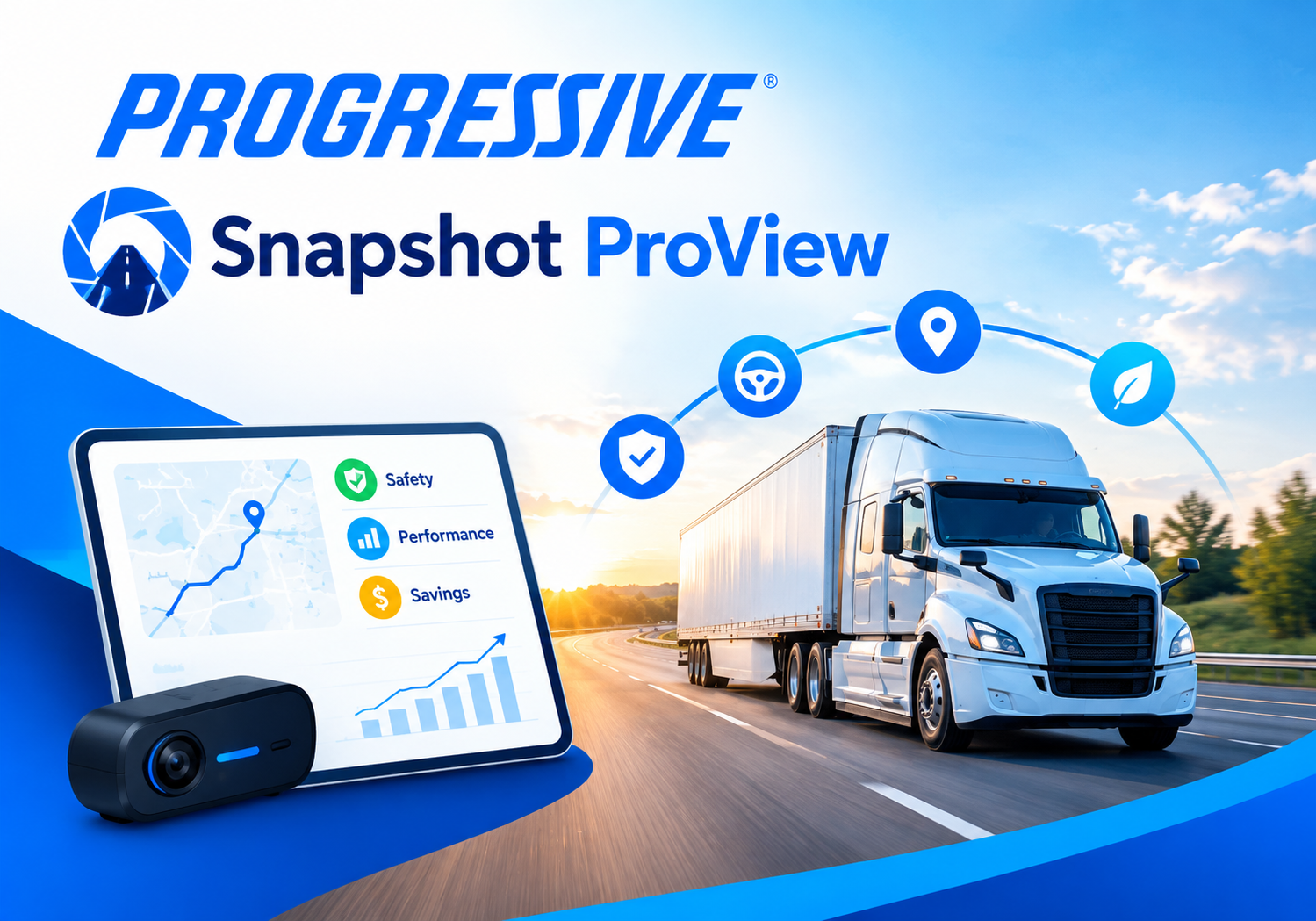
Progressive’s signature safety offering is their Snapshot telematics program, which monitors real-time driving behaviors including harsh braking, rapid acceleration, speeding, cornering forces, and other indicators of risky driving. This continuous monitoring provides fleet managers with unprecedented visibility into how vehicles are actually operated, identifying specific drivers and situations requiring intervention. Moreover, the objective data removes subjectivity from performance discussions, enabling coaching conversations grounded in facts rather than perceptions. Businesses participating in Snapshot can earn substantial premium discounts based on demonstrated safe driving, with savings potentially reaching 20-30% for fleets maintaining excellent safety records.
Beyond telematics technology, Progressive provides dedicated fleet safety consultants who work with businesses to develop customized safety programs addressing their specific risk profiles. These consultants conduct operational assessments, identify vulnerability areas, recommend targeted interventions, and help measure program effectiveness over time. Their expertise proves particularly valuable for businesses experiencing elevated claim frequencies who need professional guidance identifying and addressing root causes. Additionally, Progressive maintains partnerships with leading driver training providers, facilitating access to specialized instruction at preferred rates for policyholders.
Furthermore, Progressive’s accident forgiveness programs recognize that occasional incidents are inevitable even in well-managed fleets, preventing first accidents from triggering premium increases for businesses with otherwise strong safety records. This feature protects businesses from disproportionate financial penalties following isolated incidents while maintaining incentives for overall safety performance. For medium to large fleets seeking sophisticated safety management support backed by advanced technology and professional expertise, Progressive delivers comprehensive solutions that drive measurable improvements in both safety outcomes and insurance economics.
Infinity Auto: Supportive Pathways for Safety Improvement
Infinity Auto specializes in serving businesses that may face underwriting challenges due to previous safety records, driver qualifications, or other risk factors that complicate insurance placement in standard markets. Rather than simply charging higher premiums and moving on, Infinity takes a supportive approach that helps businesses improve safety performance and work toward better insurance markets over time.
The company recognizes that businesses with challenged safety histories often lack the knowledge, resources, or guidance needed to implement effective improvement programs. Consequently, Infinity provides practical coaching on basic safety fundamentals that deliver meaningful risk reductions without overwhelming businesses already facing operational challenges. This guidance covers essential topics like establishing and enforcing driver qualification standards, conducting regular safety meetings, documenting driver training, investigating accidents systematically, and creating accountability for safe performance.
Moreover, Infinity’s underwriting approach considers improvement trajectories rather than focusing solely on historical performance. Businesses that demonstrate commitment to safety enhancement through documented programs, reduced claim frequencies, and improved driver records may qualify for premium reductions at renewal even if their overall risk profiles remain elevated compared to standard market norms. This improvement-focused approach creates pathways for businesses to work their way toward better insurance positions rather than remaining perpetually stuck in high-cost markets.
Additionally, Infinity understands that financial constraints often limit safety investments for businesses in non-standard markets. Their recommendations emphasize cost-effective interventions delivering maximum impact per dollar invested—such as focused driver coaching, clear safety policies, and regular communication—rather than expensive technology implementations beyond reach for budget-constrained operations. This pragmatic approach ensures that safety improvements remain accessible regardless of financial situations. For businesses working to overcome challenged safety records and improve their insurance positions, Infinity Auto provides supportive partnership that recognizes improvement efforts and creates realistic pathways toward better risk profiles and lower insurance costs.
What Financial Impact Do Driver Safety Programs Have on Insurance Costs?
The financial benefits of driver safety programs manifest through multiple channels that collectively generate substantial returns on investment, typically exceeding program implementation and maintenance costs by factors of three to five or more. Understanding these financial mechanisms helps businesses appreciate the true value of safety investments beyond mere regulatory compliance or ethical obligations.
Research indicates that comprehensive driver safety programs can reduce accident rates by 20-50%, translating to insurance premium savings of 10-30% or more over time.
Primarily, direct premium discounts represent the most visible financial benefit. Many insurers, including Progressive and BiBerk, offer explicit discounts ranging from 5% to 25% for businesses implementing approved driver safety training programs. These discounts apply immediately upon program implementation, delivering rapid returns that partially offset training costs in the first year. For a business paying $50,000 annually in commercial auto premiums, a 15% safety discount generates $7,500 in savings—often exceeding the cost of implementing basic safety programs and generating positive returns from year one.
Experience rating and insurance history
Subsequently, reduced claim frequencies prevent the experience-based premium increases that follow accidents. Commercial auto insurance operates largely on experience rating, where premiums adjust annually based on loss history. Businesses with poor claims records face substantial surcharges—potentially 25-50% or more above base rates—while those maintaining claim-free periods benefit from experience credits. By preventing accidents through safety programs, businesses avoid these surcharges entirely. A single prevented accident that would have cost $25,000 might prevent $5,000-$10,000 in annual premium increases over the subsequent three-year rating period, generating total savings of $15,000-$30,000 from that one prevented incident.
Moreover, safety programs preserve access to preferred insurance markets and prevent forced migration to non-standard carriers charging substantially higher premiums. Businesses with multiple serious accidents or consistent claim patterns may find standard insurers unwilling to renew coverage, forcing them into non-standard markets like those served by Infinity Auto where premiums can run 50-100% higher than standard market rates. By maintaining strong safety records, businesses preserve their preferred carrier relationships and avoid these premium penalties. The difference between standard and non-standard market premiums for a moderate-sized fleet might reach $20,000-$40,000 annually, representing substantial value preservation through safety excellence.
Insurance deductibles
Additionally, driver safety programs reduce deductible payments that drain cash flow following accidents. While deductibles don’t technically constitute insurance costs, they represent direct financial impacts from accidents that safety programs prevent. A business maintaining $2,500 deductibles across a 20-vehicle fleet might experience 8-10 annual incidents requiring deductible payments of $20,000-$25,000. Reducing incident frequency by 40% through effective safety programs saves $8,000-$10,000 annually in avoided deductible payments—money that flows directly to bottom-line profits rather than insurers or repair shops.
Furthermore, comprehensive safety programs generate indirect financial benefits beyond insurance savings. Reduced accidents mean less vehicle downtime for repairs, maintaining fleet availability and preventing lost revenue from inability to serve customers. Workers’ compensation claims decrease when driver injuries decline, reducing another insurance expense category. Customer satisfaction improves when deliveries arrive safely and on time without accident-related delays. Employee morale and retention benefit from safe working environments, reducing recruitment and training costs. Vehicle maintenance costs decline when drivers operate equipment properly without abuse. These combined indirect benefits often equal or exceed direct insurance savings, multiplying total returns from safety investments.
What Components Make Driver Safety Programs Most Effective?

Effective driver safety programs share common elements that research and practical experience have identified as critical success factors. While specific implementations vary based on organization size, industry, and culture, these foundational components appear consistently in programs achieving superior safety outcomes and insurance cost reductions.
Initially, comprehensive driver qualification standards establish baseline expectations ensuring only qualified individuals operate company vehicles. These standards should address minimum age requirements, license classifications appropriate to vehicle types, acceptable driving record criteria, substance abuse testing policies, and periodic re-qualification intervals. BiBerk provides template qualification policies that businesses can customize to their specific needs, ensuring professional standards without starting from blank pages. Rigorous qualification prevents hiring drivers with histories predicting future accidents, addressing risk at its source before problematic drivers enter fleets.
Training
Subsequently, thorough initial training ensures drivers possess necessary knowledge and skills before operating independently. Effective training programs cover defensive driving techniques, vehicle-specific operational procedures, cargo securement methods, hours-of-service regulations, accident response protocols, customer service expectations, and company safety policies. Training should include both classroom instruction and behind-the-wheel evaluation ensuring practical competency. Progressive‘s training partnerships facilitate access to professional instruction that meets industry standards while qualifying for insurance discounts. Initial training investments pay dividends throughout employment by establishing proper techniques and safety consciousness from day one.
Moreover, ongoing refresher training maintains skills and addresses emerging issues throughout drivers’ careers. Annual or semi-annual safety meetings provide opportunities to review policies, discuss recent accidents and near-misses, introduce new procedures, address seasonal hazards like winter driving, and reinforce safety culture. These regular touchpoints keep safety top-of-mind and prevent complacency that develops when training occurs only at hire. Many insurers require evidence of ongoing training to maintain safety discounts, making regular refreshers both operationally beneficial and financially necessary.
Monitoring systems
Additionally, performance monitoring systems provide visibility into driving behaviors enabling targeted interventions. This monitoring can range from simple supervisor ride-alongs and customer feedback collection to sophisticated telematics systems like Progressive‘s Snapshot that capture detailed behavioral data. Regardless of technology level, effective monitoring identifies both exemplary performance worthy of recognition and problematic behaviors requiring correction before accidents occur. The key is acting on monitoring data rather than simply collecting it—using insights to drive coaching conversations and improvement plans.
Furthermore, consistent policy enforcement ensures standards apply equally to all drivers without favoritism that undermines program credibility. Clear consequences for safety violations—ranging from coaching and retraining through suspension to termination for serious or repeated infractions—must be communicated, understood, and applied consistently. Infinity Auto emphasizes this consistency when working with clients on safety improvements, recognizing that inconsistent enforcement destroys program effectiveness by signaling that safety rules are merely suggestions rather than requirements. Accountability systems should balance correction with positive reinforcement, recognizing safe performance alongside addressing problematic behaviors.
How Does Telematics Technology Enhance Driver Safety Programs?
Telematics technology has revolutionized driver safety management by providing objective, real-time visibility into actual driving behaviors rather than relying on subjective observations, self-reporting, or post-accident investigations. This technological capability transforms safety programs from reactive incident response to proactive behavior management that prevents accidents before they occur.
Primarily, telematics systems capture comprehensive behavioral data including vehicle speed, acceleration and braking patterns, cornering forces, following distances, seatbelt usage, idling time, and route adherence. Progressive‘s Snapshot program exemplifies this capability, monitoring multiple parameters continuously and aggregating data into meaningful metrics that identify risky behaviors. This granular visibility reveals patterns invisible through traditional monitoring—such as specific drivers who consistently speed, particular routes where harsh braking occurs frequently, or times of day when risky behaviors concentrate. These insights enable targeted interventions addressing actual problems rather than generic training that may miss critical issues.
Subsequently, objective data eliminates disputes about driving quality that often arise in coaching conversations. When managers counsel drivers about perceived unsafe behaviors based on customer complaints or casual observations, drivers frequently dispute the feedback or minimize its significance. Telematics data proves irrefutable—timestamped records showing exact speeds, locations, and maneuvers leave no room for debate about whether behaviors occurred. This objectivity makes coaching conversations more productive by focusing on improvement strategies rather than whether problems actually exist. Moreover, data-driven feedback demonstrates fairness by holding all drivers to identical standards rather than relying on subjective manager opinions that may vary inconsistently.
Analysis of driving safety performance
Moreover, telematics enables graduated intervention strategies that address different performance levels appropriately. Drivers maintaining excellent safety scores might receive recognition and small rewards reinforcing positive behaviors. Those with moderate scores indicating room for improvement receive coaching focused on specific behaviors needing attention. Drivers with poor scores reflecting significant risks receive intensive intervention including formal performance improvement plans, additional training, or operational restrictions until performance improves. This differentiation ensures resources focus where they’re most needed while rewarding excellence. BiBerk‘s resources help businesses establish these tiered response systems, even without sophisticated technology, by creating manual tracking and intervention frameworks.
Additionally, telematics provides immediate feedback that accelerates behavior change compared to delayed annual reviews. Some systems offer in-vehicle alerts that notify drivers immediately when harsh braking, speeding, or other risky behaviors occur, creating real-time learning opportunities. Even without instant feedback, weekly or monthly performance reports keep safety top-of-mind far more effectively than annual discussions. This frequency enables continuous improvement rather than hoping drivers remember annual training throughout the year. Progressive‘s reporting dashboards provide managers and drivers with regular visibility into performance trends, celebrating improvements and addressing deteriorations promptly.
Furthermore, telematics data supports insurance claims by providing objective evidence of accident circumstances. When disputed liability situations arise—where other parties falsely claim commercial drivers caused accidents—GPS data, speed records, and other telemetry can prove drivers were operating properly. This evidence facilitates faster claims resolution, prevents unjust fault assessments, and protects businesses from fraudulent claims. Some insurers reduce premiums for businesses using telematics partly because this fraud prevention capability reduces overall claim costs. For businesses operating in high-litigation areas, this evidentiary benefit alone may justify telematics investments.
What Training Methods Deliver the Best Safety Outcomes?

Driver safety training has evolved significantly beyond traditional classroom lectures, with research identifying methods that generate superior learning outcomes and behavioral changes compared to passive information delivery. Understanding and implementing these effective approaches maximizes training return on investment by producing actual performance improvements rather than merely checking compliance boxes.
Hands-on behind-the-wheel trainings
Initially, hands-on behind-the-wheel training proves far more effective than classroom instruction alone for developing practical driving skills. While classroom sessions effectively convey knowledge about rules, principles, and procedures, translating that knowledge into skillful vehicle operation requires practice with feedback. Effective programs include practical driving assessments where trainers ride along, observe actual performance, and provide immediate correction and coaching. This experiential learning identifies individual skill gaps that generic classroom training might miss, enabling personalized improvement plans addressing specific driver needs.
Scenario-based trainings
Subsequently, scenario-based training that simulates challenging situations drivers will actually encounter prepares them for real-world decision-making better than abstract instruction. Training scenarios might include responding to aggressive drivers, navigating adverse weather, managing vehicle malfunctions, handling customer conflicts, or dealing with unexpected road hazards. By working through these situations in controlled training environments—whether through simulators, role-playing, or structured discussions—drivers develop mental models and response strategies they can apply when actual situations arise. Progressive‘s training partnerships often include scenario-based approaches that prepare drivers for the specific challenges they’ll face in their roles.
Peer-to-peer learning
Moreover, peer-to-peer learning where experienced safe drivers mentor newer colleagues leverages organizational knowledge while building safety culture. Pairing new drivers with veteran mentors for initial routes provides on-the-job training that classroom sessions cannot replicate. Mentors demonstrate real-world application of safety principles, share practical tips developed through experience, and model professional attitudes toward safety. This apprenticeship approach accelerates skill development while inducting new drivers into safety-conscious cultures. Additionally, peer learning validates that safe operations are practically achievable rather than merely theoretical ideals disconnected from operational realities.
Video-based trainings
Additionally, video-based training using actual dashcam footage from company vehicles or industry sources creates powerful learning opportunities. Reviewing footage of near-misses or actual accidents—particularly those involving the company’s own fleet—generates emotional engagement that abstract discussions cannot match. Drivers see real consequences of specific behaviors, making risks tangible rather than theoretical. These video reviews should occur in non-punitive contexts focused on collective learning rather than blame, encouraging open discussion about contributing factors and prevention strategies. Infinity Auto recommends this approach to clients developing safety programs, recognizing its effectiveness even for organizations with limited training budgets.
Furthermore, ongoing micro-learning through brief, frequent safety messages proves more effective for retention than infrequent lengthy sessions. Weekly safety tips, daily pre-shift briefings highlighting specific hazards, or monthly focused topics maintain continuous attention to safety without overwhelming drivers with marathon training sessions. This distributed learning approach respects modern attention spans while providing regular reinforcement that prevents safety from fading into background amid daily operational pressures. BiBerk‘s safety resources include ready-made safety talk topics that managers can use for these brief but impactful communications.
How Can Small Businesses Benefit from Driver Safety Programs?
Small businesses face unique challenges implementing driver safety programs due to limited resources, but they often gain proportionally greater benefits because single accidents can threaten their financial stability more severely than would affect larger organizations with deeper reserves.
Scalable program design allows small businesses to start simple and expand as resources permit. Initial implementations might include basic driver screening during hiring, periodic defensive driving course enrollment through third-party providers like BiBerk offers, written safety policies establishing clear expectations, monthly safety meetings reviewing recent incidents and reinforcing priorities, and simple tracking of accidents and violations. These foundational elements require modest investment but establish safety program presence that qualifies for insurance discounts.
Cost-effective resource leveraging helps small businesses access training and tools without large expenditures. Online training courses from insurance providers and industry associations offer affordable alternatives to custom curriculum development. Free or low-cost telematics solutions using smartphones provide basic monitoring capabilities without hardware investments. Industry association memberships provide access to shared resources including safety manuals, policy templates, and training materials. Government programs through OSHA and similar agencies offer free consultation and training assistance for qualifying small businesses.
Insurance premium impact
Insurance premium impact matters more for small businesses where commercial auto insurance represents a larger proportion of total expenses. Percentage savings of 10-15% through safety program discounts translate to meaningful absolute dollars that can be reinvested in business growth. Moreover, preventing even a single serious accident avoids deductible payments of thousands of dollars plus potential premium increases at renewal that compound over multiple years. The defensive value of avoiding catastrophic losses justifies safety investments even beyond the offensive goal of earning discounts.
Competitive differentiation opportunities emerge for small businesses that establish strong safety reputations in their markets. Many customers selecting service providers consider safety records, particularly for transportation and delivery services. Safety certifications and awards provide marketing material differentiating from competitors. Low accident rates suggest operational competence and professionalism that extend beyond just driving, influencing customer perceptions about overall service quality.
Employees retention
Employee retention advantages particularly benefit small businesses where individual departures create larger operational disruptions. Driver recruitment and turnover costs include advertising expenses, screening and background checks, training investments, productivity losses during learning curves, and increased accident risk during initial employment periods. Creating safer work environments through genuine safety commitment reduces turnover by showing employees their wellbeing matters. The resulting stability improves service quality and reduces recruiting costs.
Owner-operator involvement enables personal leadership that larger organizations struggle to replicate. Small business owners who personally participate in safety training, conduct ride-alongs with drivers, discuss safety in regular conversations, and visibly prioritize safety in resource decisions create powerful cultural influence. This personal touch builds loyalty and commitment that formal policies alone cannot achieve.
Agility and flexibility allow small businesses to implement improvements quickly without bureaucratic approval processes. Identifying problems through incident analysis or driver feedback, small businesses can adjust policies, modify training, or acquire new equipment within days rather than months. This responsiveness enables rapid continuous improvement that keeps programs fresh and addresses emerging issues promptly.
Summing up
The compelling business case for implementing comprehensive driver safety programs rests on multiple overlapping benefits that collectively transform these initiatives from optional enhancements into strategic necessities for companies operating commercial vehicles. The insurance premium reductions alone typically justify program costs within the first year, with savings of 5-25% or more available from carriers like BiBerk, Progressive, and Infinity Auto who recognize and reward risk reduction efforts.
However, the financial justification extends far beyond immediate insurance discounts. Companies implementing effective safety programs experience reduced accident rates of 20-60% compared to baseline performance, translating to dramatic decreases in deductible payments, vehicle repair costs, medical expenses, legal liabilities, and operational disruptions. The cumulative five-year savings often exceed several times the initial program investment when all direct and indirect costs are considered comprehensively.
Looking forward, the integration of driver safety programs with broader risk management and operational strategies will likely intensify. Advanced telematics systems will provide increasingly sophisticated analytics predicting risks before they materialize. Artificial intelligence will enable personalized training addressing individual driver development needs. Autonomous and semi-autonomous vehicle technologies will reshape the human role in transportation while creating new training and supervision requirements.
For businesses seeking to optimize their driver safety program implementation and maximize the benefits of partnerships with carriers like BiBerk, Progressive, and Infinity Auto, working with experienced consultants can accelerate progress and avoid common pitfalls. Organizations like Solution for Guru (https://www.solution4guru.com/) bring specialized expertise in developing customized safety programs, integrating technology solutions, training management teams, and establishing measurement systems that document results for insurance negotiations.
Frequently Asked Questions
Insurance premium reductions typically begin appearing within 6-12 months of program implementation, though the timing depends on several factors including policy renewal dates and demonstrated results. Most commercial auto insurance policies renew annually, meaning full premium adjustments reflecting new safety programs take effect at the next renewal following implementation. However, some carriers like Progressive offer mid-term adjustments for companies participating in telematics programs that show immediate improvement in driving behaviors.
Minimum requirements vary among insurance carriers, but most require several common elements to qualify for safety program discounts. These typically include documented written safety policies covering key areas like cell phone usage, seatbelt requirements, and substance abuse prohibition; regular driver training with records confirming completion by all drivers at least annually; systematic driver qualification processes including license verification and driving record review during hiring; and a formal incident investigation procedure showing how the company responds to accidents and implements corrective actions.
Benefits of Cooperation with Solution for Guru Company
Implementing comprehensive driver safety programs presents numerous challenges even for organizations with strong internal capabilities. Working with experienced consultants like Solution for Guru (https://www.solution4guru.com/) accelerates program development, avoids costly mistakes, and ensures that initiatives deliver maximum return on investment.
Solution for Guru brings specialized expertise in designing customized driver safety programs tailored to specific industry requirements, operational characteristics, and organizational cultures. Their consultants have worked across diverse sectors including transportation, delivery services, field service operations, and construction, understanding the unique safety challenges each industry faces. This experience enables them to recommend best practices proven effective in similar operations rather than generic approaches requiring extensive trial-and-error refinement.
For companies serious about maximizing the business value of driver safety programs while building partnerships with leading commercial auto insurance providers including BiBerk, Progressive, and Infinity Auto, Solution for Guru delivers expertise, objectivity, and practical implementation support that accelerates results and ensures sustainable success.
Recommended
- Full Coverage vs. Liability: Which Auto Insurance Is Right for You?
- What’s Covered and What’s Not: Breaking Down Auto Insurance Coverage Types
- What Are the Best Auto Insurance Options for Rideshare Drivers (Uber, Lyft, etc.)?
- How to Get Affordable Auto Insurance After an Accident or Ticket
- Auto and Renters Insurance Bundle
- Preferred Auto Insurance Companies
- How to Get Auto Insurance Online
- Auto Insurance for Farms
- Auto International Insurance
- Comparing Commercial Auto Insurance
- The Top Commercial Auto Insurance Options