ManageEngine ITSM
In the rapidly evolving landscape of enterprise IT management, organizations require comprehensive solutions that streamline service delivery, enhance operational efficiency, and support digital transformation initiatives. Furthermore, as businesses increasingly depend on complex IT infrastructures to maintain competitive advantages, the need for robust IT Service Management (ITSM) platforms has never been more critical. ManageEngine has emerged as a prominent player in this space, offering an extensive portfolio of ITSM and remote access solutions that empower IT teams to deliver exceptional service while managing costs effectively and maintaining security standards across increasingly distributed work environments.
Table of Contents
- Quick Summary
- What Is ManageEngine and Why Does It Matter?
- What Does ManageEngine ITSM Software Offer?
- How Does ManageEngine Remote Access Software Enhance IT Support?
- What Core Features Define ManageEngine’s ITSM Platform?
- How Does ManageEngine’s Pricing Structure Work?
- What Advantages Does ManageEngine Provide?
- What Role Does ManageEngine Play in Modern ITSM?
- How Can Organizations Successfully Implement ManageEngine?
- Summing up
- Frequently Asked Questions
- Benefits of Cooperation with Solution for Guru
Quick Summary
ManageEngine represents a comprehensive suite of IT management solutions developed by Zoho Corporation, providing organizations with powerful ITSM capabilities, remote access functionality, and integrated tools for managing modern IT operations. The platform’s flagship product, ServiceDesk Plus, delivers end-to-end ITSM functionality covering incident management, problem management, change management, asset management, and self-service capabilities that align with ITIL best practices. Additionally, ManageEngine’s Remote Access Plus extends IT support capabilities beyond traditional boundaries, enabling technicians to troubleshoot, manage, and maintain systems regardless of location. Together, these solutions address the evolving needs of IT departments managing hybrid work environments, distributed teams, and complex technology ecosystems. With competitive pricing, extensive customization options, and a focus on mid-market organizations, ManageEngine has established itself as a viable alternative to enterprise-focused competitors while delivering enterprise-grade functionality at accessible price points.
What Is ManageEngine and Why Does It Matter?
ManageEngine is a division of Zoho Corporation, a global software company headquartered in Chennai, India, with a significant presence in Austin, Texas, and offices worldwide. Founded in 2002, ManageEngine has grown into one of the leading providers of IT management software, serving over 280,000 organizations across 190 countries. The company’s mission centers on making enterprise IT management affordable, accessible, and effective for organizations of all sizes, particularly targeting the mid-market segment often underserved by traditional enterprise vendors.
The significance of ManageEngine in today’s IT landscape stems from several factors that differentiate it from competitors. Primarily, the platform addresses the democratization of enterprise-grade IT management tools, bringing sophisticated capabilities previously reserved for large enterprises with substantial budgets to mid-sized organizations and growing businesses. This accessibility has transformed how thousands of IT departments operate, enabling them to implement structured service management frameworks, automate routine tasks, and deliver professional IT services without prohibitive costs or complex implementations that traditionally characterized ITSM adoption.
Moreover, ManageEngine’s comprehensive product portfolio addresses virtually every aspect of IT operations through integrated solutions that work seamlessly together. Beyond ITSM, the company offers network monitoring, application performance management, security information and event management (SIEM), privileged access management, mobile device management, and numerous other specialized tools.
Furthermore, ManageEngine maintains a strong commitment to customer support and community engagement that distinguishes it from larger competitors often criticized for impersonal service and difficulty accessing technical assistance. The company provides extensive documentation, active user forums, regular webinars, and responsive technical support that helps customers maximize value from their investments. This support ecosystem proves particularly valuable for mid-market organizations without large internal IT teams or dedicated ITSM specialists who rely on vendor guidance for implementation and optimization.
What Does ManageEngine ITSM Software Offer?

ManageEngine’s ITSM software, primarily delivered through ServiceDesk Plus, provides comprehensive IT service management capabilities designed to help organizations deliver efficient, structured IT support aligned with industry best practices. The platform encompasses the full spectrum of ITSM disciplines, from foundational service desk functionality through advanced service management processes that support mature IT organizations.
Incident Management and Service Desk Operations
At its core, ManageEngine ITSM excels in incident management, providing robust tools for receiving, tracking, prioritizing, assigning, and resolving user-reported issues. The platform supports multiple channels for incident submission, including self-service portals, email, phone integration, mobile applications, and chatbots, ensuring users can report problems through their preferred methods. Consequently, IT teams gain centralized visibility into all incoming requests regardless of submission channel, preventing issues from falling through cracks and enabling consistent service delivery.
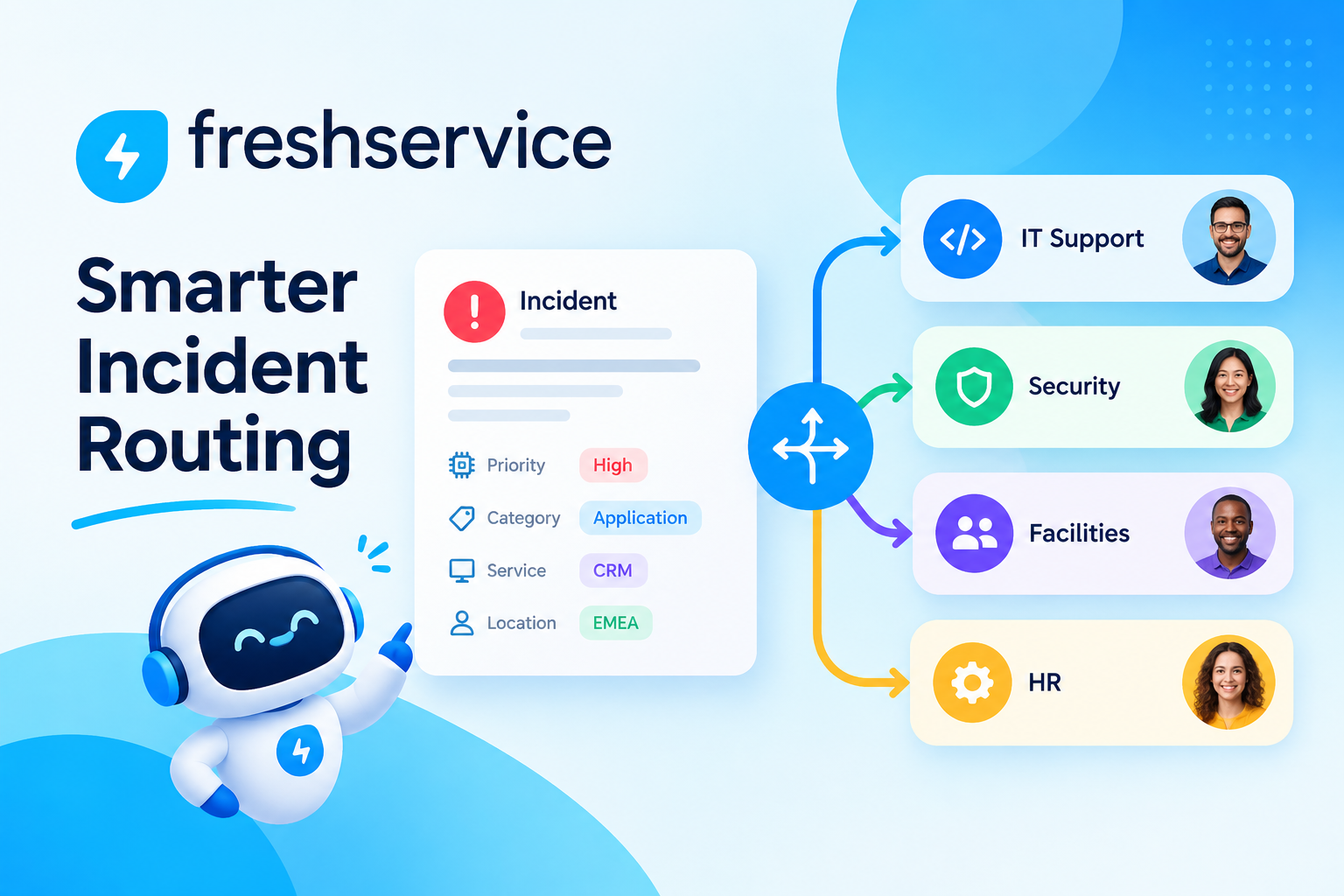
The incident management module includes sophisticated workflow automation that routes tickets to appropriate technicians based on categories, priorities, asset associations, or custom business rules. This automation eliminates manual triage efforts while ensuring tickets reach qualified personnel promptly. Additionally, service level agreement (SLA) management features track response and resolution timeframes, automatically escalating overdue tickets and providing visibility into compliance metrics that demonstrate service quality to stakeholders. These SLA capabilities prove essential for IT departments establishing performance standards and demonstrating accountability to business leadership.
Problem and Change Management
Beyond reactive incident resolution, ManageEngine ITSM supports proactive problem management that identifies root causes of recurring incidents and implements permanent solutions preventing future occurrences. The platform’s problem management module links related incidents, facilitates root cause analysis, tracks known errors, and manages workarounds until permanent fixes can be implemented. This systematic approach reduces recurring support burdens while improving overall system stability and user satisfaction.
Change management functionality provides structured processes for planning, approving, implementing, and reviewing changes to IT infrastructure, applications, and services. The platform supports change advisory boards (CAB) with approval workflows, risk assessment tools, rollback planning, and post-implementation reviews. Moreover, integration between change and incident management enables organizations to identify problematic changes quickly when incident spikes occur following deployments, accelerating problem identification and resolution. This integrated approach reduces change-related incidents while maintaining necessary agility for business-driven IT evolution.
Asset and Configuration Management
Comprehensive asset management capabilities within ManageEngine ITSM provide centralized visibility into hardware, software, and configuration items (CIs) across the organization. The platform automatically discovers assets through network scanning, integrates with procurement systems, tracks warranties and licenses, manages software compliance, and maintains relationships between assets and users. Furthermore, configuration management database (CMDB) functionality maps dependencies between IT components, enabling impact analysis before changes and accelerating incident resolution by providing context about affected systems.
This asset intelligence proves invaluable for cost management, compliance, and strategic planning. Organizations gain visibility into asset lifecycles, identify underutilized resources, plan refresh cycles based on actual usage and condition, and demonstrate software license compliance during audits. Additionally, integration between asset management and service desk operations enables technicians to view complete asset histories during troubleshooting, including past incidents, changes, and configurations that might relate to current issues.
How Does ManageEngine Remote Access Software Enhance IT Support?
ManageEngine’s Remote Access Software, delivered through Remote Access Plus, extends IT support capabilities beyond traditional helpdesk boundaries by enabling technicians to remotely control, troubleshoot, manage, and maintain endpoint devices regardless of location. This remote access functionality has become increasingly critical as organizations embrace hybrid work models where employees operate from homes, satellite offices, and various locations rather than centralized facilities.
Remote Control and Troubleshooting
The platform’s remote control capabilities allow IT technicians to establish secure connections to end-user devices, viewing screens and operating systems as if physically present at the machine. This functionality dramatically accelerates support by eliminating travel time, enabling technicians to diagnose issues directly rather than relying on user descriptions, and implementing fixes immediately without waiting for users to follow complex instructions. Moreover, the remote control feature supports both attended sessions (where users grant access and remain present) and unattended access (for maintenance during off-hours or support of unmanned systems like servers and kiosks).
During remote sessions, technicians can transfer files, restart systems, access command lines, view system information, and perform virtually any action possible with physical access. The platform maintains comprehensive session logs documenting all activities for audit purposes, addressing security and compliance requirements common in regulated industries. Additionally, bandwidth optimization features ensure usable performance even over slower network connections, making remote support feasible in diverse connectivity situations.
Remote Deployment and Patch Management
Beyond troubleshooting, ManageEngine Remote Access Plus enables centralized software deployment and patch management across distributed endpoints. IT teams can remotely install applications, deploy operating system updates, distribute security patches, and maintain software currency without requiring physical access to devices or user intervention. This capability proves particularly valuable for organizations managing remote workers, retail locations, branch offices, or other distributed endpoints where coordinating updates through traditional methods would prove impractical.
The deployment functionality supports scheduling that minimizes business disruption by performing installations during maintenance windows or outside business hours. Wake-on-LAN capabilities allow administrators to power on sleeping systems remotely for updates, while automatic restart scheduling ensures patches requiring reboots complete without indefinitely waiting for users to restart manually. These automation features significantly reduce administrative burden while improving security posture by ensuring timely patch deployment across the entire environment.
Integration with ServiceDesk Plus
The strategic integration between ManageEngine’s Remote Access Plus and ServiceDesk Plus creates seamless workflows spanning ticketing and hands-on resolution. Technicians working on service desk tickets can initiate remote sessions directly from ticket interfaces, accessing affected systems with single clicks rather than switching between disparate applications. Furthermore, remote session details automatically populate ticket records, creating comprehensive documentation of resolution activities that support knowledge base development and future troubleshooting. This integration eliminates friction that often exists between ITSM platforms and remote access tools, creating unified support experiences that improve efficiency and technician satisfaction.
What Core Features Define ManageEngine’s ITSM Platform?
ManageEngine’s ITSM platform encompasses numerous features that collectively enable comprehensive IT service management. Understanding these core capabilities helps organizations evaluate whether the platform aligns with their requirements and identify areas where customization or additional tools might be necessary.
| Feature Category | Key Capabilities | Business Value |
|---|---|---|
| Service Desk | Ticketing, SLA management, automation, multi-channel support | Centralized request management, improved response times |
| Self-Service Portal | Knowledge base, service catalog, request submission | Reduced ticket volumes, improved user autonomy |
| Asset Management | Discovery, tracking, lifecycle management, CMDB | Cost optimization, compliance, better decision-making |
| Change Management | Approval workflows, CAB support, risk assessment | Reduced change-related incidents, controlled evolution |
| Problem Management | Root cause analysis, known error database | Proactive issue prevention, reduced recurring incidents |
| Reporting & Analytics | Dashboards, custom reports, trend analysis | Data-driven decisions, performance visibility |
Self-Service Capabilities
ManageEngine‘s self-service portal empowers users to resolve common issues independently without submitting tickets or contacting technicians. The platform provides searchable knowledge bases containing solutions to frequently encountered problems, enabling users to find answers immediately rather than waiting for support responses. Additionally, service catalog functionality allows users to request standard services—such as software installations, access permissions, or equipment orders—through structured forms that capture necessary information and route requests appropriately without back-and-forth communications.
This self-service emphasis delivers dual benefits: users gain immediate resolution to simple issues while IT teams redirect their efforts toward complex problems requiring expertise rather than answering repetitive questions or processing routine requests. Organizations implementing robust self-service typically experience 20-40% reductions in submitted tickets, translating directly to cost savings and improved service quality through faster resolution of remaining issues requiring human intervention.
Customization and Workflow Automation
ManageEngine ITSM provides extensive customization capabilities enabling organizations to adapt the platform to their specific processes rather than forcing processes to conform to rigid software designs. Custom fields, forms, views, and modules can be created to capture organization-specific information and support unique workflows. Moreover, the platform’s workflow automation engine enables creation of complex business rules that automate ticket routing, approvals, notifications, field updates, and integrations without programming knowledge.
These customization capabilities prove essential for organizations with established processes or unique requirements that generic configurations cannot accommodate. Rather than compromising operational approaches to fit software limitations, ManageEngine allows businesses to implement ITSM in ways that enhance rather than disrupt existing workflows. However, this flexibility requires careful planning to avoid over-customization that complicates upgrades or creates maintenance burdens exceeding benefits gained from tailored configurations.
How Does ManageEngine’s Pricing Structure Work?
ManageEngine‘s pricing philosophy emphasizes affordability and transparency, targeting mid-market organizations seeking enterprise capabilities without enterprise budgets. The company offers multiple licensing models designed to accommodate various organizational sizes, deployment preferences, and feature requirements.
Perpetual vs. Subscription Licensing
ManageEngine offers both perpetual licenses (one-time purchases with ongoing maintenance fees) and subscription licenses (annual or multi-year terms with recurring payments). Perpetual licensing appeals to organizations preferring to own software outright and maintain control over upgrade timing, though it requires upfront capital investment. Conversely, subscription licensing spreads costs over time with lower initial investments, includes automatic version updates, and provides flexibility to scale licensing up or down as organizational needs change. Many organizations favor subscription models for predictable operating expenses that avoid large capital expenditures requiring approval processes and budget allocations.
Tiered Editions
ServiceDesk Plus, ManageEngine’s flagship ITSM platform, is available in multiple editions—Standard, Professional, and Enterprise—each incorporating progressively more features and capabilities. The Standard edition provides core service desk functionality suitable for organizations beginning ITSM journeys or those with straightforward requirements. Professional adds advanced features like project management, contract management, and purchase order tracking. Enterprise includes comprehensive ITIL-aligned capabilities, advanced customization, and integrations supporting mature IT organizations with complex requirements.
This tiered approach allows organizations to start with editions matching current needs and upgrade as requirements evolve, avoiding over-purchasing unnecessary capabilities initially while providing clear growth paths. Pricing scales based on the number of technicians using the system (not end users submitting tickets), making costs predictable and often more affordable than competitors charging per-user fees that multiply rapidly in larger organizations.
| Edition | Starting Price (Annual) | Best For | Key Additions |
|---|---|---|---|
| Standard | ~$1,195 (2 technicians) | Small IT teams, basic ITSM | Core ticketing, basic asset management |
| Professional | ~$2,395 (2 technicians) | Growing teams, advanced needs | Projects, contracts, purchase orders |
| Enterprise | ~$6,295 (2 technicians) | Mature ITSM, complex operations | Advanced workflows, integrations, CMDB |
Note: Pricing is approximate and varies based on technician counts, deployment options (cloud vs. on-premise), and regional factors. Organizations should contact ManageEngine directly for current, accurate quotes.
What Advantages Does ManageEngine Provide?

Key Advantages
- Cost-Effectiveness: Significantly lower pricing than enterprise competitors while delivering comparable functionality
- Comprehensive Features: Extensive ITSM capabilities covering incident, problem, change, asset, and knowledge management
- Customization Flexibility: Extensive configuration options allowing adaptation to specific organizational processes
- Integrated Ecosystem: Broad product portfolio enabling unified IT management from single vendor
- Deployment Options: Both cloud and on-premise deployments supporting various infrastructure preferences
- Strong Support: Responsive customer service, extensive documentation, active community
- Quick Implementation: Relatively straightforward deployment compared to enterprise platforms
- Regular Updates: Frequent feature releases and improvements keeping platform current
- ITIL Alignment: Processes designed around ITIL best practices supporting professional service management
Potential Limitations
- Interface Design: User interface less modern than some newer competitors, though functional
- Reporting Complexity: Advanced reporting can require significant configuration and learning
- Integration Effort: While many integrations exist, connecting with unique systems may require custom development
- Performance at Scale: Very large implementations may experience performance challenges requiring optimization
- Mobile Experience: Mobile applications functional but not as polished as some competitors
- Learning Curve: Extensive features create initial complexity for new users
- Customization Risks: Flexibility can lead to over-customization complicating future upgrades
What Role Does ManageEngine Play in Modern ITSM?
ManageEngine occupies a distinctive position in the contemporary ITSM landscape, serving as a bridge between entry-level helpdesk tools and enterprise-focused platforms that often prove cost-prohibitive or overly complex for mid-market organizations. This positioning has become increasingly important as IT service management maturity spreads beyond large enterprises to organizations of all sizes recognizing the value of structured IT operations.
In the broader ITSM ecosystem, ManageEngine has democratized enterprise-grade service management by making sophisticated capabilities accessible to organizations with limited budgets and technical resources. Many mid-sized companies, educational institutions, healthcare providers, government agencies, and growing businesses have implemented professional ITSM practices through ManageEngine that would have been financially or technically infeasible with traditional enterprise vendors. This accessibility has elevated overall ITSM maturity across industries, enabling more organizations to deliver reliable, professional IT services that support business objectives rather than merely reacting to problems.
Moreover, ManageEngine‘s role extends to driving innovation in practical areas that matter to working IT professionals rather than pursuing flashy features primarily valuable for marketing. The company’s development priorities reflect real-world IT challenges—remote work support, automation, integration, usability improvements—rather than chasing every emerging technology trend. This pragmatic focus resonates with IT teams seeking tools that solve actual problems rather than implementations impressive in demonstrations but impractical in daily operations.
Furthermore, in the current environment where hybrid work, cloud adoption, and digital transformation create unprecedented complexity, ManageEngine’s integrated approach to IT management proves increasingly valuable. Organizations can implement unified platforms spanning ITSM, remote access, endpoint management, network monitoring, and security within cohesive ecosystems rather than managing disconnected point solutions. This integration reduces operational friction, improves visibility, and enables IT teams to respond more effectively to business needs while managing expanded technology landscapes with limited resource growth.
How Can Organizations Successfully Implement ManageEngine?

Successful ManageEngine implementation requires thoughtful planning, stakeholder engagement, and realistic expectations about timelines and effort requirements. Organizations approaching implementation strategically achieve faster value realization and higher user adoption than those treating it as purely technical deployment.
Planning and Requirements Gathering
Implementation should begin with thorough requirements gathering that identifies specific business needs, current pain points, desired outcomes, and success criteria. This discovery phase involves interviewing stakeholders across IT and business units, documenting existing processes, identifying integration requirements, and prioritizing capabilities most critical for organizational success. Furthermore, establishing clear metrics for measuring success—such as ticket resolution times, user satisfaction scores, or first-call resolution rates—provides baselines for evaluating implementation effectiveness and justifying ongoing investment.
Organizations should resist temptation to customize extensively during initial implementation, instead focusing on configuring standard functionality to match critical processes while deferring nice-to-have customizations until core capabilities stabilize. This phased approach accelerates initial deployment, allows users to familiarize themselves with basic functionality before complexity increases, and ensures foundational processes work reliably before adding advanced features.
Data Migration and Integration
For organizations replacing existing systems, data migration requires careful planning ensuring historical information transfers accurately without disrupting ongoing operations. ManageEngine provides migration tools and services supporting transitions from various legacy systems, though data quality inevitably requires attention. Cleaning data before migration—removing duplicates, standardizing formats, validating accuracy—improves new system quality and prevents importing problems that compromise effectiveness.
Integration with existing systems such as Active Directory, email platforms, monitoring tools, and business applications should be established early, as these connections enable automated workflows, single sign-on capabilities, and unified visibility that maximize platform value. ManageEngine supports numerous pre-built integrations while providing APIs for custom connections when standard options don’t address specific needs. Organizations should prioritize integrations delivering immediate operational benefits rather than attempting to connect every possible system simultaneously.
Training and Change Management
Comprehensive training for both IT staff and end users determines adoption success. Technicians require deep training on system functionality, workflows, customization capabilities, and administrative tasks, while end users need guidance on self-service portals, ticket submission, and knowledge base usage. ManageEngine provides various training resources including documentation, video tutorials, and live webinars, though organizations often benefit from supplementing vendor materials with internal training tailored to specific configurations and processes.
Change management efforts should address both technical and cultural dimensions of ITSM adoption. Communicating the benefits of structured service management, addressing concerns about accountability or process changes, securing executive sponsorship, and celebrating early wins all contribute to successful transitions. Organizations should expect several months for full adoption as teams adjust to new workflows and develop proficiency with platform capabilities.
Summing up
ManageEngine has established itself as a compelling ITSM solution that successfully balances comprehensive functionality, accessibility, and affordability in ways that resonate particularly with mid-market organizations seeking enterprise capabilities without enterprise complexity or costs. Throughout this examination, we’ve established that ManageEngine’s value proposition rests on several foundational pillars that distinguish it within the competitive ITSM landscape.
The platform’s comprehensive feature set addresses the full spectrum of IT service management needs, from fundamental service desk operations through advanced problem management, change control, asset lifecycle management, and knowledge management. Moreover, the integration between ManageEngine’s ITSM software and Remote Access Software creates unified support experiences that span ticketing, troubleshooting, and resolution without forcing technicians to context-switch between disparate applications. This integration proves increasingly valuable as organizations manage distributed workforces and hybrid environments where remote support capabilities have evolved from convenience to necessity.
From a financial perspective, ManageEngine delivers exceptional value by providing enterprise-grade capabilities at price points accessible to organizations with limited IT budgets. The tiered licensing structure enables organizations to start with configurations matching current needs while providing clear upgrade paths as requirements evolve. Furthermore, the technician-based pricing model rather than per-user fees often results in dramatically lower total costs compared to competitors, particularly for organizations supporting large user populations with relatively small IT teams.
For organizations evaluating ITSM solutions, ManageEngine merits serious consideration particularly when comprehensive functionality, affordability, and reasonable implementation complexity rank as priorities. The platform delivers genuine enterprise capabilities without requiring enterprise budgets, implementation timelines, or ongoing administrative overhead. While alternatives may offer more modern interfaces, simpler configurations for basic needs, or specialized features for niche requirements, few competitors match ManageEngine’s combination of breadth, depth, cost-effectiveness, and accessibility for mid-market organizations seeking to professionalize IT service delivery.
Frequently Asked Questions
ManageEngine offers both cloud-hosted and on-premise deployment options, each with distinct advantages addressing different organizational needs and preferences. The cloud deployment, delivered as Software-as-a-Service (SaaS), provides the fastest implementation path with minimal infrastructure requirements, automatic updates and patches, predictable subscription pricing, and reduced IT overhead since ManageEngine manages hosting, security, and maintenance. This option proves ideal for organizations seeking rapid deployment, those with limited IT infrastructure resources, or businesses preferring operational expenses over capital investments. Conversely, on-premise deployment provides maximum control over data location, customization depth, integration flexibility, and upgrade timing—factors that may be critical for organizations with strict data residency requirements, complex compliance needs, or preferences for owning infrastructure.
Yes, ManageEngine provides robust capabilities supporting multi-site and multi-national organizations with distributed locations, diverse time zones, and varying operational requirements. The platform’s multi-site support enables organizations to establish separate service desk instances for different locations while maintaining centralized visibility and reporting across the entire organization. Site-specific configurations allow tailoring workflows, SLAs, business hours, and escalations to local requirements while preserving standardization where beneficial. Furthermore, ManageEngine supports multiple languages and localization, enabling interface translation and region-specific formatting for dates, times, and currencies—critical for international deployments where users work in various languages.
Benefits of Cooperation with Solution for Guru
While ManageEngine provides powerful ITSM capabilities, successful implementation and optimization often benefit from experienced guidance that accelerates value realization while avoiding common pitfalls. This is where partnering with specialized consultancies like Solution for Guru delivers substantial advantages extending far beyond basic software deployment.
Solution for Guru brings deep ManageEngine expertise spanning implementation planning, technical configuration, integration development, customization, training, and ongoing optimization. Their consultants have guided numerous organizations through successful ManageEngine deployments across various industries, building practical knowledge of what works, what doesn’t, and how to navigate challenges that inevitably arise during implementation. This experience proves invaluable for organizations lacking internal ITSM expertise or those implementing ManageEngine for the first time.
For organizations serious about implementing ManageEngine successfully—achieving rapid value realization, high user adoption, and sustainable operational improvements—partnering with Solution for Guru represents strategic investment accelerating success while avoiding expensive mistakes and extended learning curves that plague many self-directed implementations.
Recommended:
- ITSM Change Management
- ITSM Integration: Streamlining IT Service Management for Modern Enterprises
- ITSM Problem Management
- What Are ITSM Ticketing Tools?
- ITSM Jobs: Your Guide to a Thriving Career in IT Service Management
- Why are ITSM Best Practices essential?
- What is an IT Management Service Provider?
- Comprehensive Guide to ITSM Tools: Features, Benefits, and Top Solutions
- What is IT Service Management (ITSM)?