Core ITSM Processes: A Comprehensive Guide to Service Management Excellence
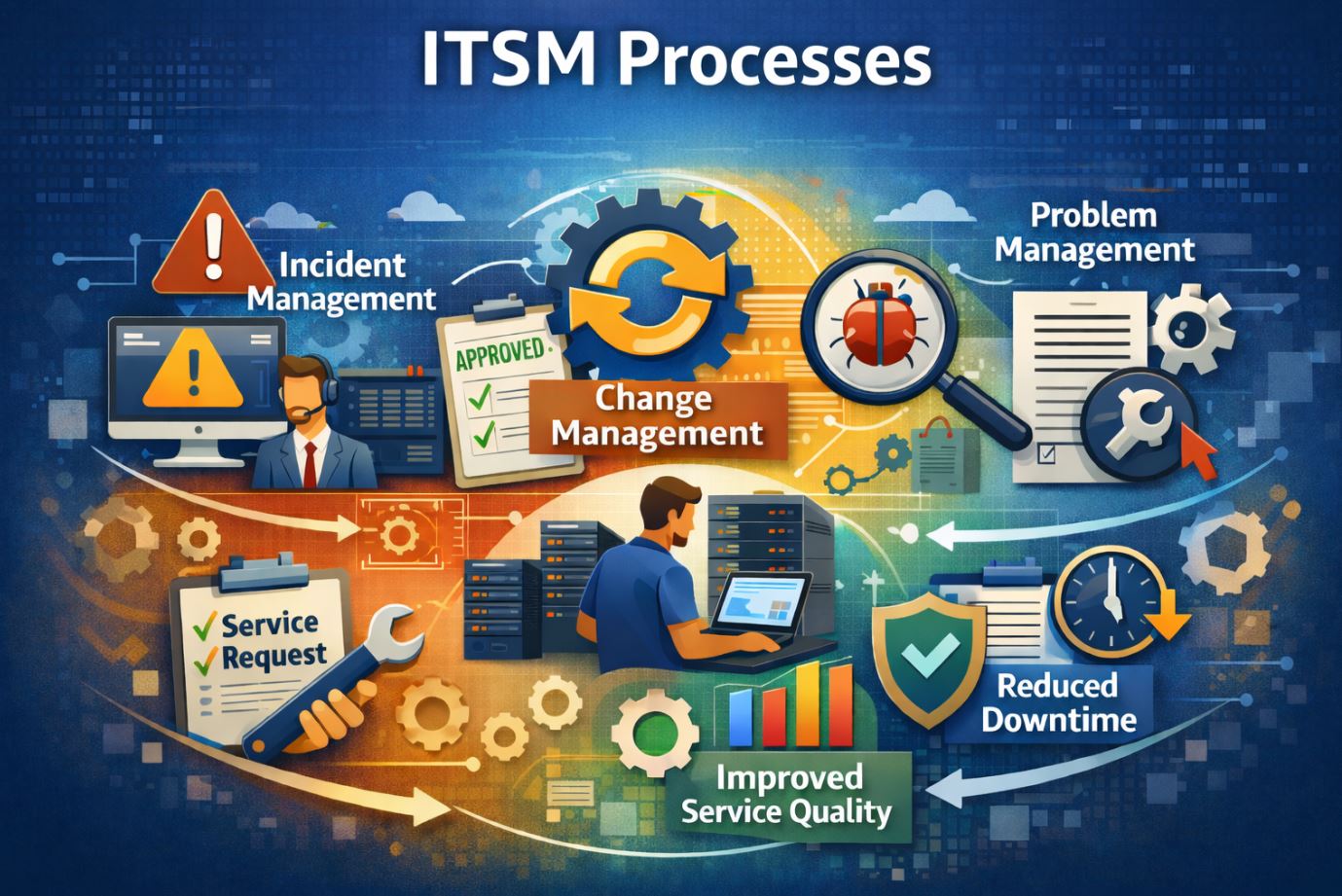
In today’s digitally-driven business landscape, organizations increasingly rely on robust IT Service Management (ITSM) frameworks to deliver consistent, high-quality technology services. Understanding and implementing core ITSM processes is no longer optional but essential for companies seeking to optimize their IT operations, improve service delivery, and maintain competitive advantage in their respective markets.
Table of Contents
- Quick Summary
- What is ITSM Processes?
- Leading ITSM Software Solutions
- Core ITSM Process Categories
- Implementing ITSM Processes Successfully
- Summing up
- Frequently Asked Questions
- Benefits of Cooperation with Solution for Guru
Quick Summary
This comprehensive guide explores the fundamental ITSM processes that form the backbone of effective IT service delivery. We examine nine core processes including Incident Management, Problem Management, Change Management, and others that enable organizations to maintain service quality, minimize disruptions, and continuously improve IT operations. Additionally, we review leading ITSM software platforms such as Freshservice, ManageEngine, and Zendesk, which provide the technological foundation for implementing these processes. Whether you’re beginning your ITSM journey or refining existing practices, this article offers practical insights, implementation strategies, and performance metrics to help your organization achieve service management excellence.
What is ITSM Processes?
ITSM processes represent a collection of structured, systematic approaches designed to plan, deliver, manage, and improve IT services within an organization. These processes provide a standardized framework that ensures IT departments can consistently meet business needs while maintaining service quality, security, and compliance requirements.
At its core, ITSM processes transform IT from a reactive, technical function into a proactive, strategic business partner. Rather than simply fixing issues as they arise, ITSM processes enable organizations to prevent problems, plan changes carefully, manage resources efficiently, and continuously improve service delivery based on measurable outcomes.
Furthermore, ITSM processes are typically based on established frameworks such as ITIL (Information Technology Infrastructure Library), which provides best-practice guidance for service management. These frameworks emphasize a lifecycle approach, encompassing service strategy, design, transition, operation, and continual improvement. Consequently, organizations adopting ITSM processes benefit from decades of collective industry experience and proven methodologies.
The value proposition of ITSM processes extends beyond the IT department. When properly implemented, these processes improve communication between IT and business stakeholders, increase transparency in service delivery, reduce operational costs, and ultimately enhance the end-user experience. Moreover, they provide the foundation for digital transformation initiatives by ensuring IT services are reliable, scalable, and aligned with organizational objectives.
Leading ITSM Software Solutions
Implementing ITSM processes effectively requires robust software platforms that can automate workflows, track service requests, manage assets, and provide visibility into IT operations. The following three solutions represent industry-leading platforms that organizations worldwide trust to support their ITSM initiatives.
Freshservice
Freshservice stands out as a modern, cloud-based ITSM platform that emphasizes user experience and intuitive design. Built specifically for IT teams that want to implement ITSM processes without extensive complexity, Freshservice offers a comprehensive suite of capabilities aligned with core ITSM processes.
The platform excels in Incident Management through intelligent ticket routing, automated categorization, and AI-powered suggestions that help technicians resolve issues faster. Its Service Request Management capabilities streamline fulfillment through self-service portals and pre-approved workflows. Additionally, Freshservice provides robust Change Management features with risk assessment, approval workflows, and collision detection to prevent conflicting changes.
What makes Freshservice particularly relevant to core ITSM processes is its emphasis on automation and AI. The platform leverages machine learning to identify patterns, predict potential incidents, and recommend knowledge base articles, thereby supporting both Problem Management and Knowledge Management processes. Furthermore, its Configuration Management Database (CMDB) automatically discovers and maps IT assets and their relationships, providing the foundation for effective asset and configuration management.
Organizations implementing core ITSM processes with Freshservice benefit from its quick deployment, intuitive interface, and seamless integration capabilities with other business systems. The platform’s mobile-first approach ensures that IT teams can manage processes from anywhere, while its analytics dashboards provide real-time visibility into process performance and service delivery metrics.
ManageEngine

ManageEngine offers a comprehensive portfolio of IT management solutions, with its ServiceDesk Plus product serving as a powerful ITSM platform designed to support all core ITSM processes. This solution is particularly well-suited for organizations seeking deep customization capabilities and extensive process automation.
The platform’s strength lies in its holistic approach to ITSM processes. ManageEngine provides end-to-end support for Incident, Problem, and Change Management with sophisticated workflows, approval chains, and escalation mechanisms. Its Asset Management capabilities extend beyond basic tracking to include contract management, software license compliance, and lifecycle management, ensuring organizations maintain complete visibility over their IT assets.
Particularly noteworthy is ManageEngine’s approach to Configuration Management and Release Management. The platform offers a comprehensive CMDB that maintains detailed information about configuration items and their relationships, enabling impact analysis before implementing changes. Its Release Management features coordinate the planning, scheduling, and deployment of releases while maintaining detailed audit trails for compliance purposes.
ManageEngine supports core ITSM processes through advanced automation capabilities, including business rules, workflow automation, and orchestration that reduce manual effort and ensure consistent process execution. The platform’s reporting and analytics capabilities provide deep insights into process performance, helping organizations identify improvement opportunities and demonstrate the value of ITSM initiatives to stakeholders.
Organizations choose ManageEngine when implementing core ITSM processes because of its flexibility, scalability, and comprehensive feature set that grows with organizational needs. Whether deployed on-premises or in the cloud, the platform adapts to unique business requirements while maintaining alignment with ITIL best practices.
Zendesk

Zendesk, traditionally known for customer service management, has expanded its capabilities to become a viable ITSM platform through Zendesk for Service. This evolution makes it particularly attractive for organizations seeking to unify their internal IT support and external customer service operations under a single platform.
The platform’s approach to core ITSM processes emphasizes collaboration and communication. Zendesk’s Incident Management capabilities leverage its proven ticketing system with ITSM-specific enhancements such as SLA management, escalation workflows, and team collaboration tools. Its Service Request Management features include a customizable self-service portal, request forms, and approval workflows that streamline service delivery.
What distinguishes Zendesk in the context of core ITSM processes is its exceptional user experience and omnichannel support. Users can submit requests through email, web portals, chat, or even social media, and all interactions are consolidated into a unified view. This approach supports Knowledge Management processes by making information accessible across multiple channels and integrating seamlessly with the support workflow.
Zendesk’s strength in analytics and reporting provides organizations implementing core ITSM processes with comprehensive visibility into service performance. The platform offers customizable dashboards, real-time metrics, and trend analysis that help IT leaders measure process effectiveness and identify areas requiring attention. Furthermore, its extensive marketplace of integrations and apps enables organizations to extend ITSM capabilities and connect with other business systems.
Organizations implementing core ITSM processes with Zendesk benefit from its intuitive interface, which reduces training requirements and increases adoption rates. The platform’s scalability ensures it can support growing teams and evolving process maturity, while its flexible pricing models accommodate organizations of various sizes and budgets.
Comparing Leading ITSM Platforms
When selecting an ITSM platform to support core processes, organizations benefit from understanding how leading solutions compare across key capabilities. The following table provides a detailed comparison of Freshservice, ManageEngine, and Zendesk to help inform platform selection decisions.
| Feature/Capability | |  |  |
|---|---|---|---|
| Deployment Options | Cloud-based SaaS with modern architecture | Cloud, on-premises, and hybrid deployment options available | Primarily cloud-based with enterprise hosting options |
| User Interface | Modern, intuitive interface with minimal learning curve; mobile-first design | Comprehensive interface with extensive customization; steeper learning curve | Clean, user-friendly interface known for exceptional ease of use |
| CMDB Capabilities | AI-powered CMDB with automated discovery and relationship mapping | Robust CMDB with deep asset relationships and extensive discovery tools | Basic configuration tracking with integration to external CMDBs |
| Automation Features | Workflow automator with AI suggestions, orchestration capabilities | Advanced workflow automation with scripting, custom functions, and extensive triggers | Powerful automation through triggers, automations, and business rules |
| Integration Ecosystem | 1000+ integrations via marketplace; strong API capabilities | Extensive native integrations within ManageEngine suite; REST API available | 1500+ apps in marketplace; excellent API and webhook support |
| Change Management | Streamlined change workflows with risk assessment and CAB scheduling | Comprehensive change management with detailed approval chains and compliance tracking | Change management available with structured workflows and approvals |
| Self-Service Portal | Highly customizable portal with AI-powered search and chatbot integration | Configurable portal with extensive branding and multiple portal support | Intuitive help center with multi-brand support and community features |
| Reporting & Analytics | Pre-built dashboards with custom report builder; real-time analytics | Extensive reporting capabilities with scheduled reports and advanced analytics modules | Comprehensive analytics with customizable dashboards and Explore reporting tool |
| AI & Machine Learning | Freddy AI for ticket routing, sentiment analysis, and predictive support | AI-powered insights for anomaly detection and predictive analytics | Answer Bot for automated responses and intelligent triage capabilities |
| Pricing Model | Per-agent monthly subscription; transparent pricing tiers | Flexible licensing with perpetual and subscription options; volume discounts | Per-agent pricing with multiple product tiers; professional services available |
Core ITSM Process Categories
Successfully implementing ITSM requires understanding and coordinating multiple interconnected processes. Each process serves a specific purpose while contributing to the overall goal of delivering reliable, efficient IT services. The following sections examine the nine core ITSM processes that form the foundation of effective service management.
Service Request Management
Service Request Management is the process that handles user requests for standard IT services, information, or access to resources. Unlike incidents, which represent unplanned interruptions, service requests are pre-defined, routine requests that follow established fulfillment procedures.
This process begins when users submit requests through various channels such as self-service portals, email, or direct contact with the service desk. Effective Service Request Management categorizes these requests, routes them to appropriate fulfillment teams, and tracks progress through to completion. Moreover, the process emphasizes automation through pre-approved workflows that enable rapid fulfillment without unnecessary approval delays.
The business value of robust Service Request Management lies in improved user satisfaction and reduced service desk workload. By providing self-service options and automating fulfillment, organizations empower users to access services quickly while freeing IT staff to focus on more complex issues. Additionally, standardized request catalogs ensure consistent service delivery and enable accurate capacity planning.
| Service Request Management Components | Description | Key Benefits |
|---|---|---|
| Service Catalog | Centralized listing of available IT services and requests | Clarity, standardization, and self-service enablement |
| Request Fulfillment Workflows | Automated processes for delivering standard services | Speed, consistency, and reduced manual effort |
| Approval Mechanisms | Structured authorization for requests requiring validation | Compliance, cost control, and appropriate access |
| Self-Service Portal | User-facing interface for submitting and tracking requests | User empowerment and reduced service desk contacts |
Organizations implementing Service Request Management should focus on creating comprehensive service catalogs, automating common requests, and continuously refining fulfillment workflows based on user feedback. Platforms like Freshservice, ManageEngine, and Zendesk provide the technological capabilities needed to implement these practices effectively, ensuring that service requests are handled efficiently and transparently.
Incident Management
Incident Management represents one of the most visible and critical ITSM processes. This process aims to restore normal service operation as quickly as possible following an unplanned interruption or degradation of service, thereby minimizing adverse impact on business operations.
The Incident Management process follows a structured lifecycle that begins with incident detection and logging, continues through categorization, prioritization, investigation, and resolution, and concludes with closure and documentation. Throughout this lifecycle, communication with affected users remains paramount, ensuring stakeholders understand the status and expected resolution timeline.
Prioritization forms a crucial component of effective Incident Management. By assessing both the urgency of user needs and the impact on business operations, IT teams can allocate resources appropriately and ensure critical incidents receive immediate attention. Furthermore, proper categorization enables trend analysis that feeds into Problem Management, helping organizations address underlying causes rather than repeatedly fixing symptoms.
Successful Incident Management requires clear escalation procedures that engage appropriate resources when first-level support cannot resolve issues promptly. These procedures should define escalation triggers, escalation paths, and timeframes to ensure incidents move efficiently through resolution stages. Additionally, integrating Incident Management with Configuration Management enables impact assessment, helping teams understand which services and users an incident affects.
The metrics that measure Incident Management effectiveness include mean time to resolve (MTTR), first contact resolution rate, incident volume trends, and customer satisfaction scores. These metrics provide insights into process efficiency and help identify improvement opportunities. Consequently, organizations should regularly review these metrics and adjust their Incident Management practices accordingly.
ITSM platforms such as Freshservice, ManageEngine, and Zendesk enhance Incident Management through automated ticket routing, intelligent prioritization algorithms, collaboration tools, and comprehensive reporting capabilities. These features ensure incidents are handled consistently, efficiently, and with full visibility into the resolution process.
Problem Management

While Incident Management focuses on restoring service quickly, Problem Management takes a proactive approach by identifying and addressing the root causes of incidents. This process aims to minimize the impact of incidents that cannot be prevented and to prevent the recurrence of incidents related to underlying problems.
Problem Management operates through two primary activities: reactive problem management, which analyzes recurring incidents to identify root causes, and proactive problem management, which identifies potential problems before they cause incidents. Both activities require thorough investigation, analysis, and collaboration across IT teams to understand complex technical relationships and dependencies.
The process begins with problem identification, where patterns of recurring incidents or significant individual incidents trigger problem investigation. Subsequently, problem analysis employs techniques such as root cause analysis, timeline analysis, and Kepner-Tregoe methodology to determine underlying causes. Once identified, problems are documented with detailed information including symptoms, root causes, and workarounds.
Known Error records represent an important output of Problem Management. When a problem’s root cause is identified but a permanent solution has not yet been implemented, the problem becomes a Known Error. Documenting Known Errors with workarounds enables quicker incident resolution and provides valuable information for future problem-solving efforts.
| Problem Management Activities | Purpose | Key Outcomes |
|---|---|---|
| Trend Analysis | Identify patterns in incident data | Proactive problem identification |
| Root Cause Analysis | Determine underlying causes of problems | Permanent solutions rather than temporary fixes |
| Known Error Database | Document problems and their workarounds | Faster incident resolution and knowledge sharing |
| Problem Prioritization | Focus resources on high-impact issues | Optimal resource allocation |
Organizations implementing Problem Management should establish clear criteria for when incidents warrant problem investigation, create dedicated time for proactive problem identification, and maintain close integration with Incident, Change, and Knowledge Management processes. The analytical capabilities provided by platforms like Freshservice, ManageEngine, and Zendesk support these activities by identifying incident trends, correlating related incidents, and facilitating root cause documentation.
Change Management
Change Management is the process that controls the lifecycle of all changes to IT infrastructure, applications, and services. This process aims to enable beneficial changes to be made with minimum disruption to IT services, balancing the need for innovation with the requirement for service stability.
The change lifecycle begins with change request submission, where stakeholders propose modifications to IT services or infrastructure. Subsequently, Change Management evaluates each request through a standardized assessment process that considers risk, resource requirements, benefits, and potential impact on existing services. This evaluation determines the appropriate approval authority and implementation approach.
Change categorization plays a vital role in efficient Change Management. Standard changes, which are low-risk, well-understood modifications, can follow pre-approved workflows with minimal review. Normal changes require evaluation and approval through Change Advisory Board (CAB) meetings. Emergency changes, implemented to resolve critical incidents or security vulnerabilities, follow expedited approval processes while maintaining necessary controls.
Risk assessment forms the cornerstone of effective Change Management. By systematically evaluating potential impacts, technical complexity, and implementation risks, organizations can make informed decisions about whether to proceed with changes and what safeguards to implement. Additionally, integrating Change Management with Configuration Management enables impact analysis that identifies which services, users, and systems a proposed change might affect.
The Change Advisory Board serves as the governance body for significant changes, bringing together stakeholders from IT and business units to review proposed changes, assess risks, and make approval decisions. Regular CAB meetings ensure consistent evaluation criteria and facilitate knowledge sharing about organizational priorities and resource constraints.
Change implementation requires careful planning, including detailed implementation plans, backout procedures, testing approaches, and communication strategies. Thorough planning reduces implementation risks and ensures teams can respond effectively if issues arise. Furthermore, post-implementation review validates that changes achieved their objectives without causing unintended consequences, creating a feedback loop for process improvement.
Modern ITSM platforms such as Freshservice, ManageEngine, and Zendesk streamline Change Management through automated workflows, approval routing, collision detection that identifies conflicting changes, and comprehensive change calendars that provide visibility into planned modifications. These capabilities ensure changes are implemented safely, efficiently, and with appropriate oversight.
Release Management
Release Management coordinates the planning, building, testing, and deployment of releases into production environments. This process ensures that multiple changes are packaged, tested, and deployed together in a controlled manner, reducing disruption and maintaining service quality throughout the transition.
The relationship between Change Management and Release Management is complementary. While Change Management authorizes individual changes, Release Management coordinates their implementation as cohesive packages. This coordination is particularly important for complex changes involving multiple components or dependencies, where individual implementation might create inconsistencies or failures.
Release planning begins by identifying changes that should be packaged together based on dependencies, timing requirements, and resource availability. Subsequently, the release build phase creates the actual release package, incorporating all necessary components, configurations, and documentation. Rigorous testing in non-production environments validates that the release functions as intended and does not introduce defects or performance issues.
Release deployment follows carefully planned schedules that minimize business disruption. Organizations typically define release windows, which are pre-approved timeframes for deploying changes to production, balancing the need for service stability with the pace of innovation. Additionally, deployment plans include detailed steps, rollback procedures, verification activities, and communication protocols to ensure smooth transitions.
| Release Management Phases | Key Activities | Success Criteria |
|---|---|---|
| Release Planning | Define scope, schedule, and resources | Clear release objectives and stakeholder agreement |
| Build and Test | Integrate changes and validate functionality | All tests passed and performance requirements met |
| Deployment | Implement release in production environment | Successful deployment with no critical incidents |
| Review and Close | Evaluate outcomes and document lessons learned | Release objectives achieved and knowledge captured |
Early life support represents an important Release Management activity that provides enhanced monitoring and support immediately following deployment. During this period, IT teams remain on heightened alert to quickly address any issues that emerge, ensuring problems are resolved before they significantly impact users.
Organizations implementing Release Management benefit from automation tools that handle build, test, and deployment activities consistently and reliably. The release management capabilities in platforms like Freshservice, ManageEngine, and Zendesk facilitate planning, coordination, and tracking throughout the release lifecycle, ensuring visibility and control over release activities.
Configuration Management
Configuration Management maintains information about configuration items (CIs) required to deliver IT services and the relationships between those items. This process provides the foundation for effective decision-making across all other ITSM processes by ensuring accurate, up-to-date information about the IT environment.
The Configuration Management Database (CMDB) serves as the central repository for configuration information. A well-maintained CMDB contains details about hardware, software, documentation, personnel, and their interrelationships, creating a comprehensive view of the IT infrastructure. This information supports impact analysis, change planning, incident resolution, and asset management activities.
Configuration item identification determines which items should be tracked in the CMDB based on their significance to service delivery. While organizations might theoretically track every component, practical Configuration Management focuses on items that meaningfully impact services or are subject to change control. Proper identification ensures the CMDB remains manageable while providing necessary visibility.
Maintaining CMDB accuracy requires ongoing effort through discovery tools, integration with other systems, and verification procedures. Automated discovery tools periodically scan the IT environment to identify new or modified configuration items. Integration with procurement, deployment, and decommissioning processes ensures the CMDB reflects changes as they occur. Additionally, periodic audits verify CMDB accuracy and identify discrepancies requiring correction.
Relationship mapping constitutes one of Configuration Management’s most valuable aspects. By documenting dependencies between configuration items, organizations can perform impact analysis that reveals which services might be affected by changes or incidents. These relationships also support troubleshooting by helping technicians understand how components interact and where problems might originate.
Configuration Management interfaces with virtually every other ITSM process. Change Management uses CI information for impact assessment, Incident Management leverages it for troubleshooting, Problem Management relies on it for root cause analysis, and Asset Management depends on it for tracking ownership and lifecycle information.
Modern ITSM platforms like Freshservice, ManageEngine, and Zendesk include CMDB capabilities with automated discovery, relationship mapping, and integration with other ITSM processes. These features ensure organizations maintain accurate configuration information that supports informed decision-making and effective service management.
Service Level Management
Service Level Management defines, monitors, and manages the level of IT services delivered to customers. This process ensures that agreed service levels are achieved and that continuous improvement efforts drive service quality enhancement over time.
Service Level Agreements (SLAs) form the cornerstone of Service Level Management. These formal agreements between IT service providers and customers define expected service levels, including availability targets, response times, resolution times, and quality metrics. Clear, measurable SLAs set mutual expectations and provide the basis for evaluating service performance.
Developing effective SLAs requires understanding business requirements and balancing customer expectations with resource capabilities and costs. Organizations should engage customers in SLA discussions to ensure agreements reflect actual business needs rather than arbitrary targets. Furthermore, SLAs should align with underlying contracts with external suppliers, ensuring IT can meet its commitments to customers.
Service Level Management operates through continuous monitoring and reporting cycles. IT teams track actual performance against SLA targets, identifying when services approach or breach thresholds. Regular reporting provides transparency to customers and stakeholders, demonstrating service quality and highlighting areas requiring improvement. These reports should present performance data clearly and focus on business impact rather than technical metrics alone.
When SLAs are breached, Service Level Management triggers appropriate responses including incident escalation, management notification, and investigation into underlying causes. Understanding why breaches occur enables organizations to implement corrective actions that prevent recurrence, whether through process improvements, additional resources, or infrastructure enhancements.
| SLA Components | Description | Examples |
|---|---|---|
| Service Description | Clear definition of covered services | Email service, application support, network access |
| Service Hours | When services are available and supported | 24/7, business hours, with specific timezone |
| Performance Targets | Measurable service quality metrics | 99.9% availability, 15-minute response time |
| Responsibilities | Obligations of both provider and customer | Provider maintains systems, customer reports incidents promptly |
Service Level Management also involves managing relationships with underlying suppliers through Operational Level Agreements (OLAs) and Underpinning Contracts (UCs). These agreements ensure that internal teams and external vendors provide the capabilities necessary for IT to meet its customer commitments.
ITSM platforms such as Freshservice, ManageEngine, and Zendesk support Service Level Management through automated SLA tracking, escalation triggers, and comprehensive reporting. These features ensure SLA performance is monitored continuously and stakeholders receive timely information about service quality.
Knowledge Management

Knowledge Management captures, organizes, and shares information throughout the organization to improve decision-making, reduce resolution times, and enable consistent service delivery. This process transforms individual expertise into organizational knowledge that benefits all IT staff and service users.
The knowledge lifecycle begins with knowledge creation, where IT staff document solutions, procedures, best practices, and lessons learned from their work. Subsequently, knowledge approval processes ensure information accuracy and relevance before publication. Knowledge organization through categorization, tagging, and structured formats makes information easily discoverable when needed.
Knowledge base articles represent the primary output of Knowledge Management. Well-written articles provide clear, step-by-step instructions for resolving incidents, fulfilling requests, or performing routine tasks. These articles should use consistent formats, include relevant keywords for searchability, and incorporate visual aids when appropriate to enhance understanding.
Making knowledge accessible requires user-friendly search capabilities and integration with other ITSM processes. When technicians work on incidents or service requests, they should be able to quickly find relevant knowledge base articles without leaving their workflow. Similarly, self-service portals should provide customers with easy access to knowledge that helps them resolve issues independently.
Knowledge Management supports organizational efficiency by reducing the time required to resolve incidents and fulfill requests. When technicians can access proven solutions rather than investigating from scratch, resolution times decrease and consistency improves. Furthermore, knowledge articles enable first-contact resolution by equipping frontline staff with information typically held by specialists.
Maintaining knowledge quality requires ongoing effort through periodic review, update processes, and retirement of outdated articles. Assigning knowledge owners ensures accountability for keeping information current. Additionally, usage metrics identify which articles are most valuable and which may need improvement or retirement.
The integration between Knowledge Management and Problem Management deserves special attention. When Problem Management identifies root causes and workarounds, this information should be captured in knowledge articles that enable faster incident resolution. Similarly, frequently accessed knowledge articles might indicate underlying problems worthy of investigation.
ITSM platforms like Freshservice, ManageEngine, and Zendesk provide robust Knowledge Management capabilities including article creation workflows, version control, search functionality, and usage analytics. Many platforms also incorporate AI capabilities that suggest relevant articles automatically based on incident description, further enhancing knowledge utilization.
Asset Management
Asset Management tracks and optimizes the lifecycle of IT assets from acquisition through disposal. This process ensures organizations maintain visibility into asset inventory, optimize asset utilization, manage costs effectively, and maintain compliance with licensing and regulatory requirements.
The asset lifecycle encompasses several stages, each requiring specific management activities. Acquisition involves procuring assets based on business needs and budget constraints. Deployment transfers assets to operational status, assigning them to users or infrastructure roles. Operation represents the productive phase where assets deliver value. Maintenance ensures assets remain functional through updates, repairs, and support. Finally, disposal securely removes assets from service when they become obsolete or exceed their useful life.
Asset inventory management maintains comprehensive records of all IT assets including hardware, software, and licenses. Accurate inventory enables organizations to understand what assets they own, where assets are located, who is using them, and their current status. This information supports financial planning, audit compliance, and informed decision-making about asset investments.
Software Asset Management represents a critical subset focused specifically on software licenses and compliance. Organizations must track software installations, compare them against license entitlements, and ensure compliance with vendor agreements. Non-compliance can result in significant financial penalties and reputational damage, making software asset management essential for risk mitigation.
Asset lifecycle cost analysis provides insights into the total cost of ownership for IT assets. By tracking acquisition costs, maintenance expenses, support costs, and disposal costs, organizations can make informed decisions about when to replace assets and which products provide the best value. This analysis supports budget planning and capital investment decisions.
| Asset Management Activities | Purpose | Key Benefits |
|---|---|---|
| Asset Discovery | Identify all IT assets in the environment | Complete inventory visibility |
| Asset Tracking | Monitor asset location, status, and assignment | Accountability and loss prevention |
| License Management | Ensure software compliance and optimize license usage | Cost optimization and risk mitigation |
| Lifecycle Planning | Plan asset refresh and replacement | Optimal performance and cost management |
Integration between Asset Management and Configuration Management ensures consistency between asset records and configuration items. While Asset Management focuses on financial and contractual aspects, Configuration Management emphasizes technical relationships and dependencies. Together, these processes provide comprehensive visibility into the IT environment.
The asset management capabilities in platforms like Freshservice, ManageEngine, and Zendesk include automated discovery, contract tracking, license management, and financial reporting. These features help organizations maintain accurate asset information, optimize asset utilization, and demonstrate compliance with licensing agreements.
Implementing ITSM Processes Successfully
Successfully implementing core ITSM processes requires careful planning, stakeholder engagement, and phased execution. Organizations should approach implementation as a journey rather than a one-time project, recognizing that process maturity develops gradually through experience and continuous improvement.
Assessment and planning form the critical first phase of ITSM implementation. Organizations should evaluate their current state, identifying existing processes, pain points, and improvement opportunities. This assessment should consider organizational readiness, including cultural factors, resource availability, and competing priorities. Based on this understanding, organizations can develop implementation roadmaps that prioritize processes delivering the greatest business value.
Process design should balance best-practice frameworks like ITIL with organizational realities. While ITIL provides valuable guidance, organizations must adapt processes to fit their specific context, culture, and constraints. Over-engineering processes with excessive complexity can hinder adoption, while oversimplified processes may fail to provide necessary controls. Striking the right balance requires involving key stakeholders in process design to ensure solutions meet practical needs.
Tool selection represents another critical decision point. Organizations should evaluate ITSM platforms based on their ability to support required processes, integration capabilities with existing systems, user experience, scalability, and total cost of ownership. Platforms like Freshservice, ManageEngine, and Zendesk each offer distinct strengths, and organizations should carefully assess which best aligns with their requirements and implementation approach.
Change management and communication are essential for driving adoption of new ITSM processes. IT staff and service users must understand why processes are changing, how changes will benefit them, and what actions they need to take. Effective communication campaigns, training programs, and visible leadership support help overcome resistance and build enthusiasm for process improvements.
Phased rollout reduces implementation risk by allowing organizations to learn and adjust before full-scale deployment. Starting with pilot groups or individual processes enables teams to validate approaches, identify issues, and refine solutions before broader implementation. Success in early phases builds confidence and momentum for subsequent phases.
Measurement and continuous improvement ensure ITSM processes deliver sustained value. Organizations should define key performance indicators for each process, establish baseline measurements, and track improvement over time. Regular process reviews identify optimization opportunities, and organizations should maintain flexibility to adjust processes based on experience and changing business needs.
Summing up
Core ITSM processes provide the essential framework for delivering reliable, efficient IT services that support organizational success. Throughout this comprehensive guide, we have explored nine fundamental processes—Service Request Management, Incident Management, Problem Management, Change Management, Release Management, Configuration Management, Service Level Management, Knowledge Management, and Asset Management—each contributing uniquely to service management excellence.
The interdependencies among these processes underscore the importance of viewing ITSM holistically rather than as isolated activities. Effective Incident Management depends on robust Knowledge Management and accurate Configuration Management. Successful Change Management requires integration with Release Management and Asset Management. By implementing these processes as an integrated system, organizations achieve synergies that multiply the value of individual process improvements.
Technology platforms play a vital role in ITSM success by providing the automation, integration, and visibility that modern service management demands. Solutions like Freshservice, ManageEngine, and Zendesk offer comprehensive capabilities that support core ITSM processes, reducing manual effort and enabling consistency at scale. Organizations should carefully evaluate these platforms based on their specific needs, recognizing that the right tool significantly accelerates ITSM maturity and adoption.
Nevertheless, technology alone cannot ensure ITSM success. Process implementation requires committed leadership, engaged stakeholders, clear communication, and cultural alignment. Organizations must invest in training, change management, and continuous improvement to realize the full potential of ITSM processes. Moreover, they should maintain realistic expectations, understanding that process maturity develops over time through practical experience and iterative refinement.
Finally, organizations implementing ITSM processes should remember that the ultimate goal is not process perfection but business enablement. ITSM exists to ensure technology serves organizational objectives effectively and reliably. By keeping this purpose central, organizations can make pragmatic decisions about process implementation, avoid unnecessary complexity, and maintain focus on delivering genuine business value through excellent IT service management.
Frequently Asked Questions
Incident Management focuses on restoring normal service operation as quickly as possible after an unplanned disruption occurs. Its primary goal is speed—getting users back to productivity with minimal delay. In contrast, Problem Management takes a longer-term view by investigating the root causes of incidents to prevent recurrence. While Incident Management asks “how do we fix this now?” Problem Management asks “why did this happen and how do we prevent it from happening again?” Both processes are complementary and essential: Incident Management provides immediate relief while Problem Management delivers lasting solutions. Organizations implementing both processes benefit from faster incident resolution in the short term and fewer incidents overall in the long term.
The timeline for implementing ITSM processes varies significantly based on organizational size, process maturity, scope of implementation, and resource availability. A small organization implementing basic Incident and Service Request Management might achieve initial deployment within 2-3 months, while a large enterprise implementing comprehensive ITSM processes across multiple processes could require 12-18 months or more. However, organizations should view ITSM implementation as an ongoing journey rather than a fixed-duration project. Initial deployment represents just the beginning, with process optimization, adoption improvement, and maturity development continuing over years. Most organizations find that starting with one or two high-priority processes, demonstrating value, and then expanding incrementally produces better results than attempting comprehensive implementation all at once.
Benefits of Cooperation with Solution for Guru
Organizations embarking on their ITSM journey or seeking to optimize existing processes can significantly accelerate success by partnering with experienced implementation specialists. Solution for Guru offers comprehensive ITSM consulting and implementation services that help organizations navigate the complexities of service management transformation.
Solution for Guru brings deep expertise across all core ITSM processes and leading technology platforms including Freshservice, ManageEngine, and Zendesk. This platform-agnostic approach ensures organizations receive objective guidance tailored to their specific needs rather than vendor-biased recommendations. The team’s extensive experience across industries and organizational sizes enables them to bring best practices while adapting solutions to unique business contexts.
Organizations partnering with Solution for Guru benefit from faster implementation timelines, higher adoption rates, and better alignment between ITSM capabilities and business needs. The combination of technical expertise, change management skill, and practical industry experience provides the comprehensive support organizations need to achieve ITSM excellence and realize the full business value of their service management investments.
Recommended:
- ITSM Change Management
- ITSM Integration: Streamlining IT Service Management for Modern Enterprises
- ITSM Problem Management
- What Are ITSM Ticketing Tools?
- ITSM Jobs: Your Guide to a Thriving Career in IT Service Management
- Why are ITSM Best Practices essential?
- What is an IT Management Service Provider?
- Comprehensive Guide to ITSM Tools: Features, Benefits, and Top Solutions
- What is IT Service Management (ITSM)?