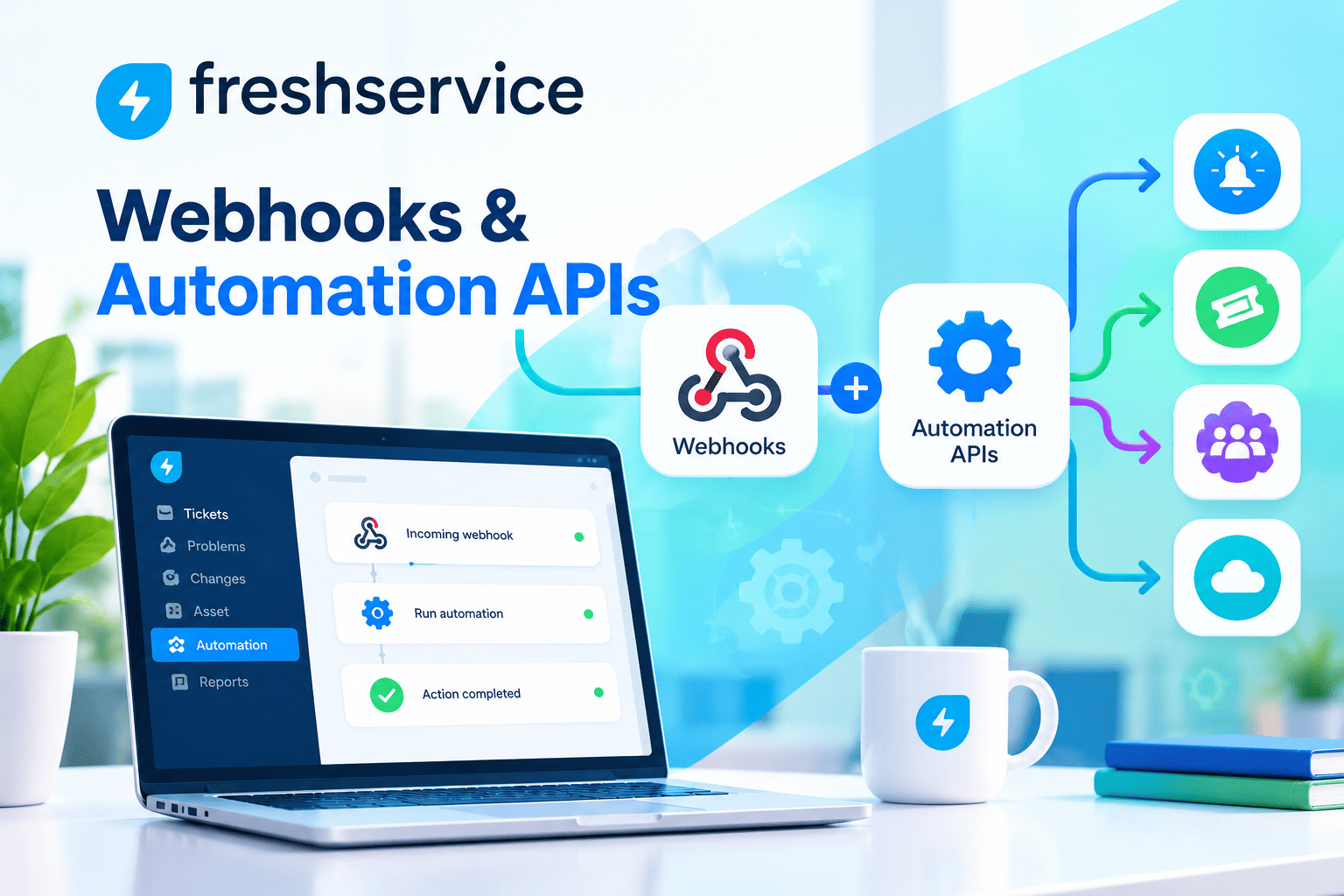
Hidden ITSM Functionality That Matters

In today’s rapidly evolving technological landscape, IT Service Management (ITSM) platforms have become indispensable tools for organizations striving to deliver exceptional service quality. However, beneath the surface of standard ticketing and incident management capabilities lies a treasure trove of hidden functionality that many IT teams overlook. These powerful yet underutilized features can dramatically transform service delivery, enhance operational efficiency, and unlock unprecedented value from your ITSM investment.
Table of Contents
- Quick Summary
- What is ITSM?
- Leading ITSM Platforms: A Closer Look
- Platform Comparison Overview
- Hidden ITSM Functionality That Transforms Service Delivery
- Summing up
- Frequently Asked Questions
- Benefits of Cooperation with Solution for Guru Company
Quick Summary
This comprehensive guide explores the hidden functionality within leading ITSM platforms that can revolutionize your IT service delivery. We examine three industry-leading solutions—Freshservice, ManageEngine, and Zendesk—revealing powerful yet often overlooked features including advanced analytics, predictive intelligence, sophisticated automation capabilities, asset relationship mapping, and cost optimization tools. Furthermore, we provide actionable insights on leveraging these hidden functionalities to enhance operational efficiency, reduce costs, and deliver superior service experiences. Whether you’re evaluating ITSM platforms or seeking to maximize your current investment, this article illuminates the path to unlocking hidden value within your ITSM ecosystem.
What is ITSM?
IT Service Management represents a comprehensive approach to designing, delivering, managing, and improving the way information technology is utilized within an organization. Essentially, ITSM encompasses the entirety of activities, policies, and processes that organizations employ to implement, manage, and support IT services throughout their lifecycle. The discipline focuses on aligning IT services with business needs while maintaining a customer-centric approach to service delivery.
At its core, ITSM provides structured frameworks such as ITIL (Information Technology Infrastructure Library), which guide organizations in establishing best practices for incident management, problem management, change management, service catalog management, and asset management. Consequently, modern ITSM platforms translate these frameworks into practical, user-friendly software solutions that enable IT teams to work more efficiently, respond to incidents faster, and proactively prevent service disruptions.
Moreover, contemporary ITSM extends far beyond traditional helpdesk functions. Today’s platforms incorporate artificial intelligence, machine learning, automation, and advanced analytics to deliver predictive insights, streamline workflows, and enhance user experiences. Additionally, ITSM solutions integrate seamlessly with numerous business applications, creating unified ecosystems that break down silos and facilitate collaboration across departments.
Organizations implementing robust ITSM practices typically experience measurable improvements in service quality, reduced downtime, enhanced employee productivity, and better alignment between IT operations and strategic business objectives. Therefore, understanding ITSM isn’t merely about adopting software—it represents a fundamental shift toward treating IT as a service provider with clearly defined offerings, service level agreements, and continuous improvement mechanisms.
Leading ITSM Platforms: A Closer Look
Freshservice: The Modern Approach
Freshservice has emerged as a powerful cloud-based ITSM solution that combines intuitive design with enterprise-grade functionality. Built on the Freshworks platform, this solution delivers comprehensive service management capabilities while maintaining remarkable ease of use. Specifically relevant to hidden functionality, Freshservice excels in areas that many users never fully explore, including its advanced automation engine, AI-powered service catalog, and sophisticated asset management capabilities.
The platform’s hidden strengths include its Freddy AI capabilities, which power intelligent ticket assignment, sentiment analysis, and predictive field suggestions that dramatically reduce resolution times. Furthermore, Freshservice offers extensive API capabilities and pre-built integrations that enable organizations to create seamless workflows across their entire technology stack. The platform’s reporting and analytics features extend well beyond standard dashboards, offering customizable widgets, trend analysis, and predictive insights that help IT leaders make data-driven decisions.
Additionally, Freshservice provides robust change management workflows, problem management capabilities, and release management features that often go underutilized despite their potential to prevent recurring incidents and streamline deployment processes. The platform’s mobile application delivers full-featured ITSM capabilities on the go, while its service catalog can be customized to create self-service experiences that reduce ticket volume and empower end users.
ManageEngine: Enterprise Versatility

ManageEngine ServiceDesk Plus represents a comprehensive ITSM solution designed to meet the complex needs of enterprise organizations. This platform stands out for its depth of functionality across IT operations management, asset management, and project management domains. In relation to hidden functionality, ManageEngine offers an extensive array of advanced features that many organizations never fully leverage, particularly in areas of IT asset lifecycle management, software license optimization, and advanced reporting capabilities.
The platform’s hidden gems include its powerful business rules engine, which enables sophisticated automation scenarios beyond basic ticket routing. Moreover, ManageEngine provides comprehensive CMDB (Configuration Management Database) capabilities with automatic relationship mapping, dependency visualization, and impact analysis features that prove invaluable during change planning and incident resolution. The solution’s advanced analytics module includes SLA tracking, trend analysis, and customizable dashboards that deliver actionable insights into service performance.
Notably, ManageEngine’s integration capabilities extend to network monitoring, endpoint management, and security tools, creating a unified IT management ecosystem. The platform’s project management module seamlessly connects service requests with project workflows, while its contract management features help organizations track vendor agreements, warranties, and license renewals. These interconnected capabilities enable IT teams to manage their entire technology landscape from a single platform, though many organizations utilize only a fraction of these powerful features.
Zendesk: Customer-Centric Service
Zendesk brings its renowned customer service expertise to the ITSM domain, offering solutions that prioritize user experience and omnichannel support. While traditionally known for external customer support, Zendesk has expanded its capabilities to serve internal IT service management needs with equal effectiveness. Regarding hidden functionality, Zendesk excels in conversational support, AI-powered automation, and creating seamless experiences across multiple communication channels.
The platform’s lesser-known capabilities include its sophisticated macros and triggers system, which enables complex automation scenarios that can handle multi-step workflows without human intervention. Furthermore, Zendesk’s Answer Bot utilizes machine learning to suggest relevant knowledge base articles and automatically resolve common requests before they reach human agents. The platform’s reporting and analytics suite extends far beyond basic metrics, offering cohort analysis, funnel reporting, and custom SQL queries for advanced users.
Particularly relevant to hidden ITSM functionality, Zendesk provides extensive customization options through its apps marketplace, where organizations can add specialized capabilities ranging from time tracking to advanced SLA management. The platform’s API-first architecture enables deep integrations with virtually any enterprise system, while its Sunshine platform provides a flexible foundation for building custom applications and workflows. Additionally, Zendesk’s collaboration features facilitate seamless communication between IT teams and end users through side conversations, internal notes, and collaborative ticketing features.
Platform Comparison Overview
| Feature Category | |  |  |
|---|---|---|---|
| AI & Automation | Freddy AI for predictions, automated categorization, smart suggestions | Advanced business rules, workflow automation, scripted actions | Answer Bot, automated responses, intelligent routing, macros |
| Asset Management | Comprehensive discovery, relationship mapping, contract tracking | Deep CMDB integration, automated discovery, lifecycle management | Basic asset tracking with customizable fields and integrations |
| Analytics & Reporting | Customizable dashboards, trend analysis, predictive insights | Advanced analytics module, SLA tracking, custom report builder | Explore analytics, custom metrics, cohort analysis, SQL queries |
| Integration Capabilities | Pre-built integrations, REST API, marketplace apps | Extensive API, native integrations with ManageEngine suite | Robust API, extensive app marketplace, Sunshine platform |
| Knowledge Management | AI-suggested articles, collaborative editing, multi-language support | Integrated knowledge base, article analytics, approval workflows | Advanced search, AI recommendations, content blocks, multilingual |
| Change Management | Visual workflows, approval processes, CAB scheduling | Comprehensive change control, impact analysis, rollback planning | Change tracking with approval workflows and automation triggers |
| Self-Service Portal | Customizable portal, service catalog, employee onboarding | Fully branded portals, catalog management, custom forms | Highly customizable help centers, Guide theme engine, multilingual |
| Mobile Capabilities | Full-featured iOS/Android apps with offline support | Mobile app for technicians and end users, field service features | Mobile SDK, native apps, responsive web interface |
| Pricing Model | Tiered subscription, per-agent pricing | Flexible licensing, perpetual and subscription options | Tiered plans, per-agent pricing, enterprise customization |
| Deployment Options | Cloud-based SaaS | Cloud and on-premise options available | Primarily cloud-based with enterprise hosting options |
Hidden ITSM Functionality That Transforms Service Delivery
Advanced Analytics and Predictive Intelligence
Beyond standard reporting dashboards, modern ITSM platforms like Freshservice, ManageEngine, and Zendesk offer sophisticated analytics capabilities that remain largely untapped by many organizations. These hidden analytical powerhouses enable IT leaders to move from reactive firefighting to proactive service optimization.
Predictive analytics within these platforms analyze historical ticket data, seasonal trends, and service patterns to forecast potential incidents before they occur. For instance, Freshservice’s analytics engine can identify patterns indicating imminent hardware failures, allowing IT teams to perform preventive maintenance before systems fail. Similarly, ManageEngine’s trend analysis capabilities help organizations anticipate capacity requirements, staffing needs, and budget allocations based on historical service demand patterns.
Moreover, these platforms provide cohort analysis that segments users, departments, or service types to reveal hidden inefficiencies. By examining which user groups generate the most tickets, which services experience the longest resolution times, or which technicians demonstrate the highest first-contact resolution rates, organizations can target improvement efforts where they’ll deliver maximum impact. Consequently, teams can allocate resources more effectively, identify training opportunities, and optimize service delivery processes.
Additionally, custom reporting capabilities within these ITSM solutions allow organizations to create executive dashboards that translate technical metrics into business-relevant insights. Instead of simply tracking ticket volumes, these advanced reports can demonstrate IT’s contribution to business objectives, quantify cost savings from automation initiatives, or measure the impact of service improvements on employee productivity. Therefore, IT departments can better communicate their value to organizational leadership and secure support for strategic initiatives.
Workflow Automation Beyond Basic Tickets
While most organizations utilize basic automation for ticket routing and assignment, the true power of ITSM automation extends far beyond these fundamental capabilities. Freshservice, ManageEngine, and Zendesk each provide sophisticated workflow engines that can orchestrate complex, multi-step processes across numerous systems and stakeholders.
Advanced automation scenarios include orchestrating entire onboarding workflows that automatically provision accounts, assign hardware, schedule training, and track completion across multiple systems. When an HR system creates a new employee record, these ITSM platforms can trigger cascading workflows that coordinate activities across IT, facilities, security, and other departments without manual intervention. Subsequently, these automated processes ensure consistent experiences, reduce onboarding time, and eliminate the errors inherent in manual coordination.
Furthermore, intelligent escalation workflows go beyond simple time-based rules. Modern ITSM platforms can analyze ticket content, sentiment, business impact, and historical patterns to determine optimal escalation paths. For example, Freshservice can automatically escalate tickets containing keywords indicating security incidents while simultaneously notifying security teams, creating related problem records, and triggering communication workflows to affected users. This level of sophisticated automation dramatically reduces response times for critical incidents.
Event-driven automation represents another underutilized capability within these platforms. By integrating with monitoring tools, cloud platforms, and business applications, ITSM solutions can automatically create incidents, launch remediation workflows, or trigger change management processes based on external events. ManageEngine excels in this area, offering bidirectional integrations that not only react to events but can also trigger actions in connected systems, creating truly orchestrated IT operations.
Asset Discovery and Relationship Mapping
One of the most powerful yet overlooked capabilities within ITSM platforms involves comprehensive asset management and relationship mapping. While basic asset tracking is widely understood, the advanced discovery, lifecycle management, and dependency visualization features within Freshservice, ManageEngine, and Zendesk remain underutilized despite their transformative potential.
Automated asset discovery continuously scans network infrastructure to maintain accurate, real-time inventories of hardware, software, cloud resources, and virtual assets. ManageEngine particularly excels in this domain, offering agent-based and agentless discovery mechanisms that identify assets, extract detailed specifications, track installed software, and monitor license compliance without manual data entry. Consequently, organizations maintain current asset inventories that support accurate reporting, budgeting, and decision-making.
Relationship mapping creates comprehensive configuration management databases (CMDBs) that document dependencies between applications, infrastructure components, and business services. These relationship maps prove invaluable during incident resolution, enabling technicians to quickly understand how individual component failures impact broader services. For example, when a database server experiences issues, the CMDB immediately reveals which applications depend on that database, which users access those applications, and which business processes might be affected.
Moreover, impact analysis capabilities leverage these relationship maps to assess proposed changes before implementation. By visualizing dependencies and relationships, change managers can predict potential impacts, identify stakeholders who require notification, and plan appropriate testing strategies. Freshservice’s visual relationship mapping makes these complex dependencies understandable at a glance, enabling more informed decision-making throughout the change management process.
Asset lifecycle management features track assets from procurement through retirement, capturing warranty information, maintenance schedules, contract renewals, and depreciation data. This comprehensive lifecycle visibility enables proactive management, ensuring organizations renew critical contracts before expiration, replace aging hardware before failure, and optimize asset utilization across their technology estate. Furthermore, these platforms can trigger automated workflows when assets approach warranty expiration, contract renewal dates, or end-of-life milestones.
Self-Service Portal Customization

The self-service portal represents far more than a simple ticket submission interface—it’s a powerful tool for reducing service desk workload, empowering end users, and delivering exceptional service experiences. However, many organizations barely scratch the surface of their ITSM platform’s self-service capabilities, missing opportunities to deflect routine requests and enable user independence.
Advanced service catalog functionality within Freshservice, ManageEngine, and Zendesk enables organizations to create comprehensive, categorized offerings that guide users through complex request processes. Rather than presenting users with overwhelming forms, modern service catalogs use conditional logic, progressive disclosure, and intelligent defaults to simplify request submission. For instance, when requesting a new laptop, the catalog can automatically suggest appropriate specifications based on the user’s role, department, and previous requests.
Knowledge base integration transforms self-service portals from ticket submission tools into comprehensive support resources. Zendesk’s Guide platform demonstrates this capability exceptionally well, offering powerful search functionality, AI-recommended articles, and content that adapts based on user behavior and feedback. When users search for solutions, the system learns which articles successfully resolve issues, automatically surfacing the most helpful content for similar future queries.
Personalization capabilities allow these platforms to tailor self-service experiences based on user attributes, previous interactions, and departmental affiliations. Users can be presented with relevant service offerings, targeted announcements, and customized interfaces that reflect their specific needs and preferences. ManageEngine’s portal customization options enable organizations to create department-specific views, multilingual interfaces, and branded experiences that align with corporate identity standards.
Integration Ecosystem Management
The true power of modern ITSM platforms lies not in their standalone capabilities but in their ability to orchestrate workflows across an organization’s entire technology ecosystem. Hidden integration capabilities within Freshservice, ManageEngine, and Zendesk enable seamless connectivity with hundreds of business applications, creating unified experiences that transcend traditional system boundaries.
Pre-built integrations eliminate the technical complexity traditionally associated with system connectivity. All three platforms offer extensive marketplace ecosystems where organizations can discover and deploy integrations with popular collaboration tools, monitoring solutions, cloud platforms, and business applications. For example, integrating ITSM platforms with Microsoft Teams or Slack enables users to receive notifications, submit requests, and check ticket status without leaving their preferred communication tools.
API-first architectures provide unlimited customization possibilities for organizations with unique integration requirements. Comprehensive REST APIs enable developers to programmatically access virtually every platform function, creating custom integrations that align precisely with organizational workflows. Zendesk‘s API documentation and developer resources particularly stand out, offering detailed guides, code examples, and sandbox environments that accelerate integration development.
Furthermore, integration health monitoring ensures connected systems remain operational and synchronized. ManageEngine provides integration dashboards that track connection status, data synchronization success rates, and error conditions, enabling proactive management of integration infrastructure. When integrations fail, automated alerts notify administrators immediately, minimizing service disruptions and data inconsistencies.
Knowledge Management Intelligence

Beyond basic knowledge base functionality, sophisticated knowledge management features within leading ITSM platforms drive continuous improvement, accelerate resolution times, and reduce recurring incidents. However, these intelligent capabilities often remain dormant within organizations that treat knowledge management as a secondary priority.
AI-powered article suggestions automatically recommend relevant knowledge base content to technicians while they work on tickets. By analyzing ticket descriptions, categories, and historical resolution patterns, these systems surface articles that have successfully resolved similar issues in the past. Freshservice‘s intelligent article recommendations reduce the time technicians spend searching for solutions, enabling faster resolution and more consistent service quality.
Collaborative authoring workflows ensure knowledge articles maintain accuracy and relevance through structured review processes. Rather than allowing individuals to publish content without oversight, these platforms support draft creation, peer review, approval workflows, and scheduled content reviews. ManageEngine‘s knowledge management module includes version control, change tracking, and rollback capabilities that maintain content integrity while enabling continuous improvement.
Usage analytics reveal which articles deliver value and which require improvement. By tracking article views, helpfulness ratings, search terms that lead to articles, and correlation between article usage and successful ticket resolution, organizations can identify content gaps, update outdated information, and create new articles addressing emerging issues. Consequently, knowledge bases evolve dynamically to meet changing support needs.
Additionally, contextual knowledge insertion enables technicians to seamlessly incorporate knowledge base content into ticket responses. Rather than copying and pasting between systems, these platforms allow agents to search, preview, and insert knowledge articles directly into responses, ensuring consistent communication while accelerating response times.
Cost Optimization Features
Hidden within ITSM platforms are powerful capabilities designed to reduce IT costs, optimize resource allocation, and demonstrate return on investment. Organizations that overlook these features miss opportunities to justify their ITSM investments and identify significant savings opportunities across their technology estates.
License management features track software entitlements, monitor actual usage, and identify optimization opportunities. ManageEngine‘s software asset management capabilities discover installed applications, compare against purchased licenses, identify unused licenses, and flag compliance risks. By reclaiming unused licenses, negotiating renewals based on actual usage, and preventing unauthorized software deployment, organizations can reduce software costs substantially while maintaining compliance.
Cost allocation and chargeback capabilities attribute IT costs to specific departments, projects, or cost centers. By tracking time spent on service requests, hardware allocated to departments, and software licenses consumed by business units, organizations can implement transparent cost allocation models that encourage responsible resource consumption. These features transform IT from a cost center into a service provider with clear pricing and accountability.
Automation ROI tracking quantifies the business value delivered by workflow automation initiatives. By measuring time saved through automation, tickets deflected through self-service, and reduced escalation rates from intelligent routing, organizations can demonstrate concrete returns on their ITSM investments. Zendesk‘s analytics capabilities include workforce management features that calculate productivity improvements, enabling IT leaders to justify continued investment in automation and process optimization.
Furthermore, service request optimization identifies opportunities to standardize, automate, or eliminate frequently requested services. By analyzing request patterns, processing times, and resource consumption, these platforms reveal inefficient processes that consume disproportionate resources. Subsequently, organizations can redesign service offerings, implement better automation, or establish policies that reduce unnecessary work.
Compliance and Audit Capabilities
Regulatory compliance and audit preparation represent critical responsibilities for IT organizations, yet many overlook powerful compliance features embedded within their ITSM platforms. These capabilities automate evidence collection, enforce process adherence, and simplify audit preparation across various regulatory frameworks.
Audit trails automatically log every action, change, and access event within the ITSM platform, creating comprehensive records that satisfy regulatory requirements. ManageEngine’s audit logging captures user activities, configuration changes, data modifications, and administrative actions with precise timestamps and user attribution. During audits, organizations can quickly produce detailed evidence demonstrating process adherence and control effectiveness.
Compliance workflow enforcement ensures critical processes follow established procedures consistently. By configuring mandatory approval checkpoints, required documentation, and sequential workflow stages, organizations prevent shortcuts that could create compliance violations. For example, change management processes can require documented business justification, technical review, approval from designated authorities, and post-implementation verification before changes are deployed to production.
Reporting templates
Reporting templates aligned with common regulatory frameworks simplify compliance documentation. Rather than manually compiling evidence for SOC 2, ISO 27001, or HIPAA audits, these platforms provide pre-configured reports that demonstrate control implementation and effectiveness. Freshservice offers customizable report templates that map platform capabilities to specific compliance requirements, accelerating audit preparation significantly.
Data retention policies
Data retention policies ensure historical records remain accessible for required periods while automatically archiving or deleting data beyond retention requirements. These policies balance regulatory obligations with storage optimization, maintaining compliance while controlling data growth. Additionally, role-based access controls restrict sensitive information access to authorized personnel, demonstrating appropriate data protection.
Security features
Security features including encryption, single sign-on integration, multi-factor authentication, and session management protect ITSM data while satisfying information security requirements. Zendesk‘s enterprise security capabilities include IP whitelisting, advanced authentication options, and security event logging that align with stringent security frameworks. These features not only protect organizational data but also provide evidence of security control implementation during audits.
Summing up
Throughout this exploration of hidden ITSM functionality, we’ve uncovered powerful capabilities within Freshservice, ManageEngine, and Zendesk that extend far beyond basic ticketing and incident management. These advanced features—spanning predictive analytics, sophisticated automation, comprehensive asset management, intelligent knowledge systems, and robust compliance capabilities—represent untapped potential within organizations’ existing ITSM investments.
The platforms we’ve examined each bring unique strengths to the table. Freshservice excels with its intuitive interface and AI-powered capabilities that democratize advanced functionality for teams of all technical levels. ManageEngine delivers enterprise-grade depth across asset management, integration capabilities, and comprehensive lifecycle management features. Meanwhile, Zendesk brings its customer-centric philosophy to internal service management, offering exceptional self-service experiences and omnichannel support capabilities.
Ultimately, realizing value from these hidden capabilities requires intentional effort. Organizations must move beyond initial implementations focused solely on core ticketing functionality and invest time in exploring, configuring, and adopting these advanced features. The return on this investment manifests through reduced operational costs, improved service quality, enhanced employee productivity, and better alignment between IT operations and business objectives.
Moreover, successful ITSM optimization isn’t a one-time project but an ongoing journey. As these platforms continue evolving with new capabilities, AI enhancements, and integration options, organizations that regularly reassess their usage patterns and explore newly released features will maintain competitive advantages through superior service delivery.
For organizations embarking on this optimization journey, partnering with experienced ITSM consultants can accelerate time-to-value while avoiding common implementation pitfalls. Specialists who understand the nuances of Freshservice, ManageEngine, and Zendesk can identify configuration opportunities, design workflows that leverage hidden capabilities, and transfer knowledge to internal teams, ensuring sustainable long-term success.
Frequently Asked Questions
The most impactful yet overlooked features include automated asset discovery and relationship mapping, which maintain accurate CMDBs without manual effort; advanced workflow automation that extends beyond basic ticket routing to orchestrate complex multi-system processes; and intelligent knowledge management with AI-powered article suggestions that accelerate resolution times. Additionally, self-service portal customization with conditional logic and personalized experiences significantly reduces ticket volumes while improving user satisfaction. Organizations implementing these features typically see measurable improvements within weeks, including reduced ticket volumes, faster resolution times, and decreased manual work for IT teams.
Start by conducting a thorough assessment of current pain points, inefficiencies, and business objectives. Analyze ticket data to identify recurring issues, time-consuming manual processes, and service areas with poor satisfaction scores. Then review your ITSM platform’s advanced capabilities against these identified needs. For instance, organizations struggling with software license costs should explore license optimization features, while those facing compliance requirements should investigate audit trail and workflow enforcement capabilities. Engaging with ITSM platform vendors, consulting documentation, and participating in user communities can reveal relevant features aligned with your specific challenges. Additionally, partnering with experienced consultants who understand both your business context and platform capabilities can accelerate this discovery process significantly.
Benefits of Cooperation with Solution for Guru Company
Navigating the complex landscape of ITSM platforms and unlocking their hidden functionality requires expertise, experience, and strategic insight. This is where partnership with Solution for Guru delivers transformative value for organizations seeking to maximize their ITSM investments.
Solution for Guru brings deep technical expertise across leading ITSM platforms including Freshservice, ManageEngine, and Zendesk. Their consultants don’t simply implement software—they design comprehensive service management strategies aligned with your business objectives, operational realities, and growth trajectory. By understanding your unique challenges and opportunities, they configure platforms to leverage hidden functionality that directly addresses your specific needs rather than deploying generic implementations.
Training and knowledge transfer represent core components of every Solution for Guru engagement. Rather than creating dependency, they invest in building internal capabilities through hands-on training, detailed documentation, and mentoring that enables your team to independently manage and optimize ITSM platforms long after engagement completion.
In conclusion, while powerful ITSM platforms provide the foundation for exceptional service delivery, realizing their full potential requires expertise, strategic vision, and ongoing optimization. Partnering with Solution for Guru ensures your organization not only implements leading ITSM technology but truly leverages hidden functionality that drives measurable business value, operational excellence, and sustained competitive advantage.
Recommended:
- Core ITSM Processes: A Comprehensive Guide to Service Management Excellence
- How Knowledge Management Enhances ITSM Quality?
- ITSM Change Management
- ITSM Integration: Streamlining IT Service Management for Modern Enterprises
- ITSM Problem Management
- What Are ITSM Ticketing Tools?
- ITSM Jobs: Your Guide to a Thriving Career in IT Service Management
- Why are ITSM Best Practices essential?
- What is an IT Management Service Provider?
- Comprehensive Guide to ITSM Tools: Features, Benefits, and Top Solutions
- What is IT Service Management (ITSM)?