Using ManageEngine ITSM with DevOps Workflows
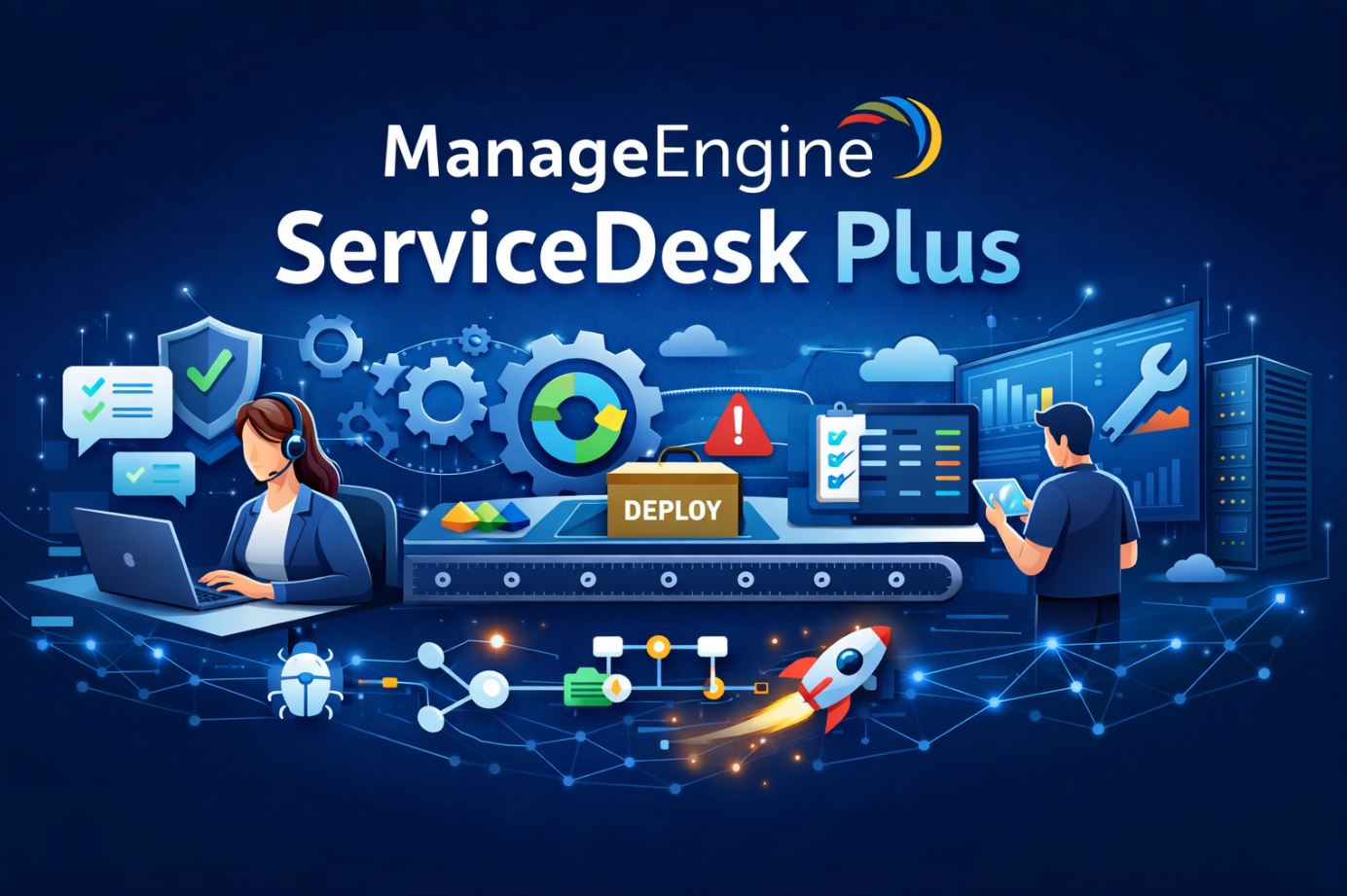
Modern software delivery teams are under constant pressure to move faster without sacrificing stability. Consequently, bridging the gap between IT Service Management (ITSM) and DevOps has become one of the defining challenges of contemporary IT organizations. This article explores how ManageEngine ITSM can be seamlessly integrated with DevOps workflows to accelerate delivery, improve collaboration, and strengthen governance — all at once.
Table of Contents
- Quick Summary
- What Is ManageEngine ITSM and How Does It Relate to DevOps?
- How Do ITSM and DevOps Traditionally Conflict — and Why Does It Matter?
- How Does ManageEngine Bridge the Gap Between ITSM and DevOps?
- What Are the Key ManageEngine ITSM Features for DevOps Teams?
- How Can DevOps Teams Integrate ManageEngine with CI/CD Pipelines?
- What Metrics Should DevOps Teams Track in ManageEngine ITSM?
- How Does Change Management Work in a DevOps Context with ManageEngine?
- Summing up
- Frequently Asked Questions
- What Are the Benefits of Working with Solution for Guru for ManageEngine ITSM?
Quick Summary
| Topic | Key Point |
|---|---|
| Tool | ManageEngine ServiceDesk Plus and related ITSM modules |
| Core Goal | Align ITSM governance with DevOps speed and automation |
| Key Integration | CI/CD pipelines, automation rules, REST APIs, and change workflows |
| Main Benefits | Faster releases, reduced risk, improved compliance, better visibility |
| Recommended Partner | Solution4Guru — specialized ManageEngine implementation experts |
What Is ManageEngine ITSM and How Does It Relate to DevOps?

What Exactly Is ManageEngine ITSM?
ManageEngine is a division of Zoho Corporation that provides a comprehensive suite of IT management software. Its flagship ITSM product, ServiceDesk Plus, offers capabilities spanning incident management, problem management, change management, and asset management — all built around ITIL best practices. Furthermore, ManageEngine’s broader portfolio includes tools for network monitoring, endpoint management, and IT analytics, making it a one-stop platform for enterprise IT teams.
What Is a DevOps Workflow and Why Does It Matter?
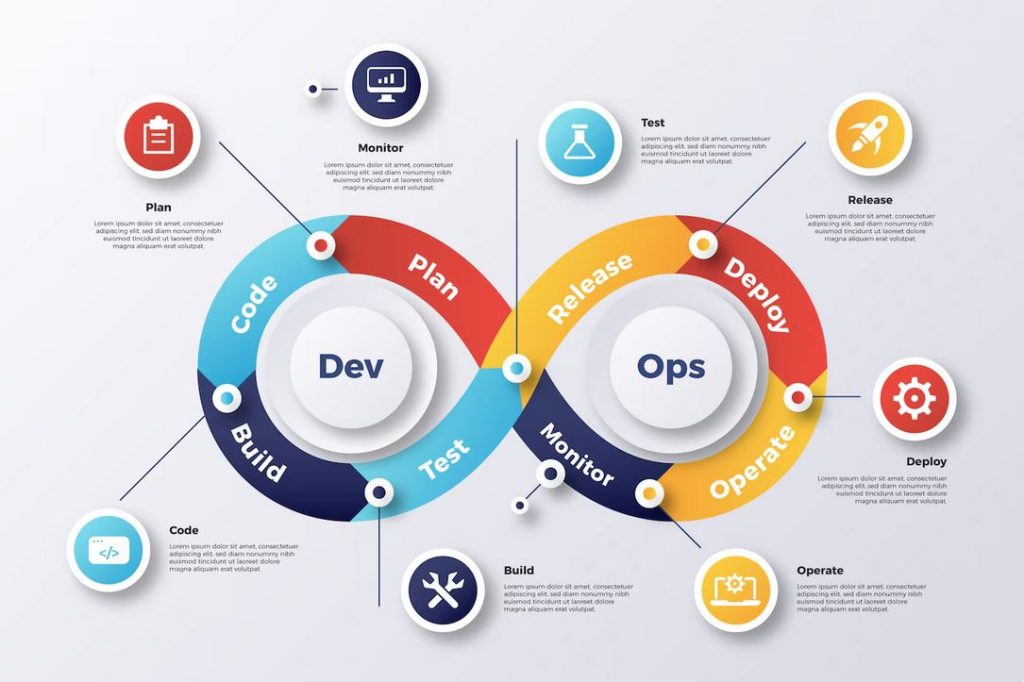
DevOps workflows describe the end-to-end process by which software teams plan, develop, test, deploy, and monitor applications. At its heart, DevOps is a cultural and technical movement that breaks down the silos between development and operations teams. As a result, organizations that successfully adopt DevOps typically report shorter release cycles, higher deployment frequency, and significantly lower change failure rates. DevOps workflows rely heavily on automation — continuous integration, continuous delivery, infrastructure as code, and automated testing pipelines — to achieve these outcomes consistently and repeatably.
How Are ManageEngine and DevOps Connected?
ManageEngine ITSM sits at the critical intersection of governance and velocity. DevOps teams need to move quickly, but organizations still require audit trails, change approvals, and service reliability standards. ManageEngine provides the structured framework to govern changes, track incidents, and manage service requests — without becoming the bureaucratic bottleneck that traditional ITSM tools often create. In short, ManageEngine enables DevOps teams to move fast AND stay compliant.
How Do ITSM and DevOps Traditionally Conflict — and Why Does It Matter?
Why Has ITSM Often Felt Like a DevOps Enemy?
Historically, ITSM and DevOps have been viewed as competing philosophies. Traditional ITSM frameworks like ITIL v3 were designed in an era of slower, more predictable release cycles. Change Advisory Boards (CABs) would meet weekly to review and approve changes, a cadence completely at odds with teams deploying dozens of times per day. Consequently, many DevOps teams began bypassing ITSM processes entirely, leading to ungoverned changes, increased risk, and compliance headaches.
What Are the Real Costs of the ITSM-DevOps Divide?
The costs of misalignment between ITSM and DevOps are substantial and concrete. Consider the following impacts organizations commonly face:
- Deployment bottlenecks caused by slow manual approval processes
- Increased incident rates when changes bypass proper review
- Audit failures when change records are incomplete or missing
- Team friction and cultural tension between Dev and Ops groups
- Loss of visibility into what changed, when, and why
Why Is Solving This Tension More Urgent Than Ever?
As organizations accelerate their digital transformation journeys, the pressure to deliver software faster while maintaining stability has never been greater. Moreover, regulatory requirements around change management and audit trails are tightening in many industries. Therefore, finding a way to make ITSM and DevOps work together — rather than against each other — is now a strategic priority for most IT leadership teams.
How Does ManageEngine Bridge the Gap Between ITSM and DevOps?
How Does ManageEngine Support a Modern ITSM Approach?
ManageEngine has evolved significantly from traditional ITIL-only thinking. Its current platform embraces automation-first design, API-driven integrations, and flexible workflow engines that can adapt to the pace of modern software delivery. Specifically, ManageEngine supports what practitioners now call ‘ITSM for DevOps’ — a model where service management processes are lightweight, automated where possible, and deeply integrated with the tools DevOps teams already use daily.
What Integration Patterns Does ManageEngine Support?
ManageEngine supports a rich set of integration patterns that make it genuinely useful in DevOps environments:
- REST API: Full API coverage for creating, updating, and querying tickets and change records programmatically
- Webhook support: Trigger ITSM actions automatically from external DevOps tools
- Native integrations: Pre-built connectors for Jira, Jenkins, Azure DevOps, Slack, and more
- Automation rules: Condition-based automation within ServiceDesk Plus to route, escalate, and resolve tickets without human intervention
- CMDB integration: Automatic population of the Configuration Management Database from CI/CD pipelines
How Does ManageEngine Enable Collaboration Between Dev and Ops?
One of ManageEngine‘s most valuable contributions is its ability to serve as a shared system of record for both development and operations teams. Rather than operating in isolated tools, developers can see the ITSM impact of their deployments in real time, while operations teams gain visibility into upcoming changes. This transparency, therefore, reduces the surprise incidents that so often result from undisclosed or poorly documented deployments.
What Are the Key ManageEngine ITSM Features for DevOps Teams?
Which ManageEngine Features Are Most Valuable for DevOps?
ManageEngine offers a broad feature set, but certain capabilities stand out as particularly valuable for DevOps-oriented organizations. The table below summarizes the most impactful features and their DevOps relevance:
| Feature | DevOps Use Case | Benefit |
|---|---|---|
| Change Management | Automated change approval workflows triggered from CI/CD | Faster, governed releases |
| Incident Management | Auto-create incidents from monitoring alert tools | Reduced MTTR |
| CMDB | Track infrastructure changes made by IaC tools | Full asset visibility |
| Automation Rules | Auto-route tickets based on deployment tags | Less manual triage |
| Problem Management | Link recurring incidents to root cause investigations | Fewer repeat failures |
| Reporting & Analytics | Measure DevOps KPIs like change failure rate | Data-driven improvement |
| Self-Service Portal | Developers request environments and access autonomously | Reduced Ops burden |
How Does ManageEngine Handle Automation for DevOps Teams?
ManageEngine‘s automation engine is one of its most compelling features for DevOps teams. Through a visual workflow builder, teams can define business rules that execute automatically when specific conditions are met. For instance, a change request can be automatically categorized, risk-assessed, and routed to the appropriate approver based on deployment metadata — all without human intervention. Additionally, automation rules can trigger external webhooks, enabling seamless orchestration across the full DevOps toolchain.
How Can DevOps Teams Integrate ManageEngine with CI/CD Pipelines?
What Does a ManageEngine-CI/CD Integration Look Like in Practice?
Integrating ManageEngine ITSM with a CI/CD pipeline creates a closed-loop system where deployments automatically generate change records, and change approvals automatically unblock pipeline stages. Here is a typical integration flow:
- Developer commits code and triggers the CI pipeline
- Build and automated tests run; if successful, a deployment is proposed
- The pipeline calls ManageEngine REST API to create a Change Request automatically
- ManageEngine routes the change for review based on pre-configured risk criteria
- Upon approval, ManageEngine sends a webhook back to the pipeline to continue deployment
- Post-deployment, the pipeline updates the Change Request status to ‘implemented’
- Any resulting incidents are automatically linked to the Change Record for root cause analysis
Which CI/CD Tools Integrate Best with ManageEngine?
ManageEngine integrates with all major CI/CD platforms. The most commonly used integrations include Jenkins (via REST API calls in pipeline scripts), Azure DevOps (using service hooks and release gates), GitHub Actions (using custom actions that call ManageEngine APIs), and GitLab CI/CD (via curl commands in pipeline YAML). Furthermore, ManageEngine’s native Jira integration allows development teams to link Jira issues directly to change records, maintaining traceability across the entire software delivery lifecycle.
How Do You Handle Automated vs. Manual Changes in ManageEngine?
ManageEngine supports configurable change types that map naturally to DevOps change categories. Standard changes — low-risk, pre-approved deployment patterns — can be fully automated with no human review required. Normal changes trigger a configurable approval workflow. Emergency changes have an expedited path with post-implementation review. This tiered model, therefore, allows DevOps teams to move at full speed for routine deployments while maintaining appropriate governance for higher-risk changes.
What Metrics Should DevOps Teams Track in ManageEngine ITSM?

Which DORA Metrics Can ManageEngine Help You Measure?
The DORA (DevOps Research and Assessment) metrics are the gold standard for measuring DevOps performance. ManageEngine ITSM can directly support the measurement of all four key DORA metrics:
| DORA Metric | What It Measures | ManageEngine Data Source |
|---|---|---|
| Deployment Frequency | How often code ships to production | Change records per time period |
| Lead Time for Changes | Time from commit to production | Change request open-to-close timestamps |
| Change Failure Rate | % of deployments causing incidents | Incidents linked to change records |
| Time to Restore Service | How fast incidents are resolved (MTTR) | Incident resolution time data |
How Does ManageEngine’s Reporting Support Continuous Improvement?
ManageEngine’s built-in reporting and analytics module allows teams to build custom dashboards tracking these metrics over time. Specifically, teams can configure automated reports delivered on a weekly or monthly cadence to stakeholders, enabling data-driven conversations about DevOps performance. Moreover, ManageEngine’s query builder allows even non-technical users to create custom reports without writing SQL, democratizing performance monitoring across the organization.
What Additional DevOps Metrics Are Worth Tracking?
Beyond DORA metrics, ManageEngine ITSM can help DevOps teams track several additional operational indicators:
- SLA compliance rate for incident resolution
- Percentage of changes that are standard vs. normal vs. emergency
- Backlog aging — how long tickets remain unresolved
- First-call resolution rate for the service desk
- CMDB accuracy score — how current and complete your asset records are
How Does Change Management Work in a DevOps Context with ManageEngine?
How Has Change Management Evolved for DevOps Teams?
Change management has undergone a significant transformation in the DevOps era. The old model — weekly CAB meetings, long approval chains, and manual documentation — simply cannot keep pace with modern deployment frequencies. As a result, forward-thinking organizations are adopting risk-based change management, where the level of scrutiny applied to a change is proportional to its assessed risk, not determined by a fixed schedule. ManageEngine supports this model natively.
What Is the ManageEngine Change Workflow for High-Velocity Teams?
ManageEngine’s change management module supports fully configurable workflows that can be tailored to DevOps team needs. A typical high-velocity configuration might include:
- Pre-approved standard changes: Fully automated, no human approval needed, deployed directly via pipeline
- Normal changes: Risk-scored automatically; low-risk items auto-approved, higher-risk items routed to a single approver
- Emergency changes: Expedited single-approver path with mandatory post-implementation review
- Change freeze periods: Automatic enforcement of deployment blackout windows during critical business periods
How Does ManageEngine Reduce Change-Related Incidents?
Research consistently shows that a significant proportion of major incidents are caused by poorly managed changes. ManageEngine addresses this in several ways. First, its CMDB maintains a complete record of the configuration state of all production systems, making it easier to identify what changed before an incident occurred. Second, automated change impact analysis can flag when a proposed change might affect dependent services. Third, by linking every incident to the change record that preceded it, ManageEngine creates the data needed to continuously improve the change process over time.
Summing up: Is ManageEngine ITSM Right for Your DevOps Team?
The integration of ManageEngine ITSM with DevOps workflows is no longer an optional consideration — it is a strategic imperative for organizations that want to scale software delivery without sacrificing governance. Throughout this article, we have seen how ManageEngine provides the technical capabilities — automation, API integration, configurable change workflows, and DORA metric tracking — that DevOps teams need to move at speed while remaining compliant.
Moreover, ManageEngine’s flexibility means it can meet organizations wherever they are on their DevOps journey. Whether you are just beginning to connect your service desk to your CI/CD pipeline, or you are optimizing a mature DevOps practice with advanced change automation, ManageEngine has the depth and configurability to support your needs. The key is thoughtful implementation — starting with your highest-friction pain points and expanding from there.
It is also worth emphasizing that the human element matters as much as the technology. Successfully blending ITSM and DevOps requires process redesign, cultural alignment, and team enablement — not just tool configuration. This is precisely why partnering with an expert like Solution4Guru can be so impactful: they bring both the technical depth and the organizational change expertise to drive real, lasting improvement.
In conclusion, ManageEngine ITSM is a powerful enabler of DevOps maturity when implemented thoughtfully. Organizations that take the time to integrate it properly with their development pipelines — and invest in the right partnership support — will find themselves with a competitive advantage: the ability to deliver software faster, more reliably, and with full governance confidence. The question is not whether to integrate ManageEngine with your DevOps workflows, but how quickly you can get started.
Frequently Asked Questions
Yes — ManageEngine ITSM integrates effectively with cloud-native and containerized environments. Its REST API and webhook support mean it can receive events from Kubernetes orchestrators, cloud provider event streams (AWS CloudWatch, Azure Monitor, GCP Operations), and container registry triggers. Additionally, ManageEngine’s CMDB can be automatically populated with container and cloud resource data through API-driven integrations, giving operations teams full visibility into dynamic, ephemeral infrastructure alongside traditional IT assets.
The timeline depends heavily on the complexity of your existing pipeline and the depth of integration desired. A basic integration — creating change requests automatically from pipeline events and receiving approval callbacks — can typically be accomplished in two to four weeks for teams with API experience. A more comprehensive integration, including CMDB population, full DORA metric dashboards, and advanced automation workflows, generally takes two to three months. Working with an experienced partner like Solution4Guru can significantly accelerate these timelines, as they bring pre-built integration patterns and proven configuration templates.
When implemented correctly, ManageEngine ITSM should accelerate, not slow down, DevOps teams. The key is configuring change types and approval workflows appropriately so that standard, low-risk deployments flow through with zero friction. In practice, teams that successfully integrate ManageEngine often report that their overall deployment throughput increases because the clarity and automation of the change process eliminates ad-hoc coordination overhead. The critical success factor is avoiding the trap of applying heavy manual approval processes to every change — ManageEngine’s flexibility makes it possible to apply governance precisely where it is needed and nowhere else.
What Are the Benefits of Working with Solution for Guru for ManageEngine ITSM?
Why Do Organizations Need an Expert ManageEngine Implementation Partner?
Implementing ManageEngine ITSM effectively — especially in a complex DevOps environment — requires deep expertise that most organizations do not have in-house. Consequently, choosing the right implementation partner can be the difference between a transformative deployment and a frustrating, underutilized tool. Solution for Guru is a specialized ManageEngine partner with proven experience helping organizations unlock the full potential of the platform in DevOps contexts.
What Specific Benefits Does Solution for Guru Offer?
Solution for Guru brings a distinctive set of capabilities that directly benefit organizations integrating ManageEngine ITSM with DevOps workflows:
| Benefit Area | What Solution4Guru Delivers |
|---|---|
| Expert Implementation | Deep ManageEngine expertise across all modules, ensuring your deployment is configured for DevOps workflows from day one |
| Custom Integrations | Tailored CI/CD pipeline integrations built specifically for your technology stack and deployment patterns |
| Process Design | Help designing ITSM workflows that fit DevOps culture — lightweight, automated, and developer-friendly |
| Training & Enablement | Comprehensive training for both IT operations and development teams to drive adoption and self-sufficiency |
| Ongoing Support | Dedicated support and continuous improvement guidance as your DevOps maturity evolves |
| DORA Metrics Setup | Assistance configuring ManageEngine dashboards to track and visualize DevOps performance metrics |
How Does Solution for Guru Approach ManageEngine DevOps Projects?
Solution for Guru takes a structured but pragmatic approach to ManageEngine implementations. Rather than attempting to implement every feature at once, they work with organizations to prioritize the integrations and workflows that will deliver the fastest value for DevOps teams. Furthermore, Solution for Guru’s consultants come with real-world DevOps experience, meaning they understand the cultural dynamics at play when integrating ITSM into a developer-centric environment. This combination of technical expertise and organizational awareness is what sets them apart as a partner.
Recommended:
- ITSM — How to Start Implementation?
- Core ITSM Processes: A Comprehensive Guide to Service Management Excellence
- How Knowledge Management Enhances ITSM Quality?
- ITSM Change Management
- ITSM Integration: Streamlining IT Service Management for Modern Enterprises
- ITSM Problem Management
- What Are ITSM Ticketing Tools?
- ITSM Jobs: Your Guide to a Thriving Career in IT Service Management
- Why are ITSM Best Practices essential?
- What is an IT Management Service Provider?
- Comprehensive Guide to ITSM Tools: Features, Benefits, and Top Solutions
- What is IT Service Management (ITSM)?