CI/CD, Automation, and Beyond: Core DevOps Practices You Should Implement Today

Software teams today face relentless pressure to ship faster, fail less, and recover instantly. According to the 2026 Accelerate State of DevOps Report published by Google Cloud, elite-performing DevOps teams deploy code 973 times more frequently than low-performing ones and restore service 6,570 times faster after incidents. Those numbers are not coincidental — they reflect deliberate, systematic engineering practices built around CI/CD pipelines, automation, and a culture of continuous improvement. Whether your organization is just beginning its DevOps journey or looking to sharpen existing workflows, understanding these core practices gives you a concrete competitive advantage. This article breaks down everything you need to know, from foundational concepts to advanced implementation strategies, and shows you how tools like monday.com DevOps Software and expert partners such as Solution for Guru can accelerate the journey.
Table of contents
Quick Summary
| Topic | Key Takeaway |
| CI/CD | Automates build, test, and release to shorten feedback loops dramatically. |
| Automation | Eliminates repetitive manual tasks, reduces human error, and frees engineers for creative work. |
| IaC | Manages infrastructure through version-controlled code, ensuring consistency across environments. |
| Testing | Shifts quality checks left, catching bugs earlier when they cost far less to fix. |
| Observability | Gives real-time visibility into system health, enabling faster incident response. |
| DevSecOps | Embeds security into every stage of the pipeline rather than treating it as an afterthought. |
| monday.com | Provides end-to-end DevOps project visibility, sprint planning, and cross-team alignment. |
| Solution for Guru | Offers expert consulting to design, implement, and optimize your entire DevOps ecosystem. |
What Are CI/CD and Automation?
CI/CD stands for Continuous Integration, Continuous Delivery, and Continuous Deployment — three tightly connected practices that together form the backbone of modern software engineering. At its core, CI/CD is a philosophy: write code, integrate it continuously, verify it automatically, and deliver it to users as quickly as responsible engineering allows. Automation is the engine that makes all of this possible, replacing slow, error-prone manual steps with fast, repeatable machine processes.
Continuous Integration means developers merge their code changes into a shared repository many times a day. Each merge automatically triggers a build and a battery of automated tests. The immediate benefit is obvious: teams catch integration bugs within minutes rather than discovering them weeks later during a painful, time-consuming merge conflict resolution session.
Continuous Delivery extends CI by automatically preparing every validated code change for release to production. A human still makes the final deployment decision, but the pipeline ensures the software is always in a deployable state. Continuous Deployment goes one step further, pushing every passing change directly to production without any manual gate — a practice elite organizations like Amazon and Netflix use to deploy thousands of times per day.
Automation, meanwhile, goes far beyond the pipeline itself. It encompasses infrastructure provisioning, configuration management, security scanning, performance testing, log analysis, and incident response. According to GitLab’s 2023 Global DevSecOps Report, teams that adopt comprehensive automation report 57% faster release cycles and significantly higher developer satisfaction — because engineers spend time building features, not babysitting servers.
How Does monday.com DevOps Software Accelerate DevOps Adoption?

One of the most persistent challenges DevOps teams face is not technical — it is organizational. Developers, QA engineers, operations staff, and product managers each track work in silos, creating misalignment that slows delivery. monday.com DevOps Software directly addresses this problem by providing a unified platform where every stakeholder sees the same real-time picture of sprint progress, pipeline status, incident tickets, and release timelines.
monday.com DevOps Software integrates natively with GitHub, GitLab, Jira, PagerDuty, and dozens of other tools your team already uses. Consequently, engineers do not need to leave their workflow to update project status — automations push relevant data directly into monday.com boards. This means product managers always have accurate release forecasts, and leadership gains confidence in delivery commitments without scheduling yet another status meeting.
What Specific Features Make monday.com Valuable for DevOps Teams?
- Sprint Planning Boards — visualize backlog, active sprint, and done columns in a customizable Kanban or Scrum layout
- Pipeline Status Widgets — see CI/CD build health, test results, and deployment status in one dashboard
- Incident Management Templates — respond to production issues with pre-built escalation workflows that notify the right people instantly
- Workload Management — balance engineer capacity across sprints to prevent burnout and bottlenecks
- Automation Recipes — trigger actions (send Slack message, update ticket status, assign reviewer) based on pipeline events
- Custom Dashboards — aggregate KPIs like deployment frequency, lead time, and MTTR for leadership reporting
Furthermore, monday.com‘s no-code automation builder lets operations teams create complex conditional logic — for example, automatically escalating a ticket from P2 to P1 if it remains unresolved for more than 30 minutes and simultaneously paging the on-call engineer. This kind of cross-functional automation, without requiring any engineering time to build, is exactly the leverage DevOps teams need to scale.
Why Do CI/CD Pipelines Matter for Modern Teams?
The business case for CI/CD is compelling and well-documented. The Accelerate book by Nicole Forsgren, Jez Humble, and Gene Kim — based on six years of DevOps research — demonstrates a clear link between CI/CD adoption and organizational performance. Teams with mature pipelines not only deploy more frequently but also experience significantly lower change failure rates. In other words, speed and stability are not competing forces; proper CI/CD achieves both simultaneously.
Consider what happens without a pipeline. A developer finishes a feature after two weeks of work and submits it for review. Another developer submits a conflicting change. The team spends days resolving conflicts, manually testing on a shared staging environment, and waiting for someone with production access to deploy. A bug slips through because the staging environment differs from production in subtle ways. A hotfix goes out at 11 PM on a Friday. This scenario is frustratingly common — and entirely preventable.
With a CI/CD pipeline in place, the same feature goes through automated linting, unit tests, integration tests, security scans, and a deployment to a staging environment that mirrors production exactly — all within 15 minutes of the developer pushing code. If anything breaks, the developer learns immediately and fixes it in context, while the problem is fresh. If everything passes, the change moves toward release automatically. The cognitive overhead drops dramatically, and the team’s confidence in its own software rises just as dramatically.
How Does Continuous Integration Work in Practice?
A typical CI workflow starts the moment a developer pushes a branch to the shared repository. The CI server — Jenkins, GitHub Actions, GitLab CI, CircleCI, or a similar tool — detects the push and triggers a pipeline run. The pipeline first compiles or builds the application to verify the code is syntactically correct and all dependencies resolve. It then runs the unit test suite, which should complete in under ten minutes for most projects. If unit tests pass, integration tests run against real database and API dependencies spun up in isolated containers.
Static analysis tools run in parallel: linters enforce code style, SAST (Static Application Security Testing) tools scan for known vulnerability patterns, and dependency checkers flag outdated or insecure third-party libraries. A code coverage tool ensures the new code ships with adequate test coverage. Throughout all of this, the pipeline produces detailed logs and a clear pass/fail status. If any step fails, the pipeline stops and immediately notifies the developer via Slack, email, or a monday.com automation.
The key discipline CI requires is keeping the main branch always green — never committing broken code that blocks other developers. Teams enforce this through branch protection rules that prevent merging unless the CI pipeline passes. Trunk-based development, where developers merge small changes directly to the main branch multiple times per day rather than maintaining long-lived feature branches, takes this discipline to its logical extreme and further reduces integration risk.
How Does Continuous Delivery Differ from Continuous Deployment?
This distinction trips up many teams. Continuous Delivery means the pipeline automatically prepares code for release — building artifacts, running tests, deploying to staging — but a human explicitly approves each production deployment. Continuous Deployment removes that human gate entirely; if all automated checks pass, production deployment happens automatically.
For many regulated industries — healthcare, finance, government — Continuous Delivery is the appropriate model because compliance frameworks require explicit human sign-off on production changes. For consumer web applications and SaaS products without strict regulatory constraints, Continuous Deployment maximizes speed and eliminates the latency between ‘code is ready’ and ‘users have it.’
Importantly, teams do not need to start with Continuous Deployment. Even Continuous Integration alone — without automated deployment — delivers massive value by catching bugs early. Teams should build maturity progressively: first nail CI, then automate staging deployments, then introduce feature flags and canary releases to manage production risk, and finally graduate to full Continuous Deployment when confidence in the pipeline is high.
| Practice | Who Approves Production? | Best For |
| Continuous Integration | N/A — no auto-deploy | All teams starting DevOps |
| Continuous Delivery | Human approval required | Regulated industries, risk-averse orgs |
| Continuous Deployment | Fully automated | High-velocity SaaS, consumer apps |
What Is Infrastructure as Code and Why Should You Care?

Infrastructure as Code (IaC) treats servers, networks, databases, and cloud resources the same way developers treat application code: written in a declarative or imperative language, stored in version control, reviewed via pull requests, and applied automatically by a pipeline. Tools like Terraform, Pulumi, AWS CloudFormation, and Ansible make this possible across every major cloud platform.
The productivity argument for IaC is straightforward. Manually provisioning a development, staging, and production environment takes days or weeks and inevitably produces subtle differences that cause ‘works on my machine’ bugs. With IaC, a single command spins up an identical environment in minutes. Developers can provision their own sandboxes, experiment freely, and destroy resources when done — with zero risk of accumulating forgotten cloud costs.
The reliability argument is equally compelling. Every infrastructure change goes through the same code review and automated validation process as application code. Drift — where the actual state of infrastructure diverges from its intended state — becomes detectable and correctable automatically. Disaster recovery transforms from a multi-day manual scramble into a pipeline run that rebuilds the entire environment from code in hours.
Which IaC Tools Should Your Team Use?
- Multi-cloud IaC for provisioning infrastructure declaratively across AWS, Azure, GCP, and 300+ providers. The industry standard for cloud-agnostic infrastructure.: Terraform
- Agentless configuration management that works over SSH, ideal for configuring servers and deploying applications without installing additional software.: AnsibleAnsible
- IaC using real programming languages (TypeScript, Python, Go) instead of custom DSLs, giving teams the full power of software engineering for infrastructure.: PulumiPulumi
- Cloud-native IaC solutions tightly integrated with each provider’s ecosystem.: AWS CDK / Azure Bicep / GCP Deployment Manager
- A thin wrapper around Terraform that adds DRY (Don’t Repeat Yourself) patterns, remote state management, and dependency management for large-scale IaC codebases.: TerragruntTerragrunt
Whichever tool your team chooses, the critical discipline is the same: no manual changes in production. Every infrastructure modification — from changing an autoscaling threshold to rotating a TLS certificate — flows through the IaC pipeline. This single rule eliminates an enormous category of incidents caused by undocumented manual changes that nobody can reproduce or reverse.
How Do Automated Testing Strategies Strengthen Your Pipeline?
Automated testing is the foundation upon which CI/CD reliability rests. Without comprehensive automated tests, a CI/CD pipeline is merely a fast way to deploy broken software. Teams that invest seriously in testing architecture move faster, not slower, because they spend far less time debugging production incidents and far more time writing new features.
The testing pyramid, a concept popularized by Mike Cohn and later refined by Martin Fowler, provides a useful mental model. The base of the pyramid — unit tests — should be large in number, fast to execute (milliseconds each), and entirely isolated from external dependencies. The middle layer — integration tests — verifies that components work correctly together, testing real database queries, API calls, and service interactions. The top of the pyramid — end-to-end tests — simulates real user journeys through the entire application stack, running in minutes rather than seconds and offering the highest confidence but also the highest maintenance cost.
What Does a Mature Test Automation Strategy Look Like?
- Unit Tests — cover every business logic function and edge case; aim for 80%+ code coverage on business-critical paths
- Integration Tests — test database queries, external API calls, message queue interactions, and service-to-service communication
- Contract Tests — verify that API contracts between services remain compatible as teams evolve them independently (tools: Pact, Spring Cloud Contract)
- End-to-End Tests — cover the 10-20 most critical user journeys using tools like Playwright, Cypress, or Selenium
- Performance Tests — verify response times, throughput, and resource consumption under load using tools like k6, Gatling, or JMeter
- Chaos Engineering — deliberately inject failures (network latency, service crashes, disk failures) to validate resilience and recovery mechanisms
monday.com DevOps Software complements your testing strategy by giving QA leads a centralized place to track test suite health, monitor flaky test trends, and prioritize test debt alongside feature work. When a monday.com automation detects a CI pipeline failure, it can automatically create a bug ticket, assign it to the developer who introduced the failing commit, and add it to the current sprint — eliminating the manual triage step entirely.
What Role Does Monitoring and Observability Play?

Deployment is not the finish line — it is the starting gun. Once code reaches production, teams need eyes on system behavior to validate that the release performs as expected and to catch problems before users do. Monitoring tells you when something is wrong; observability tells you why. Modern DevOps teams build systems that are observable by design, emitting structured logs, metrics, and distributed traces from every component.
The three pillars of observability — metrics, logs, and traces — provide complementary views of system health. Metrics give you high-level aggregates: CPU utilization, request rate, error rate, and response time percentiles. Logs provide detailed records of individual events, invaluable for debugging specific failures. Distributed traces follow a single request as it travels through microservices, revealing exactly where latency accumulates and where errors originate.
Effective observability requires deliberate instrumentation from the beginning. Teams adopt OpenTelemetry — the CNCF standard for telemetry — to instrument applications in a vendor-neutral way, then route telemetry to platforms like Datadog, Grafana, New Relic, or the ELK Stack. Alerting rules fire when key metrics cross predefined thresholds, paging on-call engineers through PagerDuty or OpsGenie. SLOs (Service Level Objectives) and error budgets provide a rational framework for deciding when to prioritize reliability work over feature development.
How Does monday.com Support Incident Management?
When an alert fires, the clock starts ticking. monday.com DevOps Software provides incident management boards that coordinate response across engineers, managers, and communications teams in real time. Each incident automatically generates a ticket with severity, affected services, owning team, and a timeline of actions taken. After resolution, monday.com’s retrospective templates guide teams through a blameless post-mortem process, identifying root causes and tracking action items to completion — so the same failure never happens twice.
How Can Shift-Left Security Transform Your Development Cycle?
Traditional security worked like an audit: software was built, tested, and then handed to a security team for review before release. This model is fundamentally broken in a world where teams deploy dozens of times per day. By the time the security review concludes, the codebase has changed significantly. Moreover, fixing security vulnerabilities late in the development cycle costs 10 to 100 times more than catching them during development, according to the Systems Sciences Institute at IBM.
Shift-left security — also called DevSecOps — embeds security practices into every stage of the development lifecycle rather than treating security as a final gate. The pipeline itself becomes the primary security control. SAST tools scan source code for vulnerability patterns before merge. SCA (Software Composition Analysis) tools flag open-source dependencies with known CVEs. Container image scanners check base images and installed packages against vulnerability databases. DAST (Dynamic Application Security Testing) tools probe running applications for common attack vectors like SQL injection and XSS.
Beyond tooling, DevSecOps requires a cultural shift. Security champions — developers with additional security training — embed within each product team, reviewing code with a security lens and spreading awareness of secure coding practices. Threat modeling sessions happen at the beginning of major features, not after they ship. Developers receive automated training notifications when their code patterns match known vulnerable patterns. The goal is to make secure coding the path of least resistance, not an additional burden.
| Pipeline Stage | Security Practice | Example Tools |
| Code | SAST, secrets detection, peer review | SonarQube, Semgrep, git-secrets |
| Build | Dependency scanning (SCA) | Snyk, OWASP Dependency-Check |
| Test | DAST, penetration testing | OWASP ZAP, Burp Suite |
| Deploy | Container image scanning, IaC scanning | Trivy, Checkov, tfsec |
| Runtime | RASP, anomaly detection, SIEM | Falco, Datadog Security, Splunk |
What Are the Key Conclusions from This DevOps Guide?
DevOps is not a product you purchase or a certification you earn — it is a continuous journey toward faster, safer, more reliable software delivery. The practices covered in this article — CI/CD pipelines, automation, Infrastructure as Code, automated testing, observability, and shift-left security — are not independent choices. They form a reinforcing ecosystem where each practice amplifies the value of the others. A CI pipeline without automated tests is just fast deployment of untested code. Observability without CI/CD gives you visibility into problems you cannot quickly fix. The practices work best together.
The journey does not need to start with everything at once. In fact, teams that try to implement all DevOps practices simultaneously often overwhelm themselves and abandon the effort. Instead, start with Continuous Integration — the foundational practice that delivers immediate feedback and reduces integration pain. Build from there: add automated staging deployments, then introduce IaC for your most critical environment, then instrument your application for observability. Each step delivers value immediately while laying the groundwork for the next.
Throughout this journey, tooling and expert guidance dramatically accelerate progress. monday.com DevOps Software provides the organizational visibility and cross-team coordination that technical tools alone cannot deliver — bridging the gap between developers, operations, product managers, and leadership. And Solution for Guru provides the deep technical expertise and implementation support to help your organization build the right pipeline architecture, avoid costly mistakes, and build internal capability for long-term self-sufficiency. Together, these resources give your team the best possible foundation for DevOps success.
Ultimately, the organizations that win in software-driven markets are those that learn to change quickly without breaking things. CI/CD and automation are the mechanisms that make this possible. Start today, iterate continuously, and watch your team’s confidence, velocity, and reliability grow together.
Frequently Asked Questions
The timeline depends heavily on your current state and the complexity of your application. A small team with a straightforward application can have a basic CI pipeline running with automated tests and staging deployments within two to four weeks. A large organization with complex legacy applications, multiple teams, and strict compliance requirements may need three to six months for a comprehensive implementation. Working with a specialized partner like Solution for Guru typically cuts this timeline in half by avoiding common architectural mistakes and providing pre-built pipeline templates adapted to your technology stack.
Absolutely not — and trying to do so is one of the most common mistakes teams make. DevOps adoption is most successful when approached incrementally. Start with Continuous Integration since it delivers immediate value and builds the foundation for everything else. Add automated testing progressively, beginning with unit tests and expanding to integration and end-to-end tests over time. Introduce IaC for new environments before migrating legacy infrastructure. Add observability tools as your team grows comfortable with the pipeline. Each practice delivers standalone value while building momentum and organizational buy-in for the next step.
What Are the Benefits of Partnering with Solution for Guru?
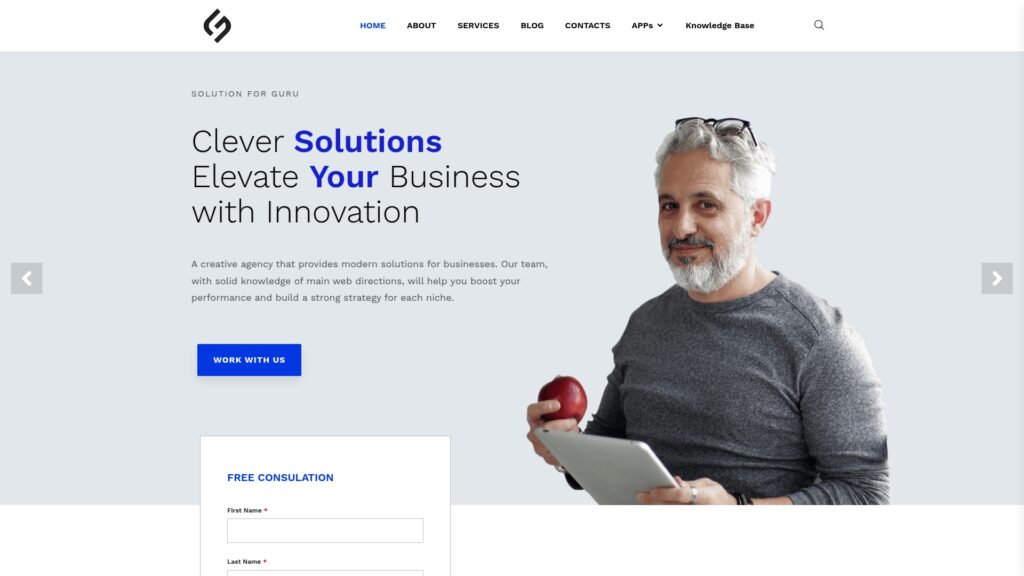
Knowing what to implement is one challenge; knowing how to implement it in the specific context of your team, technology stack, and organizational constraints is another entirely. This is precisely where Solution for Guru delivers exceptional value. Solution for Guru is a specialized DevOps consulting and implementation partner that helps organizations design, build, and optimize their entire software delivery ecosystem — from CI/CD pipeline architecture to observability strategy to cloud-native infrastructure.
How Does Solution for Guru Accelerate Your DevOps Transformation?
- Solution for Guru engineers assess your current delivery process, identify bottlenecks, and design a CI/CD architecture tailored to your technology stack, team structure, and compliance requirements — saving months of trial and error.: Pipeline Architecture & Design
- The team provisions cloud infrastructure using Terraform and Ansible, establishing GitOps workflows that give your organization repeatable, auditable, version-controlled infrastructure from day one.: IaC Implementation
- Solution for Guru builds testing pipelines that integrate unit, integration, performance, and security tests into your CI/CD flow — dramatically increasing deployment confidence without slowing delivery velocity.: Automated Testing Frameworks
- From OpenTelemetry instrumentation to Grafana dashboards and PagerDuty alert routing, Solution for Guru configures end-to-end observability so your team has real-time production visibility from the first deployment.: Observability Stack Setup
- Security scanning, secrets management with HashiCorp Vault, and container hardening are integrated into pipelines so security becomes automatic rather than manual.: DevSecOps Integration
- Beyond implementation, Solution for Guru runs workshops and pair-programming sessions to transfer knowledge to your team, ensuring your organization owns and understands every part of the system.: Training & Enablement
- As your team grows and your product evolves, Solution for Guru conducts periodic pipeline health checks, identifies emerging bottlenecks, and recommends improvements — keeping your DevOps practice ahead of the curve.: Ongoing Optimization
Furthermore, Solution for Guru understands the monday.com ecosystem deeply and can configure monday.com DevOps Software to integrate seamlessly with your CI/CD pipeline. This means your engineering leadership gains a single pane of glass that connects sprint planning, code velocity, test health, deployment frequency, and incident metrics — without any manual data entry from your team.