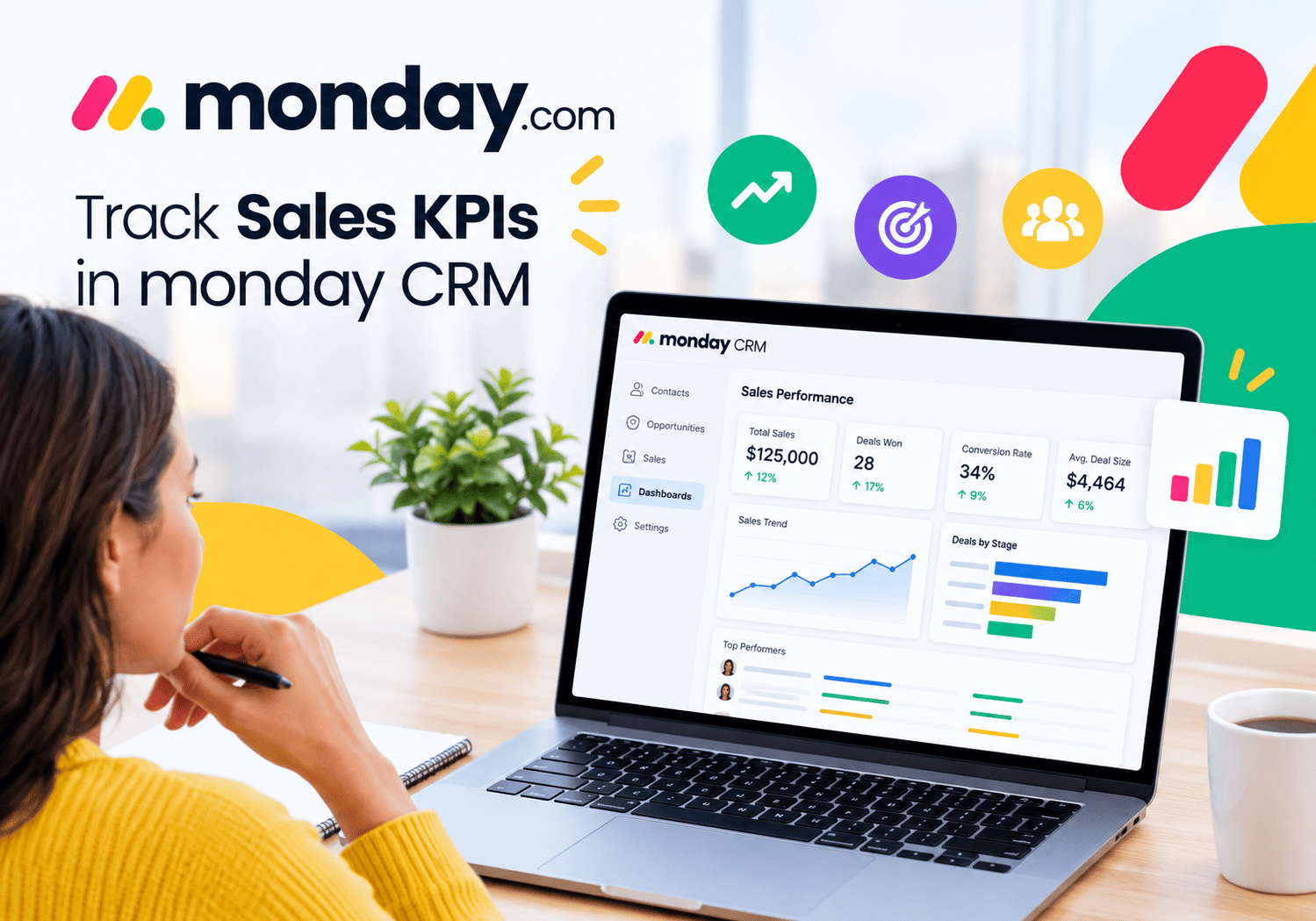
CRM Proficiency for Sales Teams: Turning Data into Deals

Sales teams today generate enormous amounts of data — call logs, email threads, pipeline stages, customer histories, and behavioral signals. Yet data alone does not close deals. The teams that consistently outperform their competition know how to harness CRM tools to transform raw information into timely, relevant actions. Consequently, CRM proficiency has become one of the most critical competencies for modern sales professionals. This article breaks down what that proficiency looks like in practice, examines five leading platforms, and gives sales teams a clear path to turning data into revenue.
Table of contents
What Does This Article Cover at a Glance?
Below is a quick overview of the key topics you will find throughout this guide:
- Why CRM proficiency directly impacts revenue performance
- How Pipedrive, Bigin by Zoho CRM, Zoho CRM, Salesforce, and Creatio serve sales teams
- A side-by-side comparison table of all five platforms
- Actionable strategies for using CRM data to accelerate the sales cycle
- The role of Solution for Guru in helping teams implement and master their CRM
- Frequently asked questions on CRM adoption and best practices
Why Does CRM Proficiency Matter So Much for Sales Performance?
A CRM system is only as powerful as the team using it. Research from Salesforce’s State of Sales report consistently shows that high-performing sales teams are significantly more likely to use their CRM as a central source of truth rather than relying on spreadsheets or email threads. In other words, the platform is the same for everyone — but the skill gap separates average reps from top performers.
Furthermore, CRM proficiency enables teams to move beyond simple contact management. When sales professionals learn to build custom views, set automated follow-up sequences, and interpret pipeline analytics, they dramatically reduce the time they spend on administrative work. That saved time flows directly into customer conversations — which is where deals actually close.
Additionally, well-trained CRM users make better forecasting decisions. Accurate pipeline data helps sales managers allocate resources, adjust quotas, and anticipate revenue gaps before they become problems. Therefore, investing in CRM training delivers measurable returns across the entire revenue organization, not just for individual reps.
Which CRM Platforms Lead the Market for Sales Teams?
Five platforms stand out as particularly well-suited to sales-focused organizations. Each one brings distinct strengths, and the right choice depends on team size, complexity, and growth ambitions. Below, we examine how each platform connects to the central theme of turning data into actionable deals.
How Does Pipedrive Help Sales Teams Turn Pipeline Data into Closed Deals?

Pipedrive stands out as one of the most sales-centric CRMs on the market. The platform organizes every interaction around a visual pipeline, making it immediately clear which deals need attention and which are at risk of going cold. Unlike tools that bury pipeline data inside complex menus, Pipedrive surfaces deal health on the first screen a rep opens in the morning.
Pipedrive excels at activity-based selling. The platform prompts reps to log calls, schedule follow-ups, and set reminders based on predefined stages, thereby eliminating the most common failure point in sales processes — missed follow-ups. Moreover, its AI-powered sales assistant analyzes historical win/loss patterns and proactively suggests the next best action for each deal.
For teams that want a CRM that prioritizes selling over data entry, Pipedrive delivers a particularly strong return. Its reporting suite provides clear conversion metrics by stage, source, and rep — giving managers the visibility they need to coach effectively. You can explore Pipedrive’s full feature set at the official listing:
Is Bigin by Zoho CRM the Right Starting Point for Smaller Sales Teams?

Bigin by Zoho CRM takes a deliberately simplified approach to pipeline management. Designed specifically for small businesses and micro-teams, Bigin strips away the feature complexity that overwhelms new CRM users and replaces it with an intuitive interface that most reps master within a day or two.
Despite its simplicity, Bigin offers real pipeline customization. Teams build multiple pipelines for different product lines or sales motions, track communications across email and phone from a single record, and automate repetitive tasks through easy-to-configure workflows. As a result, even very small teams benefit from structured, data-driven processes without hiring a dedicated CRM administrator.
Bigin also connects seamlessly to the broader Zoho ecosystem. When a business grows and needs more advanced capabilities — such as advanced analytics, marketing automation, or service management — the transition to Zoho CRM or Zoho One is a natural and low-friction upgrade path. Get started with Bigin here:
How Does Salesforce Transform Complex Sales Data into Enterprise-Level Insights?

Salesforce remains the dominant force in enterprise CRM for a reason: it connects every layer of a sales organization — from territory management and partner channels to product catalogs and contract renewals — inside one platform. For large teams managing complex B2B cycles, this comprehensive data architecture gives managers a level of visibility that smaller tools simply cannot match.
The platform’s Einstein AI engine deserves specific attention. Einstein analyzes deal histories, email sentiment, and engagement signals to score leads, predict close dates, and flag at-risk opportunities automatically. Consequently, sales reps spend less time on manual analysis and more time acting on AI-generated insights that are grounded in real account data.
Salesforce also leads in integration breadth. With over 3,000 apps on AppExchange, businesses build a fully connected revenue stack that links their CRM to ERP systems, marketing platforms, customer support tools, and financial software. Although Salesforce requires a larger implementation investment, the long-term ROI for mid-to-large teams is well-documented. Learn more here:
Why Do Process-Driven Sales Teams Choose Creatio?

Creatio takes a unique angle in the CRM market: it positions itself as a no-code process automation platform with a powerful CRM component built in. Rather than starting from a contact database, Creatio starts from the business process — mapping every stage of a customer journey, automating handoffs between teams, and tracking outcomes against defined KPIs.
This process-first philosophy makes Creatio exceptionally strong for sales teams that operate within complex approval workflows, require deep integration with marketing and customer success, or sell through multi-step procurement cycles. The platform’s visual process designer lets operations teams build and modify workflows without writing a single line of code — which dramatically reduces the time between identifying a process bottleneck and fixing it.
Furthermore, Creatio’s real-time dashboards give sales leaders a live view of pipeline health, team productivity, and conversion rates. By combining process automation with CRM data, Creatio helps organizations not just record what happened in their sales cycle but actively improve it. Explore Creatio’s capabilities here:
How Does Zoho CRM Scale Sales Data Management from SMB to Enterprise?

Zoho CRM occupies a uniquely versatile position in the market. It serves small businesses with affordable entry-level plans while simultaneously offering enterprise-grade features — multi-currency support, territory management, advanced analytics, and AI scoring — that compete directly with Salesforce at a lower price point.
Zia, Zoho’s AI assistant, monitors sales activities around the clock. It identifies the optimal time to contact a lead, predicts deal closure probabilities, detects anomalies in sales trends, and suggests workflow improvements based on historical patterns. Sales teams that leverage Zia insights proactively close more deals and respond to market shifts faster than teams relying solely on manual review.
Additionally, Zoho CRM integrates natively with over 50 Zoho applications — covering marketing, finance, HR, and customer support — as well as 1,000+ third-party tools. This ecosystem depth means teams rarely need to export data to another system, reducing data silos and improving the accuracy of every report. Discover Zoho CRM here:
How Do These Five CRM Platforms Compare Side by Side?
The table below summarizes the most important dimensions sales teams evaluate when selecting a CRM platform. Use it to identify which tool aligns best with your team’s size, budget, and growth stage.
| Feature / CRM |  | | |  |  |
|---|---|---|---|---|---|
| Target Audience | SMBs & startups | Micro-businesses | SMBs to enterprise | Mid to large enterprise | Mid to large enterprise |
| Ease of Use | ★★★★★ | ★★★★★ | ★★★★☆ | ★★★☆☆ | ★★★★☆ |
| AI & Automation | AI sales assistant | Basic workflows | Zia AI, robust automation | Einstein AI, advanced | No-code AI studio |
| Pipeline Management | Visual drag-&-drop | Multi-pipeline | Multi-pipeline + forecasting | Opportunity management | Full lifecycle stages |
| Reporting & Analytics | Built-in dashboards | Basic reports | Advanced analytics | Einstein Analytics | Real-time dashboards |
| Mobile App | iOS & Android | iOS & Android | iOS & Android | iOS & Android | iOS & Android |
| Integrations | 400+ apps | 50+ apps | 1 000+ apps | 3 000+ (AppExchange) | 500+ marketplace |
| Free Plan | 14-day trial | Free plan available | Free plan (3 users) | 30-day trial | 14-day trial |
| Starting Price | ~$14/user/mo | Free / $7/user/mo | Free / $14/user/mo | ~$25/user/mo | ~$25/user/mo |
| Best For | Pipeline-focused sales | Very small teams | Growing sales teams | Complex enterprise sales | Process automation |
How Can Sales Teams Build Real CRM Proficiency?

Choosing the right CRM is only the first step. Building genuine proficiency requires structured learning, consistent habits, and organizational support. The following sections break down the key dimensions of CRM mastery that separate good sales teams from great ones.
What Data Habits Separate Top CRM Users from Average Ones?
Top CRM users treat their platform as the primary record of every customer interaction — not as a backup or reporting tool. They log calls immediately after hanging up, update deal stages within hours of a meaningful conversation, and attach relevant documents and notes to the account record rather than leaving them in email inboxes. This discipline creates a reliable data foundation that analytics tools can actually use.
In contrast, average CRM users enter data sporadically, often only when a manager requests a pipeline review. The result is a database filled with stale information, inaccurate close dates, and missing contact details. Consequently, any report built on that data misleads rather than informs.
Building better data habits requires three things: simplifying data entry (Pipedrive and Bigin by Zoho CRM excel here), establishing team-wide standards for what gets logged and when, and creating a coaching culture where managers review CRM data quality as part of their regular one-on-ones. When data quality improves, every downstream benefit — forecasting, AI scoring, territory planning — improves alongside it.
How Should Sales Teams Use CRM Automation to Accelerate the Sales Cycle?

Automation is one of the highest-leverage capabilities inside any modern CRM, yet most sales teams use only a fraction of what their platform offers. Effective automation focuses on eliminating the repetitive, time-consuming tasks that pull reps away from selling — without removing the human touch that wins deals.
Here are the automation use cases that deliver the greatest impact across Pipedrive, Zoho CRM, Salesforce, Creatio, and Bigin by Zoho CRM:
- Lead assignment rules — route incoming leads to the right rep based on territory, industry, or deal size automatically
- Follow-up sequences — trigger personalized email or task reminders when a deal stalls in a specific stage
- Stage-based notifications — alert managers when high-value deals move backward in the pipeline
- Contract and proposal generation — auto-populate documents with CRM data, cutting proposal prep time by 60% or more
- Post-meeting activity logging — sync calendar and phone dialers to CRM records automatically
Salesforce and Creatio offer the most sophisticated automation capabilities, while Zoho CRM strikes an excellent balance between power and accessibility. Pipedrive provides visual workflow automation that is particularly easy for non-technical teams to configure. Even Bigin by Zoho CRM, despite its simplicity, includes workflow triggers that reduce manual entry for small teams significantly.
How Do Sales Teams Turn CRM Analytics into Better Coaching Conversations?
Analytics transform CRM data from a historical record into a forward-looking coaching tool. The most effective sales managers use pipeline analytics not to check on reps but to identify systemic issues — stages where deals stall, lead sources that underperform, or rep behaviors that correlate with higher win rates.
All five platforms in this guide provide analytics dashboards, but they differ substantially in depth. Salesforce‘s Einstein Analytics and Creatio‘s real-time dashboards offer the most granular reporting, enabling teams to drill into individual account health scores and pipeline velocity metrics. Zoho CRM‘s reports are highly customizable and integrate directly with its forecasting module. Pipedrive provides clean, visual conversion funnel reports that managers can share with reps in weekly reviews. Bigin by Zoho CRM keeps reporting simpler, which suits micro-teams that need clarity over complexity.
A practical coaching framework based on CRM analytics includes three steps. First, identify the stage with the highest drop-off rate in the pipeline. Second, examine the CRM records of deals that failed at that stage to find common patterns — missed follow-ups, long response times, absent decision-makers. Third, adjust sales training and process to address that specific gap. Repeating this cycle quarterly drives continuous improvement that compounds over time.
What Role Does Mobile CRM Access Play in Field and Remote Sales?
Modern sales does not happen only at desks. Field sales reps, remote workers, and executives traveling between meetings need full CRM access on their phones. Fortunately, all five platforms — Pipedrive, Bigin by Zoho CRM, Zoho CRM, Salesforce, and Creatio — deliver well-designed iOS and Android apps that support pipeline management, contact updates, and activity logging on the go.
Mobile access also enables real-time data entry, which is the single most effective way to improve data quality. When a rep logs a call outcome immediately after hanging up rather than trying to reconstruct it hours later at their desk, the data is more accurate and more complete. Over time, this habit significantly improves the reliability of pipeline reports and AI-generated insights.
Salesforce’s mobile app is particularly robust, offering full customization to match the desktop experience. Pipedrive’s app is praised for its speed and intuitive pipeline view. Zoho CRM’s mobile app includes Zia AI suggestions, so reps receive intelligent prompts even when working away from their computers. Bigin by Zoho CRM’s app keeps everything simple — ideal for small teams that prioritize ease over feature depth.
How Do Integrations Extend CRM Value Across the Entire Sales Stack?
No CRM works in isolation. The true power of a CRM emerges when it connects with the other tools a sales team relies on daily — email clients, marketing automation, video conferencing, proposal software, accounting systems, and customer support platforms.
Salesforce leads in integration breadth with its AppExchange marketplace offering over 3,000 applications. Zoho CRM connects natively with the entire Zoho suite — including Zoho Campaigns, Zoho Desk, and Zoho Books — making it an outstanding choice for businesses that want a unified platform without third-party connectors. Pipedrive offers 400+ integrations covering the most popular sales tools, including Slack, Zoom, Calendly, and HubSpot. Creatio‘s marketplace provides 500+ connectors, with strong options for ERP and enterprise software integration. Bigin by Zoho CRM connects to essential tools like Google Workspace, Microsoft 365, and Zapier — more than sufficient for micro-teams.
When planning a CRM implementation, therefore, the integration map is as important as the feature list. A CRM that connects every touchpoint in the customer journey produces a complete data picture — one that enables far more accurate insights than a siloed database ever could.
How Does AI Change the Way Sales Teams Use CRM Data?

Artificial intelligence has fundamentally changed the CRM landscape over the past three years. Today, AI does not just analyze historical data — it predicts future outcomes, recommends actions, and automates decisions that previously required human judgment.
Salesforce‘s Einstein AI scores leads and opportunities based on hundreds of behavioral signals, predicts close dates with statistical confidence, and generates natural language summaries of account activity. Zoho CRM‘s Zia monitors every deal in the pipeline and proactively flags anomalies — such as a usually active contact going silent — that a human manager might miss. Creatio uses AI to optimize process flows, automatically suggesting improvements based on outcome data. Pipedrive‘s AI assistant highlights the deals most likely to close this week, helping reps prioritize their daily activities. Bigin by Zoho CRM incorporates lighter AI features appropriate for its target audience.
The key to maximizing AI value is data quality, which brings everything back to the foundational habits discussed earlier. AI models trained on clean, complete, consistently updated CRM data produce significantly better predictions than those working with patchy information. Therefore, building AI proficiency starts with building data discipline.
What Are the Key Takeaways for Sales Teams Aiming to Turn Data into Deals?
CRM proficiency is not a technical skill reserved for administrators — it is a core sales competency that every rep and manager in a revenue organization needs to develop. The evidence is clear: teams that use their CRM consistently and intelligently generate more pipeline, convert at higher rates, and forecast more accurately than those who treat it as a reporting afterthought.
Each of the five platforms examined in this article serves a distinct part of the market, and each transforms CRM data into deal outcomes in its own way:
- Pipedrive delivers the most intuitive pipeline-centric experience for small and mid-sized sales teams, making it easy to stay focused on the right activities at the right time.
- Bigin by Zoho CRM gives micro-businesses a structured, affordable entry point into data-driven selling without the complexity that typically discourages adoption.
- Zoho CRM scales from startup to enterprise with a comprehensive feature set, Zia AI intelligence, and deep ecosystem integration — all at a highly competitive price point.
- Salesforce leads the enterprise market with Einstein AI, unmatched integration breadth, and the reporting depth that large, complex sales organizations require to manage territories, channels, and partners.
- Creatio empowers process-driven teams to automate complex sales workflows without code, connecting CRM data to business process optimization in a way few other platforms can match.
Ultimately, the platform you choose matters far less than how well your team uses it. CRM proficiency — rooted in clean data habits, smart automation, analytical coaching, and continuous improvement — is the actual differentiator. And when you need expert support to get there faster, Solution for Guru provides the certified guidance that turns a CRM implementation into a long-term competitive advantage.
Frequently Asked Questions
The timeline varies depending on the platform’s complexity and the team’s prior experience. For straightforward tools like Bigin by Zoho CRM or Pipedrive, most reps reach basic proficiency within one to two weeks of daily use. More complex platforms like Salesforce or Creatio typically require four to eight weeks for core proficiency and several months before teams fully leverage advanced features like AI scoring and custom analytics.
For most growing B2B sales teams, Zoho CRM delivers the strongest combination of features, scalability, and price. Its free plan supports up to three users, paid plans start at very competitive rates, and the platform grows with the business — from basic pipeline management to advanced AI-driven forecasting and multi-territory management. The native integration with the broader Zoho ecosystem is an additional advantage for teams that also need marketing automation, customer support, or project management tools. However, teams that prioritize ease of use above all else should consider Pipedrive, while those already running enterprise systems at scale typically benefit most from Salesforce’s ecosystem depth. Creatio is the top choice when process automation is the primary requirement.
Absolutely — and CRM proficiency is one of the primary ways smaller teams level the playing field. A five-person sales team using Pipedrive or Bigin by Zoho CRM with disciplined data habits, smart automation, and regular pipeline reviews can consistently out-execute a 20-person team that treats its CRM as an afterthought. CRM proficiency multiplies the capacity of every individual rep by eliminating wasted time, preventing missed follow-ups, and surfacing the highest-priority opportunities each day. Furthermore, AI features available in Zoho CRM, Salesforce, and Creatio give smaller teams access to the same predictive intelligence that was previously the exclusive domain of large enterprises with dedicated data science resources.
How Does Partnering with Solution for Guru Accelerate CRM Proficiency?
Even the most capable CRM platform delivers limited results without expert implementation and targeted training. This is precisely where Solution for Guru adds exceptional value. As a specialized CRM consultancy, Solution for Guru brings certified expertise across all major platforms — including Pipedrive, Bigin by Zoho CRM, Zoho CRM, Salesforce, and Creatio — and translates that expertise into measurable performance improvements for sales teams.
The table below outlines the specific benefits sales teams gain when they partner with Solution for Guru:
| Benefit | What It Means for Your Sales Team |
|---|---|
| Certified CRM Expertise | Specialists hold certifications in Pipedrive, Zoho CRM, Salesforce, and Creatio, ensuring best-practice implementations. |
| Tailored Configuration | The team customizes every CRM to match your unique sales process rather than forcing a generic setup. |
| Data Migration Support | Solution for Guru migrates existing contact, deal, and activity data without loss or duplication. |
| Onboarding & Training | Hands-on training sessions accelerate adoption, so your reps start selling faster. |
| Ongoing Optimization | Post-launch audits identify bottlenecks and apply improvements as your business scales. |
| Integration Architecture | Experts connect your CRM with email, marketing, ERP, and support tools to build a unified revenue stack. |
Beyond implementation, Solution for Guru takes a holistic approach to CRM success. The team conducts discovery sessions to understand your current sales process, identifies inefficiencies that the right CRM configuration can eliminate, and builds a phased rollout plan that minimizes disruption to active selling. Consequently, sales teams reach full productivity faster and with far less frustration than they experience during self-directed implementations.
Moreover, Solution for Guru provides ongoing support as your business evolves. Whether you are scaling your team, entering new markets, or adopting new AI features in your CRM, their consultants adapt your platform configuration to match your current reality rather than the setup you had at launch. Learn more about working with Solution for Guru at: www.solution4guru.com
Recommended:
- Customer 360° View in Creatio: Benefits for Sales Teams
- The Pipedrive Gmail Add-On
- Creatio CRM Implementation Guide for U.S. Businesses
- How Does Zoho CRM Handle Multi-Pipeline Sales Architecture?
- How Does Creatio Improve Lead Management and Conversion Rates?
- Top CRM-Related Professions Every Modern Company Needs
- Using Zia AI for Predictive Sales Analytics: How Does It Transform Modern Sales Performance?
- Why Creatio CRM Is Gaining Popularity in the U.S. Market
- Can Pipedrive Scale with a Growing Sales Team?
- How Does Zoho CRM Reporting and Analytics Transform Sales Operations?
- Smart CRM Integration with Website and SEO for Growth
- What Are Lead Scoring Models in Zoho CRM and Why Do They Matter?
- Common Pipedrive Setup Mistakes and How to Fix Them
- How to Build Powerful Sales Reports in Pipedrive
- Zoho Projects + Zoho CRM: Managing Sales-to-Project Workflows
- Careers in CRM: Roles, Skills, and Career Paths
- What is CRM System Proficiency?