CRM Automation: The Key to Faster Sales and Better Customer Service
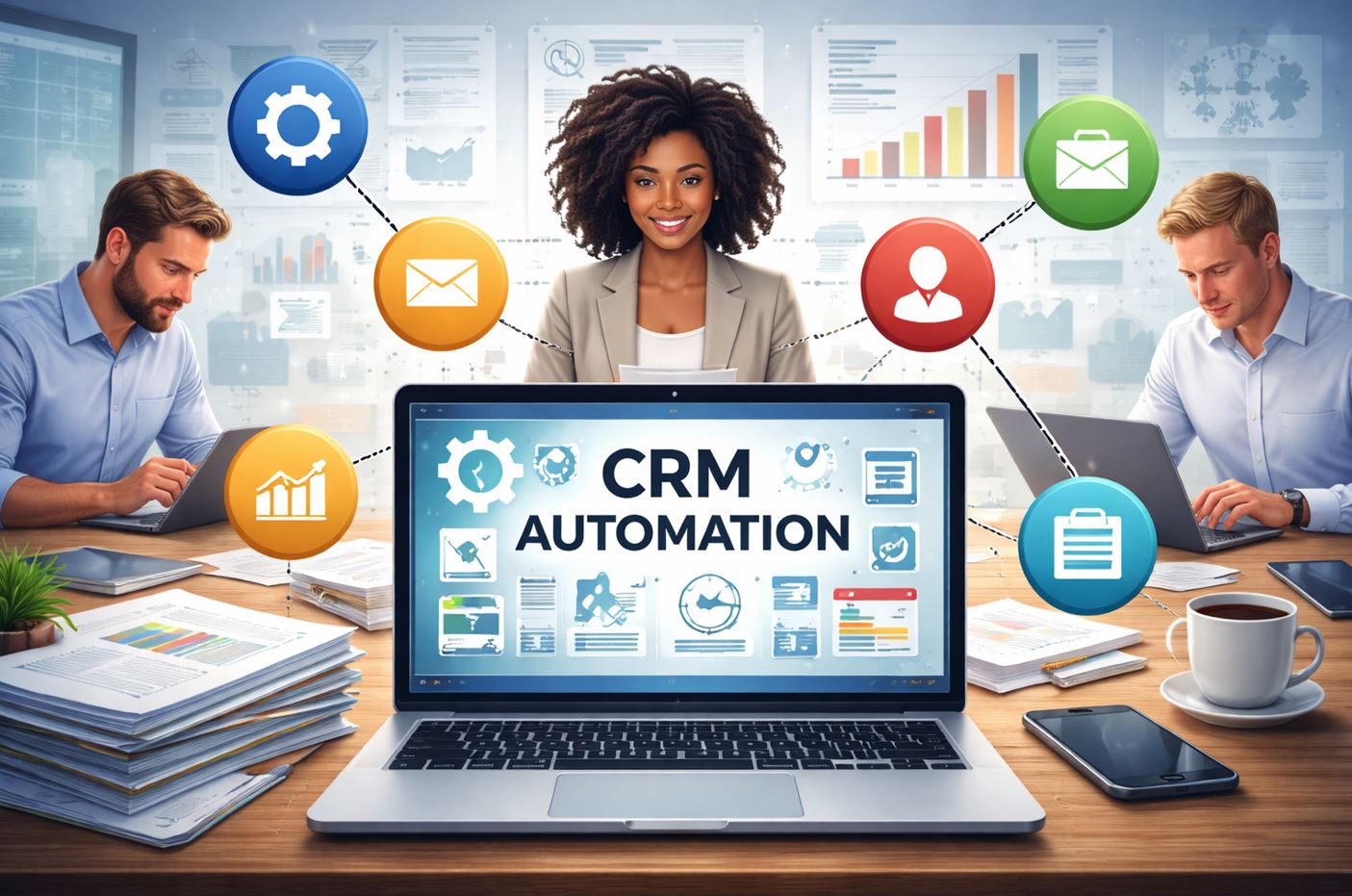
In today’s fast-paced business environment, companies are constantly searching for ways to streamline their operations, boost productivity, and deliver exceptional customer experiences. One of the most transformative solutions available is Customer Relationship Management (CRM) automation. By automating repetitive tasks, centralizing customer data, and enabling intelligent workflows, CRM automation has become an essential tool for businesses aiming to accelerate their sales cycles and enhance customer service quality.
As organizations grow, managing customer relationships manually becomes increasingly challenging. Sales teams spend countless hours on administrative tasks, customer service representatives struggle to access comprehensive customer histories, and valuable opportunities slip through the cracks due to delayed follow-ups. Furthermore, CRM automation addresses these pain points by leveraging technology to handle routine processes, allowing teams to focus on what truly matters: building meaningful relationships with customers and closing deals.
Table of Contents
- Quick Summary
- What is CRM Automation and Why Does It Matter?
- How Does Salesforce CRM Enable Automation?
- What Makes Pipedrive CRM Effective for Sales Automation?
- How Does Bigin by Zoho CRM Support Small Business Automation?
- What Automation Capabilities Does Zoho CRM Offer?
- Which CRM Platform Best Suits Your Automation Needs?
- How Can Automation Accelerate Your Sales Process?
- What Are the Customer Service Benefits of CRM Automation?
- How Do You Successfully Implement CRM Automation?
- Summing up
- Frequently Asked Questions
- Benefits of Cooperation with Solution for Guru Company
Quick Summary
CRM automation represents a game-changing approach to managing customer relationships by automating repetitive tasks, streamlining workflows, and providing actionable insights. This article examines four leading CRM platforms—Salesforce CRM, Pipedrive CRM, Bigin by Zoho CRM, and Zoho CRM — each offering unique automation capabilities tailored to different business needs. By implementing CRM automation, businesses can significantly reduce manual data entry, accelerate sales cycles, improve customer service response times, and make data-driven decisions that fuel growth.
The key benefits include automated lead assignment, intelligent follow-up reminders, workflow automation, email marketing integration, and comprehensive analytics. Moreover, modern CRM systems enable teams to work more efficiently, eliminate human errors, and maintain consistent communication with prospects and customers throughout their journey. Whether you’re looking to scale your sales operations or deliver personalized customer experiences at scale, CRM automation provides the foundation for sustainable business growth.
What is CRM Automation and Why Does It Matter?
CRM automation refers to the use of technology to automatically handle routine customer relationship management tasks without requiring manual intervention. Instead of sales representatives manually entering data, sending follow-up emails, or updating contact records, automation software handles these processes based on predefined rules and triggers. This technological advancement fundamentally transforms how businesses interact with customers, manage sales pipelines, and deliver service.
At its core, CRM automation operates through a combination of workflows, triggers, and rules that execute specific actions when certain conditions are met. For instance, when a potential customer fills out a contact form on your website, the CRM system can automatically create a new lead record, assign it to the appropriate sales representative based on territory or workload, send a personalized welcome email, and schedule a follow-up task for three days later. All of these actions occur instantaneously without any manual input, ensuring no lead falls through the cracks.
The importance of CRM automation extends far beyond simple time savings. In today’s competitive marketplace, customers expect rapid responses, personalized interactions, and seamless experiences across all touchpoints. Manual processes simply cannot deliver this level of consistency and speed at scale.
From a strategic perspective, automation frees your team from mundane tasks, allowing them to focus on high-value activities that directly impact revenue. Sales professionals can spend more time having meaningful conversations with qualified prospects rather than updating spreadsheets. Customer service representatives can address complex issues that require human empathy and problem-solving rather than answering routine questions that could be automated. This shift in focus not only improves job satisfaction but also drives better business outcomes.
How Does Salesforce CRM Enable Automation?

Salesforce CRM stands as the global leader in customer relationship management, offering one of the most comprehensive and powerful automation platforms available today. As a cloud-based solution, Salesforce provides businesses with extensive automation capabilities that span sales, marketing, customer service, and operations. The platform’s robust infrastructure supports organizations of all sizes, from startups to Fortune 500 companies, making it an incredibly versatile choice for businesses seeking to automate their customer relationship processes.
The automation capabilities within Salesforce CRM are built around several key technologies, most notably Salesforce Flow (formerly known as Process Builder and Workflow Rules). This visual automation tool enables users to create sophisticated workflows without writing code, making automation accessible to business users rather than requiring dedicated developers. Through Salesforce Flow, organizations can automate virtually any business process, from simple field updates to complex multi-step approvals that involve multiple departments and systems.
One of Salesforce’s standout automation features is its Einstein AI, which brings artificial intelligence directly into the CRM workflow. Einstein analyzes historical data to predict which leads are most likely to convert, automatically scores opportunities based on their likelihood to close, and even suggests the next best actions for sales representatives to take. This predictive intelligence transforms how sales teams prioritize their time, ensuring they focus on the opportunities with the highest probability of success. Furthermore, Einstein Bots can handle routine customer inquiries through natural language processing, providing instant responses while escalating complex issues to human agents.
Salesforce CRM excels in automating the entire lead-to-cash process. When a marketing campaign generates a new lead, Salesforce can automatically score that lead based on demographic and behavioral data, assign it to the appropriate sales representative according to territory rules, send personalized email sequences, create tasks for follow-up activities, and track every interaction across multiple channels.
What Makes Pipedrive CRM Effective for Sales Automation?

Pipedrive CRM has earned its reputation as a sales-focused CRM platform that prioritizes simplicity and effectiveness. Unlike more complex enterprise solutions, Pipedrive was designed by salespeople for salespeople, resulting in an intuitive interface that emphasizes visual pipeline management and practical automation features. This approach makes it particularly appealing to small and medium-sized businesses that want powerful automation without the steep learning curve associated with more comprehensive platforms.
The core strength of Pipedrive CRM lies in its visual sales pipeline, which provides a clear, drag-and-drop interface for managing deals. However, beneath this simple exterior lies a sophisticated automation engine that streamlines repetitive sales tasks. Pipedrive’s automation features are designed to be accessible to users without technical expertise, allowing sales teams to create and modify workflows quickly based on their specific needs.
Pipedrive’s workflow automation enables users to create triggers based on specific actions or conditions. For instance, when a deal moves to a particular stage in the pipeline, the system can automatically send a templated email to the prospect, create follow-up activities for the sales representative, update custom fields with relevant information, and notify team members who need to be involved in the next steps. These automated workflows ensure consistency in the sales process while reducing the administrative burden on sales professionals, allowing them to focus on building relationships and closing deals.
Email automation within Pipedrive extends beyond simple templates to include sophisticated sequences that adapt based on recipient behavior. Sales teams can create multi-step email campaigns that automatically pause if a prospect replies, ensuring that automated messages never clash with active conversations. The system tracks all email interactions, providing visibility into which messages resonate with prospects and which fall flat.
How Does Bigin by Zoho CRM Support Small Business Automation?

Bigin by Zoho CRM represents a unique proposition in the CRM market: a streamlined, affordable platform specifically designed for small businesses and startups that need essential automation without overwhelming complexity. Recognizing that many small businesses find traditional CRMs too feature-rich and complicated, Zoho developed Bigin as a lightweight alternative that focuses on the automation capabilities that matter most to growing companies. This targeted approach makes it an ideal starting point for businesses taking their first steps into CRM automation.
Bigin’s workflow automation enables small businesses to create custom rules that trigger specific actions based on defined conditions. For example, when a new customer is added to the system, Bigin can automatically send a welcome email, assign an onboarding task to a team member, and create a follow-up reminder for one week later. While these workflows may seem basic compared to enterprise CRM capabilities, they address the most critical automation needs for small businesses: ensuring consistent follow-up, maintaining organized customer records, and reducing manual administrative work.
Email automation
Email automation in Bigin provides small businesses with professional communication capabilities that were once available only to larger organizations. Teams can create email templates for common scenarios, set up automated sequences for nurturing leads, and track email engagement metrics to understand which messages resonate with prospects. The system can automatically log all email interactions in the CRM, providing a complete communication history without requiring manual data entry. This documentation is invaluable when team members need to understand the context of a customer relationship or when onboarding new employees.
Task automation
Bigin’s task automation ensures that important activities don’t slip through the cracks, which is particularly crucial for small teams where individual accountability is high. The platform can automatically create tasks based on various triggers, such as when a customer hasn’t been contacted in thirty days or when a deal reaches a certain stage. Team members receive reminders about upcoming and overdue tasks, helping maintain consistent customer engagement even during busy periods. This automated task management helps small businesses maintain professionalism and reliability without requiring dedicated project managers.
Bigin integrates with other Zoho products and popular third-party applications, extending its automation capabilities beyond the core CRM functionality. Small businesses using Zoho Mail, Zoho Books, or other Zoho suite products can create seamless workflows that span multiple applications. For businesses using tools like Google Workspace or Microsoft 365, Bigin offers integrations that ensure information flows smoothly between systems. These integrations enable small businesses to build comprehensive automation ecosystems without the complexity typically associated with enterprise integration projects.
What Automation Capabilities Does Zoho CRM Offer?

Zoho CRM positions itself as a comprehensive yet affordable alternative to more expensive enterprise CRM platforms, offering extensive automation capabilities that rival those found in systems costing significantly more. As the flagship CRM product from Zoho Corporation, it provides a feature-rich environment where businesses can automate complex workflows, integrate with hundreds of applications, and leverage artificial intelligence to optimize customer relationships. This combination of power and affordability has made Zoho CRM popular among mid-sized businesses and growing companies seeking enterprise-grade automation without enterprise pricing.
The automation foundation of Zoho CRM is built on several interconnected technologies, including Workflow Rules, Blueprint, and Zia, Zoho’s artificial intelligence assistant. Workflow Rules enable users to create automated processes that execute when specific conditions are met, such as sending emails, updating fields, assigning tasks, or triggering webhooks to external systems. Blueprint takes automation a step further by allowing businesses to design visual process flows that guide users through complex procedures step-by-step, ensuring consistency and compliance across the organization. This structured approach proves particularly valuable for industries with regulatory requirements or standardized processes that teams must follow precisely.
Zia, Zoho‘s AI assistant, brings intelligent automation to CRM operations in ways that significantly enhance productivity and decision-making. Zia can predict which leads are most likely to convert based on historical patterns, automatically assign lead scores, identify anomalies in sales data, and even suggest the best times to contact prospects based on their engagement patterns. The AI can analyze emails and automatically extract important information to update CRM records, reducing manual data entry. Furthermore, Zia provides conversational insights, allowing users to ask questions in natural language and receive data-driven answers without navigating complex reporting interfaces.
Lead management automation
Lead management automation in Zoho CRM helps businesses capture, qualify, and convert prospects efficiently. The system can automatically capture leads from multiple sources including web forms, social media, live chat, and email, then apply scoring rules based on demographic and behavioral data. High-scoring leads can be automatically routed to senior sales representatives, while lower-scoring leads enter nurturing workflows. This intelligent routing ensures that your best salespeople focus on the most promising opportunities, while automation handles the cultivation of prospects who need more time and information before making a purchase decision.
Email automation
Email automation within Zoho CRM extends across marketing, sales, and customer service functions. The platform includes sophisticated email campaign management capabilities that allow businesses to create segmented lists, design professional templates, and set up multi-step sequences that adapt based on recipient behavior. When a prospect opens an email and clicks a specific link, the system can automatically update their lead score, create a follow-up task for a sales representative, and add them to a more targeted email sequence. This behavioral automation ensures that communication remains relevant and timely without requiring constant manual oversight.
Sales process automation
Sales process automation in Zoho CRM helps standardize and optimize how deals progress through the pipeline. Businesses can define stage-specific criteria that must be met before an opportunity can advance, ensuring that critical steps aren’t skipped. Automated approval workflows route important deals to managers for review, while the system tracks approval history and maintains an audit trail for compliance purposes. When deals are won, automation can trigger contract generation, billing processes, and handoff to customer success teams, ensuring a smooth transition from sales to implementation.
Analytics and reporting automation
Analytics and reporting automation in Zoho CRM provides businesses with actionable insights without requiring manual data compilation. The platform can generate and distribute scheduled reports to stakeholders, create real-time dashboards that visualize key performance indicators, and send automated alerts when metrics fall outside acceptable ranges. These automated insights help managers stay informed about business performance and make data-driven decisions quickly. Moreover, Zia’s predictive analytics can forecast sales trends, identify at-risk customers, and highlight opportunities for upselling or cross-selling, enabling proactive rather than reactive business strategies.
Which CRM Platform Best Suits Your Automation Needs?
Selecting the right CRM platform for your automation needs requires careful consideration of your business size, complexity, budget, and specific requirements. Each of the platforms discussed—Salesforce CRM, Pipedrive CRM, Bigin by Zoho CRM, and Zoho CRM—offers distinct advantages that make them ideal for different scenarios. Understanding these differences is crucial for making an investment that will serve your business well both now and as you grow.
| Feature |  |  | |  |
|---|---|---|---|---|
| Best For | Large enterprises, complex processes | Sales-focused teams, SMBs | Small businesses, startups | Growing mid-sized businesses |
| Ease of Use | Moderate learning curve | Very intuitive | Extremely simple | Moderate learning curve |
| Automation Complexity | Highly sophisticated | Moderate, sales-focused | Basic essential workflows | Advanced capabilities |
| AI Capabilities | Einstein AI (advanced) | Basic predictive features | Limited | Zia AI (comprehensive) |
| Pricing | Premium pricing | Mid-range pricing | Budget-friendly | Affordable to moderate |
| Customization | Extensive customization | Moderate customization | Limited customization | Extensive customization |
| Integration Ecosystem | Thousands of integrations | Good integration options | Basic integrations | Extensive Zoho ecosystem |
| Email Automation | Sophisticated campaigns | Sales-focused sequences | Basic templates | Comprehensive marketing |
| Reporting & Analytics | Advanced with AI insights | Good visual reports | Basic reporting | Advanced analytics |
| Workflow Automation | Complex multi-step flows | Sales pipeline automation | Simple rule-based | Blueprint process design |
| Mobile Experience | Full-featured app | Excellent mobile interface | Simple mobile access | Comprehensive mobile app |
| Support Options | Premium support available | Email and chat support | Email support | Multiple support tiers |
Brief Summary
When evaluating these platforms, consider your team’s technical sophistication and willingness to invest time in learning new systems.
Beyond platform capabilities, consider your integration requirements carefully. If your business relies heavily on specific third-party applications, verify that your chosen CRM integrates smoothly with those tools. Salesforce‘s massive AppExchange marketplace typically offers the most integration options, but Zoho‘s extensive suite of complementary products often eliminates the need for third-party tools altogether. Pipedrive covers the most common business application integrations, while Bigin focuses on essential connections that small businesses typically need.
Budget considerations extend beyond initial subscription costs to include implementation time, training requirements, and ongoing administration. While Salesforce may seem expensive, its powerful capabilities can deliver substantial ROI for organizations that fully leverage them. Conversely, an inexpensive platform that your team doesn’t adopt or that lacks critical features will ultimately prove more costly due to lost productivity and missed opportunities. Calculate total cost of ownership including setup, training, integrations, and any consulting or development work required to meet your specific needs.
How Can Automation Accelerate Your Sales Process?
CRM automation fundamentally transforms sales operations by eliminating bottlenecks, ensuring consistent execution, and enabling sales teams to focus on high-value activities that directly generate revenue. The acceleration achieved through automation isn’t merely about speed—it’s about optimizing the entire sales journey to improve both efficiency and effectiveness. By understanding how automation impacts each stage of the sales process, businesses can implement strategies that dramatically reduce sales cycles while improving win rates.
Lead response time represents one of the most critical factors in sales success, with studies consistently showing that the first company to respond to a lead inquiry has a significantly higher chance of winning the business. Manual lead distribution processes introduce delays as leads sit in queues waiting for assignment or get overlooked during busy periods. Automated lead routing eliminates these delays by instantly assigning new leads to the appropriate sales representative based on territory, product expertise, workload, or lead score. Furthermore, automation can immediately send acknowledgment emails to prospects, confirming their inquiry has been received and setting expectations for next steps, which reassures prospects and prevents them from reaching out to competitors.
Automated lead scoring revolutionizes how sales teams prioritize their time and efforts. Rather than treating all leads equally or relying on gut instinct to determine which prospects deserve immediate attention, automation analyzes multiple data points to calculate objective lead scores. The system considers demographic factors like company size and industry, behavioral signals like website visits and content downloads, and engagement metrics like email opens and responses. High-scoring leads are automatically flagged for immediate follow-up, while lower-scoring leads enter nurturing workflows until they demonstrate stronger buying signals. This intelligent prioritization ensures that sales representatives focus on opportunities with the highest probability of conversion, dramatically improving productivity and win rates.
Email automation
Email automation accelerates the sales process by ensuring timely, consistent communication without requiring manual effort from sales representatives. Automated email sequences can nurture leads over time, providing valuable information that educates prospects about your solutions and addresses common objections. When prospects engage with these automated emails by clicking specific links or downloading resources, the system can automatically notify the assigned sales representative and create follow-up tasks. This combination of automated nurturing and intelligent human intervention creates an optimal balance where technology handles routine communication while sales professionals focus on personalized, high-impact interactions.
Task automation
Task automation ensures that critical sales activities never fall through the cracks, which is particularly important for teams managing large volumes of opportunities across extended sales cycles. The CRM can automatically create follow-up tasks based on prospect behavior, deal stage progression, or time-based triggers. If a sales representative sends a proposal and the prospect doesn’t respond within five days, automation creates a follow-up task and suggests talking points based on previous interactions. When a deal has been in a particular stage longer than average, the system can alert managers to potential issues requiring intervention. These automated reminders and escalations maintain forward momentum in the sales process and prevent opportunities from stalling due to delayed follow-up.
Document automation
Document automation streamlines the creation and management of sales collateral, proposals, and contracts. Rather than manually assembling documents from templates and copying information from the CRM, automation can generate customized proposals that pull customer-specific data directly from the system. When a deal reaches the proposal stage, the CRM automatically creates a professionally formatted document including pricing, terms, and relevant case studies, then routes it for internal approval if required. After approval, the system sends the proposal to the prospect and tracks when it’s been opened and reviewed. This seamless document workflow can reduce proposal generation time from hours or days to minutes, enabling sales representatives to respond quickly to prospect requests.
Integration automation
Integration automation creates seamless information flow between the CRM and other sales tools, eliminating redundant data entry and ensuring everyone has access to current information. When a sales representative schedules a meeting using their calendar application, automation can create the corresponding activity in the CRM, sync attendee information, and update the deal record. When a prospect signs a contract in your document management system, automation can automatically mark the deal as won, trigger the customer onboarding process, and notify relevant team members. These cross-system workflows prevent information silos and ensure that the CRM remains the single source of truth for all customer-related information.
The cumulative effect of these automation capabilities is a sales process that moves prospects from initial inquiry to closed deal significantly faster than manual approaches. Sales representatives spend more time in productive conversations and less time on administrative tasks. Lead response times drop from hours to minutes, follow-up becomes consistent and timely, and opportunities progress smoothly through the pipeline without unnecessary delays. Moreover, automation provides unprecedented visibility into sales performance, enabling managers to identify successful patterns and replicate them across the team. This data-driven approach to sales optimization creates a continuous improvement cycle where processes become progressively more efficient and effective.
What Are the Customer Service Benefits of CRM Automation?

Customer service automation through CRM systems represents a powerful strategy for delivering exceptional experiences while managing operational efficiency. Modern consumers expect rapid responses, consistent service quality, and personalized interactions regardless of which channel they use to contact your business. Meeting these expectations manually becomes increasingly challenging as customer bases grow, but automation enables service teams to scale their operations without proportionally increasing headcount. By intelligently handling routine inquiries and streamlining agent workflows, CRM automation elevates service quality while reducing costs.
Automated ticket routing
Automated ticket routing ensures that customer inquiries reach the right agent immediately, eliminating the delays associated with manual triage and assignment. When a customer submits a support request, the CRM analyzes the inquiry content, customer history, and issue complexity, then routes the ticket to the agent best equipped to resolve it quickly. The system considers factors like agent expertise, current workload, language proficiency, and availability, ensuring optimal assignment every time. This intelligent routing reduces resolution times, improves first-contact resolution rates, and prevents the frustration customers experience when their issues are transferred multiple times before reaching someone who can help.
Self-service automation
Self-service automation empowers customers to find answers to common questions without waiting for agent assistance. CRM systems can integrate knowledge bases and chatbots that provide instant responses to frequently asked questions, guide customers through troubleshooting procedures, and handle routine transactions like password resets or order status inquiries. When customers can resolve simple issues themselves at any time of day, it reduces ticket volume for your service team while improving customer satisfaction through immediate resolution. For issues that require human intervention, the chatbot can collect initial information and create a ticket with all relevant context, allowing agents to begin working on solutions immediately without conducting preliminary information gathering.
Automated customer communication
Automated customer communication keeps clients informed throughout the support process without requiring manual updates from agents. When a ticket is created, the system automatically sends an acknowledgment email confirming receipt and providing an estimated resolution timeframe. As agents work on the issue, automation can send status updates at predetermined intervals, letting customers know their request hasn’t been forgotten. When the issue is resolved, the system notifies the customer and may automatically send a satisfaction survey to gather feedback. This consistent communication reduces customer anxiety and the volume of “status check” inquiries that consume agent time.
Automated workflows
Automated workflows streamline common service processes by guiding agents through standardized procedures step-by-step. For instance, when processing a product return, the workflow might automatically check warranty status, generate a return authorization, send shipping instructions to the customer, and create a refund task for the accounting team. These structured workflows ensure consistency in how issues are handled, reduce training requirements for new agents, and prevent important steps from being overlooked. Moreover, automation captures data at each workflow step, creating detailed records that support quality assurance and compliance requirements.
Multi-channel automation
Multi-channel automation ensures consistent service experiences regardless of how customers choose to contact your business. Whether a customer reaches out via email, phone, live chat, social media, or self-service portal, the CRM captures all interactions in a unified timeline. Automation ensures that if a customer starts a conversation in one channel and continues it in another, agents have complete visibility into the previous interaction. This omnichannel approach eliminates the frustration of customers having to repeat information and ensures that service quality remains consistent across all touchpoints.
The benefits of customer service automation extend beyond operational efficiency to create measurable improvements in customer satisfaction, retention, and loyalty. Customers receive faster responses, more consistent experiences, and proactive support that demonstrates genuine care for their success. Service teams work more efficiently, experience less stress from overwhelming ticket volumes, and derive greater satisfaction from focusing on complex, meaningful problem-solving rather than repetitive administrative tasks. Consequently, businesses reduce support costs while simultaneously improving the quality of service delivered, creating a rare win-win scenario that benefits all stakeholders.
How Do You Successfully Implement CRM Automation?

Successfully implementing CRM automation requires a strategic approach that balances technical capabilities with organizational readiness, user adoption, and continuous improvement. Many businesses become overly focused on the technology itself while neglecting the human and process factors that ultimately determine whether automation delivers its promised benefits. By following a structured implementation methodology and avoiding common pitfalls, organizations can maximize the return on their CRM investment and create sustainable automation practices that evolve with their needs.
The implementation journey begins with thorough process mapping and analysis of your current workflows. Before automating anything, document how your sales and service processes actually work today, not how you wish they worked or how policy manuals describe them. Interview team members who perform these processes daily to understand pain points, bottlenecks, and workarounds they’ve developed. This ground-level perspective often reveals opportunities for automation that managers might overlook. Additionally, identify which processes are standardized enough to automate and which require human judgment and flexibility. Not everything should be automated—some customer interactions benefit from the empathy, creativity, and contextual understanding that only humans can provide.
Prioritization
Prioritization is essential because attempting to automate everything simultaneously overwhelms teams and dilutes implementation efforts. Start by identifying quick wins—processes that are highly repetitive, time-consuming, prone to errors, and relatively straightforward to automate. Successful initial automation projects build momentum and demonstrate value, making it easier to secure buy-in for more complex initiatives. For instance, automating lead assignment and acknowledgment emails might take only days to implement but immediately demonstrates tangible benefits, whereas redesigning your entire opportunity management process might take months and encounter resistance from established sales practices.
Data quality forms
Data quality forms the foundation of effective CRM automation, yet many organizations underestimate the importance of data cleanup before implementation. Automation workflows rely on accurate, complete data to function correctly, so importing messy data from spreadsheets or legacy systems will simply automate chaos. Invest time in cleaning existing customer data, establishing naming conventions, defining required fields, and creating validation rules that maintain data quality going forward. Platforms like Salesforce CRM, Pipedrive CRM, Bigin by Zoho CRM, and Zoho CRM all offer data validation features, but these must be configured thoughtfully based on your specific requirements.
User involvement
User involvement throughout the implementation process is critical for adoption and success. The people who will use the CRM daily should help design workflows, test automation, and provide feedback before full deployment. When users feel ownership over the system rather than having it imposed upon them, adoption rates improve dramatically. Create a cross-functional implementation team that includes sales representatives, customer service agents, and managers who understand both the strategic objectives and day-to-day realities. This team can identify potential issues early, advocate for the system among their peers, and serve as go-to resources during rollout.
Integration planning
Integration planning ensures that your CRM connects seamlessly with other business systems and that data flows smoothly between applications. Whether you’re using Salesforce CRM, Pipedrive CRM, Bigin by Zoho CRM, or Zoho CRM, consider which other tools your team relies on daily—email platforms, marketing automation, accounting software, project management tools, and communication platforms. Plan integrations that eliminate duplicate data entry and create automated workflows that span multiple systems.
Change management
Change management receives insufficient attention in many CRM implementations, yet it’s often the factor that determines success or failure. Even the most sophisticated automation will fail if users refuse to adopt it or find workarounds that bypass the system. Communicate clearly and frequently about why automation is being implemented, what benefits it will deliver, and how it aligns with organizational goals. Address concerns and resistance openly rather than dismissing them, and be willing to adjust implementations based on legitimate feedback. Celebrate early wins and recognize team members who embrace the new system, creating positive reinforcement that encourages broader adoption.
Summing up
CRM automation has evolved from a competitive advantage to a business necessity in today’s fast-paced, customer-centric marketplace. The ability to deliver rapid responses, consistent experiences, and personalized interactions at scale simply cannot be achieved through manual processes alone. Throughout this comprehensive examination of CRM automation, several critical insights emerge that should guide your automation strategy and platform selection.
The platforms discussed—Salesforce CRM, Pipedrive CRM, Bigin by Zoho CRM, and Zoho CRM—each bring unique strengths to automation challenges. Salesforce CRM delivers unmatched sophistication and scalability for enterprises with complex requirements, extensive integration needs, and resources to fully leverage its comprehensive capabilities. Organizations choosing Salesforce gain access to cutting-edge AI through Einstein, the world’s largest ecosystem of complementary applications, and automation tools that can orchestrate intricate multi-department workflows. However, this power comes with corresponding complexity and cost that may be excessive for smaller organizations with straightforward needs.
The strategic importance of CRM automation extends beyond the tactical benefits of time savings and error reduction. Automation fundamentally changes how businesses compete by enabling them to deliver experiences that customers have come to expect—immediate responses, consistent quality, and personalized attention regardless of scale. Companies that embrace automation effectively can serve more customers with smaller teams, maintain higher service standards, and gather insights that drive continuous improvement.
For businesses evaluating CRM automation today, the question is not whether to automate but rather which platform best aligns with your specific needs, resources, and growth trajectory. Whether you choose the enterprise power of Salesforce CRM, the sales focus of Pipedrive CRM, the simplicity of Bigin by Zoho CRM, or the comprehensive value of Zoho CRM, the key is committing fully to implementation, adoption, and continuous improvement. Half-hearted automation delivers half-results, while organizations that embrace automation strategically gain sustainable competitive advantages that compound over time.
Frequently Asked Questions
Implementation timelines vary significantly based on organizational complexity, chosen platform, and scope of automation. For small businesses implementing basic automation in platforms like Bigin by Zoho CRM or Pipedrive CRM, initial workflows can be operational within one to two weeks, with measurable improvements in response time and data quality appearing within the first month. Mid-sized organizations deploying Zoho CRM with more sophisticated workflows typically require two to three months for comprehensive implementation, though quick wins from initial automation often materialize within the first few weeks. Enterprise implementations using Salesforce CRM, especially those involving multiple departments, extensive customization, and complex integrations, commonly require three to six months or longer. However, phased approaches allow organizations to realize value progressively rather than waiting for complete implementation.
Absolutely—in fact, businesses with complex sales processes often derive the greatest benefit from CRM automation because these processes involve numerous steps, multiple stakeholders, and significant opportunity for errors or oversights when managed manually. However, successfully automating complex processes requires more sophisticated platforms and more thoughtful implementation than straightforward transactional sales. Platforms like Salesforce CRM and Zoho CRM excel in these scenarios due to their extensive customization capabilities, advanced workflow engines, and ability to model multi-stage approval processes. The key to automating complex processes successfully is resisting the temptation to automate everything immediately.
Benefits of Cooperation with Solution for Guru Company
Implementing and optimizing CRM automation represents a significant undertaking that can overwhelm organizations lacking specialized expertise. While the platforms discussed—Salesforce CRM, Pipedrive CRM, Bigin by Zoho CRM, and Zoho CRM—offer powerful capabilities, realizing their full potential requires deep technical knowledge, implementation experience, and strategic guidance. This is where partnering with Solution for Guru provides transformative value for businesses embarking on their automation journey.
Solution for Guru brings extensive expertise across multiple CRM platforms, enabling them to provide objective guidance on platform selection based on your specific requirements rather than pushing a single solution. Their consultants understand the strengths, limitations, and ideal use cases for different systems, helping you avoid the costly mistake of choosing a platform that doesn’t align with your needs. Whether you’re a startup considering Bigin by Zoho CRM, a growing business evaluating Pipedrive CRM or Zoho CRM, or an enterprise requiring Salesforce CRM’s capabilities, Solution for Guru can assess your requirements objectively and recommend the optimal path forward.
Partnering with Solution for Guru transforms CRM automation from a daunting technical project into a guided journey with experienced advisors who have successfully navigated these challenges many times before. Their combination of platform expertise, technical capabilities, implementation experience, and commitment to client success makes them an invaluable partner for organizations serious about leveraging platforms like Salesforce CRM, Pipedrive CRM, Bigin by Zoho CRM, and Zoho CRM to their full potential. By combining powerful technology with expert guidance, businesses can achieve automation outcomes that drive measurable improvements in sales performance, customer service quality, and operational efficiency.
Recommended:
- What Should Investors Know About Salesforce Stock?
- What KPIs Should Every Business Track in Their CRM System?
- What is CRM Database?
- How Can CRM Analytics Transform Your Salesforce Experience?
- CRM Management
- Getting Started With Pipedrive
- What is Pipedrive CRM?
- Choosing the best low-cost CRM
- Top Microsoft Dynamics Alternatives and Competitors
- CRM Cost Comparison of Top Platforms