CRM, Website and SEO Integration: Best Practices for Lead Generation

Generating quality leads in today’s competitive digital landscape demands more than a great product — it requires a seamlessly connected ecosystem where your CRM, website, and SEO strategy work together as one. When these three pillars align, businesses capture more leads, nurture them faster, and convert them more efficiently. This article explores exactly how to build that ecosystem and which platforms can help you get there.
📋 Table of Contents
- Quick Summary
- What Are CRM, Website and SEO Integration and How Are They Related?
- Which CRM Platforms Lead the Way in Integration for Lead Generation?
- How Does Pipedrive CRM Support Website and SEO Integration?
- How Does Bigin by Zoho CRM Handle Lead Generation Integration?
- How Does Salesforce Power Enterprise-Level CRM and SEO Integration?
- How Does Creatio Combine No-Code Automation with Lead Generation Integration?
- How Does Zoho CRM Create a Full-Stack Lead Generation Integration?
- How Do These Platforms Compare Side-by-Side?
- What Are the Best Practices for CRM, Website and SEO Integration?
- Summing up
- Frequently Asked Questions
- Why Partner with Solution for Guru?
Quick Summary
- CRM, website, and SEO integration creates a unified lead generation machine that captures, tracks, and converts prospects more efficiently.
- Platforms like Pipedrive, Bigin by Zoho, Salesforce, Creatio, and Zoho CRM each offer distinct integration strengths suited to different business sizes and needs.
- Best practices include linking web forms directly to CRM pipelines, feeding keyword data into lead scoring, aligning content with buyer intent, and automating follow-up sequences.
- Working with a specialist implementation partner like Solution for Guru dramatically accelerates time-to-value and reduces integration errors.
What Are CRM, Website and SEO Integration and How Are They Related?
At its core, CRM (Customer Relationship Management) integration means connecting your customer database to other digital systems so that data flows without manual input. When you extend that connection to your website and your SEO strategy, you create a pipeline where every organic visitor, every form submission, and every keyword ranking feeds directly into your sales process.
Your website acts as the front door. SEO determines who finds that door and when. The CRM is the room behind the door — the place where conversations, deals, and relationships live. Without integration, these three systems operate in silos: the marketing team optimizes pages without knowing which keywords actually close deals, the sales team chases leads without understanding what content brought them in, and the website collects form submissions that land in an inbox rather than a structured pipeline.
Why Does This Integration Matter for Lead Generation?
Research from HubSpot consistently shows that companies with tightly aligned sales and marketing systems — the very alignment that CRM-website-SEO integration enables — generate significantly more revenue than their siloed counterparts. The reason is attribution: when you know which search query led a prospect to which landing page, and you track that path all the way to a closed deal, you can double down on what works and cut what doesn’t.
Furthermore, integration reduces lead decay. Studies by the Harvard Business Review found that companies that respond to leads within an hour are nearly seven times more likely to qualify that lead than those who wait longer. Automated CRM capture from web forms makes near-instant response possible. Together, these three systems transform lead generation from a guessing game into a data-driven engine.
The relationship between SEO and CRM is particularly powerful. Keywords reveal intent. When you map organic search queries to your CRM’s lead stages, you discover which intent signals predict high-value customers — and you can optimize your content accordingly. This closed-loop reporting is the gold standard of modern digital marketing.
Which CRM Platforms Lead the Way in Integration for Lead Generation?
Several CRM platforms have built robust ecosystems around website and SEO integration. Below, we examine five of the most prominent options and explain exactly how each one supports integrated lead generation.
How Does Pipedrive CRM Support Website and SEO Integration?

Pipedrive built its reputation on sales pipeline visibility, and its integration capabilities make it a strong choice for teams that want to connect organic traffic directly to deal flow. Through its native Web Forms feature, Pipedrive lets you embed lead capture forms on any website page — from SEO-optimized landing pages to blog posts — and automatically creates a deal and contact the moment someone submits. No manual entry, no lost leads.
Additionally, Pipedrive connects with Google Analytics via third-party integrations (such as Zapier or native Pipedrive Marketplace apps), enabling teams to pass UTM parameters — including the organic keyword source — directly into the CRM record. Sales reps then see exactly which search query or campaign brought a lead in, giving them valuable context before the first call.
Pipedrive also supports LeadBooster, an add-on that includes a chatbot, live chat, and prospector tool. When embedded on high-traffic SEO pages, LeadBooster captures visitors who aren’t ready to fill out a form but are open to a conversation. Combined with its visual pipeline, Pipedrive offers small-to-mid-sized teams a clean, efficient integrated experience.
- Best for: Small and mid-sized sales teams prioritizing pipeline clarity
- Key integration strengths: Web Forms, LeadBooster chatbot, Zapier/Marketplace ecosystem
- SEO link: UTM parameter capture and Google Analytics connection
How Does Bigin by Zoho CRM Handle Lead Generation Integration?

Bigin by Zoho CRM positions itself as the ideal entry-level CRM for small businesses and solopreneurs who need power without complexity. Despite its simplified interface, Bigin punches above its weight when it comes to website and SEO integration. Its pipeline-centric design means that a lead entering from a web form immediately appears in a visual deal stage, giving even one-person teams a professional, organized lead flow.
Bigin connects natively with Zoho’s broader ecosystem — including Zoho Sites, Zoho Forms, and Zoho Marketing Automation — making it straightforward to capture visitors from SEO-optimized pages and route them into segmented pipelines based on the page they visited. This URL-based segmentation is particularly valuable for SEO: a prospect landing on a “small business accounting software” page has different intent than one landing on an “enterprise ERP” page, and Bigin lets you treat them differently from the moment they arrive.
Moreover, Bigin’s workflow automation triggers follow-up emails or task assignments the moment a form submits, keeping response time short even for lean teams. For businesses just beginning to connect their website and CRM, Bigin offers an accessible, affordable starting point that scales into Zoho CRM as needs grow.
- Best for: Solopreneurs and small businesses new to CRM integration
- Key integration strengths: Zoho ecosystem native integration, URL-based pipeline routing
- SEO link: Landing page-based lead segmentation
How Does Salesforce Power Enterprise-Level CRM and SEO Integration?

Salesforce stands as the world’s most widely adopted CRM platform, and for enterprise organizations, its integration depth with websites and SEO tools is unmatched. Through Salesforce Marketing Cloud and Pardot (now Marketing Cloud Account Engagement), the platform tracks visitors across your entire website, scores them based on pages visited — including SEO-targeted content pages — and feeds that behavioral data directly into the CRM record.
Salesforce’s Web-to-Lead feature captures form submissions from any website page into the CRM with a simple code snippet. Beyond that, Salesforce connects deeply with Google Search Console, Google Ads, and SEO platforms like SEMrush through its AppExchange marketplace, allowing marketing teams to pull organic keyword performance data alongside lead data in the same dashboards. This level of attribution reporting helps enterprise teams understand which content investments drive real revenue.
Furthermore, Salesforce Einstein AI analyzes patterns in your lead data to predict which prospects are most likely to convert, enabling sales teams to prioritize outreach intelligently. For large organizations with complex sales cycles and high lead volumes, Salesforce delivers the most comprehensive integration ecosystem available — at a corresponding cost and complexity level.
- Best for: Enterprise and mid-market organizations with complex sales processes
- Key integration strengths: Marketing Cloud, Pardot, AppExchange, Einstein AI
- SEO link: Google Search Console integration, content scoring, organic attribution reporting
How Does Creatio Combine No-Code Automation with Lead Generation Integration?

Creatio distinguishes itself through its no-code process automation platform, which sits at the heart of its CRM capabilities. For businesses that want to build custom lead generation workflows without developer resources, Creatio’s visual process designer makes it possible to map exactly how an organic web lead moves through stages — from initial capture to qualification to sales handoff — and automate every transition.
Creatio’s marketing module captures leads from web forms, landing pages, and email campaigns, and it natively tracks the source of each lead. When combined with its analytics dashboards, marketing teams gain clear visibility into which SEO-driven content types — blog posts, pillar pages, case studies — generate the highest-quality pipeline. Creatio also supports dynamic page personalization, meaning your website can show different content to visitors based on their industry or behavior, improving both conversion rates and SEO dwell time signals.
Additionally, Creatio integrates with Google Analytics, Mailchimp, and various marketing automation platforms via its Marketplace. Its unified CRM, marketing, and service platform means teams avoid the data fragmentation that often plagues multi-tool stacks. For mid-market businesses seeking process-first CRM integration, Creatio represents a compelling, flexible choice.
- Best for: Mid-market companies seeking no-code process customization
- Key integration strengths: No-code process automation, dynamic personalization, unified platform
- SEO link: Content performance analytics, dwell time optimization via personalization
How Does Zoho CRM Create a Full-Stack Lead Generation Integration?

Zoho CRM occupies the sweet spot between small-business simplicity and enterprise power, making it one of the most popular choices for growing companies that need deep website and SEO integration without Salesforce-level costs. Zoho CRM’s SalesSignals feature tracks visitor behavior on your website in real time — notifying sales reps when a prospect returns to a pricing page or downloads a whitepaper — turning passive SEO traffic into active sales signals.
Through Zoho’s sprawling ecosystem, Zoho CRM integrates natively with Zoho Sites, Zoho Forms, Zoho PageSense (a conversion optimization tool similar to Hotjar), and Zoho MarketingHub. This means you can A/B test your SEO landing pages, capture leads, route them to the right pipeline, and trigger automated nurture sequences all within one vendor’s ecosystem. The data coherence this creates is a significant advantage over cobbling together disparate tools.
Zoho CRM also connects with Google Workspace, including Google Analytics and Google Ads, and supports direct integration with SEO tools via Zapier. Its Zia AI assistant analyzes lead engagement patterns and recommends the best times to contact specific prospects — a feature that becomes particularly powerful when combined with SEO-driven inbound lead volumes. For businesses scaling from 10 to 500 employees, Zoho CRM offers one of the most complete integration packages available.
- Best for: Growing SMBs and mid-market teams scaling their lead generation
- Key integration strengths: SalesSignals, full Zoho ecosystem, Zia AI, Google Workspace integration
- SEO link: Real-time visitor tracking, landing page A/B testing via PageSense, keyword attribution
How Do These Platforms Compare Side-by-Side?
Choosing the right CRM for your integration strategy requires weighing multiple factors. The table below summarizes the key dimensions across all five platforms to help you make an informed decision.
| Feature / Platform |  | |  |  |  |
|---|---|---|---|---|---|
| Best for | SMBs, sales-first teams | Solopreneurs, micro-businesses | Enterprise, complex orgs | Mid-market, process-driven | Growing SMBs to mid-market |
| Web Form / Lead Capture | ✅ Native Web Forms | ✅ Zoho Forms integration | ✅ Web-to-Lead feature | ✅ Landing page capture | ✅ Native + Zoho Forms |
| SEO / Keyword Attribution | UTM tracking via integrations | URL-based routing | Deep (Search Console + AppExchange) | Content performance analytics | Google Analytics + Zia AI |
| Website Visitor Tracking | Via LeadBooster / 3rd party | Basic (via Zoho ecosystem) | ✅ Pardot / Marketing Cloud | ✅ Built-in tracking | ✅ SalesSignals (real-time) |
| Automation Depth | Medium | Light | Very High | Very High (no-code) | High |
| AI / Predictive Lead Scoring | Limited | ❌ | ✅ Einstein AI | ✅ Built-in AI | ✅ Zia AI |
| Ecosystem / Integrations | 400+ via Marketplace / Zapier | Zoho ecosystem + Zapier | 7,000+ AppExchange apps | Marketplace + REST API | 900+ Zoho apps + Zapier |
| Ease of Setup | ⭐⭐⭐⭐⭐ | ⭐⭐⭐⭐⭐ | ⭐⭐ | ⭐⭐⭐ | ⭐⭐⭐⭐ |
| Starting Price (per user/mo) | ~$14 | ~$7 | ~$25 | Custom pricing | ~$14 |
| Landing Page A/B Testing | Via 3rd party | Via Zoho PageSense | ✅ Marketing Cloud | ✅ Dynamic personalization | ✅ Zoho PageSense |
What Are the Best Practices for CRM, Website and SEO Integration?

Understanding which platform to choose is only the first step. The real value of CRM, website, and SEO integration comes from how you implement and operate it. The following best practices, drawn from industry experience and documented research, give you a practical roadmap for building a high-performing lead generation system.
How Do You Capture and Route Leads Effectively?
Effective lead capture starts with strategic form placement. Rather than restricting contact forms to a single “Contact Us” page, place contextual lead capture forms on your highest-traffic SEO pages — blog posts, resource pages, product comparison pages, and service landing pages. Each form should match the intent of the page: a visitor reading a post about “accounting software for freelancers” likely wants a free trial, not a generic contact form.
Once you place forms, configure your CRM to route leads based on the source page or UTM parameters. For example:
- Pipedrive: Use custom fields to store the landing page URL and set automation rules to assign leads to specific pipelines based on that field.
- Zoho CRM and Bigin: Leverage Zoho Forms’ conditional routing to send leads from different pages into different CRM pipelines automatically.
- Salesforce: Use Web-to-Lead with hidden form fields to capture campaign source, medium, and keyword, then build assignment rules based on those values.
- Creatio: Design a no-code workflow that reads the lead’s source URL and assigns it to the appropriate product team or territory.
Additionally, reduce form friction wherever possible. Research from Unbounce shows that reducing form fields from four to three can increase conversions by up to 50%. Ask only for what you need at the first touchpoint, and use progressive profiling — collecting more data with each subsequent interaction — to enrich CRM records over time.
How Should You Use SEO Data Inside Your CRM?
Most marketing teams treat SEO data (rankings, traffic, keywords) as a separate domain from CRM data (leads, deals, revenue). Bridging this gap unlocks one of the most powerful insights in digital marketing: which organic search queries actually generate revenue, not just traffic.
To bridge this gap, start by passing UTM parameters through every internal link on your website — particularly from blog posts and SEO content to conversion pages. When a visitor clicks from a “best CRM for small business” article to your pricing page and then fills out a form, your CRM should record that origin keyword in the lead’s record. Both Salesforce (via Pardot/Marketing Cloud) and Zoho CRM (via SalesSignals and Google Analytics integration) support this level of attribution natively.
Next, build a regular review cadence where your marketing and sales teams analyze which keywords appear most frequently in closed-won deals. This data tells you exactly which topics to prioritize in your content calendar. For instance, if leads who found you via “CRM integration consulting” close at twice the rate of those who searched “CRM software list,” you should invest more in optimizing for the former.
Finally, use keyword intent data to inform lead scoring. High-intent keywords (“buy,” “pricing,” “demo,” “vs,” “review”) should trigger higher lead scores in your CRM. Salesforce Einstein and Zoho Zia both support custom lead scoring models that you can configure to weight keyword intent accordingly.
How Does Content Strategy Support Lead Generation?
SEO content doesn’t just attract visitors — when properly integrated with your CRM, it qualifies them before they ever speak to a salesperson. The key is aligning your content with your buyer’s journey stages and tracking which content types correlate with high-quality leads.
A well-structured content funnel for CRM-SEO integration looks like this:
| Funnel Stage | Content Type | SEO Intent | CRM Action Triggered |
|---|---|---|---|
| Awareness | Blog posts, guides, infographics | Informational (“what is CRM”) | Anonymous visitor tracking, cookie capture |
| Consideration | Comparison pages, case studies, webinars | Commercial (“best CRM for SMB”) | Lead score increment, nurture sequence enrollment |
| Decision | Pricing pages, demo landing pages, free trials | Transactional (“CRM pricing,” “get a demo”) | Lead creation, sales rep assignment, immediate follow-up task |
Platforms like Creatio allow you to personalize website content based on CRM data — for example, showing a returning lead who is already in your pipeline a case study relevant to their industry rather than a generic homepage. This personalization simultaneously improves conversion rates and increases time-on-site, which sends positive signals to search engines.
How Can Automation Supercharge Your Lead Funnel?

Automation transforms integration from a data-sharing exercise into an active lead generation engine. When configured correctly, automation ensures that no lead sits idle, every response goes out within minutes, and every prospect receives the right message at the right stage.
Consider the following automation flows across different platforms:
- Pipedrive: When a lead submits a form on a high-intent SEO page (e.g., “request a demo”), automatically create a deal in the “Demo Requested” pipeline stage, assign it to the next available sales rep in a round-robin rotation, and send a personalized email confirmation within two minutes.
- Zoho CRM: Use SalesSignals to trigger an alert to a sales rep the moment a lead returns to the pricing page for the second time — a strong buying signal. Combine this with an automated “Are you ready to talk?” email that fires 30 minutes after the second visit.
- Salesforce: Set up Pardot engagement programs that send a series of educational emails to leads who entered via top-of-funnel SEO content, gradually warming them up over 14 days before passing them to sales as Marketing Qualified Leads.
- Creatio: Design a no-code workflow that automatically schedules a follow-up call task for a rep when a lead’s engagement score crosses a threshold — combining email opens, page visits, and form interactions into a single composite score.
- Bigin by Zoho: Set up a simple workflow that tags leads by the product page they visited and enrolls them in the matching email sequence — ensuring even a one-person team delivers personalized nurture at scale.
How Do You Measure Integration Success?
You can’t improve what you don’t measure. A well-integrated CRM-website-SEO stack gives you the data to track the metrics that matter most for lead generation performance. Focus on these key performance indicators:
- Lead-to-Opportunity Rate: What percentage of CRM leads become qualified sales opportunities? This reveals how well your SEO is attracting the right audience.
- Organic Lead Conversion Rate: Of all visitors from organic search, what percentage submit a form or initiate a chat? Improving this rate multiplies the value of your SEO investment.
- Time to First Response: How quickly does your team or automation respond to a new inbound lead? Aim for under five minutes for high-intent leads.
- Revenue by Keyword: Which organic search terms generate the most closed-won revenue? Track this by connecting your CRM pipeline data back to UTM parameters or Search Console data.
- Lead Score Accuracy: Do high-scoring leads actually convert at higher rates? Validate your scoring model quarterly and adjust weights based on real conversion data.
All five platforms — Pipedrive, Bigin, Salesforce, Creatio, and Zoho CRM — provide reporting dashboards where you can track these metrics. For deeper cross-channel analysis, connect your CRM to a business intelligence tool like Google Looker Studio (free) or Tableau to visualize the full picture.
Summing up
The gap between generating website traffic and generating revenue closes when you connect your CRM, website, and SEO strategy into a single, coherent system. As this article demonstrates, each of the five major platforms we examined approaches this integration with distinct strengths:
- Pipedrive CRM excels for sales-focused SMBs that want a clean pipeline experience with smart web form capture and LeadBooster chatbot engagement. Its ease of setup and strong Marketplace ecosystem make it a top choice for teams that want results quickly.
- Bigin by Zoho CRM gives small businesses and solopreneurs an affordable, lightweight entry point into CRM-website integration. Its native Zoho ecosystem connections and URL-based lead routing make it surprisingly capable for its price point.
- Salesforce remains the gold standard for enterprise organizations that need deep SEO attribution, AI-powered lead scoring via Einstein, and an unmatched ecosystem of 7,000+ integrations. The investment in setup and licensing pays off at scale.
- Creatio stands apart through its no-code process automation, making it ideal for mid-market businesses that want to design custom lead journeys without relying on developers. Its dynamic personalization features also give it a unique edge for improving SEO engagement metrics.
- Zoho CRM delivers the most complete full-stack integration package for growing businesses, combining real-time SalesSignals visitor tracking, Zia AI lead scoring, native A/B testing via PageSense, and deep Google Analytics connectivity in one coherent platform.
Let’s generalize
Ultimately, the best platform is the one your team will actually use, configured in a way that reflects your real sales process. Whichever option you choose, the integration principles remain the same: capture leads from SEO-optimized pages automatically, route them intelligently based on intent signals, nurture them with relevant content, and measure everything back to revenue.
Furthermore, don’t underestimate the value of expert guidance. The difference between an integration that generates leads and one that transforms your business often comes down to implementation quality. Partnering with specialists like Solution for Guru accelerates that journey significantly.
Start with your highest-traffic SEO pages, connect them to your CRM with proper UTM tracking, automate your first response sequences, and build a monthly review habit around your organic revenue attribution data. These steps, taken consistently, compound into a lead generation engine that grows alongside your SEO investment.
Frequently Asked Questions
The fastest approach depends on your CRM. Pipedrive, Zoho CRM, and Bigin all offer native form builders that generate embeddable HTML you paste directly into your website — setup takes under 30 minutes. For Salesforce, the Web-to-Lead feature generates a code snippet after a brief configuration in the admin panel. Creatio’s marketing module provides similar landing page form tools. Alternatively, tools like Zapier connect virtually any form tool (Typeform, Gravity Forms, HubSpot Forms) to any CRM in under an hour without code. The critical step is ensuring you pass UTM parameters as hidden form fields so that your CRM records the SEO source of every lead.
You connect the dots between Google Search Console (which shows keyword impressions and clicks) and your CRM pipeline data (which shows deal stages and closed revenue) via UTM parameters. Set up UTM tracking so that every organic click carries the source, medium, and campaign data through to your CRM record. Then, in your CRM reporting — whether in Salesforce, Zoho CRM, Pipedrive, or Creatio — filter won deals by their UTM source and identify which keywords appear most frequently. Google Looker Studio (free) makes it easy to build a visual dashboard that combines Search Console data with CRM export data in one view. This closed-loop reporting is the most reliable way to prioritize your SEO content investments based on actual revenue impact rather than vanity metrics like page views or rankings alone.
Why Partner with Solution for Guru for Your Integration?
Knowing the best practices is one thing — implementing them correctly across your specific tech stack is another challenge entirely. That’s where Solution for Guru delivers exceptional value.
Solution for Guru specializes in CRM implementation, website integration, and digital lead generation strategy. Their team brings deep hands-on experience with platforms including Pipedrive, Zoho CRM, Salesforce, Creatio, and Bigin — exactly the tools discussed in this article. Instead of generic setup, they design integration architectures tailored to your business model, sales process, and growth targets.
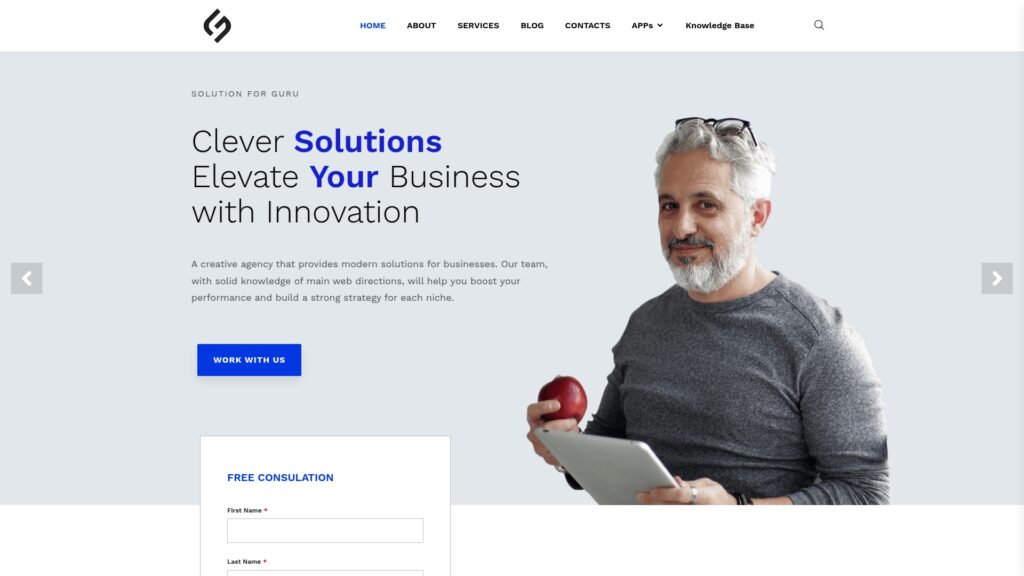
Working with Solution for Guru gives you:
- Faster time-to-value — avoid the trial-and-error of DIY integration and launch a working system in weeks, not months.
- Expert configuration — pipelines, lead scoring, automation workflows, and UTM attribution set up correctly from day one.
- SEO-CRM alignment — they bridge the gap between your marketing and sales teams, ensuring content performance data flows into your CRM and drives sales decisions.
- Ongoing support and optimization — integration isn’t a one-time event; Solution for Guru provides continuous improvement to keep your lead generation engine performing as your business scales.
- Vendor-neutral guidance — they recommend the platform that genuinely fits your needs rather than pushing a single solution.
For businesses serious about turning their website and SEO investment into measurable revenue, partnering with Solution for Guru is a smart, strategic move.
Recommended:
- CRM Ecosystem Explained: Business and Technical Roles You Need
- What is CRM System Proficiency?
- How Should You Structure Your CRM Team for Maximum Success?
- Using Salesforce to Build a 360° Customer View
- What Should Investors Know About Salesforce Stock?
- What KPIs Should Every Business Track in Their CRM System?
- What is CRM Database?
- How Can CRM Analytics Transform Your Salesforce Experience?
- CRM Management
- Getting Started With Pipedrive
- What is Pipedrive CRM?
- Choosing the best low-cost CRM
- Top Microsoft Dynamics Alternatives and Competitors
- CRM Cost Comparison of Top Platforms