From Solo Podcaster to Global Audience with Riverside AI
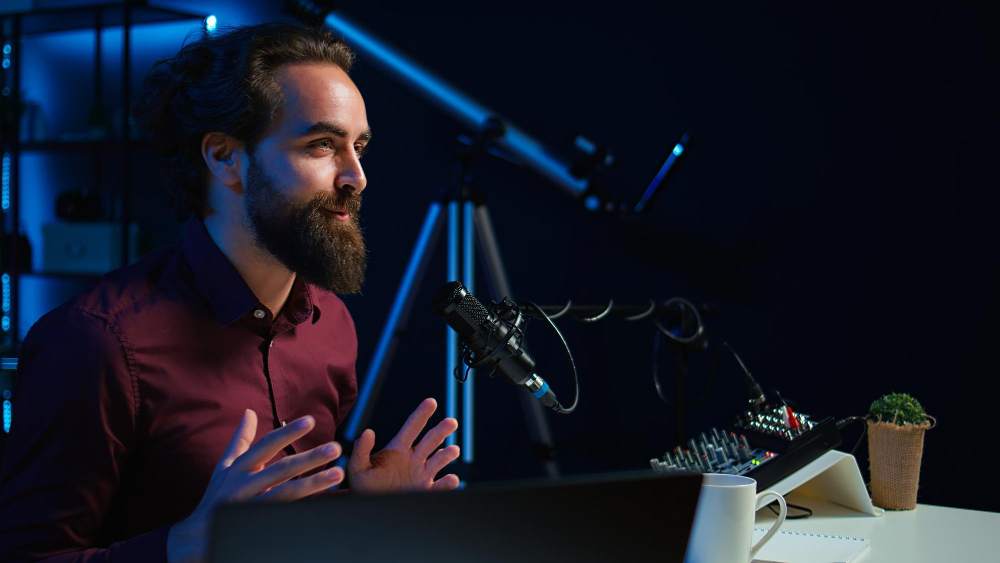
Independent podcasters now compete on the same stage as major media companies — and AI-powered tools are closing that gap faster than ever. If you record solo, manage your own editing, and dream of listeners across multiple continents, this guide walks you through exactly how Riverside transforms your workflow from local hobby to global presence.
📋 Table of Contents
- Quick Summary
- What Is a Solo Podcaster and What Does a Global Audience Really Mean?
- What Is Riverside and How Does Its AI Editing Work?
- Why Does AI Matter More Than Ever for Independent Podcasters?
- How Does Riverside Ensure Studio-Quality Recording Without a Studio?
- How Does Riverside’s AI Simplify the Post-Production Editing Workflow?
- How Can You Leverage Riverside’s Features for Multi-Platform Distribution?
- What Growth Strategies Work Best When Combined With Riverside?
- What Are the Key Takeaways for Solo Podcasters Using Riverside?
- Frequently Asked Questions
- How Does Partnering With Solution for Guru Supercharge Your Podcast Growth?
Quick Summary
This article covers how solo podcasters use Riverside’s AI features to grow from a one-person show to a globally recognized brand. Key takeaways include:
- Riverside records studio-quality audio and video locally, even on slow internet connections.
- Its AI engine auto-transcribes, removes filler words, and generates multilingual captions.
- Automatic clip creation and social-ready snippets dramatically cut post-production time.
- Multilingual translation features let podcasters reach non-English-speaking audiences.
- Partnering with Solution for Guru adds expert strategy and marketing support to your technical toolkit.
What Is a Solo Podcaster and What Does a Global Audience Really Mean?
A solo podcaster is an individual creator who produces, records, edits, and distributes a podcast without the backing of a production company or a full media team. From bedroom studios to home offices, millions of solo hosts publish episodes on platforms like Spotify, Apple Podcasts, and YouTube every week. According to Podcast Insights, there are over 4 million registered podcasts worldwide, with a significant share produced by independent creators operating alone.
The phrase “global audience” no longer belongs exclusively to celebrity broadcasters. Today, it refers to any creator whose content consistently reaches listeners across multiple countries and languages. Reaching a global audience means your show earns subscribers in Tokyo, São Paulo, Lagos, and Berlin — not just in your home city. Moreover, it means your content stays discoverable, understandable, and shareable across language barriers.
What Makes the Transition From Local to Global So Challenging?
The shift from a small local audience to a global one involves three core challenges. First, language stands as the most obvious barrier — most independent podcasters record exclusively in English, cutting off billions of potential listeners. Second, production quality separates professional-sounding shows from amateur ones; listeners across all markets quickly abandon poorly mixed audio. Third, discoverability requires SEO-rich transcripts, shareable clips, and consistent multi-platform presence — tasks that overwhelm a one-person team.
Fortunately, AI tools — and specifically Riverside — now address all three simultaneously. Rather than hiring a translator, a video editor, and a social media manager, a solo podcaster can automate those functions and focus on what matters most: creating compelling content.
What Is Riverside and How Does Its AI Editing Work?

Riverside is a browser-based podcast and video recording platform specifically designed for remote interviews and solo productions. Unlike Zoom or Google Meet, Riverside records each participant’s audio and video track locally on their device, then uploads the high-quality file to the cloud. This means that even if your internet drops during a session, the recording stays pristine — a critical advantage for professional podcasters.
Beyond clean recording, Riverside integrates a powerful AI layer that handles transcription, editing, translation, and content repurposing. Consequently, what used to require a team of three or four people now runs inside a single dashboard. The platform targets podcasters, journalists, marketers, and media companies who need broadcast-quality output without broadcast-level budgets.
| Riverside Feature | What It Does | Benefit for Solo Podcasters |
|---|---|---|
| Local recording | Records up to 4K video and 48kHz audio locally per participant | Studio quality regardless of internet speed |
| AI transcription | Auto-generates accurate text transcripts in minutes | Enables SEO content and fast editing |
| Text-based editing | Edit audio/video by editing the transcript text | No timeline scrubbing; saves hours |
| AI filler word removal | Detects and removes “um,” “uh,” and long silences | Polished delivery without manual cuts |
| Multilingual captions | Generates and overlays captions in multiple languages | Expands accessibility and global reach |
| Magic Clips | AI identifies highlight moments and creates short clips | Ready-made social media content |
| Custom branding | Adds logos, colors, and lower thirds to video output | Professional, consistent brand identity |
How Does Riverside Generate Multilingual Variants and Captions?
One of Riverside‘s most powerful features for global growth is its multilingual caption generation. After your episode finishes recording, Riverside’s AI transcription engine converts spoken audio into text. Then, using integrated translation models, the platform renders that transcript into captions in languages including Spanish, French, German, Portuguese, Japanese, and more.
These captions burn directly into your exported video, meaning you can publish a single episode with captions in three or four languages — all without hiring a translator. Furthermore, Riverside allows you to export the transcript as a standalone text file, which you can then repurpose as a blog post or show notes in each target language. This approach dramatically increases the SEO surface area of each episode, helping your podcast appear in search results across different linguistic markets.
Additionally, Riverside’s speaker diarization identifies who said what, which keeps multilingual transcripts clean and accurate even in interview-format episodes. For solo podcasters narrating long-form content, this means your captions stay perfectly synced — essential for non-native speakers following along in their second language.
How Does Riverside Create Promotional Snippets Automatically?
Riverside’s Magic Clips feature uses AI to scan your full episode and identify the moments most likely to resonate on social media. The algorithm considers factors like vocal energy, topic density, and pacing to surface highlight segments — typically between 30 seconds and 3 minutes long. Therefore, instead of manually scrubbing through a 60-minute recording to find your best soundbite, you receive a curated list of suggested clips within minutes of your recording ending.
Each clip arrives pre-formatted for platforms like Instagram Reels, TikTok, YouTube Shorts, and LinkedIn. Riverside automatically adjusts aspect ratios from 16:9 widescreen to 9:16 vertical and 1:1 square. Captions overlay automatically, keeping the content accessible even when viewers watch without sound — a growing behavior across all major social platforms. For solo podcasters who struggle to maintain a consistent social presence, this feature alone can justify the platform’s subscription cost.
Why Does AI Matter More Than Ever for Independent Podcasters?

The podcasting landscape grew intensely competitive between 2020 and 2024. Edison Research’s Infinite Dial report consistently shows listener numbers climbing — but so does the volume of new shows. As a result, solo podcasters face more competition than at any previous point in the medium’s history. AI tools level the playing field by providing capabilities previously reserved for funded media companies.
Specifically, AI addresses the time bottleneck that kills most solo podcasting operations. A typical one-hour episode requires three to six hours of post-production without AI assistance — transcription, editing, clip creation, writing show notes, and scheduling social posts. With Riverside’s AI suite, that same workflow compresses to under an hour. This time recapture allows solo podcasters to either publish more frequently or invest more energy in content quality and audience engagement.
Key Insight: Research from Buzzsprout indicates that podcasters who publish consistently — at least once per week — grow their audience 3x faster than those who publish irregularly. AI tools make consistent publishing achievable for single-person operations.
Beyond efficiency, AI unlocks data-informed decisions. Riverside’s analytics dashboard shows which clips performed best, which segments listeners rewound, and how far into episodes your audience typically listens. Armed with this data, you can refine your format, adjust episode length, and identify your most engaging topics — all evidence-based improvements that compound over time.
How Does Riverside Ensure Studio-Quality Recording Without a Studio?
Audio quality remains the single biggest factor in listener retention. Research published by Lower Street confirms that poor audio drives away listeners faster than any other production variable — including video quality and content depth. Riverside solves this problem through its local recording architecture.
While competing platforms like Zoom stream audio and video over the internet in compressed form, Riverside records each participant’s track at uncompressed, broadcast-quality settings directly on their local device. The platform then syncs these high-fidelity files to the cloud in real time. Even if your upload speed fluctuates mid-session, the locally stored track remains perfect.
What Recording Specifications Does Riverside Support?
- Audio: Up to 48kHz WAV (lossless), with separate tracks per speaker
- Video: Up to 4K resolution at 30fps per participant
- Screen sharing: Full HD capture for tutorial-style content
- Mobile: Dedicated iOS and Android apps maintain local recording on smartphones
Furthermore, Riverside includes real-time audio enhancement powered by AI. The platform applies noise reduction, echo cancellation, and automatic gain leveling during the recording session itself. Consequently, even if a car alarm goes off outside your window mid-episode, Riverside’s noise suppression filters it out before it ever reaches your final file.
This combination of local recording fidelity and real-time AI enhancement means that a solo podcaster recording from a bedroom closet can produce audio indistinguishable from a professional studio session — a genuine game-changer for creators who cannot invest in acoustic treatment or expensive microphone setups.
How Does Riverside’s AI Simplify the Post-Production Editing Workflow?
Traditional podcast editing requires proficiency in a digital audio workstation (DAW) like Audacity, GarageBand, or Adobe Audition. Learning these tools takes weeks, and using them competently takes hours per episode. Riverside‘s text-based editor removes this barrier entirely by linking every word in your transcript directly to the corresponding audio timeline position.
The workflow works as follows: once your recording ends and Riverside generates your transcript, you simply delete text to remove that audio from your episode. Want to cut a rambling tangent that lasted three minutes? Highlight the paragraph in the transcript, press delete, and the corresponding audio disappears — no timeline scrubbing, no waveform analysis required. This approach makes editing accessible to creators with zero technical background.
What Specific AI Editing Functions Does Riverside Provide?
- Filler word removal: Automatically detects and removes “um,” “uh,” “like,” “you know,” and similar verbal fillers throughout the entire episode with one click.
- Silence removal: AI trims dead air and overly long pauses, tightening pacing without affecting natural speech rhythm.
- Chapter markers: Riverside can suggest episode chapters based on topic shifts identified in the transcript — ideal for long-form shows.
- Studio Sound: A one-click mastering tool that applies professional-grade compression, EQ, and limiting to your final mix.
- Background noise removal: AI identifies and suppresses consistent background noise like HVAC hum, keyboard clicks, or ambient room tone.
Together, these features mean a solo podcaster can move from raw recording to a polished, distribution-ready episode without opening any external software. Furthermore, because Riverside operates entirely in the browser, there are no large software downloads or hardware requirements — your existing laptop handles everything.
How Can You Leverage Riverside’s Features for Multi-Platform Distribution?
Recording and editing represent only two thirds of the podcasting pipeline. Distribution — getting your content onto the right platforms in the right formats — determines how many people actually discover and listen to your show. Riverside streamlines this stage through its export system and integrations.
The platform exports your finished episode in multiple formats simultaneously, including MP3 for audio-only podcast directories, MP4 for YouTube, and vertical 9:16 MP4 for social reels. You also receive your full transcript as a text file, which you can paste directly into your podcast hosting platform as show notes or convert into a blog post for SEO purposes.
| Platform | Recommended Format | Riverside Export | Key Benefit |
|---|---|---|---|
| Spotify / Apple Podcasts | MP3 (audio) | ✅ Direct export | Reaches core podcast listeners |
| YouTube | MP4 (16:9 video) | ✅ Direct export | Taps world’s #2 search engine |
| Instagram Reels / TikTok | MP4 (9:16 vertical) | ✅ Magic Clips | Viral discovery potential |
| MP4 (1:1 or 16:9) | ✅ Magic Clips | B2B audience reach | |
| Blog / Website | Text transcript | ✅ Text export | SEO indexing and accessibility |
| Newsletters | Key quotes + audio embed | ✅ Transcript + clips | Engages existing subscribers |
Riverside also integrates directly with popular podcast hosting platforms and tools. This means you can push your finished episode from Riverside’s dashboard to your hosting provider without switching tabs — a small but meaningful efficiency in a workflow built on dozens of micro-tasks.
What Growth Strategies Work Best When Combined With Riverside?

Riverside provides the production infrastructure, but growth requires deliberate strategy on top of great tools. Solo podcasters who scale successfully combine Riverside’s output with consistent content marketing, community building, and search engine optimization. The following two pillars consistently deliver the strongest results for independent creators.
How Does SEO-Driven Content Amplify Your Podcast Reach?
Riverside’s auto-generated transcripts unlock a powerful SEO opportunity that most solo podcasters neglect. Each episode transcript, published as a blog post or show notes page, creates a new indexed page on your website. As a result, your podcast episodes become discoverable through Google search — not just through Spotify or Apple Podcasts search.
Moreover, when you publish multilingual transcripts using Riverside’s translation capabilities, you multiply that SEO effect across different language versions of Google. A Spanish-language transcript of your episode can rank in Google.es searches, driving listeners from Spain, Mexico, and Latin America to your show organically. This approach effectively turns every episode into multiple pieces of searchable content simultaneously.
To maximize this strategy, structure your show notes using keyword-rich headings, embed your episode player, and include a summary paragraph targeting your primary search term. Tools like Ahrefs or Ubersuggest help identify the exact phrases your target audience searches before they discover podcasts on a given topic.
How Do Short-Form Social Clips Drive New Listeners to Your Show?
Short-form video now drives more new podcast discovery than any other channel. According to Edison Research, YouTube surpassed Spotify as the most-used podcast listening platform in the United States in 2024. TikTok and Instagram Reels introduce millions of people to podcasters daily through algorithm-driven recommendation feeds.
Riverside’s Magic Clips feature creates these short-form assets automatically, but amplifying them requires consistency and strategy. Specifically, you should publish at least three to five clips per episode across platforms, add on-screen captions (which Riverside applies automatically), and include a clear call-to-action directing viewers to your full episode. Testing different clips from the same episode also reveals which topics resonate most strongly with different audience segments.
Pro Tip: Use Riverside’s branded templates to ensure every clip carries your podcast’s visual identity — logo, colors, and episode title. Brand recognition compounds over time; listeners who see your clips repeatedly on social media are far more likely to subscribe when they finally click through.
What Are the Key Takeaways for Solo Podcasters Using Riverside?
The journey from solo podcaster to global audience no longer demands a production company, a translation team, or a full-time social media manager. Riverside compresses that entire operation into a single AI-powered platform accessible from any browser on any device.
Throughout this article, we have established that Riverside’s local recording architecture delivers studio-quality audio regardless of your internet conditions — the foundational requirement for building listener trust at scale. Additionally, its AI transcription and text-based editing turn a technically demanding workflow into a task manageable by anyone, regardless of their technical background.
Moreover, Riverside’s multilingual caption generation and Magic Clips features directly address the two largest barriers to global growth: language access and consistent social media presence. By automating both, Riverside enables solo podcasters to publish multilingual content across five or six platforms from a single recording session — a workflow that previously required days and multiple contractors.
Equally important, the strategic layer matters as much as the tools. Combining Riverside’s production automation with the expert guidance of Solution for Guru creates a complete growth system — one that handles both the how of podcast production and the why of audience building. The most successful independent podcasters in 2024 and beyond use AI to eliminate bottlenecks and human expertise to identify opportunities.
In short, the solo podcaster of today has access to capabilities that major media companies only unlocked five years ago. The tools are ready. The global audience is waiting. The only remaining question is whether you take the first step and start recording.
Frequently Asked Questions
Yes, absolutely. Riverside designs its interface specifically for creators who lack technical production backgrounds. The text-based editor removes the need to understand audio timelines, and the AI handles technically complex tasks like noise reduction and filler word removal automatically. Most solo podcasters record and publish their first episode within a few hours of signing up. Riverside also provides extensive tutorial documentation and video guides that walk you through every feature step-by-step, making the learning curve exceptionally manageable even for first-time podcasters.
Riverside’s transcription accuracy typically exceeds 90% for clear, well-recorded audio in English, which places it among the most accurate AI transcription tools available. For other languages, accuracy varies depending on the language and recording clarity — Spanish, French, and German tend to perform particularly well. Riverside supports transcription and caption generation across dozens of languages, making it genuinely viable for non-English-speaking markets. For highly technical or jargon-heavy content, you may need to review and correct some terminology manually, but the time savings compared to manual transcription remain substantial regardless.
How Does Partnering With Solution for Guru Supercharge Your Podcast Growth?
While Riverside gives you the production tools, strategic growth requires expert guidance tailored to your specific niche, audience, and goals. This is where Solution for Guru becomes an invaluable partner for solo podcasters who are serious about scaling.
Solution for Guru is a digital growth consultancy that helps content creators and media brands build sustainable, data-driven growth systems. Their team combines content strategy, SEO expertise, paid media management, and audience development into cohesive growth plans — precisely the kind of strategic layer that complements Riverside’s technical capabilities.

What makes the Riverside + Solution for Guru combination particularly effective is the division of labor it creates. Riverside handles the technical production pipeline — recording, editing, transcription, clip generation — automatically. Solution for Guru then layers strategic intelligence on top: identifying growth opportunities, refining your positioning, and amplifying your best content to the right audiences at the right time.
Furthermore, Solution for Guru’s team understands the specific challenges that solo podcasters face, including time constraints, limited marketing budgets, and the difficulty of building an audience from zero. Their consultancy model adapts to your stage of growth, offering support whether you publish your first episode or already have 10,000 monthly listeners and want to reach 100,000.
Ready to Scale Your Podcast?
Combine Riverside’s AI production power with expert growth strategy. Visit Solution for Guru to explore how their team can build a custom growth plan for your show — and visit Riverside to start producing broadcast-quality episodes today.