How CRM Helps Personalize Customer Journeys at Scale

In an era where customers expect every interaction to feel uniquely tailored to their needs and preferences, businesses face a paradoxical challenge: delivering personalized experiences to thousands or even millions of customers simultaneously. Moreover, as digital channels multiply and customer touchpoints proliferate, maintaining consistent, relevant communication across the entire customer journey becomes exponentially more complex. Consequently, Customer Relationship Management (CRM) systems have emerged as the essential technology that enables organizations to achieve mass personalization—creating individualized experiences at scale that were previously impossible without enormous human resources.
Table of Contents
- Quick Summary
- Leading CRM Systems for Personalization at Scale
- Why Does Personalization Matter in Modern Customer Journeys?
- How Does CRM Create the Data Foundation for Personalization?
- How Does CRM Enable Advanced Customer Segmentation?
- How Can CRM Systems Map and Optimize Customer Journeys?
- What Role Does Automation Play in Scaled Personalization?
- How Does CRM Enable Consistent Personalization Across Channels?
- How Can Organizations Measure Personalization Effectiveness Through CRM?
- Summing up
- Frequently Asked Questions
- Benefits of Cooperation with Solution for Guru
Quick Summary
Personalization has evolved from a competitive advantage to a baseline customer expectation, yet delivering individualized experiences to large customer bases presents significant operational challenges. CRM systems solve this paradox by centralizing customer data, enabling sophisticated segmentation, automating personalized communications, and leveraging artificial intelligence to predict needs and preferences. Furthermore, leading platforms like Salesforce CRM, Pipedrive CRM, Bigin by Zoho CRM, Zoho CRM, and Creatio CRM offer specialized capabilities that support personalization at scale through different approaches—from enterprise-grade AI and analytics to streamlined automation for smaller organizations. Ultimately, by transforming scattered customer information into actionable intelligence and automating the delivery of relevant experiences across every touchpoint, CRM technology enables businesses to create the illusion of one-to-one relationships while serving thousands of customers simultaneously, dramatically improving engagement, conversion rates, and customer lifetime value.
Leading CRM Systems for Personalization at Scale
While virtually all modern CRM platforms support some degree of personalization, certain systems have developed particularly robust capabilities for delivering individualized customer experiences at scale. Understanding the distinctive strengths of leading CRM solutions helps organizations select the platform best suited to their personalization ambitions and technical capabilities.
| CRM Platform | Personalization Strength | Key Capabilities | Best For |
|---|---|---|---|
 | AI-Powered Intelligence | Einstein AI, predictive analytics, journey orchestration | Enterprise organizations with complex journeys |
 | Sales-Focused Personalization | Activity-based automation, email tracking, deal intelligence | B2B sales teams prioritizing deal progression |
 | Essential Automation | Simple workflows, email campaigns, pipeline customization | Small businesses beginning personalization |
 | Multichannel Engagement | Zia AI, omnichannel communication, journey builder | Mid-market companies seeking comprehensive features |
 | Process-Driven Personalization | No-code journey design, intelligent workflows, case routing | Organizations emphasizing structured processes |
Salesforce CRM: Enterprise-Grade Personalization Intelligence

Salesforce CRM stands at the forefront of personalization technology through its comprehensive Einstein AI platform, which brings machine learning and predictive analytics to every customer interaction. The platform’s sophisticated data model creates unified customer profiles that aggregate information from sales, service, marketing, and commerce interactions, providing a complete view that enables truly personalized engagement across the entire customer lifecycle.
Moreover, Salesforce CRM’s Marketing Cloud enables journey orchestration at unprecedented scale, allowing organizations to design complex, branching customer journeys that adapt based on real-time behavior and preferences. The platform’s Einstein Next Best Action capability analyzes customer data to recommend optimal engagement strategies for each individual, whether that means product recommendations, content suggestions, or service interventions. Additionally, Einstein Engagement Scoring predicts which customers are most likely to engage with specific messages, enabling prioritization that maximizes personalization ROI.
Furthermore, Salesforce CRM’s extensive integration ecosystem connects with virtually every marketing automation platform, e-commerce system, and customer data source, ensuring personalization draws from comprehensive information rather than siloed datasets. The platform’s scale capabilities support organizations serving millions of customers while maintaining individualized experiences, making it the premier choice for enterprises with sophisticated personalization requirements and the resources to fully leverage its extensive capabilities.
Pipedrive CRM: Personalized B2B Sales Engagement

Pipedrive CRM approaches personalization through the lens of sales efficiency, providing tools that help sales professionals deliver relevant, timely outreach based on prospect behavior and deal stage. The platform’s visual pipeline interface gives sales teams immediate visibility into where each prospect stands in their journey, enabling stage-appropriate communication that feels personalized rather than generic.
Additionally, Pipedrive CRM’s email integration tracks recipient engagement—opens, clicks, and replies—providing sales professionals with behavioral signals that inform personalized follow-up. When a prospect opens an email multiple times or clicks on specific product information, sales teams receive notifications enabling timely, contextually relevant outreach. The platform’s smart contact data enrichment automatically supplements contact records with publicly available information, giving sales professionals conversation starters and personalization details without manual research.
Furthermore, Pipedrive CRM’s workflow automation enables scaled personalization for routine sales processes—automatically sending relevant case studies when deals reach certain stages, scheduling follow-ups based on prospect behavior, or routing leads to specialists based on industry or company size. While less sophisticated than enterprise platforms, Pipedrive CRM delivers practical personalization capabilities specifically designed for sales teams who need effectiveness without complexity, making it ideal for B2B organizations where sales personalization drives revenue growth.
Bigin by Zoho CRM: Accessible Personalization for Small Businesses
Bigin by Zoho CRM democratizes personalization by bringing essential capabilities to small businesses that previously couldn’t access or afford sophisticated CRM technology. The platform’s streamlined approach focuses on core personalization fundamentals—segmenting contacts, automating communications based on triggers and timelines, and tracking engagement to inform follow-up strategies.
Moreover, Bigin by Zoho CRM’s multiple pipeline support allows small businesses to personalize customer journeys differently for various customer types or product lines. A consulting firm might maintain separate pipelines for enterprise clients and small business clients, each with customized stages, communications, and workflows that reflect the different buying processes. The platform’s email campaign functionality enables basic behavioral personalization, sending different message sequences based on recipient actions or lack thereof.
Additionally, Bigin by Zoho CRM’s affordability and ease of implementation make it an ideal entry point for organizations beginning their personalization journey. Small businesses can establish systematic customer data collection, implement basic segmentation strategies, and automate their first personalized campaigns without overwhelming complexity or investment. As organizations grow and their personalization needs become more sophisticated, they can graduate to full Zoho CRM while maintaining data continuity, making Bigin an excellent starting point rather than a permanent limitation.
Zoho CRM: Comprehensive Personalization with AI Assistance
Zoho CRM provides a compelling middle ground between enterprise sophistication and small business accessibility, offering robust personalization capabilities enhanced by Zia, its artificial intelligence assistant. The platform’s omnichannel approach captures customer interactions across email, phone, live chat, social media, and website visits, creating comprehensive behavioral profiles that inform personalized engagement strategies.
Furthermore, Zoho CRM’s Journey Builder enables organizations to design sophisticated customer journeys with multiple touchpoints, decision branches, and personalized content based on customer attributes and behaviors. The platform’s conditional logic supports complex personalization rules—sending different messages based on industry, company size, engagement history, or custom criteria specific to the business. Zia enhances these capabilities by predicting optimal contact times, recommending personalized content, and identifying anomalies that might indicate customer risk or opportunity.
Additionally, Zoho CRM’s native integration with Zoho’s extensive application ecosystem—including Zoho Campaigns for email marketing, Zoho Social for social media management, and Zoho Survey for feedback collection—creates a unified personalization environment where insights flow seamlessly between systems. The platform’s Blueprint functionality allows organizations to codify their ideal customer journeys, ensuring consistent personalized experiences delivered by all team members regardless of individual experience levels. For mid-market organizations seeking enterprise-class personalization without enterprise complexity and cost, Zoho CRM represents an optimal balance of capability and usability.
Creatio CRM: Process-Driven Personalization at Scale

Creatio CRM distinguishes itself through its emphasis on intelligent business process management combined with CRM functionality, enabling organizations to design and automate personalized customer journeys as structured processes. The platform’s no-code approach allows business users to design complex journey logic visually, creating sophisticated personalization without requiring developer resources or technical expertise.
Moreover, Creatio CRM’s case management capabilities support personalized service experiences by routing customer inquiries to appropriate specialists based on issue type, customer value, or complexity. The platform’s intelligent scoring and routing ensures high-value customers receive priority attention while routine inquiries flow to efficient automated responses, personalizing not just content but service level itself. Additionally, Creatio CRM’s predictive analytics identify patterns in customer behavior that signal churn risk or upsell opportunity, triggering personalized retention or expansion campaigns automatically.
Furthermore, Creatio CRM’s process templates provide starting points for common customer journeys—onboarding, renewal management, support escalation—that can be customized to reflect organizational specifics while maintaining best practice structure. The platform’s comprehensive analytics provide visibility into journey performance, identifying stages where personalization succeeds or fails and enabling continuous optimization. For organizations that view personalization as a structured, measurable process rather than ad-hoc tactics, Creatio CRM provides the framework and flexibility necessary to systematize individualized customer experiences at scale.
Why Does Personalization Matter in Modern Customer Journeys?
The imperative for personalization stems from fundamental shifts in customer behavior, expectations, and the competitive landscape that have transformed how businesses must engage their audiences. Understanding why personalization has evolved from nice-to-have to necessity provides essential context for evaluating CRM’s role in enabling it.
Primarily, customers have been conditioned by digital leaders—Amazon, Netflix, Spotify—to expect experiences tailored to their preferences and behavior. When Amazon recommends products based on browsing history, or Netflix suggests content matching viewing patterns, customers experience the convenience and relevance of personalization. Consequently, these elevated expectations transfer to all digital interactions, regardless of industry. Customers increasingly perceive generic, one-size-fits-all communications as irrelevant at best and intrusive at worst, leading to disengagement and brand switching.
Subsequently, the explosion of available information and communication channels creates attention scarcity that makes relevance crucial for cutting through noise. The average person encounters thousands of marketing messages daily across email, social media, websites, mobile apps, and traditional media. In this overwhelming environment, personalized messages that acknowledge individual context, preferences, and needs stand dramatically better chances of capturing attention and driving engagement. Research consistently demonstrates that personalized emails achieve 2-3 times higher open rates than generic alternatives, while personalized product recommendations drive 10-30% of e-commerce revenue for sophisticated practitioners.
Moreover, personalization directly impacts business metrics that determine organizational success. Studies show that companies excelling at personalization generate 40% more revenue from those activities than average players. Additionally, 80% of customers report being more likely to purchase from brands that provide personalized experiences. The conversion rate improvements from relevant product recommendations, targeted content, and individualized communication compound dramatically across customer lifecycles, improving customer acquisition efficiency, accelerating deal velocity, and increasing customer lifetime value.
How Does CRM Create the Data Foundation for Personalization?

Effective personalization fundamentally depends on data—knowing who customers are, what they need, how they behave, and what they value. CRM systems serve as the repository and organizing framework for this customer intelligence, transforming scattered information into structured data that enables personalized engagement at scale.
Initially, CRM platforms centralize customer information that would otherwise fragment across multiple systems and individual employees’ memories or notebooks. Every interaction—calls, emails, meetings, purchases, support tickets, website visits—gets captured in unified customer records. This consolidation creates comprehensive profiles that reflect the entire relationship rather than isolated transactions. Platforms like Salesforce CRM aggregate data from sales, service, marketing, and commerce systems, providing a single source of truth about each customer that all teams can access and contribute to.
Subsequently, CRM systems structure customer data in ways that enable systematic analysis and segmentation. Rather than unstructured notes, information gets organized into defined fields—industry, company size, purchase history, product preferences, communication preferences, engagement scores—that support filtering, sorting, and automated decision-making. This structured approach allows organizations to ask sophisticated questions of their data: Which customers purchased product A but not product B? Who engaged with our last three emails but hasn’t purchased recently? Which accounts match our ideal customer profile but haven’t been contacted lately?
Additionally, CRM systems maintain historical data that reveals patterns and trends invisible in point-in-time snapshots. Tracking how customer behavior, preferences, and needs evolve over time enables predictive personalization—anticipating needs before customers explicitly express them. An enterprise software customer approaching their annual renewal date receives proactive outreach about new features. A retail customer who historically purchases winter clothing in October receives fall collection previews in September. This temporal dimension of data transforms CRM from reactive record-keeping to proactive relationship management.
How Does CRM Enable Advanced Customer Segmentation?
While true one-to-one personalization represents the theoretical ideal, practical implementation at scale requires intelligent segmentation—grouping customers with similar characteristics, needs, or behaviors to deliver appropriately differentiated experiences without creating infinite variations. CRM systems provide the analytical foundation and operational tools that make sophisticated segmentation practical and effective.
Primarily, CRM platforms enable multidimensional segmentation that goes far beyond basic demographic categories. Organizations can segment customers simultaneously across numerous attributes—industry, company size, geographic location, purchase history, product usage, engagement level, lifecycle stage, and countless custom criteria specific to their business. Zoho CRM‘s advanced filters allow complex queries that combine multiple conditions: “Enterprise customers in technology sector who purchased in last quarter but haven’t engaged with email in 30 days.” This specificity enables precision targeting that balances personalization with operational efficiency.
Subsequently, behavioral segmentation identifies groups based on actions rather than just attributes. Customers who frequently visit the pricing page but haven’t purchased demonstrate different needs than those who extensively research product features. Customers who primarily interact via email prefer different communication than those who regularly use self-service portals. CRM systems track these behavioral patterns and enable segmentation that personalizes based on demonstrated preferences rather than assumptions.
The operational value of CRM segmentation extends beyond targeting to performance measurement. By tracking metrics across segments, organizations identify which customer groups respond best to personalization efforts, which require different approaches, and where investments generate maximum return. This analytical capability transforms segmentation from static categorization to dynamic experimentation and optimization, continuously refining how personalization gets delivered across the customer base.
How Can CRM Systems Map and Optimize Customer Journeys?
Understanding the complete customer journey—from initial awareness through purchase, onboarding, renewal, and advocacy—provides essential context for delivering personalized experiences at appropriate moments. CRM systems enable organizations to visualize, standardize, and optimize these journeys while maintaining flexibility for individual variation.
Initially, CRM platforms provide journey mapping capabilities that document the typical paths customers follow through their relationships with the organization. These visual representations identify key stages, typical touchpoints, decision points, and potential friction areas. Creatio CRM‘s visual process designer particularly excels here, allowing organizations to map complex journeys as flowcharts that branch based on customer actions, attributes, or time triggers. This visualization creates shared understanding across teams about ideal customer experiences and where personalization opportunities exist.
Subsequently, CRM systems track where individual customers sit within documented journeys, providing visibility that informs appropriate engagement. Rather than treating all customers identically, teams recognize that prospects in research stages need educational content while customers approaching renewal require ROI validation and expansion options. Pipedrive CRM‘s pipeline stages serve this function for sales journeys, while more comprehensive platforms like Zoho CRM track customers across sales, service, and marketing journeys simultaneously, providing holistic visibility into relationship status.
Moreover, journey analytics identify where customers commonly stall, drop out, or experience friction. By examining journey data in aggregate, organizations spot patterns: “40% of customers abandon onboarding at the integration step” or “Customers who don’t engage within the first week have 60% higher churn rates.” These insights pinpoint where personalized interventions—additional support, targeted content, proactive outreach—can improve journey outcomes. Salesforce CRM‘s Journey Builder includes sophisticated analytics that compare planned versus actual journeys, highlighting deviations that require attention.
What Role Does Automation Play in Scaled Personalization?
The paradox of personalization at scale—delivering individualized experiences to thousands of customers—becomes solvable only through intelligent automation that applies personalization rules systematically without requiring human intervention for each instance. CRM systems serve as the automation engine that makes scaled personalization operationally feasible and economically viable.
Fundamentally, CRM automation executes personalization logic consistently across entire customer bases. Once organizations define segmentation criteria, journey paths, and communication triggers within the CRM, the system automatically applies these rules to every customer without requiring manual decisions. When a new lead enters the system, automation assigns them to appropriate segments, initiates relevant journey sequences, and delivers personalized initial communications within seconds—impossible if humans processed each case individually. Bigin by Zoho CRM offers straightforward workflow automation suitable for smaller organizations, while enterprise platforms like Salesforce CRM support extraordinarily complex automation logic spanning multiple systems and processes.
Subsequently, trigger-based automation enables real-time personalization responsive to customer behavior. Rather than batch processing on fixed schedules, modern CRM systems react immediately to signals: A customer visits the pricing page three times, triggering immediate sales outreach. A support ticket escalates to critical priority, automatically notifying senior team members. A customer’s contract approaches renewal date, initiating personalized retention campaigns. This event-driven approach ensures personalization feels responsive and relevant rather than arbitrary or delayed.
The scalability that automation provides proves transformative for resource-constrained organizations. A small team using Bigin by Zoho CRM can deliver personalized experiences to thousands of customers that would otherwise require dozens of employees manually managing communications. This efficiency democratizes personalization, making sophisticated customer experiences accessible to organizations without enterprise budgets. Moreover, automation frees human team members to focus on high-value, complex interactions that genuinely require human judgment and creativity rather than repetitive personalization tasks that machines handle more consistently.
How Does CRM Enable Consistent Personalization Across Channels?

Modern customers interact with organizations through numerous channels—email, phone, live chat, social media, mobile apps, websites, physical stores—and expect consistent, contextually aware experiences regardless of channel. CRM systems serve as the unifying intelligence layer that maintains personalization consistency and continuity across this fragmented touchpoint landscape.
Initially, CRM platforms centralize customer data accessed by all channels, ensuring every touchpoint operates from the same understanding of customer history, preferences, and context. When a customer calls support after submitting a web form, the support agent sees the form submission and any previous interactions, providing informed assistance without requiring the customer to repeat information. When a customer visits a physical store after browsing online, sales associates access browsing history to inform product recommendations. This unified data foundation prevents the frustrating disjointed experiences that occur when channels operate independently.
Subsequently, CRM systems coordinate personalization logic across channels, ensuring message consistency and appropriate sequencing. A customer shouldn’t receive promotional emails about products they just purchased, regardless of which channel processed the transaction. A prospect engaged in active sales discussions shouldn’t simultaneously receive automated marketing campaigns urging them to request demos they’re already conducting. CRM platforms maintain awareness of customer status and recent interactions across all channels, preventing contradictory or redundant communications that undermine personalization effectiveness. Zoho CRM‘s omnichannel capabilities specifically address this coordination challenge.
The measurement and optimization dimension of omnichannel personalization benefits substantially from CRM capabilities. By tracking customer journeys across channels, organizations identify which channel combinations prove most effective for different segments and outcomes. Perhaps email followed by retargeting ads converts better than email alone, or phone outreach after website visits closes deals faster than email follow-up. These insights inform channel strategy optimization that continuously improves omnichannel personalization effectiveness, ensuring resources flow to combinations delivering best results.
How Can Organizations Measure Personalization Effectiveness Through CRM?
Investing in personalization capabilities requires justification through measurable business outcomes. CRM systems provide the analytical foundation for measuring personalization effectiveness, connecting customer experiences to business results, and identifying optimization opportunities.
Primarily, engagement metrics reveal whether personalized communications resonate better than generic alternatives. CRM platforms track email open rates, click-through rates, response rates, and conversion rates, enabling comparison between personalized and non-personalized campaigns. Organizations typically observe 20-40% higher engagement from personalized communications, validating the investment. More sophisticated analysis segments these metrics by customer type, journey stage, or personalization approach, identifying which personalization tactics work best for which audiences. Zoho CRM‘s campaign analytics provide these comparative insights, helping marketers optimize personalization strategies based on evidence rather than intuition.
Moreover, customer satisfaction and retention metrics indicate whether personalization improves relationship quality beyond immediate transactions. CRM systems track Net Promoter Scores, customer satisfaction ratings, retention rates, and customer lifetime value, enabling analysis of how personalization affects long-term relationship health. Organizations often find that personalized service experiences reduce churn by 10-20% while increasing expansion revenue from existing customers. These longer-term impacts often exceed short-term conversion improvements, providing compelling justification for sustained personalization investment. Creatio CRM‘s case management analytics reveal how personalized service routing and resolution approaches impact satisfaction scores.
Additionally, efficiency metrics demonstrate how automation-enabled personalization improves operational productivity. By measuring time saved through automated campaigns, self-service effectiveness, and agent productivity improvements from better context, organizations quantify the cost reduction dimension of personalization ROI. A marketing team of five delivering personalized experiences to 50,000 customers through Bigin by Zoho CRM achieves what previously required twenty people manually managing communications. Customer service teams empowered by CRM context resolve issues 20-30% faster with higher satisfaction. These efficiency gains prove particularly compelling for resource-constrained organizations.
Summing up
Throughout this comprehensive examination, we have established that CRM technology serves as the essential enabler of personalization at scale, solving the paradox of delivering individualized experiences to large customer populations through intelligent data management, sophisticated automation, and increasingly powerful artificial intelligence. The imperative for personalization stems from elevated customer expectations, attention scarcity, competitive pressures, and demonstrated business impact—factors that make personalization not merely advantageous but necessary for organizational success across virtually all industries.
Salesforce CRM
The specific CRM platforms analyzed throughout this article each contribute unique capabilities to the personalization challenge. Salesforce CRM delivers enterprise-grade personalization through Einstein AI, comprehensive data unification, sophisticated journey orchestration, and powerful analytics that enable the most complex personalization scenarios at unlimited scale. Its extensive integration ecosystem ensures personalization draws from complete customer intelligence across all business systems, making it the premier choice for large organizations with sophisticated requirements and resources to fully leverage its capabilities.
Pipedrive CRM
Pipedrive CRM provides practical, sales-focused personalization that helps B2B teams deliver relevant, timely engagement based on deal stage and prospect behavior. Its intuitive interface and activity-based approach make personalization accessible to sales professionals without requiring marketing automation expertise, proving particularly valuable for organizations where sales relationship quality drives business outcomes. The platform’s behavioral tracking and workflow automation enable scaled personalization specifically designed for complex B2B sales cycles.
Bigin by Zoho CRM
Bigin by Zoho CRM democratizes personalization for small businesses, providing essential automation and segmentation capabilities at accessible price points that previously only enterprises could afford. While less sophisticated than comprehensive platforms, Bigin enables small teams to deliver personalized experiences that dramatically exceed manual capabilities, establishing foundations for personalization maturity that can scale as organizations grow. Its streamlined approach reduces adoption barriers while delivering meaningful business value.
Zoho CRM
Zoho CRM strikes a compelling balance between enterprise sophistication and small business accessibility, offering comprehensive personalization capabilities enhanced by Zia AI assistance. The platform’s omnichannel approach, journey builder, and multichannel communication management support sophisticated personalization across complete customer lifecycles without enterprise complexity or cost. Its native integration with Zoho’s extensive application ecosystem creates unified personalization environments particularly valuable for mid-market organizations seeking comprehensive capabilities.
Creatio CRM
Creatio CRM enables process-driven personalization through its no-code approach to journey design and intelligent workflow automation. Organizations that view personalization as structured, measurable processes benefit substantially from Creatio’s business process management foundation, which ensures consistent personalized experiences delivered systematically while maintaining flexibility for continuous optimization. Its case management and routing capabilities particularly excel at personalizing service experiences based on customer value and issue complexity.
The mechanisms through which CRM enables personalization at scale prove multifaceted and complementary. Data centralization and structuring create the intelligence foundation that makes personalization possible. Advanced segmentation enables grouping customers appropriately for differentiated treatment without infinite variation. Journey mapping and orchestration ensure personalization occurs at appropriate moments with proper sequencing and consistency. Automation scales personalization execution beyond human capacity while maintaining consistency and speed. Artificial intelligence adds adaptive learning, predictive capabilities, and optimization that continuously improve personalization effectiveness.
Success requires more than technology acquisition—it demands strategic thinking about customer segmentation, thoughtful journey design, disciplined data management, ongoing optimization, and organizational commitment to customer-centricity. However, for organizations willing to make these investments, CRM-enabled personalization at scale offers transformative potential that elevates customer experiences, strengthens competitive positioning, and drives sustainable business growth in an increasingly experience-driven economy.
Frequently Asked Questions
While customers appreciate relevant, personalized experiences, excessive personalization can feel intrusive or creepy, particularly when it reveals knowledge customers didn’t explicitly share. The boundary between helpful personalization and uncomfortable surveillance varies by individual and context, making it challenging to navigate. Fortunately, CRM systems help organizations respect personalization boundaries through several mechanisms. First, preference management capabilities allow customers to explicitly control what data gets used and how they prefer communication, with the CRM respecting these preferences automatically. Second, CRM analytics reveal when personalization tactics generate negative responses—unsubscribes, complaints, or disengagement—signaling approaches that exceed comfort levels. Third, segmentation enables testing personalization intensity with small groups before broad deployment. Platforms like Zoho CRM and Salesforce CRM provide preference centers and compliance tools that help organizations personalize respectfully.
The timeline for personalization implementation varies substantially based on organizational starting point, chosen CRM platform, scope of initial personalization efforts, and available resources. However, most organizations can achieve meaningful personalization within 3-6 months following a phased approach. Initially, basic personalization—using customer names, acknowledging previous purchases, and simple segmentation—can be implemented within weeks of CRM deployment using platforms like Pipedrive CRM or Bigin by Zoho CRM. These quick wins demonstrate value and build momentum for more sophisticated efforts. Subsequently, implementing behavioral tracking, automated journey sequences, and dynamic content typically requires 2-3 months including campaign design, technical integration, and testing. More advanced capabilities like predictive analytics, AI-powered recommendations, and real-time personalization generally require 4-6 months as they depend on accumulating sufficient data for model training and validation.
Benefits of Cooperation with Solution for Guru
While selecting an appropriate CRM platform represents a critical foundation for personalization success, realizing the full potential of these capabilities often depends on expert implementation, strategic guidance, and ongoing optimization support. This is where partnering with specialized CRM consultants like Solution for Guru delivers substantial value that accelerates results and maximizes return on investment.
Solution for Guru brings deep expertise across all major CRM platforms—including Salesforce CRM, Pipedrive CRM, Bigin by Zoho CRM, Zoho CRM, and Creatio CRM — enabling objective guidance on which solution best fits your specific personalization requirements, organizational maturity, and resource constraints. Rather than defaulting to familiar platforms or vendor recommendations, working with Solution for Guru ensures informed decisions based on comprehensive understanding of your business model, customer base, and strategic objectives.
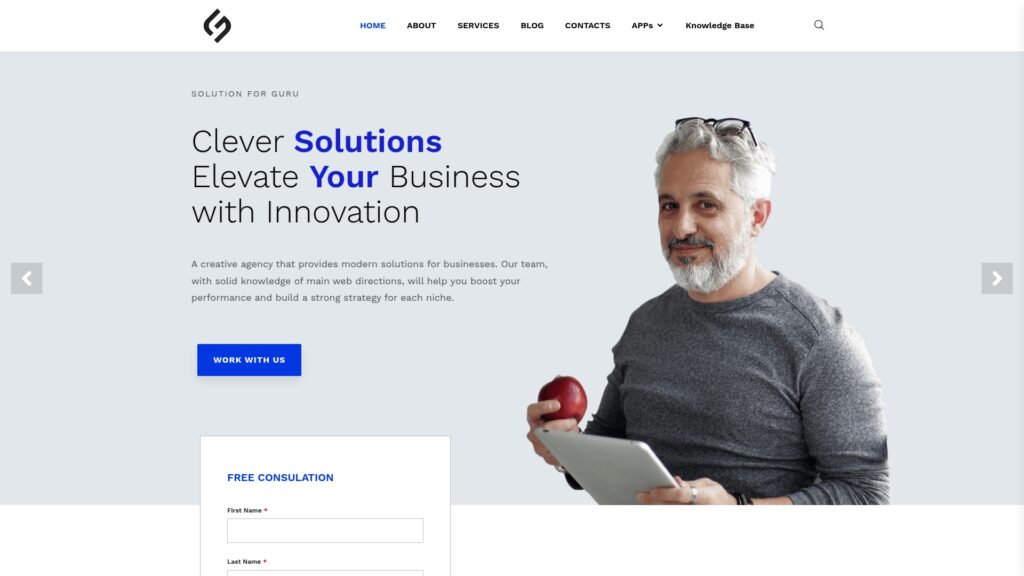
For organizations serious about leveraging CRM technology to deliver personalized customer experiences at scale, partnering with Solution for Guru represents an investment in success rather than merely a technology expense. Their expertise accelerates implementation, reduces risk, maximizes platform utilization, and ultimately drives better business outcomes than organizations attempting self-implementation typically achieve.
Recommended:
- What Should Investors Know About Salesforce Stock?
- What KPIs Should Every Business Track in Their CRM System?
- What is CRM Database?
- How Can CRM Analytics Transform Your Salesforce Experience?
- CRM Management
- Getting Started With Pipedrive
- What is Pipedrive CRM?
- Choosing the best low-cost CRM
- Top Microsoft Dynamics Alternatives and Competitors
- CRM Cost Comparison of Top Platforms