How Does GPS Tracking Work: Satellites, Signals, and Software?

Every day, millions of commercial vehicles, delivery trucks, and fleet assets move across roads worldwide — and the businesses operating them need to know exactly where each one is, in real time. GPS tracking makes this possible, transforming raw satellite signals into actionable intelligence that drives safety, efficiency, and profitability. Yet despite how widely businesses use GPS technology today, the underlying mechanics — how satellites communicate with devices, how signals become coordinates, and how software converts those coordinates into fleet insights — remain a mystery to many decision-makers. Understanding how GPS tracking actually works empowers organizations to choose the right solutions and extract the most value from them.
Table of contents
Quick Summary
This article explains the complete GPS tracking chain — from orbiting satellites to the software dashboards that fleet managers rely on daily. Key topics covered include: How GPS satellites, receivers, and trilateration work together to pinpoint locationHow fleet management platforms — Azuga, Verizon Connect, and Motive — turn GPS data into operational intelligenceA side-by-side comparison of Azuga, Verizon Connect, and MotiveHow partnering with Solution for Guru maximizes GPS tracking ROI
How Do Azuga, Verizon Connect, and Motive Relate to GPS Tracking?
GPS tracking technology only delivers real business value when paired with software capable of interpreting, storing, and presenting location data meaningfully. Three platforms consistently lead the fleet GPS tracking market: Azuga, Verizon Connect, and Motive. Each platform builds on the same fundamental GPS technology but packages it differently — serving distinct fleet sizes, industries, and operational priorities.
Azuga specializes in gamified driver safety and telematics, making it particularly popular with small-to-midsize fleets that want to reduce accidents and insurance costs. Verizon Connect leverages Verizon’s telecommunications infrastructure to deliver enterprise-grade fleet visibility with deep integration capabilities. Motive — formerly KeepTruckin — focuses on trucking and heavy-duty transport, combining ELD compliance, AI-powered dashcams, and GPS tracking in a single unified platform.
Together, these three platforms illustrate how GPS tracking technology evolves from raw satellite data into purpose-built business tools. Throughout this article, each platform serves as a real-world reference point for the GPS concepts discussed — showing how the same underlying technology gets applied differently based on industry needs.
How Does the GPS Satellite Network Actually Function?
What Satellites Make Up the GPS Constellation?
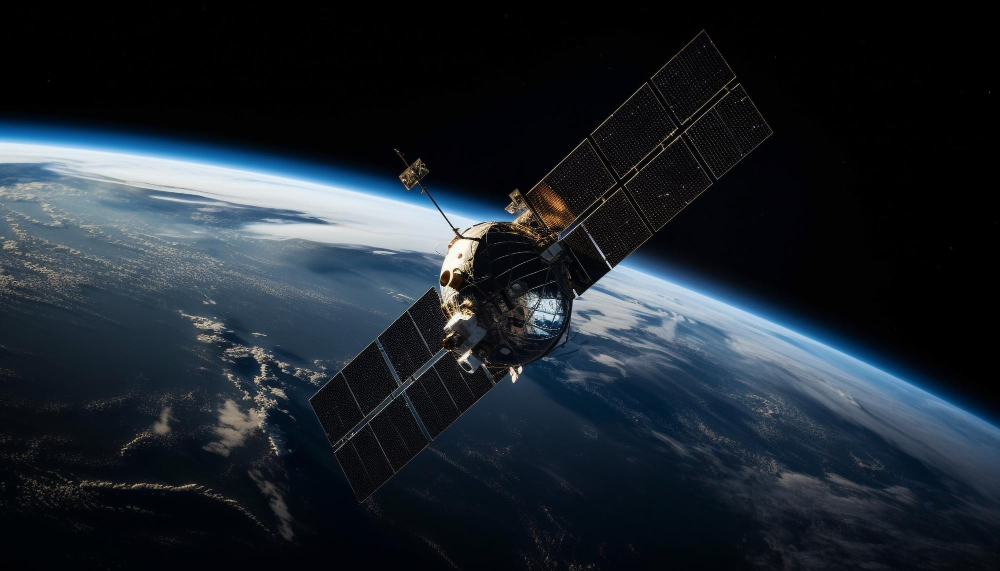
The Global Positioning System (GPS) operates through a network of at least 31 active satellites that the United States government maintains in medium Earth orbit, approximately 20,200 kilometers above the planet’s surface. The U.S. Space Force manages this constellation, known formally as NAVSTAR GPS, ensuring that at least four satellites remain visible from any point on Earth at any given time — the minimum required for accurate three-dimensional positioning.
Each satellite completes two full orbits around Earth every 24 hours, traveling at roughly 14,000 kilometers per hour. The satellites distribute across six orbital planes, each tilted at 55 degrees relative to the equator, ensuring consistent global coverage. Furthermore, each satellite carries atomic clocks accurate to within one second every 300,000 years — a precision level that makes GPS positioning calculations possible.
It is worth noting that GPS is only one of several global navigation satellite systems (GNSS) in operation. Russia operates GLONASS, the European Union operates Galileo, and China operates BeiDou. Modern fleet tracking hardware from platforms like Verizon Connect and Motive typically receives signals from multiple GNSS constellations simultaneously, improving accuracy and reliability — especially in urban environments with signal obstructions.
What Signals Do GPS Satellites Transmit?
GPS satellites continuously broadcast radio signals on multiple frequencies. The primary civilian frequency, L1 at 1575.42 MHz, carries the Coarse/Acquisition (C/A) code that most commercial GPS receivers use. A second frequency, L2 at 1227.60 MHz, traditionally served military applications but now supports civilian dual-frequency receivers that deliver significantly improved accuracy.
Each satellite’s signal contains three critical pieces of information: the satellite’s precise current position (ephemeris data), the current time according to the satellite’s atomic clock, and an almanac containing approximate positions of all other satellites in the constellation. GPS receivers use this information to calculate the time it took for the signal to travel from the satellite to the receiver — and from that travel time, determine the distance to that satellite.
Signal travel time matters enormously because GPS signals travel at the speed of light, approximately 299,792 kilometers per second. Even tiny timing errors translate into significant position errors. This is precisely why atomic clock precision is non-negotiable in GPS satellite design, and why fleet platforms like Azuga invest in high-quality GPS hardware that accurately captures and processes these timing signals.
| GPS Frequency | Band Name | Primary Use | Accuracy Level |
|---|---|---|---|
| 1575.42 MHz | L1 C/A | Standard civilian positioning | 3–5 meters |
| 1227.60 MHz | L2C | Dual-frequency civilian (enhanced) | 1–2 meters |
| 1176.45 MHz | L5 | Safety-of-life applications | Sub-meter |
| 1575.42 + 1227.60 MHz | L1/L2 Combined | Fleet & commercial telematics | 1–3 meters |
How Does Trilateration Turn Satellite Signals into a Location?
What Is the Trilateration Process?
Many people mistakenly believe GPS uses triangulation — a method based on measuring angles. In reality, GPS uses trilateration, which calculates position by measuring distances from multiple known reference points. Understanding the difference clarifies exactly how a GPS receiver converts raw satellite signals into a precise geographic coordinate.
When a GPS receiver captures a signal from a single satellite, it knows only that it exists somewhere on a sphere of a specific radius centered on that satellite. Adding a second satellite narrows the position to the circle where two spheres intersect. A third satellite further reduces the position to two possible points. Finally, a fourth satellite — or knowledge of the receiver’s approximate altitude — eliminates the ambiguous second point and pinpoints the exact location in three dimensions: latitude, longitude, and altitude.
In practice, GPS receivers simultaneously process signals from as many satellites as they can detect — often 8 to 12 satellites simultaneously. More satellites mean more redundant distance measurements, which the receiver’s processor uses to cross-check and refine the position calculation. Fleet tracking hardware used by platforms like Motive typically incorporates multi-constellation GNSS chips that maximize satellite visibility, delivering the position updates every few seconds that fleet managers expect.
What Factors Affect GPS Accuracy in Fleet Tracking?
Several environmental and technical factors influence how accurately a GPS receiver can determine its position. Fleet managers benefit from understanding these factors because they explain why GPS accuracy varies between environments and why premium fleet tracking hardware outperforms budget alternatives.
- Atmospheric interference: The ionosphere and troposphere slow GPS signals unpredictably, introducing distance calculation errors. Dual-frequency receivers correct for this by comparing how two frequencies slow at different rates.
- Urban canyon effect: Dense clusters of tall buildings reflect GPS signals before they reach the receiver, causing multipath errors. Advanced receivers filter multipath signals using signal quality algorithms.
- Satellite geometry (PDOP): Poor satellite distribution across the sky — even with sufficient satellite count — degrades accuracy. Fleet hardware continuously monitors dilution of precision (DOP) values and alerts when geometry is poor.
- Receiver hardware quality: Consumer-grade GPS chips prioritize cost over precision. Fleet-grade hardware in devices from Azuga and Verizon Connect uses higher-quality chips with more sophisticated signal processing.
- Software filtering: Kalman filtering algorithms in fleet tracking software smooth out position noise, producing cleaner tracks even in challenging signal environments.
How Does GPS Hardware Capture and Transmit Fleet Data?

What Hardware Components Make Up a Fleet GPS Tracker?
A fleet GPS tracking device combines several hardware components into a single unit that installs in a vehicle. Understanding these components clarifies what separates a basic consumer GPS device from the professional-grade telematics hardware that fleet platforms like Verizon Connect, Azuga, and Motive deploy.
The core component is the GNSS receiver chip, which captures satellite signals and calculates position coordinates. Surrounding this chip, fleet trackers include a cellular modem — typically 4G LTE — that transmits position data and vehicle diagnostics to cloud servers. An OBD-II port connector provides the vehicle interface, giving the tracker access to engine data, fault codes, fuel consumption, odometer readings, and dozens of other vehicle health parameters.
Additionally, modern fleet trackers incorporate accelerometers and gyroscopes that detect harsh braking, rapid acceleration, sharp cornering, and collision events. This inertial sensor data complements GPS position data, enabling the driver safety scoring systems that platforms like Azuga make central to their offering. Some advanced units also include temperature sensors, door sensors, or cargo monitoring capabilities for specialized fleet applications.
How Does Cellular Data Transmission Work in GPS Tracking?
Once a GPS tracker calculates a vehicle’s position and captures diagnostic data, it must transmit this information to a cloud server where fleet management software can process and display it. This transmission happens over cellular networks — the same infrastructure that smartphones use — through the tracker’s built-in cellular modem.
Most fleet trackers transmit position updates at configurable intervals, typically every 10 to 60 seconds when a vehicle is in motion. The data packet sent in each transmission is compact — typically containing timestamp, GPS coordinates, speed, heading, and selected vehicle diagnostic parameters. Motive’s platform, for example, allows fleet managers to configure update frequency based on operational needs, balancing data granularity against cellular data costs.
When cellular coverage is unavailable — in tunnels, remote areas, or low-coverage zones — fleet trackers store data locally and transmit it in a batch once coverage resumes. This store-and-forward capability ensures that complete trip records reach the fleet management platform even in areas with intermittent connectivity.
How Does Fleet Management Software Transform GPS Data into Business Intelligence?
What Happens to GPS Data Once It Reaches the Cloud?
Raw GPS coordinates represent only the starting point of what fleet management software delivers. Once position data reaches cloud servers, sophisticated processing transforms it into the maps, reports, alerts, and analytics that fleet managers actually use. This processing layer is where platforms like Azuga, Verizon Connect, and Motive differentiate themselves from basic GPS tracking solutions.
The first processing step involves map matching — aligning raw GPS coordinates to the road network using mapping databases. This step corrects minor GPS errors and produces clean, road-snapped tracks that accurately reflect a vehicle’s actual route. Verizon Connect, for example, uses high-resolution mapping data to deliver precise turn-by-turn trip reconstructions that support both operational review and compliance documentation.
Beyond map matching, the software applies business logic to interpret what the data means. A vehicle stopping for 15 minutes at a known customer address becomes a service visit. A period of engine-on but zero movement becomes an idling event. A sudden deceleration spike becomes a harsh braking incident. This contextual interpretation — applied automatically at scale across an entire fleet — is what converts GPS tracking from a location technology into a fleet intelligence platform.
How Do Real-Time Alerts and Geofencing Work?
One of the most operationally valuable features of fleet GPS software is the ability to generate real-time alerts based on location, behavior, or vehicle status. Fleet managers configure alert rules once, and the software monitors every vehicle continuously — notifying the appropriate person the moment a rule triggers.
Geofencing extends this capability spatially, allowing managers to define virtual geographic boundaries around locations such as customer sites, depots, restricted zones, or service areas. Azuga, Verizon Connect, and Motive all offer geofencing tools that trigger automatic alerts when vehicles enter or exit defined zones, enable automatic timekeeping for customer visits, and support compliance monitoring for vehicles that must remain within authorized territories.
Common real-time alert types available across leading fleet platforms include:
- Speeding alerts triggered when a vehicle exceeds a defined speed threshold
- Geofence entry and exit notifications for customer sites and restricted areas
- Harsh driving alerts for braking, acceleration, and cornering events
- Engine fault code alerts requiring maintenance attention
- Unauthorized usage alerts when vehicles move outside approved hours
- Low fuel or battery alerts for electric and hybrid vehicles
- Driver distraction alerts from AI dashcam analysis (Motive speciality)
How Do Azuga, Verizon Connect, and Motive Apply GPS Tracking Technology?
What Makes Azuga’s GPS Tracking Approach Distinctive?

Azuga built its GPS tracking platform around a core insight: driver behavior determines fleet outcomes more than almost any other variable. Consequently, Azuga wraps standard GPS tracking capabilities in a sophisticated driver safety and gamification layer that motivates behavioral change rather than simply monitoring it.
Azuga’s SafetyCam dashcam integrates directly with its GPS tracking system, adding visual context to location and behavior data. When a harsh braking event triggers, the camera captures video of the moments before and after, giving fleet managers the evidence needed to coach drivers effectively. Furthermore, Azuga’s driver scoring system ranks drivers against each other, creating healthy competition that consistently reduces incident rates.
Azuga also partners with insurance companies to offer usage-based insurance (UBI) programs, where fleets that demonstrate safe driving through GPS and telematics data qualify for premium reductions. This makes Azuga particularly appealing to small and midsize fleets where insurance costs represent a significant operational expense.
How Does Verizon Connect Leverage Its Network for GPS Tracking?

Verizon Connect distinguishes itself through the scale and reliability of its underlying communications infrastructure. As part of Verizon’s telecommunications ecosystem, the platform delivers GPS tracking data over one of North America’s most extensive and reliable 4G LTE networks — a significant advantage for fleets operating in remote or rural areas where competitor networks experience more coverage gaps.
Verizon Connect offers enterprise-grade fleet management capabilities, including advanced dispatching and route optimization tools that integrate GPS tracking with operational workflows. Fleet managers can assign jobs, optimize routes based on real-time traffic, and monitor execution — all within the same platform that provides GPS visibility. This operational integration makes Verizon Connect particularly strong for service fleet operators managing complex scheduling requirements.
Additionally, Verizon Connect’s platform scales effectively to very large fleets, with enterprise customers managing thousands of vehicles across multiple regions. Its extensive API capabilities allow integration with ERP systems, field service management software, and custom internal applications — making it a natural fit for large organizations with established technology ecosystems.
How Does Motive Combine GPS Tracking with ELD Compliance?

Motive — formerly KeepTruckin — targets the trucking and transportation sector with a platform that addresses the industry’s most pressing regulatory and operational challenges simultaneously. Its GPS tracking capabilities integrate with Electronic Logging Device (ELD) compliance tools, ensuring that Hours of Service (HOS) records align precisely with vehicle location and movement data.
Motive’s AI dashcam system, which it calls the AI-12 Camera, represents one of the most advanced safety applications of GPS tracking data in the market. The camera uses computer vision to detect distracted driving, drowsiness, seatbelt non-compliance, and phone use in real time — then correlates these detections with GPS location to prioritize coaching for the highest-risk incidents at the most dangerous locations.
Furthermore, Motive’s Spend Management feature extends the platform beyond traditional GPS tracking into fuel card integration and expense management. By combining GPS trip data with fuel purchase records, Motive automatically flags potential fuel fraud, identifies excessive idle fuel consumption, and provides fleet-level fuel economy analysis — delivering financial intelligence that extends well beyond basic location tracking.
How Do Azuga, Verizon Connect, and Motive Compare?
The following table provides a direct comparison of the three platforms across key dimensions relevant to fleet GPS tracking decisions:
| Feature / Criteria | |  |  |
|---|---|---|---|
| Primary Target Market | SMB fleets, insurance-focused | Mid-market to enterprise | Trucking & heavy transport |
| GPS Update Frequency | Up to every 30 seconds | Configurable, up to real-time | Up to every 10 seconds |
| GNSS Constellations | GPS + GLONASS | GPS + GLONASS + Galileo | GPS + GLONASS + BeiDou |
| Dashcam Integration | SafetyCam (built-in) | Optional (third-party) | AI-12 Camera (built-in, AI-powered) |
| ELD / HOS Compliance | Basic compliance tools | Full ELD compliance | Full ELD + FMCSA-certified |
| Driver Safety Scoring | Gamified scoring + rankings | Standard scoring | AI behavior detection + scoring |
| Geofencing | Yes — unlimited zones | Yes — advanced zone management | Yes — zone + compliance alerts |
| Route Optimization | Basic routing | Advanced dispatch + optimization | Route playback + optimization |
| Fuel Management | Fuel monitoring | Fuel reporting | Fuel card integration + fraud detection |
| API / Integrations | Standard API | Extensive enterprise API | Open API + 100+ integrations |
| Insurance UBI Program | Yes — direct partnerships | No | No |
| Mobile App | iOS and Android | iOS and Android | iOS and Android |
| Contract Flexibility | Month-to-month available | Annual contracts typical | Flexible terms available |
| Best For | Safety-focused SMB fleets | Large, complex enterprise fleets | Trucking & ELD-regulated fleets |
What Are the Broader Business Benefits of GPS Fleet Tracking?

How Does GPS Tracking Reduce Fleet Operating Costs?
Fleet operating costs respond directly and measurably to GPS tracking implementation. According to the American Transportation Research Institute (ATRI), fuel represents approximately 24% of total trucking operational costs — and GPS-driven idle reduction and route optimization consistently deliver 10–15% fuel savings. For a fleet of 50 vehicles averaging 20,000 annual miles, this translates to tens of thousands of dollars in annual savings.
Maintenance costs follow a similar pattern. GPS tracking enables predictive maintenance scheduling based on actual vehicle usage rather than calendar intervals. Platforms like Verizon Connect and Motive monitor engine fault codes in real time, alerting fleet managers to emerging issues before they escalate into expensive breakdowns. Furthermore, driver behavior monitoring reduces wear from aggressive driving, extending tire, brake, and drivetrain life across the fleet.
Insurance premiums represent another major area of GPS-driven savings. Azuga’s insurance partnerships directly reward safe driving behavior with premium reductions — but even fleets using Verizon Connect or Motive benefit from lower premiums by demonstrating GPS-verified safety records and incident response capabilities to insurers.
How Does GPS Tracking Improve Driver Safety and Compliance?
Driver safety improvements represent perhaps the most compelling business case for GPS fleet tracking — not only because accidents cost money, but because they harm people. According to the National Highway Traffic Safety Administration (NHTSA), large truck crashes resulted in 5,837 fatalities in 2022. Fleet GPS and telematics systems that identify and correct dangerous driving behaviors demonstrably reduce this toll.
All three platforms — Azuga, Verizon Connect, and Motive — provide driver safety scoring systems that identify high-risk drivers and enable targeted coaching. Studies cited by the National Safety Council show that fleets implementing telematics-based safety programs reduce accident rates by 20–30% within the first year. This reduction directly cuts accident-related costs, which the ATRI estimates at an average of $148,279 per truck involved in an injury crash.
Compliance management adds another dimension. Motive’s ELD system ensures that drivers adhere to Hours of Service regulations, reducing both regulatory risk and driver fatigue — a leading cause of serious truck accidents. Verizon Connect’s compliance tools support DVIR (Driver Vehicle Inspection Reports) and IFTA fuel tax reporting, reducing administrative burden while improving regulatory standing.
| GPS Tracking Benefit | Typical Improvement | Platform Speciality |
|---|---|---|
| Fuel cost reduction | 10–15% savings | All three platforms |
| Accident rate reduction | 20–30% decrease | Azuga (safety focus) |
| Insurance premium savings | Up to 15% reduction | Azuga UBI program |
| Maintenance cost reduction | 10–20% savings | Verizon Connect, Motive |
| Driver productivity improvement | 8–12% increase | Verizon Connect (dispatch) |
| ELD compliance violations | Near elimination | Motive (trucking focus) |
| Fuel fraud reduction | Significant reduction | Motive (fuel card integration) |
What Conclusions Can We Draw About GPS Tracking Technology and Leading Platforms?
GPS tracking technology rests on a remarkably elegant foundation: atomic clocks in orbiting satellites, signal travel time calculations, and trilateration mathematics that pinpoint any vehicle on Earth within meters. However, the real value that businesses extract from GPS tracking does not come from satellites alone — it comes from the software, analytics, and operational intelligence that platforms like Azuga, Verizon Connect, and Motive layer on top of that raw location data.
Azuga delivers GPS tracking through a safety-first lens, using gamification and insurance partnerships to make driver behavior improvement both measurable and rewarding. Verizon Connect brings enterprise-scale reliability and deep operational integration to fleets that need more than basic visibility. Motive targets the trucking sector with an integrated compliance and safety platform that treats GPS tracking as one component of a comprehensive fleet intelligence solution.
Choosing between these platforms therefore requires understanding not just what GPS tracking technology does, but what operational outcomes each platform prioritizes. A small landscaping company primarily concerned about insurance costs will find Azuga’s approach compelling. A national retailer managing hundreds of delivery vehicles across multiple regions will appreciate Verizon Connect’s enterprise depth. A long-haul trucking operator navigating ELD mandates and driver safety regulations will find Motive’s purpose-built trucking tools most relevant.
Ultimately, GPS tracking technology continues to evolve rapidly. Dual-frequency GNSS receivers improve urban accuracy. AI dashcams add computer vision to the data stream. 5G connectivity enables faster, richer data transmission. Businesses that invest in understanding this technology — and partner with the right platform and implementation experts — position themselves to extract compounding value as the technology advances.
Explore Azuga, Verizon Connect, and Motive to find the GPS tracking platform that best fits your fleet’s needs.
Frequently Asked Questions
Modern commercial fleet GPS tracking hardware typically achieves position accuracy within 2 to 5 meters under good sky visibility conditions. Premium fleet tracking devices from platforms like Verizon Connect and Motive use multi-constellation GNSS receivers — combining GPS, GLONASS, Galileo, and BeiDou satellites — to maintain better accuracy in challenging environments such as urban areas, dense forests, or mountainous terrain. Software-side map matching and Kalman filtering further improve the practical accuracy of displayed tracks, even when raw GPS signals are slightly noisy. For most fleet management applications — route verification, geofence compliance, visit confirmation — this level of accuracy comfortably meets operational requirements. Applications demanding sub-meter accuracy, such as precision agriculture or surveying, use specialized differential GPS (DGPS) or RTK systems beyond standard fleet tracking hardware.
Yes — all three major platforms discussed in this article include store-and-forward capability to handle cellular coverage gaps. When a vehicle travels through an area without cellular signal, the GPS tracker continues calculating and storing position updates, vehicle diagnostics, and driver behavior events in its onboard memory. Once the vehicle re-enters cellular coverage, the device automatically uploads the stored data to the cloud platform, filling in the trip record without gaps. This capability is particularly important for Motive customers operating in remote trucking corridors where cellular coverage can be intermittent. The duration of store-and-forward capacity depends on device hardware and data transmission frequency settings, but most commercial fleet trackers store several hours of data locally without issue.
Why Does Partnering with Solution for Guru Maximize Your GPS Tracking Investment?
What Does Solution for Guru Bring to GPS Fleet Tracking Deployments?
Selecting the right GPS tracking platform is only half the challenge — configuring it correctly for your specific fleet operations, integrating it with existing systems, and training your team to use it effectively determines the actual ROI you achieve. Solution for Guru specializes in exactly this implementation and optimization work, helping businesses deploy Azuga, Verizon Connect, Motive, and other fleet tracking solutions with precision and speed.
Solution for Guru’s consultants combine deep platform knowledge with practical fleet operations expertise. Rather than delivering a generic configuration, they analyze each client’s route structures, compliance requirements, driver safety priorities, and reporting needs — then build a platform setup that reflects how the business actually operates. This tailored approach consistently delivers faster adoption, higher utilization rates, and stronger financial outcomes than self-service implementations.
What Specific Benefits Does Solution for Guru Deliver?
Organizations that partner with Solution for Guru for GPS fleet tracking implementations gain a range of concrete advantages:
- Platform selection consulting — matching your fleet’s size, industry, and operational priorities to the right platform among Azuga, Verizon Connect, Motive, and other leading solutions
- Custom configuration — tailoring geofence zones, alert rules, driver scoring parameters, and dashboards to match your specific operational workflows
- System integration — connecting your GPS tracking platform with dispatch software, ERP systems, payroll, and compliance tools for seamless data flow
- Driver and manager training — building team competence quickly through structured training programs that maximize feature adoption
- Compliance setup assistance — configuring ELD, HOS, DVIR, and IFTA reporting correctly from day one to avoid regulatory penalties
- Ongoing optimization consulting — reviewing platform performance data regularly and recommending improvements as your fleet and operations evolve
- Dedicated support — providing a single point of contact with deep platform expertise, eliminating the frustration of generic vendor support queues
In short, Solution for Guru bridges the gap between GPS tracking technology potential and actual fleet performance improvement. To learn more, visit solution4guru.com.
Recommended
- Can GPS Trackers Be Hacked? Security Risks Explained
- 4G vs 5G GPS Trackers: What’s Changing?
- AI in Fleet Tracking: How Are Predictive Maintenance and Analytics Transforming Fleet Operations?
- Tracking Requirements for Commercial Vehicles in the U.S.
- How Vehicle Maintenance Tracking Software Reduces Costs and Extends Fleet Lifespan?
- Top Benefits of GPS Vehicle Tracking Fleet Management Solutions for Modern Businesses
- Vehicle Tracking Online
- Business Vehicle Tracking: Boosting Efficiency and Accountability on the Road