How Does Time Tracking and Billing Automation Transform Project Management?

Every project manager knows the feeling: hours slip by, invoices pile up, and somewhere between tracking billable time and chasing client approvals, the actual work suffers. Time tracking and billing automation directly tackle this problem. By combining smart tracking tools with automated invoicing workflows, teams reclaim hours previously lost to administrative tasks and, furthermore, dramatically reduce billing errors that damage client trust.
Moreover, modern project management no longer treats time tracking as an afterthought. Instead, leading platforms weave it into the entire project lifecycle — from initial planning through final invoice delivery. This integration transforms raw timesheet data into actionable financial insights, helping businesses grow with confidence.
Table of contents
Quick Summary: What Will You Learn in This Article?
| Topic | Key Takeaway |
| What is time tracking automation? | Tools that automatically log, categorize, and report billable hours without manual entry |
| How does billing automation work? | Systems that convert tracked time into invoices, apply rates, and send them to clients automatically |
| Zoho Projects role | An all-in-one platform that unifies time tracking, billing, and project management in one workspace |
| Best practices | Setting clear billing policies, using integrations, and reviewing automated reports regularly |
How Does Zoho Projects Connect Time Tracking and Billing in One Place?
Before diving into the mechanics of automation, it is worth understanding why platform choice matters so much. Zoho Projects stands out as a purpose-built solution that bridges the gap between project execution and financial management. Rather than forcing teams to juggle separate tools for task management, time logging, and invoicing, Zoho Projects brings all three together under one roof.
Specifically, Zoho Projects offers built-in timesheets where team members log hours directly against tasks and milestones. The platform then feeds this data into its billing module, which applies predefined hourly rates and generates client-ready invoices automatically. Consequently, project managers spend less time chasing down timesheets and more time delivering results.
Additionally, Zoho Projects integrates natively with Zoho Invoice and Zoho Books, creating a seamless financial pipeline from the first logged minute to the final payment received. This tight integration makes it a compelling choice for agencies, consultancies, and any business that bills clients based on time and effort.
What Is Time Tracking Automation and Why Does It Matter for Project Managers?
How Do Manual Time Tracking Problems Affect Project Profitability?
Manual time tracking creates a chain of problems that silently erode project profitability. When team members log hours at the end of the week from memory, they routinely underreport by 10 to 20 percent, according to research from Harvard Business Review. Furthermore, inconsistent formats across team members make it nearly impossible to generate accurate client reports without substantial cleanup work.
Beyond simple underreporting, manual processes introduce costly delays. Finance teams often wait days or even weeks for timesheets before they can issue invoices. This delay directly impacts cash flow, particularly for small and mid-sized businesses that depend on predictable monthly billing cycles. Additionally, disputes over billed hours damage client relationships and consume management time that should go toward delivering value.
Automated time tracking solves these problems at the source. Tools like those built into Zoho Projects log time automatically as team members work, attaching each entry to the correct task, milestone, and project. As a result, billing data stays accurate, complete, and ready for invoicing without any manual intervention.
What Are the Core Components of an Automated Time Tracking System?
A robust automated time tracking system combines several interconnected components that work together to ensure accuracy and efficiency. Understanding these components helps project managers choose the right tools and configure them effectively.
| Component | Function | Benefit |
| Timer-based logging | One-click start/stop timers attached to specific tasks | Captures exact duration without estimation |
| Automatic categorization | Tags entries by project, task type, and billing rate | Eliminates manual sorting and reduces errors |
| Integration with calendars | Imports meeting and event data as time entries | Ensures all billable time gets captured |
| Approval workflows | Routes logged hours to managers for review before billing | Adds oversight without creating bottlenecks |
| Real-time dashboards | Shows logged vs. budgeted hours across all projects | Enables proactive budget management |
Zoho Projects incorporates all five of these components natively. Team members start timers directly from their task lists, while managers review and approve entries through a centralized timesheet dashboard. Consequently, the entire process flows smoothly from time capture to billing approval.
How Does Billing Automation Streamline the Invoice-to-Payment Cycle?

What Steps Does Billing Automation Replace in a Traditional Workflow?
Traditional billing for project-based work involves a lengthy series of manual steps, each carrying its own risk of error or delay. Billing automation systematically replaces each of these steps with rule-based processes that execute without human intervention.
In a traditional workflow, a project manager must first collect timesheets from every team member, then verify entries for accuracy, calculate billable amounts by applying the correct rates, format an invoice, send it to the client, track payment status, and follow up on overdue accounts. This process typically takes several days and requires constant attention.
By contrast, an automated billing system powered by Zoho Projects condenses this entire workflow. As team members log time, the system continuously aggregates billable hours. When a billing period closes, the platform automatically calculates totals, applies client-specific rates, and generates a draft invoice ready for manager review. Therefore, what once took days now takes minutes.
Which Billing Models Work Best with Automated Systems?
| Billing Model | Description | Best For | Zoho Projects Support |
| Hourly billing | Charges clients based on actual hours logged | Consulting, legal, creative agencies | Full support with rate cards |
| Fixed price | Charges a set fee regardless of hours spent | Well-defined projects with clear scope | Budget tracking and milestone billing |
| Milestone-based | Invoices trigger when specific project milestones complete | Long-term development projects | Automated milestone billing triggers |
| Retainer | Monthly flat fee for ongoing access to a team | Ongoing support contracts | Recurring invoice automation |
| Blended rate | Different rates for different team members on same project | Mixed-seniority project teams | Role-based rate configuration |
Zoho Projects handles all five billing models through its flexible rate configuration system. Project managers define rates at the project, task, or user level, and the billing engine applies them automatically when generating invoices. This flexibility makes it equally suitable for a solo consultant billing hourly and a large agency managing dozens of concurrent fixed-price projects.
What Are the Best Practices for Implementing Time Tracking Automation?

How Should Teams Set Up Their Time Tracking Policies for Automation Success?
Successful automation begins with clear policy, not technology. Before configuring any tool, project managers must define exactly what counts as billable time, how granularly team members should log entries, and what approval process applies to different project types. Without these decisions in place, even the most sophisticated automation produces unreliable results.
First, establish minimum time entry granularity. Most successful implementations use 15-minute increments as the smallest trackable unit. This level of detail gives clients meaningful visibility into how their budget breaks down while avoiding the cognitive burden of logging every two-minute email. Zoho Projects supports custom rounding rules that automatically round entries to your preferred increment.
Second, set daily or end-of-session logging requirements rather than weekly deadlines. Research consistently shows that memory degrades significantly after 24 hours, making weekly timesheet submissions far less accurate than daily entries. Zoho Projects addresses this through automated reminders that prompt team members to log their time before ending the day.
Third, create a clear escalation path for disputed entries. When clients question billed hours, teams need a transparent audit trail that shows exactly when work happened, who performed it, and what task it related to. Zoho Projects maintains a complete, timestamped log of all entries, edits, and approvals, making dispute resolution straightforward.
What Integrations Should You Prioritize When Automating Project Billing?
Time tracking and billing automation delivers maximum value when it connects seamlessly with the other tools your team already uses. Rather than creating data silos, the right integrations create a unified flow of information from project execution through financial reporting.
The following integrations deliver the highest return on investment for most project-based businesses:
- Accounting software: Connecting Zoho Projects to Zoho Books or QuickBooks ensures that every invoice automatically syncs to your general ledger without duplicate data entry.
- CRM systems: Linking Zoho Projects to Zoho CRM associates billable hours with specific client accounts, giving sales and account management teams real-time visibility into project profitability.
- Communication platforms: Integrating with Slack or Microsoft Teams allows team members to log time directly from the tools where they spend most of their day, reducing the friction that leads to missed entries.
- Payroll systems: For businesses that pay contractors based on logged hours, connecting time tracking data to payroll eliminates redundant data entry and reduces payroll errors.
- Business intelligence tools: Exporting aggregated time data to Power BI or Google Data Studio enables custom reporting that goes beyond the built-in dashboards.
Zoho Projects supports all of these integrations through native connectors and the Zoho ecosystem’s broad API capabilities. Furthermore, the platform’s Zapier compatibility extends its integration potential to hundreds of additional business tools.
How Can Businesses Measure the ROI of Time Tracking and Billing Automation?

What Metrics Should You Track to Evaluate Automation Effectiveness?
Investing in time tracking and billing automation makes sense only when the benefits clearly outweigh the implementation costs. Fortunately, the right metrics make this calculation straightforward. Project managers who track these numbers before and after implementation typically see compelling returns within the first three months.
| Metric | What It Measures | Typical Improvement After Automation |
| Invoice generation time | Hours spent preparing each client invoice | 75-90% reduction |
| Billing accuracy rate | Percentage of invoices sent without errors | Improvement from ~85% to 99%+ |
| Days sales outstanding (DSO) | Average days between invoice send and payment | 15-25% reduction |
| Timesheet submission rate | Percentage of time entries submitted on schedule | Increase from ~70% to 95%+ |
| Unbilled time percentage | Logged hours that never reach an invoice | Reduction from ~15% to under 3% |
| Project margin accuracy | How closely actual margins match initial estimates | Significant improvement in forecasting |
Zoho Projects provides built-in reports that track most of these metrics automatically. The platform’s project profitability reports compare budgeted versus actual hours and costs in real time, giving managers early warning when a project threatens to go over budget. Additionally, the timesheet compliance reports show which team members consistently submit on time, enabling targeted coaching.
How Does Zoho Projects Help You Identify Hidden Revenue Opportunities?
Beyond reducing administrative waste, time tracking automation reveals patterns in how your team actually works — patterns that often point toward untapped revenue. When every minute of billable work gets captured accurately, project managers frequently discover that their teams provide significant value that never appears on any invoice.
Specifically, Zoho Projects’ time analysis reports break down logged hours by task type, team member, and project phase. This granularity often reveals that certain types of work consistently take longer than estimated, signaling an opportunity to adjust pricing. Similarly, the platform identifies which project types generate the highest margins, helping business development teams focus on the most profitable work.
Furthermore, Zoho Projects’ budget tracking features show real-time burn rates for every active project. When a project approaches its budget ceiling, the system alerts the project manager automatically, creating an opportunity to have a proactive conversation with the client rather than absorbing an unexpected overrun silently.
What Conclusions Can We Draw About Time Tracking and Billing Automation?
Time tracking and billing automation has moved from a competitive advantage to a business necessity for project-based organizations. Companies that continue relying on manual processes pay a steep price in administrative overhead, billing errors, delayed cash flow, and missed revenue. By contrast, organizations that embrace automation create a positive cycle where accurate data drives better decisions, better decisions improve project margins, and improved margins fuel further growth.
Zoho Projects sits at the center of this transformation for thousands of businesses worldwide. Its combination of built-in time tracking, flexible billing configuration, seamless integration with the Zoho financial ecosystem, and robust reporting makes it one of the most complete platforms available for teams that need to connect project execution with financial performance.
Nevertheless, the best software only delivers its full potential when implemented correctly. Solution4Guru brings the expertise, methodology, and ongoing support needed to turn Zoho Projects into a precisely calibrated billing machine for your specific business model. From initial workflow analysis through full deployment and beyond, their team ensures that your investment in automation pays off quickly and continues delivering value as your business evolves.
Ultimately, the question is not whether to automate time tracking and billing, but how quickly you can get started. Every month of manual processes represents real money left on the table through unbilled hours, billing errors, and unnecessary administrative cost. The combination of Zoho Projects and Solution4Guru gives you the fastest, most reliable path to capturing all of it.
Frequently Asked Questions: What Do Project Managers Ask About Time Tracking and Billing Automation?
The implementation timeline varies depending on your team size, the complexity of your billing models, and the number of integrations required. However, most businesses working with Solution4Guru complete a fully configured Zoho Projects deployment within two to four weeks. This timeline includes workflow design, system configuration, data migration, integration setup, and staff training. Simpler implementations for smaller teams can go live in as little as one week, while enterprise deployments with complex multi-tier billing structures and multiple system integrations typically require four to six weeks.
Yes, Zoho Projects supports multi-currency billing natively through its integration with Zoho Invoice and Zoho Books. Project managers can configure different currencies for different client accounts, and the system applies current exchange rates automatically when generating invoices. Similarly, the platform supports jurisdiction-specific tax configurations, including VAT, GST, and sales tax, allowing businesses that operate across multiple regions to maintain compliance without manual tax calculations. Solution for Guru specializes in configuring these multi-currency and multi-tax setups correctly from the start, ensuring that your international billing runs accurately from day one rather than requiring painful corrections later.
What Role Does Solution for Guru Play in Helping You Automate Time Tracking and Billing?
How Does Solution for Guru Accelerate Your Zoho Projects Implementation?
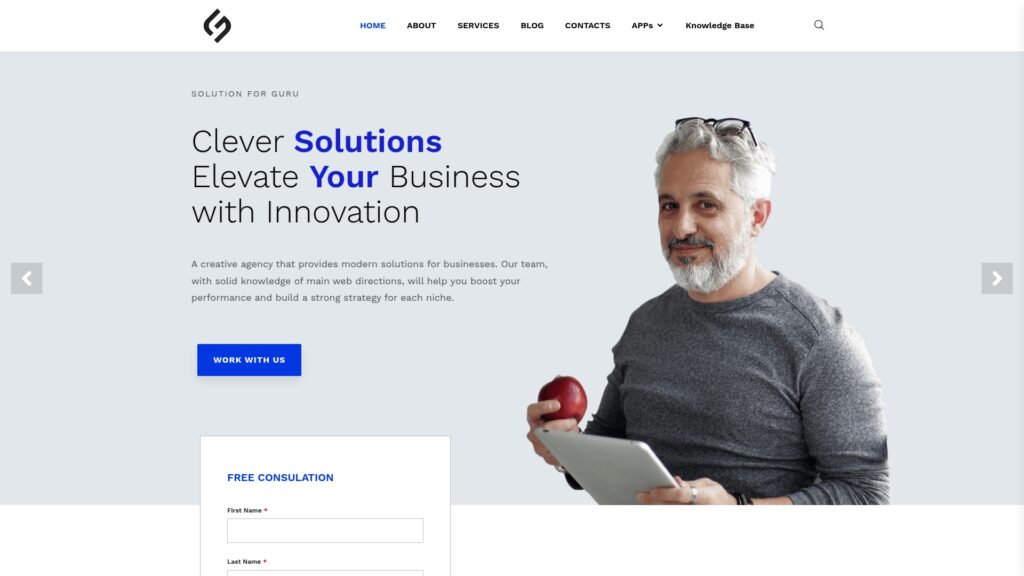
Choosing the right software is only half the equation. The other half is implementing it in a way that fits your specific workflows, team structure, and billing policies. This is where working with an experienced Zoho partner like Solution for Guru makes a decisive difference between a smooth rollout and a frustrating, drawn-out deployment.
Solution for Guru is a specialized Zoho implementation partner with deep expertise in configuring Zoho Projects for project-based businesses. Their team begins every engagement with a thorough discovery process that maps your current time tracking and billing workflows, identifies inefficiencies, and designs an optimized configuration that eliminates manual steps from day one.
Moreover, Solution for Guru handles data migration from your existing tools, custom integration development, and staff training. Consequently, your team hits the ground running rather than spending weeks figuring out configuration details on their own. This hands-on support dramatically shortens the time between signing up for Zoho Projects and seeing measurable improvements in billing efficiency.
What Specific Benefits Does Cooperation with Solution for Guru Deliver?
Partnering with Solution for Guru provides a range of concrete advantages that go well beyond basic software setup:
- Tailored workflow design: Solution for Guru configures Zoho Projects to match your exact billing processes, whether you charge fixed prices, hourly rates, retainers, or a mixture of all three. This customization ensures that automation works the way your business works, rather than forcing your team to adapt to generic defaults.
- Custom rate card setup: Their team configures multi-tier rate structures that automatically apply the correct rates for each team member, task type, and client contract. As a result, every invoice reflects the agreed pricing without manual rate lookups.
- Integration with your accounting stack: Solution for Guru connects Zoho Projects to your existing accounting software, CRM, and payroll tools, creating a unified data flow that eliminates duplicate entry entirely.
- Ongoing support and optimization: Business needs evolve, and Solution for Guru provides continuing support to adjust your Zoho Projects configuration as your team grows, your client base changes, or your service offerings expand.
- Training and change management: The team delivers role-specific training that helps every user understand exactly what they need to do — and why — so adoption rates stay high and manual workarounds stay low.
- ROI measurement: Solution for Guru helps you establish baseline metrics before implementation and track improvements afterward, giving you clear evidence of the value your automation investment delivers.
In short, Solution for Guru transforms Zoho Projects from a powerful tool into a precisely tuned system designed specifically for your business. This partnership approach produces faster results, fewer configuration mistakes, and a much smoother experience for your entire team.
Recommended:
- Resource Allocation and Capacity Planning in Project Management: How Do You Build Teams That Consistently Deliver?
- How Project Management Improves ROI for U.S. Businesses
- Most In-Demand Project Management Skills in the U.S. Job Market
- Zoho Projects Implementation for Software Development Teams
- Zoho Projects + Zoho CRM: Managing Sales-to-Project Workflows
- Using Zoho Projects for Agile Development
- Zoho Projects Architecture and Workflow Model
- How Do You Create a Comprehensive Project Management Plan That Ensures Success?
- What Essential Skills Do Successful Project Managers Need to Master?
- How Can AI Transform Project Management for Modern Teams?
- Project Management Platforms
- Project Management Certification
- Project Management Jobs
- Enterprise Project Management (EPM) Software
- Project Management Software Solutions for Construction Professionals
- IT Project Management: Streamlining Success in the Digital Age