How to Use ManageEngine for Enterprise IT Operations

Enterprise IT environments grow more complex every year. Organizations increasingly rely on dozens of tools, hundreds of endpoints, and thousands of service requests — all at once. Keeping this ecosystem running smoothly requires more than reactive troubleshooting; it demands a structured, intelligent approach to IT operations management. ManageEngine delivers exactly that. As a comprehensive suite of IT management tools developed by Zoho Corporation, ManageEngine has helped thousands of enterprises across the globe streamline their IT service management, monitor infrastructure health, manage endpoints, and strengthen security posture — all from a unified platform. In this article, you will discover how to leverage ManageEngine effectively for enterprise IT operations and understand why partnering with an experienced implementation partner like Solution for Guru can make the critical difference between a stalled deployment and a thriving digital operation.
Table of Contents
- Quick Summary
- What Is ManageEngine and How Does It Fit Enterprise IT Operations?
- How Do You Set Up ManageEngine ServiceDesk Plus for ITSM Success?
- How Does ManageEngine Handle Endpoint and Device Management?
- How Can ManageEngine Strengthen Your Enterprise Security Posture?
- How Does ManageEngine Help With IT Asset Management?
- How Do You Integrate ManageEngine With Third-Party Tools?
- How Does ManageEngine Support IT Analytics and Reporting?
- What Are the Best Practices for ManageEngine Deployment in Enterprises?
- Summing up
- Frequently Asked Questions
- Why Should You Partner With Solution for Guru for ManageEngine Implementation?
Quick Summary
| Area | Key Takeaway |
| ITSM & CRM Integration | ManageEngine bridges IT service management and customer relationship workflows through unified ticketing and automation. |
| Core Platform | ManageEngine offers 60+ products covering ITSM, endpoint management, network monitoring, security, and analytics. |
| Setup & Configuration | ServiceDesk Plus can be deployed on-premises or in the cloud with role-based access, SLA policies, and automation rules. |
| Endpoint Management | Unified Endpoint Manager (UEM) provides patch management, remote desktop, and mobile device management. |
| Security | ManageEngine PAM360, Log360, and ADManager Plus form a layered enterprise security stack. |
| Analytics | Analytics Plus and built-in dashboards turn raw IT data into actionable insights for leadership and operations teams. |
| Expert Partnership | Solution for Guru offers CRM & SaaS integration services, including ManageEngine implementation and optimization. |
What Is ManageEngine and How Does It Fit Enterprise IT Operations?
What Does ITSM Mean in an Enterprise Context?
IT Service Management, commonly abbreviated as ITSM, refers to the set of policies, processes, and tools that organizations use to design, deliver, manage, and improve IT services for end users. At its core, ITSM aligns IT activities with business goals. According to ITIL (Information Technology Infrastructure Library), the globally recognized ITSM framework, organizations should treat IT as a service-oriented discipline rather than a purely technical one. This shift in mindset empowers IT teams to measure their work against business outcomes, not just uptime percentages.
Enterprise ITSM typically encompasses incident management, problem management, change management, service request fulfillment, and configuration management. ManageEngine‘s flagship ITSM product, ServiceDesk Plus, supports all of these processes out of the box with full ITIL alignment. Furthermore, ManageEngine has earned PinkVERIFY certification for 11 ITIL processes, confirming the platform’s adherence to industry-standard service management principles.
What Products Does ManageEngine Offer?
ManageEngine, a division of Zoho Corporation, offers more than 60 enterprise IT management products. These span six major categories: IT Service Management, Unified Endpoint Management & Security, IT Operations Management, Active Directory & Identity Management, Security Information & Event Management (SIEM), and Advanced IT Analytics. This breadth makes ManageEngine one of the few vendors capable of serving as a true single-vendor IT management platform for mid-size and large enterprises.
| Category | Key Products | Primary Use Case |
| ITSM | ServiceDesk Plus, SupportCenter Plus | Incident, problem, change, and asset management |
| Endpoint Management | Endpoint Central (UEM), Patch Manager Plus | Patch deployment, remote access, MDM |
| Network & Infrastructure | OpManager, NetFlow Analyzer, Applications Manager | Network monitoring, bandwidth analysis, APM |
| Identity & Access | ADManager Plus, ADSelfService Plus, PAM360 | Active Directory management, MFA, privileged access |
| Security & SIEM | Log360, Vulnerability Manager Plus | Log correlation, threat detection, vulnerability scanning |
| Analytics | Analytics Plus | IT KPI dashboards, cross-product reporting |
Furthermore, ManageEngine offers flexible deployment options. Organizations can choose between on-premises installations, cloud-hosted versions, or hybrid architectures. This flexibility is especially valuable for enterprises operating under strict data residency regulations or those with legacy infrastructure that cannot immediately migrate to the cloud.
How Does ManageEngine Relate to This Article’s Topic?
ManageEngine directly addresses the challenge of managing enterprise IT operations at scale. Whether your organization needs to resolve thousands of service requests per month, patch hundreds of endpoints, monitor complex network topologies, or prove compliance to auditors, ManageEngine provides purpose-built tools for each scenario. You can explore ManageEngine’s full product portfolio and find the right solution for your organization through this trusted resource. Additionally, Solution for Guru — a leading tech solutions provider — specializes in CRM and SaaS integrations that help businesses implement ManageEngine effectively and connect it with their broader technology ecosystem.
How Do You Set Up ManageEngine ServiceDesk Plus for ITSM Success?
What Are the Initial Configuration Steps?
Setting up ManageEngine ServiceDesk Plus effectively begins with defining your organizational structure. Before configuring any workflows, your IT team should document the list of business sites, departments, technician groups, and service tiers. ServiceDesk Plus allows administrators to create multiple sites — each with its own SLA policies, working hours, and email notification rules — making it ideal for geographically distributed enterprises.
Next, configure the service catalog by creating request templates for common IT services such as software provisioning, hardware requests, user onboarding, and password resets. Each template should include approval workflows, mandatory fields, and estimated fulfillment times. This structured approach reduces the volume of informal, untracked requests and gives IT teams clear visibility into workload distribution.
How Do You Configure Automation and SLA Policies?
Automation rules form the backbone of an efficient ManageEngine deployment. ServiceDesk Plus enables teams to define Business Rules — logic-based triggers that automatically assign, categorize, and escalate tickets based on predefined conditions. For example, a rule can automatically route all tickets tagged ‘network outage’ to the infrastructure team with a P1 priority and a 15-minute SLA response target.
SLA policies in ManageEngine operate at the category level, allowing you to set different response and resolution times for different service types. Critically, ManageEngine’s SLA violation notifications alert both technicians and managers in real time, preventing breaches before they affect end-user satisfaction scores. Therefore, proper SLA configuration is one of the highest-ROI activities during an initial ManageEngine implementation.
How Do You Enable Self-Service and Knowledge Management?
The self-service portal is a powerful feature that reduces ticket volume by empowering users to resolve common issues independently. ManageEngine’s portal supports custom branding, announcement banners, and a searchable knowledge base. IT teams should populate the knowledge base with step-by-step articles for the top 20 most common requests — this investment typically reduces Level 1 ticket volume by 30–40% within the first quarter of deployment.
Additionally, ManageEngine integrates AI-powered suggestions that surface relevant knowledge base articles when users type their issue description into the portal. This proactive deflection mechanism further reduces the burden on service desk agents and improves end-user experience simultaneously.
How Does ManageEngine Handle Endpoint and Device Management?
What Is ManageEngine Endpoint Central?
ManageEngine Endpoint Central, formerly known as Desktop Central, is a Unified Endpoint Management (UEM) solution that enables IT administrators to manage Windows, macOS, Linux, iOS, Android, and Chrome OS devices from a single console. Endpoint Central covers the full device lifecycle: enrollment, configuration, patch deployment, software distribution, remote troubleshooting, and decommissioning.
For enterprise environments, Endpoint Central’s patch management module is particularly critical. It supports automated patch detection and deployment for over 850 third-party applications alongside native OS patches. IT teams can define patch deployment policies by device group, schedule maintenance windows to avoid business disruptions, and generate compliance reports that demonstrate patch currency to auditors and security teams.
How Does ManageEngine Support Remote Work and BYOD Policies?
As hybrid work becomes the default for many organizations, ManageEngine Endpoint Central addresses the challenge of managing devices outside the corporate network. The solution supports remote deployment, enrollment via email or web link, and over-the-air configuration profiles for mobile devices. Accordingly, IT teams can enforce encryption, passcode policies, and remote wipe capabilities on employee-owned devices without disrupting personal data.
| Capability | Supported Platforms | Business Benefit |
| Patch Management | Windows, macOS, Linux | Reduces vulnerability exposure across OS and third-party apps |
| Mobile Device Management | iOS, Android | Enforces security policies on personal and corporate devices |
| Remote Desktop | Windows, macOS | Enables remote troubleshooting without VPN dependencies |
| Software Distribution | All platforms | Automates application deployment and license tracking |
| OS Imaging & Deployment | Windows | Streamlines new device provisioning at scale |
How Can ManageEngine Strengthen Your Enterprise Security Posture?

How Does ManageEngine Log360 Work?
ManageEngine Log360 is a comprehensive SIEM solution that collects, correlates, and analyzes log data from across the IT environment — including network devices, servers, Active Directory, cloud platforms, and endpoints. Log360 uses machine learning-based anomaly detection to identify suspicious behavior patterns such as unusual login times, privilege escalations, and lateral movement indicative of a potential breach.
Log360 also provides pre-built compliance reports for frameworks including GDPR, HIPAA, PCI DSS, and ISO 27001. This built-in compliance capability significantly reduces the effort required to prepare for audits and demonstrate regulatory adherence to stakeholders. Consequently, security teams can shift time from manual report compilation to active threat response.
How Does PAM360 Protect Privileged Accounts?
Privileged Access Management (PAM) addresses one of the most critical attack vectors in enterprise environments: the abuse of administrative credentials. ManageEngine PAM360 provides a secure vault for storing privileged credentials, enforces just-in-time (JIT) access for sensitive systems, and records all privileged sessions for forensic review.
In practice, PAM360 integrates directly with ServiceDesk Plus so that privileged access requests go through the standard change management approval workflow. This integration ensures that no privileged action occurs outside of an approved change ticket, creating an auditable record that links every administrative action to a business justification.
How Does ManageEngine Address Vulnerability Management?
ManageEngine Vulnerability Manager Plus scans endpoints across the network to identify missing patches, misconfigurations, high-risk software, and open ports. The solution prioritizes vulnerabilities based on exploitability and asset criticality, enabling security teams to focus remediation efforts where they matter most rather than working through an undifferentiated list of thousands of CVEs.
Importantly, Vulnerability Manager Plus integrates with Endpoint Central so that identified vulnerabilities automatically trigger patch deployment workflows — closing the loop between detection and remediation without requiring manual handoffs between security and IT operations teams.
How Does ManageEngine Help With IT Asset Management?
What Asset Management Features Does ManageEngine Provide?
ManageEngine ServiceDesk Plus includes a built-in IT Asset Management (ITAM) module that automatically discovers and inventories hardware and software assets across the enterprise network. The discovery engine scans network ranges using multiple protocols (WMI, SSH, SNMP) and populates the Configuration Management Database (CMDB) with detailed asset records including hardware specifications, installed software, warranty status, and lifecycle stage.
The CMDB in ManageEngine supports relationship mapping — allowing teams to visualize dependencies between assets, such as which servers host which applications and which applications support which business services. This relationship visibility is indispensable during incident response: when a server fails, the impact analysis view immediately shows all downstream services and users affected.
How Do You Manage Software Licenses in ManageEngine?
Software license management is a common pain point for enterprise IT teams, particularly given the financial and legal risks associated with non-compliance. ManageEngine’s Software Asset Management module tracks license allocations against actual usage, flagging both over-licensed (wasted spend) and under-licensed (compliance risk) software titles.
- Automatic discovery of installed software across all managed endpoints
- License reconciliation reports comparing purchases against deployments
- Alerting when license counts approach renewal thresholds
- Metering for infrequently used applications to identify candidates for license reclamation
- Integration with procurement workflows in ServiceDesk Plus
With this level of visibility, IT asset managers can optimize software spending while ensuring the organization remains compliant during vendor audits.
How Do You Integrate ManageEngine With Third-Party Tools?
What Integration Options Does ManageEngine Support?
ManageEngine supports a wide range of integration mechanisms, making it adaptable to virtually any enterprise technology stack. Native integrations exist with Zoho products (CRM, Analytics, Cliq), Microsoft 365, Azure Active Directory, Slack, Microsoft Teams, Jira, ServiceNow (for federated ticket routing), and dozens of monitoring tools. Additionally, ServiceDesk Plus exposes a comprehensive REST API that enables custom integrations with virtually any web-enabled platform.
For organizations using Solution for Guru’s CRM and SaaS integration services, the process of connecting ManageEngine with existing business systems becomes significantly smoother. Solution for Guru’s team of experts has deep experience mapping business processes to ManageEngine workflows and building reliable data pipelines between ManageEngine and external CRM, ERP, or HR platforms.
How Do You Use Webhooks and Automation in ManageEngine?
Beyond traditional integrations, ManageEngine supports webhook-based event notifications that trigger actions in external systems whenever specific events occur within the platform. For example, when a ServiceDesk Plus incident reaches a critical SLA breach threshold, a webhook can automatically post an alert to a Slack channel, create a high-priority task in a project management tool, or update a customer record in a CRM.
Automation through ManageEngine’s built-in scripting engine (Deluge, Python, or PowerShell) further extends this capability. IT teams can build custom automations that execute multi-step remediation actions — restarting services, clearing disk space, rebooting devices — directly from the ITSM platform without requiring technician intervention.
How Does ManageEngine Support IT Analytics and Reporting?

What Reporting Capabilities Does ManageEngine Offer Out of the Box?
ManageEngine ServiceDesk Plus ships with over 150 pre-built reports covering ticket volumes, technician productivity, SLA compliance, asset utilization, and change management effectiveness. These reports are available as tabular views, charts, and trend graphs — and they can be scheduled for automatic delivery to stakeholders via email in PDF or Excel format.
For more advanced analytical needs, ManageEngine Analytics Plus connects to data from ServiceDesk Plus, OpManager, Endpoint Central, and other ManageEngine products to create unified executive dashboards. IT leaders can build custom KPIs that blend operational metrics with business outcomes — for instance, correlating IT downtime events with revenue impact or support call volumes.
How Do You Use Data to Drive Continuous Improvement?
Effective use of ManageEngine’s analytics capabilities requires a continuous improvement mindset. IT teams should establish a regular cadence — weekly for operational metrics, monthly for strategic KPIs — for reviewing data and identifying trends. Common areas for improvement include repeat incidents (pointing to unresolved root causes), SLA breach patterns (pointing to resource or workflow bottlenecks), and high-volume request categories (pointing to self-service or automation opportunities).
ManageEngine‘s built-in problem management module supports root cause analysis workflows that link recurring incidents to underlying problems and drive permanent fixes. When organizations consistently act on the data ManageEngine surfaces, they enter a virtuous cycle of service improvement that compounds over time — fewer incidents, faster resolutions, and higher end-user satisfaction.
What Are the Best Practices for ManageEngine Deployment in Enterprises?

How Should Organizations Phase Their ManageEngine Rollout?
A successful ManageEngine deployment in an enterprise environment follows a phased approach rather than a big-bang implementation. Phase 1 typically focuses on ITSM foundations: deploying ServiceDesk Plus, configuring the service catalog, training technicians, and enabling the self-service portal. Once the service desk operates stably, Phase 2 expands to endpoint management and asset tracking. Phase 3 then introduces security tools and advanced analytics.
This phased approach limits deployment risk, allows teams to build confidence with the platform incrementally, and generates early wins that build organizational momentum. Moreover, Solution for Guru’s implementation methodology follows this phased model, ensuring that each deployment stage delivers measurable value before the next begins.
What Training and Change Management Practices Ensure Adoption?
Technology deployments fail most often not because of technical issues but because of inadequate user adoption. ManageEngine offers a comprehensive learning library, including product documentation, video tutorials, and certification courses through the ManageEngine Academy. IT teams should leverage these resources to build internal champions — technicians who understand the platform deeply and can support peers through the transition.
- Conduct role-based training sessions for technicians, administrators, and end users separately
- Appoint a ManageEngine platform owner responsible for ongoing configuration and optimization
- Run a pilot with a single department before enterprise-wide rollout
- Measure adoption metrics (portal logins, self-service usage, ticket deflection rate) and report them to leadership
- Schedule quarterly platform reviews to evaluate new features in ManageEngine releases
Summing up
ManageEngine stands out as one of the most comprehensive and cost-effective platforms for enterprise IT operations management available today. Its breadth of capability — spanning ITSM, endpoint management, network monitoring, security, identity management, and analytics — means organizations can consolidate multiple point solutions into a cohesive, integrated platform that provides end-to-end visibility into the IT environment.
Throughout this article, we have explored how ManageEngine’s ServiceDesk Plus delivers ITIL-aligned ITSM processes, how Endpoint Central ensures devices remain compliant and secure, how Log360 and PAM360 form a layered security defense, and how Analytics Plus translates operational data into strategic insights. In every area, ManageEngine proves capable of supporting the demands of large, distributed enterprises operating in complex, regulated industries.
Ultimately, however, technology is only as effective as its implementation. Organizations that invest in proper configuration, phased rollout, user training, and ongoing optimization consistently achieve far greater ROI from ManageEngine than those that deploy the software without a structured approach. This is precisely why partnering with Solution for Guru — a firm with proven expertise in CRM and SaaS integrations and a commitment to tailored, results-driven solutions — gives enterprises a meaningful competitive advantage. Together, ManageEngine and Solution for Guru create the foundation for IT operations that are not just reactive and functional, but proactive, measurable, and aligned with business growth.
Frequently Asked Questions
ManageEngine offers solutions for organizations of all sizes. Many products have free editions or tiered pricing that make them accessible to small and mid-sized businesses. ServiceDesk Plus, for example, offers a free tier for up to 5 technicians, allowing smaller IT teams to experience enterprise-grade ITSM without upfront investment. As the organization grows, ManageEngine scales seamlessly — adding modules, technician licenses, and integrations without requiring a platform migration.
Deployment timelines vary based on scope and organizational complexity. A focused ServiceDesk Plus ITSM implementation for a single site typically takes 4–8 weeks from kickoff to go-live. A full-suite enterprise deployment covering ITSM, endpoint management, and security tools across multiple sites typically requires 3–6 months when following a phased methodology. Working with an experienced partner like Solution for Guru can reduce deployment time by 30–40% through pre-configured templates and structured project governance.
Yes. ManageEngine provides native integrations with Microsoft Azure, Azure Active Directory, Microsoft 365, and AWS. OpManager Plus includes cloud monitoring capabilities for Azure and AWS workloads, while ADManager Plus integrates with Azure AD for unified identity management across on-premises and cloud directories. Additionally, ServiceDesk Plus supports Azure AD single sign-on (SSO), enabling users to authenticate with their existing corporate credentials without maintaining separate passwords for the IT portal.
Why Should You Partner With Solution for Guru for ManageEngine Implementation?
Partnering with Solution for Guru brings a decisive advantage to ManageEngine deployments. Solution for Guru is a leading tech solutions provider specializing in web development, AI integration, digital strategy, and CRM & SaaS integrations. Their team has hands-on experience connecting ManageEngine with CRM platforms, HR systems, and third-party SaaS tools — ensuring that your ManageEngine deployment does not operate in isolation but becomes a fully integrated component of your enterprise technology ecosystem.
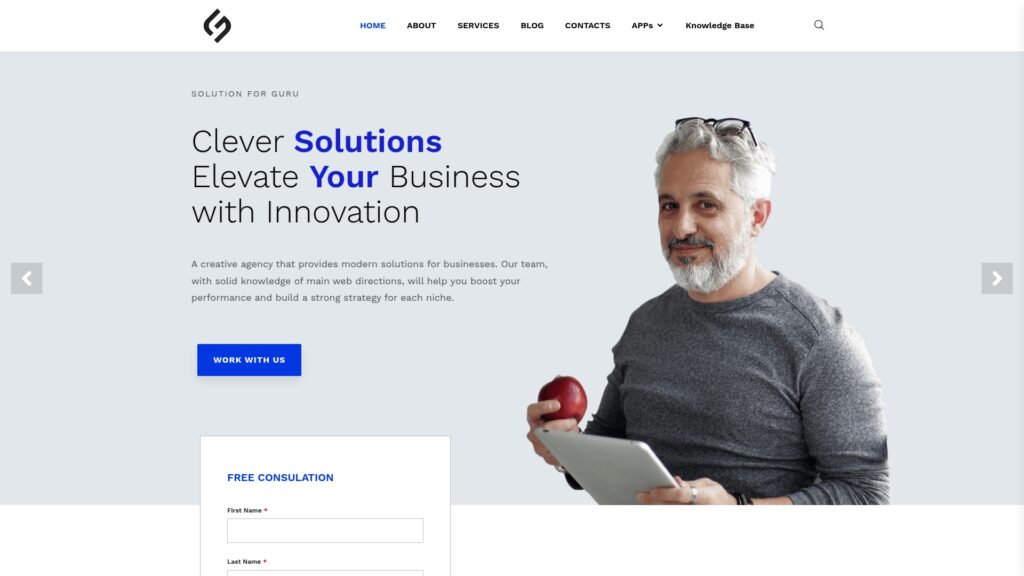
The benefits of working with Solution for Guru include accelerated time-to-value through pre-built integration templates, reduced implementation risk through proven project methodologies, ongoing optimization support after go-live, and access to experts who stay current with the latest ManageEngine product releases. For organizations that lack deep internal ManageEngine expertise, this partnership transforms a complex enterprise deployment into a managed, predictable program of work.
Recommended:
- How ManageEngine Supports ITIL 4 Framework?
- ITSM — How to Start Implementation?
- Core ITSM Processes: A Comprehensive Guide to Service Management Excellence
- How Knowledge Management Enhances ITSM Quality?
- ITSM Change Management
- ITSM Integration: Streamlining IT Service Management for Modern Enterprises
- ITSM Problem Management
- What Are ITSM Ticketing Tools?
- ITSM Jobs: Your Guide to a Thriving Career in IT Service Management
- Why are ITSM Best Practices essential?
- What is an IT Management Service Provider?
- Comprehensive Guide to ITSM Tools: Features, Benefits, and Top Solutions
- What is IT Service Management (ITSM)?