Insurance Needs for Contractors with Company Vehicles: What Do You Really Need?

Running a contracting business means managing job sites, crews, schedules — and vehicles. Company trucks, vans, and cars are not just transportation; they carry equipment, tools, materials, and, most importantly, your employees. However, one accident without the right commercial auto insurance can wipe out years of hard work in a single claim. This article breaks down exactly what contractors need, why state laws require it, which providers lead the market, and how to build a policy that genuinely protects your business.
Table of contents
Quick Summary
| Topic | Key Takeaway |
|---|---|
| Who needs commercial auto insurance | Any contractor whose employees drive company vehicles for business purposes |
| Core coverages required | Commercial auto liability, physical damage, uninsured motorist, hired/non-owned auto |
| Top providers covered | BiBerk, Progressive, Infinity Auto |
| State requirements | Every U.S. state mandates minimum liability limits for commercial vehicles |
| Additional coverages to consider | General liability, workers’ compensation, tools & equipment, umbrella policies |
| How Solution for Guru helps | Guidance on selecting the right coverage mix, policy comparison, and ongoing support |
Which Insurance Providers Should Contractors Consider for Company Vehicles?
Contractors operating company vehicles need insurers who understand the commercial auto space — not personal auto underwriters trying to cover work trucks as an afterthought. Three providers stand out consistently in this market: BiBerk, Progressive, and Infinity Auto. Each brings distinct strengths, and understanding those differences helps contractors choose the right fit for their fleet size, risk profile, and budget.
How Does BiBerk Serve Contractors with Company Vehicles?
BiBerk — a Berkshire Hathaway company — built its commercial insurance platform specifically for small and mid-size businesses. Contractors represent one of its core markets. BiBerk’s commercial auto insurance covers vehicles used for business purposes, including pickup trucks, cargo vans, utility vehicles, and work fleets. The company delivers quotes online in minutes — a significant advantage for busy contractors who cannot spend hours on the phone with an agent.
BiBerk’s platform allows contractors to bundle commercial auto with general liability, workers’ compensation, and business owner’s policies in a single streamlined process. Furthermore, BiBerk’s financial backing through Berkshire Hathaway gives policyholders confidence that claims will pay out — a critical consideration when evaluating any commercial insurer. For sole proprietors or small crews with one to five vehicles, BiBerk offers a particularly efficient path to comprehensive coverage.
How Does Progressive Support Contractor Fleets?

Progressive is one of the largest commercial auto insurers in the United States, and contractors benefit from the company’s deep experience underwriting work vehicles of all types. Progressive’s commercial auto covers everything from single work vans to large contractor fleets. The company offers 24/7 claims support through its website, mobile app, and phone lines — keeping contractors operational even when a vehicle goes out of commission.
Progressive also excels in fleet programs for growing contracting businesses. As your headcount and vehicle count increase, Progressive’s fleet discounts and multi-vehicle policies scale accordingly. Additionally, Progressive’s Name Your Price tool helps contractors identify policies within a defined budget range — a practical feature for smaller operations managing tight margins. Contractors who combine a business owner’s policy with commercial auto through Progressive often achieve meaningful premium savings.
How Does Infinity Auto Handle High-Risk and Specialty Contractor Fleets?
Infinity Auto specializes in serving drivers and businesses that other carriers classify as non-standard risks. For contractors whose drivers carry violations, accidents, or gaps in insurance history, Infinity Auto frequently provides coverage options where mainstream insurers decline. This makes Infinity an important option for contractors in industries with higher driver turnover or those operating in high-traffic urban markets where accident rates run above average.
Infinity Auto also supports contractors who combine personal and commercial vehicle coverage, offering package arrangements that simplify policy management. The company’s agent-assisted model suits contractors who prefer to speak with a specialist before committing to a policy rather than relying entirely on self-service online tools. Consequently, Infinity Auto fills a gap in the market that BiBerk and Progressive do not always address.
How Do BiBerk, Progressive, and Infinity Auto Compare Side by Side?
The table below summarizes the key differences between these three providers to help you determine which one aligns best with your contracting business:
| Feature |  |  | |
|---|---|---|---|
| Target Market | Small businesses & contractors | Contractors of all sizes | High-risk & specialty drivers |
| Online Quote Speed | Fast — minutes online | Fast — instant online | Moderate — agent preferred |
| Bundling Options | GL, workers’ comp, BOP | Business owners policy, fleet | Personal + commercial combo |
| Fleet Coverage | Yes — up to larger fleets | Yes — strong fleet programs | Yes — specialty fleets |
| Hired/Non-Owned Auto | Yes | Yes | Yes |
| Claims Process | Online & phone | 24/7 online, app, phone | Phone & agent-assisted |
| Backed By | Berkshire Hathaway | Progressive Corp. | Kingsway Financial |
| Best For | Sole proprietors, small crews | Growing contractor fleets | High-risk driver history |
Why Do Contractors Specifically Need Commercial Auto Insurance?
Many contractors make the costly assumption that personal auto insurance covers their work vehicle. It does not. Personal auto policies explicitly exclude vehicles used for business purposes — including driving to job sites, hauling materials, or transporting workers. If your driver causes an accident in a company truck and only carries personal auto coverage, your insurer will likely deny the claim entirely. The resulting out-of-pocket exposure can reach hundreds of thousands of dollars.
What Makes a Vehicle ‘Commercial’ in the Eyes of an Insurer?
Insurers classify a vehicle as commercial when its primary use involves business activities. Specifically, contractors trigger commercial classification when they:
- Drive vehicles registered in the business’s name
- Transport tools, equipment, or materials for paying jobs
- Carry employees or subcontractors to and from work sites
- Operate vehicles over a certain weight threshold (typically 10,000 lbs GVWR)
- Use vehicles for deliveries or client visits as a core business function
Therefore, even a pickup truck a contractor drives primarily for work — even if occasionally used personally — may require a commercial auto policy. Working with a qualified insurer or business advisor helps you classify your vehicles correctly and avoid coverage gaps that only surface at claim time.
What Happens If You Drive a Work Vehicle Without Commercial Coverage?
Operating a business vehicle without commercial auto insurance exposes contractors to compounding risks. First, your personal insurer can deny coverage for accidents that occur while driving for work. Second, the business itself faces liability for damages your vehicle causes — including bodily injury claims that regularly exceed $1 million in serious accidents. Third, state licensing boards for certain trades actively check insurance compliance, and gaps can result in suspended contractor licenses.
Additionally, lenders who financed your work vehicles typically require commercial insurance as a condition of the loan. Allowing coverage to lapse — even temporarily — can trigger loan defaults. The combination of legal, financial, and operational risk makes proper commercial auto coverage non-negotiable for any serious contracting operation.
What Core Coverages Do Contractors Need for Company Vehicles?
Commercial auto insurance is not a single product — it is a package of coverages that combine to address different risk scenarios. Contractors should understand each component before selecting a policy, rather than defaulting to the cheapest option and discovering coverage gaps only after an accident.
| Coverage Type | What It Covers | Who Needs It Most |
|---|---|---|
| Commercial Auto Liability | Bodily injury & property damage you cause | All contractors with vehicles |
| Collision Coverage | Damage to your vehicle from collisions | Contractors with financed vehicles |
| Comprehensive Coverage | Theft, weather, vandalism, fire | Those with expensive equipment on-board |
| Uninsured Motorist | Injuries/damage from uninsured drivers | Required in most states |
| Hired & Non-Owned Auto | Rented or employee-owned vehicles used for work | Contractors using multiple vehicle types |
| Medical Payments | Medical costs for driver and passengers | Any crew transporting workers |
| Tools & Equipment Rider | Tools stolen or damaged from the vehicle | Tradespeople, construction crews |
What Is Commercial Auto Liability and Why Is It the Foundation?
Commercial auto liability coverage pays for bodily injury and property damage that your vehicle causes to third parties. If your driver rear-ends another vehicle at a construction site, liability coverage pays the other driver’s medical bills, vehicle repairs, and legal fees if the situation escalates to a lawsuit. Every state requires minimum liability limits for commercial vehicles, and most experienced insurance advisors recommend limits far above those minimums.
Specifically, contractors should consider liability limits of at least $500,000 per occurrence, and ideally $1,000,000 or more, particularly if they operate heavy vehicles or work in densely populated areas. BiBerk, Progressive, and Infinity Auto all offer liability limits above $1,000,000 for commercial auto policies — a critical feature for contractors whose vehicle accidents could trigger large personal injury claims.
Why Should Contractors Add Physical Damage Coverage?
Physical damage coverage divides into two components: collision and comprehensive. Collision pays for damage to your vehicle resulting from accidents with other vehicles or objects. Comprehensive pays for losses from theft, weather events, vandalism, fire, and animal collisions. Together, these coverages protect the vehicles themselves — not just third parties.
Contractors who finance their work vehicles through commercial loans almost always face a lender requirement to carry physical damage coverage. Furthermore, a contractor whose truck suffers serious damage without physical damage coverage faces not only repair costs but potential business interruption while the vehicle stays in the shop. Replacing a work truck out of pocket — when those funds could cover payroll or materials — creates unnecessary cash flow strain.
What Is Hired and Non-Owned Auto Coverage and Who Needs It?
Hired and non-owned auto (HNOA) coverage protects contractors when their employees use rented vehicles or personal vehicles for company business. If a project manager rents a van to transport equipment or an employee drives a personal truck to pick up supplies and causes an accident, HNOA coverage responds — because the company’s primary commercial auto policy only covers specifically listed vehicles.
HNOA coverage is especially important for contractors who occasionally rent additional vehicles during peak seasons or rely on employees to use their own vehicles for work errands. Progressive, BiBerk, and Infinity Auto all offer HNOA as an endorsement or standalone option. Without it, contractors assume full personal liability for accidents in vehicles that their commercial policy never listed.
What State Requirements Apply to Contractors with Company Vehicles?

Every state in the U.S. mandates minimum liability insurance for commercial vehicles. However, those minimums vary significantly by state, and some states impose additional requirements for certain vehicle types or industries. The table below shows representative minimum requirements in key states — but contractors should always verify current requirements with their state’s Department of Motor Vehicles or a licensed insurance agent, since legislatures update these thresholds periodically.
| State | Min. Liability (BI per person) | Min. Liability (BI per accident) | Min. Property Damage |
|---|---|---|---|
| California | $15,000 | $30,000 | $5,000 |
| Texas | $30,000 | $60,000 | $25,000 |
| Florida | $10,000 (PIP state) | N/A | $10,000 |
| New York | $25,000 | $50,000 | $10,000 |
| Illinois | $25,000 | $50,000 | $20,000 |
Source: Insurance Information Institute and individual state DMV guidelines (2024). Note that minimum limits represent legal floors, not recommended levels of protection.
Do Federal Regulations Also Apply to Contractor Vehicles?
Yes — federal regulations apply to certain contractor vehicles that cross state lines or meet specific weight and cargo thresholds. The Federal Motor Carrier Safety Administration (FMCSA) regulates commercial motor vehicles that operate in interstate commerce. Contractors who transport goods, materials, or equipment across state lines in vehicles exceeding 10,001 lbs GVWR must register with the FMCSA and carry minimum liability coverage of $750,000 — considerably higher than most state minimums.
Furthermore, contractors who haul hazardous materials face even stricter federal insurance requirements, with minimum coverage levels reaching $5,000,000 in some cases. BiBerk and Progressive both support contractors navigating federal filing requirements, including the necessary MCS-90 endorsements that FMCSA mandates for interstate commercial carriers. Working with an insurer experienced in federal compliance prevents costly penalties and operational disruptions.
What Additional Coverages Should Contractors Consider Beyond Commercial Auto?
Commercial auto insurance protects contractors from vehicle-related risks, but a complete business insurance program addresses exposures that extend well beyond the vehicle itself. Contractors who understand the full landscape of available coverages build more resilient businesses and avoid paying out-of-pocket for losses that a broader policy would have covered.
How Does General Liability Complement Commercial Auto for Contractors?
General liability insurance covers bodily injury and property damage that your business operations cause — separate from vehicle accidents. For example, if a contractor damages a client’s property while working on a job site, general liability responds. If a passerby trips over equipment left near your work vehicle, general liability handles the claim. Commercial auto only covers incidents directly involving your vehicle; general liability covers everything else.
BiBerk makes it straightforward to bundle commercial auto with general liability in a single policy, which simplifies administration and often reduces total premium. Progressive similarly offers business owner’s policies that combine general liability and commercial property coverage alongside commercial auto. Contractors who carry both coverages close the gap between vehicle-specific and site-specific risks — a gap that generates significant uninsured exposure when only one policy is in place.
Do Contractors Need Workers’ Compensation If Their Employees Drive Company Vehicles?
Yes — and workers’ compensation requirements for contractors often extend specifically to employees who drive as part of their job duties. If an employee suffers injuries in a vehicle accident while performing work duties, workers’ compensation covers medical expenses, lost wages, and rehabilitation costs — regardless of who caused the accident. Commercial auto medical payments coverage handles injuries to the driver and passengers in certain circumstances, but workers’ compensation provides the comprehensive employee injury protection that medical payments does not fully replicate.
Most states require contractors to carry workers’ compensation once they employ one or more workers. BiBerk offers workers’ compensation coverage through the same platform as commercial auto, allowing contractors to manage multiple coverages without working with multiple insurers. This integrated approach reduces administrative burden significantly — a benefit that compounds as the business grows and insurance complexity increases.
What Is a Commercial Umbrella Policy and When Do Contractors Need One?
A commercial umbrella policy provides additional liability limits above and beyond the limits of your underlying commercial auto and general liability policies. When a serious accident exhausts your primary policy limits — which can happen quickly in catastrophic injury cases — an umbrella policy responds for the excess amount. Contractors operating heavy equipment, large fleets, or working on high-value projects benefit most from umbrella coverage.
For example, a contractor whose truck causes a multi-vehicle accident resulting in $2,000,000 in damages would exhaust a $1,000,000 commercial auto liability limit and face the remaining $1,000,000 personally — unless an umbrella policy covers the gap. Progressive and BiBerk both offer umbrella endorsements that contractors can layer on top of existing policies. Given that umbrella coverage typically costs only a few hundred dollars per year for the first $1,000,000 in additional limits, the cost-to-protection ratio makes it one of the highest-value additions to any contractor’s insurance program.
How Should Contractors Manage Insurance for a Growing Fleet?
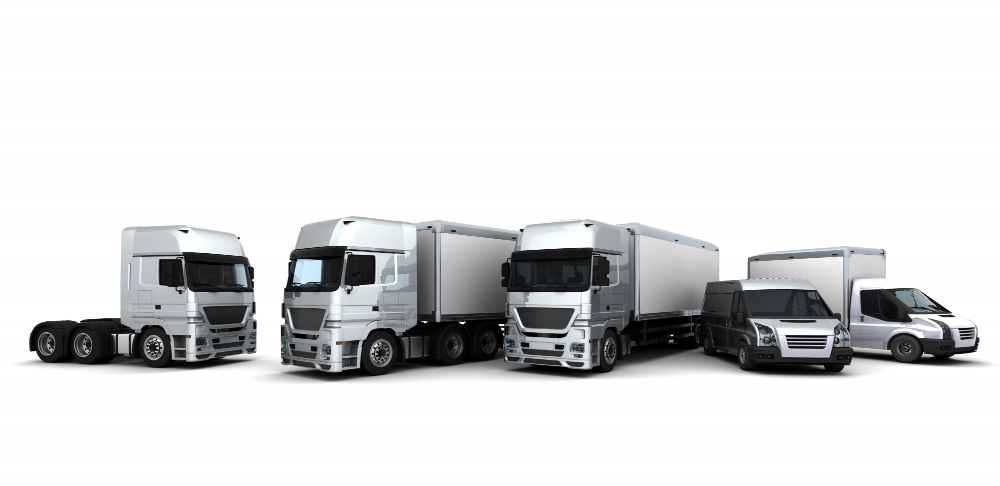
Managing insurance across multiple vehicles introduces complexity that single-vehicle policies do not present. Contractors who add vehicles regularly, employ multiple drivers, or operate vehicles in different states need systematic approaches to fleet insurance management — not a collection of individual policies stitched together reactively.
What Is a Fleet Policy and When Does It Make Sense?
A fleet policy covers multiple vehicles under a single agreement with unified limits, billing, and claims management. Rather than maintaining separate policies for each work truck or van, contractors consolidate all vehicles onto one fleet policy — simplifying renewals, reducing administrative effort, and often unlocking volume discounts. Most insurers define a fleet as five or more vehicles, though some providers extend fleet-like programs to smaller groups.
Progressive leads among the three profiled providers in fleet program depth, offering dedicated fleet underwriting, telematics-based discounts, and specialized claims handling for multi-vehicle operations. BiBerk supports growing fleets up to a substantial size before recommending specialized fleet underwriting. Infinity Auto‘s fleet programs tend to focus on specialty and non-standard driver populations where mainstream fleet insurers decline coverage.
How Do Telematics and Driver Monitoring Affect Contractor Insurance Costs?
Telematics — GPS and driving behavior monitoring systems installed in company vehicles — give insurers real-time data on how drivers operate the vehicles. Contractors who enroll in telematics programs with their insurers often receive premium discounts in exchange for allowing the insurer to monitor speed, braking, acceleration, and hours of operation. Progressive’s Snapshot program for commercial vehicles represents one of the best-known examples of this model.
Beyond premium discounts, telematics data helps contractors identify risky driving behaviors before accidents occur. A driver who consistently hard-brakes or exceeds speed limits appears clearly in telematics reports, giving fleet managers the opportunity to intervene with coaching or route changes. Consequently, telematics programs reduce both insurance costs and accident frequency simultaneously — a dual benefit that compounds over the life of the fleet.
How Should Contractors Choose Between BiBerk, Progressive, and Infinity Auto?
Choosing among BiBerk, Progressive, and Infinity Auto ultimately depends on your specific business profile. No single provider dominates every category, and the right choice varies based on fleet size, driver history, geographic scope, and the other coverages you need alongside commercial auto. However, several practical principles guide the decision effectively.
What Questions Should Contractors Ask Before Selecting an Insurer?
Before committing to a commercial auto policy, contractors benefit from asking the following questions directly:
- Does this policy cover all vehicle types in my fleet, including trailers and equipment haulers?
- What happens to my coverage if a driver I add later has a violation on their record?
- Does the policy include hired and non-owned auto coverage, or do I need to add it separately?
- How does the claims process work if a vehicle is disabled at an active job site?
- Can I bundle this policy with general liability and workers’ compensation for a combined discount?
- Does the insurer offer FMCSA filing support if I expand into interstate operations?
BiBerk handles the first and fifth questions particularly well for small businesses. Progressive excels on questions three, four, and six for medium-to-large fleets. Infinity Auto addresses question two better than most mainstream providers for contractors with non-standard driver histories.
What Conclusions Should Contractors Draw About Commercial Vehicle Insurance?
Contractors who operate company vehicles carry significant liability exposure every day those vehicles are on the road. Furthermore, that exposure compounds with each additional driver, each heavier vehicle, and each mile traveled across unfamiliar territory. Building the right commercial auto insurance program is not a box-checking exercise — it is a strategic decision that directly affects business survival in the event of a serious accident.
Three fundamental conclusions emerge from this analysis:
- Commercial auto insurance is non-negotiable for contractors. Personal auto policies will not protect business vehicles, and the financial exposure from an uninsured commercial accident can end a business permanently.
- The right provider depends on your specific profile. BiBerk delivers the fastest path to bundled commercial coverage for small contractors. Progressive leads for growing fleets that need telematics integration and fleet-specific programs. Infinity Auto solves coverage challenges that other providers cannot address for non-standard risks.
- Coverage should expand as the business grows. Starting with liability and physical damage coverage makes sense for new contractors; adding general liability, workers’ compensation, umbrella coverage, and HNOA protection builds the comprehensive safety net that established contracting businesses require.
The most important step is acting before an accident forces the issue. BiBerk, Progressive, and Infinity Auto each make quoting straightforward, and comparing multiple options takes less than an hour. For contractors who want expert guidance throughout that process — including help identifying coverage gaps and structuring a complete business insurance program — Solution for Guru provides exactly that support.
Frequently Asked Questions
Rarely — and only in very limited circumstances. Personal auto policies typically include exclusions for commercial use, which means any accident that occurs while driving for work-related purposes can face a denied claim. Some personal auto policies cover occasional incidental business use — such as driving to a client meeting once a month — but regular work site travel, material hauling, and employee transportation trigger commercial use exclusions in virtually every standard personal auto policy. Contractors who rely on personal vehicles for regular business activities should obtain hired and non-owned auto coverage at minimum, and ideally a commercial auto policy that reflects actual vehicle use.
Commercial auto insurance premiums for contractors vary widely based on vehicle type, driver history, coverage limits, geographic location, and annual mileage. A single work van with a clean driving record in a mid-sized market might cost $1,200 to $2,500 annually. A fleet of five trucks with higher liability limits in a high-traffic metropolitan area could cost $15,000 to $30,000 or more per year. BiBerk and Progressive both provide online quoting tools that generate ballpark estimates in minutes based on your specific inputs. Infinity Auto’s premiums tend to run higher for non-standard risks but often represent the only viable option when mainstream insurers decline coverage. Working with Solution for Guru helps contractors identify the most cost-effective policy structure for their specific situation rather than defaulting to the first quote they receive.
How Does Solution for Guru Help Contractors Navigate Insurance Decisions?
Solution for Guru is an independent business advisory consultancy that helps contractors and small businesses make confident decisions about insurance, software, and operational strategy. When it comes to commercial vehicle insurance specifically, Solution for Guru brings structured expertise that removes the guesswork from an otherwise complex and high-stakes decision.
What Specific Benefits Do Contractors Gain from Working with Solution for Guru?
- Coverage Gap Analysis — Solution for Guru reviews your existing policies and identifies exposures that your current coverage does not address, including HNOA gaps, umbrella shortfalls, and state compliance issues.
- Provider Comparison Support — rather than evaluating BiBerk, Progressive, and Infinity Auto independently, contractors work with Solution for Guru advisors who understand the nuances of each provider’s underwriting and can match your profile to the right fit.
- Bundling Optimization — Solution for Guru identifies opportunities to combine commercial auto with general liability, workers’ compensation, and other coverages in ways that reduce total premium without reducing protection.
- Federal and State Compliance Guidance — contractors expanding into new states or interstate operations benefit from Solution for Guru’s familiarity with FMCSA requirements, state-specific minimums, and licensing board insurance requirements.
- Ongoing Policy Review — as your fleet grows, your coverage needs change. Solution for Guru provides periodic reviews that keep your insurance program aligned with your actual operational profile.
Ultimately, working with Solution for Guru means contractors spend less time navigating insurance complexity and more time running their businesses. The advisory relationship pays for itself when it prevents a single coverage gap from becoming a financial catastrophe.
Recommended
- Commercial Auto Insurance for Delivery Businesses: Why biBERK Is a Strong Option
- Full Coverage vs. Liability: Which Auto Insurance Is Right for You?
- What’s Covered and What’s Not: Breaking Down Auto Insurance Coverage Types
- What Are the Best Auto Insurance Options for Rideshare Drivers (Uber, Lyft, etc.)?
- How to Get Affordable Auto Insurance After an Accident or Ticket
- Auto and Renters Insurance Bundle
- Preferred Auto Insurance Companies
- How to Get Auto Insurance Online
- Auto Insurance for Farms
- Auto International Insurance
- Comparing Commercial Auto Insurance
- The Top Commercial Auto Insurance Options