Pipedrive vs Zoho: Which CRM Platform Is Right for Your Business?
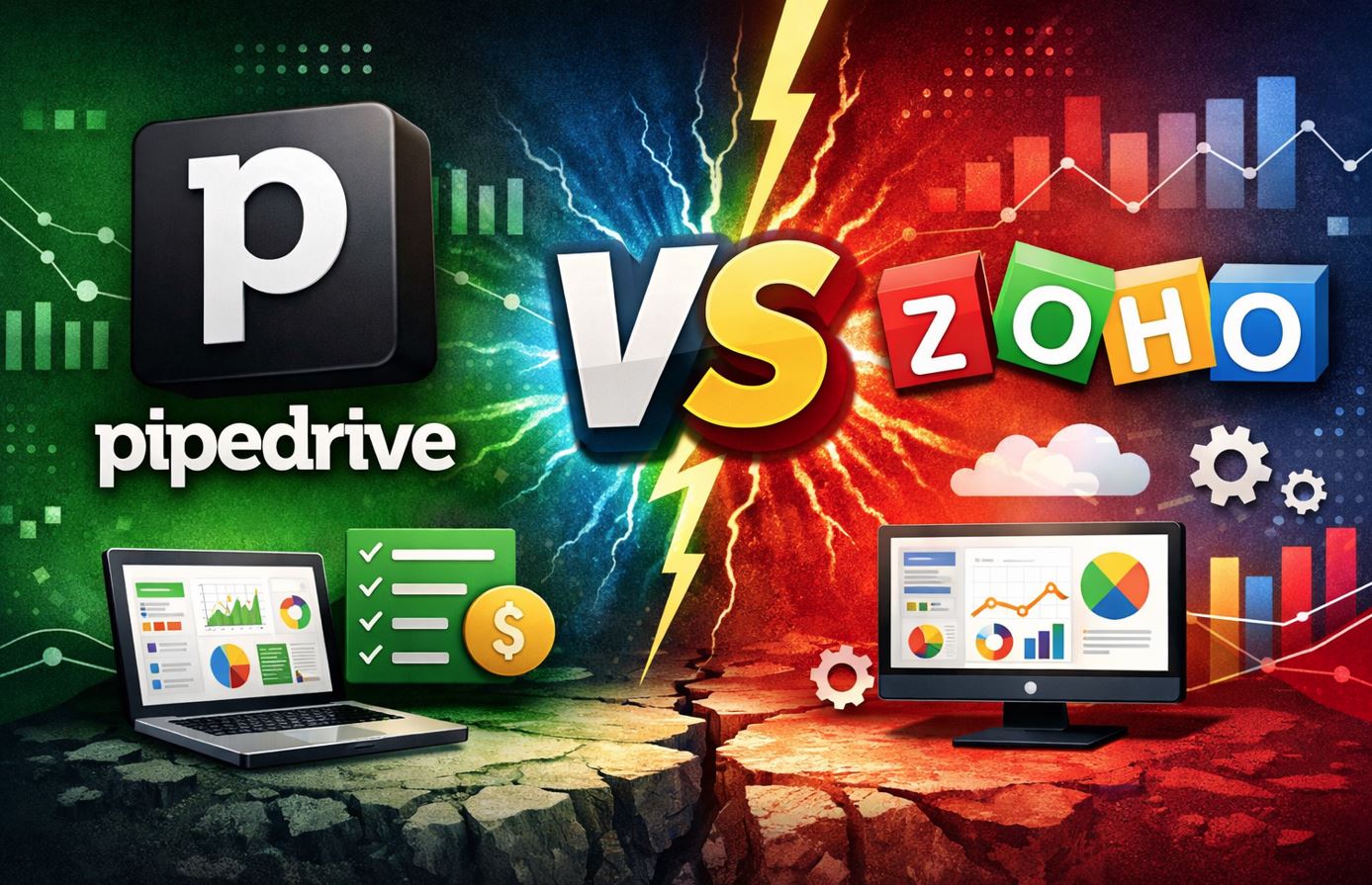
Choosing the right Customer Relationship Management (CRM) system can significantly impact your business growth and sales efficiency. Both Pipedrive CRM and Zoho CRM are powerful platforms that help businesses streamline customer interactions, automate sales processes, and close more deals. However, they cater to different business needs and approaches. This comprehensive guide will help you understand the key differences, strengths, and weaknesses of each platform to make an informed decision.
Table of Contents
- Quick Summary
- What Are Pipedrive CRM and Zoho CRM?
- Feature Comparison Table
- Which CRM Is Easier to Use for Beginners?
- How Do Pricing Models Compare Between Both Platforms?
- Which Platform Offers Better Automation Capabilities?
- How Customizable Are These CRM Solutions?
- What Integration Options Do They Provide?
- Which CRM Delivers Superior Reporting and Analytics?
- How Do Mobile Apps Compare?
- What Support and Training Resources Are Available?
- Which Platform Scales Better with Business Growth?
- Summing up
- Frequently Asked Questions
- Benefits of Cooperation with Solution for Guru Company
Quick Summary
Pipedrive CRM is a sales-focused platform designed for simplicity and visual pipeline management. It excels at helping sales teams track deals through intuitive drag-and-drop interfaces. With pricing starting at $14 per user per month, it’s ideal for small to medium-sized businesses that prioritize straightforward sales processes without overwhelming complexity.
Zoho CRM, on the other hand, offers a comprehensive suite of features suitable for businesses seeking an all-in-one solution. Starting with a free plan for up to three users and paid plans from $14 per user per month, Zoho CRM provides extensive customization, AI capabilities, and integration with the broader Zoho ecosystem, making it perfect for growing businesses with diverse needs.
The Bottom Line: Choose Pipedrive CRM if you need a clean, sales-focused tool that’s quick to implement. Opt for Zoho CRM if you require extensive customization, advanced features, and integration across multiple business functions.
What Are Pipedrive CRM and Zoho CRM?
Understanding Pipedrive CRM

Pipedrive CRM is a sales-centric customer relationship management platform founded in 2010 by salespeople who were frustrated with existing CRM solutions. Consequently, it was built specifically to help sales teams visualize and manage their sales pipelines effectively. The platform is trusted by over 100,000 businesses across 170 countries worldwide.
Moreover, Pipedrive CRM emphasizes simplicity and usability, featuring a visual interface that allows users to drag and drop deals through different pipeline stages. The platform focuses primarily on helping businesses organize leads, track communications, and automate repetitive sales tasks. Furthermore, it includes features like email integration, activity tracking, goal setting, and sales forecasting.
Additionally, Pipedrive CRM offers four main pricing tiers: Lite, Growth, Premium, and Ultimate, ranging from $14 to $99 per user per month when billed annually. Each tier progressively unlocks more advanced features such as workflow automation, revenue forecasting, and enhanced reporting capabilities. The platform also provides various add-ons including LeadBooster, Campaigns, Projects, and Smart Docs to extend its functionality.
Understanding Zoho CRM

Zoho CRM is part of the extensive Zoho suite of business applications, offering a comprehensive approach to customer relationship management. Launched by Zoho Corporation, it has become one of the most feature-rich and affordable CRM solutions available in the market today.
Unlike single-purpose tools, Zoho CRM provides a complete ecosystem for managing sales, marketing, customer support, and inventory. It includes advanced features such as AI-powered sales assistance through Zia, Blueprint for process management, multichannel communication, and extensive customization options. Therefore, businesses can tailor the platform to match their specific workflows and requirements.
Zoho CRM offers five pricing editions: Free (for up to 3 users), Standard ($14/user/month), Professional ($23/user/month), Enterprise ($40/user/month), and Ultimate ($52/user/month) when billed annually. Each tier progressively adds more sophisticated features including advanced analytics, AI capabilities, and enhanced automation. Importantly, Zoho CRM integrates seamlessly with over 40 other Zoho applications and hundreds of third-party tools.
Feature Comparison Table
| Feature |  |  |
|---|---|---|
| Starting Price (Annual) | $14/user/month (Lite) | Free for 3 users; $14/user/month (Standard) |
| Free Plan | 14-day free trial only | Yes, for up to 3 users |
| Ease of Use | Highly intuitive, minimal learning curve | More complex, steeper learning curve |
| Visual Pipeline | Excellent drag-and-drop interface | Available but less visual |
| Workflow Automation | Available from Growth plan ($39/user/month) | Available from Standard plan ($14/user/month) |
| AI Capabilities | AI-powered insights and forecasting | Zia AI assistant with advanced features |
| Email Integration | Full email sync from Growth plan | Email integration from Standard plan |
| Customization Level | Moderate customization options | Extensive customization capabilities |
| Mobile App | Excellent iOS and Android apps | Full-featured mobile apps |
| Integrations | 500+ integrations via marketplace | 900+ integrations plus Zoho suite |
| Marketing Features | Campaigns add-on required ($16+/month) | Built-in marketing automation |
| Customer Support | Email and chat; phone on higher tiers | Email, chat, phone; 24/7 on higher tiers |
| Reporting & Analytics | Good visual reports and dashboards | Advanced analytics and data storytelling |
| Best For | Sales-focused teams, SMBs | All-in-one solution seekers, diverse teams |
Which CRM Is Easier to Use for Beginners?
Why Is Pipedrive CRM Considered More User-Friendly?
Pipedrive CRM consistently receives praise for its intuitive design and minimal learning curve. The platform was specifically designed by salespeople for salespeople, which means it focuses on practical usability rather than overwhelming users with features. Its visual pipeline interface allows users to see all their deals at a glance and move them through stages with simple drag-and-drop actions.
Furthermore, the onboarding process is straightforward and well-structured. New users are guided through setup with helpful videos, checklists, and tooltips that make configuration quick and painless. Additionally, the clean interface ensures that even team members with limited technical experience can navigate the system effectively without extensive training.
The dashboard provides a clear overview of activities, goals, and pipeline health without cluttering the screen with unnecessary information. Most importantly, sales representatives can start using Pipedrive CRM productively within hours rather than days, which significantly reduces the time and cost associated with implementation.
What Makes Zoho CRM More Complex Initially?
Zoho CRM offers significantly more features and customization options compared to Pipedrive CRM, which naturally results in increased complexity. New users often find the interface cluttered initially, especially when navigating through the extensive menu options and settings. However, this complexity is a trade-off for the platform’s comprehensive capabilities.
The learning curve for Zoho CRM is steeper because users need to understand various modules including Sales, Marketing, Support, and Inventory management. Additionally, configuring workflows, customizing fields, and setting up automation rules requires more technical knowledge than Pipedrive CRM. Organizations typically need to invest more time in training and may benefit from professional implementation services.
Nevertheless, once properly configured and customized, Zoho CRM becomes highly efficient for teams that need advanced functionality. The platform provides extensive documentation, video tutorials, webinars, and a strong community forum to help users overcome the initial learning challenges. Therefore, businesses willing to invest time upfront will ultimately benefit from a more powerful and flexible system.
How Do Pricing Models Compare Between Both Platforms?

What Does Pipedrive CRM Pricing Include?
Pipedrive CRM offers a transparent pricing structure with four main tiers designed to accommodate businesses at different growth stages. The Lite plan starts at $14 per user per month when billed annually (or $24 monthly), providing essential features like unlimited contacts, deals, pipelines, and lead management. However, it notably lacks email synchronization and automation capabilities.
The Growth plan, priced at $39 per user per month annually ($49 monthly), adds critical features including email sync with templates, workflow automation builder, and group emailing. This tier represents the sweet spot for most small businesses that need comprehensive CRM functionality. Moreover, the Premium plan at $64 per user per month provides advanced features like revenue forecasting, custom reporting, and project management tools.
Additionally, Pipedrive CRM offers various paid add-ons that can significantly increase costs. These include Campaigns for email marketing (starting at $16/month for 1,000 subscribers), LeadBooster for lead generation, Projects for task management, and Smart Docs for proposal creation. Consequently, businesses should carefully consider which add-ons are essential to avoid unexpected cost escalation.
How Does Zoho CRM Pricing Provide Better Value?
Zoho CRM distinguishes itself by offering a completely free plan for up to three users, making it an excellent choice for startups and very small teams testing CRM solutions. This free tier includes essential features like lead management, contact organization, basic workflows, and mobile access with 1GB storage, providing genuine value without any financial commitment.
The Standard plan matches Pipedrive CRM’s entry price at $14 per user per month annually but includes more features such as mass emailing (250 emails daily), multiple sales pipelines, custom dashboards, sales forecasting, and workflow automation. Therefore, Zoho CRM delivers superior value at the same price point, especially for businesses needing automation from the start.
Higher tiers offer progressively advanced capabilities. The Professional plan ($23/user/month) introduces Blueprint process management and advanced customization. The Enterprise plan ($40/user/month) adds Zia AI assistant and multi-user portals, while the Ultimate plan ($52/user/month) provides advanced analytics and enhanced storage. Importantly, Zoho CRM includes many features as standard that Pipedrive CRM charges extra for through add-ons, making the total cost of ownership potentially lower for feature-rich implementations.
Which Platform Offers Better Automation Capabilities?
How Does Pipedrive CRM Handle Workflow Automation?
Pipedrive CRM provides workflow automation starting from its Growth plan, allowing users to create automated processes that reduce manual work and improve efficiency. The automation builder uses a visual interface where users can set triggers (such as deal stage changes) and define actions (like sending emails or creating tasks). This approach makes automation accessible even to users without technical backgrounds.
However, the automation capabilities are somewhat limited compared to more comprehensive platforms. Pipedrive CRM restricts automation to 5,000 runs every 10 minutes and doesn’t support complex logic like branching, looping, or nested conditions. Therefore, businesses with sophisticated automation requirements may find these limitations constraining as they scale.
Despite these constraints, Pipedrive CRM’s automation effectively handles common sales scenarios such as automatic deal assignment, follow-up reminders, activity scheduling, and email sequences. Additionally, the platform offers AI-powered features that provide sales insights, revenue forecasting, and deal probability scoring, helping sales teams focus their efforts more strategically.
Why Does Zoho CRM Excel in Advanced Automation?
Zoho CRM offers significantly more sophisticated automation capabilities starting from its Standard plan itself. The platform includes workflow rules, assignment rules, macros, and Blueprint—a unique process management tool that guides users through multi-step business processes with visual clarity. Consequently, teams can standardize complex workflows and ensure consistent execution across the organization.
Moreover, Blueprint allows administrators to create stage-based processes with mandatory fields, approval mechanisms, and conditional transitions, ensuring that sales representatives follow best practices at every step. This level of process control is particularly valuable for enterprises with regulatory requirements or complex sales cycles that demand standardization.
Furthermore, Zoho CRM’s AI assistant Zia enhances automation through intelligent features like sentiment analysis, email intent detection, anomaly detection, and predictive lead scoring. Zia can also automate email responses, suggest optimal contact times, and provide conversational AI capabilities. Therefore, Zoho CRM delivers enterprise-grade automation that supports sophisticated business processes far beyond basic task automation.
How Customizable Are These CRM Solutions?
What Customization Options Does Pipedrive CRM Offer?
Pipedrive CRM provides moderate customization capabilities that balance flexibility with simplicity. Users can create custom fields to capture specific information relevant to their business, customize pipeline stages to match their sales processes, and design personalized dashboards to track key metrics. Additionally, the platform allows custom activity types and email templates to standardize communications.
The Premium and higher tiers unlock more advanced customization features including revenue forecasting models, custom reporting capabilities, and personalized permissions management. However, Pipedrive CRM intentionally limits deep customization to maintain its core value proposition of simplicity and ease of use. Therefore, businesses requiring extensive customization of modules, objects, or database structures may find Pipedrive CRM restrictive.
Nevertheless, for most small to medium-sized businesses, Pipedrive CRM’s customization options are entirely sufficient. The platform strikes an effective balance between providing necessary flexibility and avoiding the complexity that comes with unlimited customization possibilities. Users can configure the system to match their workflows without getting overwhelmed by excessive options.
How Does Zoho CRM Enable Deep Customization?
Zoho CRM stands out for its extensive customization capabilities that allow businesses to tailor virtually every aspect of the platform. Users can create custom modules beyond the standard Sales, Marketing, and Support modules, design custom page layouts, build custom fields with various data types, and even write custom functions using Deluge scripting language.
Additionally, Zoho CRM offers canvas view for completely redesigning record pages, client scripts for customizing UI behavior, validation rules for ensuring data quality, and custom buttons with specific actions. The platform also supports sandboxes (testing environments) where administrators can safely test configurations before deploying them to production, reducing the risk of errors.
Moreover, the Professional and higher plans include advanced customization tools like multi-user portals, custom tabs, and integration with Zoho Creator for building entirely custom applications. This level of customization makes Zoho CRM suitable for complex enterprises with unique requirements that cannot be met by out-of-the-box solutions. However, this flexibility requires technical expertise or professional implementation services to leverage effectively.
What Integration Options Do They Provide?
Which Third-Party Tools Integrate with Pipedrive CRM?
Pipedrive CRM offers integration with over 500 third-party applications through its marketplace, covering essential business tools across various categories. Popular integrations include communication platforms like Slack, Zoom, and Microsoft Teams; marketing tools like Mailchimp; project management solutions like Asana and Trello; and accounting software like QuickBooks and Xero.
Furthermore, Pipedrive CRM provides native email integration with Gmail, Outlook, and other major email providers, enabling two-way synchronization that keeps all correspondence centralized within the CRM. The platform also offers calendar integration for scheduling and meeting management. Additionally, users can leverage Zapier or Make (formerly Integromat) to create custom integrations with thousands of additional applications.
The platform’s API allows developers to build custom integrations tailored to specific business needs, although it’s somewhat more limited compared to enterprise-grade alternatives. Nevertheless, for most businesses, Pipedrive CRM’s integration ecosystem provides sufficient connectivity to create a cohesive technology stack without requiring extensive technical expertise or custom development.
How Does Zoho CRM’s Integration Ecosystem Compare?
Zoho CRM provides exceptional integration capabilities through three distinct advantages: native integration with the entire Zoho ecosystem, connections with 900+ third-party applications, and comprehensive API access. The native integration with over 40 Zoho products creates a unified business management environment where data flows seamlessly between applications.
For instance, businesses can integrate Zoho CRM with Zoho Books for accounting, Zoho Desk for customer support, Zoho Campaigns for email marketing, Zoho Analytics for advanced reporting, and Zoho Projects for project management. This integration eliminates data silos and provides a complete 360-degree view of customers across all business functions.
Additionally, Zoho CRM integrates with major third-party platforms including Google Workspace, Microsoft 365, Salesforce, LinkedIn, Twitter, Facebook, and hundreds of other business applications. The platform’s robust API and webhook capabilities enable developers to create sophisticated custom integrations. Moreover, Zoho Flow provides a no-code integration builder similar to Zapier but optimized for Zoho products, making integration accessible to non-technical users as well.
Which CRM Delivers Superior Reporting and Analytics?

What Reporting Features Does Pipedrive CRM Include?
Pipedrive CRM offers solid reporting and analytics capabilities focused on sales performance metrics. The platform provides pre-built reports covering deals, activities, revenue forecasting, conversion rates, and sales velocity. Users can visualize data through various chart types including bar graphs, line charts, and pie charts that make trends immediately apparent.
Moreover, the Premium plan unlocks custom reporting capabilities allowing users to build reports based on specific data combinations and filters. The dashboard feature enables users to create personalized views that display their most important metrics at a glance. Additionally, Pipedrive CRM includes goal-setting functionality with progress tracking that helps sales teams stay motivated and aligned.
However, compared to more comprehensive platforms, Pipedrive CRM’s analytics capabilities are somewhat limited. The platform focuses primarily on sales-centric metrics and doesn’t offer advanced statistical analysis, predictive modeling, or complex data manipulation. Therefore, businesses requiring sophisticated business intelligence capabilities may need to export data to dedicated analytics tools or consider alternatives with more robust reporting features.
Why Is Zoho CRM Analytics More Comprehensive?
Zoho CRM delivers significantly more powerful analytics and reporting capabilities across all business functions. The platform includes standard reports for sales, marketing, support, and inventory, plus the ability to create completely custom reports using drag-and-drop report builders. Users can apply multiple filters, groupings, and calculations to analyze data from virtually any angle.
Furthermore, the Enterprise and Ultimate plans include advanced features like anomaly detection, AI-powered insights through Zia, data storytelling with colorful infographics, and predictive analytics. Zoho CRM can also generate automated insights that proactively identify trends, opportunities, and potential issues without users needing to manually build reports.
Additionally, the Ultimate plan integrates Zoho Analytics, a dedicated business intelligence platform that provides augmented analytics capabilities including auto-generated reports, advanced data visualization, cohort analysis, and cross-functional reporting that combines data from multiple sources. This comprehensive approach to analytics makes Zoho CRM suitable for data-driven organizations that base strategic decisions on thorough analysis rather than intuition alone.
How Do Mobile Apps Compare?

What Makes Pipedrive CRM’s Mobile App Excellent?
Pipedrive CRM‘s mobile applications for iOS and Android are widely praised for delivering desktop-level functionality in a mobile-optimized interface. The apps maintain the platform’s signature visual pipeline view, allowing sales representatives to manage deals, update stages, and track progress while on the move. This consistency between desktop and mobile experiences ensures productivity regardless of location.
Moreover, the mobile apps include offline capabilities, meaning users can access critical information, update records, and prepare for meetings even without internet connectivity. Changes synchronize automatically when connection is restored. Additionally, the apps feature quick actions, smart notifications, and voice notes that help field sales teams capture information efficiently without interrupting their workflow.
The mobile interface is intuitive and specifically designed for touch interaction rather than being a simple port of the desktop version. Features like one-tap call logging, meeting scheduling, and contact management make it practical for sales professionals who spend significant time away from their desks. Therefore, Pipedrive CRM excels at supporting mobile-first sales teams.
How Does Zoho CRM Perform on Mobile Devices?
Zoho CRM provides comprehensive mobile applications that bring the platform’s extensive functionality to smartphones and tablets. The apps support all major modules including Sales, Marketing, Support, and Inventory, allowing users to manage complete business processes from mobile devices. This full-featured approach ensures that mobile workers aren’t limited by their device choice.
Additionally, Zoho CRM’s mobile apps include unique capabilities like geolocation tracking for field sales teams, check-in/check-out functionality for customer visits, and offline mode for accessing data in areas with poor connectivity. The platform also offers voice notes, business card scanning through OCR technology, and mobile-specific workflows that streamline field operations.
However, due to Zoho CRM’s extensive feature set, the mobile interface can sometimes feel more complex compared to Pipedrive CRM’s streamlined approach. Users may need to navigate through more menus to access certain functions. Nevertheless, for organizations requiring comprehensive CRM functionality on mobile devices, Zoho CRM delivers exceptional capabilities that support diverse business processes beyond just sales activities.
What Support and Training Resources Are Available?

How Does Pipedrive CRM Support Its Users?
Pipedrive CRM provides multiple support channels to help users succeed with the platform. All plans include email and chat support during business hours, ensuring that users can get assistance when encountering issues. The Premium and higher tiers add phone support, providing direct access to support specialists for more complex problems requiring detailed discussion.
Furthermore, Pipedrive CRM maintains an extensive knowledge base with articles, tutorials, and guides covering all aspects of the platform. The Pipedrive Academy offers free online courses, webinars, and certification programs that help users maximize their CRM investment. Additionally, the platform provides personalized onboarding for new customers, helping them configure the system appropriately from the start.
The Pipedrive community forum allows users to connect with peers, share best practices, and learn from experienced users’ solutions to common challenges. Moreover, Pipedrive partners with implementation consultants and agencies worldwide who can provide professional services for businesses requiring hands-on assistance. Therefore, users have access to comprehensive support resources regardless of their technical expertise level.
What Support Options Does Zoho CRM Provide?
Zoho CRM offers tiered support based on subscription levels, starting with email support on the free plan and progressively adding chat, phone, and priority support on higher tiers. The Enterprise and Ultimate plans include 24/7 support, ensuring that global businesses can get assistance regardless of time zones. This comprehensive support infrastructure demonstrates Zoho’s commitment to customer success.
Additionally, Zoho maintains extensive documentation including help articles, video tutorials, webinars, and user guides that cover both basic usage and advanced customization. The Zoho University provides free online courses that educate users about CRM best practices and platform-specific features. Moreover, Zoho hosts regular webinars addressing specific topics and industry use cases.
The platform’s community forum is particularly active, with thousands of users sharing solutions, customizations, and integrations. Zoho also maintains a global network of certified partners who offer implementation, customization, migration, and training services. For enterprises requiring dedicated support, Zoho offers premium support packages with faster response times and dedicated account managers. Therefore, Zoho CRM provides comprehensive support options suitable for organizations of all sizes.
Which Platform Scales Better with Business Growth?
How Well Does Pipedrive CRM Handle Business Growth?
Pipedrive CRM is designed to scale smoothly with growing sales teams, maintaining its core value of simplicity while adding capabilities through higher-tier plans. Small businesses can start with the Lite plan and progressively upgrade as their needs evolve, adding automation, advanced reporting, and team collaboration features. This gradual scaling approach prevents overwhelming users while providing necessary functionality.
However, businesses experiencing rapid growth or evolving into complex organizational structures may eventually outgrow Pipedrive CRM’s capabilities. The platform’s focus on sales processes means it lacks native functionality for comprehensive marketing automation, advanced customer service management, and complex multi-department workflows. Therefore, growing companies may eventually need to integrate multiple specialized tools or consider more comprehensive platforms.
Nevertheless, for businesses that maintain a strong sales focus regardless of size, Pipedrive CRM continues to deliver value at scale. The platform supports multiple pipelines, custom permissions, team management, and performance tracking suitable for larger sales organizations. Additionally, the robust API and integration capabilities allow businesses to build a technology ecosystem around Pipedrive CRM that addresses specialized needs not covered by the core platform.
Why Is Zoho CRM Better Suited for Scaling Enterprises?
Zoho CRM excels at supporting business growth through its comprehensive feature set and extensive Zoho ecosystem integration. Companies can start with the free plan and scale through progressively powerful tiers without changing platforms, maintaining data continuity and user familiarity throughout their growth journey. This seamless progression eliminates the disruption and cost associated with platform migrations.
Moreover, Zoho CRM’s ability to handle sales, marketing, support, and inventory within a single platform makes it ideal for businesses expanding beyond pure sales operations. As organizations grow and add departments, they can activate additional modules and integrate other Zoho products like Zoho Desk, Zoho Campaigns, Zoho Books, and Zoho Projects, creating an integrated business management ecosystem.
Furthermore, the Enterprise and Ultimate plans provide features specifically designed for large organizations including multi-user portals, advanced permissions management, dedicated infrastructure, and sophisticated workflow automation. The platform’s extensive customization capabilities ensure that Zoho CRM can adapt to unique business processes rather than forcing businesses to conform to rigid structures. Therefore, Zoho CRM represents a long-term platform choice that grows with businesses from startup through enterprise stages.
Summing up
Both Pipedrive CRM and Zoho CRM are excellent platforms that serve different business needs and philosophies. Your choice ultimately depends on your organization’s priorities, technical capabilities, and growth trajectory.
Choose Pipedrive CRM if: You prioritize simplicity and want a sales-focused tool that’s immediately usable without extensive configuration. Pipedrive CRM is ideal for small to medium-sized sales teams that value visual pipeline management, quick implementation, and intuitive interfaces over extensive customization. Additionally, if your budget is limited and you need a straightforward solution without the complexity of enterprise features, Pipedrive CRM delivers exceptional value.
Choose Zoho CRM if: You need a comprehensive platform that handles multiple business functions beyond sales. Zoho CRM suits organizations seeking extensive customization, advanced automation, AI capabilities, and integration with a broader business ecosystem. Furthermore, if you anticipate significant growth and want a platform that scales from startup to enterprise without requiring migration, Zoho CRM provides better long-term value despite its steeper learning curve.
In conclusion, neither platform is objectively superior; rather, each excels in different scenarios. Pipedrive CRM wins on simplicity, user experience, and sales-specific functionality. Zoho CRM triumphs on comprehensiveness, value for money, and scalability. Therefore, carefully evaluate your current needs, growth plans, and team capabilities before making your decision. Consider taking advantage of free trials from both platforms to experience their differences firsthand before committing.
Frequently Asked Questions
Yes, both platforms support data migration through various methods. Zoho CRM provides built-in import tools that can handle CSV files exported from Pipedrive CRM, making migration relatively straightforward. The import process maps fields between the two systems and transfers contacts, deals, organizations, activities, and custom fields. However, complex customizations, automation rules, and integrations typically require manual reconfiguration in the new platform.
For organizations with large datasets or complex configurations, professional migration services are recommended to ensure data integrity and minimize disruption. Many Zoho partners and CRM consultants specialize in platform migrations and can handle the technical complexities while ensuring business continuity. Additionally, both platforms offer API access that enables custom migration scripts for very specific requirements that standard import tools cannot address.
Zoho CRM generally provides better value for budget-conscious small businesses due to its free plan for up to three users and more features included at each pricing tier. The free plan includes essential CRM functionality that many startups can use productively for months or even years before needing to upgrade. Even when comparing paid plans at the same price point ($14/user/month), Zoho CRM includes workflow automation, mass emailing, and multiple pipelines that Pipedrive CRM reserves for higher tiers.
However, value isn’t determined solely by features and price. Pipedrive CRM’s simplicity means lower implementation costs, faster user adoption, and reduced training expenses. Small businesses with limited technical resources may find that Pipedrive CRM’s ease of use saves money in the long run by reducing the need for external consultants or extensive internal training. Therefore, businesses should consider total cost of ownership including implementation, training, and ongoing management when evaluating value, not just subscription fees.
Benefits of Cooperation with Solution for Guru Company
Selecting the right CRM is just the first step; successful implementation requires expertise, strategic planning, and ongoing optimization. Solution for Guru specializes in helping businesses maximize their CRM investments through comprehensive services tailored to your unique needs.
Why Partner with Solution for Guru?
- We design custom workflows, integrations, and automations that connect your CRM with existing business tools, creating a seamless technology ecosystem that enhances productivity across departments.
- Technology only delivers value when people use it effectively. We provide comprehensive training programs that ensure your team understands not just how to use the CRM, but why it matters for their success.
- Your business evolves, and your CRM should too. We provide continuous support, performance monitoring, and optimization recommendations that help you extract maximum value from your CRM investment over time.
Whether you choose Pipedrive CRM for its simplicity or Zoho CRM for its comprehensiveness, Solution for Guru transforms your CRM from a software purchase into a strategic competitive advantage. Contact us today to discover how we can accelerate your CRM success and drive measurable business results.
Recommended:
- How Should You Structure Your CRM Team for Maximum Success?
- Using Salesforce to Build a 360° Customer View
- What Should Investors Know About Salesforce Stock?
- What KPIs Should Every Business Track in Their CRM System?
- What is CRM Database?
- How Can CRM Analytics Transform Your Salesforce Experience?
- CRM Management
- Getting Started With Pipedrive
- What is Pipedrive CRM?
- Choosing the best low-cost CRM
- Top Microsoft Dynamics Alternatives and Competitors
- CRM Cost Comparison of Top Platforms