Smart CRM Integration with Website and SEO for Growth

Growing a business online today means more than just having a website. Companies that integrate a Customer Relationship Management (CRM) platform with their website and SEO strategy consistently outperform those that do not. According to Nucleus Research, CRM applications deliver an average ROI of $8.71 for every dollar spent. Furthermore, businesses that align their CRM with their digital marketing efforts report up to 29% higher sales revenue. This article explores how smart CRM integration with your website and SEO drives measurable growth, and how platforms like Pipedrive CRM, Bigin Zoho CRM, Zoho CRM, Salesforce, and Creatio lead the way.
Table of contents
Quick Summary
This guide walks through the full picture of CRM and website-SEO integration for business growth. Here is what you will learn:
- Why CRM integration with websites and SEO matters for growth
- How five leading CRMs — Pipedrive, Bigin Zoho, Zoho CRM, Salesforce, and Creatio — approach this challenge
- A side-by-side comparison table of all five platforms
- Deep-dive sections on each CRM’s website and SEO capabilities
- Actionable conclusions and frequently asked questions
- How partnering with Solution for Guru can accelerate your CRM integration journey
Which CRM Platforms Lead in Website and SEO Integration?
Not all CRMs are equal when it comes to web and SEO integration. The five platforms below represent the most widely adopted solutions in 2024, each with a distinct approach to connecting with your website and digital marketing stack. Below, we introduce each platform and explain how it relates to the core topic of this article.
How Does Pipedrive CRM Connect Websites with Sales Pipelines?

Pipedrive CRM is a sales-first CRM built around visual pipelines. For website and SEO integration, Pipedrive offers native web forms, a live chat tool called LeadBooster, and seamless connectivity with Google Analytics and Google Search Console via third-party integrations. Consequently, marketing and sales teams can trace every website visitor’s journey from organic search landing to closed deal.
Pipedrive’s strength lies in its simplicity. Small and mid-sized businesses, in particular, benefit from its drag-and-drop deal tracking combined with automated lead capture from web forms. Additionally, Pipedrive integrates directly with Zapier, enabling connections to hundreds of SEO and analytics tools. According to Pipedrive’s own data, users close 28% more deals on average after adopting the platform.
How Does Bigin Zoho CRM Support Small Business Growth Online?

Bigin by Zoho CRM targets small businesses and solopreneurs who need CRM functionality without enterprise complexity. In terms of website integration, Bigin provides embeddable web forms and basic pipeline management that connects leads directly from your site to your sales workflow.
While Bigin does not offer the full SEO analytics stack of its larger sibling Zoho CRM, it connects smoothly via Zapier and Zoho Flow to tools like Google Analytics, Mailchimp, and social media platforms. Therefore, small businesses can still build a cohesive digital growth loop at a budget-friendly price point. Bigin is particularly strong for service businesses, freelancers, and startups that want to qualify inbound leads from SEO traffic without investing in a full enterprise platform.
How Does Zoho CRM Blend SEO Data with Customer Journeys?

Zoho CRM offers one of the most comprehensive native integrations with the Zoho ecosystem, which includes Zoho Marketing Hub, Zoho SalesIQ (live chat), and Zoho Campaigns. This suite allows businesses to track a visitor’s first organic search click all the way to their purchase or contract.
Moreover, Zoho CRM connects natively with Google Ads and Google Analytics, giving marketers clear attribution data. The platform’s AI assistant, Zia, analyzes customer behavior patterns and suggests optimal times to reach out, which dramatically improves the conversion rate of SEO-driven traffic. According to Zoho, businesses using their unified platform report a 26% improvement in lead conversion rates. For mid-market companies that want to unify their digital and sales operations, Zoho CRM is a powerful, cost-effective choice.
How Does Salesforce Turn SEO Traffic into Revenue at Scale?

Salesforce is the world’s leading CRM platform, and its website and SEO integration capabilities reflect that leadership. Through Salesforce Experience Cloud, businesses can build SEO-optimized web experiences that feed directly into CRM workflows. Additionally, Salesforce Marketing Cloud and Pardot (now called Marketing Cloud Account Engagement) enable granular tracking of every organic search interaction.
Einstein AI, Salesforce’s artificial intelligence layer, scores leads from SEO traffic based on behavioral signals — predicting which prospects are most likely to convert. The AppExchange marketplace offers thousands of integrations with SEO tools like SEMrush, Moz, and HubSpot Content Hub. For large enterprises, Salesforce provides the most feature-rich and scalable integration environment available. Research by Forrester shows that Salesforce customers achieve an average of 25% increase in marketing ROI within the first year.
How Does Creatio Automate the Website-to-CRM Growth Cycle?

Creatio stands apart through its no-code process automation philosophy. Businesses can build sophisticated website integration workflows — including lead capture, SEO campaign tracking, and nurturing sequences — without writing a single line of code.
Creatio’s marketing module includes campaign management, web analytics integration, and behavioral tracking across digital touchpoints. Furthermore, its Freedom platform allows teams to customize and extend the CRM to fit any growth strategy. Creatio is especially valuable for companies that run complex, multi-step sales processes driven by inbound SEO traffic, as the platform can automate the entire journey from first website visit to closed deal. Analyst firm Gartner recognized Creatio as a Visionary in the 2023 Magic Quadrant for B2B Marketing Automation.
How Do These Five CRM Platforms Compare Side by Side?
The table below provides a structured comparison of Pipedrive, Bigin Zoho CRM, Zoho CRM, Salesforce, and Creatio across the key dimensions that matter for website and SEO-driven growth:
| Feature / CRM |  | | |  |  |
|---|---|---|---|---|---|
| Best For | Sales-focused SMBs | Small teams / startups | SMBs & mid-market | Enterprise | Enterprises & BPM |
| Website Integration | Strong (forms, chat) | Basic widgets | Advanced widgets | Full ecosystem | Deep API/web connectors |
| SEO/Analytics Link | Via Zapier/Webhooks | Limited | Google Analytics | GA + native analytics | Built-in analytics |
| Lead Capture | Web forms + chatbot | Web forms | Web forms + live chat | Web forms + AI scoring | Full journey tracking |
| Marketing Automation | Pipedrive Campaigns | Limited | Zoho Campaigns | Marketing Cloud | Built-in marketing tools |
| API / Integrations | REST API + Zapier | REST API + Zapier | 500+ native apps | Thousands via AppExchange | REST API + Marketplace |
| Mobile App | Yes | Yes | Yes | Yes | Yes |
| AI Features | AI Sales Assistant | Basic | Zia AI | Einstein AI | Creatio AI (no-code) |
| Starting Price ($/mo) | ~$14 (Essential) | ~$7 (Basic) | ~$14 (Standard) | ~$25 (Essentials) | Custom / $25+ |
| Free Trial | 14 days | 15 days | 15 days | 30 days | 14 days |
| GDPR / Privacy | Yes | Yes | Yes | Yes | Yes |
| Customer Support | 24/7 chat & email | Email + chat | 24/7 multi-channel | 24/7 (premium plans) | 24/7 + dedicated CSM |
Note: Pricing may vary by region and plan tier. Always check current pricing on the vendor’s official website.
How Does CRM Integration with Your Website Drive More Qualified Leads?

Why Does Website-CRM Integration Matter for Lead Quality?
When your website and CRM work together seamlessly, every form submission, chat interaction, and page visit becomes actionable data. Instead of manually exporting leads from a contact form and importing them into a spreadsheet, your sales team receives real-time, enriched lead records automatically. This automation eliminates data loss, reduces response time, and dramatically improves lead quality.
Pipedrive, for example, connects its LeadBooster chatbot directly to its pipeline. When a visitor lands on a pricing page after clicking an organic keyword, LeadBooster can qualify them through a conversation and instantly create a deal in Pipedrive. Similarly, Zoho CRM‘s SalesIQ live chat captures the visitor’s behavior, the keywords they searched, and their location — creating a 360-degree lead profile before any human interaction.
Furthermore, Salesforce takes this a step further with its Einstein Lead Scoring feature. By analyzing thousands of historical deals, Einstein predicts which new leads from SEO traffic are most likely to convert. Consequently, sales representatives spend their time on high-value prospects rather than cold outreach.
What Role Does Web Form Integration Play in CRM Data Accuracy?
Web forms remain the most common method of capturing leads from organic traffic. However, manual data entry from forms into CRMs introduces errors and delays. All five CRMs discussed in this article offer native or near-native web form integration to solve this problem.
Bigin Zoho CRM and Zoho CRM both provide embeddable form builders that push submissions directly into the CRM with automatic field mapping. Pipedrive‘s Web Forms feature includes UTM parameter capture, meaning you can see exactly which SEO campaign, keyword, or page drove the conversion. Salesforce‘s Web-to-Lead functionality is the industry standard for enterprise-level form integration, offering custom field mapping, auto-response emails, and lead assignment rules.
Creatio goes further by allowing businesses to build multi-step form sequences within its no-code environment, triggering automated nurturing workflows immediately upon submission. As a result, the gap between a visitor completing a form and receiving a relevant follow-up message shrinks from days to seconds.
How Does SEO Data Inside a CRM Improve Marketing ROI?
Can CRM Platforms Track Organic Search Traffic to Conversions?
One of the most powerful benefits of CRM-SEO integration is closed-loop attribution — the ability to track a customer’s journey from their first organic search click all the way to revenue. Without this connection, marketers operate with incomplete data, unable to prove which SEO investments actually generate business outcomes.
Zoho CRM achieves closed-loop attribution through its native Google Ads and Google Analytics integration. When a lead converts from an organic keyword, that keyword gets stored in the CRM record. Sales managers can then run reports that show revenue generated per keyword, per landing page, or per SEO campaign. Salesforce provides even deeper attribution through its Marketing Cloud and Google Marketing Platform connector, enabling true multi-touch attribution across paid and organic channels.
Pipedrive, meanwhile, uses UTM parameters passed through its web forms and LeadBooster chat to attribute deals to specific SEO campaigns. Although this approach requires careful UTM tagging discipline from your marketing team, it delivers actionable attribution data within a simple interface that sales teams actually use.
How Do CRMs Use SEO Insights to Personalize Sales Outreach?
Smart CRM integration does not stop at data capture. The real competitive advantage emerges when SEO data actively shapes how your sales team communicates with prospects. For instance, if Zoho CRM records show that a lead found you through the keyword ‘best project management software for construction’, a sales representative can open the conversation with industry-specific talking points rather than a generic pitch.
Creatio‘s automation engine takes personalization further by triggering different nurturing sequences based on the landing page a visitor arrived at. A prospect who found you via a blog post about enterprise security, for example, automatically enters a nurturing track focused on compliance and data protection — without any manual segmentation work.
Salesforce‘s Einstein AI analyzes the content a lead engaged with on your website and recommends the next best action for sales. Therefore, every touchpoint becomes more relevant, which directly improves conversion rates from organic traffic.
What Are the Best Practices for Integrating CRM with Your Website?

How Should You Structure Your CRM Integration for Maximum SEO Impact?
A successful CRM-website integration follows a clear architecture. First, define the data points you want to capture from every website interaction: traffic source, landing page, keyword (from UTM or GA4 data), form data, and behavioral signals such as time on page or scroll depth. Next, map these data points to CRM fields in Pipedrive, Zoho CRM, or Salesforce so that every lead record tells a complete story.
Additionally, implement website event tracking through Google Tag Manager (GTM) to capture micro-conversions — actions like video plays, calculator uses, or chatbot interactions — and push these events into your CRM via webhook or API. Creatio and Salesforce both support advanced webhook-based event ingestion, while Pipedrive and Zoho CRM handle it effectively through Zapier or native API connections.
Finally, establish a service-level agreement (SLA) between your marketing and sales teams: define how quickly sales must follow up on leads from organic traffic. Research by Harvard Business Review shows that companies that respond to leads within one hour are seven times more likely to qualify the lead than those that wait even an hour longer.
How Do You Avoid Common CRM-Website Integration Mistakes?
The most common mistake is building an integration without a clear data governance plan. When multiple forms, chatbots, and landing pages all feed into the same CRM, duplicate records become a serious problem. Zoho CRM and Salesforce both offer native deduplication tools, while Pipedrive recommends using third-party deduplication apps available in its Marketplace.
Another frequent error is neglecting mobile optimization. Since more than 60% of organic search traffic now comes from mobile devices (Google Search Central, 2023), your web forms and chatbots must function flawlessly on smartphones. All five CRMs featured here offer mobile-responsive form builders, but you should always test the full journey — from organic search click to CRM record creation — on actual mobile devices before launch.
Furthermore, failing to connect CRM data back to your SEO keyword strategy is a missed opportunity. Bigin Zoho CRM and Zoho CRM users, in particular, can export sales conversation themes and closed-deal attributes to inform content marketing and keyword targeting strategies, creating a virtuous growth cycle between SEO and sales.
How Does CRM Integration Enhance Local SEO and Multi-Location Businesses?
Can CRMs Support Local SEO Strategies Through Location Data?
Local businesses and multi-location companies face unique challenges in connecting website traffic to physical sales outcomes. CRM platforms with strong website integration capabilities help bridge this gap by capturing location data from leads and attributing it to specific local SEO campaigns or Google Business Profile interactions.
Salesforce‘s territory management features allow large enterprises to route leads from local landing pages to the appropriate regional sales team automatically. Zoho CRM similarly supports multi-region pipelines, enabling franchise networks or national companies with local branches to manage territory-specific sales funnels fed by local SEO traffic.
Pipedrive, though simpler, handles location-based lead routing effectively through its smart contact data enrichment, which automatically fills in company details including location when a lead is created. Meanwhile, Creatio‘s no-code workflow builder lets businesses create location-aware automation rules without developer involvement.
How Does Google My Business Data Flow into CRM Systems?
Google Business Profile (formerly Google My Business) drives significant inbound inquiries for local businesses through phone calls, messages, and website clicks. Connecting these touchpoints to your CRM ensures that no local lead falls through the cracks.
While native Google Business Profile integrations remain limited across most CRMs, third-party tools like Zapier enable automated creation of CRM contacts whenever a new review, message, or phone call lead comes in from Google. Bigin Zoho CRM, designed specifically for small businesses, works particularly well in this scenario due to its straightforward Zapier compatibility and affordable pricing.
Zoho CRM integrates with Zoho Social and various reputation management tools to capture local signals and feed them into the customer record. As a result, local SEO efforts — such as optimizing Google Business Profiles or building local citations — connect directly to your sales pipeline data, making it easier to calculate the ROI of local SEO investment.
How Do CRM Platforms Support Content Marketing and Blogging for SEO?
Can CRM Data Inform Your Content Strategy and Keyword Targeting?
One of the most underutilized growth strategies is using CRM data to drive content marketing decisions. By analyzing the questions prospects ask during sales conversations, the objections they raise, and the pain points that drive them to search, marketing teams can identify high-intent keyword topics that their content should address.
Salesforce‘s Pardot (Marketing Cloud Account Engagement) provides marketers with deep insight into which content pieces prospects consumed before becoming customers. This data directly informs future content production priorities. Similarly, Zoho CRM‘s integration with Zoho Analytics allows marketing teams to build dashboards showing which blog posts drive the most qualified leads — enabling data-driven editorial calendars.
Pipedrive users can leverage its Activities and Notes features to log recurring prospect questions, which their marketing team then turns into SEO-optimized blog posts and FAQ pages. Creatio takes an automated approach, using its AI engine to surface patterns in deal notes and customer communications that suggest new content topics. Consequently, the CRM evolves from a sales tool into a content intelligence platform.
How Does Email Marketing Integration Connect SEO Traffic with Nurturing?
When a visitor lands on your website from an organic search and signs up for a newsletter or downloads a resource, CRM-connected email marketing takes over. Effective nurturing sequences keep prospects engaged until they are ready to buy, dramatically improving the long-term ROI of your SEO investment.
Pipedrive Campaigns, the built-in email marketing tool, allows sales teams to send targeted sequences based on CRM data — including the lead source and the pages the prospect visited. Zoho CRM connects natively with Zoho Campaigns for sophisticated drip sequences, behavioral triggers, and A/B testing. Moreover, Salesforce Marketing Cloud offers the most powerful email automation available, with AI-driven send-time optimization and predictive content personalization.
Bigin Zoho CRM connects with popular email tools like Mailchimp and ActiveCampaign via native integrations, making it practical for small businesses. Creatio‘s marketing module includes built-in email automation with visual journey builders, enabling non-technical teams to design complex nurturing flows tied directly to website behavior and SEO campaign data.
What Are the Key Takeaways for CRM-Website-SEO Integration?
After examining each platform in depth, several clear conclusions emerge for businesses that want to use CRM integration with their website and SEO strategy as a growth engine.
Pipedrive CRM: The Sales-Focused Growth Accelerator
Pipedrive CRM is the top choice for small to mid-sized sales-driven businesses that want a fast, intuitive integration between their website and pipeline. Its LeadBooster chatbot, web forms with UTM capture, and email automation make it straightforward to convert organic traffic into qualified deals. Pipedrive works best when simplicity and sales velocity are the primary goals.
Bigin Zoho CRM: Affordable Entry Point for Small Businesses
Bigin Zoho CRM delivers strong value for startups and small businesses entering the CRM world. Its simple web form integration and Zapier compatibility make website-to-CRM lead capture accessible at minimal cost. Additionally, Bigin scales upward to Zoho CRM as businesses grow, making it a smart entry point into the Zoho ecosystem.
Zoho CRM: The Unified Platform for Mid-Market Growth
Zoho CRM shines for mid-market companies that want to unify their entire digital stack under one roof. Its native integrations with Google Analytics, Google Ads, and the broader Zoho suite enable genuine closed-loop attribution from SEO keyword to closed revenue. Furthermore, Zia AI adds intelligent insights that continuously improve marketing and sales performance.
Salesforce: Enterprise-Grade SEO and CRM at Scale
Salesforce remains the undisputed leader for large enterprises that need robust, scalable CRM-website-SEO integration. Einstein AI, the AppExchange ecosystem, and Marketing Cloud make Salesforce the most powerful platform for turning organic search traffic into long-term customer value. The investment in Salesforce pays off most clearly at scale, where its automation and analytics capabilities generate measurable competitive advantages.
Creatio: The No-Code Automation Champion
Creatio offers a unique advantage for businesses with complex processes that require deep customization without heavy developer resources. Its no-code Freedom platform enables marketing and operations teams to build sophisticated website integration workflows, automated SEO campaign tracking, and personalized nurturing journeys independently. As a result, Creatio shortens the time-to-value for CRM-website integration projects significantly.
Frequently Asked Questions About CRM and SEO Integration
Integrating a CRM with your website does not directly change your SEO rankings, as search engines rank pages based on content quality, backlinks, technical performance, and user experience signals. However, CRM integration indirectly strengthens SEO performance in several important ways. First, CRM data helps you identify which content topics generate the most qualified leads, allowing your team to produce more targeted, high-intent content that earns better rankings. Second, personalized follow-up sequences nurtured by CRM data increase repeat visits and time-on-site, which are positive behavioral signals for search engines. Third, using CRM insights to improve conversion rates on landing pages boosts the business ROI of your existing rankings — meaning even without higher rankings, you generate more revenue from the traffic you already receive. Platforms like Zoho CRM and Salesforce make this content intelligence loop particularly powerful through their native analytics integrations.
For WordPress websites, Pipedrive and Zoho CRM offer the most accessible integration paths. Pipedrive provides a dedicated WordPress plugin through third-party developers, while Zoho CRM offers Zoho Forms — a native form builder with a WordPress plugin that maps directly to CRM fields with no coding required. Bigin Zoho CRM follows a similar approach, making it ideal for small business WordPress sites. Salesforce integrates with WordPress through the Salesforce Web-to-Lead form builder and several community-supported plugins, though it requires slightly more technical setup. Creatio‘s API and Zapier connectivity make it compatible with WordPress, but building a polished, no-code integration typically requires guidance from an implementation partner like Solution for Guru. For most small to mid-sized businesses on WordPress, Zoho CRM or Pipedrive offers the best balance of capability and implementation simplicity.
Why Should You Partner with Solution for Guru for CRM Integration?
Choosing the right CRM is only half the challenge — implementing it correctly and integrating it with your website and SEO stack is where most businesses struggle. This is where Solution for Guru delivers exceptional value.
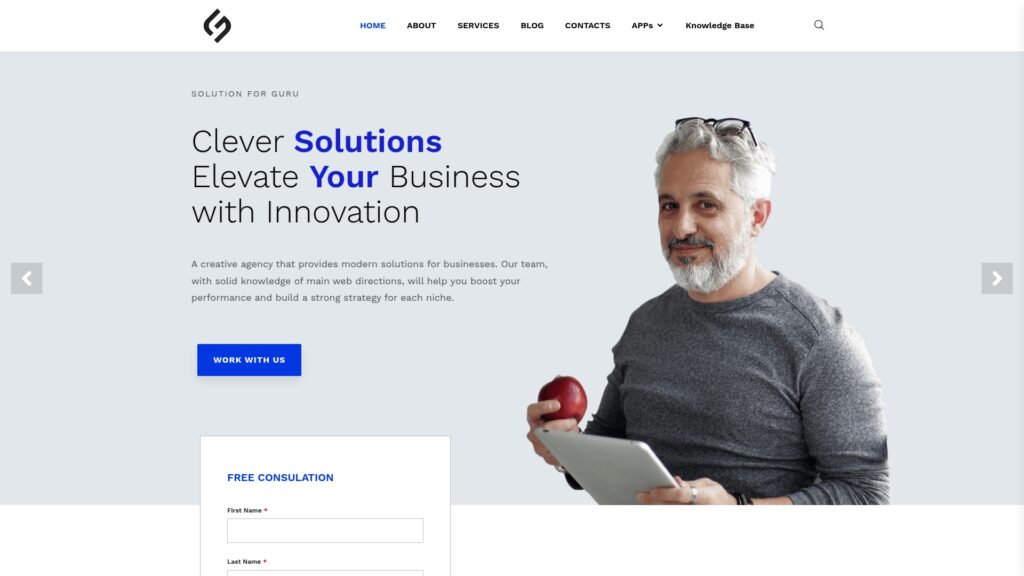
Solution for Guru is a technology consulting and implementation partner specializing in CRM setup, website integration, and digital growth strategy. Here is why businesses choose them:
- Expert CRM Implementation: Solution for Guru’s certified consultants have hands-on experience with Pipedrive, Zoho CRM, Salesforce, Creatio, and more, ensuring your platform is configured for maximum performance from day one.
- Website & SEO Integration Architecture: Their team designs and builds the technical bridges between your CRM, website, Google Analytics, and SEO tools, eliminating data silos and creating a seamless growth infrastructure.
- Custom Automation Development: Solution for Guru builds tailored automation workflows that match your unique sales process — from lead capture on landing pages to multi-step nurturing sequences triggered by SEO campaign behavior.
- Ongoing Optimization and Support: Beyond initial setup, they provide continuous monitoring, reporting, and optimization to ensure your CRM-website-SEO integration delivers improving results over time.
- Training and Team Enablement: Their training programs ensure your marketing and sales teams fully leverage the integrated platform, maximizing the return on your CRM investment.
- Proven ROI Methodology: Solution for Guru applies data-driven frameworks to measure and report the direct revenue impact of CRM and SEO integration, giving leadership clear visibility into growth outcomes.
Furthermore, Solution for Guru maintains partnerships with leading technology vendors, enabling clients to access preferred pricing, dedicated support, and early access to new features. Whether you are implementing a CRM for the first time or migrating from a legacy system, their structured methodology reduces risk and accelerates time to value.
Recommended:
- What Are Lead Scoring Models in Zoho CRM and Why Do They Matter?
- Connecting Zoho CRM with Helpdesk Systems: The Complete Business Guide
- Building a CRM Dream Team: Key Specialists You Can’t Ignore
- Common Pipedrive Setup Mistakes and How to Fix Them
- How to Build Powerful Sales Reports in Pipedrive
- Zoho Projects + Zoho CRM: Managing Sales-to-Project Workflows
- Advanced Filtering in Pipedrive: Tips and Tricks
- Careers in CRM: Roles, Skills, and Career Paths
- Pipedrive Web Chat and LeadBooster: Generate More Leads from Your Website
- CRM Ecosystem Explained: Business and Technical Roles You Need
- What is CRM System Proficiency?
- How Should You Structure Your CRM Team for Maximum Success?
- Pipedrive vs Zoho: Which CRM Platform Is Right for Your Business?
- What Should Investors Know About Salesforce Stock?
- What KPIs Should Every Business Track in Their CRM System?