What Is the Best Payroll Software for Accountants in 2026?

Accountants manage payroll under constant pressure. Tax deadlines, compliance requirements, multi-state filings, employee classifications, direct deposit schedules, and year-end reporting all converge into one of the most error-sensitive processes in any business. The difference between a payroll software that genuinely serves accountants and one that merely tolerates them comes down to a specific set of capabilities: multi-client management, automated tax filings, seamless integration with accounting platforms, and reporting that gives accountants the data they need without hours of manual extraction.
The market offers dozens of payroll tools, but most target business owners rather than the accounting professionals who run payroll on their behalf. This article focuses on four platforms that consistently stand out for accountant-specific workflows: Patriot Software, BambooHR, Rippling, and OnPay. Each brings distinct strengths, and understanding where they excel — and where they fall short — helps accountants make decisions that serve their clients for years, not just the current tax season.
Table of contents
Quick Summary
| Platform | Best For | Starting Price | Tax Filing | Accountant Portal | Key Strength |
|---|---|---|---|---|---|
 | HR-integrated payroll | Custom pricing | Yes | Yes | HR + payroll in one platform |
 | Small business accountants | ~$17/mo + $4/employee | Full-service available | Yes | Affordable, accountant-friendly |
 | Tech-forward, multi-state teams | ~$8/mo/user | Yes | Yes | Automation depth and integrations |
 | Multi-industry payroll | ~$40/mo + $6/employee | Full-service | Yes | Transparent pricing, compliance tools |
How Do These Payroll Platforms Relate to Accounting Work?
Payroll software and accounting work intersect at several critical points: tax liability calculations, journal entry generation, general ledger synchronization, compliance reporting, and client data management. Each of the four platforms discussed in this article addresses that intersection differently — and understanding those differences helps accountants choose the right tool for each client engagement.
Why Does Payroll Software Choice Matter So Much for Accountants?
Accountants bear professional responsibility for accuracy. A payroll error does not just inconvenience a client — it can trigger IRS penalties, damage employee trust, and create restatement work that costs everyone time and money. The right payroll software reduces that exposure by automating tax calculations, filing deadlines, and compliance checks that accountants would otherwise track manually.
Furthermore, accountants managing multiple clients need software that scales horizontally — across clients, not just within a single employer account. Platforms that offer dedicated accountant portals, multi-client dashboards, and accountant-specific billing models transform what would be a fragmented, client-by-client administrative burden into a managed, streamlined service.
What Features Define the Best Payroll Software for Accountants?
Before examining each platform, here are the core criteria that separate genuinely accountant-friendly payroll software from general-purpose tools:
- Automated federal, state, and local tax filing — the software calculates, files, and remits payroll taxes on schedule, with penalties covered if errors originate from the platform
- Accountant/partner portal — a dedicated interface for managing multiple client accounts from a single login
- Accounting software integration — direct sync with QuickBooks, Xero, Sage, or other general ledger platforms
- Robust reporting — payroll summaries, tax liability reports, workers’ comp data, and journal entries exportable in accountant-ready formats
- Direct deposit and payment flexibility — support for multiple pay schedules, pay types, and employee classifications
- Compliance tools — automated W-2, 1099, ACA, and new hire reporting
- Transparent, scalable pricing — billing models that work for accountant practices managing small to mid-size client bases
What Does Patriot Software Offer Accountants?

Patriot Software positions itself directly at small business accountants and bookkeepers. It offers two payroll tiers — Basic Payroll (the accountant runs tax filings manually) and Full-Service Payroll (Patriot handles all federal, state, and local tax filings automatically) — and builds a dedicated partner program around accounting professionals.
How Does Patriot Software Support Multi-Client Accountant Workflows?
Patriot Software’s Accountant Portal gives accounting professionals a centralized dashboard to access all client accounts from a single login. Rather than managing separate credentials for each client, the accountant logs into one interface and navigates between client payroll runs, reports, and tax records.
The portal also allows accountants to set their own access levels — view-only for clients who prefer to run payroll themselves, or full-access for clients who delegate payroll entirely. This flexibility matches the range of service models that accounting practices actually use.
Additionally, Patriot Software offers white-label options that let accountants present the payroll software under their own brand. For practices building a payroll service offering, this branding capability adds professional polish to the client experience.
What Are Patriot Software’s Core Payroll Capabilities?
Patriot Software covers the full payroll processing cycle:
- Unlimited payroll runs per month at no extra charge
- Direct deposit with a two-day or four-day processing window
- Support for hourly, salary, and contractor payments
- Multiple pay schedules (weekly, bi-weekly, semi-monthly, monthly)
- Pre-tax and post-tax deductions (health insurance, 401(k), garnishments)
- PTO tracking integrated into payroll
- W-2 and 1099 generation (included in Full-Service tier)
- Workers’ compensation integration
Tax-wise, the Full-Service tier handles federal Form 941, FUTA (940), state withholding, state unemployment, and local taxes where applicable — with a penalty-free guarantee if Patriot’s calculations cause an error.
How Does Patriot Software Integrate with Accounting Platforms?
Patriot Software integrates directly with Patriot Accounting (its own general ledger product) and offers QuickBooks Online integration. Accountants who use Xero or other platforms typically export payroll journal entries in CSV format and import manually — a limitation worth noting for practices that rely on real-time sync.
For small business clients with straightforward payroll needs and accountants managing a mid-size client portfolio, Patriot Software’s combination of affordability, partner tools, and tax automation makes it one of the strongest value propositions in the market.
What Does BambooHR Offer Accountants?

BambooHR takes a fundamentally different approach from Patriot Software. Rather than building a payroll-first product, BambooHR builds an HR platform first — and payroll is a module within that broader employee management system. This distinction matters significantly for accountants whose clients need both payroll processing and HR infrastructure in one place.
How Does BambooHR Connect Payroll and HR Data?
BambooHR’s core strength lies in its unified employee record. Every piece of HR data — hire date, compensation history, benefits elections, job title changes, terminations — flows automatically into payroll without manual re-entry. Consequently, accountants working within BambooHR see payroll figures that already reflect current employment status, compensation structures, and benefit deductions.
This integration eliminates one of the most common sources of payroll error: data entry discrepancies between HR and payroll systems. When an HR manager updates a salary in BambooHR following a performance review, that change propagates to the next payroll run automatically. Accountants benefit from this data integrity without needing to audit the connection between systems.
What Payroll Features Does BambooHR Provide?
BambooHR Payroll (available as an add-on to BambooHR’s Core and Pro plans) includes:
- Automated payroll tax calculations and filings (federal, state, and local)
- Direct deposit with employee self-service access to pay stubs
- Off-cycle and bonus payroll runs
- Time tracking integration — hours flow from timesheets directly into payroll
- Benefits deduction management synced with BambooHR’s benefits module
- W-2 generation and year-end filing support
- New hire reporting compliance
- Garnishment management
BambooHR also provides an employee self-service portal where employees update their own personal details, tax withholding elections, and direct deposit information — reducing the administrative burden on both the employer and the accountant.
What Are BambooHR’s Limitations for Accountants?
BambooHR’s accountant-facing tools are less developed than Patriot Software‘s dedicated partner portal. Accountants managing BambooHR for multiple clients typically do so through individual client account access rather than a unified multi-client dashboard. Furthermore, BambooHR’s pricing is custom-quoted and generally positions toward mid-size organizations (50–500 employees), making it less cost-effective for very small clients.
That said, for clients in the 30–300 employee range who need HR and payroll unified under one platform, BambooHR delivers exceptional value — and accountants embedded in those client relationships benefit from the platform’s data quality and compliance automation.
What Does Rippling Offer Accountants?

Rippling represents the most technically ambitious platform in this comparison. It unifies HR, payroll, IT management, benefits, and spend management into a single employee data model — and its payroll module benefits directly from that unified architecture. For accountants managing clients who operate across multiple states, employ a mix of W-2 employees and 1099 contractors, or run fast-growing teams, Rippling delivers automation depth that other platforms do not match.
How Does Rippling Handle Multi-State and Global Payroll?
Rippling’s payroll engine handles all fifty U.S. states automatically, including states with city- and county-level tax requirements. When an employee moves from one state to another, Rippling updates their tax jurisdiction automatically — the accountant does not need to manually add state tax registrations or reconfigure withholding rules.
For clients with international employees, Rippling’s Global Payroll module extends this capability to over 50 countries, handling local employment law compliance, currency conversion, and tax filings in each jurisdiction. This makes Rippling the strongest option in this comparison for accountants serving clients with distributed or international workforces.
What Automation Does Rippling Provide for Payroll Processing?
Rippling’s workflow automation engine allows accountants and HR teams to build multi-step triggers across the entire employee lifecycle:
- New hire completes onboarding → payroll profile auto-created, benefits enrolled, IT devices provisioned
- Employee promoted → compensation updated in payroll, benefits tier adjusted, approval workflow triggered
- Employee terminated → final paycheck calculated per state law, IT access revoked, COBRA notification sent
These automations run without manual intervention, which significantly reduces the operational load on accountants managing clients with frequent workforce changes.
How Does Rippling Support Accountants Specifically?
Rippling offers an accountant partner program with a dedicated dashboard for managing client accounts. Partners access detailed payroll reports, journal entry exports formatted for major accounting platforms, and compliance documentation for each client. Rippling integrates natively with QuickBooks, Xero, and NetSuite — with real-time general ledger sync that eliminates manual journal entry work.
The depth of Rippling‘s integration library (600+ apps) also means that for technology-forward clients, Rippling connects payroll data to virtually any other business system — ERP, project management, expense management, or custom internal tools via API.
What Does OnPay Offer Accountants?

OnPay occupies a distinctive position in the payroll market: it delivers full-service payroll processing — automated tax filings, year-end forms, compliance tools — at a pricing structure that remains among the most transparent and predictable in the industry. For accountants building scalable payroll service practices, OnPay’s combination of pricing clarity, compliance depth, and dedicated partner program makes it one of the most commercially attractive platforms to offer clients.
How Does OnPay’s Pricing Model Benefit Accounting Practices?
OnPay charges a base monthly fee plus a flat per-employee fee — with no tiered feature restrictions. Every OnPay account includes all features regardless of company size: full-service tax filing, multiple pay schedules, multi-state payroll, contractor payments, benefits administration, and HR tools. There are no add-ons required to access core functionality.
This all-inclusive model benefits accountants in two ways. First, it simplifies client pricing conversations — the monthly cost is predictable and scales linearly with headcount. Second, it means accountants do not encounter feature walls when clients need specific capabilities, such as contractor 1099 processing or multi-state tax filings, that other platforms charge extra for.
What Compliance Tools Does OnPay Provide?
OnPay‘s compliance capabilities address the industries with the most complex payroll requirements:
| Industry | OnPay Compliance Feature |
|---|---|
| Agriculture | Farm worker payroll, piece-rate pay calculations |
| Nonprofits | 501(c)(3) tax-exempt employer support |
| Restaurants | Tip management, tip credit calculations |
| Construction | Prevailing wage, certified payroll reports |
| Healthcare | Shift differentials, multiple pay rates |
| Domestic employment | Household employer tax handling (Schedule H) |
This industry breadth makes OnPay particularly valuable for accounting practices with diverse client bases — a single platform that handles a restaurant’s tip credits and a nonprofit’s tax-exempt employer status without requiring separate products.
How Does OnPay’s Accountant Partner Program Work?
OnPay runs a dedicated accountant and bookkeeper partner program. Partners receive a personalized dashboard for managing all client accounts, with one-click navigation between clients and consolidated payroll calendars showing upcoming runs and tax deadlines across the entire portfolio.
OnPay also provides revenue-sharing arrangements for accountants who refer new clients, creating a commercial incentive aligned with the accountant’s growth objectives. Furthermore, OnPay’s support team maintains a dedicated accountant support line — partners do not navigate general customer support queues when they need help with a client issue.
How Do These Four Payroll Platforms Compare?

With each platform examined individually, a direct comparison clarifies which tool best serves which type of accountant and client profile.
What Are the Key Differences Between Patriot Software, BambooHR, Rippling, and OnPay?
| Criteria | | |  | |
|---|---|---|---|---|
| Primary focus | Payroll + basic HR | HR platform with payroll | Unified workforce OS | Payroll + compliance |
| Best client size | 1–50 employees | 30–500 employees | 10–1,000+ employees | 1–500 employees |
| Starting price | ~$17/mo + $4/emp | Custom quote | ~$8/mo/user | ~$40/mo + $6/emp |
| Full-service tax filing | ✅ (Full-Service tier) | ✅ | ✅ | ✅ (all tiers) |
| Multi-state payroll | ✅ | ✅ | ✅ (all 50 states) | ✅ |
| Global payroll | ❌ | ❌ | ✅ (50+ countries) | ❌ |
| Contractor (1099) payroll | ✅ | ✅ | ✅ | ✅ |
| Accountant portal | ✅ Dedicated partner | ✅ Limited | ✅ Dedicated partner | ✅ Dedicated partner |
| QuickBooks integration | ✅ | ✅ | ✅ (real-time) | ✅ |
| Xero integration | ⚠️ Manual export | ✅ | ✅ (real-time) | ✅ |
| HR module included | Basic | Full (core product) | Full | Basic |
| Benefits administration | Add-on | ✅ Full | ✅ Full | ✅ Included |
| Time tracking | ✅ | ✅ | ✅ | ✅ |
| Workflow automation | Basic | Moderate | Advanced | Moderate |
| Industry-specific tools | General | General | General | ✅ Strong |
| White-label option | ✅ | ❌ | ❌ | ❌ |
| Penalty-free tax guarantee | ✅ | ✅ | ✅ | ✅ |
| Partner revenue sharing | ✅ | ❌ | ✅ | ✅ |
Which Platform Should You Choose for Different Client Types?
The right platform depends on client profile more than on any single feature. Consider this decision framework:
- Choose Patriot Software when your clients are small businesses (under 50 employees) with straightforward payroll needs, and when you want a white-label option to present under your own practice brand.
- Choose BambooHR when your clients prioritize unified HR and payroll data, have structured HR processes (performance management, onboarding workflows), and operate in the 30–300 employee range.
- Choose Rippling when your clients are growth-stage companies, operate across multiple states or countries, employ a mix of W-2 and 1099 workers, and need deep automation across HR, payroll, and IT together.
- Choose OnPay when you manage a diverse client base across multiple industries, want all-inclusive pricing without feature add-ons, and value a strong accountant partner program with revenue sharing.
Conclusions: Which Payroll Software Gives Accountants the Best Foundation?
Throughout this article, we have examined four payroll platforms through the lens of what accountants actually need: tax accuracy, multi-client management, accounting integration, compliance depth, and commercial viability for practice growth.
Patriot Software delivers the strongest value for accountants serving small business clients who want an affordable, white-label-capable platform with a dedicated partner program. BambooHR excels when clients need HR and payroll unified — particularly mid-size organizations where data integrity between HR and finance matters most. Rippling stands apart for technology-forward clients, multi-state operations, and practices that want the deepest automation available in any payroll platform. OnPay balances full-service compliance, industry versatility, and transparent pricing in a way that makes it commercially compelling for practices building scalable payroll service offerings.
None of these platforms is universally superior — each serves a distinct client profile, and the most effective accounting practices match platforms to clients deliberately rather than applying a one-size approach. Moreover, the value of any payroll platform depends heavily on implementation quality. A well-configured OnPay account outperforms a poorly configured Rippling account every time, regardless of feature set.
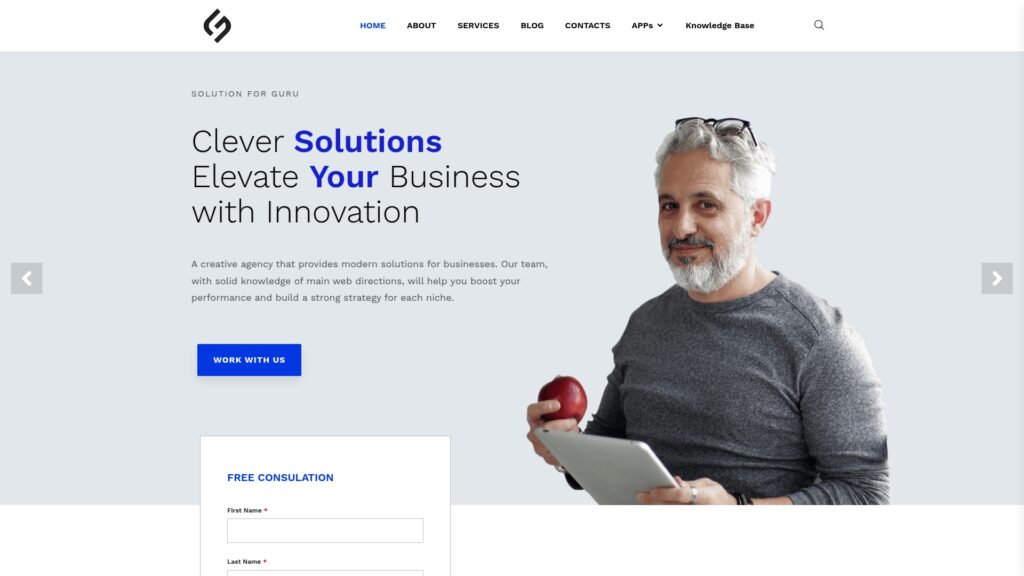
That is precisely why partnering with Solution for Guru accelerates the return on your payroll software investment. Their implementation expertise, integration skills, and ongoing support transform Patriot Software, BambooHR, Rippling, or OnPay from capable products into genuinely efficient, accurately configured tools that serve your clients reliably through every pay cycle and tax season.
Frequently Asked Questions
Each of the four platforms handles multi-client management differently. Patriot Software and OnPay offer the most accountant-specific partner portals — single-login dashboards where you navigate between all client accounts, see upcoming payroll deadlines in one calendar view, and access reports across the portfolio. Rippling‘s partner program provides similar multi-client visibility with additional automation depth. BambooHR‘s multi-client management is less consolidated; accountants typically access each client account individually rather than through a unified partner view. For practices managing more than ten clients, Patriot Software and OnPay currently provide the most mature accountant-facing infrastructure. Solution for Guru helps practices configure these partner portals correctly from setup, ensuring the accountant view reflects the specific access levels, reporting preferences, and workflow triggers that match their service model.
All four platforms — Patriot Software, BambooHR, Rippling, and OnPay — offer a penalty-free guarantee: if the platform’s calculations or filings cause a tax error, the platform covers resulting IRS or state agency penalties. This guarantee applies specifically to errors originating from the software’s calculations or filing processes, not to errors arising from incorrect data that the accountant or client entered. In practice, this means accountants must ensure that employee tax elections, state registrations, and compensation data are accurately maintained in the system. The guarantee covers the platform’s responsibility; data accuracy remains the accountant’s responsibility. Solution for Guru’s implementation process establishes data quality standards and validation checkpoints that reduce the risk of input errors reaching the payroll engine in the first place.
How Does Solution for Guru Help Accountants Implement and Optimize Payroll Software?
Selecting the right payroll platform is only the beginning. Implementation, data migration, integration with existing accounting systems, and staff training all determine whether the platform actually delivers its promised efficiency gains. That is exactly where Solution for Guru provides expert support.
What Does Solution for Guru Do for Accounting Practices?
Solution for Guru is a certified implementation partner with deep expertise in business software deployment, integration, and workflow optimization. For accounting practices adopting Patriot Software, BambooHR, Rippling, or OnPay, their team delivers:
- Platform selection consulting — Solution for Guru evaluates your client portfolio, practice size, current software stack, and growth objectives to recommend the platform that best fits your specific situation. They go beyond vendor marketing materials to provide an objective, experience-based recommendation.
- Implementation and configuration — their team configures the chosen payroll platform to match your clients’ organizational structures, pay schedules, tax jurisdictions, and deduction structures. Clean configuration from day one prevents the data integrity problems that plague self-managed implementations.
- Data migration — Solution for Guru manages the transfer of employee records, historical payroll data, tax IDs, and compensation histories from existing systems into the new platform, with validation checks at every stage.
- Accounting system integration — they connect the payroll platform to your general ledger (QuickBooks, Xero, Sage, NetSuite) and configure the chart of accounts mapping so payroll journal entries post accurately without manual intervention.
- Workflow automation setup — Solution for Guru builds the automation rules that make platforms like Rippling and OnPay genuinely reduce your operational workload, rather than leaving those capabilities unused in the background.
- Team training — they deliver role-specific training for accountants, bookkeepers, and client HR contacts, ensuring everyone who touches the payroll process understands their responsibilities in the new system.
Why Does Implementation Quality Determine Long-Term Value?
Payroll software underperforms not because of product limitations but because of implementation gaps. Tax jurisdiction configurations missed at setup cause filing errors months later. Chart of accounts mappings built without an accountant’s input generate journal entries that need manual correction every pay cycle. Employee records migrated without validation create discrepancies that surface during year-end reporting.
Solution for Guru prevents these outcomes by applying proven implementation methodology rather than relying on self-service setup wizards. Their team has configured payroll systems across dozens of accounting practices — they know where the edge cases hide and build safeguards into the initial setup.
What Ongoing Support Does Solution for Guru Provide?
After implementation, payroll systems require ongoing attention. Tax law changes, new state registrations, software updates, and client business changes all require configuration adjustments. Solution for Guru provides:
- Periodic configuration reviews to ensure compliance with current tax requirements
- Support for onboarding new clients to the payroll platform
- Integration troubleshooting when accounting system sync issues arise
- Upgrade guidance when clients outgrow their current payroll tier
- Strategic consulting on expanding payroll service offerings within the practice