Digital Transformation in Commercial Auto Insurance: What’s Next for Businesses?

The commercial auto insurance industry stands at a crossroads. For decades, carriers relied on paper applications, manual underwriting, and phone-based claims handling — processes that served their purpose but left significant inefficiencies on the table. Today, however, digital transformation is rewriting the rules. Telematics, artificial intelligence, cloud platforms, and instant-quote portals now allow businesses to secure coverage faster, manage risk more intelligently, and interact with their insurers in entirely new ways. For any business that operates a vehicle fleet — from a single delivery van to hundreds of trucks — understanding where this transformation is heading is no longer optional. It is a competitive necessity.
Table of contents
Quick Summary
| Topic | What You Will Discover |
| Digital transformation drivers | Why the industry is changing now and what is accelerating it |
| Key technologies reshaping coverage | Telematics, AI underwriting, IoT, and usage-based insurance |
| Leading insurers in the US market | How BiBerk, Progressive, and Infinity Auto lead digital adoption |
| Impact on businesses | Cost savings, faster claims, smarter risk management |
| Challenges to adoption | Data privacy, legacy systems, workforce readiness |
| Future outlook | Autonomous vehicles, embedded insurance, predictive analytics |
Which Insurance Companies Are Pioneering Digital Transformation in Commercial Auto?
Three standout carriers currently demonstrate how digital transformation reshapes commercial auto insurance in the United States. Each brings a distinct approach, yet all three share a commitment to technology-driven efficiency that directly benefits business policyholders.
How Does BiBerk Leverage Technology for Commercial Auto Coverage?
BiBerk, a Berkshire Hathaway company, built its model around digital-first simplicity. Rather than routing businesses through agents and lengthy paper applications, BiBerk allows commercial clients to obtain quotes and bind coverage entirely online, often in under ten minutes. This approach directly addresses one of the most persistent pain points for small and medium-sized businesses: the time and friction of acquiring commercial auto insurance. BiBerk’s platform handles multiple commercial lines in one place, enabling fleet operators to manage their policies, download certificates, and handle claims through a single digital portal. Consequently, businesses spend less time on administration and more time on operations.
How Does Progressive Apply Data and Telematics to Commercial Fleets?

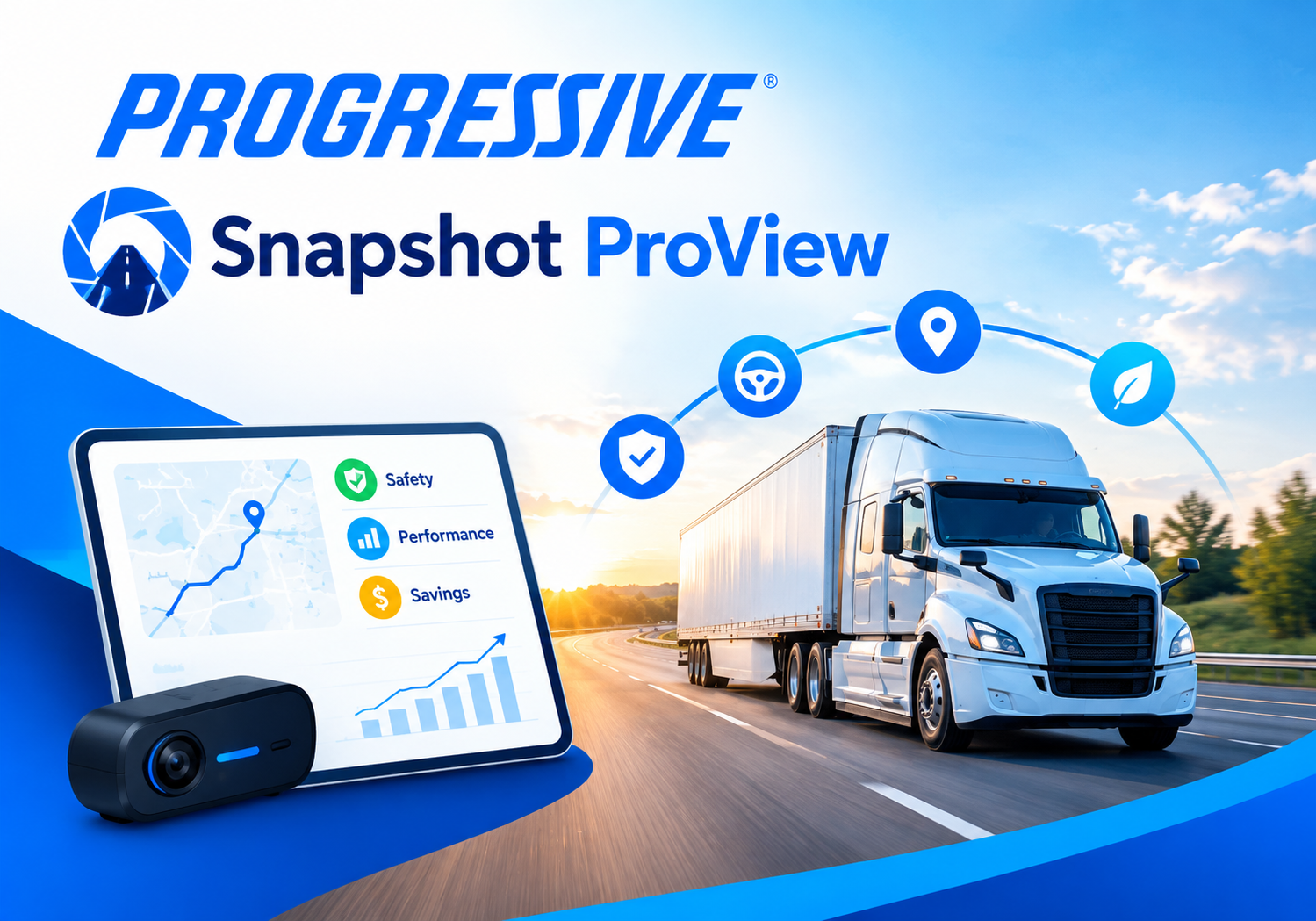
Progressive occupies a unique position in the market by combining massive scale with deep investment in data analytics and telematics. Through its commercial lines division, Progressive equips fleet operators with tools to monitor driving behavior, fuel consumption, and route efficiency — data points that feed directly into underwriting and pricing decisions. Progressive’s Snapshot commercial program and related telematics offerings allow responsible fleet operators to demonstrate lower risk profiles and, as a result, secure more favorable premium rates. Progressive also invests heavily in AI-driven claims processing, reducing the time between an incident and a settlement decision from weeks to days.
How Does Infinity Auto Insurance Serve Specialized Commercial Auto Clients?
Infinity Auto focuses on non-standard and specialty commercial auto segments, including businesses that have difficulty obtaining coverage through conventional channels. By applying data-driven underwriting models, Infinity Auto evaluates risk more granularly than traditional actuarial tables allow, opening coverage options for businesses with complex profiles. Their digital platforms streamline the application process and give agents and business owners transparent access to policy details, endorsements, and billing information. As digital transformation matures, Infinity Auto’s ability to serve underserved commercial segments positions it as a valuable partner for businesses seeking tailored, technology-enabled protection.
What Exactly Is Digital Transformation in Commercial Auto Insurance?
Digital transformation in commercial auto insurance refers to the comprehensive shift from analog, paper-driven, and agent-dependent processes toward technology-enabled platforms that automate, personalize, and accelerate every stage of the insurance lifecycle. This transformation touches every touchpoint — from how a business applies for coverage to how it reports a claim, monitors its fleet, and renews its policy.
Furthermore, digital transformation is not simply about building a website or a mobile app. Instead, it encompasses deep operational changes: replacing manual underwriting with machine learning models, substituting physical inspections with remote sensing and telematics data, and moving policy management from filing cabinets to cloud-based platforms accessible from any device, anywhere, at any time.
The commercial auto segment, in particular, demands this transformation urgently because businesses operate fleets that generate enormous volumes of real-time data. Every mile driven, every hard brake, every route deviation produces information that, when captured and analyzed correctly, transforms risk assessment from a backward-looking exercise into a forward-looking, predictive discipline.
What Are the Core Technologies Driving This Transformation?
| Technology | Application in Commercial Auto Insurance | Business Benefit |
| Telematics & GPS | Real-time vehicle tracking, driver behavior monitoring | Lower premiums for safe fleets, faster claims |
| Artificial Intelligence | Automated underwriting, fraud detection, claims triage | Faster decisions, reduced costs |
| Internet of Things (IoT) | Connected vehicle sensors, dashcams, cargo monitors | Proactive risk prevention, fewer incidents |
| Cloud Computing | Digital policy management, instant document access | 24/7 accessibility, scalability |
| Big Data Analytics | Predictive loss modeling, risk segmentation | More accurate pricing, fewer surprises |
| Mobile Applications | Claims reporting, certificate issuance, fleet dashboards | Self-service convenience for businesses |
| Blockchain | Fraud-resistant policy records, automated claim payouts | Trust, transparency, and speed |
Why Is Digital Transformation Accelerating Right Now in Commercial Auto?
Several converging forces explain why the pace of transformation has accelerated sharply in recent years rather than unfolding gradually over decades.
How Did the Pandemic Reshape Insurance Distribution?
The COVID-19 pandemic forced insurers to abandon in-person processes almost overnight. Agents could no longer visit clients, adjusters could not inspect vehicles physically, and paper-based workflows broke down entirely. In response, carriers accelerated digital investment by years, not months. Companies like BiBerk that already operated digitally-native models gained significant ground during this period, while legacy carriers scrambled to build the digital infrastructure they had deferred for years. The resulting shift in customer expectations proved permanent — businesses that discovered they could obtain quotes, bind policies, and manage claims entirely online rarely wanted to return to the old way.
What Role Does the Rise of Delivery and Gig Economy Fleets Play?
The explosive growth of e-commerce and gig economy platforms created an entirely new category of commercial auto risk. Delivery fleets expanded rapidly, last-mile logistics companies multiplied, and app-based ride services entered markets that traditional insurers had never served. These new business models demanded coverage that could scale up and down with demand — sometimes daily — and that could price risk based on actual usage rather than annual estimates. Traditional annual policies simply could not meet this need. Consequently, usage-based insurance (UBI) and pay-per-mile commercial products emerged directly in response to this demand, and carriers like Progressive moved swiftly to capture this growing segment.
How Do Rising Claim Costs and Inflation Drive Insurers Toward Technology?
Commercial auto loss costs have climbed significantly over the past several years. Vehicle repair costs have risen sharply due to supply chain disruptions and the increasing complexity of modern vehicles. Medical costs tied to accident injuries continue to grow. Legal expenses in commercial auto litigation have escalated. These pressures force insurers to find efficiencies through technology — AI-driven claims processing costs less than manual handling, telematics-based pricing accurately reflects actual risk rather than relying on proxies, and fraud detection algorithms prevent losses that human reviewers miss. In short, digital transformation helps insurers remain profitable in a difficult environment, and they pass a portion of those savings to businesses that embrace technology alongside them.
How Is Usage-Based Insurance Changing the Game for Business Fleets?
Usage-based insurance represents one of the most disruptive innovations in commercial auto. Rather than pricing a fleet based on static factors like vehicle type, driver age, and historical loss data, UBI models price coverage based on how, when, and where vehicles actually operate. This shift benefits responsible fleet operators significantly.
Progressive pioneered UBI in the personal auto space and has extended these capabilities to commercial lines. Fleet operators that participate in telematics programs can demonstrate safe driving behavior — measured through hard braking frequency, speeding incidents, nighttime driving, and distracted driving alerts — and earn tangible premium reductions. For businesses managing thin margins, these reductions matter enormously.
BiBerk‘s streamlined digital platform complements UBI by making the enrollment and management process simple. Businesses connect their fleet telematics data to their policy management portal, view their risk scores in real time, and understand exactly which behaviors drive their premium. This transparency builds trust and motivates fleet managers to invest in driver training programs that further reduce risk.
Infinity Auto applies similar data-driven principles to specialty commercial segments, where UBI tools help underwrite risks that standard tables would otherwise decline or overcharge. By analyzing actual vehicle usage patterns, Infinity Auto offers competitive rates to businesses that demonstrate responsible operations — even when those businesses operate in higher-risk categories.
| UBI Factor | How It Is Measured | Impact on Premium |
| Miles driven | GPS odometer data | Pay-per-mile pricing reduces premiums for low-usage fleets |
| Hard braking events | Accelerometer data | Fewer events signal safer drivers and lower loss probability |
| Speeding frequency | GPS speed vs. posted limits | Staying within limits earns premium credits |
| After-hours driving | Time-stamped GPS logs | Late-night driving correlates with higher risk |
| Distracted driving | Mobile device sensors, dashcams | Alert reduction programs lower rates over time |
| Route characteristics | GPS route analysis | Urban vs. rural, highway vs. local roads affect risk scoring |
How Does Artificial Intelligence Transform Commercial Auto Claims?

Claims handling has historically been the most time-consuming and expensive part of the commercial auto insurance process. A single commercial vehicle accident can trigger weeks of back-and-forth between the business, the insurer, repair shops, medical providers, and legal teams. Artificial intelligence is compressing this timeline dramatically.
What Does AI-Powered Claims Triage Look Like in Practice?
When a driver reports an accident through a mobile app, AI systems immediately begin processing the claim. Computer vision algorithms analyze photos of vehicle damage submitted by the driver and produce a repair estimate within minutes. Natural language processing tools review the incident report, cross-reference it with telematics data from the moment of the accident, and flag any inconsistencies that warrant further investigation. Simultaneously, the system checks the vehicle’s history, the driver’s record, and the policy terms to determine coverage eligibility automatically.
Progressive employs this kind of AI-driven claims triage across its commercial book, allowing adjusters to focus their attention on genuinely complex cases while the system resolves straightforward claims with minimal human intervention. For businesses, the practical result is faster vehicle repair, faster return to service, and less revenue lost to vehicle downtime.
How Does AI Combat Insurance Fraud in Commercial Auto?
Insurance fraud costs the commercial auto market billions of dollars annually, and fraudulent claims ultimately increase premiums for honest businesses. AI changes the fraud-detection equation fundamentally. Machine learning models trained on millions of historical claims identify patterns that human reviewers cannot detect — staged accident signatures, suspicious repair shop relationships, anomalous injury claim timing, and organized fraud ring behaviors. By flagging suspicious claims before payments go out, AI saves carriers significant money and, in turn, prevents premium inflation for legitimate commercial clients. BiBerk benefits from Berkshire Hathaway’s data infrastructure, which supports sophisticated fraud analytics across a vast portfolio of commercial insurance claims.
What Challenges Do Businesses Face When Adopting Digital Insurance Tools?

Despite the clear benefits, digital transformation in commercial auto insurance does not proceed without friction. Businesses and insurers alike must navigate several meaningful challenges before they can fully realize the available advantages.
How Do Data Privacy Concerns Affect Telematics Adoption?
Telematics programs collect detailed data about driver behavior and vehicle location. Some employees, particularly those who use company vehicles for occasional personal trips, resist monitoring on privacy grounds. Fleet managers must balance the financial benefits of telematics-based pricing against employee relations concerns and, in some jurisdictions, specific legal requirements around employee monitoring. Carriers like Progressive and BiBerk address this challenge by offering transparent data policies and by limiting the data collected to business-use periods where possible. However, businesses must still develop clear internal policies and obtain appropriate employee consent before enrolling fleets in telematics programs.
How Do Legacy Systems Create Integration Barriers?
Many established businesses operate fleet management, HR, and accounting systems that predate modern API-based integration standards. Connecting these legacy platforms to digital insurance portals requires custom development work, middleware solutions, or data migration projects that consume time and budget. This barrier disproportionately affects mid-sized businesses that have invested significantly in older infrastructure but lack the IT resources to modernize quickly. Choosing insurers like BiBerk, Progressive, and Infinity Auto that offer well-documented APIs and integration support reduces this barrier meaningfully, but does not eliminate it entirely.
How Does Workforce Readiness Affect Digital Insurance Adoption?
Digital transformation requires not just new technology but new skills. Fleet managers, finance teams, and operations staff must learn to navigate digital insurance portals, interpret telematics dashboards, and engage with AI-driven claims processes. Organizations that invest in training and change management typically see faster adoption curves and better outcomes from digital insurance tools. Those that deploy technology without adequate preparation often find the tools underused and the expected benefits unrealized.
What Does the Future of Commercial Auto Insurance Look Like?
Looking beyond the present state of digital transformation, several emerging trends promise to reshape commercial auto insurance even further over the next five to ten years.
How Will Autonomous and Semi-Autonomous Vehicles Reshape Commercial Coverage?
Autonomous vehicle technology is advancing steadily in commercial applications — long-haul trucking, delivery services, and urban logistics are all active deployment zones. As vehicles take on more driving decisions themselves, the question of liability shifts. When an autonomous system causes an accident, the claim may run through the vehicle manufacturer’s product liability coverage rather than a traditional commercial auto policy. Carriers that adapt their products to cover the intersection of human and machine decision-making will capture this emerging market. Progressive already participates in autonomous vehicle insurance programs and continues to build the actuarial models necessary to price these novel risks.
What Is Embedded Insurance and How Will It Affect Fleets?
Embedded insurance integrates coverage directly into the purchase or lease of a commercial vehicle — or into the platforms that manage fleet operations. Rather than purchasing insurance as a separate transaction, a business leasing a delivery van through a platform might receive commercial auto coverage automatically as part of the lease agreement, priced dynamically based on actual usage. This model removes friction entirely and ensures that vehicles are always covered appropriately. As fleet management software platforms mature and as vehicle manufacturers develop stronger digital ecosystems, embedded insurance will become increasingly common in the commercial auto segment.
How Will Predictive Analytics Reduce Fleet Accidents Before They Happen?
The ultimate promise of digital transformation in commercial auto is not just faster claims — it is fewer claims altogether. Predictive analytics models, fed by telematics data, maintenance records, weather patterns, and driver behavior histories, can identify which vehicles and drivers carry the highest accident probability in the near term. Fleet managers who act on these predictions — scheduling additional training, delaying a high-risk driver’s shift, or routing around dangerous weather — prevent accidents that would otherwise occur. Infinity Auto and Progressive are both developing predictive risk tools that move commercial auto insurance from a reactive product to a proactive risk management partnership.
| Future Trend | Timeline | Business Impact |
| Autonomous vehicle coverage | 2025–2030 | New liability frameworks, reduced human driver risk |
| Embedded fleet insurance | 2025–2027 | Seamless coverage tied to fleet management platforms |
| Predictive accident prevention | 2024–2026 | Proactive alerts reduce incidents and claims |
| Real-time dynamic pricing | 2024–2026 | Premium adjusts daily based on fleet behavior |
| Blockchain claim records | 2026–2030 | Tamper-proof, instant multi-party claim settlement |
| Climate risk modeling | 2025–2028 | Route-level weather risk priced into commercial policies |
What Are the Key Takeaways on Digital Transformation in Commercial Auto Insurance?
Throughout this article, one theme emerges clearly: digital transformation in commercial auto insurance is not a future possibility — it is an active, accelerating reality that forward-thinking businesses are embracing right now. The evidence appears at every level of the market.
BiBerk demonstrates that commercial coverage can be entirely digital without sacrificing professional quality or financial strength. Its Berkshire Hathaway backing, combined with an online-first model, gives businesses the rare combination of reliability and convenience.
Progressive shows that data and telematics can dramatically improve pricing fairness while simultaneously enabling faster, more accurate claims resolution. Fleet operators that participate actively in Progressive’s telematics programs consistently find that responsible driving behavior translates into measurable cost savings over time.
Infinity Auto illustrates that digital transformation reaches beyond mainstream markets. By applying data-driven underwriting to specialty and non-standard commercial auto risks, Infinity Auto opens coverage pathways for businesses that traditional models would otherwise exclude or price out of the market.
Together, these three carriers represent the present and future of commercial auto insurance: faster, smarter, more data-driven, and more genuinely useful to the businesses they serve. For any organization operating commercial vehicles, the question is no longer whether to engage with digital insurance tools — it is how to do so quickly, effectively, and in a way that integrates seamlessly with existing operations.
Partnering with experts like Solution for Guru ensures that this transition happens efficiently, without the costly trial-and-error of self-managed implementation. As commercial auto insurance continues its digital evolution toward embedded coverage, predictive analytics, and autonomous vehicle products, businesses that build strong digital foundations today will be positioned to adapt without disruption tomorrow.
Frequently Asked Questions
Absolutely — and in many ways, small businesses stand to gain the most from digital transformation in commercial auto insurance. Carriers like BiBerk specifically designed their platforms for small commercial clients, enabling even sole proprietors and micro-fleets to obtain professional coverage online in minutes. The elimination of agent commissions and paper-processing overhead means that digital-native carriers often offer more competitive premiums than traditional channels, even for very small fleets. Furthermore, basic telematics tools now cost very little to deploy and can still deliver meaningful insights even for a two- or three-vehicle operation — helping owners document safe driving behavior and make the case for lower renewal rates.
Protecting driver privacy in telematics programs requires both technical and policy measures. On the technical side, businesses should choose telematics solutions that allow them to disable tracking during designated personal-use periods — many platforms support a simple in-app toggle that drivers control themselves. On the policy side, businesses should develop a clear written telematics policy that explains exactly what data is collected, how long it is retained, who can access it, and how the company uses it for insurance purposes. Sharing this policy with drivers before enrollment, obtaining written consent, and establishing a transparent feedback process all reduce resistance and build trust. Carriers like Progressive publish detailed descriptions of what their commercial telematics programs collect, which gives businesses a solid foundation for their own internal documentation.
How Can Solution for Guru Help Your Business Navigate Digital Insurance Transformation?
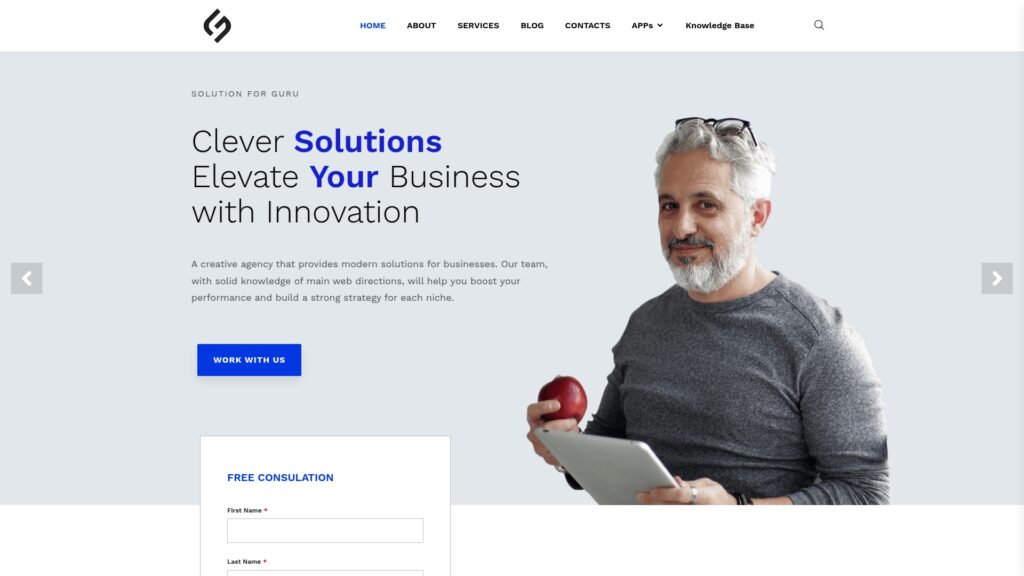
Successfully adopting digital commercial auto insurance tools requires more than selecting the right carrier. It demands integrating insurance data with fleet management systems, configuring telematics platforms, training staff, and building workflows that turn insurance data into operational decisions. This is precisely where Solution for Guru adds transformative value.
Solution for Guru is a certified technology implementation partner with deep expertise in digital business systems, including insurance-adjacent platforms, CRM tools, automation workflows, and data integration solutions. Their consultants work with businesses to design and deploy technology ecosystems that connect every operational system — from fleet tracking software to accounting platforms — into a unified, real-time management environment.
What Specific Services Does Solution for Guru Provide?
- Digital systems integration — connecting fleet telematics, insurance portals, and business management platforms through APIs and automation workflows.
- Zoho CRM and Zoho Books implementation — helping businesses track fleet assets, insurance renewals, claims histories, and costs within a single unified CRM and accounting environment.
- Custom workflow automation — building automated alerts for policy renewals, claims status updates, telematics threshold breaches, and driver training reminders.
- Data migration — transferring historical fleet and insurance records from legacy systems to modern cloud platforms without data loss.
- Staff training and documentation — ensuring that fleet managers and finance teams can fully utilize digital insurance tools and interpret the data these tools generate.
- Ongoing support and optimization — monitoring integrations, updating automations as carrier platforms evolve, and refining workflows as business needs change.
For businesses working with BiBerk, Progressive, or Infinity Auto, Solution for Guru can ensure that the digital capabilities each carrier offers are fully activated and integrated into the business’s broader operational technology stack — rather than remaining isolated tools that require manual attention.
Recommended
- Insurance Needs for Contractors with Company Vehicles: What Do You Really Need?
- Commercial Auto Insurance for Delivery Businesses: Why biBERK Is a Strong Option
- What It’s Like to Work in Commercial Auto Insurance (And How to Start)
- Careers in Commercial Auto Insurance: Roles, Salaries, and How to Get Started
- How Auto Insurance Impacts the Cost of Running a Commercial Fleet?
- 5 Mistakes Businesses Make When Buying Commercial Auto Insurance
- The Rise of Digital Auto Insurance Platforms: What to Expect in 2026
- Full Coverage vs. Liability: Which Auto Insurance Is Right for You?
- What’s Covered and What’s Not: Breaking Down Auto Insurance Coverage Types
- What Are the Best Auto Insurance Options for Rideshare Drivers (Uber, Lyft, etc.)?
- How to Get Affordable Auto Insurance After an Accident or Ticket
- Auto and Renters Insurance Bundle