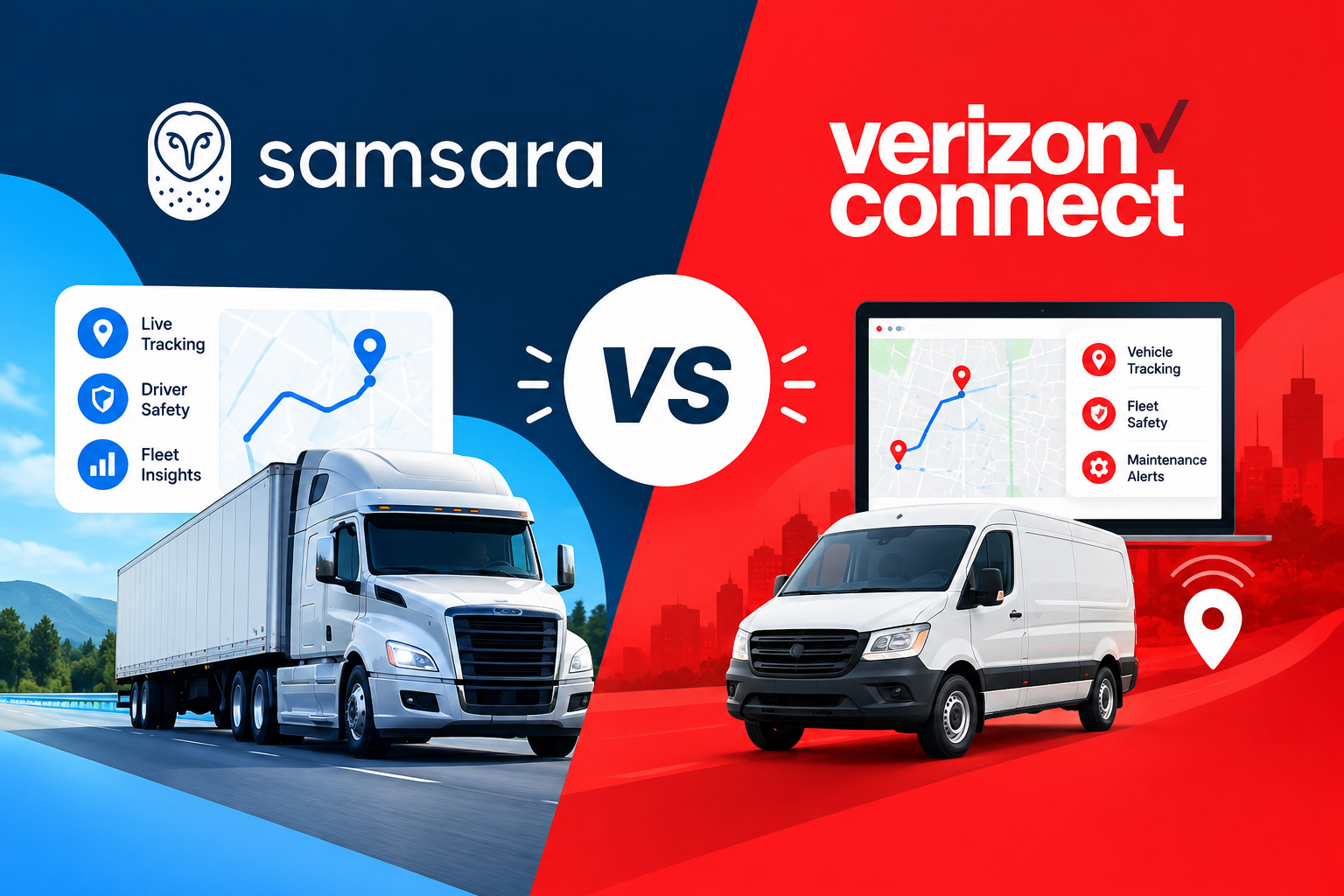
What Is the True Cost Breakdown of Fleet Tracking Systems?

Managing a fleet without a tracking system is like navigating without a map. Companies that invest in fleet tracking technology consistently reduce fuel costs, improve driver safety, and streamline operations. However, before committing to a platform, fleet managers need to understand exactly what they are paying for — and why costs vary so dramatically from one provider to the next.
This article breaks down every cost component of fleet tracking systems, compares leading platforms side by side, and helps you make a confident, data-driven purchasing decision.
Table of contents
Quick Summary: What Does a Fleet Tracking System Cost?
Fleet tracking system costs typically fall into several tiers depending on company size, feature depth, and hardware requirements. Here is a quick overview of what most businesses can expect:
| Cost Component | Typical Range | Frequency |
| Hardware (GPS device) | $30 – $200 per vehicle | One-time or leased |
| Software subscription | $15 – $100 per vehicle/month | Monthly or annual |
| Installation fees | $0 – $150 per vehicle | One-time |
| Onboarding & training | $0 – $500 per fleet | One-time |
| Ongoing support | Included or $50+/month | Ongoing |
| Dashcam add-ons | $20 – $80/vehicle/month | Monthly |
Furthermore, total annual costs for a 10-vehicle fleet can range from $3,600 to $18,000 depending on the platform and chosen features. Understanding each cost driver helps businesses avoid overpaying while still getting the tools they actually need.
How Are These Vehicle Tracking Companies Related to Fleet Cost Analysis?

Four platforms dominate the conversation when fleet managers research cost-effective tracking solutions: Azuga, Verizon Connect, Motive, and Samsara. Each company occupies a distinct position in the market — from budget-friendly SMB solutions to enterprise-grade platforms with advanced AI capabilities.
These four providers are directly relevant to this article because they collectively represent the widest spectrum of pricing models, hardware configurations, and feature sets available today. By examining and comparing them, fleet managers gain a complete picture of the market and can align costs with actual operational needs.
Each platform approaches fleet tracking differently: Azuga targets small-to-medium fleets with straightforward pricing, Verizon Connect offers enterprise depth, Motive focuses on compliance-heavy industries like trucking, and Samsara leads in AI-powered video intelligence. Consequently, their cost structures reflect those priorities.
What Are the Key Characteristics of Each Fleet Tracking Platform?
Before diving into cost structures, it helps to understand what each platform fundamentally is — its origin, core strengths, target customer, and defining features. These characteristics directly shape how each provider prices its products and where it delivers the most value.
What Makes Azuga Stand Out as a Fleet Tracking Solution?

Founded in 2012 and acquired by Solera Holdings in 2021, Azuga built its identity around simplicity and accessibility for small-to-medium fleets. The platform centers on its plug-and-play OBD-II GPS device, which drivers can install themselves in under two minutes — no technician required. This approach eliminates a significant barrier to adoption for businesses that cannot afford expensive professional installations.
Azuga’s core platform delivers real-time GPS tracking, driver safety scores, fuel monitoring, maintenance alerts, and basic reporting within an intuitive dashboard that non-technical fleet managers appreciate. One of its most distinctive features is its gamified driver rewards program: drivers earn points for safe driving behavior, which they can redeem for gift cards — a behavioral incentive that actually improves safety outcomes rather than simply monitoring them.
- Founded: 2012, acquired by Solera Holdings in 2021
- Best for: Small-to-medium fleets (1–50 vehicles), field service companies, small delivery operations
- Signature feature: Gamified driver safety rewards system
- Hardware: OBD-II plug-and-play, self-install in under 2 minutes
- Contract flexibility: Month-to-month options available — rare in this industry
- Integrations: QuickBooks, Fleetio, Azuga FleetCam add-on for dashcam video
Azuga is particularly well-suited for fleet managers who are transitioning from paper-based tracking or spreadsheet management for the first time. Its learning curve is gentle, its onboarding resources are self-guided, and its pricing transparency is higher than most competitors. The trade-off is depth: Azuga lacks the advanced AI, enterprise integrations, and compliance sophistication of Motive, Samsara, or Verizon Connect.
What Defines Verizon Connect as an Enterprise Fleet Platform?
Verizon Connect (formerly known as Fleetmatics and NexTraq) emerged from Verizon’s 2016 acquisition of multiple telematics companies and consolidation into a unified enterprise platform. Today, Verizon Connect serves over 500,000 customers across 140 countries, making it one of the largest fleet management providers in the world by customer count.
The platform’s defining characteristic is enterprise-grade reliability backed by Verizon’s own nationwide cellular network infrastructure. Unlike competitors that rely on third-party SIM cards, Verizon Connect routes data through Verizon’s own LTE network — providing superior connectivity in rural areas and regions where MVNO signals degrade. This infrastructure advantage makes it the preferred choice for utilities, municipalities, and logistics operators who cannot afford data gaps.
- Founded: Consolidated 2016 from Fleetmatics, NexTraq, and Telogis acquisitions
- Best for: Mid-to-large enterprises (25+ vehicles), utilities, municipalities, national logistics
- Signature feature: Native Verizon LTE network connectivity — no third-party SIM dependency
- Hardware: Professional hardwired installation typically required
- Contract: Typically 12–36 months; enterprise accounts negotiated directly
- Integrations: SAP, Oracle, Salesforce, Geotab, and 100+ enterprise connectors
Verizon Connect’s breadth of features — spanning fleet tracking, field service management, dispatch optimization, route planning, and regulatory compliance — makes it a comprehensive operational platform rather than simply a GPS tracker. However, this depth introduces complexity: implementation typically requires dedicated IT resources and a structured rollout plan, which smaller organizations often find challenging without external support.
What Makes Motive the Leading Choice for Trucking and Compliance?

Originally launched in 2013 as KeepTruckin, Motive rebranded in 2022 to reflect its expansion beyond trucking into a broader fleet intelligence platform. Despite this evolution, Motive’s roots in ELD compliance remain its clearest differentiator. The company was among the first approved ELD providers when the FMCSA mandate took effect in 2017, and it built its reputation serving owner-operators and mid-size carriers who needed an affordable, FMCSA-compliant solution.
Today, Motive serves more than 120,000 customers and manages over 1 million commercial vehicles. Its platform combines ELD/HOS compliance, AI dashcam technology, GPS fleet tracking, driver safety coaching, fuel card integration, and spend management into a unified system. This all-in-one approach distinguishes Motive from platforms that require separate subscriptions for compliance and tracking.
- Founded: 2013 as KeepTruckin, rebranded Motive in 2022
- Best for: Trucking carriers, logistics operators, construction fleets — any FMCSA-regulated operation
- Signature feature: FMCSA-approved ELD with native HOS, DVIR, and IFTA reporting
- Hardware: Mix of OBD-II and hardwired options; AI dashcam sold separately
- Contract: Annual plans standard; aggressive discounts for prepaid annual billing
- Integrations: Major TMS platforms (McLeod, TMW), fuel card networks, payroll systems
Motive’s driver-facing mobile app consistently earns the highest ratings among truck drivers — a critical factor, since driver adoption determines whether a telematics investment actually delivers ROI. Drivers who resist logging into clunky interfaces undermine data quality. Motive’s app design reflects years of feedback from professional drivers who use it daily in the cab.
What Sets Samsara Apart as a Technology-Forward Fleet Platform?

Founded in 2015 by the co-founders of Meraki (a Cisco company), Samsara entered the fleet tracking market with a fundamentally different philosophy: connected operations powered by AI and real-time data intelligence. The company went public on the NYSE in 2021 and has since grown into one of the fastest-scaling Industrial IoT companies globally, serving customers including Sysco, Vail Resorts, and the City of Chicago.
Samsara’s most distinctive characteristic is its AI Video Safety platform — a dual-facing dashcam system that uses machine vision and machine learning to detect unsafe driving behaviors in real time. Rather than reviewing footage after an incident occurs, Samsara’s AI coaches drivers in the moment through in-cab audio alerts. The platform analyzes data from over 1 trillion miles of driving to power its safety models, making its AI predictions increasingly accurate over time.
- Founded: 2015; NYSE IPO in December 2021
- Best for: Technology-forward fleets, enterprises prioritizing safety ROI, multi-asset operations
- Signature feature: AI Video Safety with real-time in-cab coaching — the most advanced in the industry
- Hardware: Dual-facing AI dashcam is central to the product; professionally installed or self-install
- Contract: Typically 3-year minimum for enterprise; hardware often subsidized within contract
- Integrations: 200+ native integrations via open API; Samsara App Marketplace
Samsara also distinguishes itself through its connected sensor ecosystem: beyond vehicles, the platform tracks trailers, equipment, refrigeration units, and industrial assets through a unified dashboard. This breadth makes it the natural choice for complex operations managing mixed asset types. The trade-off is cost — Samsara’s 3-year contract requirement and premium hardware pricing create a higher commitment threshold than competitors, requiring fleet managers to be confident in the investment before signing.
Why Does Understanding Fleet Tracking Costs Matter So Much?
Fleet tracking is not simply a GPS dot on a map. Modern telematics platforms bundle real-time location data, engine diagnostics, driver behavior scoring, ELD compliance, dashcam footage, fuel analytics, and maintenance alerts into a single subscription. Every additional feature layer adds cost — but it also adds measurable ROI.
According to the American Transportation Research Institute (ATRI), fuel represents approximately 24% of total trucking operational costs. Fleet tracking systems that optimize routing and reduce idle time can cut fuel expenses by 10–15%. Similarly, insurance providers like Progressive and Samsara Insurance often offer 5–15% premium discounts to fleets using verified telematics data.
Therefore, understanding the full cost breakdown — not just the monthly subscription rate — allows business owners to calculate true return on investment and choose a system that pays for itself within the first year of operation.
What Are the Main Cost Components of Fleet Tracking Systems?
What Hardware Costs Should You Expect?
Hardware represents the most visible upfront cost in fleet tracking. Most providers offer either a plug-and-play OBD-II device or a hardwired GPS unit. The choice significantly affects both performance and price.
- OBD-II plug-in devices: $30–$80 per unit, easy self-installation, suitable for light-duty fleets
- Hardwired GPS trackers: $80–$200 per unit, professional installation required, more accurate and tamper-resistant
- Dashcams (AI-enabled): $100–$300 per unit, often bundled into monthly subscription plans
- Asset trackers (trailers, equipment): $30–$120 per unit with separate subscription tiers
Motive, for example, charges separately for its AI dashcam hardware, while Samsara bundles camera hardware into a minimum 3-year contract. Azuga, on the other hand, frequently offers free hardware with contract commitments, reducing the barrier for smaller fleets. Verizon Connect typically requires professional installation, adding $50–$150 per vehicle in setup fees.
How Do Software Subscription Models Affect Total Cost?
Software subscriptions form the recurring backbone of fleet tracking costs. Providers generally structure pricing in one of three ways: per vehicle per month, tiered packages, or modular add-ons.
Per-vehicle-per-month pricing is the most common model and the easiest to budget. However, platforms often lock core features behind higher tiers, meaning advertised base prices rarely reflect what a fleet actually needs to run effectively.
| Platform | Entry Price/Vehicle/Month | Mid-Tier | Enterprise |
| ~$25 | ~$35 | Custom |
 | ~$35 | ~$55 | Custom quote |
 | ~$20 (basic) | ~$35 | Custom |
 | ~$27 | ~$45 | Custom |
Importantly, most enterprise quotes require direct negotiation. Fleets with 20+ vehicles typically secure 15–30% discounts off published rates. Annual prepayment further reduces costs by another 10–20% on most platforms.
What Installation and Onboarding Costs Are Typically Hidden?
Installation and onboarding represent frequently overlooked cost categories that can add hundreds or thousands of dollars to the total investment, particularly for larger fleets.
- Self-installation (OBD-II): $0 — most fleet managers can complete this in under 5 minutes per vehicle
- Professional hardwired installation: $75–$150 per vehicle, typically required for Verizon Connect and hardwired Samsara units
- Training and onboarding: Free webinars (Azuga, Motive) vs. dedicated onboarding packages ($200–$500 for Verizon Connect enterprise tiers)
- API integration fees: $0–$500+ depending on ERP, dispatch, or payroll system connections
Motive stands out for its self-guided onboarding resources, reducing time-to-value significantly. Verizon Connect, while more complex to deploy, provides dedicated implementation support that larger fleets find valuable for managing the rollout.
How Do Compliance and ELD Costs Factor Into the Total?
For commercial motor carriers operating under FMCSA regulations, Electronic Logging Device (ELD) compliance adds another cost dimension. ELD functionality is either bundled into standard plans or sold as a separate module.
Motive built its reputation on ELD compliance for the trucking industry. Its ELD solution integrates directly with Hours of Service (HOS) tracking, DVIR (Driver Vehicle Inspection Reports), and IFTA fuel tax reporting — features that Azuga‘s base tier does not include. Verizon Connect offers a dedicated compliance module, while Samsara includes ELD in its standard fleet plans.
Businesses operating non-commercial fleets — delivery vans, service vehicles, municipal trucks — typically do not need ELD compliance, which allows them to select more affordable base plans from any provider. However, carriers subject to FMCSA rules should factor compliance module costs of $10–$25 per vehicle per month into their budget.
What Do Dashcam and AI Video Features Add to the Cost?
AI-powered dashcams have become one of the fastest-growing cost categories in fleet tracking. These systems use machine learning to detect distracted driving, tailgating, harsh braking, and drowsiness in real time — providing both safety benefits and liability protection.
- Samsara AI Dashcam: Hardware ~$200–$299, included in subscription above base tier
- Motive AI Dashcam: Hardware ~$150–$250, subscription from ~$35/vehicle/month with video
- Azuga FleetCam: ~$25–$45/vehicle/month add-on, includes event-triggered video clips
- Verizon Connect Integrated Camera: Available as add-on, pricing on request
Samsara’s AI video capabilities are particularly well-regarded, with its platform analyzing 1 trillion miles of driving data to power its safety algorithms (Samsara, 2024). However, this depth of capability comes at a premium. Motive offers a compelling alternative for trucking-focused operations where dashcam footage doubles as exoneration evidence in accident disputes.
How Does Fleet Size Affect Per-Unit Pricing?
Fleet size is one of the strongest levers for negotiating lower per-unit costs. All four major providers offer volume discounts, though the thresholds and discount depths vary considerably.
| Fleet Size | | | | |
| 1–10 vehicles | List price | List price | List price | List price |
| 11–25 vehicles | ~5–10% off | Negotiable | ~10% off | ~5–10% off |
| 26–50 vehicles | ~15% off | ~15–20% off | ~15–20% off | ~15% off |
| 50+ vehicles | Custom | Custom | Custom | Custom |
Additionally, annual billing consistently reduces monthly effective rates across all platforms. Motive is particularly aggressive with annual pricing, sometimes offering up to 25% savings for fleets that prepay a full year. Verizon Connect‘s enterprise team negotiates custom packages that can include free hardware, extended warranties, and dedicated account management for large deployments.
What Ongoing and Hidden Costs Should Businesses Watch For?
Beyond subscription and hardware, several ongoing costs catch fleet managers off guard during the first year of operation. Awareness of these expenses prevents budget overruns and ensures accurate ROI calculations.
- Contract cancellation fees: Samsara and Verizon Connect typically enforce 12–36 month contracts with early termination fees equivalent to remaining contract value
- Hardware replacement: GPS units occasionally fail; replacement costs $30–$150 depending on provider policies
- Data overage charges: Some platforms cap data storage for video footage; exceeding limits triggers additional fees
- Feature upgrade costs: Moving from base to mid-tier plans mid-contract may require a new agreement
- Driver app licenses: Some platforms charge separately for driver-facing mobile apps on fleets over a certain size
Azuga generally offers month-to-month flexibility that reduces contractual risk, making it attractive for businesses that prefer agility over locked-in pricing. Nevertheless, month-to-month rates are consistently higher than annual commitments across the industry.
How Do Azuga, Verizon Connect, Motive, and Samsara Compare on Cost and Features?
The following comprehensive comparison table consolidates the key differentiators across the four leading fleet tracking platforms. This enables side-by-side evaluation based on the cost dimensions most relevant to your operation.
| Feature / Criteria | | | | |
| Starting price (per vehicle/month) | ~$25 | ~$35 | ~$20 | ~$27 |
| Hardware cost | Often free w/ contract | $80–$200 | $80–$200 | $150–$300 |
| Contract length | Month-to-month available | 12–36 months | 12–36 months | 12–36 months |
| Installation | Self (OBD-II) | Professional required | Self or professional | Self or professional |
| ELD/HOS compliance | Add-on | Add-on module | Included (core product) | Included |
| AI dashcam | Add-on (~$25–$45/mo) | Add-on (custom price) | Add-on (~$35/mo) | Bundled (higher tiers) |
| Mobile app quality | Good | Very good | Excellent | Excellent |
| Fuel analytics | Yes | Yes | Yes | Yes |
| Maintenance alerts | Yes | Yes | Yes | Yes |
| Driver behavior scoring | Yes | Yes | Yes | Yes (AI-powered) |
| API integrations | Limited | Extensive | Extensive | Extensive |
| Best for | SMBs, light fleets | Enterprise | Trucking/logistics | Tech-forward fleets |
| Free trial | Yes (demo) | Demo only | Yes | Demo only |
| Customer support | Phone, email, chat | Phone, email | 24/7 phone, chat | 24/7 phone, chat |
This comparison clearly illustrates that no single platform wins across all categories. Instead, the best choice depends on fleet size, industry requirements, technical sophistication, and budget flexibility. Motive leads for compliance-heavy trucking operations, Samsara excels in AI-driven safety analytics, Verizon Connect provides enterprise-grade depth, and Azuga offers the lowest barrier to entry for smaller fleets.
What Conclusions Should Fleet Managers Draw About Fleet Tracking Costs?
How Should Small Fleets Approach Fleet Tracking Investment?
Small fleets of 1–15 vehicles benefit most from platforms that minimize upfront commitment while delivering core tracking capabilities. In this segment, Azuga consistently emerges as the most cost-effective starting point. Its OBD-II plug-and-play hardware eliminates installation costs, month-to-month plan availability reduces contractual risk, and its interface suits non-technical fleet managers who need straightforward reporting without steep learning curves.
That said, small fleets that already operate in regulated industries — particularly if they run CDL-required commercial vehicles — should seriously consider Motive even at the small-fleet tier. Its ELD-first design means compliance comes standard rather than as a costly add-on, and its driver app consistently earns high marks for ease of use among drivers unfamiliar with fleet software.
When Does Verizon Connect or Samsara Justify the Premium Cost?
Mid-size and enterprise fleets operating 25 or more vehicles unlock significantly better economics with Verizon Connect and Samsara through volume negotiation. Beyond pricing, both platforms justify their premium through integration depth: Verizon Connect connects natively with major fleet management ERPs including SAP, Oracle, and Geotab, while Samsara’s open API ecosystem supports hundreds of third-party integrations.
Samsara, furthermore, leads the market in AI-powered safety outcomes. Research published on Samsara’s platform reports that fleets using its AI dashcam system reduce collision rates by an average of 57% within the first year. For fleets where accident liability represents a material financial risk — construction, utilities, last-mile delivery — this ROI justifies the higher subscription cost and hardware investment.
Verizon Connect earns its premium through sheer enterprise reliability and the backing of Verizon’s nationwide network infrastructure. For fleets operating across diverse geographies where connectivity is mission-critical, this infrastructure advantage translates to more consistent data quality compared to SIM-dependent competitors.
What Is the Smart Long-Term Cost Strategy for Fleet Tracking?
Ultimately, the smartest fleet tracking investment considers total cost of ownership over three years rather than monthly sticker price. A platform that costs $5 more per vehicle per month but reduces fuel spending by 12%, eliminates $200,000 in accident liability, and saves 10 hours per week in manual reporting delivers far superior ROI than the cheapest subscription available.
Fleet managers should calculate their break-even point by estimating savings in fuel, maintenance, insurance, and administrative labor against the combined hardware, subscription, and integration costs of their chosen platform. Most well-implemented fleet tracking systems reach break-even within 6–18 months of deployment.
Additionally, negotiating annual billing from day one, requesting bundled hardware deals, and starting with a pilot program on 5–10 vehicles before full fleet rollout represent proven strategies for minimizing risk while building internal confidence in the technology.
Frequently Asked Questions About Fleet Tracking System Costs
The average monthly cost of fleet tracking ranges from $20 to $55 per vehicle for standard GPS tracking and driver behavior monitoring. Adding features like AI dashcams, ELD compliance, or advanced analytics typically pushes costs to $45–$100 per vehicle per month. However, fleets that negotiate annual billing and volume discounts regularly achieve effective rates 15–25% below published pricing. Azuga and Motive represent the most competitive entry-level options, while Verizon Connect and Samsara command premium pricing in exchange for enterprise-grade capabilities and support.
Yes — several providers offer month-to-month flexibility, though this convenience comes at a price premium. Azuga is notable for offering no-contract options that allow fleets to cancel with 30 days notice. Motive also offers flexible terms for smaller fleet tiers. Verizon Connect and Samsara, by contrast, typically require 12–36 month commitments, particularly for enterprise accounts where hardware is subsidized. Fleets that prioritize flexibility over lowest monthly price should evaluate Azuga’s month-to-month plans carefully, and consider whether the 15–25% savings from annual billing justify locking into a longer commitment once the platform proves its value.
Most well-implemented fleet tracking systems reach financial break-even within 6–18 months. The primary savings drivers include: fuel reduction through optimized routing and idle-time monitoring (typically 10–15% fuel savings), insurance premium discounts from telematics-verified safe driving (5–15% with participating insurers), reduced overtime through accurate time-on-site tracking, lower accident costs through dashcam exoneration and proactive safety coaching, and extended vehicle lifespan through predictive maintenance alerts. A 10-vehicle fleet spending $500/month on tracking that reduces fuel costs by $300/month, insurance by $150/month, and eliminates one preventable accident per year worth $5,000 in liability achieves break-even in well under 12 months.
Why Should You Partner With Solution for Guru for Fleet Tracking Implementation?
Choosing the right fleet tracking platform is only half the challenge. Successfully implementing, customizing, and integrating telematics data into your existing business workflows requires expertise that many fleet operators simply do not have in-house. That is where Solution for Guru provides decisive value.
Solution for Guru specializes in fleet technology consulting, helping businesses across industries evaluate, deploy, and optimize telematics platforms including Azuga, Verizon Connect, Motive, and Samsara. Rather than navigating complex vendor negotiations alone, fleet managers who work with Solution for Guru benefit from expert guidance through every phase of adoption.
What Specific Benefits Does Solution for Guru Offer Fleet Operators?
- Vendor-neutral platform evaluation: Solution for Guru analyzes your specific fleet profile — size, industry, compliance requirements, existing software stack — and recommends the platform that delivers the best value, not the highest commission
- Contract negotiation support: Their team understands vendor pricing structures and secures fleet discounts, bundled hardware deals, and favorable contract terms that fleet managers rarely obtain independently
- Integration architecture: Solution for Guru designs and implements integrations between fleet tracking platforms and ERP, payroll, dispatch, and maintenance management systems — eliminating the costly manual data transfer that plagues many fleet operations
- Ongoing optimization: After deployment, their analysts review fleet data monthly, identifying underutilized features, cost reduction opportunities, and performance improvements that most fleet teams overlook
- Training and change management: Driver adoption is the most common implementation failure point; Solution for Guru delivers structured training programs that accelerate adoption and maximize platform ROI
Working with Solution for Guru transforms a complex, high-stakes technology decision into a structured, supported process with measurable outcomes. For fleet operators who want the benefits of advanced telematics without the implementation headaches, this partnership represents one of the highest-ROI investments available.
Recommended
- Offline Tracking: How Do Devices Store Data Without Connectivity?
- Real-Time Tracking vs Passive Tracking: What Are the Key Differences?
- How Vehicle Tracking Systems Reduce Commercial Auto Insurance Costs
- How Does GPS Tracking Work: Satellites, Signals, and Software?
- Can GPS Trackers Be Hacked? Security Risks Explained
- 4G vs 5G GPS Trackers: What’s Changing?
- AI in Fleet Tracking: How Are Predictive Maintenance and Analytics Transforming Fleet Operations?
- Tracking Requirements for Commercial Vehicles in the U.S.
- How Vehicle Maintenance Tracking Software Reduces Costs and Extends Fleet Lifespan?
- Top Benefits of GPS Vehicle Tracking Fleet Management Solutions for Modern Businesses
- Vehicle Tracking Online
- Business Vehicle Tracking: Boosting Efficiency and Accountability on the Road