Progressive vs biBERK vs NEXT: Which Commercial Auto Insurance Offers Better Value?

Every mile your business vehicle travels carries financial risk. A single at-fault accident without adequate commercial auto insurance can trigger liability claims, vehicle repair costs, and legal fees that threaten a small business’s survival. Yet with dozens of insurers competing for your premium dollar, identifying the policy that delivers genuine value — not just the lowest sticker price — requires careful comparison.
Three insurers consistently rise to the top of small-business commercial auto conversations in the United States: Progressive, biBERK, and NEXT Insurance. Each brings a distinct approach to coverage, pricing, and customer experience. This article breaks down exactly what each provider offers, where they excel, where they fall short, and ultimately which type of business owner gets the most value from each option.
Table of contents
Quick Summary
- Progressive Commercial leads the US market in commercial auto volume, offering extensive coverage options, strong claims infrastructure, and usage-based telematics for fleet management.
- biBERK provides direct-to-business insurance backed by Berkshire Hathaway, with competitive pricing for small businesses that prefer to skip the middleman.
- NEXT Insurance delivers a fully digital, mobile-first experience designed specifically for self-employed professionals, independent contractors, and micro-businesses.
- All three providers offer core commercial auto liability, collision, and comprehensive coverage, but differ significantly in underwriting appetite, pricing model, and customer support infrastructure.
- The best choice depends on business size, fleet complexity, industry type, and how much the owner values digital convenience versus personalised service.
What Is Commercial Auto Insurance and Why Does It Matter for US Businesses?
Commercial auto insurance covers vehicles that businesses own, lease, or use primarily for work purposes. It differs from personal auto insurance in one critical respect: personal policies explicitly exclude business use, meaning that a delivery driver, contractor, or sales professional who causes an accident while working can face a denied claim that exposes their business — and personal assets — to devastating liability.
According to the Insurance Information Institute, the average cost of a commercial auto liability claim exceeds $70,000, and claims involving injuries can easily surpass $500,000 when legal costs are included. For small businesses operating on thin margins, a single uninsured incident can mean bankruptcy. Consequently, selecting the right commercial auto policy is not a cost-minimisation exercise — it is a risk management decision with potentially existential stakes.
Commercial auto policies typically bundle several coverage types: bodily injury and property damage liability, collision coverage for the insured vehicle, comprehensive coverage for non-collision losses, uninsured motorist protection, medical payments coverage, and hired and non-owned auto coverage for employees using personal or rented vehicles for work. Understanding which provider structures these coverages most favourably for your specific business type is the central challenge this article addresses.
How Does Progressive Approach Commercial Auto Insurance for US Businesses?

Progressive Commercial is the largest commercial auto insurer in the United States by market share, a position it has held since 2013 according to the National Association of Insurance Commissioners (NAIC) data. This scale gives Progressive several structural advantages: broader underwriting appetite, deeper claims handling infrastructure, and more pricing data than virtually any competitor. Progressive writes commercial auto policies for an exceptionally wide range of vehicle types and business categories — from single-vehicle contractors to fleets exceeding 50 units, and from artisan contractors to long-haul truckers.
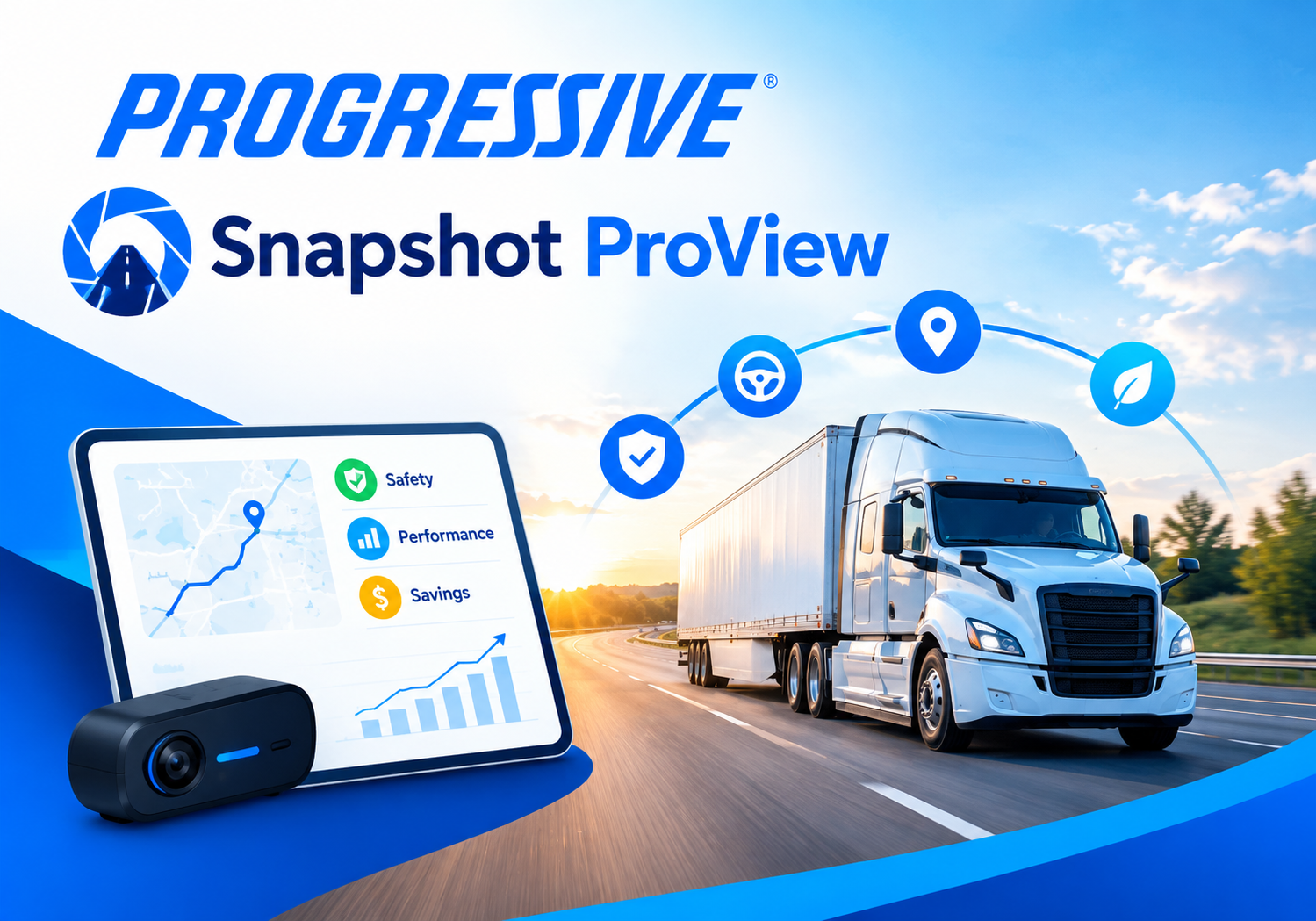
Progressive’s Smart Haul and Snapshot ProView telematics programmes allow fleet owners to earn premium discounts based on actual driving behaviour, including hard braking, speeding, and mileage. For businesses with disciplined drivers, these programmes can deliver meaningful savings that are simply unavailable from smaller, less technologically sophisticated insurers. Furthermore, Progressive’s commercial auto policies are available through both independent agents and direct online channels, giving business owners flexibility in how they purchase and manage their coverage.
Progressive’s claims network spans all 50 states with 24/7 phone claims reporting, an online claims portal, and a network of over 9,000 independent repair facilities in its Service Centers programme. For business owners who depend on their vehicles for daily operations, rapid claims resolution is not a nice-to-have — it is essential. Progressive’s scale and infrastructure make it one of the strongest performers on this dimension.
How Does biBERK Serve Small Business Owners With Commercial Auto Coverage?
biBERK operates as a direct-to-consumer commercial insurance brand owned by Berkshire Hathaway Insurance Group — one of the most financially stable insurance conglomerates in the world, rated A++ by AM Best. This parentage matters because it combines the financial strength of a Fortune 10 company with the pricing efficiency of a direct channel that eliminates broker commissions.
biBERK targets small businesses with straightforward insurance needs — typically companies with fewer than 20 employees, a small number of vehicles, and operations that fit within well-defined risk categories. Their commercial auto product covers business-owned vehicles used for deliveries, client visits, job sites, and other work-related transportation. The online quote process takes roughly ten minutes and typically produces instant pricing without requiring agent involvement.
One of biBERK’s most compelling value propositions is price transparency. Their website publishes indicative premium ranges by business type, which helps owners benchmark their quotes before purchasing. According to biBERK’s own data, small businesses that switch to their platform save an average of 20% on their commercial insurance premiums compared to their prior insurer. While individual results vary significantly by business type and location, the combination of Berkshire Hathaway’s underwriting discipline and direct channel economics genuinely enables competitive pricing for the right risk profiles.
How Does NEXT Insurance Target Independent Contractors and Small Fleets?

NEXT Insurance entered the commercial insurance market in 2016 with a fundamentally different premise: that small business insurance is broken for self-employed people and micro-businesses because traditional insurers designed their products and processes for larger, more complex risks. NEXT rebuilt the entire insurance experience around mobile-first technology, instant AI-powered underwriting, and occupation-specific policy bundles that simplify coverage decisions for business owners who lack insurance expertise.
NEXT’s commercial auto coverage forms part of a broader business insurance ecosystem that typically includes general liability, professional liability, tools and equipment coverage, and workers’ compensation — all purchasable together through a single digital platform. This bundling approach appeals strongly to independent contractors, gig workers, and sole proprietors who need multiple coverage types but want to manage everything in one place without speaking to an agent.
Notably, NEXT issues digital certificates of insurance instantly — a feature that contractors find invaluable when clients require proof of coverage before authorising work to begin. NEXT’s LiveCert technology allows policyholders to share verified certificates of insurance directly from their smartphone in seconds, a capability that neither Progressive nor biBERK matches in speed or convenience.
What Coverage Options Does Each Provider Actually Offer Business Owners?
Coverage breadth and structure vary considerably across these three providers, and understanding these differences prevents the common mistake of choosing a policy based purely on premium without verifying that it covers the specific scenarios your business faces.
Which Vehicle Types and Business Categories Does Progressive Cover?
Progressive Commercial covers the broadest range of vehicle types and business categories among the three providers. Their commercial auto programme includes passenger vehicles and SUVs used for business, pickup trucks and cargo vans, box trucks and straight trucks, dump trucks, tow trucks, semi-trucks and tractor-trailers, specialty vehicles such as concrete mixers, food trucks, and utility vehicles, and fleets of any size from a single vehicle to hundreds of units.
This breadth reflects Progressive’s position as a specialist in hard-to-place commercial risks. Business categories that other insurers decline — including long-haul trucking, hazardous materials transport, and certain construction trades — often find coverage options through Progressive. Additionally, Progressive offers several endorsements that enhance standard commercial auto policies: rental reimbursement for downtime coverage, loan/lease gap protection, custom equipment coverage for specialty builds, and new vehicle replacement on qualified policies.
What Are biBERK’s Coverage Strengths and Limitations?
biBERK‘s commercial auto product covers business-owned passenger vehicles, light trucks, and vans used primarily for commercial purposes. Their sweet spot is straightforward small-business risks: a plumber’s pickup truck, a realtor’s sedan, a small retailer’s delivery van. Their underwriting appetite does not extend to heavy trucks, specialty vehicles, or businesses in certain higher-risk categories such as logging, mining, or long-haul freight.
Within their target market, however, biBERK delivers solid coverage breadth. Their standard commercial auto policy includes combined single limit or split limit liability, collision and comprehensive with flexible deductible options, uninsured and underinsured motorist coverage, medical payments, and hired and non-owned auto coverage. Furthermore, because biBERK also offers general liability, workers’ compensation, and professional liability, small business owners can consolidate multiple policies with a single carrier — simplifying administration and potentially qualifying for multi-policy discounts.
How Does NEXT’s Commercial Auto Coverage Differ From Traditional Policies?
NEXT Insurance‘s commercial auto coverage focuses on light commercial vehicles — passenger cars, SUVs, pickup trucks, and cargo vans — used by self-employed professionals and small businesses. Like biBERK, NEXT does not cover heavy trucks or specialised commercial vehicles. Their differentiation lies not in coverage breadth but in coverage accessibility and digital management.
NEXT builds its policies around specific occupation types — electricians, plumbers, landscapers, cleaners, photographers, consultants — and presents coverage recommendations tailored to each trade’s typical risk profile. This occupation-first approach simplifies the purchasing process considerably, because business owners do not need to understand insurance terminology to get appropriate coverage; they simply describe what they do and NEXT configures a policy accordingly. Consequently, NEXT tends to score highest on ease of purchase and customer satisfaction among self-employed buyers who find traditional insurance purchasing confusing or time-consuming.
How Does Pricing Compare Across Progressive, biBERK, and NEXT?

Pricing is the most complex dimension to compare because commercial auto premiums depend on dozens of variables: vehicle type, business category, driver history, annual mileage, coverage limits, deductible levels, state of operation, and claims history. Nevertheless, broad patterns emerge from market research and published data that help business owners understand where each provider typically positions on price.
What Do Business Owners Typically Pay for Progressive Commercial Auto?
According to Insureon’s 2024 commercial insurance benchmark data, small businesses pay a median of approximately $147 per month for commercial auto insurance through mainstream carriers. Progressive Commercial prices tend to cluster around the market median for standard risks, but can move significantly above or below depending on business category, vehicle type, and driver profile. For fleets using Progressive’s Snapshot ProView telematics programme, premium reductions of 5% to 15% are common for businesses whose drivers demonstrate safe habits.
Progressive’s pricing model rewards loyalty modestly but prioritises competitive new-business rates to attract market share. Their multi-policy discount for businesses that bundle commercial auto with general liability or commercial property through Progressive partners can deliver 5% to 12% savings. For businesses with a prior claims history or higher-risk vehicle types, Progressive’s scale means they often remain competitive where specialty insurers would apply significant surcharges.
Is biBERK Actually Cheaper Than Traditional Commercial Auto Insurers?
biBERK claims that their direct model — eliminating agent commissions — allows them to charge 20% to 25% less than traditional insurers for equivalent coverage. Independent analysis from Fit Small Business and AdvisorSmith broadly supports this claim for straightforward small-business risks in non-catastrophe-prone states. However, for businesses in high-cost states (California, Florida, New York) or higher-risk occupations, biBERK’s pricing advantage shrinks considerably because their underwriting system declines or substantially surcharges risks outside their target profile.
The important nuance with biBERK pricing is that their cost advantage only materialises when your business fits their underwriting sweet spot. A sole proprietor driving a single passenger vehicle for client visits in a low-claims state will almost certainly find biBERK’s pricing compelling. A landscaping company with three pickup trucks and a trailer in a state with high litigation rates may find Progressive or a regional carrier more competitive. Therefore, obtaining quotes from multiple providers remains essential regardless of biBERK’s general pricing reputation.
How Does NEXT Price Its Commercial Auto Policies for Micro-Businesses?
NEXT Insurance typically prices at or slightly below market median for its target occupations, using AI-powered underwriting that factors in occupation-specific risk patterns rather than generic business category classifications. NEXT also offers monthly payment plans without instalment fees — a genuine advantage for cash-flow-sensitive self-employed individuals who prefer to pay-as-they-go rather than committing to an annual premium upfront.
NEXT’s bundling model creates additional pricing dynamics: business owners who purchase commercial auto together with general liability typically see combined premiums that are more competitive than buying each policy separately from different providers. For a freelance photographer, independent consultant, or small cleaning business that needs both coverages, NEXT’s bundle pricing frequently delivers better total value than sourcing each policy from the cheapest individual provider.
How Do Progressive, biBERK, and NEXT Compare Side by Side?
The following table provides a structured comparison across the dimensions most relevant to business owners evaluating commercial auto insurance options.
| Criteria |  |  |  |
| AM Best Financial Rating | A+ (Superior) | A++ (Berkshire Hathaway) | A- (via partners) |
| Market Position | #1 commercial auto insurer by US market share | Direct subsidiary of Berkshire Hathaway | Insurtech specialist for small/micro-business |
| Purchase Channel | Online direct + independent agents | Online direct only | Online + mobile app only |
| Vehicle Types Covered | All vehicles incl. heavy trucks, fleets, specialty | Light commercial vehicles and passenger cars | Light commercial vehicles and passenger cars |
| Fleet Size Support | 1 to 50+ vehicles; dedicated fleet programme | Primarily 1–5 vehicles | Primarily 1–3 vehicles |
| Telematics / UBI | Snapshot ProView and Smart Haul programmes | Not available | Not available |
| Digital Certificate of Insurance | Available via portal (not instant mobile share) | Available via portal | Instant via LiveCert mobile feature |
| Bundling Options | Commercial auto + BOP via agent partners | Commercial auto + GL + WC + PL | Commercial auto + GL + tools + WC + PL |
| Claims Support | 24/7 phone + online; 9,000+ repair facilities | Phone and online; business hours primary | App-based claims + phone; 24/7 on higher tiers |
| Relative Pricing | Market-median; discounts via telematics | Typically 20% below market for target risks | At or slightly below market median; bundle savings |
| Best Suited For | Any business size; fleets; hard-to-place risks | Small businesses under 20 employees, low complexity | Self-employed, contractors, micro-businesses |
| Weaknesses | Higher premiums possible for standard small risks vs direct competitors | No telematics; limited for fleets or specialty vehicles | Limited heavy vehicle coverage; smaller claims network |
How Do These Insurers Handle Claims When Something Actually Goes Wrong?

Premium pricing matters far less than claims performance when a business vehicle sustains damage or causes an accident. The true measure of commercial auto insurance value is how quickly and fairly an insurer resolves claims — because every day a work vehicle sits unrepaired is a day of lost productivity and revenue.
What Makes Progressive’s Claims Process Stand Out?
Progressive‘s claims infrastructure reflects its position as the largest commercial auto carrier in the country. The company operates dedicated commercial claims teams separate from its personal lines operation, ensuring that adjusters understand business context — including the revenue impact of vehicle downtime — when settling claims. Progressive’s Concierge Level Repair programme manages the entire repair process on behalf of the policyholder, coordinating vehicle drop-off, rental vehicle arrangement, and repair completion without requiring the business owner to manage multiple vendors.
Progressive consistently scores above industry average in J.D. Power’s commercial insurance satisfaction studies, particularly on claims handling timeliness and communication quality. For fleet operators, Progressive’s fleet claims management service assigns a dedicated account representative who coordinates multiple simultaneous claims — a critical capability when an accident involves several vehicles or drivers from the same business.
How Does biBERK’s Claims Experience Differ From Larger Carriers?
As a direct insurer, biBERK handles claims primarily through phone and online channels without the agent intermediary that many business owners rely on for advocacy during the claims process. The advantage of this model is cost efficiency — fewer middlemen mean lower overhead and (in theory) faster decisions. The potential disadvantage is that business owners without prior claims experience may find the direct process more demanding, particularly for complex claims involving third-party liability or significant vehicle damage.
biBERK’s claims process benefits from Berkshire Hathaway’s financial stability: claims payments come from one of the most financially secure insurance groups in the world, eliminating the insolvency risk that affects smaller regional carriers. Furthermore, biBERK’s customer reviews on platforms such as Trustpilot and the Better Business Bureau generally rate their claims responsiveness positively for straightforward claims, though complex multi-party claims receive mixed feedback.
What Should Business Owners Know About NEXT’s Claims Handling?
NEXT Insurance‘s claims process runs primarily through its mobile app and online portal, reflecting the company’s digital-first philosophy. Policyholders file claims through the app, upload photos of damage, and track claim status in real time — a user experience that appeals strongly to tech-comfortable business owners who prefer self-service over phone queues. NEXT’s AI-assisted initial claims triage routes straightforward claims toward faster resolution pathways, which can result in quicker payouts for minor vehicle damage.
The caveat is that NEXT’s claims network, while growing, does not yet match the geographic breadth or specialist depth of Progressive’s infrastructure. For businesses operating in rural areas or those with complex commercial vehicle claims, NEXT may involve longer resolution timelines than established carriers. Nevertheless, for the micro-business owner with a single vehicle and a straightforward claim profile, NEXT’s digital claims experience consistently earns high satisfaction ratings among its core customer segment.
Which Provider Offers the Best Value for Different Types of Business Owners?
Value is not a universal concept in commercial insurance — it depends entirely on the match between a provider’s strengths and a specific business’s needs. The following guidance helps different types of business owners identify which provider offers the most compelling overall package.
When Should a Business Owner Choose Progressive Commercial?
Progressive Commercial delivers the best value for businesses that operate fleets of two or more vehicles, need coverage for heavy or specialty vehicles, operate in industries with complex liability exposures (construction, transportation, trades), have drivers with mixed safety records that benefit from telematics-based pricing, or prioritise claims infrastructure and 24/7 support over purchasing convenience. Businesses that previously struggled to find coverage due to vehicle type or industry category should explore Progressive first, as their underwriting appetite accepts risks that digital-first competitors typically decline.
When Does biBERK Represent the Best Commercial Auto Choice?
Business owners should consider biBERK when they operate one to three light commercial vehicles, have a clean claims history, run a business category that fits within biBERK’s defined risk appetite, need to bundle commercial auto with other business coverages at competitive combined pricing, and value the financial strength of a Berkshire Hathaway-backed carrier. The 20% cost advantage that biBERK delivers for in-appetite risks is a genuine competitive differentiator — but only for businesses willing to accept the limitations of a direct model with no agent advocacy.
Which Businesses Get the Most Value From NEXT Insurance?
NEXT Insurance delivers its best value for self-employed individuals and sole proprietors who need commercial auto coverage as part of a broader business insurance bundle, independent contractors who frequently need to share certificates of insurance with clients on short notice, micro-businesses with a single vehicle and straightforward coverage needs, and digitally-native business owners who prefer managing all insurance activities through a smartphone. If your business fits this profile, NEXT offers a combination of simplicity, digital capability, and competitive bundled pricing that neither Progressive nor biBERK matches.
What Conclusions Can Business Owners Draw From This Comparison?
After examining coverage, pricing, claims performance, and target customer fit across all three providers, a clear picture emerges. Progressive Commercial remains the most versatile choice for US businesses — it covers the widest range of vehicle types and industries, delivers the strongest claims infrastructure, and offers telematics-based pricing that rewards fleet operators who invest in driver safety programmes. For any business that needs more than one or two light commercial vehicles covered, or operates in a specialised industry, Progressive consistently delivers the depth and reliability that market leadership demands.
biBERK earns its place as a compelling alternative for small businesses with straightforward risk profiles. The Berkshire Hathaway financial backing provides genuine security, and the 20% pricing advantage for in-appetite risks is real rather than marketing hype. However, business owners must be honest about whether their risk profile fits biBERK’s underwriting appetite — attempting to force a complex commercial risk into a direct insurer’s automated system often produces inadequate coverage or frustrating declinations.
NEXT Insurance occupies a distinct and valuable niche for self-employed professionals and micro-businesses that prioritise digital convenience, instant certificate issuance, and bundled multi-coverage simplicity. For a sole-proprietor contractor who needs to share proof of insurance from a job site in seconds, or a self-employed consultant who wants all their business coverage managed in a single mobile app, NEXT delivers an experience that traditional carriers simply have not replicated.
Ultimately, no single provider dominates across all business types and use cases — which is precisely why working with an independent advisor like Solution for Guru adds genuine value. The right commercial auto policy is the one that matches your specific vehicles, operations, driver profile, and budget — and identifying that match requires comparing all available options with an objective lens rather than defaulting to the loudest advertiser or the first online quote.
Frequently Asked Questions
Standard commercial auto policies cover vehicles that the business owns. When employees use their personal vehicles for work purposes — making deliveries, visiting clients, or running business errands — those vehicles fall outside the business auto policy’s coverage. The exposure this creates is significant: if an employee causes an accident while running a work errand in their personal car, the business faces liability that neither the employee’s personal auto policy (which excludes commercial use) nor the standard commercial auto policy covers. The solution is Hired and Non-Owned Auto (HNOA) coverage, which all three providers — Progressive, biBERK, and NEXT Insurance — offer as an endorsement or standalone addition to commercial auto policies. Business owners who have any employees driving personal vehicles for work purposes should confirm HNOA coverage is in place before an incident occurs.
Most insurance professionals recommend reviewing commercial auto coverage at least annually — ideally 60 to 90 days before the policy renewal date. This timing provides enough lead time to gather competing quotes, evaluate alternatives, and switch providers without a coverage gap if a better option emerges. Beyond the annual cycle, business owners should also trigger an immediate mid-term review whenever they add a vehicle to the fleet, hire new drivers (particularly those under 25 or with prior violations), change business operations in ways that affect vehicle use patterns, or experience a significant claims event that may affect renewal pricing.
How Can Solution for Guru Help Business Owners Navigate Commercial Auto Insurance Decisions?
Solution for Guru provides independent advisory services that help business owners evaluate, select, and manage their commercial insurance programmes with confidence. Rather than relying solely on insurer-provided information — which inevitably reflects each carrier’s interest in selling their own products — Solution for Guru offers an objective perspective grounded in comprehensive market knowledge and small-business operational expertise.
The commercial insurance landscape changes constantly: carriers revise underwriting guidelines, pricing algorithms evolve, and coverage terms shift between policy renewals. Solution for Guru‘s advisors monitor these changes continuously, ensuring that the recommendations they provide reflect current market reality rather than outdated comparisons. This matters particularly for business owners who purchased commercial auto coverage several years ago and have not revisited their options — they may be significantly overpaying or carrying coverage gaps they are unaware of.
What Specific Benefits Does Working With Solution for Guru Provide?
- Independent multi-carrier comparison that spans Progressive, biBERK, NEXT, and additional regional and specialty carriers not covered in this article
- Coverage gap analysis that identifies exposures your current policy may leave unprotected — such as hired and non-owned auto, employee dishonesty, or cargo coverage
- Claims advocacy support during the claims process, ensuring that business owners receive fair settlements and understand their rights under their policy terms
- Annual policy review service that benchmarks your current premium against the market and identifies switching opportunities when savings exceed transition costs
- Multi-policy bundling optimisation that evaluates the total cost of insuring all business risks together versus sourcing each coverage from the cheapest individual provider
- Industry-specific guidance for business categories with complex commercial auto requirements — including construction, healthcare services, food delivery, and professional services
- Risk management consultation that identifies operational practices — such as driver training programmes and vehicle maintenance schedules — that can reduce claims frequency and lower premiums over time
In short, Solution for Guru transforms commercial insurance from a confusing annual chore into a managed business function that consistently delivers appropriate coverage at competitive cost.
Recommended
- What Does Progressive Commercial Auto Insurance Actually Cover?
- AI in Commercial Auto Insurance: Smarter Risk Assessment
- Understanding biBERK’s Claims Process for Commercial Auto Insurance
- When Is Progressive More Expensive Than Regional Commercial Auto Insurers?
- Top Progressive Discounts Small Business Owners Should Know About
- 24/7 Policy Management: How Progressive Supports Busy Business Owners
- Is biBERK a Good Choice for Small Business Owners?
- Checklist: Documents Needed for Commercial Auto Insurance
- How Food Truck Owners Can Benefit from Commercial Auto Insurance
- Commercial vs. Personal Auto Insurance: What’s the Difference?
- biBERK vs Progressive Commercial Auto Insurance: Which Is Better?
- Digital Transformation in Commercial Auto Insurance: What’s Next for Businesses?
- Insurance Needs for Contractors with Company Vehicles: What Do You Really Need?
- Commercial Auto Insurance for Delivery Businesses: Why biBERK Is a Strong Option
- What It’s Like to Work in Commercial Auto Insurance (And How to Start)