How Does Progressive Insurance Help High-Risk Drivers Get Covered?

If you have a DUI, multiple accidents, or a poor credit score on your record, finding affordable car insurance can feel nearly impossible. Fortunately, Progressive — one of the largest auto insurers in the United States — specializes in covering drivers that other companies routinely turn away. Progressive has built its entire business model around risk assessment, and that includes offering real solutions for high-risk drivers across the country.
This article explains exactly how Progressive Auto Insurance works for high-risk drivers, what factors determine your rates, what programs and discounts are available, and how working with an expert partner like Solution for Guru can make the process even smoother.
Table of contents
Quick Summary
| Topic | Key Takeaway |
|---|---|
| Best insurer for high-risk drivers? | Progressive ranks among the top choices in the U.S. |
| Programs available | SR-22 filing, Snapshot® telematics, Name Your Price® tool |
| Average savings | Up to 31% with Snapshot® program |
| SR-22 support | Yes — Progressive files directly with your state DMV |
| Key discounts | Multi-policy, continuous insurance, pay-in-full, homeowner |
| Expert support | Solution for Guru helps navigate options efficiently |
What Is Progressive Auto Insurance and Why Does It Matter for High-Risk Drivers?

Who Is Progressive, and How Did It Start Covering High-Risk Drivers?
Progressive Insurance was founded in 1937 by Joseph Lewis and Jack Green in Mayfield Village, Ohio. From the very beginning, the company targeted a market segment that traditional insurers avoided — drivers considered too risky to cover. According to Progressive’s own corporate history, the company was among the first U.S. insurers to offer auto insurance to drivers with accidents and violations on their records.
Today, Progressive is the third-largest auto insurer in the United States, covering over 28 million policies. The company generated more than $62 billion in net premiums written in 2023, according to data from the Insurance Information Institute. More importantly for high-risk drivers, Progressive continues to lead the industry in developing tools that help unconventional applicants secure coverage at competitive rates.
Progressive’s approach differs fundamentally from most insurers. Rather than simply rejecting high-risk applicants or charging blanket surcharges, Progressive uses sophisticated data modeling to assess individual risk profiles. This means that even if you have a DUI or multiple speeding tickets, Progressive evaluates your full driving history, vehicle type, location, and other variables before setting a final premium.
Furthermore, Progressive actively supports drivers who need SR-22 or FR-44 certificates — legal documents required by many states after serious violations. The company files these certificates directly with state DMVs, removing a significant administrative burden from the driver.
What Makes a Driver “High-Risk” in the Eyes of Auto Insurers?
Which Violations and Factors Trigger High-Risk Status?
Insurers classify drivers as high-risk based on a combination of driving history, personal profile, and claims behavior. Understanding these factors helps you anticipate what Progressive will evaluate when you apply.
Driving-related risk factors:
- DUI or DWI convictions
- Reckless driving citations
- Multiple at-fault accidents within 3–5 years
- Three or more speeding tickets in a short period
- License suspension or revocation
- Driving without prior insurance coverage
- Racing or street racing violations
Personal profile risk factors:
- Young drivers (under 25), especially males
- Drivers over 70 with diminished reaction times
- New drivers with fewer than 2 years of experience
- Poor credit scores (in states where permitted)
- Lapse in auto insurance coverage exceeding 30–60 days
Claims-related risk factors:
- Multiple comprehensive or collision claims within 3 years
- History of insurance fraud investigations
- High-value vehicles with expensive repair histories
According to data from the Insurance Research Council, drivers with a single DUI pay an average of 74% more for auto insurance than clean-record drivers. Multiple violations compound this surcharge significantly. However, Progressive’s risk-based pricing means your actual rate depends on your full profile — not just one factor in isolation.
How Does Progressive Calculate Rates for High-Risk Drivers?
What Pricing Tools Does Progressive Use to Assess Risk?
Progressive uses a proprietary algorithm that combines hundreds of variables into a single risk score. This scoring system gives the company a competitive edge when insuring nonstandard drivers. Rather than applying fixed surcharge tables, Progressive adjusts each premium dynamically.
Key variables in Progressive’s pricing model:
| Variable | Impact on Premium |
|---|---|
| Driving record (past 3–5 years) | High — most influential factor |
| Credit-based insurance score | Moderate to high (permitted in most states) |
| Vehicle make, model, and year | Moderate |
| Annual mileage | Moderate |
| Location and ZIP code | Moderate to high |
| Prior insurance history | Moderate |
| Age and gender | Moderate |
| Marital status | Low to moderate |
Progressive also uses continuous data collection through its Snapshot® program, which we discuss in detail below. This telematics tool gives drivers an opportunity to demonstrate safe behavior after a violation, effectively overriding the historical risk signal.
Additionally, Progressive offers the Name Your Price® tool, which allows drivers to enter the monthly premium they can afford and then shows them coverage options within that budget. This feature is particularly valuable for high-risk drivers who need to balance coverage quality with financial constraints.
Does Progressive Offer SR-22 Insurance, and How Does It Work?
What Is an SR-22 and Why Do High-Risk Drivers Need It?
An SR-22 is not a type of insurance — it is a certificate of financial responsibility that your insurer files with your state’s Department of Motor Vehicles. Courts and state DMVs require SR-22 filings from drivers who have committed serious violations, including DUIs, driving without insurance, or accumulating too many points on their license.
Progressive supports SR-22 filings in all states where the certificate is legally required. The process works as follows:
- You purchase an auto insurance policy from Progressive.
- You notify Progressive that you need an SR-22 filing.
- Progressive electronically submits the SR-22 form to your state DMV, typically within 24–48 hours.
- Your state receives confirmation that you carry the legally required minimum coverage.
- You maintain the policy continuously — most states require SR-22 status for 2–3 years.
SR-22 fee: Progressive charges a one-time filing fee, typically between $15 and $50, depending on your state. The far larger cost is the premium surcharge associated with the underlying violation that triggered the SR-22 requirement.
In Virginia and Florida, drivers may instead need an FR-44 certificate, which requires higher liability limits than standard SR-22 filings. Progressive supports FR-44 filings in both states.
It is worth noting that if you cancel your Progressive policy while under an SR-22 requirement, Progressive must notify your state DMV immediately. This notification can result in license suspension. Therefore, maintaining continuous coverage is critical during the SR-22 period.
What Discounts Can High-Risk Drivers Access Through Progressive?

How Can High-Risk Drivers Reduce Their Progressive Premiums?
Even drivers with violations can access meaningful discounts through Progressive. While not every discount applies in every state, the following options are broadly available and can substantially reduce your total premium.
Snapshot® Telematics Program
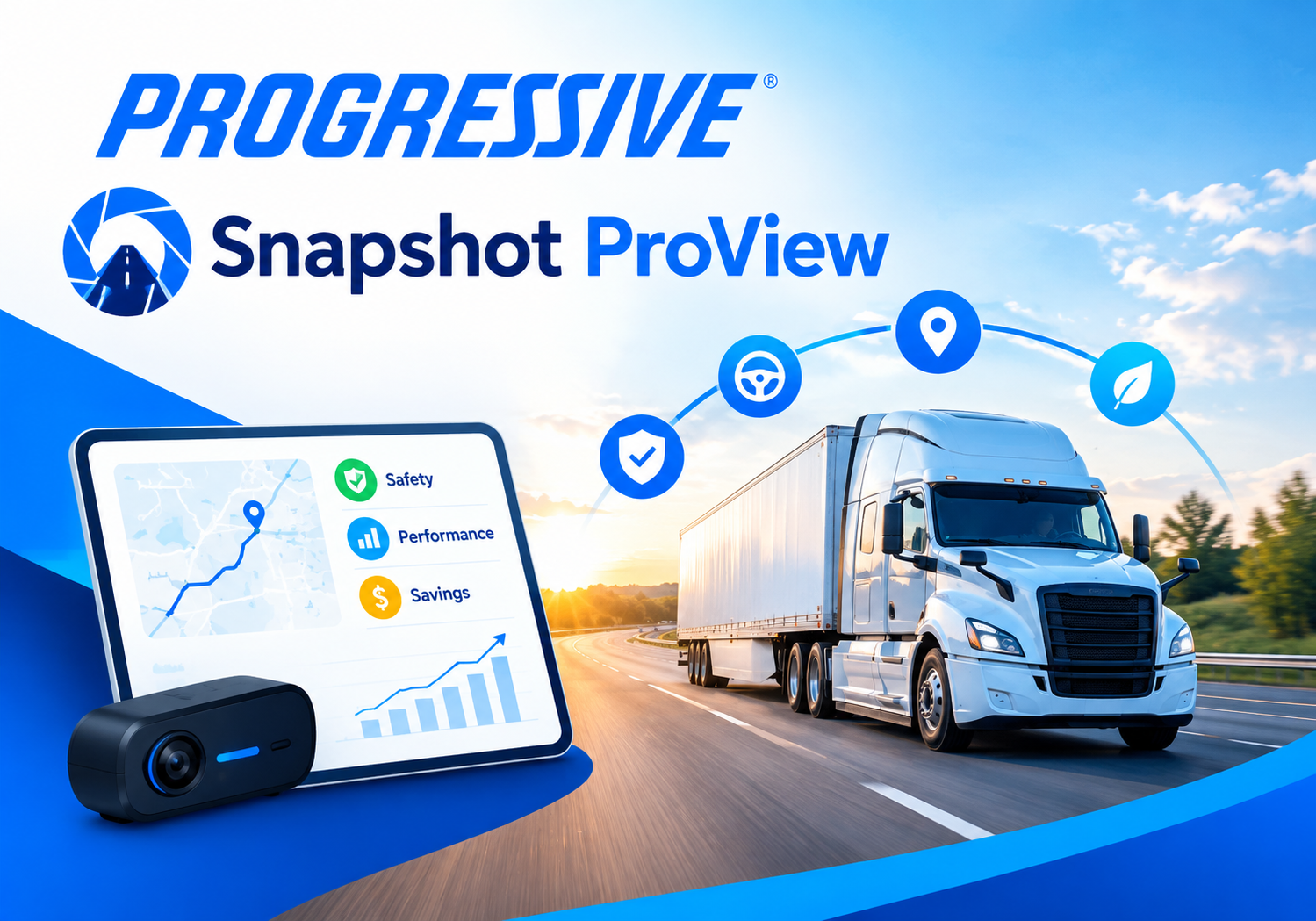
Snapshot is Progressive’s usage-based insurance program. You install a small device in your car (or use the mobile app), and Progressive tracks your driving behavior — including braking patterns, speed, time of day, and mileage. According to Progressive’s published data, drivers who participate in Snapshot® save an average of $146 per year. The top 20% of Snapshot® participants save over $900 annually.
For high-risk drivers, Snapshot® offers a powerful opportunity: if you drive safely after a violation, your telematics data can partially offset the surcharge from your driving record.
Additional available discounts:
| Discount | Estimated Savings | Notes |
|---|---|---|
| Multi-policy (home + auto) | Up to 5% | Requires homeowner or renter policy |
| Continuous insurance | Up to 15% | For maintaining uninterrupted coverage |
| Pay-in-full | Up to 9% | Pay annual premium upfront |
| Paperless billing | Up to 3% | Enroll in e-documents |
| Automatic payments | Up to 3% | Set up autopay |
| Teen driver training | Varies | Completion of approved course |
| Good student | Up to 10% | Full-time students with B average or above |
| Homeowner | Up to 10% | Own a home, even if insured elsewhere |
Combining multiple discounts can significantly reduce the sticker shock of a high-risk premium. A driver who qualifies for continuous insurance, pay-in-full, and multi-policy discounts could reduce their base rate by 20–25% before Snapshot® savings even apply.
How Does Progressive Compare to Other Insurers for High-Risk Drivers?
Is Progressive the Best Option Compared to State Farm, GEICO, or Specialty Insurers?
Progressive consistently ranks among the top three auto insurers for high-risk drivers in independent analyses. However, comparison is essential, because rates vary dramatically by state, violation type, and driver profile.
Comparison table: average annual premium for high-risk drivers
| Insurer | After DUI | After At-Fault Accident | After Multiple Tickets |
|---|---|---|---|
| Progressive | ~$2,400 | ~$1,900 | ~$1,700 |
| GEICO | ~$2,600 | ~$1,800 | ~$1,650 |
| State Farm | ~$2,800 | ~$2,100 | ~$1,900 |
| Allstate | ~$3,100 | ~$2,400 | ~$2,200 |
| Non-standard/specialty | ~$3,500+ | ~$2,800+ | ~$2,500+ |
Note: Figures are national averages based on industry data and vary by state, coverage level, and individual profile. Always obtain personalized quotes.
Progressive’s advantages over competitors include:
- Wider acceptance of SR-22 and FR-44 applicants
- More granular risk pricing, meaning one bad factor doesn’t automatically trigger the worst rate tier
- Snapshot telematics, which competitors offer but Progressive pioneered and refines most aggressively
- Name Your Price® tool, unique to Progressive and especially useful for budget-constrained high-risk drivers
- Direct SR-22 filing without requiring third-party processing
On the other hand, GEICO occasionally offers lower rates for drivers with a single accident but no other violations. State Farm’s Drive Safe & Save program competes with Snapshot® for telematics-savvy drivers. Therefore, comparing at least three quotes before choosing a policy remains the smartest approach.
What Are the Coverage Options Available to High-Risk Drivers Through Progressive?
Which Types of Coverage Does Progressive Offer for Nonstandard Policies?
High-risk drivers sometimes assume that their options reduce to bare minimum liability coverage. Progressive, however, offers a full suite of coverage options even for nonstandard policyholders.
Mandatory coverage (required by most states):
- Bodily injury liability — Covers injuries you cause to others
- Property damage liability — Covers damage you cause to others’ property
- Personal injury protection (PIP) — Required in no-fault states; covers medical expenses
- Uninsured/underinsured motorist — Protects you when the at-fault driver has no insurance
Optional but recommended coverage:
- Collision — Covers damage to your own vehicle in an accident
- Comprehensive — Covers theft, weather, vandalism, and non-collision events
- Roadside assistance — Available 24/7 through Progressive’s network
- Rental car reimbursement — Covers rental costs while your car is being repaired
- Gap insurance — Covers the difference between your car’s value and what you owe on a loan
For high-risk drivers, comprehensive and collision coverage are especially important because a single at-fault claim without full coverage can create enormous out-of-pocket expenses — compounding an already difficult insurance situation.
Progressive also offers usage-based coverage through Snapshot, which reduces premiums for low-mileage drivers. If you work from home or drive infrequently, this coverage type can meaningfully reduce your annual cost.
How Does Progressive Handle Claims for High-Risk Drivers?

What Should High-Risk Drivers Expect When Filing a Claim With Progressive?
Filing a claim with Progressive follows the same process regardless of your risk classification. However, high-risk drivers should understand the potential premium impact of filing, especially if they hold standard coverage with surcharge history.
How to file a Progressive claim:
- Report the accident via the Progressive app, website (progressive.com), or phone (1-800-776-4737)
- Document the scene — photos, police report number, witness contacts
- Progressive assigns a claims representative within 24 hours
- An adjuster inspects the vehicle damage
- Progressive issues payment directly to a repair shop or to you
- Progressive’s Concierge Repair Service handles everything if you prefer
Progressive’s claims satisfaction rating is above the industry average according to J.D. Power’s 2025 U.S. Auto Claims Satisfaction Study, where Progressive scored 870 out of 1,000 points — above the industry average of 856.
Important consideration for high-risk drivers: Each at-fault claim typically increases your premium at renewal for 3–5 years. If the damage is minor (under $1,500–$2,000), paying out of pocket rather than filing a claim often makes financial sense — particularly for drivers already in a high-risk tier.
Progressive’s Accident Forgiveness feature prevents a single at-fault accident from raising your premium, but this benefit requires a qualifying discount or additional premium. Confirm eligibility before assuming it applies to your policy.
What Are the Pros and Cons of Choosing Progressive for High-Risk Coverage?

Does Progressive Offer More Benefits Than Drawbacks for Risky Driver Profiles?
After evaluating Progressive’s offerings thoroughly, the picture for high-risk drivers is largely positive — but not without limitations.
Pros:
- Accepts most high-risk driver profiles, including DUI applicants
- Files SR-22 and FR-44 certificates directly with state DMVs
- Snapshot® telematics rewards improved driving behavior
- Name Your Price® tool helps budget-conscious drivers find workable options
- Broad discounts available even for nonstandard policyholders
- Strong digital tools — app, website, and 24/7 claims service
- Competitive rates for drivers with single violations compared to standard insurers
Cons:
- Rates after a DUI are high, though competitive within the nonstandard market
- Snapshot® can increase rates if telematics data reveals poor driving
- Customer service satisfaction is mixed — some policyholders report inconsistent agent quality
- Rate transparency can be limited without going through a full online quote
- Fewer local agent offices compared to State Farm or Allstate
On balance, Progressive stands out as one of the most accessible and technologically advanced options for high-risk drivers in the United States. The combination of SR-22 support, telematics-based rate reduction, and budget tools makes it particularly suitable for drivers who are actively working to improve their driving record.
How Long Does High-Risk Status Last With Progressive?
When Can Drivers Expect Their Premiums to Return to Standard Rates?
High-risk surcharges are not permanent — though they can feel that way during the years they apply. Progressive, like all insurers, evaluates your driving record on a rolling basis. Here is what drivers typically experience:
Violation lookback periods for Progressive:
| Violation Type | Lookback Period | Notes |
|---|---|---|
| Minor speeding ticket | 3 years | May clear sooner in some states |
| At-fault accident | 3–5 years | Severity matters |
| DUI/DWI | 5–10 years | Varies significantly by state |
| Reckless driving | 3–5 years | Often treated like DUI |
| License suspension | 3–5 years | Depends on reason for suspension |
| Multiple minor violations | 3 years each | Compound effect on premium |
As each violation ages off your record, Progressive recalculates your premium at renewal. Additionally, if you participate in Snapshot® and demonstrate consistently safe driving, you may see incremental rate reductions even before violations fully age off.
Drivers who maintain continuous coverage during their high-risk period also benefit from the continuous insurance discount, which grows in value the longer your coverage gap-free history extends. This creates a compounding positive effect over time.
Conclusions: Is Progressive Auto Insurance Right for High-Risk Drivers?
Progressive Auto Insurance represents one of the most practical and driver-friendly options for high-risk motorists in the United States. The company built its reputation on exactly this market — providing coverage to drivers that other insurers routinely reject — and that foundational mission continues to drive product development today.
For drivers dealing with DUIs, SR-22 requirements, accident surcharges, or coverage gaps, Progressive offers four distinct advantages. First, the company accepts a broader range of applicants than most standard carriers. Second, it provides direct SR-22 and FR-44 filing services that simplify a bureaucratic process. Third, the Snapshot® telematics program gives motivated drivers a real financial incentive to prove their improved behavior. Fourth, budgeting tools like Name Your Price® help drivers find coverage they can actually sustain long-term — which matters enormously, since lapses in coverage only reset the clock on building a better record.
Naturally, Progressive is not perfect for every high-risk driver. Rates after severe violations remain high, and some drivers in specific states will find better value with specialty nonstandard carriers or competitors like GEICO. Comparison shopping remains essential. However, as a starting point, Progressive consistently delivers competitive rates, solid technology, and genuine accessibility for drivers the rest of the industry overlooks.
Ultimately, the path forward for high-risk drivers is clear: secure coverage with a carrier like Progressive, use programs like Snapshot to demonstrate improved behavior, maintain continuous coverage without lapses, and let time work in your favor as violations age off your record. With patience and the right insurer, standard rates are achievable — and Progressive gives you one of the best platforms to get there.
Frequently Asked Questions
Yes — Progressive actively accepts drivers with DUI convictions, making it one of the most accessible standard carriers for this situation. After a DUI, you will pay significantly higher premiums, typically 60–90% above your pre-DUI rate, depending on your state and profile. You will also likely need to file an SR-22 certificate, which Progressive handles directly. Most states require DUI surcharges for 5–10 years, but you can reduce your rate during this period through Snapshot® telematics, discounts, and consistent on-time payments.
The premium difference varies considerably based on the specific violation and your overall profile. As a general benchmark, drivers with a single at-fault accident pay roughly 30–40% more than drivers with clean records. A DUI typically triggers a surcharge of 60–90%. Multiple violations compound these increases. However, Progressive‘s segmented pricing means some high-risk drivers pay closer to standard rates if their overall profile — vehicle type, low mileage, strong credit, and Snapshot® data — offsets the violation history.
If you cancel your Progressive policy while your SR-22 requirement is active, Progressive must notify your state DMV immediately. This notification typically results in license suspension until you secure new coverage and file a fresh SR-22. To avoid this, never cancel without first obtaining replacement coverage from another SR-22-supporting carrier. Some drivers in this situation also lose the continuous insurance discount they had built up, adding to the long-term cost of a coverage lapse.
Why Work With Solution for Guru When Navigating High-Risk Insurance?
Finding the right auto insurance as a high-risk driver takes more than a single online quote. Rates vary dramatically by state, violation type, and provider — and the cheapest option is not always the most suitable one for your specific legal and financial situation.
Solution for Guru provides expert guidance that helps drivers navigate these complexities efficiently and confidently.

What Benefits Does Solution for Guru Offer High-Risk Drivers?
Expert market knowledge: Solution for Guru’s team understands the nonstandard auto insurance market in depth. Rather than sending you to a generic comparison site, they analyze your specific profile — violations, state requirements, coverage needs, and budget — and match you with the most appropriate carriers, including Progressive.
SR-22 and FR-44 support: Navigating SR-22 requirements confuses many drivers. Solution for Guru explains your obligations clearly, helps you identify carriers that file SR-22 certificates (like Progressive), and ensures you fulfill your state’s requirements without costly mistakes.
Multi-carrier comparison: Solution for Guru works with multiple carriers, so their recommendations are objective. If Progressive offers the best rate for your profile, they will recommend it. If a specialty nonstandard carrier provides better value, they will tell you that instead.
Ongoing policy management: High-risk status changes over time — violations age off, driving scores improve, and discounts accumulate. Solution for Guru helps you re-evaluate your coverage annually to ensure you are capturing every available rate reduction as your record improves.
Time savings and reduced stress: Researching SR-22 carriers, telematics programs, and multi-policy discounts across dozens of providers takes significant time. Solution for Guru condenses this research into a streamlined, personalized consultation.
Whether you are dealing with a first DUI, recovering from multiple accidents, or simply struggling to find affordable coverage after a lapse, Solution for Guru offers the expertise and network access to find real solutions — starting with market leaders like Progressive and extending across the full range of available options.
Recommended
- Common Progressive Commercial Policy Mistakes Small Businesses Make
- Progressive vs biBERK vs NEXT: Which Commercial Auto Insurance Offers Better Value?
- What Does Progressive Commercial Auto Insurance Actually Cover?
- AI in Commercial Auto Insurance: Smarter Risk Assessment
- Understanding biBERK’s Claims Process for Commercial Auto Insurance
- When Is Progressive More Expensive Than Regional Commercial Auto Insurers?
- Top Progressive Discounts Small Business Owners Should Know About
- 24/7 Policy Management: How Progressive Supports Busy Business Owners
- Is biBERK a Good Choice for Small Business Owners?
- Checklist: Documents Needed for Commercial Auto Insurance
- How Food Truck Owners Can Benefit from Commercial Auto Insurance
- Commercial vs. Personal Auto Insurance: What’s the Difference?
- biBERK vs Progressive Commercial Auto Insurance: Which Is Better?
- Digital Transformation in Commercial Auto Insurance: What’s Next for Businesses?
- Insurance Needs for Contractors with Company Vehicles: What Do You Really Need?
- Commercial Auto Insurance for Delivery Businesses: Why biBERK Is a Strong Option
- What It’s Like to Work in Commercial Auto Insurance (And How to Start)