State-by-State Commercial Auto Requirements: How Progressive Helps Businesses Stay Compliant
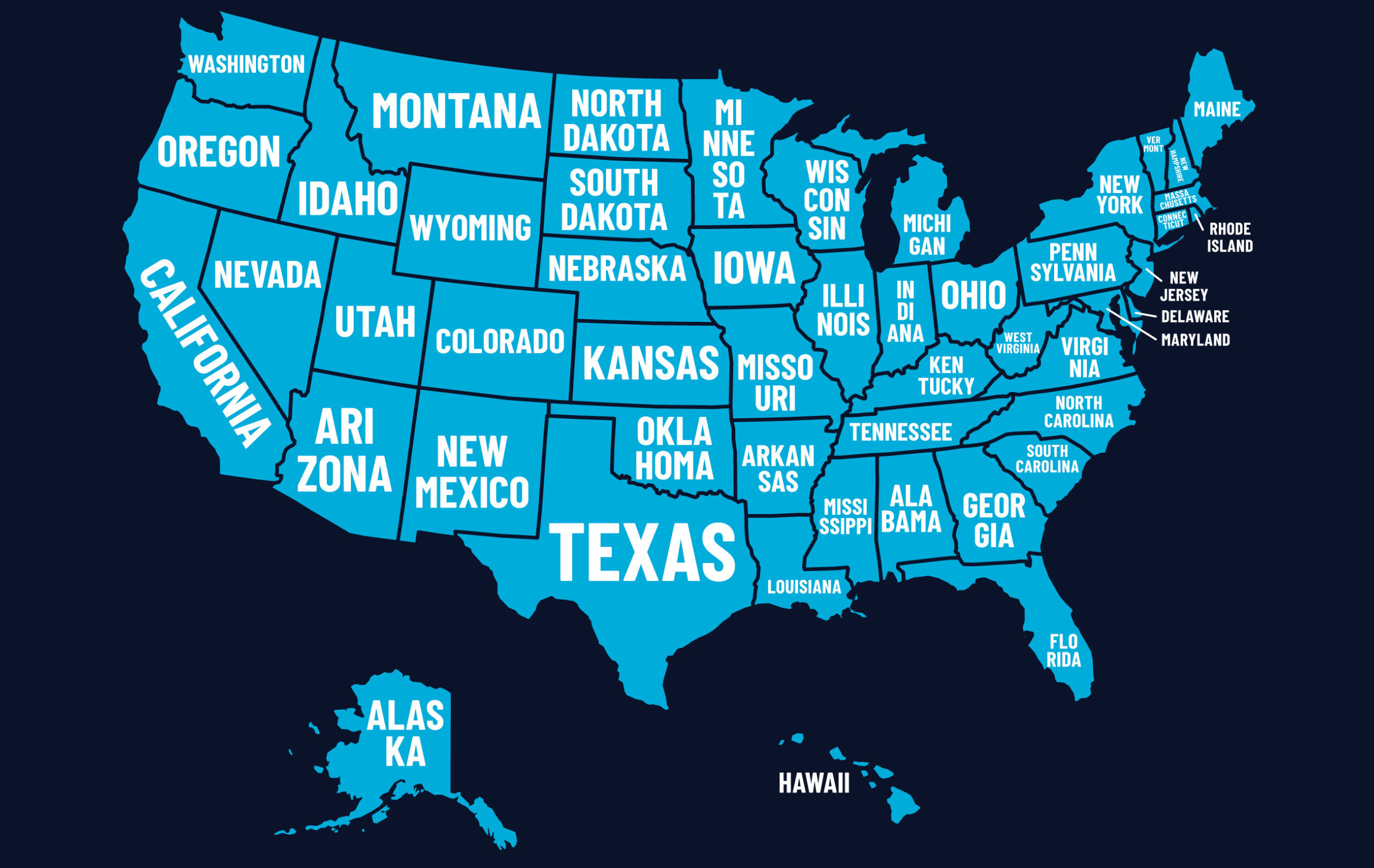
A single delivery van crossing from Ohio into Pennsylvania doesn’t just cross a state line; it crosses into a different set of insurance rules. Liability minimums, filing requirements, and even how limits are structured can shift the moment a business vehicle leaves its home state. For companies operating fleets across multiple states, keeping track of it all can quickly become a compliance headache.
This is where Progressive – Auto Insurance US plays a direct role. As one of the largest commercial auto insurers in the country, Progressive writes coverage in all fifty states and handles many of the state and federal filings that businesses would otherwise have to manage themselves. Rather than leaving fleet managers to interpret fifty different regulatory frameworks, Progressive builds compliance support directly into its commercial auto policies.
In this article, we’ll break down how state commercial auto requirements differ, where federal rules add another layer, and how Progressive helps businesses meet both without losing track of a single filing deadline.
Table of contents
Quick Summary
Before diving into the details, here is a condensed view of how state commercial auto compliance works and how Progressive supports it.
| Compliance Challenge | How Progressive Helps Address It |
| Different minimums in every state | Coverage and licensing in all 50 states, tailored to each state’s rules |
| Split-limit vs. combined single limit structures | Policies configured to match the limit structure a state or contract requires |
| State DOI filings | Electronic state filings handled directly in many states |
| Federal FMCSA filings | Support for interstate, hazmat, and for-hire federal filings |
| Multi-state fleets | Centralized billing and policy management across state lines |
| Staying compliant over time | Telematics and safety tools that support lower risk and steadier renewals |
How Is Progressive Related to State Commercial Auto Requirements?

Progressive – Auto Insurance US is a national commercial auto insurer that writes policies for everything from a single contractor’s pickup truck to large, multi-state delivery fleets. Because its policies are available in every state, Progressive sits directly at the intersection of this article’s topic: a business that needs to meet different state requirements needs an insurer that already understands what those requirements are.
Consequently, Progressive’s role here isn’t incidental. Commercial auto insurance is the mechanism through which state compliance is actually satisfied, since most states require proof of coverage before a commercial vehicle can be registered or legally operated. The sections below explain what that compliance actually involves, state by state, and how Progressive fits into meeting it.
How Did Commercial Auto Insurance Regulation Become So State-Specific?
Insurance regulation in the United States has been handled primarily at the state level since the McCarran-Ferguson Act of 1945 confirmed that states, not the federal government, hold primary authority over insurance oversight. That legal foundation is why there has never been a single, uniform national standard for commercial auto minimums.
Each state’s Department of Insurance sets its own rules based on local factors, including accident rates, medical cost trends, and legislative priorities. As a result, neighboring states can end up with meaningfully different requirements even when their driving conditions and populations look similar on paper.
For a business operating in a single state, this history is mostly academic. For a business operating across state lines, however, it explains why compliance can’t be handled with a single set of assumptions. Each new state a fleet enters comes with its own regulatory logic, shaped by decades of independent state-level policymaking rather than a shared federal framework.
Why Do Commercial Auto Insurance Requirements Vary by State?
Auto insurance regulation in the United States is handled at the state level, not the federal level, which means each state’s Department of Insurance and Department of Motor Vehicles sets its own minimum coverage rules. As a result, a business operating in only one state faces a single, fixed compliance target, while a business operating across several states faces a moving target that changes with every border crossing.
Furthermore, states periodically update these minimums, sometimes significantly. California, for example, raised its minimum liability limits in 2025 for the first time since 1967, while New Jersey and Massachusetts both increased their requirements more recently still. Businesses that don’t track these changes risk falling out of compliance without realizing it, simply because the rules shifted underneath them.
This constant variation is precisely why many businesses lean on their insurer for guidance rather than trying to track fifty separate regulatory frameworks internally. A national carrier that already monitors these changes across its entire book of business is generally better positioned to catch an update before it becomes a compliance gap.
What Are the Basic Types of State-Mandated Coverage?

Despite their differences, most states build their commercial auto requirements around a similar core: liability coverage that pays for injuries or property damage the business causes to others. How that liability is structured, however, differs from state to state.
What Is Split-Limit vs. Combined Single Limit Coverage?
Most states use split limits, which set separate maximums for bodily injury per person, bodily injury per accident, and property damage. A limit written as 25/50/25, for instance, means $25,000 per injured person, $50,000 total per accident, and $25,000 for property damage. Other states, along with many commercial contracts, use a combined single limit (CSL) instead, which applies one maximum across both injury and property damage combined.
This distinction matters more than it might initially seem, since a policy structured the wrong way for a given state or contract can technically fail to meet requirements even if the total coverage amount looks sufficient on paper. Getting the structure right, not just the number, is part of what proper compliance actually requires.
What Additional Coverages Do Some States Require?
Beyond basic liability, several states layer on additional mandatory coverages. No-fault states require personal injury protection (PIP), which pays medical costs regardless of who caused the accident. Other states require uninsured or underinsured motorist coverage, which protects a business if it’s hit by a driver carrying too little insurance of their own, or none at all.
- Personal injury protection (PIP), required in no-fault states
- Uninsured/underinsured motorist coverage, required in many states
- Minimum property damage liability, required nearly everywhere
- Proof-of-insurance filings with the state DMV or Department of Insurance
How Do State Minimums Compare Across the Country?
To illustrate just how much these minimums vary, the table below shows a sample of state liability minimums as commonly published by state insurance departments and industry compliance trackers. These figures represent legal floors, not recommended coverage levels, and businesses should always confirm current requirements directly with their state before relying on them.
| State | Typical Minimum Liability Structure |
| California | $30,000 / $60,000 / $15,000 (split limit) |
| Florida | $10,000 PIP / $10,000 property damage (no BI requirement for most drivers) |
| New York | $25,000 / $50,000 / $10,000 (split limit) |
| Alaska | $50,000 / $100,000 / $25,000 (split limit) |
| Virginia | $50,000 / $100,000 / $25,000 (split limit) |
| New Jersey | $35,000 / $70,000 / $25,000 (split limit, effective 2026) |
As this sample shows, the difference between the lowest and highest state minimums can be substantial. A fleet compliant in one state might fall short the moment it operates in another, which is exactly why insurers with a national footprint, rather than a single-state focus, matter so much for growing businesses.
How Do Federal FMCSA Requirements Add to State Rules?

State minimums aren’t the only layer businesses need to track. Certain types of commercial operations also fall under federal oversight from the Federal Motor Carrier Safety Administration (FMCSA), which sets its own, generally much higher, insurance minimums.
What Triggers Federal Filing Requirements?
FMCSA requirements typically apply to businesses that transport goods or passengers across state lines for compensation, as well as to any business hauling hazardous materials, regardless of whether they cross state lines. Once a business falls into one of these categories, it needs an MC number and must meet federal, not just state, insurance minimums.
This means a local delivery company that expands into interstate routes can suddenly find itself subject to an entirely different, stricter set of rules, even if its state-level coverage was already compliant. Recognizing this transition early prevents a business from operating out of compliance without realizing its regulatory status has changed.
How High Do Federal Minimums Go?
Federal minimums scale sharply based on cargo and vehicle type. Hazmat carriers face the highest requirement, with $5,000,000 in minimum liability coverage. Passenger transport for larger vehicles, seating sixteen or more people, also requires $5,000,000, while smaller passenger vehicles seating nine to fifteen require $1,500,000. General freight carriers typically fall in a lower, though still substantial, range.
Because these thresholds are so much higher than typical state minimums, businesses that operate in this space need an insurer capable of writing high-limit commercial policies and handling the associated federal filings, not just standard state-level liability coverage.
How Should a Multi-State Business Approach Getting a Quote?
For a business preparing to request commercial auto coverage across multiple states, the quoting process works more smoothly when key operational details are gathered in advance rather than assembled on the fly.
What Information Does an Insurer Typically Need?
Insurers generally ask for details on vehicle types, garaging addresses, driver records, operating radius, and the specific states where vehicles will be registered and driven. For fleets that already operate under FMCSA authority, prior filing history and any existing MC number also factor into the quote.
Having this information organized ahead of time, rather than gathered reactively during a renewal deadline, tends to produce more accurate quotes and fewer surprises once a policy is bound.
Why Does Loss History Matter Across State Lines?
A fleet’s claims history follows it regardless of which state a particular accident occurred in, and insurers weigh that history when pricing a multi-state policy. Businesses that track their own safety trends internally, rather than waiting for a renewal notice to reveal a problem, are generally better positioned to negotiate favorable terms as they expand.
This is another area where working with a single national carrier, rather than juggling separate regional insurers, tends to simplify things. A unified loss history is easier for both the business and the insurer to evaluate than claims data scattered across multiple providers.
What Happens If a Business Doesn’t Meet Its State’s Requirements?
Falling out of compliance carries consequences that go well beyond a hypothetical risk. Most states tie proof of insurance directly to vehicle registration, meaning a lapse can prevent a business from legally operating a vehicle at all until coverage is reinstated and verified.
Beyond registration issues, businesses that operate underinsured expose themselves to significant financial risk. If an accident’s damages exceed a policy’s limits, the business becomes personally responsible for the difference, which can threaten the company’s assets well beyond what a properly structured policy would have covered.
Contractual risk adds another layer. Many general contractors and government entities require proof of specific coverage limits, often $1,000,000 combined single limit, before they’ll allow a business to work under contract at all. Falling short of a contractual requirement can mean losing work, even if the business technically meets its state’s legal minimum.
Certificates of insurance (COIs) are typically how this requirement gets verified. A general contractor or property manager will often ask for a COI before allowing a subcontractor’s vehicles onto a job site, and any mismatch between what the contract requires and what the policy actually provides can delay a project before it even starts. Keeping COIs current and accurate is, in practice, just as important as meeting the underlying coverage requirement itself.
How Does Progressive Help Businesses Navigate State Filings?
Given how much variation exists between states, and how high the stakes of non-compliance can be, the practical question for most businesses isn’t whether these rules matter, but how to keep up with them without dedicating an entire role to regulatory tracking. This is where Progressive – Auto Insurance US becomes directly useful.
What State and Federal Filings Does Progressive Handle?
Progressive assists with state filings in select states and manages federal filings for interstate trucking, hazardous cargo, for-hire trucking, and for-hire passenger transportation. Rather than a business having to submit separate proof-of-insurance documentation to multiple regulatory bodies on its own, Progressive can handle much of that process directly as part of writing the policy.
For fleets that operate under FMCSA authority, this matters considerably, since federal filings can be time-sensitive and technically detailed. Having an insurer that already understands the filing process reduces the risk of a delay that could stall a business from legally operating.
How Does Multi-State Coverage Work for Growing Fleets?
Because Progressive writes commercial auto policies in all fifty states, businesses expanding into new territory don’t need to shop for a new insurer every time they cross a state line. Instead, coverage can be adjusted to reflect each state’s specific requirements while remaining under a single policy relationship.
This is particularly valuable for fleets that add drivers or vehicles in new states throughout the year rather than all at once. Centralized billing and policy management mean a fleet manager can track compliance status across the entire operation from one account, rather than juggling separate policies and renewal dates state by state.
How Does Progressive Support Compliance Beyond Minimum Coverage?
Meeting the legal minimum is only the starting point. Businesses that want to stay compliant over the long term, while also managing costs, typically need tools that go beyond simply purchasing a policy.
How Do Telematics Programs Support Safer, Lower-Cost Compliance?
Progressive’s Snapshot ProView program uses telematics data, including trip patterns, hard braking, and night driving, to give fleet managers visibility into how their vehicles are actually being driven. Safer driving behavior captured through this data can translate into lower premiums over time, which helps offset the cost of carrying higher, more contract-appropriate limits.
This kind of visibility also supports compliance indirectly. A fleet that tracks its own safety trends is better positioned to catch a rising risk pattern before it results in a claim, a rate increase, or a lapse triggered by unaffordable premiums.
What Additional Coverage Options Round Out a Policy?
Beyond core liability, Progressive offers additional coverage types relevant to specific compliance needs, including hired and non-owned auto coverage for employees who use personal vehicles for business purposes, motor truck cargo coverage, and trailer interchange coverage for trucking operations. Bundling these coverages under one policy, rather than piecing them together from multiple insurers, simplifies both compliance tracking and claims handling.
For businesses that also carry general liability or a business owner’s policy, Progressive offers bundling discounts, which can make maintaining comprehensive, compliant coverage more financially manageable than treating each policy as a separate purchase.
What Best Practices Help Multi-State Fleets Stay Compliant?

Bringing the previous sections together, a handful of practices consistently help multi-state fleets avoid falling out of compliance as they grow.
- Confirm state minimums before adding vehicles or drivers in a new state, not after
- Verify whether a policy needs to be split-limit or combined single limit for each state or contract
- Track any pending state legislation that could raise minimums before it takes effect
- Determine early whether interstate or hazmat operations trigger federal FMCSA requirements
- Review contractual insurance requirements from clients separately from legal state minimums
- Work with an insurer that already operates and files in every state the fleet touches
None of these steps require a dedicated compliance department to execute. What they require is consistent attention and a carrier relationship that treats compliance as part of the policy, not as an afterthought the business has to manage entirely on its own.
Which Industries Face the Strictest State and Federal Requirements?
While every commercial vehicle owner needs to meet some form of state minimum, certain industries face a meaningfully higher compliance bar due to the nature of their operations.
- Interstate trucking and freight companies subject to FMCSA minimums
- Hazmat transporters facing the $5,000,000 federal liability threshold
- For-hire passenger transport, including shuttle and charter operations
- Construction and trade contractors working under client-mandated CSL requirements
- Delivery and last-mile fleets operating across multiple states simultaneously
For businesses in these categories, the gap between the legal minimum and a realistic, contract-ready coverage level tends to be significant, which makes working with an insurer experienced in high-limit, multi-jurisdiction policies especially important.
What Business Outcomes Result From Staying Compliant?
When a business treats compliance as an ongoing process rather than a one-time setup step, the benefits extend well beyond simply avoiding fines.
| Business Area | Typical Impact of Consistent Compliance |
| Vehicle registration | Fewer disruptions from lapsed or insufficient proof of insurance |
| Contract eligibility | Ability to bid on work requiring specific liability limits |
| Financial exposure | Reduced risk of out-of-pocket liability beyond policy limits |
| Expansion readiness | Smoother entry into new states without last-minute coverage scrambles |
| Insurance costs | More stable premiums through telematics-based safety programs |
Conclusion: Compliance That Travels With Your Fleet
State-by-state commercial auto requirements aren’t going away, and for growing businesses, they tend to get more complicated, not less, as operations expand into new territory. Split limits, combined single limits, PIP mandates, and federal FMCSA thresholds all interact differently depending on where a vehicle is registered and operated.
By writing policies in all fifty states and handling many of the associated state and federal filings directly, Progressive – Auto Insurance US gives businesses a single, consistent point of coverage rather than a patchwork of state-specific policies. For companies that need compliance to travel with their fleet as it grows, Progressive offers a practical foundation to build on.
The businesses that manage this best tend to share one habit: they treat insurance compliance as an ongoing operational function, not a once-a-year renewal task. Paired with an insurer built for multi-state operations, that mindset is what keeps a growing fleet legally on the road no matter how many state lines it crosses.
Frequently Asked Questions
Yes, Progressive writes commercial auto insurance across all fifty states, which makes it a practical option for businesses operating in more than one state or planning to expand into new territory.
Not necessarily separate policies, but the requirements differ. Interstate operations that cross state lines for compensation typically fall under FMCSA rules with higher minimums, while intrastate operations follow state-level requirements. Progressive can structure a policy to address either scenario, and can help identify which set of rules applies to a given business.
State minimums change periodically, sometimes annually, as legislatures reassess coverage adequacy. Several states have raised their minimums within the past two years alone, which is why businesses should verify current requirements with their state’s Department of Insurance rather than relying on outdated figures.
What Are the Benefits of Cooperation with Solution for Guru Company?
Choosing the right commercial auto insurer is only part of staying compliant; configuring coverage correctly across multiple states, contracts, and vehicle types takes ongoing attention that many internal teams don’t have time for. This is where Solution for Guru comes in, offering hands-on CRM and software implementation support that helps businesses manage the operational side of multi-state compliance more effectively.
| Common Compliance Gap | How Solution for Guru Helps |
| No centralized view of coverage across states | Structured systems that track policy and filing status by location |
| Contract insurance requirements tracked manually | Configured workflows that flag mismatched or expiring coverage |
| Renewal and filing deadlines missed | Automated reminders integrated into existing business systems |
| Growth into new states outpaces internal processes | Scalable setup that adapts as the fleet expands |
By working with Solution for Guru, businesses avoid the common trap of having strong insurance coverage in place but no internal system to track it consistently across every state they operate in. Instead, compliance becomes a visible, manageable part of daily operations rather than something discovered only when a problem arises.
This kind of support becomes especially valuable during periods of rapid growth, when a fleet might add vehicles, drivers, or entire new states faster than internal processes can keep up. Rather than compliance tracking becoming an afterthought during expansion, Solution for Guru helps ensure it scales alongside the business itself.
Recommended
- biBERK Comprehensive vs Collision Coverage Explained
- biBERK Commercial Auto Insurance Exclusions Explained
- Does Your Driving Record Affect biBERK Commercial Auto Insurance Rates?
- Does Business Location Affect biBERK Commercial Auto Insurance Rates?
- How Progressive Supports Small Fleets: Coverage Options for 2–10 Vehicles
- How Berkshire Hathaway Companies Like biBERK Are Innovating Insurance
- Delivery Drivers and Courier Services: Progressive Commercial Auto Insurance Breakdown
- BiBerk Hired and Non-Owned Auto Insurance: Does Your Business Really Need It?
- BiBerk Commercial Truck Insurance: Is It the Right Coverage for Your Fleet?
- Progressive Commercial Auto Insurance for LLCs and Sole Proprietors
- How Progressive Handles Dual-Use Vehicles for Business and Personal Driving
- What Do Car Insurance Agents Actually Do — and How Do You Find the Best One for Your Needs?
- How to Lower Car Insurance: A Practical Guide to Reducing Your Premiums
- Minimum Liability Limits for Business Vehicles Explained
- Bundling Policies with biBERK: Pros and Cons
- Common Progressive Commercial Policy Mistakes Small Businesses Make
- Progressive vs biBERK vs NEXT: Which Commercial Auto Insurance Offers Better Value?
- What Does Progressive Commercial Auto Insurance Actually Cover?