Does Business Location Affect biBERK Commercial Auto Insurance Rates?

Two businesses can own identical delivery vans, hire equally cautious drivers, and still pay noticeably different premiums for commercial auto insurance. Why? Location is often the reason. Where a business operates, where its vehicles get parked overnight, and where its drivers spend most of their time on the road all factor into how insurers calculate risk — and therefore price.
This article breaks down exactly how business location influences commercial auto insurance rates, what specific location-related factors carry the most weight, and what business owners can do to manage location-driven costs.
Table of contents
Quick Summary
- Business location is one of several core factors insurers use to price commercial auto insurance, alongside vehicle type, usage, and driving records.
- Where you drive and where you store your vehicles both influence your rate independently of each other.
- Urban areas with heavier traffic and higher theft rates generally cost more to insure than rural or suburban locations.
- Storing vehicles securely, such as in a locked garage, can reduce theft- and vandalism-related risk and cost.
- biBERK – Auto Insurance US factors location into its pricing model and offers coverage across many locations nationwide.
- Solution For Guru helps businesses build location-aware risk management practices that support long-term savings on commercial insurance.
BiBerk – Auto Insurance US: How Does This Company Relate to the Topic?

BiBerk – Auto Insurance US is a commercial insurance provider that sells coverage directly to businesses, cutting out brokers and middlemen. This direct model is directly relevant to the location question, since biBERK explicitly names location among the core variables it uses to calculate commercial auto premiums.
Why Bring biBERK into a Discussion About Location?
According to biBERK’s own coverage documentation, many factors are assessed when determining the cost of commercial auto insurance, including the types of vehicles, what the vehicles are used for, how much you drive, where you drive, where you store the vehicles, information about the people who will be driving them, and your claims history. Location shows up twice in that list — once as where you drive, and again as where you store the vehicles — which signals just how much weight it carries in the pricing model.
What Backing Does biBERK Bring to This Topic?
biBERK is part of Berkshire Hathaway Insurance Group, giving it substantial industry experience and financial strength to draw on when pricing location-based risk. The company notes it operates as part of a group with millions of satisfied customers, more than 75 years of insurance experience, and $62 billion in paid claims in 2025, and that biBERK’s sole focus is small businesses, making it a specialist in helping companies get the right insurance coverage for their specific operating footprint.
Does Where Your Business Operates Actually Change Your Rate?

Yes, location genuinely factors into commercial auto pricing, and it does so in more than one way. Insurers separate “where you drive” from “where you park,” treating each as its own distinct variable.
What Two Location Variables Matter Most?
biBERK’s guidance draws a clear line between operational location and storage location: where and how much vehicles are driven, and where they’re parked when not in use both factor into the final cost. These aren’t the same thing. A business could operate primarily on quiet suburban roads but store its vehicles overnight in a high-crime urban lot, or vice versa — and each half of that equation gets weighed separately.
Why Does “Where You Drive” Matter So Much?
Traffic density, road conditions, and accident frequency vary significantly by region. A vehicle spending most of its time navigating congested city streets faces more opportunities for collisions than one traveling largely on open rural roads, even if both drivers follow identical safety practices. Insurers build this exposure difference directly into their pricing models.
Why Does “Where You Store the Vehicle” Matter Separately?
Storage location addresses a different kind of risk: theft and vandalism, not accidents. biBERK’s own materials illustrate this with a real example, describing a scenario where vandals damage several company vehicles on a lot, breaking windows and painting graffiti, with repair costs exceeding $25,000. Where a fleet sits overnight has a direct bearing on how likely that kind of loss becomes.
How Do Urban, Suburban, and Rural Locations Compare on Cost?

Not all locations carry the same baseline risk. Understanding the general pattern helps business owners anticipate how their specific footprint might influence pricing.
What Typically Makes Urban Locations Cost More?
Urban areas usually combine several risk factors at once: higher traffic density, more frequent stop-and-go driving, greater pedestrian and cyclist activity, and higher rates of vehicle theft and vandalism. Each of these independently nudges commercial auto rates upward, and together they tend to compound.
What Typically Makes Rural Locations Cost Less?
Rural areas generally see lower traffic volume and fewer opportunities for collisions during a typical workday. Vehicle theft and vandalism rates also tend to run lower outside dense population centers. That said, rural routes can introduce their own risks, such as higher speeds on open roads or longer response times after an incident, so “rural” doesn’t automatically mean the lowest possible rate in every category.
How Do These Patterns Compare at a Glance?
| Location Type | Traffic-Related Risk | Theft/Vandalism Risk | General Cost Impact |
|---|---|---|---|
| Urban | High | High | Tends to push rates up |
| Suburban | Moderate | Moderate | Generally moderate |
| Rural | Lower daily traffic, higher speeds | Lower | Often lower, with exceptions |
Does This Mean Every Urban Business Pays More?
Not automatically. A business’s specific driving records, claims history, and vehicle types still factor heavily into the final number. Location shifts the baseline, but it doesn’t override every other variable in the pricing formula. A well-managed urban fleet with clean driving records can still outperform a poorly managed rural one.
How Does Weather and Road Condition Vary by Location?

Geography introduces another layer beyond simple population density. A business operating in a region with frequent snow, ice, or heavy seasonal rain faces different accident risk than one in a consistently dry climate, regardless of whether that region is urban or rural. Insurers factor regional weather patterns into their broader location assessment, since these conditions directly affect how often accidents occur and how severe the resulting damage tends to be. Businesses relocating to a region with a notably different climate should expect this to influence pricing alongside the more commonly discussed urban-versus-rural distinction.
Are There Location Factors Beyond Traffic and Weather?
Yes. Local repair costs, average vehicle theft rates specific to a metro area, and even the frequency of uninsured drivers on the road in a given region all feed into how insurers assess location risk. A city with high repair labor costs, for instance, can push commercial auto rates upward even if its traffic density isn’t dramatically different from a comparable city with lower repair costs. This is one reason two seemingly similar urban areas can still produce noticeably different quotes.
How Does Vehicle Usage Combine with Location to Set Your Rate?
Location rarely operates alone — it interacts closely with what the vehicle is actually used for, which can amplify or soften its overall effect on price.
What Do Real-World Cost Ranges Look Like?
biBERK provides concrete reference points that illustrate how usage type creates wide swings in cost. According to the company, commuter or consultant use of smaller vehicles can cost $600 to $1,500 per vehicle per year, while vehicles used in for-hire trucking operations can cost $5,000 to $15,000 per vehicle per year. Location shifts these ranges up or down within their category, but the underlying usage type still sets the overall scale.
How Does Location Interact with High-Mileage Usage?
A delivery business logging long daily routes through a major metro area combines two risk-amplifying factors at once: high mileage and dense urban traffic. This combination typically pushes premiums toward the higher end of the relevant usage category, since both variables independently increase exposure to accidents.
How Does Location Interact with Low-Mileage Usage?
Conversely, a consultant who drives occasionally between nearby suburban office parks combines lower mileage with comparatively lower-risk roads, which tends to keep costs closer to the lower end of the applicable range. Businesses evaluating a location change — say, relocating operations from a city center to a suburban business park — should expect this combination effect to shift pricing, not just the location variable in isolation.
What Role Does Vehicle Storage Location Play in Your Premium?
Storage location deserves its own close look, since it’s a variable business owners can often influence directly, unlike broader regional traffic patterns.
What Specific Storage Risks Do Insurers Consider?
Insurers weigh whether vehicles sit in an open, publicly accessible lot overnight versus a secured, enclosed space. Open lots in areas with higher crime rates increase exposure to theft and vandalism, both of which show up as claims that affect future renewal pricing.
What Can Businesses Do to Reduce Storage-Related Risk?
biBERK offers direct, practical guidance here. The company recommends businesses take steps to reduce the likelihood of vehicles being stolen or vandalized, including locking them in a secured garage at night. This single change — moving from open-lot parking to secured, enclosed storage — can meaningfully reduce the theft and vandalism component of a location-based rate.
What Other Storage Practices Help?
- Park vehicles in well-lit areas if a fully enclosed garage isn’t available.
- Install security cameras or motion-sensor lighting at storage locations.
- Use steering wheel locks or immobilizers for vehicles left in higher-risk areas overnight.
- Avoid leaving valuable equipment visible inside parked vehicles.
- Rotate parking locations if a business operates from multiple sites, favoring the most secure option available each night.
Does biBERK Offer Coverage Everywhere, and Does That Affect Rates?
Coverage availability itself is a location question worth addressing before diving deeper into pricing specifics.
Does biBERK Provide Nationwide Coverage?
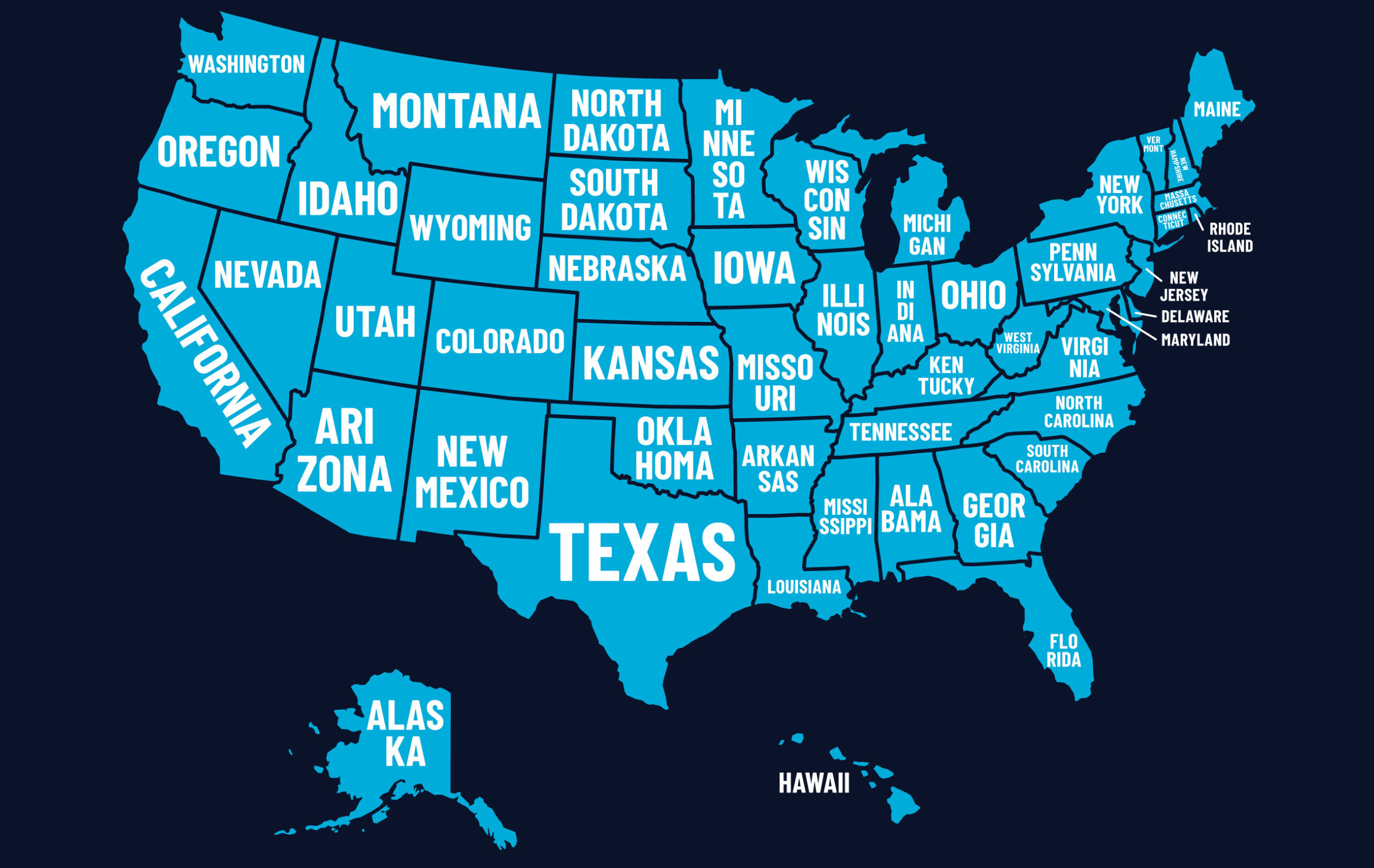
biBERK confirms broad geographic reach, noting that the company provides commercial car insurance and other policies in many locations and directs business owners to check its coverage maps for details specific to their area. This matters because coverage availability and pricing both depend on the regulatory and risk landscape of each state or region.
Why Should You Confirm Coverage Before Assuming a Quote Applies?
Insurance regulations vary by state, and not every provider offers every coverage type in every location. Before finalizing plans around a specific quote, it’s worth confirming that the coverage applies to the exact location where a business operates and stores its vehicles, especially for businesses considering expansion into a new state or region.
How Does biBERK’s Direct Model Interact with Location-Based Pricing?
Regardless of location, biBERK’s direct-to-business approach removes broker markups from the equation. The company states that its direct-to-you model enables it to provide coverage at up to 20% less than other insurance providers. This discount applies on top of whatever baseline a business’s location and usage patterns establish, meaning a business in a higher-risk urban area still benefits from the same structural savings as one operating in a lower-risk rural setting.
How Can Businesses Manage Location-Driven Insurance Costs?

While a business can’t relocate its entire operation just to lower an insurance bill, there are practical, location-related steps that help manage cost over time.
What Immediate Steps Address Location-Based Risk?
- Secure overnight vehicle storage in an enclosed or well-monitored location.
- Review delivery or service routes for opportunities to reduce time spent in high-traffic zones.
- Confirm coverage availability and any state-specific requirements before expanding into a new area.
- Document any security upgrades made to storage locations, since some insurers factor these into pricing.
How Does Claims History Compound with Location Over Time?
Location sets a baseline, but claims history still shapes what happens at each renewal. As biBERK explains, business insurance companies look at a company’s claims history, employee driving records, and other factors when determining business auto insurance cost, and the more claims a business has, the higher its rate is likely to be. A business operating in a higher-risk location that also avoids preventable claims can still outperform expectations at renewal, since insurers weigh actual performance alongside baseline geographic risk.
Can Discounts Offset Location-Driven Costs?
Yes, to a meaningful degree. biBERK offers several discount programs that apply regardless of location, including multi-policy discounts, safe driver discounts, and accident-free discounts. A business in a higher-cost urban area that qualifies for these programs can meaningfully narrow the gap between its rate and that of a lower-risk suburban or rural competitor.
Should Businesses Reassess Location Factors as They Grow?
Absolutely. A business that opens a second location, adds a new storage site, or expands its delivery radius introduces new location variables that weren’t part of the original policy. Revisiting these factors whenever the business’s geographic footprint changes helps avoid gaps in coverage and keeps pricing aligned with actual current risk, rather than an outdated snapshot from when the policy was first written.
How Do Multi-Location Businesses Handle Location-Based Pricing?
Businesses operating from more than one site face a more layered version of the location question, since each site can introduce its own combination of driving and storage risk.
What Changes When a Business Has More Than One Location?
A single-location business has one clear answer to “where do you drive and where do you park.” A multi-location business, by contrast, might operate vehicles out of several branches, each with its own local traffic patterns, crime rates, and storage arrangements. Insurers typically need visibility into all of these locations to price the policy accurately, rather than relying on a single headquarters address as a stand-in for the entire operation.
How Should a Multi-Location Business Report Its Footprint?
Accuracy matters here more than business owners sometimes realize. Underreporting the number of locations, or listing only a primary address when vehicles regularly operate and park elsewhere, can create gaps between what a policy assumes and what actually happens on the ground. Keeping an updated list of every site where vehicles are dispatched from or stored overnight helps ensure the policy reflects real operating conditions, which matters both for accurate pricing and for smooth claims handling if an incident occurs at a secondary location.
Does Expanding to a New Location Automatically Raise Rates?
Not necessarily, and it depends heavily on the specific location’s risk profile relative to existing sites. Expanding into a suburban location similar to an existing one may barely move the needle, while expanding into a dense urban center for the first time is more likely to introduce new location-based cost. The safest approach is to loop in the insurer before a new location goes live, rather than after vehicles are already operating there.
What Documentation Helps When Adding a New Location?
Insurers generally want a clear picture of how the new site will actually be used: how many vehicles will operate from it, what typical routes or service areas look like, and where those vehicles will be stored overnight. Providing this information proactively, rather than waiting for a renewal cycle to surface it, tends to produce a smoother pricing conversation and avoids the risk of a policy that doesn’t accurately reflect the business’s current footprint.
How Does Business Type Interact with Location to Shape Risk?
The type of business operating at a given location changes how much that location’s baseline risk actually matters in practice.
Why Do Delivery-Heavy Businesses Feel Location Risk More Acutely?

Businesses that dispatch vehicles constantly throughout the day — food delivery, courier services, home repair — spend far more cumulative time exposed to whatever risk their location presents than a business that sends a vehicle out only occasionally. For these businesses, even a modest difference in local traffic density or accident rates compounds significantly across hundreds of trips per month.
Why Might a Business with Infrequent Driving See Less Location Impact?
A business that primarily operates from a fixed site and only occasionally sends a vehicle out — for supply runs or the rare client visit — has much less cumulative exposure to its surrounding area’s traffic and theft risk. For these businesses, location still matters, but its overall weight in the final premium tends to be smaller relative to other factors like vehicle type and driving records.
What Should Different Business Types Prioritize?
| Business Type | Primary Location Concern | Suggested Focus |
|---|---|---|
| High-frequency delivery/courier | Cumulative traffic exposure | Route planning, driver training |
| Field service (repair, installation) | Mixed traffic and parking exposure | Secure storage, route efficiency |
| Occasional-use business vehicles | Lower cumulative exposure | Basic storage security, driver screening |
| Fleet-based trucking/logistics | Long-distance and multi-region exposure | Multi-state coverage confirmation, regional risk review |
What Questions Should You Ask Before Choosing Coverage Based on Location?
Business owners evaluating commercial auto insurance should treat location as one of several questions to work through methodically, rather than an afterthought.
What Should You Confirm About Your Primary Operating Area?
Start with the basics: how much of your driving happens in dense traffic versus lighter routes, and how does that compare to industry norms for your business type? Understanding this baseline makes it easier to interpret why a quote lands where it does, and whether adjustments to routing or scheduling might meaningfully shift future costs.
What Should You Confirm About Storage Arrangements?
Before finalizing a policy, confirm exactly where vehicles will be parked overnight and whether that location is secured, monitored, or open to public access. If storage arrangements are likely to change — for instance, if a business plans to move to a new facility within the coming year — it’s worth discussing that timeline with the insurer in advance rather than waiting until the change happens.
What Should You Ask If You’re Considering Expansion?
Businesses planning to expand into new territories should ask directly whether their current provider offers coverage there, what the general cost implications look like for that specific region, and whether any state-specific requirements apply. Getting these answers before committing to a new location prevents unpleasant surprises once a policy comes up for renewal.
Conclusion
Business location plays a real, measurable role in commercial auto insurance pricing, showing up in two distinct ways: where vehicles operate day to day, and where they sit overnight. Urban environments generally carry higher baseline costs due to traffic density and theft risk, while rural and suburban locations often start from a lower baseline — though driving records, claims history, and vehicle usage still shape the final number significantly.
biBERK – Auto Insurance US builds location directly into its pricing model while offering coverage across many parts of the country, and its direct-to-business approach means location-driven costs aren’t compounded by broker markups. Businesses that want to actively manage their location-related risk — through secured storage, smarter routing, or careful planning around expansion — put themselves in a stronger position at every renewal. For businesses looking for hands-on support building these practices into daily operations, Solution For Guru offers practical guidance tailored to how and where a business actually operates, helping turn location awareness into consistent savings alongside coverage from biBERK – Auto Insurance US.
Frequently Asked Questions
Yes. biBERK treats these as two separate factors. Where vehicles are driven affects accident-related risk, while where they’re stored overnight affects theft and vandalism risk. Both independently influence the final premium calculation.
Location does shift the baseline cost, but it’s only one factor among several. Driving records, claims history, and vehicle usage type all continue to matter significantly. A well-managed business in a higher-risk area can still perform better at renewal than a poorly managed one in a lower-risk location.
biBERK provides commercial auto coverage across many locations nationwide, but availability can vary by state and region. It’s worth checking biBERK’s coverage maps directly to confirm availability for a specific business location before finalizing a policy.
Recommended
- How Progressive Supports Small Fleets: Coverage Options for 2–10 Vehicles
- How Berkshire Hathaway Companies Like biBERK Are Innovating Insurance
- Delivery Drivers and Courier Services: Progressive Commercial Auto Insurance Breakdown
- BiBerk Hired and Non-Owned Auto Insurance: Does Your Business Really Need It?
- BiBerk Commercial Truck Insurance: Is It the Right Coverage for Your Fleet?
- Progressive Commercial Auto Insurance for LLCs and Sole Proprietors
- How Progressive Handles Dual-Use Vehicles for Business and Personal Driving
- What Do Car Insurance Agents Actually Do — and How Do You Find the Best One for Your Needs?
- How to Lower Car Insurance: A Practical Guide to Reducing Your Premiums
- Minimum Liability Limits for Business Vehicles Explained
- Bundling Policies with biBERK: Pros and Cons
- How Does Progressive Insurance Help High-Risk Drivers Get Covered?
- Common Progressive Commercial Policy Mistakes Small Businesses Make
- Progressive vs biBERK vs NEXT: Which Commercial Auto Insurance Offers Better Value?
- What Does Progressive Commercial Auto Insurance Actually Cover?
- AI in Commercial Auto Insurance: Smarter Risk Assessment
- Understanding biBERK’s Claims Process for Commercial Auto Insurance
- When Is Progressive More Expensive Than Regional Commercial Auto Insurers?