Progressive Commercial Auto Insurance for LLCs and Sole Proprietors

Running a business that depends on vehicles introduces a layer of risk that follows the company every time a vehicle pulls out of the driveway. Whether the work involves hauling tools to a job site, delivering products across town, or driving to meet a client, that vehicle becomes part of the business the moment it is used for work. For LLCs and sole proprietors, the challenge is that personal and business use often overlap on the same vehicle, and a standard personal auto policy was never designed to handle that overlap. As a result, many small business owners eventually discover that commercial auto insurance is not simply an upgrade; it is often the only coverage that responds when something goes wrong on the job.
This article explains how commercial auto insurance works for LLCs and sole proprietors, what a typical policy includes, how pricing is calculated, and how to choose coverage that actually matches the way a small business operates day to day.
Table of contents
Quick Summary
Personal auto insurance typically excludes business use, so a vehicle titled to an LLC or driven regularly for work usually needs a separate commercial policy.Progressive insures more commercial vehicles than any other carrier in the country and carries an A+ financial strength rating from AM Best.A typical policy includes liability and physical damage coverage, plus optional add-ons such as hired and non-owned auto, rental reimbursement, and roadside assistance.Monthly premiums vary significantly by industry, ranging from roughly $257 for contractors to more than $1,000 for for-hire transport vehicles.Bundling policies, enrolling in a telematics program, and maintaining continuous prior coverage can each reduce the final premium.
How Does Progressive – Auto Insurance US Fit Into This Topic?

Before getting into coverage details, it helps to understand why Progressive comes up so often in conversations about small business vehicle insurance. Progressive – Auto Insurance US has built the largest commercial auto book in the country, insuring more than 2.3 million commercial vehicles across hundreds of thousands of small businesses nationwide. For an LLC or sole proprietor trying to understand how commercial auto insurance works in practice, that scale matters because the carrier underwrites a wide range of vehicle types and business profiles, from a single contractor’s pickup truck to multi-vehicle delivery fleets and for-hire transport operations.
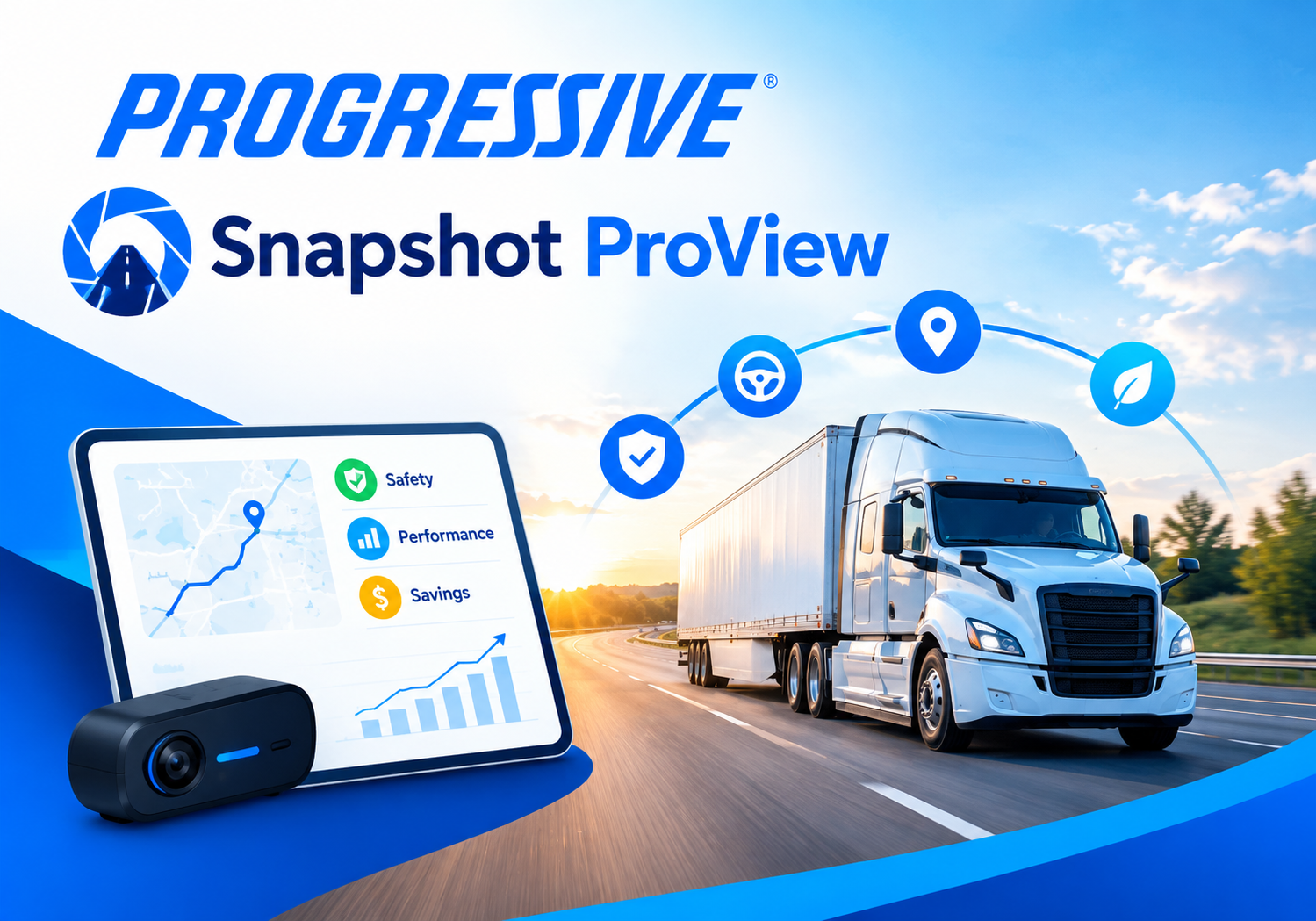
Because Progressive operates at that scale, its coverage structure, discount programs, and published pricing data offer a useful, real-world reference point for understanding what a commercial auto policy can look like for a small operation, even for readers who eventually choose a different carrier. Throughout this guide, Progressive’s policy options and its Snapshot ProView telematics program serve as concrete examples that illustrate the broader principles every LLC and sole proprietor should know before buying coverage.
Do LLCs and Sole Proprietors Actually Need Commercial Auto Insurance?
The short answer is that it depends on how the vehicle is used, not simply on who owns it. Many new business owners assume that because a vehicle is registered in their own name, their personal auto policy automatically extends to work-related driving. In reality, insurers draw a sharp line between personal and business use, and crossing that line without the right policy can leave an LLC or sole proprietor financially exposed exactly when protection matters most.
When Does a Personal Policy Stop Covering the Vehicle?
Most personal auto policies are written with everyday driving in mind: commuting, errands, and family trips. Once a vehicle starts hauling tools, making deliveries, transporting clients, or carrying equipment that is essential to the job, that use typically falls outside what a personal policy was built to cover. According to the Insurance Information Institute, personal auto policies generally exclude business-related driving. As a result, insurers can deny a claim if a driver has an accident while using the vehicle for work, even when the policyholder has paid premiums faithfully for years without filing a single claim.
The exclusion is not limited to obvious cases like delivery vans or contractor trucks, either. A consultant driving to client meetings, a freelance photographer hauling equipment to a shoot, or a tutor traveling between students’ homes can all trigger the same exclusion, simply because the driving supports income-generating work rather than personal life.
How Do State Rules and Vehicle Ownership Change the Answer?
Ownership is often the clearest signal. Most insurers require a commercial policy when an LLC holds a vehicle’s title, regardless of how often the owner drives it. Sole proprietors face a more complicated situation because the law recognizes the business and the individual as the same entity. Consequently, many sole proprietors title vehicles in their own names even when they use those vehicles almost entirely for business purposes. In that case, the deciding factor becomes use rather than title: a sole proprietor who only commutes might get by with a personal policy, while one who travels to job sites, carries tools, or makes deliveries usually needs commercial coverage.
Vehicle weight adds another consideration. Heavier vehicles, such as box trucks, dump trucks, and commercial trailers, typically require commercial insurance regardless of how owners use them because these vehicles can cause more severe damage in an accident. States also often set higher minimum liability coverage requirements for commercial vehicles. Check those requirements before assuming a personal policy meets local regulations.
| Factor | Personal Auto Insurance | Commercial Auto Insurance |
| Vehicle ownership | Titled to an individual | Titled to the business, or used primarily for it |
| Typical use | Commuting, errands, family trips | Job sites, deliveries, client visits, hauling equipment |
| Who is covered | Policyholder and immediate family | Owner, employees, and permitted drivers |
| Liability limits | Generally lower | Generally higher, scaled to business risk |
| Business equipment | Usually excluded | Can be added through endorsements |
What Coverage Options Does Progressive Offer for Business Vehicles?
Once it is clear that a vehicle needs commercial coverage, the next question is what that coverage actually includes. Progressive – Auto Insurance US structures its commercial auto policies around a core set of protections that apply broadly, plus a list of optional add-ons that let an LLC or sole proprietor tailor the policy to the specific way the business uses its vehicles.
Which Coverages Come Standard With a Commercial Policy?
A typical commercial auto policy starts with liability coverage, which pays for bodily injury and property damage if a covered driver causes an accident while operating a business vehicle. Physical damage coverage follows close behind, protecting the vehicle itself against collision and other covered events such as theft, vandalism, or weather damage. Beyond these two pillars, most policies also extend protection to anyone with permission to drive the vehicle, not just the named business owner, which matters once an LLC brings on its first employee or subcontractor. Medical payments coverage, depending on the state, typically rounds out the core package by covering injury-related costs for the driver and passengers regardless of who caused the accident. Together, these core coverages form the baseline that most states expect a commercial vehicle to carry before it is allowed on the road for business purposes.
Which Optional Add-Ons Should an LLC Consider?
Beyond the core policy, several add-ons address gaps that liability and physical damage coverage do not reach on their own. Hired and non-owned auto coverage protects vehicles that a business rents and employees’ personal vehicles when they use them for work. This coverage is important for any LLC that occasionally relies on a team member’s own car. Rental reimbursement helps cover the cost of a temporary vehicle while a covered one is in the shop after a claim, keeping deliveries or job site visits on schedule. Towing and roadside assistance addresses the more routine disruptions, like a flat tire or dead battery, that can otherwise stall a workday.
For businesses that haul equipment or goods using a trailer they do not own, trailer and cargo coverage protects that property while it is in transit. Choosing the right combination of add-ons usually comes down to matching coverage to the specific risks a business actually faces, rather than purchasing every available option by default.
| Coverage | What It Covers |
| Liability | Bodily injury and property damage caused to others |
| Physical damage | Repair or replacement of the business vehicle itself |
| Hired and non-owned auto | Rented or employee-owned vehicles used for work |
| Rental reimbursement | A temporary vehicle while a covered one is repaired |
| Towing and roadside assistance | Flat tires, lockouts, and battery jump-starts |
| Trailer and cargo | Trailers and goods in transit that the business does not own |
| Medical payments | Injury-related costs for the driver and passengers |
How Does Coverage Differ Between an LLC and a Sole Proprietorship?
Business structure shapes more than tax filing; it also shapes how exposed an owner’s personal assets are if something goes wrong on the road. Understanding that connection helps explain why the same accident can have very different financial consequences depending on whether the business operates as an LLC or a sole proprietorship.
Why Does Business Structure Change the Risk Picture?
An LLC creates a legal separation between the business and its owner, which is one of the main reasons people choose that structure in the first place. However, this protection can break down if the business does not carry adequate commercial auto insurance, since a serious accident involving a company vehicle can lead to a lawsuit that tests the strength of that separation. A sole proprietorship, by contrast, offers no legal distinction between the owner and the business at all; the individual and the company are the same entity in the eyes of the law. That means a judgment from a business-related accident can reach personal assets like a home, savings, or other property directly, without needing to challenge the business structure first. For both structures, adequate commercial auto insurance functions as a financial buffer that absorbs the cost of an accident before it threatens personal wealth.
What Should Sole Proprietors Watch for When Buying a Policy?
Sole proprietors often underestimate how often their driving counts as business use, partly because the same vehicle handles both errands and work in the same week. Before deciding whether a personal policy provides enough coverage, evaluate how you use the vehicle during a typical month. Insurers focus on regular usage patterns rather than occasional exceptions. You may need commercial coverage if you use the vehicle for any of the following purposes:
- Regular travel to multiple job sites or client locations
- Hauling tools, equipment, or inventory needed for the work
- Making deliveries or transporting goods for a fee
- Carrying passengers or property for compensation
- Operating under a name, logo, or signage tied to the business
How Much Does Progressive Commercial Auto Insurance Typically Cost?

Cost is often the first question on a small business owner’s mind, and the honest answer is that commercial auto premiums vary more than personal auto premiums do, because the underlying risk varies so much by industry and vehicle type.
Which Factors Drive the Monthly Premium?
Insurers price commercial auto policies around several variables that interact with each other. Industry matters first, since a landscaping business hauling trailers full of equipment presents a different risk profile than a consulting firm whose vehicles mostly sit in client parking lots. Vehicle type and weight follow closely, as heavier trucks and specialized vehicles generally cost more to insure than standard cars and vans. Driving records for every covered driver factor in as well, along with the chosen coverage limits and deductible. Location plays a role too, since traffic density, weather patterns, and local accident rates differ from state to state and even city to city. Finally, claims history carries real weight: a business with a clean record over the past several years typically qualifies for better pricing than one with recent claims.
Which Discounts Can Bring the Price Down?
Fortunately, several discounts can offset some of these cost drivers, and most are worth asking about directly when requesting a quote:
- Continuous coverage discount for maintaining insurance over the prior 12 months
- Business experience discount for companies operating three years or more
- Commercial driver’s license discount for qualifying drivers
- Bundling discount for pairing commercial auto with a general liability policy or BOP
- Paid-in-full discount, which can save up to 15% compared with monthly payments
- Telematics discount through usage-based programs that track and reward safe driving
| Business Type | Approximate Monthly Premium |
| Contractors | Around $257 |
| General small business (average across industries) | Roughly $147 to $245 |
| Delivery services | Varies with fleet size and mileage |
| For-hire transport trucking | Around $1,041 or more |
How Should an LLC Choose the Right Coverage Limits and Deductibles?
Once the basic structure of a policy is clear, the next decision is sizing it correctly: how much liability protection makes sense, and how much risk the business should absorb itself through the deductible.
What Liability Limits Make Sense for a Growing Business?
State minimums represent a floor, not a recommendation. Many states only require relatively modest liability limits, which can look adequate on paper but fall short after a serious accident involving injuries or significant property damage. A business with employees driving company vehicles, or one operating heavier vehicles, generally benefits from limits well above the state minimum, since a single severe accident can easily exceed a low limit and expose the business, and potentially the owner personally, to the difference. A useful approach is to think about coverage in proportion to the business’s assets and revenue: a growing LLC with multiple vehicles and employees carries more exposure than a single sole proprietor driving to occasional appointments, and the liability limit should reflect that difference rather than defaulting to whatever the state happens to require.
How Does the Deductible Choice Affect Monthly Cost?
The deductible works as a trade-off between monthly premium and out-of-pocket cost after a claim. A higher deductible generally lowers the monthly premium because the business agrees to absorb more of the cost of a smaller claim itself, which can make sense for a business with healthy cash reserves that wants to keep monthly costs predictable. A lower deductible raises the monthly premium but reduces the financial shock if an accident happens, which can matter more for a newer LLC or sole proprietorship still building up working capital. There is not a universally correct choice here; the right deductible depends on how comfortably the business could absorb an unexpected repair bill without disrupting cash flow, which is worth calculating honestly before settling on a number.
What Does the Quoting and Claims Process Look Like With Progressive?

Understanding the mechanics of getting a quote and filing a claim helps remove some of the uncertainty around switching to, or starting with, a commercial policy.
What Information Should an Owner Gather Before Requesting a Quote?
A faster, more accurate quote usually starts with having a few key details on hand before beginning the process:
- The business’s legal structure and how long it has been operating
- The vehicles to be insured, including make, model, and weight class
- How the owner uses each vehicle, we also take into account typical mileage and work locations
- The desired coverage limits and deductible for each vehicle
- Driving records of each person who will be driving the vehicle
If you have this information ready, you can often complete an online quote in less than fifteen minutes. Many insurers also provide same-day coverage after you finalize the application and submit payment.
What Happens After an Accident or Claim?
Filing a commercial auto claim generally follows a similar pattern to a personal auto claim, just with more parties potentially involved. The driver should document the scene, exchange information with anyone else involved, and report the incident to the insurer as soon as possible, either online or by phone. You can speed up the early stages of the process by providing the vehicle’s policy number, the driver’s license information, and a description of how the driver was using the vehicle at the time. From there, an adjuster typically evaluates the damage, confirms coverage applies, and outlines next steps for repairs or, in injury cases, medical claims. Keeping basic claims information accessible across the team, not just with the owner, can shorten the time between an accident and getting a vehicle back on the road.
Conclusion
Choosing the right auto insurance for an LLC or sole proprietorship comes down to an honest look at how the business actually uses its vehicles, not just what the state minimum requires or what feels simplest on paper. A personal policy might genuinely be enough for an owner who only commutes, but the moment a vehicle starts hauling equipment, making deliveries, or carrying the business’s name on the door, commercial coverage becomes the safer, and often the only reliable, option. Progressive – Auto Insurance US offers one practical starting point for comparing what commercial auto coverage looks like in practice, given its scale as the country’s leading commercial auto insurer and its range of policies built for everything from a single contractor’s truck to multi-vehicle fleets.
Working through coverage limits, optional add-ons, and available discounts before requesting a quote puts an LLC or sole proprietor in a stronger position to ask the right questions and compare offers meaningfully. Ultimately, the goal is not just compliance with state law; it is making sure that one accident, however unlikely it feels today, does not turn into a financial setback the business cannot recover from.
Frequently Asked Questions
In many cases, yes, particularly if the vehicle is used regularly for work beyond commuting. Personal auto insurance typically excludes business-related driving, so a sole proprietor who travels to job sites, hauls equipment, or makes deliveries usually needs a dedicated commercial policy, even while keeping a separate personal policy for non-work driving. Carriers like Progressive – Auto Insurance US can also help confirm whether a specific situation qualifies for personal coverage or requires a commercial policy based on how the vehicle is actually used.
Yes, a commercial auto policy can typically cover both business and personal use of the same vehicle, which means a separate personal policy is not always necessary once commercial coverage is in place. This flexibility is one reason commercial auto insurance often simplifies things for a sole proprietor whose vehicle serves double duty throughout the week.
Same-day coverage is common once an application and payment are complete, particularly when quoting online. For example, Progressive – Auto Insurance US generally allows business owners to obtain a quote and finalize coverage on the same day. This speed helps LLCs that need to put a vehicle on the road quickly or must provide proof of insurance before starting a new contract.
What Are the Benefits of Working With Solution for Guru?
Insurance is only one piece of running a vehicle-dependent LLC or sole proprietorship smoothly; the back-office systems that track jobs, clients, invoices, and compliance documents matter just as much to the business’s overall resilience. This is where Solution for Guru becomes a useful partner alongside whatever insurance decisions a business makes. As a CRM and software implementation consultancy, Solution for Guru helps small businesses set up and configure the tools that keep operations organized, from scheduling and dispatching vehicles to tracking certificates of insurance, vehicle maintenance records, and client invoices in one place. For an LLC that manages multiple drivers or vehicles, a properly configured CRM helps teams avoid overlooking important details when they renew a policy, add a new vehicle to coverage, or retrieve records after an incident.
The Solution for Guru team works directly with platforms many small businesses already rely on, helping configure workflows so that information does not live in scattered spreadsheets or sticky notes. That kind of operational groundwork does not replace the right insurance coverage, but it does make insurance decisions easier to manage over time, since renewal dates, driver records, and vehicle details stay organized and easy to retrieve. For a growing LLC or sole proprietorship juggling insurance, compliance, and daily operations all at once, that kind of structured support can make the difference between scrambling at renewal time and handling it as routine business.
Recommended
- How Progressive Handles Dual-Use Vehicles for Business and Personal Driving
- What Do Car Insurance Agents Actually Do — and How Do You Find the Best One for Your Needs?
- How to Lower Car Insurance: A Practical Guide to Reducing Your Premiums
- Minimum Liability Limits for Business Vehicles Explained
- Bundling Policies with biBERK: Pros and Cons
- How Does Progressive Insurance Help High-Risk Drivers Get Covered?
- Common Progressive Commercial Policy Mistakes Small Businesses Make
- Progressive vs biBERK vs NEXT: Which Commercial Auto Insurance Offers Better Value?
- What Does Progressive Commercial Auto Insurance Actually Cover?
- AI in Commercial Auto Insurance: Smarter Risk Assessment
- Understanding biBERK’s Claims Process for Commercial Auto Insurance
- When Is Progressive More Expensive Than Regional Commercial Auto Insurers?
- Top Progressive Discounts Small Business Owners Should Know About
- 24/7 Policy Management: How Progressive Supports Busy Business Owners
- Is biBERK a Good Choice for Small Business Owners?
- Checklist: Documents Needed for Commercial Auto Insurance
- How Food Truck Owners Can Benefit from Commercial Auto Insurance
- Commercial vs. Personal Auto Insurance: What’s the Difference?