Minimum Liability Limits for Business Vehicles Explained
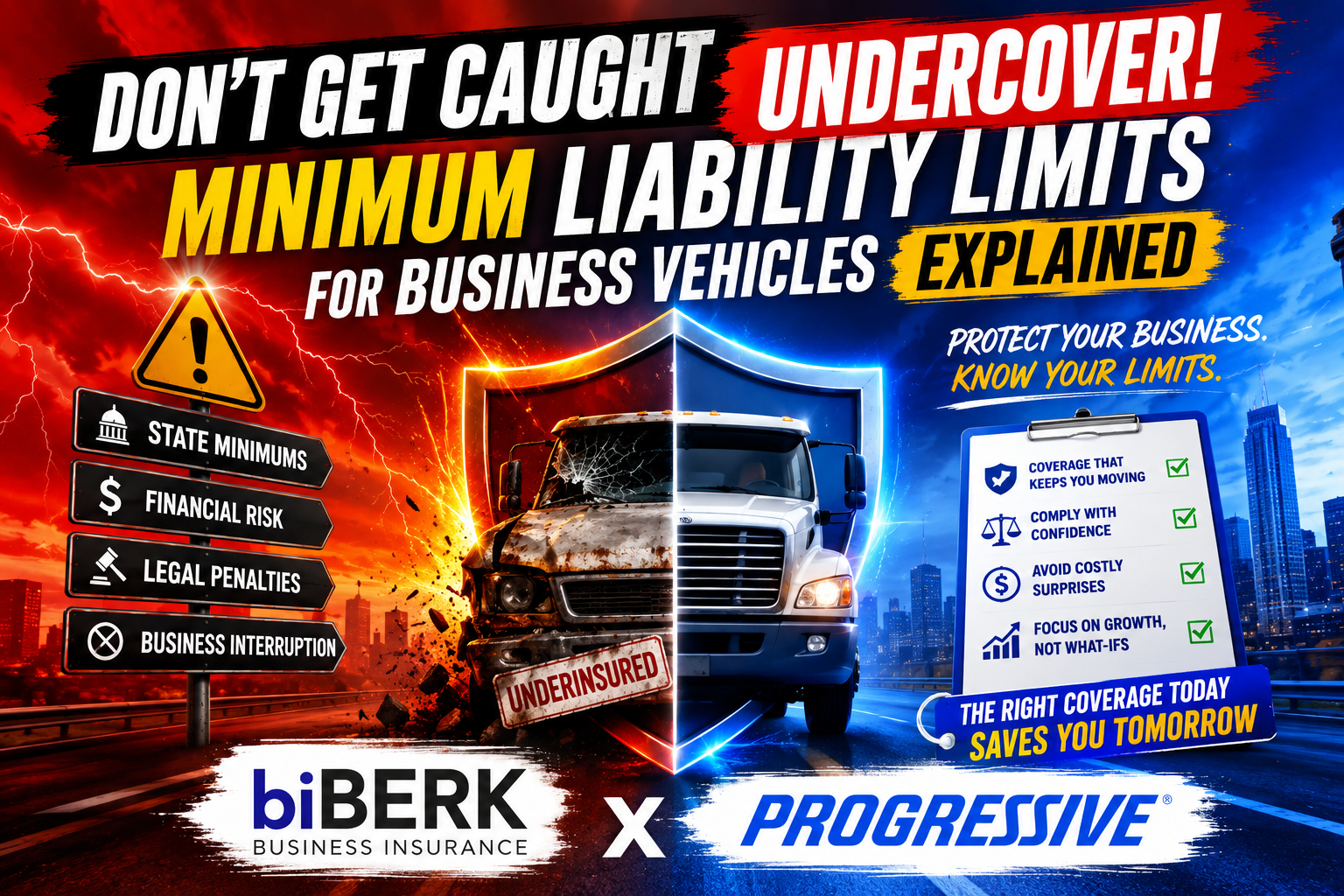
If your business uses vehicles — whether a single delivery van or a full commercial fleet — you carry a legal obligation to protect others from the financial consequences of accidents your drivers may cause. Minimum liability limits define the floor of that protection, and understanding them is not optional. Failing to meet state or federal minimums can result in fines, license suspensions, and devastating out-of-pocket losses that no small business should risk. This article breaks down exactly what minimum liability limits mean for business vehicles in the United States, how they differ by state and vehicle type, and how insurers like biBERK and Progressive help business owners meet — and wisely exceed — those legal thresholds.
Table of contents
| Quick Summary Every U.S. business that operates vehicles must carry commercial auto liability insurance that meets state minimums and, for interstate carriers, FMCSA federal minimums. These minimums define the least amount of coverage required by law — but they rarely represent adequate protection for real-world accidents. Key takeaway: State minimums range from $10,000 to $25,000 per person; federal FMCSA minimums range from $300,000 to $5,000,000 depending on vehicle type and cargo. biBERK and Progressive are two leading U.S. commercial auto insurers that help businesses meet — and exceed — these legal thresholds. |
Which Insurance Companies Help Businesses Meet Liability Minimums for Commercial Vehicles?
Two of the most prominent commercial auto insurers in the United States are biBERK and Progressive. Both providers offer commercial auto policies that cover the liability minimums required by state and federal law. However, their approaches, strengths, and ideal customer profiles differ significantly. Understanding what each company brings to the table helps business owners make smarter coverage decisions.
How Does biBERK Support U.S. Businesses With Commercial Auto Liability Requirements?
biBERK operates as a direct subsidiary of Berkshire Hathaway Insurance Group — one of the most financially stable insurance organizations in the world, holding an A++ rating from AM Best. You can explore their commercial auto options at biBERK’s website.
biBERK targets small and medium-sized businesses that need straightforward, affordable commercial auto coverage without the complexity of broker-managed policies. Their platform allows business owners to get a quote, purchase a policy, and manage coverage entirely online — making it particularly efficient for businesses that cannot afford to spend hours on insurance administration.
Furthermore, biBERK’s commercial auto policies integrate seamlessly with their other business insurance products — including General Liability, Workers’ Compensation, and Cyber Insurance — allowing business owners to bundle coverages and reduce overall premium costs. For a small business operating one to twenty vehicles, biBERK delivers genuine value by combining competitive pricing with the financial might of Berkshire Hathaway.
How Does Progressive Commercial Auto Insurance Address Liability Minimums?

Progressive is one of the largest commercial auto insurers in the United States, holding an A+ rating from AM Best and offering coverage across all 50 states. Their commercial auto division serves businesses ranging from sole proprietors with one vehicle to large enterprises managing fleets of hundreds. Visit Progressive’s commercial auto options at Progressive’s website.
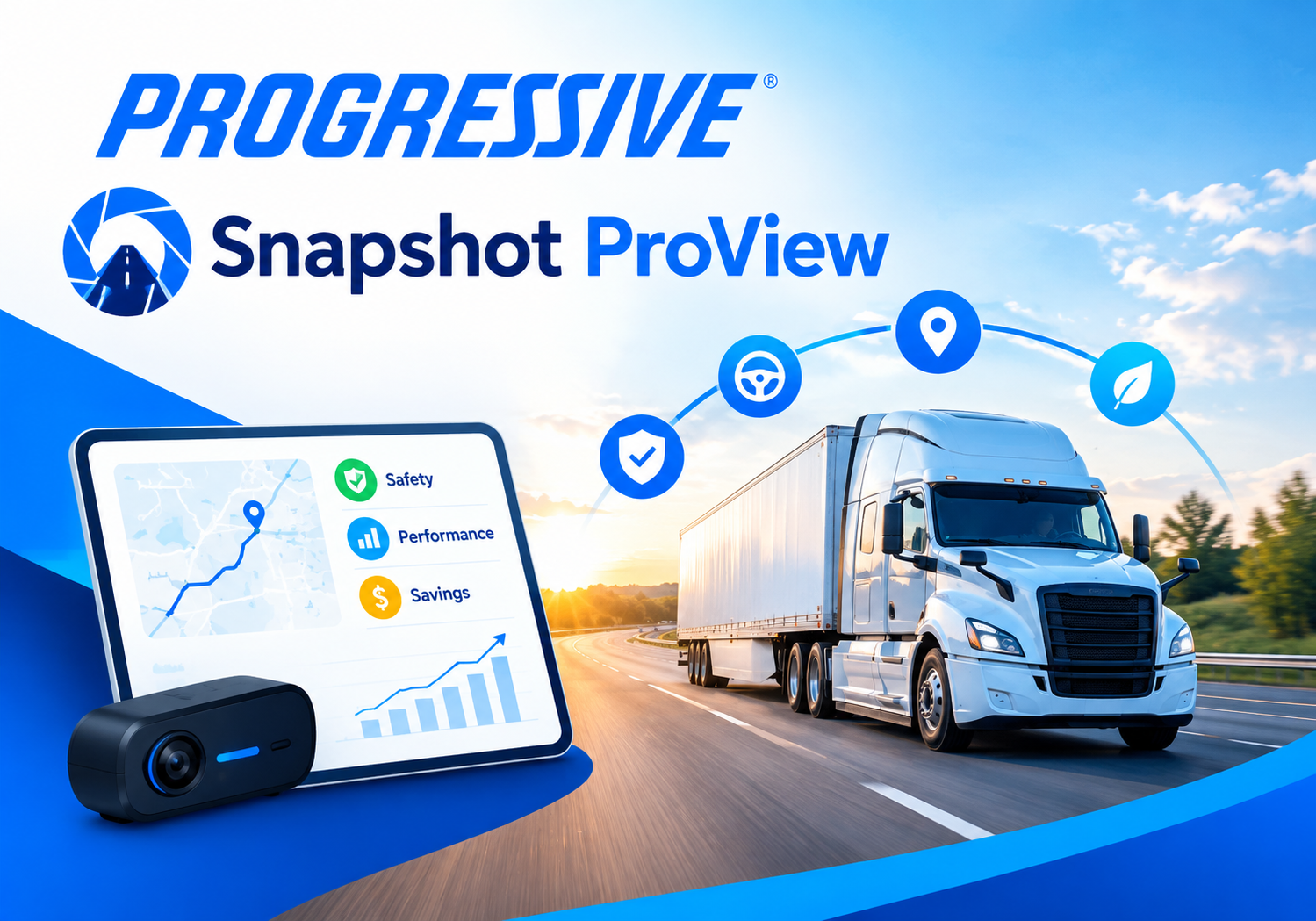
Progressive’s commercial auto policies cover liability limits that meet or exceed state minimums, with options to customize coverage limits based on the specific risks a business faces. Notably, Progressive offers its Snapshot ProView telematics program, which allows commercial fleet owners to monitor driver behavior and potentially reduce premiums based on safe driving data.
Moreover, Progressive provides access to a nationwide network of independent agents — an important advantage for business owners who prefer personalized guidance when navigating complex liability requirements, especially for regulated industries like trucking, transportation, and hazardous materials hauling.
What Are Minimum Liability Limits for Business Vehicles, and Why Do They Exist?
Minimum liability limits represent the lowest amount of liability insurance coverage that a business must maintain on its commercial vehicles as required by law. Specifically, liability insurance covers damages your business causes to other people — including bodily injuries and property damage — when one of your drivers is at fault in an accident.
State governments set these minimums to ensure that accident victims can recover financial compensation even when the at-fault driver lacks sufficient personal funds. Without minimum liability requirements, injured parties might receive nothing after a serious accident — a situation that harms individuals and burdens public resources.
For businesses, meeting these minimums is not just a legal formality. It is a baseline risk management requirement. However, as we will explore throughout this article, meeting the minimum is rarely enough to adequately protect a business from the financial consequences of a serious commercial vehicle accident.
What Is the Difference Between Bodily Injury Liability and Property Damage Liability?
Commercial auto liability coverage divides into two distinct components, and understanding both is essential for any business that operates vehicles.
Bodily Injury Liability (BI) covers medical expenses, lost wages, pain and suffering, and legal defense costs when your driver injures another person in an accident. States typically express BI limits in a split format — for example, $25,000 per person and $50,000 per accident — meaning the policy pays up to $25,000 to any single injured person and up to $50,000 total per accident regardless of the number of injured parties.
Property Damage Liability (PD) covers the cost of repairing or replacing another person’s property — most commonly another vehicle, but also structures, fences, utility poles, and other objects — when your driver causes the damage. Minimum PD limits vary widely by state, ranging from as low as $5,000 in some states to $25,000 or more in others.
Together, BI and PD form the foundation of commercial auto liability coverage. Both biBERK and Progressive offer policies that cover both components at limits that meet or exceed every state’s legal minimums.
What Are the State Minimum Liability Limits for Business Vehicles Across the U.S.?
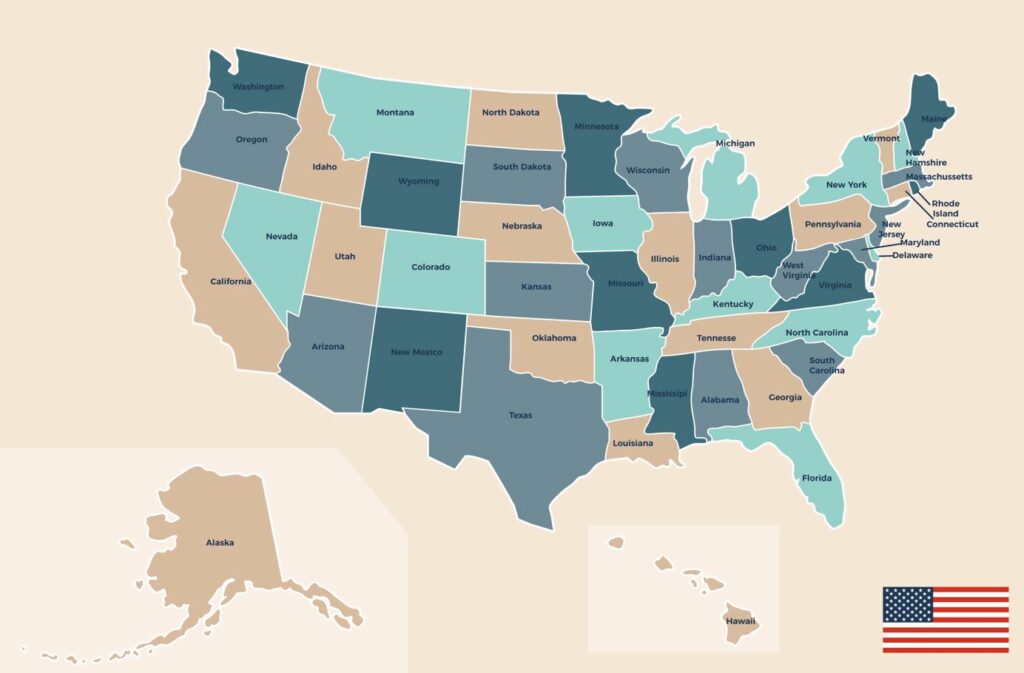
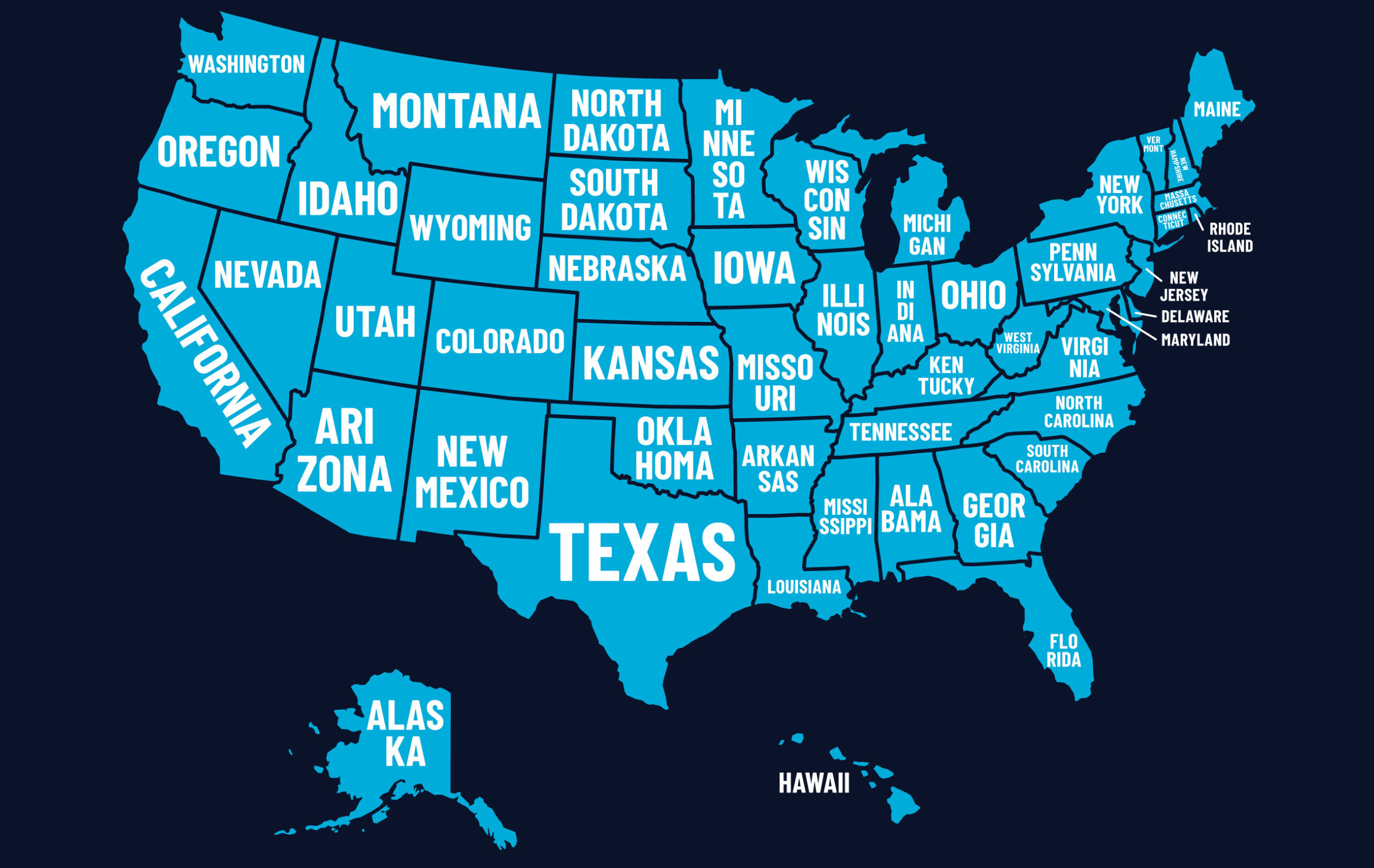
Each of the 50 U.S. states sets its own minimum liability requirements for vehicles, including commercial vehicles. The table below illustrates the minimums in eight of the most economically significant states. Note that these represent minimum thresholds — most insurance professionals, including advisors at both biBERK and Progressive, strongly recommend carrying significantly higher limits.
| State | BI per Person | BI per Accident | Property Damage |
|---|---|---|---|
| California | $15,000 | $30,000 | $5,000 |
| Texas | $30,000 | $60,000 | $25,000 |
| Florida | $10,000 | $20,000 | $10,000 |
| New York | $25,000 | $50,000 | $10,000 |
| Illinois | $25,000 | $50,000 | $20,000 |
| Pennsylvania | $15,000 | $30,000 | $5,000 |
| Ohio | $25,000 | $50,000 | $25,000 |
| Georgia | $25,000 | $50,000 | $25,000 |
As the table demonstrates, minimums vary considerably from state to state. Florida, for example, requires only $10,000 in bodily injury coverage per person — a figure that a single emergency room visit can easily exceed. Texas, by contrast, sets a $30,000 per-person minimum, which still falls far short of what serious injury claims typically cost. Consequently, business owners should treat state minimums as starting points rather than sufficient protection levels.
Do Commercial Vehicles Face Higher Minimum Requirements Than Personal Vehicles?
In many cases, yes. States often impose higher minimum liability requirements on commercial vehicles — particularly larger trucks, buses, and vehicles used for hire — because these vehicles pose greater risks to the public. A fully loaded commercial truck can weigh up to 80,000 pounds, creating far greater damage potential than a standard passenger car.
Additionally, vehicles engaged in for-hire transportation, delivery services, or the transport of hazardous materials face enhanced requirements under both state law and federal regulation. Therefore, business owners must carefully identify not only their state’s minimums but also whether their specific vehicle use triggers higher federal minimums — a distinction that both biBERK and Progressive help customers navigate during the quoting process.
What Federal Liability Minimums Apply to Interstate Commercial Vehicles?
Beyond state minimums, the Federal Motor Carrier Safety Administration (FMCSA) establishes minimum liability insurance requirements for commercial vehicles that operate in interstate commerce — meaning vehicles that cross state lines or transport goods between states. These federal minimums apply in addition to state requirements, and when they conflict, the higher limit prevails.
The FMCSA’s minimum requirements vary significantly based on the type of vehicle, the nature of the cargo, and the number of passengers transported. The following table summarizes the key federal thresholds that U.S. businesses must understand.
| Vehicle/Cargo Type | Minimum Liability | Regulatory Body |
|---|---|---|
| Non-hazmat, for-hire (< 10,001 lbs) | $300,000 | FMCSA |
| Non-hazmat, for-hire (> 10,001 lbs) | $750,000 | FMCSA |
| Hazardous materials (non-bulk) | $1,000,000 | FMCSA |
| Hazardous materials (bulk oil) | $1,000,000 | FMCSA |
| Radioactive/explosive cargo | $5,000,000 | FMCSA |
| Passenger vehicles (9–15 seats) | $1,500,000 | FMCSA |
| Passenger vehicles (16+ seats) | $5,000,000 | FMCSA |
These FMCSA minimums are substantially higher than most state minimums — and for good reason. A single serious accident involving a commercial truck hauling non-hazardous freight can easily generate $750,000 or more in damages, medical bills, and legal costs. For hazardous materials, the potential liability is even greater, which explains why FMCSA mandates $1,000,000 to $5,000,000 in coverage depending on the cargo type.
Do biBERK and Progressive Offer Policies That Meet FMCSA Requirements?
Yes — both insurers offer commercial auto policies capable of meeting FMCSA minimums. However, their suitability for FMCSA-regulated carriers differs. biBERK primarily serves small businesses with lighter commercial vehicles such as vans, pickup trucks, and small delivery vehicles. Consequently, biBERK’s policies generally suit businesses that fall below FMCSA interstate carrier thresholds or that operate smaller fleets of lighter vehicles.
Progressive, on the other hand, has a dedicated trucking and commercial transportation division that specifically serves FMCSA-regulated carriers. Through Progressive, trucking companies, freight haulers, and transportation businesses can obtain the high liability limits required by FMCSA regulations — making Progressive the stronger choice for businesses with significant interstate operations or heavy vehicle fleets.
Why Are Minimum Liability Limits Usually Insufficient for Business Vehicles?
While meeting the legal minimum is mandatory, relying on those minimums as your actual coverage strategy creates serious financial risk. The reality of commercial vehicle accidents in the United States makes this abundantly clear.
According to the Federal Motor Carrier Safety Administration, the average cost of a crash involving a large commercial truck exceeds $91,000 when injuries occur — and rises to over $3.6 million when a fatality results. Even accidents involving smaller commercial vehicles regularly generate claims that far exceed state minimum limits.
Consider a scenario where one of your drivers rear-ends another vehicle at highway speed, injuring two occupants and totaling their car. Medical bills alone could reach $100,000 or more. If your policy only carries $30,000 in bodily injury coverage per person and $60,000 per accident — Texas’s state minimum — your business absorbs the remaining $40,000 or more directly from its own assets.
What Coverage Limits Do Insurance Experts Recommend for Business Vehicles?
Most commercial insurance professionals recommend that businesses carry liability limits well above state minimums. Specifically, common recommendations include:
- $500,000 to $1,000,000 combined single limit for small business commercial auto policies
- $1,000,000 per occurrence for businesses operating medium-duty trucks or delivery vehicles
- $1,000,000 to $5,000,000 for businesses transporting passengers, hazardous materials, or operating heavy trucks
- Umbrella or excess liability policies of $1,000,000 to $5,000,000 on top of primary auto coverage
Both biBERK and Progressive allow business owners to set coverage limits significantly above state minimums. biBERK’s online quoting tool makes it easy to compare the premium difference between minimum and recommended limits — often a surprisingly small additional cost relative to the dramatically increased protection. Progressive similarly offers flexible limit options and can guide fleet operators toward appropriate coverage levels based on vehicle type, usage, and cargo.
How Do biBERK and Progressive Compare on Commercial Auto Liability Coverage?
Choosing between biBERK and Progressive for commercial auto liability coverage depends heavily on your business’s size, fleet complexity, and operational needs. The following comparison table highlights the key differences between the two providers across the most important factors.
| Feature |  |  |
|---|---|---|
| Parent Company | Berkshire Hathaway | Progressive Corporation |
| AM Best Rating | A++ (Superior) | A+ (Superior) |
| Target Customer | Small & mid-size businesses | Small to large businesses & fleets |
| Commercial Auto Coverage | Yes – cars, vans, trucks | Yes – broad fleet options |
| Policy Bundling | GL, WC, BOP, Cyber + Auto | Auto + General Liability available |
| Online Quote & Management | Fully digital platform | Fully digital + agent network |
| Local Agent Access | No local agents | Yes – agent network available |
| Snapshot Telematics | Not available | Available (usage-based pricing) |
| Fleet Size Suitability | 1–20 vehicles ideal | 1–500+ vehicles |
| Claims Process | Online/phone, centralized | Online, app, phone, or agent |
| Multi-Policy Discount | Up to 20% | Varies by bundle |
Which Provider Suits a Small Business With a Few Delivery Vehicles Better?
For a small business operating one to five delivery vehicles — such as a local courier, landscaping company, or mobile service business — biBERK typically offers the most streamlined experience. The fully digital platform, competitive pricing backed by Berkshire Hathaway’s scale, and easy policy bundling with General Liability or Workers’ Compensation make biBERK an efficient, cost-effective choice.
Moreover, biBERK’s focus on small businesses means their policies, pricing models, and customer support are tailored specifically to the needs of entrepreneurs who lack a dedicated risk management team. Additionally, biBERK’s multi-policy discount of up to 20% makes it financially attractive for businesses that need both commercial auto and other coverages simultaneously.
Which Provider Suits a Growing Fleet or Interstate Transportation Business Better?
For businesses operating larger fleets, crossing state lines, or transporting regulated cargo, Progressive’s broader commercial auto capabilities, FMCSA-compliant trucking policies, telematics programs, and nationwide agent network make it the stronger fit. Progressive‘s Snapshot ProView program, in particular, rewards fleets with strong safety records by reducing premiums based on actual driving behavior data — a significant advantage for businesses actively managing driver risk.
Furthermore, Progressive’s agent network provides personalized support for businesses navigating complex FMCSA compliance requirements, multi-state licensing, and specialized cargo endorsements — areas where a self-service digital platform may fall short of what a growing transportation business actually needs.
What Other Coverages Should Businesses Pair With Liability Insurance on Commercial Vehicles?
Liability coverage addresses the damage your business causes to others — but it does nothing to protect your own vehicles or employees. Therefore, a comprehensive commercial auto insurance strategy layers several additional coverages on top of minimum liability limits.
What Additional Coverages Complement Commercial Auto Liability?
- Physical Damage (Collision): Covers repair or replacement costs for your own vehicle after an accident regardless of fault.
- Comprehensive Coverage: Protects your vehicles against non-collision events such as theft, vandalism, hail, fire, and floods.
- Uninsured/Underinsured Motorist: Covers your business when a driver at fault in an accident carries insufficient or no insurance.
- Medical Payments / Personal Injury Protection: Covers medical expenses for your drivers and passengers regardless of fault.
- Hired and Non-Owned Auto: Extends liability coverage to rented vehicles and employee personal vehicles used for business.
- Cargo Insurance: Covers goods in transit — essential for businesses transporting clients’ property or high-value cargo.
Both biBERK and Progressive offer these additional coverages as endorsements or standalone policies that complement a commercial auto liability policy. Bundling these coverages with your primary liability policy — particularly through biBERK’s multi-policy platform or Progressive’s commercial account management tools — typically yields premium discounts and simplifies claims when multiple coverages respond to the same incident.
What Should U.S. Businesses Conclude About Minimum Liability Limits for Commercial Vehicles?
Minimum liability limits for business vehicles set a legal floor — not a financial safety net. Every business that operates commercial vehicles in the United States must meet state minimums, and those operating in interstate commerce must also satisfy FMCSA federal requirements. However, meeting the minimum is rarely sufficient to protect a business from the full financial consequences of a serious accident.
Fortunately, insurers like biBERK and Progressive make it straightforward for businesses of all sizes to meet their legal obligations and build coverage well beyond minimum thresholds. biBERK‘s direct, digitally driven approach suits small businesses that prioritize simplicity, bundling benefits, and competitive pricing backed by Berkshire Hathaway’s financial strength. Progressive’s broader fleet capabilities, telematics programs, and agent network suit growing businesses with larger vehicle operations and more complex compliance requirements.
Ultimately, the smartest approach combines three elements: understanding your state and federal minimum requirements, purchasing coverage that substantially exceeds those minimums, and regularly reviewing your limits as your business grows. Both biBERK and Progressive provide the tools and support to help U.S. businesses achieve all three goals effectively.
Get started by requesting a commercial auto quote from biBERK or Progressive today to compare pricing and coverage options tailored to your specific business needs.
Frequently Asked Questions About Minimum Liability Limits for Business Vehicles
No — and this is one of the most costly misconceptions in small business insurance. Personal auto insurance policies explicitly exclude coverage for vehicles used for commercial purposes, including deliveries, client transportation, or carrying business equipment. If a business-related accident occurs while your driver uses a personally insured vehicle, the personal insurer will likely deny the claim entirely, leaving your business exposed to the full cost of the accident. Commercial auto insurance — available through providers like biBERK and Progressive — specifically covers vehicles and drivers operating in a business context, ensuring your business carries the correct liability protection from day one.
When an accident generates damages that exceed your commercial auto liability limits, your business becomes personally responsible for the difference. In practice, this means injured parties or their attorneys can pursue a lawsuit against your business — and win a judgment that forces your company to liquidate assets, drain operating accounts, or enter into a structured payment plan to satisfy the remaining damages. For small businesses, a single underinsured accident can be financially catastrophic and, in some cases, lead to business closure. This is precisely why insurance professionals universally recommend carrying limits well above state minimums — and why umbrella or excess liability policies exist to provide an additional buffer above your primary commercial auto coverage.
Why Should You Partner With Solution for Guru to Manage Commercial Auto Liability Compliance?
Navigating minimum liability limits, FMCSA regulations, multi-state compliance requirements, and the nuances of biBERK and Progressive policies can quickly overwhelm even experienced business owners. This is precisely where Solution for Guru delivers exceptional value.
Solution for Guru is a professional business consulting and insurance advisory service that specializes in helping U.S. businesses optimize their commercial insurance strategies — including commercial auto liability coverage from providers like biBERK and Progressive.
What Specific Benefits Does Solution for Guru Provide to Commercial Vehicle Operators?
Partnering with Solution for Guru gives your business access to a comprehensive range of advisory services that go far beyond what any insurance platform offers independently:
- Compliance Auditing: Solution for Guru reviews your current commercial auto policy against state minimums and FMCSA requirements, identifying any gaps before they become legal or financial problems.
- Provider Comparison and Selection: Their advisors objectively compare biBERK, Progressive, and other leading commercial auto insurers to identify the best fit for your specific fleet size, industry, and operational geography.
- Limit Adequacy Assessment: Beyond legal minimums, Solution for Guru analyzes your actual risk exposure — fleet size, vehicle types, cargo values, driving territories — and recommends liability limits that genuinely protect your business assets.
- Bundling Strategy: For businesses that also need General Liability, Workers’ Compensation, or Cyber Insurance, Solution for Guru designs an optimal bundling strategy — particularly leveraging biBERK’s multi-policy discounts — to reduce total insurance costs while maximizing protection.
- Renewal Optimization: Each year, Solution for Guru evaluates whether your current coverage still represents the best available combination of price and protection, accounting for changes in fleet size, revenue, and risk profile.
- Claims Support: When a commercial vehicle accident occurs and multiple coverages interact, Solution for Guru’s team advocates on your behalf to ensure the claims process moves efficiently and that your business receives the full benefit of its coverage.
In summary, Solution for Guru transforms a complex, regulation-heavy insurance landscape into a clearly managed, optimally priced strategy that keeps your business legally compliant and financially protected. Whether you choose biBERK for its bundling simplicity, Progressive for its fleet capabilities, or a combination of both, Solution for Guru ensures you extract maximum value from every insurance dollar your business spends.
Discover how Solution for Guru can protect your commercial fleet and simplify your insurance compliance by visiting www.solution4guru.com today.
Recommended
- Bundling Policies with biBERK: Pros and Cons
- How Does Progressive Insurance Help High-Risk Drivers Get Covered?
- Common Progressive Commercial Policy Mistakes Small Businesses Make
- Progressive vs biBERK vs NEXT: Which Commercial Auto Insurance Offers Better Value?
- What Does Progressive Commercial Auto Insurance Actually Cover?
- AI in Commercial Auto Insurance: Smarter Risk Assessment
- Understanding biBERK’s Claims Process for Commercial Auto Insurance
- When Is Progressive More Expensive Than Regional Commercial Auto Insurers?
- Top Progressive Discounts Small Business Owners Should Know About
- 24/7 Policy Management: How Progressive Supports Busy Business Owners
- Is biBERK a Good Choice for Small Business Owners?
- Checklist: Documents Needed for Commercial Auto Insurance
- How Food Truck Owners Can Benefit from Commercial Auto Insurance
- Commercial vs. Personal Auto Insurance: What’s the Difference?
- biBERK vs Progressive Commercial Auto Insurance: Which Is Better?
- Digital Transformation in Commercial Auto Insurance: What’s Next for Businesses?
- Insurance Needs for Contractors with Company Vehicles: What Do You Really Need?
- Commercial Auto Insurance for Delivery Businesses: Why biBERK Is a Strong Option
- What It’s Like to Work in Commercial Auto Insurance (And How to Start)