5 Essential Pipedrive CRM Features for Successful Sales

Sales teams that consistently hit their targets share one thing in common: they rely on the right tools. Pipedrive, one of the world’s most widely adopted CRM platforms, gives sales professionals a structured, visual, and automation-rich environment to manage deals from first contact to closed revenue. In this article, we explore the five essential Pipedrive CRM features that drive sales success, explain how each one works in practice, and show how partnering with Solution for Guru helps your team implement and maximize every one of them.
Table of contents
Quick Summary
| Feature | Core Benefit | Who Benefits Most |
| Visual Sales Pipeline | Full deal visibility at every stage | Sales managers and reps |
| AI-Powered Sales Assistant | Smart nudges, forecasts, and next-step recommendations | Individual reps and team leads |
| Workflow Automation | Eliminates repetitive tasks, speeds up follow-up | High-volume sales teams |
| Reports and Revenue Forecasting | Data-driven decisions and accurate revenue projections | Sales directors and CFOs |
| Integrations and Marketplace | Connects Pipedrive with 400+ tools in your tech stack | Operations and RevOps teams |
| Solution for Guru Partnership | Expert CRM setup, training, and ongoing optimization | All business sizes |
What Is Pipedrive and Why Does It Matter for Sales Teams?

Founded in 2010, Pipedrive was built by salespeople, for salespeople. Unlike enterprise CRM platforms that overwhelm users with features designed primarily for IT teams, Pipedrive focuses on one core mission: helping sales professionals close more deals, faster. Today, more than 100,000 companies across 179 countries use Pipedrive to manage their sales pipelines, track communications, and forecast revenue.
Pipedrive belongs to the category of activity-based CRM software — meaning it centers the sales process on actions that reps control rather than outcomes they can only hope for. Instead of asking “Did we close the deal?” Pipedrive asks “Did we complete the right activity?” This philosophy shifts sales teams from reactive to proactive, which research consistently links to higher win rates and shorter sales cycles.
Furthermore, Pipedrive’s clean interface, low learning curve, and powerful automation capabilities make it accessible to small businesses and scalable enough for fast-growing enterprises. As a result, it consistently earns top rankings on independent review platforms, including G2, Capterra, and GetApp, where users rate it highly for usability, value for money, and customer support.
Feature 1: How Does Pipedrive’s Visual Sales Pipeline Keep Your Deals Moving?
The visual sales pipeline sits at the heart of Pipedrive’s design. Rather than presenting deals as rows in a spreadsheet, Pipedrive arranges them as cards on a Kanban-style board, organized by sales stage. This visual structure gives every team member — from a new sales rep to a seasoned sales director — an immediate, intuitive view of where every deal stands at any given moment.
How Does the Pipeline View Improve Daily Sales Activity?
When a sales rep opens Pipedrive in the morning, they see their pipeline at a glance: deals in each stage, color-coded indicators showing how long each deal has been inactive, and dollar values attached to each card. Consequently, they can prioritize their day without spending time writing reports or digging through email threads to find deal status.
Pipedrive also allows teams to build multiple custom pipelines — a critical feature for businesses with different sales processes for different product lines, customer segments, or geographies. For example, a software company might maintain a separate pipeline for new business, upsells, and partnership deals — each with its own stages and automation rules.
Moreover, managers gain real-time visibility into team performance without interrupting individual reps for status updates. The pipeline view shows every deal, every rep’s activity, and every stage conversion rate simultaneously — enabling faster coaching decisions and earlier identification of deals at risk.
What Customization Does Pipedrive Offer for Different Sales Processes?
Pipedrive gives sales teams complete control over their pipeline structure. Teams can add, rename, reorder, and remove stages to match their exact sales methodology — whether that’s MEDDIC, SPIN Selling, Challenger Sale, or a proprietary process. Additionally, custom fields allow teams to capture the deal data that matters most to their specific industry, such as contract value, decision-maker role, or implementation timeline.
| Pipeline Element | What You Can Customize | Business Benefit |
| Pipeline stages | Names, order, number of stages | Matches your actual sales process |
| Deal cards | Custom fields, tags, priority labels | Captures deal-specific context |
| Multiple pipelines | Separate processes per product/segment | Avoids process confusion |
| Deal rotting indicators | Time thresholds per stage | Highlights stalled deals proactively |
| Column filters | Rep, product, source, date range | Enables targeted coaching sessions |
Feature 2: How Does Pipedrive’s AI-Powered Sales Assistant Increase Win Rates?

Pipedrive’s AI-powered Sales Assistant functions as a personal coaching tool embedded directly in the CRM. It continuously analyzes your sales data, activity patterns, and historical deal outcomes to surface actionable recommendations in real time — without requiring any manual reporting or analysis from the sales rep.
What Kind of Insights Does the Pipedrive AI Sales Assistant Provide?
The Sales Assistant monitors deal progress and proactively alerts reps when a deal shows signs of going cold. For instance, if a high-value deal has had no activity for seven days, the assistant surfaces a notification prompting the rep to follow up. This type of intelligent nudging ensures that valuable opportunities don’t slip through the cracks due to a busy week or a forgotten task.
Beyond basic reminders, the AI Sales Assistant also provides performance insights based on historical data. It identifies which activities — such as demo calls, proposal sends, or LinkedIn connections — correlate most strongly with closed deals in your specific pipeline. Therefore, reps can focus their energy on the activities that statistically produce the best results in their market and product category.
How Does AI-Driven Deal Scoring Work Inside Pipedrive?
Pipedrive’s deal scoring assigns a probability score to each deal based on multiple factors: deal age, activity history, stage, deal value, and patterns observed across previously won and lost deals. Sales managers can use this scoring to quickly triage their pipeline — prioritizing high-probability deals for immediate attention while identifying low-score deals that need strategic intervention.
Furthermore, the scoring updates dynamically as new activities occur, keeping forecasts accurate in real time. This means sales directors gain a continuously updated view of expected revenue — not just a static snapshot from last week’s pipeline review meeting.
| AI Sales Assistant Capability | Frequency | Practical Outcome |
| Deal inactivity alerts | Real-time | Prevents deals from going cold |
| Next-best-activity suggestions | Daily | Reps focus on high-impact tasks |
| Performance trend analysis | Weekly summary | Identifies top-performing behaviors |
| Win probability scoring | Continuous | Accurate revenue forecasting |
| Email open / click tracking insights | Per email sent | Optimizes outreach timing and content |
Feature 3: How Does Pipedrive Workflow Automation Eliminate Repetitive Sales Tasks?
Sales reps lose a significant portion of their workday to non-selling tasks: logging calls, sending follow-up emails, updating deal stages, assigning tasks to colleagues, and notifying managers of stage changes. Pipedrive’s workflow automation engine eliminates these manual steps by executing them automatically whenever a defined trigger event occurs.
What Can Pipedrive Automate in a Typical Sales Workflow?
Pipedrive’s automation builder uses a straightforward trigger-condition-action logic that non-technical users can configure in minutes. A trigger event — such as a deal moving to a new stage, a contact being created, or an activity being marked complete — kicks off one or more automated actions. These actions can include sending a personalized email, creating a follow-up task, updating a custom field, notifying a team member via Slack, or adding the contact to a marketing email sequence.
Consider a practical example: when a rep marks a demo as completed (trigger), Pipedrive automatically sends a personalized follow-up email (action 1), creates a “Send proposal” task due in 48 hours (action 2), and moves the deal to the “Proposal Sent” stage (action 3). Three tasks that previously required manual effort now happen instantly — without the rep doing anything beyond running the demo itself.
How Much Time Does Sales Automation Actually Save?
According to McKinsey & Company research, sales teams can automate approximately 30% of their sales activities using currently available technology. Pipedrive’s automation tools directly address this opportunity. Teams that fully implement Pipedrive’s workflow automation consistently report saving between 3 to 5 hours per rep per week — time they can reinvest into prospecting, discovery calls, and relationship building.
| Task | Manual Time (per week) | With Pipedrive Automation | Time Saved |
| Follow-up email after demo | ~45 min | 0 min (automated) | 45 min |
| Deal stage updates | ~30 min | 0 min (trigger-based) | 30 min |
| Task creation after activity | ~40 min | 0 min (auto-created) | 40 min |
| Manager notifications | ~20 min | 0 min (instant alert) | 20 min |
| Lead assignment routing | ~25 min | 0 min (rule-based) | 25 min |
| Total per rep per week | ~160 min | ~0 min | ~2.7 hours saved |
Additionally, automation reduces human error. When deal stages update automatically, pipeline data stays accurate — which directly improves the reliability of revenue forecasts and manager dashboards.
Feature 4: How Do Pipedrive’s Reports and Revenue Forecasting Support Smarter Decisions?

Sales without data is guesswork. Pipedrive’s reporting and forecasting suite transforms raw pipeline data into clear, actionable intelligence — enabling sales leaders to make confident decisions about resource allocation, quota setting, hiring, and growth strategy.
What Built-In Reports Does Pipedrive Provide?
Pipedrive ships with a comprehensive library of pre-built reports covering the key metrics every sales team needs. These include deal conversion rates by stage, average deal size, sales cycle length, activity-to-deal ratios, and individual rep performance comparisons. Furthermore, all reports update in real time as reps log activities and move deals through the pipeline — eliminating the lag time that plagues manual spreadsheet-based reporting.
Beyond pre-built reports, Pipedrive allows teams to build custom dashboards that surface exactly the metrics most relevant to their business model. A SaaS company tracking monthly recurring revenue behaves differently from a professional services firm tracking project-based deals, and Pipedrive’s customization capabilities accommodate both.
How Does Pipedrive’s Revenue Forecasting Help Sales Leaders Plan Ahead?
Pipedrive‘s revenue forecasting module projects future revenue based on three factors: the probability score of each deal in the pipeline, the expected close date, and the deal value. By aggregating these data points across the entire pipeline, the forecast gives sales leaders a forward-looking revenue estimate that accounts for deal probability — not just total pipeline value.
This distinction matters enormously. A pipeline containing ten $50,000 deals does not guarantee $500,000 in revenue — especially if most of those deals carry a 20% win probability. Pipedrive’s forecast adjusts for this reality, giving finance and sales leadership a more honest and actionable number to plan against.
| Report Type | Key Metric | Decision It Supports |
| Stage conversion report | % of deals advancing per stage | Identifies pipeline bottlenecks |
| Sales velocity report | Revenue generated per day | Measures pipeline health over time |
| Activity report | Calls, emails, meetings per rep | Coaches low-activity reps |
| Revenue forecast | Weighted expected revenue | Informs hiring and capacity planning |
| Won/Lost analysis | Reasons for deal outcomes | Refines sales messaging and ICP |
| Leaderboard | Rep-by-rep performance ranking | Motivates competitive sales cultures |
Feature 5: How Does Pipedrive’s Integrations Marketplace Extend Your Sales Stack?
No CRM operates in isolation. Sales teams rely on a constellation of tools — email clients, marketing automation platforms, proposal software, billing systems, communication apps, and more. Pipedrive’s Marketplace connects the CRM to more than 400 third-party applications, making it the connective tissue of a modern sales tech stack.
Which Integrations Deliver the Most Value for Sales Teams?
While the full Marketplace spans hundreds of tools, certain integrations consistently deliver outsized value for sales teams. Email integrations with Gmail and Outlook sync every email conversation to the relevant deal automatically — ensuring full communication history lives inside Pipedrive without any manual logging. Similarly, the Slack integration pushes real-time deal updates and alerts to the channels where sales teams already communicate.
Moreover, Pipedrive’s native integrations with marketing platforms like Mailchimp, HubSpot Marketing, and ActiveCampaign create a seamless bridge between marketing and sales — allowing leads nurtured through email campaigns to flow directly into the sales pipeline with full context about which content they engaged with before reaching a rep.
| Integration Category | Top Tools | Key Sales Benefit |
| Email & Communication | Gmail, Outlook, Microsoft Teams | Auto-logs all email activity to deals |
| Marketing Automation | Mailchimp, ActiveCampaign, HubSpot | Passes warmed leads directly to pipeline |
| Proposal & E-Signature | PandaDoc, DocuSign, Proposify | Closes loop from CRM to signed contract |
| Telephony & Video | Zoom, Aircall, RingCentral | Logs call recordings directly to deals |
| Billing & Finance | QuickBooks, Xero, Stripe | Connects closed deals to invoicing instantly |
| Productivity | Slack, Google Workspace, Asana | Keeps sales alerts in team workflows |
How Does Pipedrive’s API Enable Custom Integrations?
For businesses with unique technology requirements, Pipedrive provides a robust REST API that enables custom integrations with any platform not covered by the Marketplace. Development teams can build bidirectional data flows between Pipedrive and proprietary systems — such as custom-built order management tools, industry-specific databases, or legacy ERP platforms.
Additionally, Pipedrive supports Zapier and Make (formerly Integromat) connections, giving non-technical teams the ability to build custom automation between Pipedrive and thousands of additional apps without writing a single line of code. This no-code approach democratizes integration capabilities across the entire organization.
How Do the 5 Pipedrive Features Compare in Terms of Impact and Ease of Implementation?

The following table summarizes each feature’s impact on sales performance, the effort required to implement it effectively, and the team size it serves best:
| Feature | Sales Impact | Implementation Effort | Best Team Size |
| Visual Sales Pipeline | High — full deal visibility | Low — set up in hours | All sizes (1–500+) |
| AI Sales Assistant | High — prevents deal slippage | Very Low — enabled by default | 5–100 reps |
| Workflow Automation | Very High — hours saved weekly | Medium — requires process mapping | 10–200 reps |
| Reports & Forecasting | Very High — drives strategy | Medium — requires KPI alignment | Managers + leadership |
| Integrations Marketplace | High — eliminates data silos | Low to Medium — per integration | All sizes |
What Are the Key Takeaways About Pipedrive CRM for Successful Sales?
Pipedrive’s five essential features — the visual sales pipeline, AI-powered Sales Assistant, workflow automation, reporting and revenue forecasting, and the integrations marketplace — collectively address every major challenge sales teams face: visibility, prioritization, efficiency, decision-making, and tool integration. Together, they transform a disconnected, manually driven sales operation into a structured, data-informed, and largely self-managing revenue engine.
Notably, Pipedrive achieves this without sacrificing simplicity. Its clean interface and logical design mean that even first-time CRM users can navigate the platform confidently, while advanced users can unlock deep automation and reporting capabilities as their needs grow. This combination of accessibility and power explains why Pipedrive has earned the loyalty of more than 100,000 businesses worldwide.
At the same time, having access to powerful features only produces results when teams use those features correctly and consistently. As a result, the implementation and enablement support that Solution for Guru provides becomes a critical multiplier of Pipedrive’s value. The combination of Pipedrive’s feature depth and Solution for Guru’s implementation expertise creates a sales enablement foundation that delivers measurable, compounding returns.
Whether you are deploying Pipedrive for the first time, migrating from another CRM, or looking to unlock features your team has underutilized, the path forward is clear: choose Pipedrive as your CRM platform and Solution for Guru as your implementation partner — and start closing more deals, faster.
Frequently Asked Questions About Pipedrive CRM Features
Yes — and this is one of Pipedrive’s most important strengths. The platform scales effectively from individual freelancers and two-person sales teams all the way to enterprise sales organizations with hundreds of reps across multiple territories. Smaller teams benefit from the clean interface, affordable pricing tiers, and low learning curve, while larger organizations tap into advanced automation, multi-pipeline management, custom permissions, and enterprise-grade reporting. Because Pipedrive grew from the needs of small sales teams rather than from the top down, it retains an intuitive, rep-friendly design even at scale — a balance that many competing CRM platforms fail to achieve.
The timeline depends heavily on the complexity of your sales process and the depth of integrations you require. A basic pipeline setup with a few automation rules can be live within a single day. A fully customized implementation — including multiple pipelines, comprehensive workflow automation, custom dashboards, and integrations with email, telephony, and marketing platforms — typically takes one to three weeks when handled by an experienced team. Without expert guidance, however, the same implementation often stretches over months as teams discover gaps, rebuild workflows, and troubleshoot integration issues through trial and error.
Pipedrive, Salesforce, and HubSpot each occupy a distinct position in the CRM market. Salesforce offers the deepest customization and enterprise integration capabilities, but requires substantial technical resources to implement and maintain — making it less practical for small to mid-sized teams. HubSpot provides an all-in-one marketing and sales platform with a strong free tier, but its CRM functionality can feel secondary to its marketing tools for pure-play sales teams. Pipedrive, by contrast, focuses exclusively on sales pipeline management — making it the most intuitive, activity-centric, and sales-rep-friendly option for teams whose primary need is closing deals rather than managing marketing campaigns.
How Does Solution for Guru Help You Get the Most from Pipedrive CRM?
Knowing that Pipedrive offers powerful features and actually extracting maximum value from those features are two very different things. Many sales teams install Pipedrive, configure a basic pipeline, and then use only a fraction of its capabilities — missing out on the automation, reporting, and integration benefits that make the biggest difference. This is precisely where Solution for Guru delivers exceptional value.
What Services Does Solution for Guru Provide to Pipedrive Users?
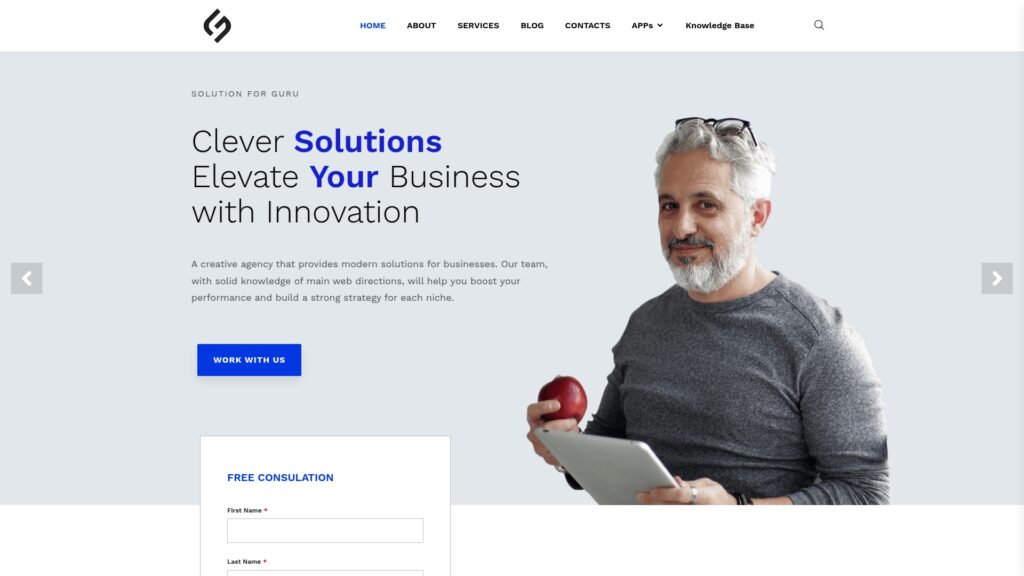
Solution for Guru specializes in CRM implementation, optimization, and team enablement — with deep expertise in Pipedrive. Rather than offering generic software consulting, the company takes a sales-process-first approach: it starts by understanding your team’s actual sales methodology, then configures Pipedrive to support and enhance that methodology specifically.
Concretely, Solution for Guru provides the following services to Pipedrive clients:
- CRM Setup and Configuration: Custom pipeline design, stage mapping, field configuration, and permission structures aligned with your sales process.
- Workflow Automation Design: End-to-end automation blueprints that eliminate the specific repetitive tasks your team faces — built, tested, and documented for you.
- Integration Implementation: Seamless connections between Pipedrive and the tools already in your tech stack — from email and telephony to marketing automation and billing.
- Dashboard and Reporting Setup: Custom dashboards that surface the KPIs your sales leadership actually uses, refreshed in real time from live pipeline data.
- Team Training: Structured onboarding and adoption programs that ensure every rep and manager uses Pipedrive correctly and confidently from day one.
- Ongoing Optimization: Regular pipeline reviews, automation audits, and feature updates that keep your Pipedrive instance aligned with your evolving business needs.
Why Do Sales Teams Achieve Better Results When Working with Solution for Guru?
The primary reason is speed. A team attempting to configure Pipedrive without expert guidance typically takes weeks to build a functional pipeline, months to implement meaningful automation, and sometimes never fully activates reporting and forecasting capabilities. Solution for Guru compresses this timeline dramatically — delivering a fully configured, integrated, and automation-enabled Pipedrive instance in days rather than months.
Beyond implementation speed, Solution for Guru brings something even more valuable: sales process expertise. The team understands not just how Pipedrive works technically, but how successful sales teams use it strategically. This means every configuration decision — from pipeline stage names to automation trigger logic — reflects best practices drawn from hundreds of real-world sales operations.
Furthermore, Solution for Guru’s support model extends beyond the initial setup. As your team grows, your sales process evolves, or Pipedrive releases new features, Solution for Guru ensures your CRM keeps pace — protecting and compounding your initial investment over time.
In short, Solution for Guru turns Pipedrive’s potential into realized sales performance — faster, more completely, and more sustainably than any team can achieve alone.
Recommended:
- Best HubSpot Integrations for Sales and Marketing Teams
- HubSpot CRM: What It Is and How It Works for Businesses
- Top Pipedrive Tips from the Community That Most Guides Don’t Cover
- What Is Bigin by Zoho CRM and Who Is It Best For?
- Creatio CRM Data Migration Best Practices
- Blueprint Automation in Zoho CRM: Process Engineering Approach
- Security & Compliance Considerations When Implementing Creatio
- BPM + CRM: Why Creatio Combines Both Worlds
- CRM Proficiency for Sales Teams: Turning Data into Deals
- Customer 360° View in Creatio: Benefits for Sales Teams
- The Pipedrive Gmail Add-On
- Creatio CRM Implementation Guide for U.S. Businesses
- How Does Zoho CRM Handle Multi-Pipeline Sales Architecture?
- How Does Creatio Improve Lead Management and Conversion Rates?
- Top CRM-Related Professions Every Modern Company Needs