Refresh Your Brand in Weeks: Digital Playbook for Business Leaders

A brand refresh is a strategic update to a brand’s visual and verbal identity that modernizes perception and aligns messaging with current business goals without changing the brand’s core identity, name, or market position. Organizations pursue one when their offerings, audience, or digital presence have evolved faster than their logo, website, or messaging. The goal is relevance, not reinvention.
TL;DR:
- If the name, business model, or market position no longer fits, choose a rebrand; outdated visuals or inconsistent messaging usually call for a refresh.
- Start with messaging, then update digital templates and operational collateral; test concepts on landing pages before committing to print, signage, or paid campaigns.
- Preserve a familiar mark, core color, or signature voice, and roll out changes in phases to limit recognition loss and catch inconsistencies early.
- Measure engagement, conversion, and internal brand clarity against baselines set before launch; a logo update alone will not fix checkout friction or inconsistent support.
Table of Contents
- What a Brand Refresh Actually Includes
- Brand Refresh vs. Rebrand: How to Choose
- Benefits and Objectives: What a Refresh Aims to Achieve
- Signals You Need a Brand Refresh
- Core Elements to Update: Visual, Verbal, Digital, and Operational
- Step-by-Step Process to Run a Brand Refresh
- Rollout, Measurement, and Risk Control
- How We Approach a Brand Refresh for Clients
- Examples of Successful Brand Refreshes
- Impact on Customer Perception and Brand Equity
- Communicating the Refresh to Employees
- A Leadership Note on Managing the Politics of a Refresh
- How We Can Support Your Brand Refresh
- FAQ
- Sources
What a Brand Refresh Actually Includes
A refresh touches more than a logo. It typically spans three layers: visual assets, verbal identity, and digital systems. A brand refresh is a strategic update to a company’s identity such as its logo, typography, and color palette, or its messaging, designed to modernize appearance and maintain relevance without changing core strategy or name.
Scope varies widely. A surface refresh might adjust a color palette and update photography. A strategic refresh reworks messaging architecture, repositions the brand against competitors, and rebuilds digital templates across every customer touchpoint. The difference is depth, not direction: both preserve the underlying identity while changing how it shows up.
Assets commonly refreshed include:
- Logo and mark: subtle geometry, weight, or color adjustments rather than a full redesign.
- Typography and color system: updated palettes that feel current without breaking recognition.
- Messaging and tone of voice: language that reflects what the business does today.
- Website UI and templates: layouts, components, and navigation patterns.
- Social and marketing assets: templates, ad creative, and email design.
Retaining brand equity matters more than novelty. Research on corporate brand updates shows that a refresh can retain existing brand equity while adding new sources of value, and that launch strategy and scope of change materially affect how dramatic the update feels to customers. Keeping an iconic mark, a core color, or a signature tone intact while modernizing everything around it is usually the safer path.
Brand Refresh vs. Rebrand: How to Choose
A refresh updates the expression of a brand. A rebrand changes its foundation: name, positioning, or market identity. Brand refreshes modernize appearance and maintain relevance without changing core strategy or name, which is the clearest dividing line between the two.
Use these decision rules to figure out which one applies:
- Check if the name still fits. If customers mispronounce it, confuse it with a competitor, or it no longer matches your offering, that points to a rebrand.
- Check if the business model changed. A company that pivoted from retail to SaaS usually needs new positioning, not just new colors.
- Check if recognition is still an asset. If your current mark still carries goodwill, a refresh protects that value instead of discarding it.
- Check the trigger. A merger, a damaged reputation, or expansion into a new category often forces a rebrand; outdated visuals or inconsistent messaging usually call for a refresh.
A company that simply updates its typography and website after years of visual drift is refreshing. A company that changes its name after a merger is rebranding.
Benefits and Objectives: What a Refresh Aims to Achieve
A refresh is judged on business outcomes, not aesthetics. The clearest benefits show up in relevance, reach, and internal clarity.
- Renewed relevance: visuals and messaging that match current products and audience expectations.
- Expanded audience reach: updated tone and design that resonate with newer customer segments.
- Improved conversion signals: clearer messaging and modern UI components that reduce friction on key pages.
- Internal alignment: teams across sales, support, and marketing working from one consistent story.
Operational maturity, not aesthetics, should drive the decision. Brand refresh decisions should be driven by operational factors such as new services, market entries, or internal fragmentation, and a successful refresh realigns teams and touchpoints to how the business actually operates today.
A refresh has limited ROI when the underlying product or service experience has not changed. Updating a logo without fixing a confusing checkout flow or inconsistent support tone will not move the metrics that matter. Benefits map most directly to engagement rate, time on site, and employee survey scores on brand clarity, not just to top-line revenue.
Signals You Need a Brand Refresh
Most refresh decisions trace back to a handful of recurring signals, internal and external.
- Visual fragmentation: different teams using different logo versions, fonts, or colors across decks, ads, and the website.
- Inconsistent messaging: sales, marketing, and support describing the business in conflicting terms.
- Declining engagement: falling click-through rates or time on site despite stable traffic.
- Customer feedback drift: prospects describing the brand using outdated or inaccurate language.
- Business milestones: a new product line, a new market, or a leadership change that the current identity does not reflect.
Five reasons commonly justify a refresh: changing competition, new audiences, new products or pricing, internal change, or outdated perception, and more than one is often present at once.
Pro Tip: Run a quick internal audit first: pull every logo file, brand guideline, and website template in use across departments. If you find more than two inconsistent versions, you already have your answer.
Core Elements to Update: Visual, Verbal, Digital, and Operational
Scoping a refresh means deciding how much to change in each asset category, not just which ones to touch. A refresh that changes everything at once risks losing recognition; one that changes nothing risks irrelevance.
Visual identity usually sees the lightest touch: logo refinement, an updated color palette, and modern photography or iconography. Effective refreshes reimagine product, story, culture, and customer experience together, which means visual changes should follow from a clear story, not precede it.
Verbal identity covers messaging architecture, value propositions, and tone of voice guidelines. This is where many refreshes create the most impact for the least visual disruption, since customers notice clearer language faster than a slightly different shade of blue.
Digital systems carry the heaviest workload: website templates, UI components, email design, and social templates all need updates that stay consistent with the new visual and verbal direction. This is also the stage where our audit-driven website redesign checklist becomes useful, since it sequences SEO and accessibility work alongside visual changes instead of treating them as an afterthought.
Operational collateral includes sales decks, proposal templates, signage, and brand governance documents, the assets that keep the refresh consistent once marketing stops actively managing it.
| Asset category | Typical scope of change | Primary owner |
|---|---|---|
| Logo and visual mark | Light to moderate refinement | Design or brand team |
| Color palette and typography | Moderate update | Design team |
| Messaging and tone of voice | Moderate to significant rewrite | Marketing and leadership |
| Website UI and templates | Significant redesign | Web and development team |
| Social and ad templates | Moderate update | Marketing team |
| Sales and operational collateral | Light update, high consistency need | Sales enablement |
- Bullet list for prioritization: start with messaging, since it informs everything downstream.
- Update digital templates next, since they touch the most customer interactions.
- Finish with operational collateral, since it changes least often and can lag by a quarter without harm.
Step-by-Step Process to Run a Brand Refresh
A refresh runs cleanest as a sequence, not a single creative sprint. Each phase produces a deliverable the next phase depends on.
- Set goals and metrics before any design work starts. Define what success looks like: higher engagement, clearer internal alignment, or stronger conversion on key pages. Without this step, the refresh becomes a matter of taste rather than a measurable project.
- Audit every touchpoint and gather stakeholder input. Pull samples from the website, social channels, sales decks, and customer support scripts. Interview sales, support, and customer-facing teams, since they often spot inconsistencies marketing misses.
- Refine positioning and messaging architecture. Rewrite the core value proposition and tone of voice guidelines before touching visuals. Reimagining product, story, culture, and customer experience together keeps the refresh grounded in substance rather than surface polish.
- Iterate on design digitally first. Build new visual concepts as website mockups or landing pages rather than static presentations. Digital-first testing reduces cost and risk, since trialing new visuals and messages on landing pages and measuring clickthrough and engagement before wide rollout costs far less than reprinting physical collateral later.
- Pilot with a limited audience before full rollout. Test new templates on one product line, one region, or one email segment, and compare performance against the prior version.
- Prepare a phased rollout plan. Sequence which channels change first: typically website, then email and social, then sales collateral, then signage or physical materials.
- Establish governance and post-launch optimization. Assign ownership for the brand guidelines document, set a review cadence, and track the KPIs defined in step one for at least two full quarters.
Throughout this process, a few habits separate successful refreshes from stalled ones:
- Keep one shared source of truth for brand guidelines instead of scattered decks.
- Loop in sales and support early, since they translate messaging to customers daily.
- Treat the website as the testing ground before committing budget to printed or physical assets.
- Revisit the original goals at each phase gate rather than letting the project drift toward aesthetics alone.
Timeline varies by scope, but a moderate refresh covering messaging, website, and core visual assets typically takes several weeks to a few months from audit to full rollout, with governance work continuing well past launch.
Rollout, Measurement, and Risk Control
Rollout strategy affects how customers perceive the change as much as the design itself. A full, simultaneous rollout signals confidence but leaves no room to correct course. A phased rollout, channel by channel, lets teams catch problems early at the cost of a longer transition period where old and new assets coexist.
Priority KPIs to track after launch include:
- Website traffic and bounce rate on redesigned pages versus historical baselines.
- Conversion rate on key landing pages and forms.
- Net Promoter Score shifts among customers surveyed before and after launch.
- Engagement metrics on social and email, including click-through and reply rates.
A/B testing on the website before wide rollout catches problems cheaply. Trialing new visuals and messages on landing pages and measuring clickthrough and engagement before wide rollout remains one of the most reliable ways to validate a refresh before committing to print, signage, or paid campaigns built on the new identity.
Governance matters after launch, too. A central asset repository, a short training session for customer-facing teams, and a quarterly brand audit keep the new identity from drifting back into the inconsistency that triggered the refresh in the first place.
How We Approach a Brand Refresh for Clients
Running a refresh well means treating it as an operational project with design deliverables, not a creative exercise with a business afterthought. We start every engagement with a full touchpoint audit, pulling website pages, templates, and messaging samples before any visual work begins.
Our process typically includes:
- An audit phase that maps current inconsistencies across web, social, and sales collateral.
- Digital-first testing, where new messaging and visual concepts get validated on live landing pages before wider rollout.
- SEO and accessibility review built into the redesign process, following the same sequencing in our website redesign checklist.
- A governance handoff, where we document brand guidelines and set up the asset repository the internal team owns going forward.
We measure success against the goals set at project start: engagement, conversion, and internal clarity, not subjective design preference. That operational discipline is also why we pair messaging work with digital marketing platform decisions early, since the systems a brand runs on shape how consistently that brand shows up.
Examples of Successful Brand Refreshes
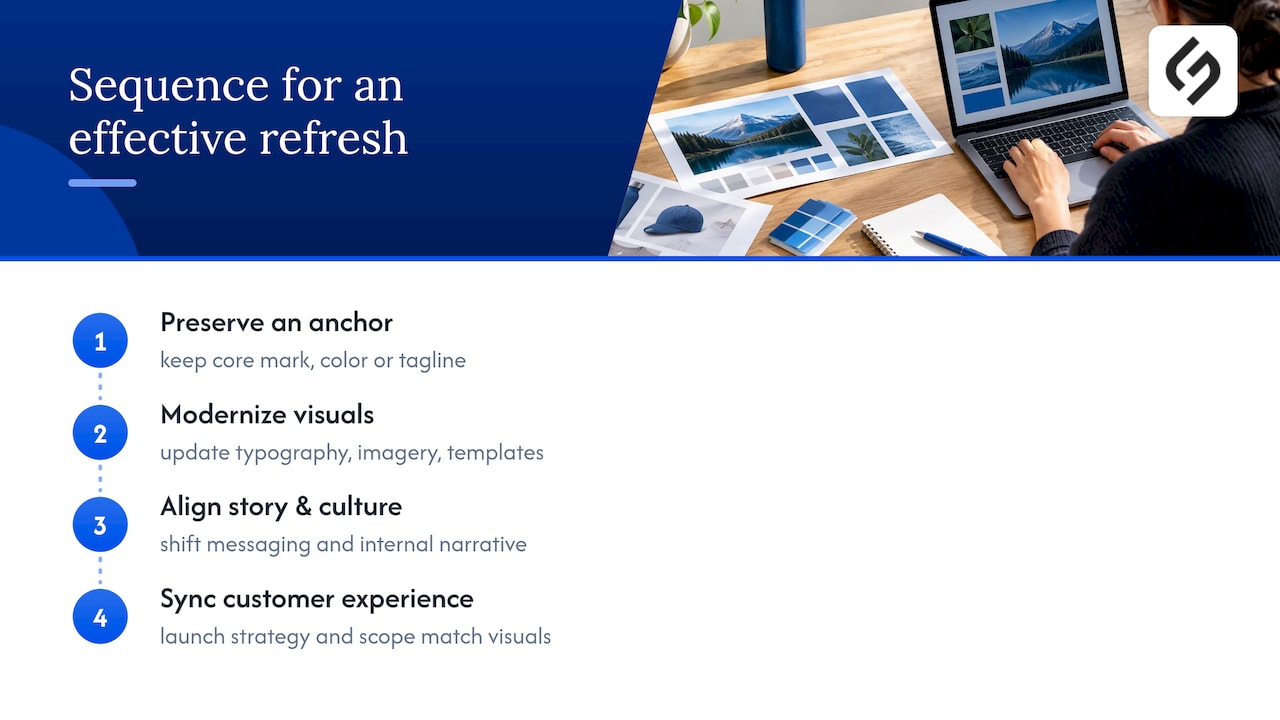
The clearest lesson from documented refresh cases is that preserving a recognizable anchor, while modernizing everything around it, protects the equity a brand has already built. Research on corporate brand updates found that launch strategy and scope of change materially affect how customers perceive the magnitude of a refresh, even when the underlying brand strategy stays the same.
In practice, this plays out in a recognizable pattern: a company keeps its core mark, its signature color, or a familiar tagline structure, while updating typography, imagery, and digital templates around it. Customers register the brand as “improved” rather than “different,” which is the outcome most refreshes are aiming for.
The common thread across effective refreshes is sequencing. Effective refreshes reimagine product, story, culture, and customer experience together, rather than treating a new logo as the finish line. When a visual update lands without a matching shift in messaging or customer experience, the refresh tends to feel cosmetic and fails to move the metrics leadership was hoping to influence. When all four elements move together, even a modest visual change reads as meaningful progress to customers and employees alike.
Impact on Customer Perception and Brand Equity
Customers do not evaluate a refresh against a blank slate. They compare it against years of accumulated association with the old identity, which means the goal is addition, not replacement.
Preserving signals of existing equity matters more than most leadership teams expect going in. Preserving an iconic mark, a core color, or a signature voice while adding modern treatments helps minimize recognition loss, which is why abrupt, total overhauls carry more risk than incremental modernization.
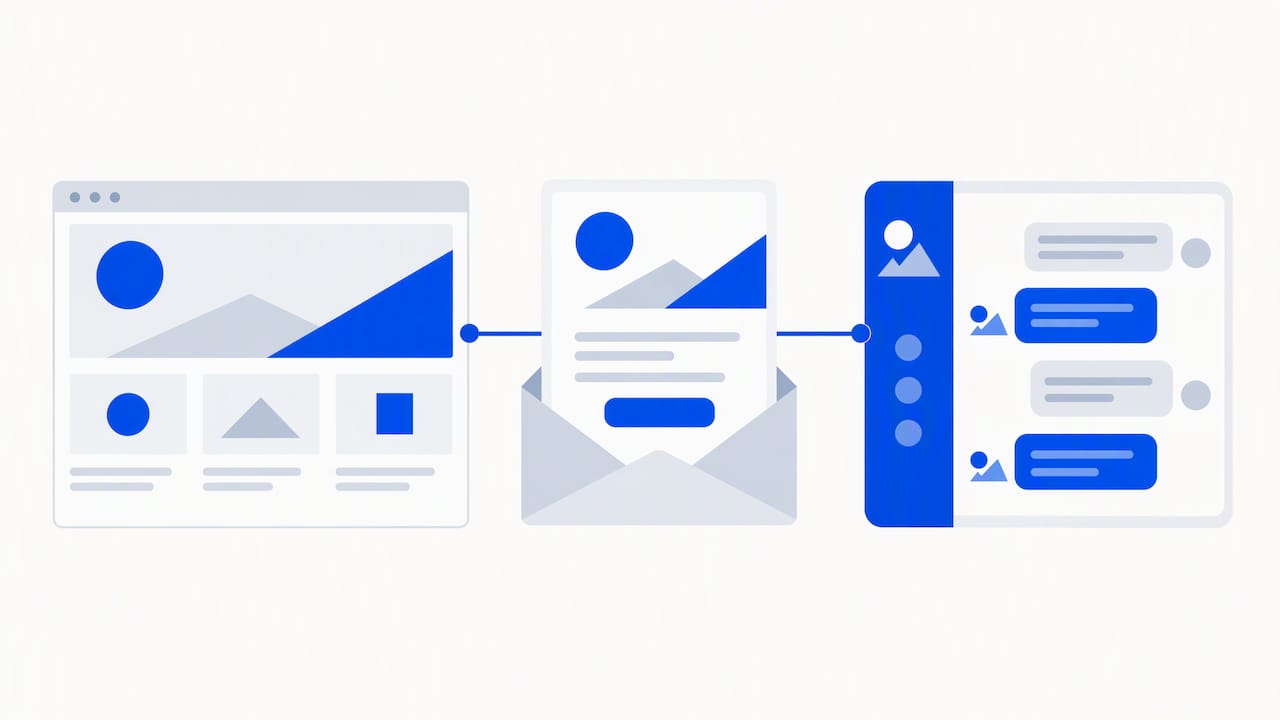
Perception shifts also depend on consistency across touchpoints. A customer who sees a refreshed website but an outdated email template, or a support team still using old terminology, notices the mismatch faster than any single design choice. That inconsistency erodes trust in the refresh itself, independent of whether the new design is objectively better. Brand equity, in this sense, is less about the strength of a new logo and more about whether every touchpoint tells the same updated story at the same time.
Communicating the Refresh to Employees
Employees are the first audience for a refresh, not the last. A refresh that reaches customers before staff understand it creates confusion at exactly the touchpoints, sales calls and support tickets, where consistency matters most.
Effective internal communication typically follows a sequence: leadership explains the business reasons behind the refresh before anyone sees new visuals, department heads get early access to new messaging and guidelines so they can answer questions, and customer-facing teams receive practical training on new terminology before launch day. Operational alignment, not a single announcement email, is what a successful refresh realigns around, teams and touchpoints matching current business operations rather than lagging behind them.
Giving employees a clear reason for the change, tied to business goals rather than aesthetics, also reduces internal resistance. Staff who understand why a refresh is happening tend to adopt new messaging faster than those who are simply handed a new style guide.
A Leadership Note on Managing the Politics of a Refresh
The hardest part of a refresh is rarely the design. It is the attachment someone on the leadership team has to the old logo, the old tagline, the old way of describing the business. Pilots solve this better than arguments: show a small, measurable result before asking anyone to let go of something they built. If a proposed change cannot survive a two-week pilot on real traffic, it probably was not ready for a full rollout anyway.
— Vadim
How We Can Support Your Brand Refresh
A brand refresh succeeds or stalls based on execution across digital systems, and that is a critical part of the project. We handle key pieces that often cause delays: website redesign, UI and UX work, SEO continuity, and CRM or marketing automation alignment to support consistent messaging delivery.
Our services that directly support a refresh include:
- Custom web development and UI/UX design for rebuilding templates around new messaging.
- SEO and digital marketing to protect and grow visibility through the transition.
- AI and automation solutions to keep customer communication consistent across channels.
- CRM and SaaS integrations, including platform implementation and data migration, to help refreshed messaging reach every customer touchpoint.
Engagements typically begin with a project-specific scoping conversation rather than a template proposal, as surface refreshes and full digital rebuilds call for different teams and timelines; exploring how to design your office for growth can further align your physical space with your refreshed brand identity. If you are weighing whether your brand needs an update, start with our services overview to see which part of the process fits your situation, or review our audit-driven website redesign checklist for a structured starting point.
FAQ
What is a brand refresh in simple terms?
A brand refresh is an update to how a brand looks and communicates, covering things like logo details, color palette, typography, and messaging, without changing the company’s name or core strategy. It keeps what customers already recognize while modernizing the details around it.
What is the main difference between a brand refresh and a rebrand?
A refresh updates the expression of an existing identity, while a rebrand changes the foundation itself, often the name or market positioning. Brand refreshes modernize appearance and maintain relevance without changing core strategy or name, which is the clearest line between the two.
How long does a typical brand refresh take?
Timelines vary with scope, but a moderate refresh covering messaging, website templates, and core visual assets generally takes several weeks to a few months from audit to full rollout. Governance and optimization work typically continues for a few quarters after launch.
What usually triggers the need for a brand refresh?
Common triggers include changing competition, new audiences, new products or pricing, internal reorganization, or an identity that no longer matches current perception. Five reasons commonly justify a refresh, and more than one is often present at the same time.
Can a brand refresh hurt existing customer recognition?
It can, if changes happen abruptly across every touchpoint at once without preserving familiar signals. Preserving an iconic mark, a core color, or a signature voice while modernizing everything around it helps minimize recognition loss, which is why incremental, tested rollouts tend to outperform sudden overhauls.
Sources
- Brand Refresh: Definition, Benefits, and 6 Steps (Shopify)
- The decision to refresh a brand isn’t creative — it’s operational (Forbes, 2025)
- 4 elements of a successful brand refresh (Harvard Business Review)
- Retaining existing brand equity when refreshing global corporate brands : Case Nokia