AI in Fleet Tracking: How Are Predictive Maintenance and Analytics Transforming Fleet Operations?

The average commercial fleet vehicle costs operators thousands of dollars every time it breaks down unexpectedly — not just in repair bills, but in missed deliveries, idle drivers, and damaged customer relationships. Traditional fleet management approaches handle these problems after they occur. Artificial intelligence changes that equation entirely. Today, AI-powered fleet tracking platforms monitor thousands of data points per vehicle in real time, identify mechanical stress patterns before failures happen, and give fleet managers actionable intelligence they can use to prevent downtime rather than recover from it. This article examines how AI transforms fleet tracking, predictive maintenance, and analytics — and which platforms lead the field in delivering these capabilities.
Table of contents
Quick Summary
| Topic | Key Takeaway |
|---|---|
| What AI fleet tracking is | The use of machine learning, telematics, and predictive analytics to manage vehicle fleets proactively |
| Core AI capabilities | Predictive maintenance, driver behavior analysis, route optimization, fuel analytics, real-time alerting |
| Top platforms covered | Azuga, Verizon Connect, Motive |
| Business impact | Reduced breakdowns, lower fuel costs, improved driver safety, and extended vehicle lifespan |
| Who benefits most | Fleet managers, logistics operators, field service businesses, and transportation companies |
Which Platforms Are Driving AI Innovation in Fleet Tracking?
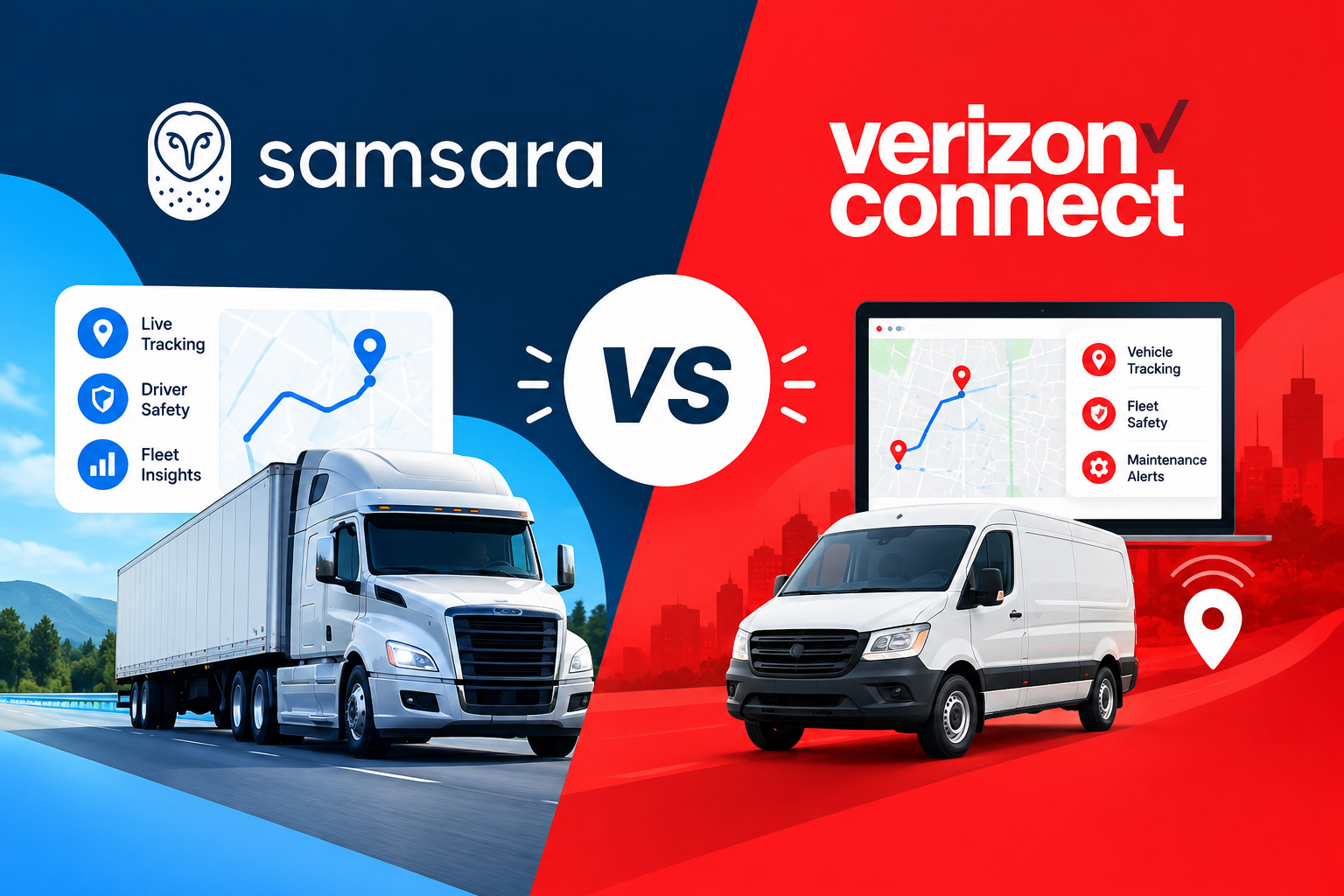
Three fleet management platforms stand at the forefront of AI-powered tracking, predictive maintenance, and analytics: Azuga, Verizon Connect, and Motive. Each serves distinct market segments and delivers AI capabilities through different technical approaches, but all three share a common mission — replacing reactive fleet management with intelligent, data-driven operations. Understanding how each platform applies AI helps fleet managers choose the solution that best matches their operational complexity, fleet size, and performance goals.
How Does Azuga Apply AI to Fleet Tracking and Predictive Maintenance?
Azuga serves small and mid-market fleets with an AI-powered platform that combines GPS tracking, driver behavior scoring, predictive maintenance alerts, and gamification into a single solution. Azuga’s AI engine continuously analyzes OBD-II diagnostic data from each vehicle, identifying fault codes, sensor anomalies, and performance degradation patterns that signal an impending failure. Rather than waiting for a check-engine light to appear, Azuga pushes maintenance alerts to fleet managers before the problem escalates into an emergency repair.
What makes Azuga particularly distinctive is its driver gamification feature — a behavioral AI layer that scores each driver’s performance across metrics including harsh braking, rapid acceleration, speeding, and idle time. Fleet managers use these scores to recognize top performers, coach struggling drivers, and build a safety culture that reduces accident rates organically. Furthermore, Azuga’s reward system incentivizes drivers directly, turning safety compliance from a mandate into a measurable, motivating goal. For smaller operations that lack dedicated safety officers, Azuga’s automated coaching tools provide enterprise-grade behavioral management at a fraction of the cost.
How Does Verizon Connect Deliver Enterprise-Grade Fleet AI?

Verizon Connect targets enterprise fleets with one of the most comprehensive AI and analytics suites in the industry. The platform ingests data from GPS hardware, driver-facing cameras, engine diagnostics, and third-party integrations to build a complete operational picture of every vehicle, every driver, and every route. Verizon Connect’s predictive maintenance module analyzes historical service records alongside real-time sensor data to forecast maintenance windows with high accuracy, enabling fleet managers to schedule service proactively and minimize productive-hour losses.
Verizon Connect also leads the market in route optimization intelligence. Its AI routing engine accounts for real-time traffic conditions, vehicle load, driver hours-of-service compliance, and delivery time windows simultaneously — generating optimal routes that reduce mileage, fuel consumption, and driver overtime. Additionally, Verizon Connect’s dashcam AI detects distracted driving, forward collision risks, and lane departure events in real time, alerting both the driver and the dispatcher before incidents escalate. For large fleet operators managing hundreds of vehicles across multiple regions, Verizon Connect’s depth of analytics and integration breadth make it a natural choice.
How Does Motive Use AI to Protect Drivers and Reduce Fleet Costs?

Motive — formerly KeepTruckin — built its platform around the trucking and logistics industry, where AI-driven safety and compliance features carry especially high stakes. Motive’s AI dashcam technology analyzes driver behavior through computer vision, detecting distraction, fatigue, harsh braking, tailgating, and lane drifting in real time. The system automatically triggers in-cab audio alerts when it detects risky behavior, giving drivers immediate corrective feedback rather than waiting for a post-trip review.
Beyond safety, Motive’s AI platform delivers powerful predictive maintenance capabilities by analyzing fault codes and engine telemetry across its large fleet data network. Because Motive processes data from hundreds of thousands of commercial vehicles, its AI models benefit from an unusually large training dataset — allowing the system to identify subtle failure precursors that less data-rich platforms might miss. Furthermore, Motive integrates deeply with transportation management systems (TMS), dispatch software, and payroll platforms, creating a connected operational hub that eliminates the data silos that typically fragment fleet management workflows.
What Is AI-Powered Fleet Tracking and How Does It Differ from Traditional Telematics?
Traditional telematics systems record and report historical data — where a vehicle went, how fast it traveled, and when it stopped. Fleet managers receive this information after the fact and use it to generate reports or investigate incidents that already occurred. AI-powered fleet tracking fundamentally changes this model by shifting from historical reporting to real-time intelligence and predictive action.
What Data Does AI Fleet Tracking Collect and Analyze?
Modern AI fleet platforms ingest data from multiple simultaneous sources, including GPS location signals, engine control unit (ECU) parameters, OBD-II diagnostic ports, accelerometer data, driver-facing and road-facing cameras, fuel sensors, and third-party traffic and weather feeds. Individually, each data stream provides limited insight. Together, AI algorithms process these streams in combination to detect patterns, anomalies, and correlations that no human analyst could identify across an entire fleet in real time.
For example, an AI system might notice that a specific vehicle’s engine coolant temperature consistently runs two degrees above its fleet peers during long highway runs, that its fuel efficiency has declined 3% over the past month, and that a fault code appeared and cleared twice without triggering a full alert. Taken together, these signals indicate a developing cooling system problem. Azuga, Verizon Connect, and Motive all use this type of multi-signal correlation to generate predictive maintenance alerts weeks before a vehicle would otherwise fail roadside.
How Does Machine Learning Improve Fleet Analytics Over Time?
Unlike static rule-based systems that trigger alerts only when predefined thresholds are crossed, machine learning models improve continuously as they process more data. Each vehicle failure, near-miss, or successfully predicted maintenance event adds to the model’s training data, making future predictions more accurate. Motive’s platform benefits particularly from this dynamic because its large user base generates an enormous volume of real-world training examples across diverse vehicle types, climates, and operating conditions.
Furthermore, AI models personalize their analysis to individual vehicles over time. A ten-year-old delivery van operating in stop-and-go urban traffic develops a very different performance baseline than a new long-haul truck on interstate routes. Machine learning models account for these individual differences, generating alerts calibrated to each specific vehicle’s normal operating envelope rather than applying fleet-wide averages that miss vehicle-specific anomalies. This personalization makes AI-driven maintenance recommendations substantially more actionable than generic mileage-based service schedules.
How Does AI Predictive Maintenance Work in Fleet Management?

Predictive maintenance represents one of the highest-value applications of AI in fleet operations. Rather than servicing vehicles on fixed schedules or waiting for failures to occur, AI predictive maintenance monitors actual vehicle condition continuously and recommends service interventions at precisely the right time — before failures happen but after components have genuinely degraded to the point where maintenance is necessary.
| Maintenance Approach | Average Downtime | Cost Impact |
|---|---|---|
| Reactive (fix when broken) | 3–5 days per incident | High — emergency repairs + towing |
| Scheduled (time-based) | 1–2 days planned downtime | Moderate — some unnecessary work |
| Predictive (AI-driven) | Hours — planned intervention | Low — targeted, just-in-time repairs |
What Vehicle Systems Does AI Monitor for Predictive Failures?
AI fleet platforms monitor a broad range of vehicle systems simultaneously. The most common predictive maintenance use cases include:
- Engine health — oil pressure trends, coolant temperature patterns, fuel injection anomalies, and exhaust system performance
- Brake system — brake pad wear estimation through deceleration pattern analysis, brake fluid pressure monitoring
- Transmission — shift pattern irregularities, fluid temperature trends, and torque converter performance signals
- Tire health — pressure monitoring combined with fuel efficiency patterns to detect slow leaks before blowouts occur
- Battery and electrical systems — voltage fluctuation patterns that indicate alternator or battery degradation
- Exhaust and emissions — DPF filter loading, EGR valve performance, and emissions sensor drift
Verizon Connect‘s enterprise platform covers the widest range of these systems, particularly for mixed fleets that include light-duty vehicles, medium-duty trucks, and heavy commercial vehicles. Azuga focuses primarily on OBD-II accessible parameters, making it well-suited for newer fleets with standardized vehicle communication protocols. Motive excels specifically in heavy-truck diagnostics, where its deep integration with commercial vehicle J1939 data buses unlocks fault code analysis beyond what standard OBD-II interfaces provide.
How Do Maintenance Alerts Reach Fleet Managers in Practice?
All three platforms deliver maintenance alerts through multiple channels to ensure fleet managers act before failures occur. Managers receive push notifications through mobile apps, email alerts with diagnostic details, and dashboard flags that appear when they log into the platform. Crucially, alerts arrive with context — not just a warning that something is wrong, but an explanation of which vehicle triggered the alert, what specific parameter is trending abnormally, what the likely failure mode is, and how urgently the vehicle needs attention.
Azuga‘s alerts integrate directly with maintenance management workflows, allowing dispatchers to schedule service appointments from within the same platform that flagged the issue. Verizon Connect connects maintenance alerts to its work order management module, automatically generating service tickets that route to the appropriate repair facility. Motive pushes fault code details to mechanics in a format that accelerates diagnosis, reducing the time technicians spend identifying the root cause before beginning repairs. Together, these workflow integrations transform AI alerts from passive notifications into active maintenance management tools.
How Does AI Analyze Driver Behavior and Why Does It Matter for Fleet Safety?
Driver behavior accounts for a significant portion of fleet costs and risks. According to the National Highway Traffic Safety Administration, driver error contributes to approximately 94% of serious crashes. Consequently, AI-powered driver behavior analysis represents one of the most direct paths to reducing fleet accident rates, insurance premiums, and liability exposure.
What Driver Behaviors Does AI Fleet Tracking Detect?
Modern AI fleet platforms detect and score a comprehensive range of driving behaviors through accelerometer data, GPS speed analysis, and computer vision from dashcams. The behaviors that AI systems monitor most consistently include:
- Harsh braking — sudden deceleration events that indicate following too closely or inattentive driving
- Rapid acceleration — aggressive starts that increase fuel consumption and mechanical wear
- Speeding — sustained speed violations and excessive speed in context of road type
- Harsh cornering — lateral G-force events that stress tires and suspension components
- Mobile phone distraction — detected through dashcam AI that identifies phone use while driving
- Drowsiness and fatigue — eye closure patterns and head position analysis from driver-facing cameras
- Seatbelt compliance — camera-based detection of unbelted drivers
- Extended idling — engine-on periods with zero movement that waste fuel and increase emissions
Motive‘s AI dashcam system leads the industry in the depth of computer vision-based behavior detection, particularly for fatigue and distraction. Verizon Connect combines dashcam AI with vehicle sensor data to generate composite behavior scores that reflect overall driving quality more comprehensively than camera-only or sensor-only approaches. Azuga‘s gamification layer transforms raw behavior scores into competitive leaderboards and rewards, creating a driver engagement model that sustains behavioral improvement over time rather than producing short-term compliance spikes.
What Impact Does Driver Coaching Have on Fleet Performance Metrics?
Fleet operators who implement structured AI-driven driver coaching programs consistently report measurable improvements across multiple performance dimensions. Industry data from the American Transportation Research Institute and fleet platform case studies indicate that sustained driver coaching programs deliver:
- 20–25% reduction in accident frequency within 12 months of program launch
- 10–15% improvement in fuel efficiency as aggressive driving behaviors decline
- Meaningful reductions in vehicle wear-and-tear costs, particularly for brakes and tires
- Lower insurance premiums — many commercial auto insurers offer discounts for fleets using AI monitoring
- Reduced driver turnover, as safety-focused coaching cultures correlate with higher job satisfaction
The key to realizing these benefits lies in combining AI detection with consistent manager follow-through. Platforms like Azuga, Verizon Connect, and Motive provide the data; fleet managers provide the coaching conversations, incentive structures, and accountability that translate data into behavioral change. Organizations that use AI data as a coaching tool rather than a surveillance mechanism consistently achieve better long-term results than those that use it primarily for disciplinary purposes.
How Do AI Route Optimization and Fuel Analytics Reduce Operating Costs?

Fleet fuel costs represent one of the largest controllable expense categories for transportation and logistics businesses. The U.S. Energy Information Administration reports that fuel accounts for 24–39% of total trucking operating costs depending on route type and vehicle class. AI route optimization and fuel analytics directly attack this expense through more intelligent planning and real-time operational adjustments.
How Does AI Route Optimization Differ from Standard GPS Navigation?
Standard GPS navigation optimizes for travel time based on distance and real-time traffic data. AI route optimization goes considerably further. Enterprise platforms like Verizon Connect factor in vehicle load weight and its effect on fuel consumption, driver hours-of-service compliance windows, delivery time commitments, customer priority levels, vehicle type and fuel efficiency curves, and historical traffic patterns by time of day and day of week — simultaneously, across an entire fleet.
The result is routing that minimizes not just time or distance, but total operating cost per delivery. A route that adds five miles but avoids highway congestion during school dismissal hours might save 15 minutes of drive time, reduce idle time significantly, and keep the driver within hours-of-service limits without requiring a rest break. Azuga‘s route tools work well for smaller fleets with straightforward delivery patterns. Verizon Connect‘s optimization engine handles the complexity of large-scale routing problems that smaller platforms cannot process efficiently.
What Insights Do AI Fuel Analytics Provide Beyond Miles Per Gallon?
AI fuel analytics moves well beyond simple miles-per-gallon calculations to identify the specific behaviors, routes, and conditions that drive fuel waste. The most actionable fuel insights that Azuga, Verizon Connect, and Motive generate include:
- Idle cost attribution — calculating the exact fuel dollar cost of idling by vehicle, driver, and location
- Speed-efficiency curves — identifying the optimal speed range for each vehicle type on different road categories
- Route fuel benchmarking — comparing actual fuel consumption per route against the expected consumption for that route and load
- Driver fuel ranking — ranking drivers by fuel efficiency to identify outliers for coaching
- Maintenance-fuel correlation — connecting degraded fuel efficiency to specific mechanical conditions that predictive maintenance alerts can address
Motive‘s fuel analytics platform provides particularly granular fuel cost reporting for trucking fleets, where fuel efficiency differences of even 0.5 miles per gallon translate into thousands of dollars per vehicle per year. Verizon Connect builds fuel analytics into its broader operational dashboards, giving executives a top-line view of fleet fuel performance alongside maintenance costs and driver safety metrics. Azuga presents fuel data in accessible visualizations that small fleet managers can act on without needing a dedicated analyst to interpret the reports.
How Does AI Fleet Technology Support Regulatory Compliance?
Fleet operators in the United States face a complex regulatory environment managed primarily by the Federal Motor Carrier Safety Administration (FMCSA). AI fleet platforms simplify compliance by automating record-keeping, alerting managers to violations before they generate penalties, and providing audit-ready documentation that protects operators during FMCSA inspections.
What Compliance Functions Do Azuga, Verizon Connect, and Motive Automate?
All three platforms carry FMCSA-certified Electronic Logging Device (ELD) functionality, which automatically records driver hours of service and generates compliant logs without manual input. Beyond ELD, each platform addresses additional compliance requirements:
- Hours of service (HOS) violation alerts — real-time warnings when drivers approach or exceed legal driving limits
- Driver Vehicle Inspection Reports (DVIR) — electronic pre- and post-trip inspections that replace paper logs
- International Fuel Tax Agreement (IFTA) reporting — automated mileage tracking by jurisdiction for fuel tax filings
- DOT roadside inspection readiness — instant access to all required documents through mobile driver apps
- Driver qualification file management — tracking license expiration, medical certificate renewal dates, and training requirements
Motive‘s compliance suite serves trucking operations with particularly comprehensive HOS and ELD functionality, reflecting its heritage as a purpose-built trucking platform. Verizon Connect handles compliance for mixed fleets that include both regulated and non-regulated vehicles, providing flexible compliance configurations for operations that span multiple vehicle classes. Azuga‘s compliance tools address the needs of smaller commercial operations that need FMCSA compliance without the complexity of enterprise-grade systems.
How Do Azuga, Verizon Connect, and Motive Compare Across Key AI Features?
The table below provides a direct side-by-side comparison of the three platforms across the dimensions most relevant to AI fleet tracking, predictive maintenance, and analytics:
| Feature | |  |  |
|---|---|---|---|
| Target Market | SMBs & mid-market fleets | Enterprise & large fleets | SMB to enterprise, trucking focus |
| Predictive Maintenance | Yes — AI-driven alerts | Yes — advanced diagnostics | Yes — fault code analysis |
| Driver Behavior Scoring | Yes — gamification included | Yes — detailed scoring | Yes — AI dashcam scoring |
| AI Dashcam | Yes | Yes | Yes — industry-leading AI cam |
| Route Optimization | Yes | Yes — enterprise-grade | Yes |
| Fuel Analytics | Yes | Yes | Yes |
| ELD Compliance | Yes — FMCSA certified | Yes — FMCSA certified | Yes — FMCSA certified |
| Integrations | Maintenance & dispatch tools | Wide enterprise ecosystem | TMS, dispatch, payroll |
| Best For | Cost-conscious fleets wanting gamification | Large operations needing deep analytics | Trucking & logistics AI features |
What Return on Investment Can Fleets Expect from AI Tracking Technology?

Fleet managers evaluating AI tracking platforms naturally ask what the technology actually delivers in financial terms. While ROI varies by fleet size, vehicle type, and operational complexity, industry research from multiple credible sources establishes clear benchmarks:
| Metric | Industry Benchmark | Source |
|---|---|---|
| Reduction in unplanned breakdowns | Up to 30% | McKinsey & Company, 2023 |
| Fuel cost savings via AI routing | 10–15% per vehicle | American Transportation Research Institute |
| Accident reduction via driver scoring | 20–25% | NHTSA Fleet Safety Report, 2023 |
| Maintenance cost reduction | 10–40% depending on fleet age | Deloitte Insights, 2022 |
| Fleet ROI payback period | Typically 6–18 months | Frost & Sullivan Fleet Technology Report |
These figures reflect industry averages across fleet sizes and sectors. Individual results depend heavily on baseline conditions — a fleet with high accident rates and reactive maintenance practices typically sees larger percentage improvements than a well-managed operation already running efficiently. However, even mature operations that implement AI analytics consistently identify optimization opportunities that deliver positive ROI within 12 to 18 months.
How Quickly Do Fleets Typically See Results After Implementation?
Implementation timelines and time-to-value vary by platform and fleet complexity. Azuga typically achieves full deployment for small-to-medium fleets within two to four weeks, with fuel and driver behavior improvements appearing in the first month of operation as managers begin using coaching tools. Verizon Connect implementations for enterprise fleets involve longer configuration and integration work — typically four to twelve weeks — but deliver more comprehensive analytics from day one due to the platform’s deeper data integration architecture. Motive‘s plug-and-play hardware and mobile-first design enable rapid deployment, with many trucking operations reporting ELD compliance and basic AI alerting active within days of hardware installation.
Regardless of platform, the fleets that achieve the fastest ROI share a common characteristic: they commit to using the data, not just collecting it. Fleet managers who review driver behavior reports weekly, act on predictive maintenance alerts within 48 hours, and use fuel analytics to adjust routing decisions consistently outperform those who deploy the technology but maintain reactive operational habits. The AI generates the intelligence; the fleet manager translates that intelligence into operational action.
What Conclusions Should Fleet Managers Draw About AI Tracking Technology?
AI-powered fleet tracking, predictive maintenance, and analytics represent a fundamental shift in how fleet operations generate value. The transition from reactive management to predictive intelligence does not just reduce costs — it transforms fleet management from a cost center into a competitive differentiator that enables faster deliveries, higher service reliability, and better driver experiences.
Three core conclusions emerge from this analysis:
- Predictive maintenance delivers the fastest financial returns. Preventing a single roadside breakdown pays for months of platform subscription costs. Azuga, Verizon Connect, and Motive each deliver predictive maintenance capabilities suited to different fleet types — Azuga for smaller fleets prioritizing ease of use, Verizon Connect for enterprise operations needing deep diagnostic integration, and Motive for trucking and logistics operations where commercial vehicle diagnostics matter most.
- Driver behavior AI multiplies safety and efficiency gains simultaneously. The same AI systems that reduce accidents also reduce fuel costs and vehicle wear. Motive’s computer vision AI leads in real-time safety intervention. Azuga’s gamification approach sustains behavioral improvement over time. Verizon Connect provides the most comprehensive scoring for large workforces where consistent driver performance management is a strategic priority.
- Analytics maturity determines long-term ROI. Platforms that connect maintenance data, driver behavior, route efficiency, and fuel consumption into unified analytics dashboards enable better decisions at every level of the organization — from dispatchers optimizing daily routes to executives evaluating fleet renewal cycles. Verizon Connect leads in enterprise analytics depth. Azuga and Motive provide accessible analytics that smaller operations can act on without dedicated data analysis resources.
The technology to transform your fleet operations exists today. Azuga, Verizon Connect, and Motive each offer free demos and trial periods that allow fleet managers to evaluate real platform capabilities against their specific operational needs.
Frequently Asked Questions
Data privacy in AI fleet tracking requires careful policy design that balances operational transparency with driver rights. Azuga, Verizon Connect, and Motive all offer configurable privacy modes that allow fleet managers to define when tracking is active — for example, disabling location tracking outside of working hours for employees who drive company vehicles home. Most platforms also provide drivers with access to their own performance data through mobile apps, promoting transparency rather than surveillance. Fleet managers should establish clear written policies that explain what data is collected, how it is used, who can access it, and how long it is retained. Many states have enacted specific commercial driver privacy regulations, and consulting with a legal advisor before deployment ensures compliance with applicable state laws.
Telematics refers to the collection and transmission of data from vehicles — GPS coordinates, speed, engine data, and similar telemetry. AI fleet analytics refers to what you do with that data. Basic telematics platforms collect and display raw data for human interpretation. AI analytics platforms process that data through machine learning algorithms to detect patterns, generate predictions, and recommend actions automatically. The distinction matters enormously in practice. A telematics system tells you that a vehicle’s engine temperature spiked yesterday. An AI analytics platform tells you that this vehicle’s temperature trend over the past three weeks matches the pattern that preceded failures in 87% of similar vehicles — and recommends scheduling service within the next five days. Azuga, Verizon Connect, and Motive all operate as AI analytics platforms rather than basic telematics systems, which is why their value proposition extends far beyond simple GPS tracking to genuine predictive intelligence.
How Does Solution for Guru Help Fleet Businesses Implement AI Tracking Platforms?
Solution for Guru is an independent business advisory consultancy that helps companies evaluate, implement, and optimize technology platforms — including AI fleet tracking solutions. When fleet managers face the challenge of selecting among Azuga, Verizon Connect, Motive, and other competing platforms, Solution for Guru provides a structured evaluation process that matches platform capabilities to specific operational requirements rather than defaulting to the most popular or most heavily marketed option.
What Specific Benefits Do Fleet Businesses Gain from Working with Solution for Guru?
- Platform Selection Guidance — Solution for Guru’s advisors evaluate your fleet size, vehicle mix, compliance requirements, and analytics goals to identify which platform delivers the strongest fit — preventing the costly mistake of deploying a platform that works well for other businesses but not your specific operation.
- Implementation Project Management — deploying GPS hardware across a fleet, integrating telematics data with existing dispatch and maintenance systems, and training drivers and managers on new tools requires careful coordination. Solution for Guru manages this complexity so your team stays focused on operations.
- Integration Architecture — connecting Azuga, Verizon Connect, or Motive with your existing TMS, ERP, maintenance management, or HR systems requires technical expertise. Solution for Guru designs and executes these integrations to create the unified data environment where AI analytics deliver their full value.
- Driver Adoption Programs — technology investment fails without driver adoption. Solution for Guru designs change management programs that help drivers understand the purpose of AI monitoring, engage with coaching feedback, and support the safety culture that makes behavior analytics work.
- Ongoing Performance Reviews — as your fleet grows and operational patterns evolve, your platform configuration needs regular review. Solution for Guru conducts periodic audits that identify new optimization opportunities and ensure your AI tools remain aligned with current business objectives.
Ultimately, the difference between a fleet technology deployment that delivers transformative results and one that becomes shelfware often comes down to the quality of implementation and ongoing engagement. Solution for Guru provides the expert guidance that turns platform investment into measurable operational improvement.
Recommended
- Top Benefits of GPS Vehicle Tracking Fleet Management Solutions for Modern Businesses
- Vehicle Tracking Online
- Business Vehicle Tracking: Boosting Efficiency and Accountability on the Road
- Auto and Renters Insurance Bundle
- Preferred Auto Insurance Companies
- How to Get Auto Insurance Online
- Auto Insurance for Farms
- Auto International Insurance
- Comparing Commercial Auto Insurance
- The Top Commercial Auto Insurance Options