How Food Truck Owners Can Benefit from Commercial Auto Insurance
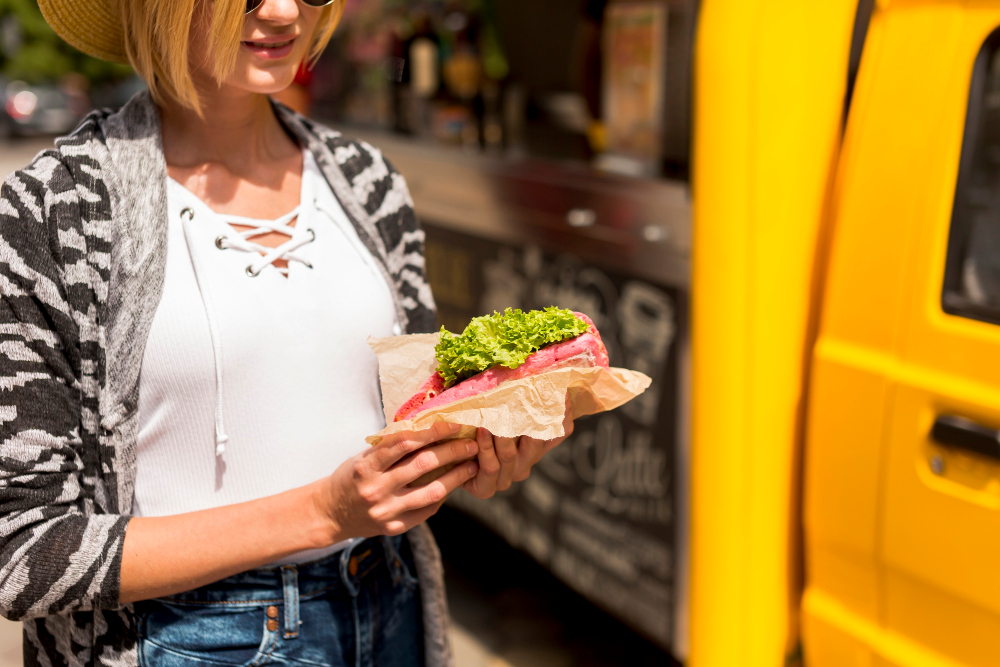
Running a food truck means juggling flavors, permits, locations, and customers — all while operating a commercial vehicle in some of the busiest urban environments in the country. Every mile your truck travels carries financial risk that a standard personal auto policy simply does not cover. Commercial auto insurance bridges that gap, and for food truck operators, it is not just a smart business decision — in most states, it is a legal requirement. This guide breaks down exactly why commercial auto coverage matters, what it includes, and how two leading insurance providers — BiBerk and Progressive — help food truck owners protect everything they have built.
Table of contents
What Does This Guide Cover at a Glance?
Here is a quick overview of the key topics covered throughout this article:
- Why personal auto insurance fails to protect food truck businesses
- The specific commercial auto coverages food truck owners need most
- How BiBerk and Progressive serve the food truck insurance market
- A side-by-side coverage and cost comparison table
- The real financial risks of operating without adequate commercial coverage
- How Solution for Guru helps food truck owners find and manage the right policies
- Frequently asked questions on food truck insurance requirements and costs
Which Insurance Companies Lead the Market for Food Truck Commercial Auto Coverage?
Two companies consistently stand out when food truck owners research commercial auto insurance: BiBerk and Progressive. Both carriers understand the unique operational profile of mobile food businesses — vehicles that serve as both transportation and workspace — and both offer policies designed specifically for commercial use. Below, we examine how each company connects to the food truck insurance landscape.
How Does BiBerk Help Food Truck Owners Manage Commercial Auto Risk?
BiBerk is a Berkshire Hathaway Insurance Group company, which means food truck owners benefit from the financial strength and claims-paying reliability of one of the most stable insurance organizations in the world. BiBerk focuses specifically on small business insurance, offering commercial auto policies that cover the full spectrum of risks food truck operators face every day.
What sets BiBerk apart is its direct-to-business model. Rather than working through agents and adding commission layers to premiums, BiBerk sells directly online, which typically saves small business owners 20% or more compared to traditional carriers. Food truck owners can get a quote, customize coverage, and bind a policy entirely online in under 30 minutes — a major practical advantage for entrepreneurs who spend their days behind a steam table rather than behind a desk.
Furthermore, BiBerk offers business owner policies (BOPs) that bundle commercial auto coverage with general liability and commercial property in a single, cost-effective package. For food trucks that carry expensive equipment — generators, refrigeration units, cooking appliances — this bundling approach ensures comprehensive protection without managing multiple separate policies. Learn more and get a quote here:
Why Do So Many Food Truck Owners Choose Progressive for Commercial Auto Coverage?

Progressive ranks as the largest commercial auto insurer in the United States, according to the National Association of Insurance Commissioners (NAIC). That market leadership translates directly into advantages for food truck operators: deep underwriting expertise in mobile commercial vehicles, competitive pricing driven by massive data pools, and a claims network with nationwide reach.
Progressive’s commercial auto policies for food trucks cover liability, collision, comprehensive, medical payments, and uninsured motorist protection — the full suite that any serious food truck operator needs. Additionally, Progressive offers usage-based and snapshot programs that reward safe driving with lower premiums over time. For food truck owners who log relatively modest annual mileage but face high urban traffic density, these programs can deliver meaningful savings.
Progressive also excels in customer support infrastructure. With a 24/7 claims reporting line, dedicated commercial claims specialists, and a robust mobile app, food truck owners can handle insurance matters quickly — even in the middle of a busy lunch service. Explore Progressive’s commercial auto options here:
Why Do Food Truck Owners Specifically Need Commercial Auto Insurance?
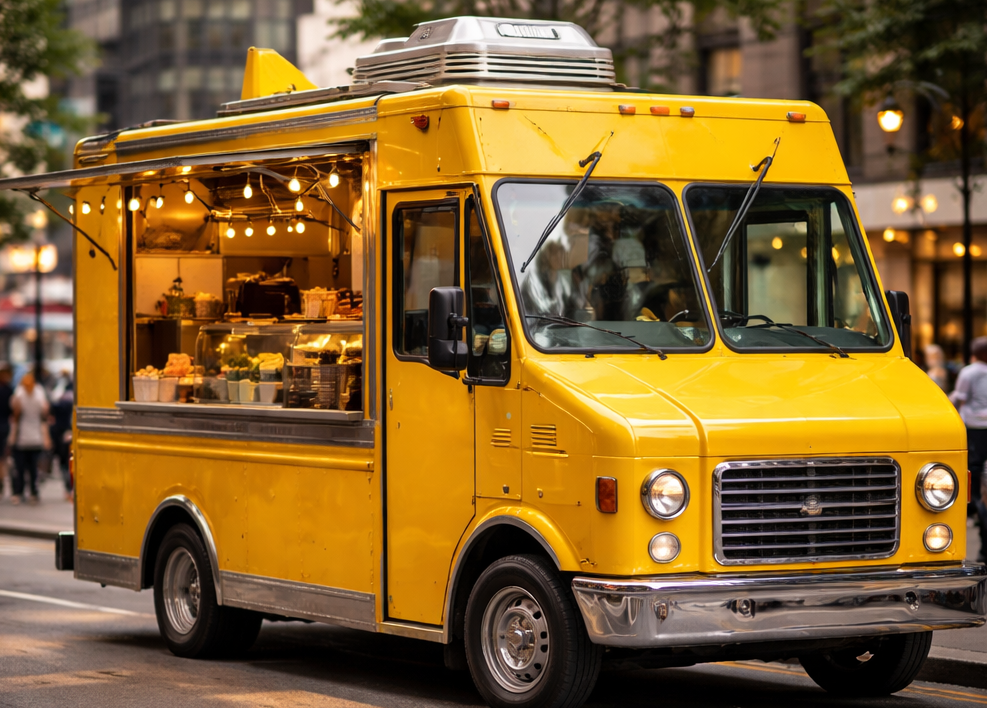
Many food truck owners make the costly mistake of assuming their personal auto insurance covers their truck. It does not. Personal auto policies explicitly exclude vehicles used for business purposes, including transporting commercial equipment, traveling to paid events, or earning income from the vehicle in any way. The moment a food truck owner drives to a catering gig or sets up at a festival, their personal policy effectively becomes void for that trip.
Consequently, a single accident — even a minor fender-bender in a parking lot — can expose a food truck owner to devastating out-of-pocket costs. Without commercial coverage, the owner personally absorbs liability claims, vehicle repair costs, and legal fees. For a small business running on thin margins, that financial exposure can mean permanent closure. Commercial auto insurance eliminates that vulnerability entirely.
What Makes Food Trucks Riskier to Insure Than Regular Commercial Vehicles?
Food trucks face a genuinely unique risk profile compared to typical commercial vehicles like delivery vans or company cars. First, they operate in high-traffic urban environments — street corners, festivals, farmers markets, and downtown business districts — where the probability of a collision or pedestrian incident is significantly higher than on rural or suburban routes.
Second, food trucks carry expensive, specialized equipment that travels with the vehicle. A commercial kitchen on wheels might contain $15,000 to $50,000 worth of cooking equipment, refrigeration systems, point-of-sale technology, and food inventory. Standard commercial auto policies may not cover equipment damage without specific endorsements, which is why understanding coverage scope is critical.
Third, food trucks often employ staff — cashiers, cooks, servers — who may drive the truck or work in close proximity to traffic. This creates workers compensation exposure in addition to the vehicle liability risk. Together, these factors make food truck insurance more complex than simply insuring a cargo van, and they justify the need for policies specifically designed for mobile food operations.
What Are the Core Commercial Auto Coverages Every Food Truck Owner Needs?
Understanding your coverage options helps you build a policy that genuinely protects your business rather than just checking a compliance box. Below are the most critical coverage types for food truck operators:
- Commercial Auto Liability — Covers bodily injury and property damage you cause to others in an accident. Most states require minimum liability limits, but food truck owners should carry higher limits given the urban environments they operate in.
- Collision Coverage — Pays to repair or replace your truck after a collision with another vehicle or object, regardless of fault. Given the replacement cost of a custom food truck ($50,000 to $150,000+), this coverage is non-negotiable.
- Comprehensive Coverage — Covers non-collision losses: theft, vandalism, fire, hailstorms, flooding, and falling objects. Food trucks parked overnight in city locations face significant theft and weather risk.
- Uninsured/Underinsured Motorist Coverage — Protects you when an at-fault driver carries insufficient insurance. The Insurance Research Council estimates that roughly 1 in 8 drivers is uninsured, making this coverage essential in urban markets.
- Medical Payments / Personal Injury Protection (PIP) — Covers medical expenses for you and your passengers after an accident, regardless of fault. This speeds up medical cost recovery and reduces the risk of lawsuits.
- Hired and Non-Owned Auto (HNOA) — Covers accidents that occur when employees drive their personal vehicles for business purposes, such as picking up supplies or making deliveries.
How Do BiBerk and Progressive Compare Across Key Coverage Areas?
The table below provides a direct comparison of coverage options available through BiBerk and Progressive, along with estimated annual costs and a need-level indicator for food truck operators specifically. Use this table as a starting point — always confirm current pricing and availability directly with each carrier.
| Coverage Type |  |  | Typical Cost / Year | Food Truck Need Level |
|---|---|---|---|---|
| Commercial Auto Liability | Yes | Yes | $1,200 – $3,500 | Essential |
| Physical Damage (Comp & Collision) | Yes | Yes | $800 – $2,000 | Essential |
| Uninsured Motorist | Yes | Yes | $150 – $400 | Highly Recommended |
| Medical Payments / PIP | Yes | Yes | $100 – $350 | Recommended |
| Hired & Non-Owned Auto | Yes | Yes | $200 – $500 | Recommended |
| General Liability Add-on | Yes (BOP option) | Yes (add-on) | $500 – $1,500 | Essential |
| Equipment Breakdown | Yes (BOP) | Limited | $200 – $600 | Recommended |
| Workers Compensation | Yes | Varies by state | $900 – $3,000 | Required if staff |
| Umbrella / Excess Liability | Yes | Yes | $300 – $800 | Recommended |
Note: Cost estimates reflect industry averages for a single food truck with clean driving history, based on data from the Insurance Information Institute and carrier disclosures. Actual premiums vary based on location, vehicle value, annual mileage, and coverage limits selected.
What Financial Risks Do Food Truck Owners Face Without Adequate Insurance?

The following table illustrates real-world risk scenarios that food truck owners encounter and the staggering financial exposure they create when operating without the right coverage. These figures reflect actual claims data reported by the Insurance Information Institute, the National Restaurant Association, and small business insurance underwriters.
| Risk Scenario | Financial Exposure Without Insurance | Coverage That Protects You |
|---|---|---|
| At-fault collision in city traffic | $15,000 – $80,000+ in damages and injury claims | Commercial Auto Liability |
| Truck totaled by hailstorm overnight | $30,000 – $80,000 replacement cost | Comprehensive Coverage |
| Employee injured in road accident | $20,000 – $150,000+ in medical costs | Workers Compensation / PIP |
| Customer slips and falls at window | $10,000 – $50,000 in liability claims | General Liability Add-on |
| Generator or fryer breaks down mid-event | $2,000 – $8,000 repair + lost revenue | Equipment Breakdown Coverage |
| Hit by uninsured driver while parked | $5,000 – $25,000 in repair costs | Uninsured Motorist Coverage |
As the table clearly demonstrates, a single uninsured event can exceed an entire year of revenue for most food truck businesses. Furthermore, liability claims involving bodily injury frequently trigger legal proceedings that extend the financial impact far beyond the initial incident. Both BiBerk and Progressive design their commercial auto policies specifically to prevent these outcomes.
How Does Location and Route Type Affect Food Truck Insurance Premiums?
Insurance carriers price commercial auto policies based on where and how a vehicle operates. Food trucks that primarily serve downtown urban areas — where traffic density, pedestrian activity, and parking constraints create higher accident probability — pay more than trucks that operate predominantly at rural events or suburban locations. Progressive‘s Commercial Auto division publishes guidance noting that urban territory classifications typically carry premium surcharges of 15% to 35% compared to rural classifications.
Additionally, the number of locations a food truck serves matters. A truck that operates from a fixed spot in a corporate office park five days a week presents a very different risk profile than one that moves between four festivals over a weekend. When you apply for coverage through BiBerk or Progressive, documenting your typical routes and event types accurately ensures your premium reflects your actual risk — and prevents claim denials based on misrepresentation.
Finally, annual mileage plays a direct role in premium calculation. Food trucks that drive long distances between cities for catering events log significantly more miles than neighborhood trucks. Progressive’s mileage-based pricing model rewards low-mileage operators with lower base rates, while BiBerk’s straightforward online quoting process lets operators adjust mileage estimates to see how they affect total premium cost.
How Should Food Truck Owners Handle Insurance When Adding a Second Vehicle?
Many successful food truck operators eventually expand to a second truck, and this milestone creates important insurance decisions. Both BiBerk and Progressive offer commercial fleet policies that cover multiple vehicles under a single policy, which almost always costs less per vehicle than insuring each truck separately. Fleet policies also simplify administration — one renewal date, one payment, one point of contact for claims.
Moreover, adding a second truck typically means adding a second driver. Both BiBerk and Progressive evaluate driver histories for all operators listed on a commercial policy. A driver with a clean commercial driving record can lower your overall fleet premium, while a driver with recent violations or accidents increases it. Consequently, food truck owners should review driver qualification standards before hiring and listing new staff as authorized operators.
When expanding operations, consider also whether your second vehicle needs different endorsements than your first. A refrigerated truck designed for catering deliveries has different equipment values and usage patterns than an open-window street truck. Working with an insurance consultant at this stage — such as the team at Solution for Guru — ensures your fleet policy reflects the actual profile of each vehicle rather than applying a one-size-fits-all approach.
What Steps Should Food Truck Owners Take After a Commercial Auto Accident?
Knowing how to respond to an accident protects both your safety and your insurance claim. The moments immediately following an incident significantly affect the outcome of any claim you file with BiBerk or Progressive. Follow these steps in order:
- Ensure safety first — move to a safe location, check for injuries, and call emergency services if needed
- Document the scene thoroughly — photograph vehicle positions, damage, road conditions, and any visible injuries before moving vehicles
- Exchange information with all involved parties — names, contact details, license numbers, vehicle registration, and insurance information
- Collect witness contact information — bystander accounts often prove critical in disputed liability claims
- Notify your insurance carrier immediately — both BiBerk and Progressive offer 24/7 claims reporting; prompt notification is typically required by policy terms
- Avoid admitting fault at the scene — let the insurance investigation determine liability based on evidence
- Keep records of all follow-up costs — medical visits, rental vehicle expenses, lost revenue from missed events
Both BiBerk and Progressive assign dedicated commercial claims adjusters to food truck incidents, recognizing that the vehicle also represents a place of business. This means your claim evaluation accounts for business interruption impact, not just vehicle repair costs.
How Can Food Truck Owners Reduce Their Commercial Auto Insurance Premiums?
Insurance premiums are not fixed — proactive steps can meaningfully reduce what you pay without sacrificing coverage. The following strategies work effectively with both BiBerk and Progressive:
- Bundle policies — combining commercial auto with general liability through BiBerk’s BOP option typically saves 10% to 20% compared to purchasing coverages separately
- Maintain a clean driving record — both carriers reward incident-free histories with lower renewal rates; consider driver safety training programs for any staff who operate the truck
- Install GPS and telematics — Progressive’s commercial telematics programs monitor driving behavior and reward safe drivers with discounts of up to 15%
- Increase your deductible — raising collision and comprehensive deductibles from $500 to $1,000 can reduce premiums by 10% to 15%, provided you maintain emergency reserves to cover the higher out-of-pocket amount
- Park in secured locations overnight — documented use of gated lots or monitored parking reduces theft and vandalism risk, which carriers factor into comprehensive pricing
- Review coverage annually — as your truck ages and depreciates, adjusting collision coverage limits to reflect current vehicle value prevents you from over-insuring a lower-value asset
What Are the Key Takeaways for Food Truck Owners Considering Commercial Auto Insurance?
Commercial auto insurance is not optional for food truck owners — it is the financial foundation that makes everything else possible. Without it, a single accident can wipe out years of hard work. With the right coverage in place, food truck operators drive confidently, serve customers freely, and build their businesses without the constant threat of catastrophic uninsured loss.
The two carriers examined throughout this article each bring compelling strengths to the food truck insurance market:
- BiBerk delivers the financial security of Berkshire Hathaway backing combined with the convenience of a fully online, direct-to-business model. Its BOP options make it easy for food truck owners to bundle commercial auto with general liability and equipment coverage in a single, cost-efficient policy. Food truck operators who value simplicity, transparency, and competitive pricing find BiBerk’s approach particularly well-suited to their needs.
- Progressive brings the depth of America’s largest commercial auto insurer to every food truck policy. Its data-driven pricing, telematics discount programs, nationwide claims network, and round-the-clock support make it the top choice for food truck owners who want comprehensive coverage from a carrier with proven expertise in mobile commercial vehicles.
Ultimately, the best commercial auto policy is the one that matches your actual operation — your routes, your vehicle value, your staff, your events. That matching process is where professional guidance pays dividends far exceeding its cost. BiBerk and Progressive both offer strong platforms; Solution for Guru helps you choose between them — and configure whichever you select — with precision and confidence.
The food truck industry continues to grow, with IBISWorld reporting consistent annual revenue expansion as consumer demand for diverse, accessible dining options increases. That growth brings opportunity — but it also brings competition, scrutiny, and risk. Commercial auto insurance ensures that when risk shows up, it does not define your story.
Frequently Asked Questions
Yes — in virtually every U.S. state, operating a vehicle for commercial purposes requires commercial auto insurance at minimum liability limits. These requirements apply regardless of whether your food truck operates in a single city or travels across state lines for events. Personal auto policies explicitly exclude commercial use, which means driving your food truck without commercial coverage violates state law in most jurisdictions and exposes you to license suspension, fines, and full personal liability for any accident-related costs. Beyond state requirements, many event venues, festivals, farmers markets, and catering clients require proof of commercial auto and general liability insurance before permitting a food truck on their premises. Consequently, maintaining current commercial auto coverage is not just a legal obligation — it is often a prerequisite for accessing the most lucrative markets and events.
According to data from the Insurance Information Institute and small business insurance market surveys, food truck owners typically pay between $2,000 and $5,000 per year for a comprehensive commercial auto policy that includes liability, collision, comprehensive, and uninsured motorist coverage. However, several factors push premiums higher or lower than this range. Location is the single largest variable. A food truck operating in New York City or Los Angeles pays substantially more than one serving rural county fairs in the Midwest, reflecting the higher accident probability and claim severity in urban markets. Vehicle value, annual mileage, driver history, and selected deductible levels each contribute additional premium variation. BiBerk’s online quoting tool and Progressive’s commercial auto specialists both provide detailed breakdowns of how each factor affects your specific premium — giving food truck owners the transparency they need to optimize coverage costs without reducing essential protection.
How Does Partnering with Solution for Guru Help Food Truck Owners Get the Right Insurance?
Navigating commercial auto insurance as a food truck owner involves more decisions than most entrepreneurs anticipate. The difference between a policy that genuinely protects your business and one that leaves dangerous gaps often comes down to expert guidance — and that is precisely what Solution for Guru delivers. As a business consulting and services firm with deep expertise in insurance planning for small and mobile businesses, Solution for Guru helps food truck owners make confident, informed decisions about their commercial coverage.
| Benefit | How It Helps Food Truck Owners |
|---|---|
| Insurance Needs Assessment | Experts analyze your specific operation — routes, staff count, equipment value — to determine exactly which coverages you need. |
| Carrier Comparison | The team compares BiBerk, Progressive, and other leading carriers side by side so you get the best rate for the right coverage. |
| Policy Gap Identification | Specialists catch dangerous coverage gaps before a claim happens, preventing uninsured losses that could close your business. |
| Claims Guidance | When an accident or incident occurs, Solution for Guru coaches you through the claims process to maximize your recovery. |
| Annual Policy Reviews | As your route grows, staff expands, or you add a second truck, the team updates your coverage to stay current. |
| Bundle Optimization | Experts identify opportunities to bundle commercial auto with general liability and equipment coverage for maximum savings. |
Beyond finding the right policy, Solution for Guru understands the complete financial picture of a food truck business. The team recognizes that every dollar spent on insurance is a dollar not spent on ingredients, equipment, or marketing — which means they optimize for maximum protection at minimum unnecessary cost, rather than simply recommending the most comprehensive (and expensive) option available.
Whether you operate a single truck at local weekend markets or run a multi-vehicle catering operation serving corporate clients, Solution for Guru tailors its guidance to your specific situation. Learn more about working with their team at: www.solution4guru.com
Recommended
- Commercial vs. Personal Auto Insurance: What’s the Difference?
- biBERK vs Progressive Commercial Auto Insurance: Which Is Better?
- Digital Transformation in Commercial Auto Insurance: What’s Next for Businesses?
- Insurance Needs for Contractors with Company Vehicles: What Do You Really Need?
- Commercial Auto Insurance for Delivery Businesses: Why biBERK Is a Strong Option
- What It’s Like to Work in Commercial Auto Insurance (And How to Start)
- Careers in Commercial Auto Insurance: Roles, Salaries, and How to Get Started
- How Auto Insurance Impacts the Cost of Running a Commercial Fleet?
- 5 Mistakes Businesses Make When Buying Commercial Auto Insurance
- The Rise of Digital Auto Insurance Platforms: What to Expect in 2026
- Full Coverage vs. Liability: Which Auto Insurance Is Right for You?
- What’s Covered and What’s Not: Breaking Down Auto Insurance Coverage Types