Integrating ManageEngine with Microsoft 365: How Can IT Teams Unlock Their Full Operational Potential?

Microsoft 365 has become the operational backbone for hundreds of thousands of organizations worldwide. From Azure Active Directory managing user identities to Microsoft Teams handling daily communications, Exchange Online routing business email, and Intune enforcing device compliance, most enterprise IT environments now run on a deeply interconnected Microsoft cloud stack. Yet many of those same organizations still manage their IT service desk, endpoint monitoring, and asset tracking on platforms that operate in isolation — disconnected from the Microsoft 365 data flowing all around them.
This disconnect creates real consequences: duplicate data entry, delayed user provisioning, fragmented incident workflows, and compliance gaps that auditors reliably find. ManageEngine ITSM bridges this gap. By integrating ManageEngine’s suite of IT management tools directly with Microsoft 365 services, organizations build a cohesive IT operational environment where identity changes, device events, and service alerts flow automatically into the right workflows — without manual intervention.
This article explores exactly how that integration works, which ManageEngine products connect to which Microsoft 365 services, and how Solution for Guru helps organizations implement these integrations correctly and securely.
Table of contents
Quick Summary
| Aspect | Key Takeaway |
|---|---|
| Article focus | Integrating ManageEngine ITSM with Microsoft 365 services |
| Primary platform | ManageEngine ServiceDesk Plus / Endpoint Central |
| Microsoft 365 services covered | Azure AD, Teams, Exchange Online, Intune, SharePoint |
| Key integration benefits | Unified identity, automated provisioning, Teams-based ticketing |
| Authentication method | OAuth 2.0, SAML 2.0, Azure AD SSO |
| Supported deployment modes | Cloud, On-Premise, Hybrid |
How Does ManageEngine ITSM Relate to Microsoft 365 Integration?
What Is ManageEngine ITSM and Why Does It Matter for M365 Environments?

ManageEngine ITSM encompasses a broad family of IT management products built by ManageEngine — a division of Zoho Corporation — covering IT service management, endpoint management, identity and access management, network monitoring, and IT analytics. The flagship product in the ITSM category is ServiceDesk Plus, a full-featured ITIL-aligned service desk platform used by over 100,000 organizations globally, according to ManageEngine’s own published figures.
ServiceDesk Plus handles the full incident, problem, change, and asset management lifecycle. However, its real power in Microsoft 365 environments emerges through its native integrations. ManageEngine built connectors for Azure Active Directory, Microsoft Teams, Exchange Online, and Microsoft Intune directly into the platform, meaning IT teams can trigger, enrich, and resolve service desk workflows using live data from the Microsoft 365 ecosystem.
Furthermore, ManageEngine’s broader product family extends the integration surface considerably. ADManager Plus handles Active Directory and Azure AD lifecycle management. ADSelfService Plus enables self-service password resets with Azure AD writeback. Endpoint Central (formerly Desktop Central) pulls device compliance data from Intune. OpManager ingests Azure Monitor alerts as ITSM incidents. Together, these products form a comprehensive IT operations platform that treats Microsoft 365 as a data source rather than a siloed application.
Which ManageEngine Products Integrate with Which Microsoft 365 Services?
Understanding the integration landscape requires mapping specific ManageEngine products to their corresponding Microsoft 365 counterparts. The table below provides this mapping across the seven most strategically significant integration points.
| Microsoft 365 Service | Integration Capability | ManageEngine Product |
|---|---|---|
| Azure Active Directory | SSO, automated user provisioning/deprovisioning, MFA enforcement | ServiceDesk Plus, ADManager Plus, ADSelfService Plus |
| Microsoft Teams | Create, update, and close tickets from Teams; real-time alerts and notifications | ServiceDesk Plus, OpManager |
| Exchange Online / Outlook | Email-to-ticket conversion, automated notifications, calendar sync | ServiceDesk Plus |
| Microsoft Intune | Endpoint compliance data in ITSM context; device-based ticket enrichment | Endpoint Central, ServiceDesk Plus |
| SharePoint Online | Knowledge base publishing; IT portal integration | ServiceDesk Plus |
| Azure Monitor / Log Analytics | Infrastructure alerts routed to ITSM as incidents | OpManager, OpManager Plus |
| Microsoft 365 Admin Center | License usage tracking; user activity data in IT asset context | Analytics Plus, ADManager Plus |
How Do ManageEngine and Microsoft 365 Share Authentication and Identity Data?
Identity forms the foundation of any ManageEngine and Microsoft 365 integration. Most organizations already store user accounts, group memberships, and access rights in Azure Active Directory. Rather than maintaining a parallel user database inside ManageEngine, the integration uses Azure AD as the authoritative identity source.
ManageEngine ServiceDesk Plus supports Azure AD single sign-on via SAML 2.0, meaning technicians and end users authenticate with their Microsoft 365 credentials — the same account they use for Teams, Outlook, and SharePoint. This eliminates password proliferation, reduces the help desk burden from forgotten passwords, and ensures that deactivating a user’s Azure AD account immediately revokes their ServiceDesk Plus access as well.
Beyond SSO, ManageEngine ADManager Plus synchronizes Active Directory and Azure AD user lifecycle events with ITSM workflows. When an HR system triggers a new hire request, ADManager Plus automatically creates the Azure AD account, assigns the correct Microsoft 365 license group, and opens an onboarding ticket in ServiceDesk Plus — all without a technician lifting a finger. This end-to-end automation, grounded in a unified identity model, dramatically reduces provisioning time and eliminates the manual errors that accompany multi-step human processes.
How Does the ManageEngine and Microsoft Teams Integration Work?

What IT Service Desk Capabilities Does Teams Integration Unlock?
Microsoft Teams has become the primary communication hub for most enterprise workforces. According to Microsoft’s own data, Teams hosts over 300 million monthly active users as of 2025. Consequently, requiring employees to leave Teams and navigate to a separate IT portal to submit a support request creates unnecessary friction and reduces ticket submission rates.
ManageEngine ServiceDesk Plus‘s Microsoft Teams integration addresses this directly. Employees submit tickets, check request status, and receive resolution notifications without ever leaving the Teams interface. The integration uses a Teams bot that responds to natural language requests and maps them to structured ITSM workflows — so a message like ‘my laptop won’t connect to VPN’ becomes a properly categorized incident ticket with the right priority, assignment group, and SLA clock started automatically.
For IT technicians, the Teams integration enables two-way communication on open tickets directly from the Teams channel. Technicians receive alerts when tickets escalate, SLAs approach breach, or approvals are pending — all inside Teams, where they already spend their day. This removes the need to monitor a separate ITSM dashboard continuously, improving response times without requiring workflow changes from the technician’s perspective.
How Do ManageEngine Teams Notifications Improve Incident Response?
Beyond ticket submission, the ManageEngine and Teams integration delivers proactive operational value through real-time notifications. IT operations teams configure ManageEngine OpManager — ManageEngine’s network and infrastructure monitoring product — to route critical alerts directly to designated Teams channels. When a server goes down, disk space reaches a threshold, or a network device stops responding, the relevant IT team receives an immediate Teams notification rather than waiting for a technician to notice in a monitoring dashboard.
These notifications include contextual data — device name, alert severity, affected service, and a direct link to the corresponding ManageEngine incident. Technicians acknowledge the alert, update the ticket status, and communicate resolution progress, all from within Teams. This integration effectively turns Teams channels into lightweight incident command centers for IT operations, reducing the mean time to acknowledge (MTTA) and mean time to resolve (MTTR) for critical infrastructure events.
Additionally, ManageEngine supports Teams approval workflows for change management. When a change request requires manager or change advisory board (CAB) approval, approvers receive a Teams notification with the change details and approve or reject the request with a single click — without logging into the ITSM platform. This accelerates change velocity while maintaining the governance controls that compliance frameworks require.
How Does ManageEngine Integrate with Azure Active Directory for Identity Lifecycle Management?

What Happens When ManageEngine Connects to Azure Active Directory?
Azure Active Directory serves as the identity backbone of Microsoft 365, controlling access to every application, device, and service in the M365 ecosystem. When ManageEngine connects to Azure AD, it gains the ability to read, write, and react to identity events — transforming what was previously a manual IT process into an automated, audit-ready workflow.
ManageEngine ADManager Plus connects directly to Azure AD through Microsoft Graph API, the same standard interface that Microsoft’s own administrative tools use. Through this connection, ADManager Plus can create, modify, and disable user accounts; assign and revoke Microsoft 365 license groups; manage group memberships; and enforce organizational unit structures — all from a single ManageEngine console that combines both on-premises Active Directory and Azure AD management.
This unified approach proves particularly valuable during offboarding. When an employee leaves the organization, IT teams use ManageEngine ADManager Plus to execute a single offboarding workflow that simultaneously disables the on-premises AD account, revokes Azure AD access, removes Microsoft 365 license assignments, transfers mailbox ownership, and closes the associated ServiceDesk Plus ticket — a process that might take 30 minutes of manual work compressed into seconds of automated execution.
How Does Self-Service Password Reset Work Across Azure AD and ManageEngine?
Password reset requests consistently rank among the top five ticket categories for enterprise IT helpdesks, according to the HDI 2025 Support Center Practices & Salary Report. Each manual password reset consumes technician time that organizations would rather direct toward higher-value work. ManageEngine ADSelfService Plus solves this problem through a self-service portal that integrates directly with Azure AD.
Employees access the ADSelfService Plus portal — available via browser, Windows login screen, or mobile app — authenticate using MFA (supporting Microsoft Authenticator, TOTP apps, and security questions), and reset their own passwords. ADSelfService Plus then writes the new password back to Azure AD through Microsoft Graph API, ensuring the reset propagates instantly to all Microsoft 365 services including Teams, Outlook, SharePoint, and OneDrive.
Beyond password resets, ADSelfService Plus enables employees to update their own profile information, unlock accounts, and manage group memberships within IT-defined boundaries. Each self-service action generates an audit log entry and, optionally, a ServiceDesk Plus ticket for record-keeping. Together, these capabilities reduce helpdesk ticket volume by 30 to 40 percent in organizations that fully deploy the integration, based on figures ManageEngine publishes from customer case studies.
How Does ManageEngine Endpoint Central Integrate with Microsoft Intune?

What Data Does the Intune Integration Surface Inside ManageEngine?
Microsoft Intune manages device compliance, mobile application distribution, and endpoint configuration policies across the Microsoft 365 device fleet. Meanwhile, ManageEngine Endpoint Central handles patch management, software deployment, remote control, and IT asset inventory for the same endpoints. Connecting the two platforms creates a unified endpoint management picture that neither tool achieves alone.
Through the Intune integration, Endpoint Central pulls device compliance status, enrollment state, OS version, and policy compliance data from Intune and surfaces it alongside Endpoint Central’s own patch status, software inventory, and hardware configuration data. IT technicians reviewing an asset record in ManageEngine ServiceDesk Plus see Intune compliance data alongside ManageEngine endpoint data — all on one screen, without switching between admin portals.
This integration particularly benefits organizations running co-management scenarios — environments where both Intune and System Center Configuration Manager (SCCM) or Endpoint Central manage the same devices. Rather than forcing IT teams to reconcile data from multiple consoles manually, the ManageEngine and Intune integration automatically consolidates device health data into a single operational view.
How Does the Integration Support Automated Incident Creation from Endpoint Events?
One of the most operationally impactful aspects of the ManageEngine and Intune integration involves automated incident creation. When Intune flags a device as non-compliant — for example, because an endpoint fails to meet BitLocker encryption requirements or because a required security patch is overdue — that compliance failure can automatically generate a ServiceDesk Plus incident ticket assigned to the relevant technician or support group.
This automation closes a significant operational gap. Without integration, compliance violations sit in the Intune console until an administrator notices them, which might take days. With ManageEngine ServiceDesk Plus and Intune connected, the ITSM platform becomes a compliance enforcement tool — routing detected violations into structured, SLA-governed workflows the moment Intune detects them.
Furthermore, Endpoint Central can push remediation actions — deploying a missing patch, enforcing an encryption policy, or running a compliance script — directly from within the ServiceDesk Plus ticket interface. Technicians close the loop between detection, ticketing, and remediation without leaving the ITSM platform or opening a separate Intune console.
How Does Integration with Microsoft 365 Transform IT Operations in Practice?

What Does IT Work Look Like Before and After ManageEngine M365 Integration?
The operational impact of ManageEngine‘s Microsoft 365 integration becomes clearest through direct comparison. The table below contrasts how specific IT processes work in a non-integrated environment versus a fully integrated ManageEngine and M365 setup.
| IT Process | Without Integration | With ManageEngine + M365 |
|---|---|---|
| User onboarding | IT manually creates AD account, assigns M365 license, opens ITSM ticket | Azure AD change triggers automated provisioning + ticket creation in ServiceDesk Plus |
| Password reset | User emails helpdesk; technician resets manually | User self-serves via ADSelfService Plus with Azure AD writeback |
| Device compliance check | Technician queries Intune separately | Endpoint Central pulls Intune data into the ITSM ticket automatically |
| Incident alert routing | Network team monitors Azure Monitor; emails IT helpdesk | Azure Monitor alert auto-creates P1 incident in ServiceDesk Plus |
| License auditing | Admin exports M365 usage report manually each month | Analytics Plus pulls M365 data continuously; dashboard always current |
| Offboarding | IT disables AD account, revokes M365 licenses, closes ticket manually | Workflow automation handles all steps from single ServiceDesk Plus request |
What Quantifiable Benefits Do Organizations Achieve Through Integration?
The efficiency gains from ManageEngine and Microsoft 365 integration translate directly into measurable business outcomes. Organizations that implement the full integration stack consistently report improvements across several key IT performance metrics.
First, user provisioning time drops dramatically. Manual provisioning of a new employee involves several steps. First, IT teams create accounts in Active Directory and Azure AD. Then, they assign Microsoft 365 licenses and configure email. Next, they add the user to the appropriate groups. Finally, they document everything in the ITSM system. Automated provisioning through ADManager Plus and ServiceDesk Plus reduces this to under five minutes of human oversight, with the system completing the remaining steps automatically.
Second, first-contact resolution rates improve because technicians access richer context. When a user calls about a Teams or email issue, the technician immediately sees the user’s Azure AD account status, Microsoft 365 license assignments, device compliance state from Intune, and recent ticket history — all within the ServiceDesk Plus ticket interface. This context reduces the back-and-forth diagnostic conversation and enables faster, more accurate resolution.
How Does Integration Support IT Compliance and Audit Readiness?
Audit readiness represents one of the most underappreciated benefits of ManageEngine and Microsoft 365 integration. When identity events, endpoint changes, and service requests flow through connected systems with complete audit trails, organizations can answer auditor questions with data rather than manual investigation.
For example, an auditor asking ‘who had access to this system during Q3, and when was that access revoked?’ can receive a precise answer drawn from the combined audit logs of Azure AD and ManageEngine ADManager Plus. Similarly, questions about change management governance — was this infrastructure change approved, by whom, and when? — receive answers from the ManageEngine ServiceDesk Plus change record, complete with Teams-sourced approval timestamps.
ManageEngine Analytics Plus further strengthens audit readiness by pulling Microsoft 365 usage and activity data into customizable compliance dashboards. IT leaders can monitor license utilization, identify inactive accounts that should be deprovisioned, and track policy compliance trends over time — all from a single reporting interface that combines ManageEngine and M365 data sources.
What Can We Conclude About Integrating ManageEngine with Microsoft 365?
The integration of ManageEngine ITSM with Microsoft 365 represents one of the highest-leverage investments an enterprise IT team can make. Rather than operating two sophisticated platforms in parallel silos, organizations that connect them unlock a multiplier effect: identity events drive automated workflows, endpoint compliance data enriches ticket context, Teams becomes an ITSM interface, and audit trails span the entire operational ecosystem.
ManageEngine‘s native connectors for Azure Active Directory, Microsoft Teams, Exchange Online, Intune, and Azure Monitor eliminate the manual data translation work that consumes technician time and introduces errors. ServiceDesk Plus, ADManager Plus, ADSelfService Plus, and Endpoint Central each play a distinct role within the integrated architecture. Together, they form a unified IT operations platform. This combined approach enhances capabilities, increases automation, and improves audit readiness. As a result, the integrated solution delivers more value than either ManageEngine or Microsoft 365 could provide on their own.
The business case is clear: faster provisioning, lower ticket volumes, improved first-contact resolution, stronger compliance posture, and a technician experience centered on the tools — especially Microsoft Teams — that IT teams already use every day.
Finally, achieving these outcomes requires more than purchasing the right software. It requires implementing it correctly, securely, and with full documentation. Solution for Guru provides exactly that — certified expertise, a proven implementation methodology, and ongoing support that gives organizations confidence their ManageEngine and Microsoft 365 integration will perform reliably, securely, and compliantly from day one.
Frequently Asked Questions
Several ManageEngine products integrate with Microsoft 365, each addressing a different operational domain. ServiceDesk Plus connects to Azure AD for SSO and user sync, Microsoft Teams for ticket submission and notifications, Exchange Online for email-to-ticket conversion, and Intune for device compliance context. ADManager Plus handles Azure AD user lifecycle management, including provisioning, deprovisioning, and license assignment. ADSelfService Plus enables self-service password reset with Azure AD writeback. Endpoint Central integrates with Intune for unified endpoint management. OpManager connects to Azure Monitor for infrastructure alert routing.
Each of these products carries its own licensing, separate from the Microsoft 365 subscription. Organizations typically license ManageEngine products per technician (for service desk tools) or per endpoint/user (for endpoint management and identity tools).
Implementation timelines vary considerably based on the scope of integrations, the complexity of the existing IT environment, and the organization’s internal review and approval processes. A focused integration covering just Azure AD SSO and the Teams connector for ServiceDesk Plus can go live in as few as two to three weeks. A comprehensive integration spanning Azure AD lifecycle management with ADManager Plus, self-service password reset with ADSelfService Plus, Intune integration with Endpoint Central, and Azure Monitor alert routing with OpManager typically requires eight to twelve weeks.
The most time-consuming phases are usually the Azure AD app registration and permission approval process — which requires coordination with the organization’s Azure AD global administrator and often involves security review — and user acceptance testing of automated provisioning workflows, which must cover edge cases like role transfers, name changes, and license changes.
Why Should Organizations Partner with Solution for Guru to Implement This Integration?
What Challenges Do Organizations Face Without Expert Implementation Support?
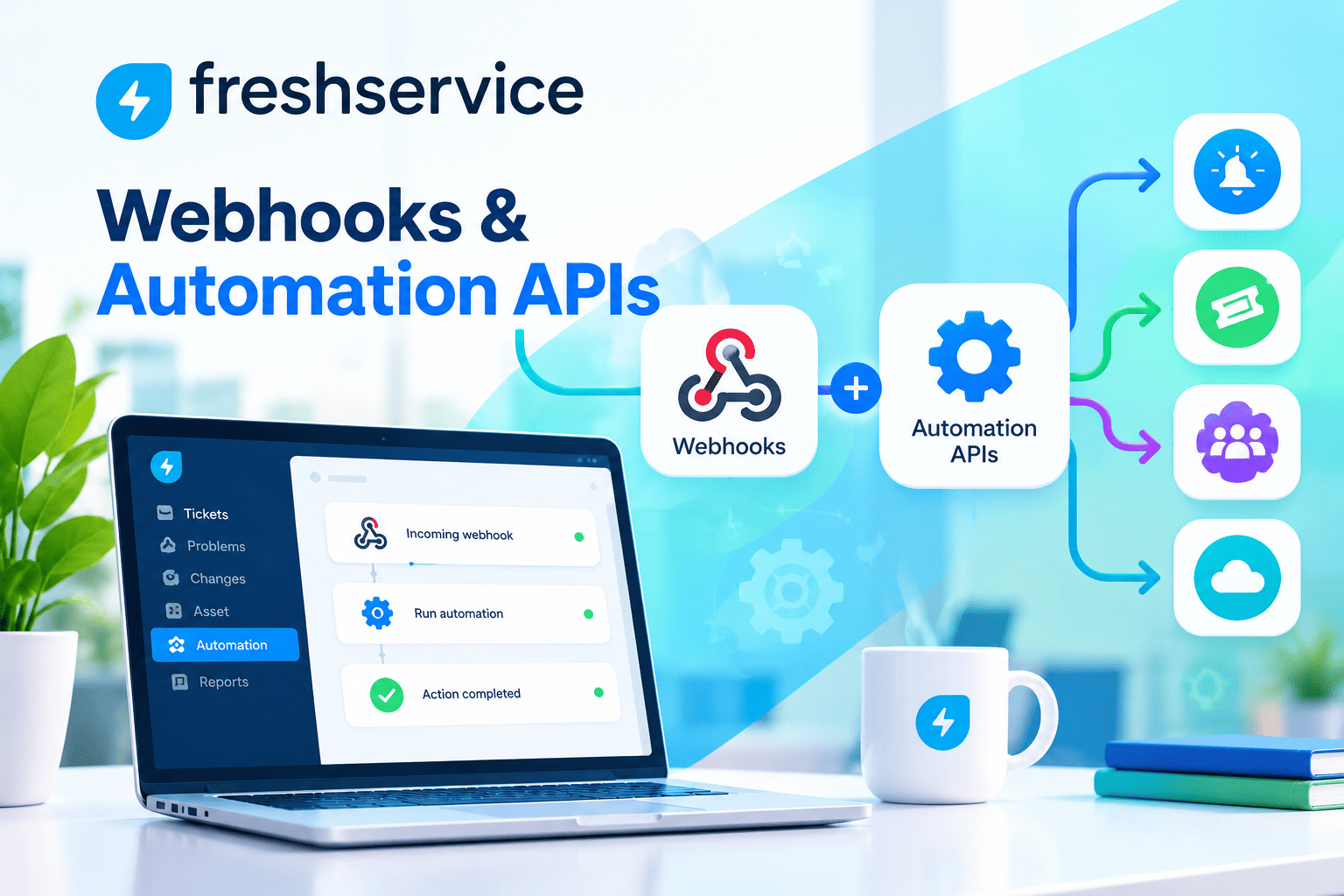
Integrating ManageEngine with Microsoft 365 involves configuring OAuth 2.0 application registrations in Azure AD, establishing Microsoft Graph API permissions, setting up webhook connections for real-time event routing, and mapping data fields between ManageEngine and M365 schemas. Each of these steps requires specific technical knowledge, and a single misconfiguration can create security gaps, data synchronization failures, or broken automation workflows.
Organizations that attempt self-guided implementations frequently encounter permission scope errors in Azure AD app registrations, incomplete user provisioning workflows that create accounts without assigning correct license groups, Teams bot deployments that fail to route tickets to the right queues, and Intune integration configurations that sync compliance data inaccurately. These issues erode confidence in the integration and often result in IT teams reverting to manual processes — negating the entire investment.
Furthermore, security hardening of the integration — ensuring that ManageEngine’s Azure AD connection uses only the minimum required Graph API permissions, that service account credentials rotate on schedule, and that audit logging captures all cross-platform activity — requires expertise that vendor documentation alone does not provide. This is precisely where Solution for Guru’s value becomes decisive.
What Specific Benefits Does Solution for Guru Deliver for ManageEngine M365 Projects?
Solution for Guru brings certified ManageEngine expertise and proven Microsoft 365 integration experience together in a structured implementation methodology. Their team has deployed ManageEngine and M365 integrations across multiple industries and organizational sizes, giving them the practical knowledge to anticipate problems before they occur rather than troubleshoot them after deployment.
Organizations that engage Solution for Guru for their ManageEngine Microsoft 365 integration gain the following concrete advantages:
- Correct Azure AD application registration: Solution for Guru configures the Azure AD app registration with precisely scoped Graph API permissions — no over-privileged service accounts that create security vulnerabilities.
- End-to-end provisioning workflow design: Their engineers design and test automated user provisioning and deprovisioning workflows that cover every scenario — new hires, role changes, transfers, and departures — before go-live.
- Teams bot deployment and routing configuration: Solution for Guru deploys the ServiceDesk Plus Teams integration correctly the first time, with ticket routing rules, notification templates, and approval workflows configured to match the organization’s support model.
- Intune and Endpoint Central synchronization: Their team configures the Intune compliance data integration with proper field mapping and automated incident creation rules that match the organization’s escalation policies.
- Security hardening review: Solution for Guru applies a security baseline to every integration component — reviewing API permission scopes, rotating service account credentials, enabling audit logging across all connected systems, and validating that data flows comply with the organization’s security policies.
- Staff training and knowledge transfer: Their engineers train IT administrators on managing and extending the integrations after deployment, ensuring the organization does not become dependent on external support for routine changes.
In short, Solution for Guru transforms what would otherwise be a technically complex, risk-laden project into a structured, documented, and fully functional integration — delivered on schedule and within budget.
Recommended:
- Automating IT Approvals in ManageEngine Using Workflows
- Designing an Effective ITSM Model for Modern IT Environments
- Common Implementation Mistakes in ManageEngine ITSM (and How to Avoid Them)
- API Automation in ManageEngine: Practical Use Cases
- How ManageEngine Supports ITIL 4 Framework?
- ITSM — How to Start Implementation?
- Core ITSM Processes: A Comprehensive Guide to Service Management Excellence
- How Knowledge Management Enhances ITSM Quality?
- ITSM Change Management
- ITSM Integration: Streamlining IT Service Management for Modern Enterprises
- ITSM Problem Management
- What Are ITSM Ticketing Tools?
- ITSM Jobs: Your Guide to a Thriving Career in IT Service Management
- Why are ITSM Best Practices essential?