Modern CRM Teams: How Are Roles Evolving in the Digital Era?

The customer relationship management landscape looks fundamentally different than it did a decade ago. What once required manual data entry, siloed spreadsheets, and reactive follow-up processes now runs on intelligent automation, AI-assisted forecasting, and real-time pipeline visibility. As CRM platforms grow more powerful, the people who use them must grow alongside. CRM team roles are no longer limited to sales reps and administrators — they now span revenue operations, customer success, data analysis, automation engineering, and cross-functional project management. This guide explores how those roles are changing, why the shift matters, and which platforms are leading the transformation.
Table of contents
What Is Driving the Evolution of CRM Team Roles?
| Quick Summary • CRM roles are expanding beyond data entry — modern teams now include revenue operations managers, CRM analysts, automation specialists, and customer success leads. • Platforms like Salesforce, HubSpot, Creatio, Zoho CRM, Pipedrive, Bigin by Zoho, and monday.com CRM each shape team roles differently based on complexity and target user. • AI-driven automation, real-time analytics, and no-code customization are the three forces most rapidly reshaping what CRM professionals do day to day. • Organizations that align CRM platform capabilities with clearly defined team roles see measurably higher adoption, pipeline accuracy, and revenue outcomes. • Solution for Guru helps businesses design role-aligned CRM implementations that match team structure to platform capability from day one. |
Which CRM Platforms Are Reshaping How Teams Operate?
Seven platforms stand at the forefront of the CRM team evolution — each shaping roles, workflows, and skill requirements in distinct ways. Understanding how each platform relates to the evolution of CRM roles helps organizations make better hiring, training, and technology decisions.
How Does Pipedrive CRM Change the Sales Rep’s Role?

Pipedrive CRM transforms sales representatives from passive data recorders into active pipeline owners. Its visual, drag-and-drop pipeline interface reduces the cognitive overhead of deal management, freeing sales reps to focus on relationship-building rather than administrative tasks. Pipedrive’s AI-powered Sales Assistant proactively surfaces deal insights, warns about stalling opportunities, and recommends next actions — effectively giving every sales rep a real-time coaching layer. Furthermore, Pipedrive’s workflow automation handles repetitive tasks like follow-up emails and task assignments, which means modern sales teams using Pipedrive spend significantly more time on high-value selling activities. For SMBs and growing sales teams, Pipedrive defines what a data-literate, automation-assisted sales role looks like in practice.
How Does Bigin by Zoho CRM Support Small Team Structures?

Bigin by Zoho CRM specifically targets micro-businesses and very small teams — typically those with one to five people managing customer relationships. Rather than requiring a dedicated CRM administrator, Bigin empowers non-technical team members to own the platform themselves. Its pipeline-first design, free entry tier, and minimal onboarding curve mean that even a solo entrepreneur can implement and maintain a structured CRM process without specialized support. Bigin directly relates to the CRM team evolution by demonstrating how platform simplicity enables leaner role structures — particularly relevant as more small businesses compete with larger organizations that have dedicated CRM teams.
How Does Zoho CRM Enable Specialist Role Development?

Zoho CRM supports a much broader role spectrum than its Bigin counterpart. With modules covering sales automation, marketing campaigns, customer support, analytics, and AI-powered predictions via Zia, Zoho CRM enables organizations to build dedicated specialist roles across each functional area. As teams grow, Zoho CRM’s modular structure allows role differentiation — one team member owns automation workflows while another manages reporting and analytics. Additionally, Zoho CRM’s deep integration with the broader Zoho ecosystem means CRM professionals increasingly work at the intersection of marketing, finance, and operations rather than within a siloed sales function.
How Does Salesforce Define the Enterprise CRM Role Architecture?

Salesforce sets the standard for enterprise CRM role complexity. Large Salesforce environments routinely require dedicated Salesforce Administrators, Salesforce Developers, Solution Architects, Revenue Cloud Specialists, and Einstein Analytics experts — all functioning as distinct roles within a single CRM ecosystem. Consequently, Salesforce has become the platform most directly responsible for formalizing CRM as a technical career path. According to the Salesforce Talent Ecosystem Report 2025, demand for Salesforce-skilled professionals grew by 14% year over year, and the global ecosystem is projected to create 9.3 million jobs by 2026. Therefore, Salesforce doesn’t merely reflect the evolution of CRM roles — it actively drives it.
How Does Creatio Empower No-Code Role Expansion?

Creatio takes a distinct position in the CRM landscape through its no-code, process-first platform design. Unlike Salesforce’s developer-heavy customization model, Creatio enables business users — not just IT teams — to build, modify, and automate complex CRM processes through visual tools. This approach fundamentally reshapes the CRM administrator role: a Creatio admin is primarily a process designer and business analyst rather than a coder. Moreover, Creatio’s Freedom UI and AI-powered studio give revenue operations teams the ability to create sophisticated automation pipelines without engineering support. As a result, Creatio represents the leading edge of a broader trend: the democratization of CRM configuration, which expands who can meaningfully contribute to CRM team performance.
How Does HubSpot CRM Shape the Modern Marketing-Sales Alignment Role?

HubSpot CRM has become the platform most associated with the convergence of marketing and sales into unified revenue teams. Its free CRM tier, combined with deeply integrated Marketing Hub, Sales Hub, and Service Hub tools, means that HubSpot professionals frequently operate across all three functions simultaneously. This cross-functional reality has given rise to a growing role type: the HubSpot Revenue Operations Manager, who owns the platform across sales, marketing, and customer success. Additionally, HubSpot’s content management, email automation, and lead nurturing capabilities require CRM team members to develop skills in digital marketing, SEO strategy, and conversion optimization — skills that traditional CRM roles never demanded.
How Does monday.com CRM Redefine Project-Driven Customer Management?

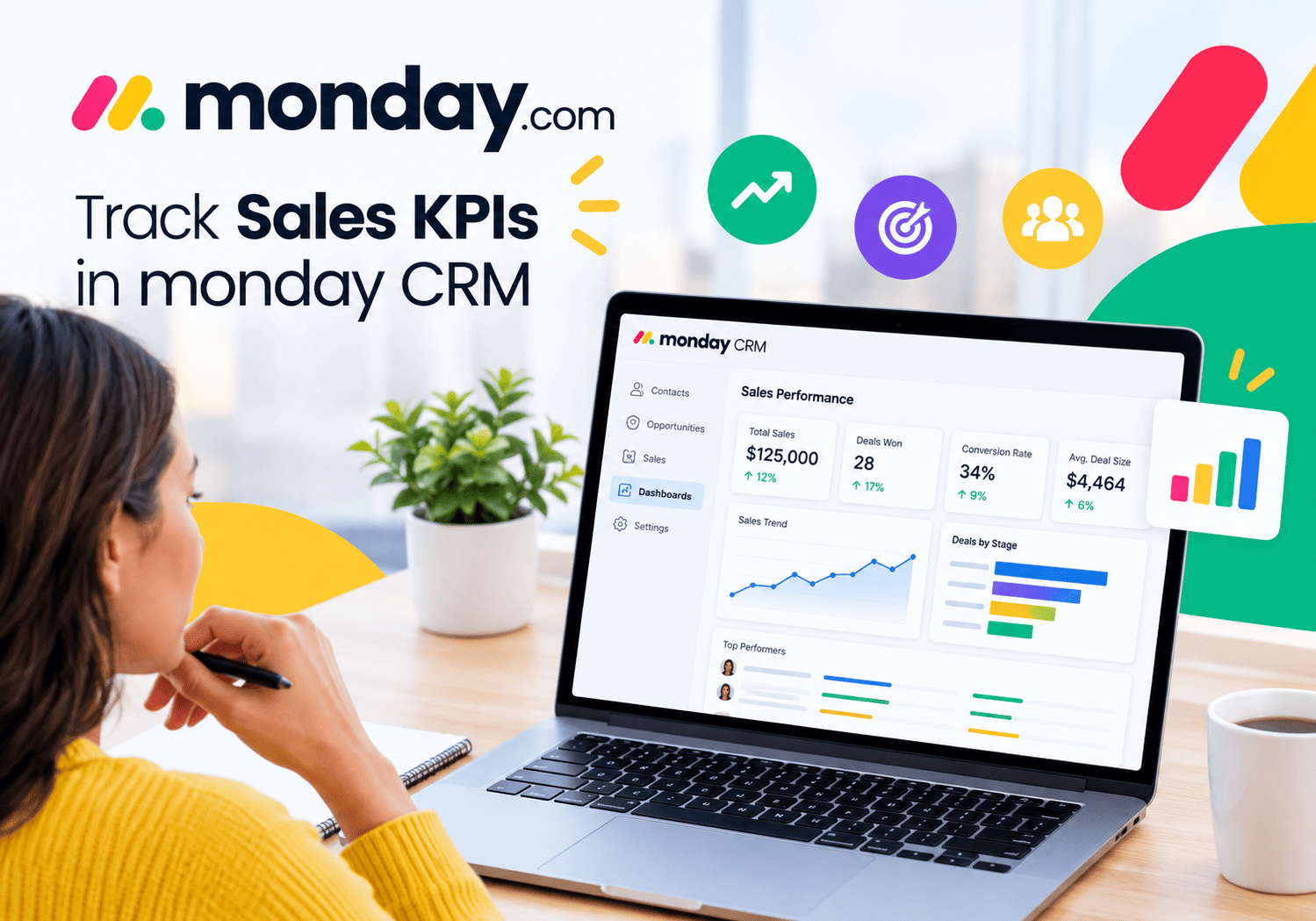
monday.com CRM approaches customer relationship management from a project and workflow management foundation, which creates a uniquely different set of role demands. Monday.com CRM users — particularly in agencies, professional services firms, and creative teams — use the platform to manage both client relationships and project delivery within the same environment. This integration means that CRM team members on monday.com often carry hybrid responsibilities that blend account management with project coordination. Furthermore, monday.com’s highly visual, board-based interface and extensive automation capabilities mean CRM professionals on the platform need strong process design skills and comfort with cross-departmental collaboration tools.
How Do the Leading CRM Platforms Compare for Modern Team Roles?
The table below compares all seven platforms across the dimensions most relevant to CRM team structure, role complexity, and capability evolution.
| Feature |  |  |  |  |  |  |  |
| Best for team size | SMB–Mid | Micro–SMB | SMB–Enterprise | Mid–Enterprise | Mid–Enterprise | SMB–Enterprise | SMB–Mid |
| No-code customization | Moderate | High | High | Moderate | Very High | High | Very High |
| AI & automation depth | Good | Basic | Strong | Very Strong | Very Strong | Strong | Moderate |
| Role-specific dashboards | Yes | Limited | Yes | Advanced | Advanced | Yes | Yes |
| Revenue Ops support | Partial | Limited | Good | Excellent | Excellent | Good | Moderate |
| Customer success tools | Basic | Basic | Good | Advanced | Advanced | Strong | Moderate |
| Ease of onboarding | High | Very High | Moderate | Complex | Moderate | High | High |
| Integration ecosystem | Strong | Moderate | Strong | Extensive | Strong | Extensive | Strong |
| Pricing tier (entry) | Affordable | Free tier | Affordable | Premium | Mid-range | Free tier | Affordable |
| CRM admin complexity | Low | Very Low | Moderate | High | Moderate | Low–Moderate | Low |
As the comparison shows, each platform occupies a distinct position on the spectrum from simplicity to sophistication. Bigin by Zoho and Pipedrive serve leaner teams where CRM roles remain broad. Meanwhile, Salesforce and Creatio support highly specialized role architectures that scale with organizational complexity.
How Have Core CRM Roles Changed in the Past Five Years?
Five years ago, a typical CRM team consisted of a few sales reps, a CRM admin managing data hygiene, and perhaps a marketing coordinator running email campaigns. Today, that same function spans a much broader spectrum. According to LinkedIn’s 2025 Emerging Jobs Report, Revenue Operations Manager and Customer Success Manager rank among the fastest-growing roles in the technology sector, with year-over-year hiring growth exceeding 30% in both categories. Furthermore, Gartner’s research on sales technology predicts that by 2026, 65% of B2B sales organizations will use AI-guided selling tools — a shift that demands entirely new competencies from CRM professionals.
What Does the Modern CRM Administrator Role Look Like?

The CRM administrator role has undergone perhaps the most dramatic transformation of any CRM function. Traditionally, the admin focused on data entry standards, user account management, and basic report generation. Today, a modern CRM administrator in a platform like Salesforce or Creatio functions as a process architect. They design automation workflows, manage integration pipelines, configure AI features, and translate business requirements into platform logic — often without writing a single line of code. As a result, the skills that define a high-performing CRM admin have shifted from data management proficiency to systems thinking, process design expertise, and cross-functional communication.
How Has the Sales Representative’s CRM Relationship Evolved?
Sales reps now interact with CRM platforms far more dynamically than before. Platforms like Pipedrive and HubSpot CRM provide sales reps with AI-suggested next actions, deal probability scores, email sequence automation, and real-time buyer engagement signals. Consequently, modern sales reps who use these platforms effectively function as mini-analysts — interpreting CRM data to prioritize their own pipelines and adjust their outreach strategies. Additionally, with mobile-first CRM access becoming standard, the expectation that sales reps keep their CRM data updated in real time has increased significantly, turning data discipline from a managerial request into a daily professional habit.
What New CRM Roles Is the Digital Era Creating?
Beyond the transformation of existing roles, the digital era has introduced entirely new CRM positions that barely existed a decade ago. The table below maps traditional CRM roles against their modern equivalents and highlights which platforms support each role’s evolution most effectively.
| CRM Role | Traditional Scope | Modern Scope | CRM Platform Examples |
| CRM Administrator | Data entry, user management | Automation builder, integration manager, no-code developer | Salesforce, Creatio, Zoho CRM |
| Sales Rep | Manual pipeline updates, call logging | AI-assisted prospecting, automated follow-ups, deal scoring | Pipedrive, HubSpot, Bigin Zoho |
| CRM Analyst | Report generation | Predictive modeling, revenue forecasting, funnel optimization | Salesforce, Zoho CRM, Creatio |
| Revenue Ops Manager | Did not exist as formal role | Cross-functional alignment, tech stack ownership, GTM strategy | Salesforce, HubSpot, monday.com CRM |
| Customer Success Manager | Reactive issue resolution | Proactive lifecycle management, health scoring, expansion revenue | HubSpot, Salesforce, Creatio |
| Marketing Automation Specialist | Email campaign management | Multi-channel journey design, lead scoring, attribution modeling | HubSpot, Zoho CRM, Creatio |
| CRM Project Manager | Software rollout coordination | Change management, adoption strategy, ROI measurement | monday.com CRM, Salesforce, Creatio |
| Research Insight According to McKinsey’s 2025 State of AI report, organizations that deploy AI across their CRM workflows reduce manual sales tasks by up to 40% and increase revenue productivity by 15–20% — directly driving the expansion of analytical and strategic CRM roles. |
What Skills Do Modern CRM Teams Need to Build?

The evolution of CRM roles isn’t only about job titles — it reflects a fundamental shift in the skill sets that CRM professionals must develop. According to Forrester’s 2025 CRM Technology Report, the three capabilities organizations struggle most to find in CRM hires are automation literacy, data interpretation skills, and change management competency. Interestingly, these are precisely the skills that platforms like Creatio, Zoho CRM, and Salesforce demand most heavily from their administrators and power users.
| Skill Category | In-Demand Skills (2025–2026) | Supporting CRM Platforms |
| Automation & workflow design | No-code process builders, trigger logic, API connections | Creatio, Zoho CRM, HubSpot, Salesforce |
| Data analysis & reporting | Dashboard design, funnel metrics, cohort analysis | Salesforce, Zoho CRM, Creatio |
| AI & machine learning basics | Prompt engineering, predictive lead scoring, AI assistant use | Salesforce Einstein, HubSpot AI, Creatio AI |
| Customer journey mapping | Lifecycle stages, touchpoint design, churn indicators | HubSpot, Salesforce, Creatio |
| Cross-tool integration | Zapier, native APIs, webhooks, middleware platforms | All platforms reviewed |
| Project & change management | Rollout planning, user adoption strategy, training design | monday.com CRM, Salesforce, Creatio |
Why Does Automation Literacy Matter More Than Technical Coding?
Notably, coding fluency is no longer the primary technical differentiator for CRM professionals. Instead, automation literacy — the ability to design, implement, and troubleshoot no-code and low-code workflows — has become the baseline expectation. Platforms like HubSpot CRM, Creatio, and monday.com CRM all offer robust no-code automation builders that business users — not developers — operate daily. This shift democratizes CRM team contributions and allows non-technical team members to deliver significant operational improvements without IT involvement.
How Does Data Literacy Drive CRM Team Performance?
As CRM platforms generate more data than ever before — across email opens, deal stages, customer health scores, campaign attribution, and support ticket histories — the ability to interpret and act on that data becomes a core professional competency. Zoho CRM‘s Advanced Analytics module, Salesforce‘s Einstein Analytics platform, and Creatio‘s built-in dashboarding tools each provide CRM team members with the analytical infrastructure to move from reactive reporting to predictive planning. Organizations that invest in developing data literacy across their CRM teams consistently outperform peers on pipeline accuracy and forecast reliability, according to SiriusDecisions research.
How Is Revenue Operations Reshaping CRM Team Structures?
Revenue Operations — commonly abbreviated as RevOps — represents the most significant structural change to CRM team design in recent years. RevOps consolidates marketing operations, sales operations, and customer success operations under a single function with shared data, shared tools, and shared accountability for revenue outcomes. According to Forrester, companies with a dedicated RevOps function grow revenue three times faster than those without one. Furthermore, B2B organizations with aligned RevOps teams achieve 19% faster revenue growth and 15% better profitability, per SiriusDecisions data.
Which CRM Platforms Best Support a RevOps Team Model?
Not all CRM platforms support a RevOps model equally. Salesforce offers the most mature RevOps infrastructure through Revenue Cloud, which unifies CPQ, billing, and subscription management with CRM data. HubSpot CRM approaches RevOps through its unified Hubs model, where marketing, sales, and service data live on a single contact record — making cross-functional visibility natural. Creatio‘s no-code platform allows RevOps managers to build and adapt cross-functional workflows without developer support. Meanwhile, monday.com CRM serves RevOps teams in project-intensive businesses by connecting client relationship data directly with delivery workflows.
How Does a RevOps Role Differ From a Traditional Sales Ops Role?
The traditional Sales Operations manager focused narrowly on sales process efficiency, quota planning, and CRM data quality within the sales team. A RevOps manager, by contrast, owns the full revenue technology stack — including the CRM, marketing automation platform, customer success tools, and analytics infrastructure — and works to eliminate the handoff friction between departments. This expanded scope makes RevOps professionals among the most platform-versatile CRM team members, often managing configurations across Zoho CRM, HubSpot, and integrated tools simultaneously.
How Is AI Changing Day-to-Day CRM Team Responsibilities?

Artificial intelligence is moving from a premium add-on to a standard feature across virtually every major CRM platform. Salesforce Einstein, HubSpot’s AI content assistant, Zoho Zia, Creatio’s AI studio, and Pipedrive’s Sales Assistant all embed AI capabilities directly into the daily workflow of CRM users. As a result, the routine tasks that once consumed significant portions of a CRM professional’s day — manual data entry, basic lead qualification, follow-up scheduling — increasingly happen automatically.
What Happens to CRM Roles When AI Handles Repetitive Tasks?
Rather than eliminating CRM roles, AI automation elevates them. When Pipedrive‘s AI Assistant handles routine deal follow-ups and HubSpot CRM‘s AI generates initial email drafts, CRM team members redirect their time toward higher-value activities: complex negotiations, relationship deepening, strategic account planning, and creative problem-solving. According to Salesforce’s State of Sales report, high-performing sales reps spend 52% of their time on actual selling activities — compared to just 27% for average performers — and AI-powered CRM tools are a primary driver of that gap. Furthermore, Bigin by Zoho CRM demonstrates that even micro-business teams benefit from AI-adjacent automation, enabling one-person CRM operations to deliver the follow-up consistency that previously required a team.
How Does AI Demand New Competencies From CRM Professionals?
AI integration into CRM workflows also creates new skill demands. CRM professionals increasingly need to understand how to configure AI features, interpret AI-generated recommendations critically, and recognize when automated suggestions require human override. Specifically, Creatio‘s AI studio allows users to build and fine-tune prediction models without coding — but doing so effectively requires business analysts who understand the underlying data logic. Similarly, using Salesforce‘s Einstein effectively demands a CRM team member who can evaluate model accuracy, adjust training data, and communicate AI-driven insights to non-technical stakeholders.
| Key Research Finding A 2025 IDC report found that organizations that successfully upskill their CRM teams on AI tools generate 2.8x more pipeline value per rep than those that deploy AI features without corresponding training investment. |
How Is Customer Success Becoming Central to the Modern CRM Team?

Customer success has moved from a post-sale support function to a revenue-generating pillar of modern business. According to Gainsight’s 2025 Customer Success Index, 72% of organizations now consider customer success a primary driver of net revenue retention — not just a cost center. This shift places Customer Success Managers (CSMs) at the heart of the CRM team, working directly within platforms like HubSpot CRM, Salesforce, and Creatio to monitor customer health scores, identify expansion opportunities, and proactively prevent churn.
How Do CRM Platforms Support the Customer Success Role?
Different platforms serve customer success teams in distinct ways. HubSpot’s Service Hub provides CSMs with a 360-degree view of customer interactions — from initial marketing touchpoints through sales conversations to ongoing support tickets — all within a single contact timeline. Salesforce’s Success Cloud and Health Score features enable enterprise CSMs to manage large portfolios of accounts systematically. Creatio’s case management and customer journey tools help service teams build proactive touchpoint sequences rather than reacting to issues after they arise. Furthermore, Zoho CRM‘s integration with Zoho Desk gives customer success teams seamless visibility into support history, allowing CSMs to intervene before dissatisfaction escalates into churn.
What Conclusions Can We Draw About the Future of CRM Teams?
The evidence is clear: CRM teams are becoming more diverse, more technically capable, and more strategically central to business performance. The old model — a sales team that uses CRM as a contact database — has given way to cross-functional revenue teams that use CRM as an operational backbone. Specifically, the seven platforms explored in this article each accelerate this transformation in distinct and complementary ways.
Pipedrive empowers sales-focused SMB teams to run professional, AI-assisted pipelines without requiring large support structures. Bigin by Zoho CRM shows that even the smallest businesses can adopt structured CRM roles effectively with the right platform simplicity. Zoho CRM grows with teams, enabling progressive role specialization as businesses scale. Salesforce defines enterprise CRM role architecture and continues to drive demand for specialized CRM career paths at scale.
Creatio‘s no-code model democratizes process ownership and expands who can meaningfully contribute to CRM team performance. HubSpot CRM defines the marketing-sales-success alignment that modern RevOps teams require. And monday.com CRM serves hybrid project-and-client teams where CRM and delivery management converge in a single workspace.
Ultimately, the organizations that will win in the next phase of CRM evolution are those that treat their CRM team not as a group of software users but as strategic architects of customer experience. Investing in the right platform, developing the right skills, and structuring roles around revenue outcomes — rather than departmental silos — will define the competitive gap between high-performing revenue teams and those left behind.
Frequently Asked Questions About Modern CRM Team Roles
For most mid-market organizations, a Revenue Operations Manager represents the highest-ROI hire when expanding a CRM team. This role consolidates oversight of the CRM platform, marketing automation stack, and customer success tools into a single function — eliminating the misalignment between departments that consistently undermines pipeline accuracy and revenue predictability. Platforms like Salesforce, HubSpot CRM, and Creatio each have the platform depth to support a full RevOps function. However, for smaller organizations not yet ready for a dedicated RevOps hire, building automation literacy into an existing CRM admin or sales operations role delivers many of the same benefits at lower cost.
The decision starts with team size and role complexity. Micro-teams of one to five people typically get the fastest ROI from Bigin by Zoho CRM or Pipedrive, where setup complexity is minimal and adoption is fast. Growing SMBs with maturing role structures benefit from Zoho CRM or HubSpot CRM‘s scalable architecture. Organizations with complex processes, compliance requirements, or multi-department revenue teams should evaluate Salesforce or Creatio first. Project-driven businesses in agencies or professional services should seriously consider monday.com CRM as their primary environment. Most importantly, the platform decision should follow role design — not precede it.
How Does Solution for Guru Help Organizations Build High-Performing CRM Teams?
The gap between deploying a CRM platform and building a genuinely high-performing CRM team is wider than most organizations expect. Technology alone doesn’t transform team roles — purposeful implementation, role-aligned configuration, and sustained change management do. That’s precisely where Solution for Guru delivers exceptional value.
Solution for Guru is a specialist CRM consulting and implementation company with deep expertise across the platforms covered in this article — including Salesforce, HubSpot, Creatio, and Zoho CRM. Their approach centers on aligning CRM platform configuration with the specific role structure and revenue goals of each client organization. Here’s how they help modern CRM teams evolve successfully:
- Platform selection guidance: With hands-on experience across Salesforce, Creatio, HubSpot, Zoho CRM, and Pipedrive, Solution for Guru helps organizations choose the platform that genuinely fits their team structure and growth trajectory — before committing to implementation.
- Automation architecture: Solution for Guru builds no-code and low-code automation workflows that eliminate the repetitive tasks burdening CRM teams, freeing professionals to focus on high-value strategic work.
- Training and adoption programs: Understanding that technology adoption depends on people, Solution for Guru delivers role-specific training programs that build the automation literacy, data analysis skills, and platform fluency modern CRM teams need.
- Ongoing optimization: As CRM roles and business needs evolve, Solution for Guru provides continuous support — adjusting configurations, adding capabilities, and ensuring the platform scales effectively with the team.

In short, Solution for Guru bridges the gap between platform capability and team performance — ensuring that investments in CRM technology translate into measurable improvements in revenue outcomes, team productivity, and customer satisfaction. Visit solution4guru.com to learn how their team can help build the CRM structure your organization needs for the digital era ahead.
Recommended:
- CRM Automation for Logistics Companies Using Creatio
- Using Creatio Dashboards for Executive Decision-Making
- Pipedrive Compliance: How Does Pipedrive Handle Data Protection, Privacy, and Security Standards?
- What Is the Pipedrive Mobile App and How Can It Transform Your Sales on the Go?
- Creatio for Healthcare Organizations: The Complete Guide
- Creatio CRM for Financial Services in the U.S.: Is It the Right Platform for Your Firm?
- Pipedrive for Sales Managers: How to Use Forecasting and Team Performance Reporting
- Extending Creatio with Marketplace Apps
- Zoho CRM API: Complete Guide for Developers
- How Do You Successfully Migrate Your CRM from Salesforce to Zoho CRM?
- How Does Pipedrive Smart Docs Transform Proposals and Contracts with Dynamic CRM Fields?
- Best CRM Mobile Apps in 2026
- CRM Functionality: Top CRM Features in 2026
- Pipedrive AI Sales Assistant
- Pipedrive Campaigns Add-on vs Dedicated Email Marketing Tools
- Pipedrive for B2B vs B2C
- Pipedrive CRM Onboarding and Staff Training: How to Achieve 90%+ Adoption Rates
- Calculating the ROI of Pipedrive CRM