Best Expense Automation Software: Which Platform Fits Your Business?

Choosing expense automation software isn’t just about picking the tool with the most features. It’s about finding the platform that actually matches how your team submits, approves, and reconciles expenses day to day.
Many businesses start this search by reading “best of” lists and comparing star ratings, only to discover after signing up that the tool doesn’t fit their approval structure or accounting system. A more reliable approach starts with your own workflow first, then evaluates platforms against that reality. With dozens of options on the market, each claiming to be “the best,” it helps to have a clear framework for comparison. This article walks through what separates strong expense automation software from the rest, using Moss, HoorayHR, and Whitevision as concrete reference points along the way.
Table of contents
Quick Summary
If you’re short on time, here’s the condensed version:
- The best expense automation software combines automated data capture, mobile receipt scanning, configurable approval workflows, accounting integrations, and real-time spend visibility into one system.
- No single platform wins across every category; the right choice depends on your company size, transaction volume, and whether expense claims sit inside HR, finance, or procurement processes.
- Moss suits businesses wanting full spend management with corporate cards, invoicing, and reimbursements in one place.
- HoorayHR suits small and mid-sized companies that want expense claims bundled directly into an all-in-one HR platform.
- Whitevision suits organizations processing high volumes of purchase invoices that need deep OCR and ERP-level automation.
- Working with an implementation partner like Solution For Guru helps translate “best on paper” into “best for your actual workflow,” since even a well-built platform underperforms if it’s configured poorly.
Consequently, the smartest approach isn’t searching for a universal winner. It’s matching platform strengths to your specific operational pain points. Keep this summary as a quick reference; the sections below walk through each evaluation criterion in more depth, along with a direct feature comparison and a checklist you can use before making a final decision.
How Do Platforms Like Moss, HoorayHR, and Whitevision Relate to This Topic?
Before comparing specific products, it’s worth establishing what “best” actually means in this category. Expense automation platforms are generally judged against five consistent capabilities: automation of repetitive data entry, mobile receipt capture, configurable approval workflows, accounting integrations, and centralized expense visibility. A platform that excels at only one or two of these areas rarely earns the label “best” for a broad range of businesses; genuine leaders in this space perform well across all five, even if they specialize more heavily in one.
This is exactly why comparing Moss, HoorayHR, and Whitevision side by side is useful. Each platform approaches the same five capabilities from a different starting point, which reveals how “best” shifts depending on what a business actually needs.

Moss is a spend management platform for small and mid-sized businesses that combines corporate cards, invoice processing, and reimbursements into one system, using AI-driven receipt recognition and automated approval routing.

HoorayHR is an all-in-one HR platform that includes an expense reimbursement app alongside leave management, personnel files, and workflows, letting employees submit a receipt photo directly from their phone.
Whitevision B.V. specializes in document and invoice processing automation, using OCR and AI-based recognition to read incoming purchase invoices, match them against orders and receipts, and route them through digital approval workflows into an ERP system.
Because these three platforms represent genuinely different entry points into expense automation, they give us a realistic lens for evaluating what “best” should mean for your specific situation, rather than relying on a generic, one-size-fits-all ranking.
What Makes Expense Automation Software “the Best” for Your Business?
With the landscape established, the next step is breaking down the individual criteria that separate strong platforms from mediocre ones.
What Core Features Should Every Platform Include?
At a minimum, expense automation software worth considering should include the following:
| Core Capability | What It Solves |
|---|---|
| Automated data extraction | Removes manual retyping of receipts and invoices |
| Mobile receipt capture | Lets employees submit expenses the moment they occur |
| Configurable approval workflows | Routes claims to the right approver without manual follow-up |
| Accounting/ERP integrations | Syncs expense data directly into financial systems |
| Centralized spend visibility | Gives finance teams real-time insight into company spending |
Any platform missing more than one of these core capabilities probably isn’t a serious contender for “best,” regardless of how polished its interface looks. These five capabilities work together; strength in one area rarely compensates for weakness in another.
How Should Pricing Factor Into the “Best” Decision?
Price alone rarely determines which platform is genuinely best, but it does shape which one is realistically sustainable for your business. HoorayHR’s per-employee pricing model scales predictably as headcount grows, which suits smaller teams that want cost certainty. Moss and Whitevision, by contrast, typically price around company size, transaction volume, or module selection, since spend management and document-processing needs don’t scale linearly with headcount alone. Therefore, when comparing pricing, it helps to model a full year of realistic usage, rather than comparing headline monthly rates, since the platform with the lowest starting price isn’t always the most cost-effective once volume and add-ons are factored in.
How Important Is Mobile Receipt Capture?
Mobile receipt capture might sound like a minor convenience, but it directly determines how much data actually gets logged accurately. When an employee can photograph a receipt immediately after a purchase, the risk of a lost paper receipt or forgotten expense drops dramatically. Moss applies AI-driven recognition to these captured receipts, automatically identifying suppliers, VAT rates, and cost centers. HoorayHR takes a similarly direct approach, letting employees scan and submit a receipt through the same self-service app they already use for leave requests. The best platforms make this step nearly frictionless, because friction at the point of capture is where most expense data quality problems begin.
Why Do Approval Workflows Matter So Much?
An approval workflow that requires manual follow-up defeats much of the purpose of automation. The best platforms let administrators build multi-step, rules-based approval chains that route claims automatically based on amount, department, or cost center. Whitevision, for instance, offers fully configurable, ERP-aligned workflows suited to organizations with complex multi-team invoice approval chains, while HoorayHR keeps things simpler with one-click manager approval, better suited to smaller teams that don’t need multiple sign-off layers. Neither approach is universally “better”; the right choice depends entirely on how many people typically need to weigh in before an expense gets approved.
How Do You Evaluate Accounting and ERP Integrations?
Integration quality often separates genuinely useful expense automation software from tools that simply create more manual work elsewhere.
What Should You Look for in an Accounting Integration?
A strong integration does more than export a CSV file at month-end. It should sync expense data automatically, map categories to the correct general ledger accounts, and reconcile transactions without requiring manual review of every line. Moss integrates with platforms like Xero, QuickBooks, DATEV, and Microsoft Dynamics, giving finance teams flexibility across different accounting ecosystems. HoorayHR connects with tools like Exact Online, AFAS, Moneybird, and Yuki, which tend to be common choices among small and mid-sized European businesses. Whitevision goes a step further for organizations with more complex financial systems, offering deep ERP integrations built specifically around platforms like Exact and AFAS.
How Do ERP Integrations Differ From Standard Accounting Integrations?
Standard accounting integrations work well for straightforward expense syncing, but organizations with more complex purchasing processes, multiple cost centers, or purchase-order matching requirements typically need something closer to true ERP integration. This is where Whitevision’s approach stands out, since it’s built specifically to handle invoice matching against purchase orders and receipts at scale, rather than simply pushing categorized transactions into an accounting system. Therefore, businesses evaluating “the best” platform should first identify whether their needs are closer to simple expense syncing or full ERP-level document processing, since that distinction significantly narrows the realistic shortlist.
What Integration Mistakes Should You Watch Out For?
A few integration missteps commonly undermine otherwise solid platform choices. Businesses sometimes select a platform based on its feature list without confirming it actually supports their specific accounting software version, only to discover mid-implementation that a workaround or manual export is required. Others underestimate how much setup time a deep ERP integration demands, assuming it will work the same way as a simple cloud-accounting sync. Confirming integration compatibility early, ideally through a technical conversation with the vendor or an implementation partner rather than just a sales page, prevents these costly surprises later in the process.
Which Expense Automation Features Actually Drive Adoption?
Even the most feature-rich platform delivers little value if employees don’t actually use it consistently. Adoption-focused features matter as much as raw functionality.
Why Does Centralized Visibility Matter Beyond Just Reporting?
Centralized dashboards do more than generate monthly reports; they let finance teams catch problems while they’re still small. Moss’s real-time dashboards, for example, give visibility into spend by category, department, or cost center as transactions happen, rather than after the fact. This kind of visibility helps prevent budget overruns before they become a quarter-end surprise, and it gives managers a much clearer basis for planning future spend.
How Does Ease of Use Affect Long-Term Adoption?
A platform that’s technically powerful but difficult to use tends to see adoption drop off within a few months, as employees quietly revert to old habits like emailing receipts or filling out spreadsheets. HoorayHR‘s simplicity, bundling expense claims into the same familiar app used for everyday HR tasks, tends to support stronger long-term adoption specifically because employees don’t need to learn or remember a separate tool. Consequently, ease of use isn’t a soft, secondary consideration; it’s often the single biggest factor determining whether a platform’s advanced features ever actually get used.
Does Automation Reduce Errors as Well as Save Time?
Beyond speed, automation reduces the kind of small, cumulative errors that build up in manual processes: duplicate entries, missing receipts, or incorrect VAT coding. Whitevision‘s matching feature automatically flags discrepancies between an invoice and its corresponding purchase order or receipt, catching issues that would otherwise require someone to check line by line. This error-reduction benefit compounds over time, since fewer mistakes mean fewer hours spent on corrections and fewer compliance risks during an audit.
What Do Independent Reviews Reveal About Real-World Performance?
Marketing pages naturally emphasize strengths, so independent user reviews offer a useful reality check. Reviewers of platforms like Moss frequently mention that automatic receipt recognition saves meaningful time per submission compared to manual entry, while also noting that integration quality with certain accounting systems can vary depending on the specific transaction type. This kind of nuance rarely shows up on a vendor’s feature page, which is exactly why cross-referencing independent reviews, alongside a hands-on trial, gives a more complete picture before committing to any platform long-term.
How Do Moss, HoorayHR, and Whitevision Compare?
With individual criteria established, a direct side-by-side comparison makes the practical differences easier to evaluate.
| Feature | |  |  |
|---|---|---|---|
| Primary focus | Spend management (cards, invoices, reimbursements) | All-in-one HR with expense claims | Purchase invoice and document automation |
| Mobile receipt capture | Yes, with AI-driven recognition | Yes, via the self-service app | Yes, via the mobile app for scanning |
| Approval workflows | Multi-step, rules-based, customizable | Simple one-click manager approval | Fully configurable, ERP-aligned workflows |
| Accounting integrations | Xero, QuickBooks, DATEV, MS Dynamics, and more | Exact Online, AFAS, Moneybird, Yuki | Deep ERP integrations (Exact, AFAS, and others) |
| Centralized visibility | Real-time dashboards across cards, invoices, reimbursements | HR-centric overview alongside leave and contracts | Document-centric dashboard tracking processing status |
| Best suited for | SMBs needing full spend visibility and cards | SMEs wanting expense claims bundled with HR | Organizations with high invoice volume needing OCR |
As this table shows, no single platform dominates every category, which reinforces why “best” should always be interpreted in context. A business evaluating these three options side by side should weigh the comparison against its own transaction volume and existing software stack rather than against a generic feature checklist.
Can Businesses Combine More Than One Platform?
Interestingly, these platforms aren’t always mutually exclusive. Some organizations pair a document-processing specialist like Whitevision for high-volume purchase invoice handling with a lighter, HR-bundled tool like HoorayHR for day-to-day employee expense claims, since the two solve genuinely different parts of the same broader spend management challenge. Before ruling this out as unnecessary complexity, it’s worth mapping which specific workflows currently cause the most friction; sometimes the “best” solution is a combination rather than a single all-in-one platform.
Which Platform Is Best for Your Business Type?

Understanding feature differences is useful, but translating that into a recommendation requires matching platforms to actual business profiles.
Which Option Fits Small Businesses Best?
For small businesses just moving away from spreadsheets or paper receipts, simplicity usually beats depth. HoorayHR’s low per-employee pricing and bundled HR functionality make it an efficient starting point, especially for teams that don’t need complex, multi-level approval chains. Moss also works well here if the business wants corporate cards included from the outset, since combining card issuance with expense tracking avoids the need for a separate spend management tool later.
Which Option Fits Growing Mid-Sized Companies Best?
As companies grow past a few dozen employees, approval complexity and spend visibility become more important than simplicity alone. Moss tends to fit well here, since its multi-step approval workflows and real-time dashboards scale naturally as departments and cost centers multiply. Businesses in this stage should also start evaluating accounting integration depth more carefully, since manual reconciliation becomes far more burdensome once transaction volume increases.
Which Option Fits High-Volume, Document-Heavy Organizations Best?
Organizations processing hundreds of purchase invoices monthly, particularly in construction, logistics, or manufacturing, typically outgrow standard expense tools quickly. Whitevision’s OCR-driven recognition and ERP-aligned workflows are built specifically for this kind of volume, automatically extracting header and line-item data rather than relying on simpler receipt scanning. For these businesses, the “best” platform isn’t necessarily the most well-known one; it’s the one engineered for high-throughput document processing.
What Questions Should You Ask Before Choosing a Platform?

Rather than relying on marketing claims alone, it helps to walk through a structured set of questions before committing to any platform.
- How many expense claims or invoices does your team process each month, and is that volume growing?
- Does your approval process involve a single manager, or multiple departments and cost centers?
- Which accounting or ERP system do you currently use, and how well does each candidate integrate with it?
- Do you need corporate card issuance bundled with expense tracking, or is reimbursement-only sufficient?
- Would your team benefit from expense claims living inside a broader HR platform, or does finance need a standalone tool?
- What’s your realistic budget per employee or per document processed, including any add-on modules?
Answering these questions honestly, ideally with input from both finance and the employees who’ll actually use the tool daily, narrows the shortlist far more effectively than reading feature lists alone. Furthermore, running a trial or demo with your actual transaction data, rather than a vendor’s sample dataset, reveals a much more accurate picture of real-world fit. It’s also worth involving whoever manages your accounting or ERP system directly in this evaluation, since integration friction discovered after signing a contract is far more disruptive than friction caught during the demo stage.
So, Which Expense Automation Software Is Actually the Best?
There’s no single universal answer; the best expense automation software is the one that matches your transaction volume, approval complexity, and existing systems most closely. Moss stands out for businesses wanting full spend management with cards, invoicing, and reimbursements unified in one platform. HoorayHR stands out for small and mid-sized teams that want expense claims bundled directly into an all-in-one HR system. Whitevision stands out for organizations with high invoice volume that need deep OCR-driven document automation and ERP integration.
Rather than searching for a single winner, therefore, the smarter approach is working through the criteria outlined in this article, core features, integration depth, adoption likelihood, and business fit, and matching those criteria to your specific situation. Combining that evaluation with expert implementation support through a partner like Solution For Guru further improves the odds that whichever platform you choose among Moss, HoorayHR, and Whitevision delivers real, sustained value rather than becoming another underused subscription.
Frequently Asked Questions
No. The best platform depends on company size, transaction volume, and existing systems. Moss, HoorayHR, and Whitevision each excel in different scenarios, so the right choice comes from matching a platform’s core strengths to your specific operational needs rather than choosing based on general popularity.
Implementation timelines vary by platform complexity. HR-centric tools like HoorayHR are often usable within a day thanks to their straightforward setup, while document-heavy platforms like Whitevision may take one to four implementation days spread across several weeks to fully connect with an ERP system. Working with an experienced implementation partner typically shortens this timeline.
Often, yes, though the fit matters more than the label. Platforms like HoorayHR are specifically priced and designed for small and medium-sized teams, while more complex tools like Whitevision are usually better suited to organizations with higher invoice volume. Choosing based on your actual transaction volume, rather than a platform’s overall market reputation, leads to a better outcome.
How Can Solution For Guru Help You Choose and Implement the Best Platform?
Even after narrowing down the right platform, getting full value from expense automation software depends heavily on how it’s configured and rolled out. This is where a specialized implementation partner makes a measurable difference. Solution For Guru helps businesses evaluate, implement, and optimize platforms like Moss, HoorayHR, and Whitevision so the “best” choice on paper actually becomes the best choice in daily practice.
Here’s what that partnership typically adds:
- Objective platform selection: Instead of relying solely on vendor sales pitches, Solution For Guru helps map your actual transaction volume and approval structure against each platform’s real strengths.
- Tailored workflow configuration: Approval chains, cost center mappings, and escalation rules get built around how your organization genuinely operates, not generic defaults.
- Smoother integration work: Connecting a platform like Whitevision or Moss to your existing accounting or ERP system often requires technical expertise most in-house teams don’t have readily available.
- Stronger employee adoption: Guided training and rollout support increase the likelihood that employees actually use mobile receipt capture and digital workflows instead of reverting to old habits.
- Ongoing optimization: As transaction volume grows or business needs shift, Solution For Guru helps reconfigure workflows and evaluate whether an upgrade or a different module makes sense.
Ultimately, pairing the right platform choice with expert implementation support turns a good decision on paper into consistent, measurable results in daily operations.
What Does the Solution For Guru Selection and Rollout Process Typically Look Like?
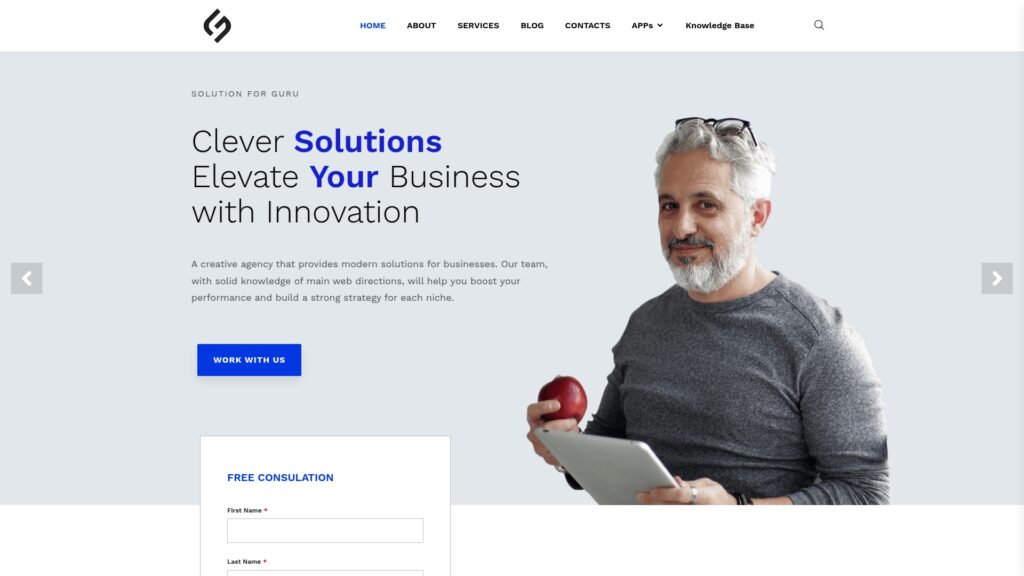
Working with Solution For Guru generally starts with a discovery phase, understanding your current expense and invoice workflow, transaction volume, and existing accounting or ERP setup. From there, the team helps shortlist which platform, or combination of platforms, genuinely fits your operational profile, rather than defaulting to whichever tool is best known. Once a platform is selected, Solution For Guru handles configuration, integration, and employee training, then stays engaged afterward to fine-tune workflows as your business changes. This end-to-end involvement often determines whether teams enthusiastically adopt a platform or gradually stop using it after the initial rollout excitement fades.
Recommended:
- What ROI Can Businesses Expect From Expense Automation Software?
- Multi-Currency Expense Management with Zoho Expense
- What Is Zoho Expense and How Does It Work?
- What Are the Biggest Challenges in Multi-Entity Expense Management?
- Whitevision vs Traditional Invoice Processing: What Changes?
- What Is Whitevision and How Does It Work?
- What Is Expense Management Software and Why Do Companies Need It?