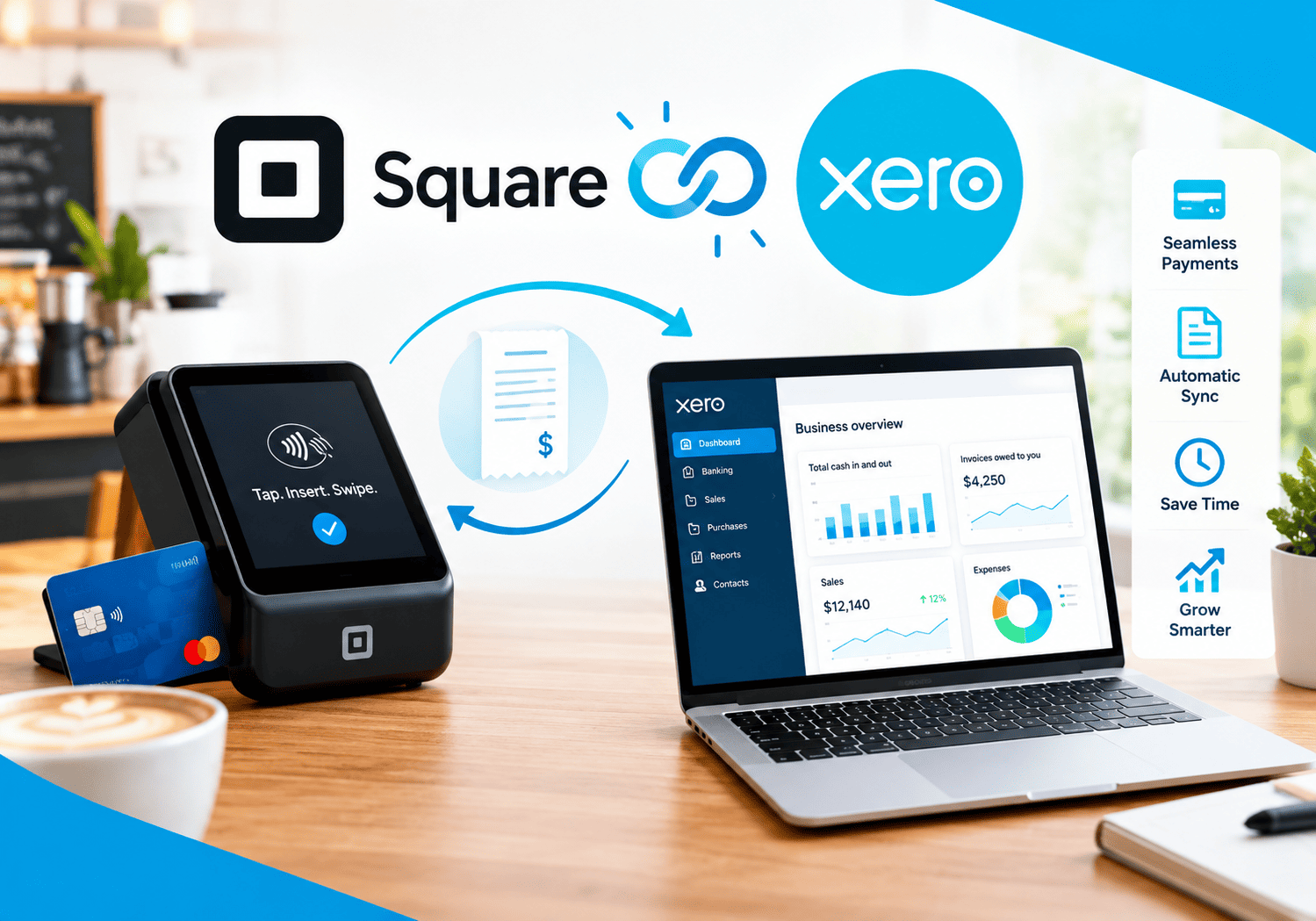
How Businesses Use Square to Accept Payments Online and In-Store

Accepting payments used to mean choosing between a clunky card terminal or a complicated online gateway. Today, thousands of small and mid-sized businesses solve this problem with a single platform instead. Square has become one of the most recognizable names in payment processing, and for good reason: it lets a business owner take a card swipe at a farmers market in the morning and process an online order from a customer across the country that same afternoon. This article explains how businesses actually use Square to accept payments both online and in-store, what fees and tools come with it, and why so many companies build their entire checkout experience around this one system.
Furthermore, as more customers expect a consistent experience whether they shop in person or through a screen, the pressure on business owners to unify their sales channels keeps growing. A shopper might browse a product online, then walk into the physical store to complete the purchase, or vice versa. Therefore, businesses need a payment system flexible enough to follow the customer rather than forcing the customer to adapt to whatever tool happens to be available. This is exactly the gap Square was designed to close, and it explains why the platform keeps appearing across so many different industries, from retail and food service to personal training and freelance consulting.
Table of contents
Quick Summary
Before diving into the details, here is a fast overview of what this article covers:
- What Square is — a payment processing and point-of-sale platform that connects in-person and online sales into one dashboard.
- In-store payments — card readers, terminals, and POS hardware that accept chip, tap, and contactless payments.
- Online payments — Square Online storefronts, payment links, invoices, and a virtual terminal for remote transactions.
- Pricing — transparent, flat-rate fees with no long-term contracts.
- Security — PCI DSS compliance and encrypted transactions across every channel.
- Extra tools — inventory, payroll, loyalty programs, and appointment scheduling built around the same payment engine.
- Best fit — small to mid-sized businesses that want simplicity; larger enterprises may eventually need more advanced processing options.
What Is Square and How Does It Relate to Accepting Payments?

Square is a credit card processing and point-of-sale platform originally built to help small businesses accept card payments without needing a traditional merchant account. Over time, it grew into a full commerce ecosystem that touches nearly every part of the payment journey, from the moment a customer taps their card to the moment funds land in a business bank account.
At its core, Square exists to answer one question business owners constantly ask: how can I accept payments in multiple places without juggling multiple systems? Instead of forcing a business to pair a separate in-store terminal with an unrelated online checkout tool, Square unifies both under one login, one reporting dashboard, and one set of transaction fees. This is precisely why the platform sits at the center of this article’s topic. Whenever a business wants to sell both in a physical location and through a website, Square typically becomes one of the first platforms considered, since it was designed from day one to bridge that exact gap between online and in-store commerce.
How Do Businesses Accept Payments In-Store With Square?
Physical retail and service businesses rely on Square’s hardware and point-of-sale software to process transactions at the counter, on the sales floor, or on the go.
What Hardware Does Square Offer for Physical Locations?
Square sells a range of devices designed for different store layouts and budgets. A small coffee cart might use the compact magstripe reader that plugs into a phone, while a busy retail store might invest in the full Square Terminal or Square Register, which includes a built-in screen, receipt printing, and card reader in one unit. Consequently, businesses of nearly any size can find hardware that matches their space and transaction volume without overspending on equipment they do not need.
How Does Square Handle Card-Present Transactions Securely?
When a customer taps, dips, or swipes a card on Square hardware, the transaction data is encrypted immediately at the point of contact. Square then routes the transaction through its processing network, confirms the payment, and syncs the sale to the business’s dashboard in real time. As a result, staff can see updated sales totals and inventory counts the moment a transaction completes, rather than waiting for an end-of-day reconciliation.
How Do Businesses Manage Staff and Registers Across Multiple Locations?
For businesses running more than one storefront, Square lets owners manage every register from a single account. Consequently, a manager can compare sales performance across locations, adjust pricing centrally, and assign staff permissions without logging into separate systems for each store.
How Do Businesses Accept Payments Online With Square?
Just as importantly, Square gives businesses several ways to accept payments without a physical card present, which matters for e-commerce, service businesses, and remote transactions.
What Tools Does Square Online Provide for E-Commerce?
Square Online lets a business build a complete storefront using a drag-and-drop website builder, then connect it directly to the same payment processing account used in-store. Because inventory and order data sync automatically, a product sold on the website reduces the same stock count as one sold at the counter. Additionally, Square Online includes support for popular digital wallets, so customers can check out using Apple Pay or Google Pay in addition to standard card payments.
How Do Payment Links and Invoices Simplify Remote Payments?
Not every business needs a full online store. A freelance photographer, for example, might simply send a payment link or an emailed invoice after a shoot. The customer clicks the link, enters their card details on a secure Square-hosted page, and the payment lands in the business’s account without any custom development work. This approach works particularly well for service-based businesses that bill clients periodically rather than running a traditional storefront.
What Is the Virtual Terminal Used For?
Square’s virtual terminal allows a business to key in card details manually, which is useful for phone orders or mail-order transactions where the card is not physically present. Meanwhile, recurring billing tools let subscription-based businesses charge customers automatically on a set schedule, eliminating the need to manually process the same invoice every month.
What Fees Does Square Charge for Payment Processing?

Transparent pricing is one of the main reasons businesses choose Square over traditional merchant account providers, which often bury fees in long contracts. The table below outlines typical Square processing costs.
| Payment Type | Typical Fee | Notes |
|---|---|---|
| In-person (card present) | Around 2.6% + 10¢ per transaction | Applies to swiped, dipped, or tapped cards |
| Online transactions | Around 2.9% + 30¢ per transaction | Applies to card-not-present sales through Square Online or payment links |
| Manually keyed-in / virtual terminal | Around 3.5% + 15¢ per transaction | Higher rate reflects increased fraud risk |
| Invoices | Around 2.9% + 30¢ per transaction | Fee charged when the invoice is paid |
| Monthly software fee | $0 on the free plan | Paid plans exist for advanced POS features |
Because these rates are flat and published openly, business owners can calculate their processing costs in advance instead of guessing at hidden interchange markups. Additionally, there are no long-term contracts, no early termination fees, and no required monthly minimums on the base plan, which lowers the barrier to entry for new businesses testing the platform.
How Does Square Support Selling Across Multiple Channels at Once?
Modern customers expect to shop however is convenient for them, whether that means walking into a store, ordering online for pickup, or paying through a link sent by text message. Square was built around this reality rather than treating each channel as a separate system.
How Does Inventory Stay in Sync Between Online and In-Store Sales?
When a product sells through the online store, Square automatically deducts that item from the same inventory count used at the physical register. Therefore, a business never accidentally oversells a product because two disconnected systems failed to communicate with each other.
How Do Reports Combine Data From Every Sales Channel?
Square’s reporting dashboard combines online and in-store transactions into one view, so an owner can see total daily revenue, top-selling products, and customer trends without exporting data from multiple platforms and merging spreadsheets manually.
What Other Business Tools Does Square Offer Beyond Payments?
Although payment processing remains its foundation, Square has expanded into a broader suite of tools that support day-to-day operations:
- Invoicing — send professional invoices and accept partial or full payments online.
- Payroll — pay employees and contractors, with tax filing support included.
- Loyalty programs — reward repeat customers automatically based on purchase history.
- Appointments — let clients book and pay for services online in advance.
- Marketing tools — send email campaigns and manage social media promotions from the same dashboard.
Consequently, a business that starts with Square purely for payment processing often finds itself using several of these adjacent tools within the first year, simply because they are already built into the same account.
The table below summarizes how Square’s core plan tiers typically differ, which helps illustrate how a business can start small and scale up without switching providers.
| Plan Level | Monthly Cost | Best For | Key Extras |
|---|---|---|---|
| Free | $0 | New businesses testing the platform | Basic POS, online store, invoicing |
| Plus | Paid monthly fee | Growing retail or restaurant businesses | Advanced inventory, staff management, dining options |
| Premium/Custom | Custom pricing | Higher-volume or multi-location businesses | Dedicated support, custom rate negotiation |
Because upgrading simply unlocks more features within the same dashboard, a business does not need to migrate customer data, retrain staff, or reconnect a website when its needs grow. This upgrade path is one more reason Square appeals to businesses planning for long-term growth rather than a short-term fix.
How Secure Is Square for Processing Customer Payments?

Security is a frequent concern for any business handling card data, and Square addresses this through several layers of protection. First, the platform maintains PCI DSS compliance, meaning it follows the payment card industry’s data security standards for storing, processing, and transmitting cardholder information. Second, transactions are encrypted from the moment a card is tapped or entered, reducing the exposure of sensitive data as it travels through the network. Third, Square monitors transactions for unusual patterns that might indicate fraud, which helps protect both the merchant and the customer.
Because these protections apply uniformly across in-store and online channels, a business does not need to configure separate security measures for each payment method. Instead, the same safeguards extend automatically to every transaction processed through the platform.
Why Do Small Businesses Choose Square Over Competing Platforms?
Several factors consistently push small business owners toward Square rather than a traditional merchant services provider.
How Fast Is Square to Set Up?
Unlike many merchant accounts that require a lengthy approval process, Square allows a business to sign up and start accepting payments almost immediately. This matters most for new businesses that cannot afford to wait days or weeks before processing their first sale.
How Does Pricing Compare to Traditional Processors?
Traditional processors often combine interchange fees, monthly minimums, and early termination penalties into confusing statements. Square instead offers one flat rate per transaction type, which makes it far easier for a small business owner to predict monthly costs.
How Well Does Square Fit Businesses That Sell Everywhere?
Because Square handles in-store, online, invoice, and mobile payments through one account, a business does not need to stitch together separate providers for each sales channel. This single-platform approach reduces both the technical overhead and the monthly software costs that would otherwise come from running multiple disconnected systems.
How Does Square Compare to Other Popular Payment Processors?
Business owners researching Square almost always compare it against Stripe and PayPal, since all three serve similar small and mid-sized business audiences. Understanding the differences helps clarify why so many brick-and-mortar businesses still gravitate toward Square specifically.
How Does Square Differ From Stripe?
Stripe is largely built for developers and online-only businesses that want deep customization through code and APIs. Square, on the other hand, is built for business owners who want a ready-made solution without needing a developer on staff. A retail shop that wants to start selling in-store today, with an online store added a week later, generally finds Square faster to launch than Stripe, which typically requires more custom setup work.
How Does Square Differ From PayPal?
PayPal is widely recognized by consumers and works well for simple online checkout, but it lacks the same depth of in-person POS hardware and inventory management that Square offers out of the box. Businesses that operate primarily online sometimes use PayPal as an additional checkout option alongside Square, since Square Online supports PayPal as a payment method too. For businesses that need one platform to handle both a physical counter and a website, Square remains the more complete option between the three.
Which Businesses Benefit Most From Choosing Square?
Retail stores, cafes, salons, food trucks, pop-up shops, and service providers who split their time between in-person appointments and online bookings tend to benefit the most from Square. Because these businesses need one system to track sales across multiple touchpoints, the unified nature of Square’s platform saves time that would otherwise go toward reconciling separate systems.
How Do Restaurants Specifically Use Square to Accept Payments?
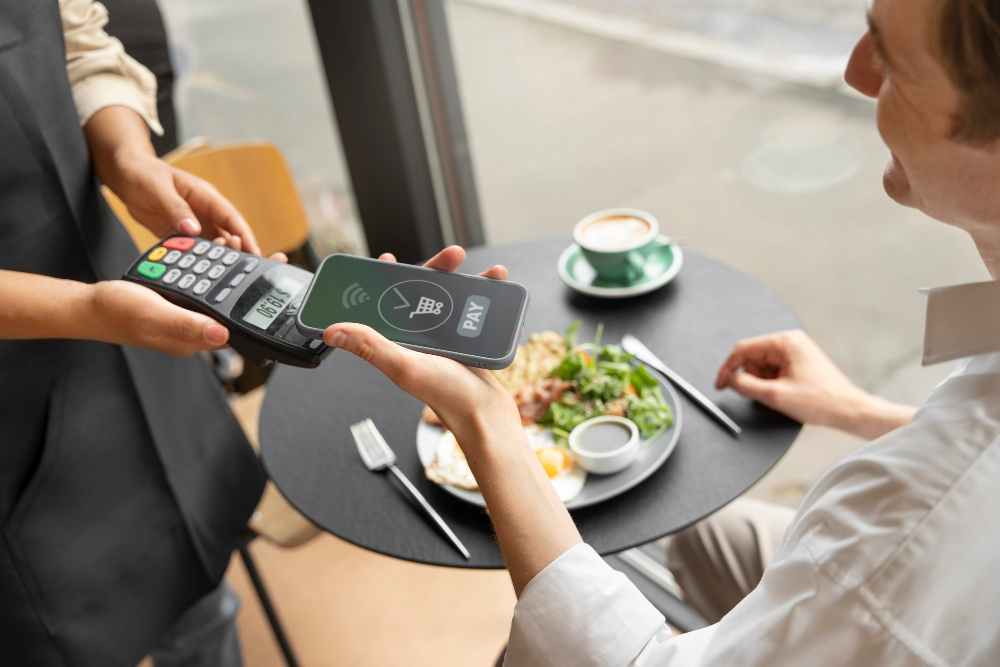
Restaurants represent one of the largest user groups on the Square platform, and they use it in a few distinctive ways.
How Does Square Handle Table-Side and Counter Ordering?
Square for Restaurants lets servers take orders and payments directly at the table using a handheld device, which speeds up turnover during busy service hours. Meanwhile, quick-service restaurants often rely on a counter-mounted Square Terminal or Register paired with a customer-facing display, so guests can see their order total and tip options before paying.
How Does Square Support Online Ordering and Delivery?
Beyond the dining room, Square Online includes built-in tools for takeout and delivery orders, allowing a restaurant to accept online orders that sync directly with the same kitchen and inventory system used for in-house dining. As a result, a restaurant does not need a separate third-party app just to handle online food orders, although Square can also integrate with popular delivery marketplaces when needed.
How Does Tip Management Work Across Channels?
Square lets restaurants configure tipping options separately for in-person and online orders, and tips collected through either channel appear in the same payroll and reporting tools. Consequently, managers can calculate tip payouts for staff without manually combining data from multiple sources.
How Does Square Support Mobile and On-the-Go Sales?
Not every business operates from a fixed location, and Square accounts for this with mobile-first tools.
How Do Vendors at Markets and Events Accept Payments?
A vendor at a farmers market or craft fair can use the Square app on a smartphone paired with a small Bluetooth card reader, allowing them to accept chip and contactless payments anywhere there is a cellular or Wi-Fi connection. Because the same account also powers a business’s storefront and in-store register, sales made at a weekend market appear alongside every other transaction in one combined report.
How Does Square Work Offline When There Is No Internet Connection?
Square includes an offline payment mode that stores transaction data locally on the device when there is no internet connection, then automatically processes those payments once connectivity returns. This feature matters for outdoor events, delivery drivers, or rural locations where a stable connection cannot always be guaranteed.
What Are the Limitations of Square for Larger Businesses?
Square is not the right fit for every business, and it is worth addressing this honestly. Larger enterprises with high transaction volumes sometimes find the flat-rate pricing more expensive than a negotiated interchange-plus rate from a traditional processor. Additionally, Square does not currently support Level 2 and Level 3 processing data, which some B2B and government buyers require for larger purchase transactions. High-risk industries, such as certain subscription or adult-content businesses, may also find that Square’s terms of service do not accommodate their transaction types. For most small and mid-sized businesses, however, these limitations rarely come into play.
Conclusion
Square has reshaped how businesses think about accepting payments by removing the traditional divide between in-store and online transactions. A retail shop can process a tap-to-pay purchase at the counter, sync that sale instantly to its online store, and send a follow-up invoice to a wholesale client, all without leaving the same platform. Transparent pricing, fast setup, strong security, and a growing set of business tools explain why Square remains one of the most widely adopted payment processing platforms for small and growing businesses today. Whether a company sells exclusively online, exclusively in a physical location, or across both, Square provides a practical, unified way to get paid.
Frequently Asked Questions
No. Square operates on a pay-as-you-go model with no long-term contracts, no monthly minimums on its free plan, and no early termination fees, which makes it accessible for new and seasonal businesses alike.
Yes. A business can accept payments entirely online through Square Online, payment links, or invoices without ever purchasing a physical card reader or terminal.
Standard transfers typically arrive within one to two business days, and many accounts also have the option to pay a small fee for instant transfers when faster access to funds is needed.
What Are the Benefits of Partnering With Solution for Guru?
Choosing a payment platform like Square is only part of building a successful online and in-store presence. Getting the most out of that platform, from a properly integrated storefront to a fast, well-optimized website, is where working with an experienced technology partner makes a measurable difference. Solution for Guru helps businesses connect payment tools such as Square with a custom-built, high-performing website rather than relying on a generic template that limits growth.
The team’s e-commerce development services focus on building secure, scalable online stores that integrate smoothly with payment processors, so checkout stays fast and reliable even during high-traffic periods. Their CRM and SaaS integration work also means a business’s Square sales data can connect to broader customer management systems, giving owners a clearer picture of customer behavior across every channel. In addition, Solution for Guru’s SEO and digital marketing services help make sure that a newly built or improved storefront actually gets found by the customers searching for it, rather than sitting unseen on page ten of search results.

Beyond the technical build, Solution for Guru provides ongoing tech consulting and cybersecurity support, which matters greatly for any business handling customer payment data. Rather than treating a website and a payment system as separate projects handled by different vendors, businesses working with Solution for Guru get one team that understands how design, security, and payment processing fit together. For a company looking to get the most value out of a platform like Square, this kind of integrated support often turns a good setup into a genuinely competitive one.
Recommended:
- What Is Square Credit Card Processing and How Does It Work?
- Xero for Small Business: Is It the Right Accounting Software for You?
- What is Xero — Overview of the Cloud Accounting Platform’s Features
- How Does FreshBooks Integrate with CRM, Payroll, and Project Management Tools?
- Financial Reporting Architecture in Zoho Books
- Zoho Books Architecture: Cloud Accounting Explained — How Does It All Work?
- FreshBooks for IT Consulting Firms: Managing Projects, Invoices, and Client Billing
- FreshBooks Review: Features, Pricing, Pros, and Cons
- Real-Time Financial Dashboards with Zoho Books
- How Can You Connect Zoho Books with Payment Gateways to Streamline Your Business Finances?
- Financial Data Migration to Zoho Books
- Zoho Books for Finance Teams: Automation and Financial Control
- How Zoho CRM Works: Data Model, Modules, and Relationships