What Are the Best Use Cases for ManageEngine Remote Access Plus in Enterprise IT?

Enterprise IT teams rarely sit near the machines they support. Employees work from home, branch offices sit in different time zones, and servers hum in data centres that nobody visits. Yet every one of those endpoints still needs patches, fixes and quick answers, and users expect help within minutes.
Remote access software closes that distance. This article walks through the strongest use cases for ManageEngine Remote Access Plus – Remote Access Software in enterprise environments. You will see where it fits, how teams apply it day to day, which security practices to pair with it and how a technology partner like Solution for Guru can help you deploy it with less friction.
Table of contents
What Should You Know at a Glance?
Here is a fast overview before we go deeper.
- Central control. ManageEngine Remote Access Plus lets technicians troubleshoot remote computers from one location and one dashboard.
- Broad platform support. The tool covers Windows, Linux and Mac computers, and it offers mobile apps for Android and iOS.
- Top use cases. Help desk support, unattended server and workstation maintenance, remote workforce support, branch office management, audits and training, and healthcare or regulated environments all benefit.
- Security features. End-user confirmation, screen blackout, role-based access control and session recording protect each connection.
- Extra admin tools. Technicians can open a command prompt, registry, event viewer and device manager remotely without interrupting the user.
- Implementation matters. Good results depend on policy, permissions and integration, not just installation.
- Expert help pays off. Solution for Guru offers integration, automation and consulting services that support a smooth rollout.
What Is ManageEngine Remote Access Plus and How Does It Fit Enterprise IT?
ManageEngine Remote Access Plus – Remote Access Software is a remote support and remote desktop management product from ManageEngine, the enterprise IT division of Zoho Corporation. The vendor describes it as secure enterprise remote access software that lets system administrators and help desk technicians troubleshoot remote computers from a central location through a unified dashboard. That description explains why it matches enterprise use cases so well: large organisations need one place to manage many distant devices.
Which Core Capabilities Define the Product?
According to a GetApp listing, the product supports Mac, Windows and Linux computers with features such as file transfer, multi-monitor support, integrated chat, session recording and collaborative troubleshooting. Its system manager tools also let technicians reach the command prompt, registry, event viewer, and printer and device management on a client machine.
The vendor’s own pages add more detail. They mention Wake on LAN, remote shutdown, in-session screen captures and customised recordings. Together, these capabilities turn a basic screen-sharing tool into a broader endpoint troubleshooting platform.
How Does It Relate to the Topic of This Article?
Enterprise IT means scale, compliance and accountability. A tool that fits this environment must handle many devices, enforce permissions and leave an audit trail. ManageEngine Remote Access Plus – Remote Access Software targets exactly those needs, which makes “best use cases” a practical question, not a theoretical one. The sections below map its features to real scenarios.
Why Do Enterprises Need Dedicated Remote Access Software?

General-purpose tools such as consumer screen-sharing apps often fall short in a corporate setting. They lack central permissions, session logs and integration with the rest of the IT stack. Enterprises therefore look for purpose-built software.
What Problems Does Enterprise Remote Access Solve?
Enterprises face several recurring pain points:
- Slow resolution. Waiting for on-site technicians stretches simple fixes into days.
- Scattered tools. Different teams use different utilities, which creates gaps in security and reporting.
- Distributed workforces. Remote staff need support outside office hours and outside the corporate network.
- Compliance pressure. Auditors want proof of who accessed which system and why.
A Capterra product page summarises the value this way: the product addresses slow, hands-on IT support, scattered endpoint administration and user downtime by giving technicians centralised remote control, unattended access, file transfer, service management and troubleshooting tools.
How Do Security Agencies View Remote Access Tools?
Security agencies treat remote access software as both a necessity and a risk. The US Cybersecurity and Infrastructure Security Agency (CISA) publishes guidance on securing remote access software, which stresses careful configuration, access control and monitoring. Enterprises should choose a platform with strong built-in controls and then apply them consistently.
How Does ManageEngine Remote Access Plus Improve Help Desk Support?

Help desk support ranks as the most common use case. Tier-one and tier-two technicians handle a constant flow of tickets, and many of them require a look at the user’s screen.
How Do Technicians Resolve Tickets Faster?
A technician opens a session from the central console, requests the user’s consent where policy demands it and works on the problem directly. Because the tool includes chat, voice and video, the technician can explain each step. The vendor also lists built-in voice, video and chat support and collaborative troubleshooting among its features. Collaborative sessions let a tier-one agent bring in a specialist without asking the user to reconnect.
Which Help Desk Scenarios Fit Best?
The following scenarios suit remote control well:
- Application crashes and configuration errors.
- Printer and driver problems.
- Profile corruption and login issues.
- Software installation and updates.
- Guided walkthroughs for non-technical users.
For each scenario, the technician saves the time that a desk visit or a long phone description would cost. Over hundreds of tickets, those minutes add up.
What Role Does Screen Blackout Play in Support?
Some tickets involve sensitive material, for example payroll files or customer records. Remote Access Plus can black out the end user’s screen and offers end-user confirmation before access, which helps prevent data leaks. These options let agents work on a machine while the tool hides what they should not see, or the reverse, depending on the policy you choose.
How Does It Support Unattended Access to Servers and Workstations?
Not every task needs the user at the keyboard. Maintenance windows often run overnight or during weekends, when nobody sits at the machine. Unattended access handles those cases.
What Maintenance Tasks Suit Unattended Access?
Administrators use unattended access for jobs like these:
- Installing updates and rebooting machines after hours.
- Checking logs and services on servers.
- Editing registry entries or configuration files.
- Running scripts through the command prompt.
- Waking machines with Wake on LAN before a maintenance job.
Reviewers on Capterra list remote control, access permissions and unattended access as the features they rate most highly for the product. Those three features form the backbone of after-hours administration.
How Do Power Controls Help?
Power control features reduce physical trips. An administrator can shut down, restart or wake a computer from the console. In a large office or a fleet of kiosks, that ability saves real travel time. It also supports energy-saving policies, because IT can power down idle machines and wake them when needed.
How Do You Deploy the Agent at Scale?
Enterprises cannot install agents on thousands of machines by hand. Capterra notes that the product supports agent deployment through Active Directory. Use that route to roll out agents to domain-joined computers in bulk, then test a pilot group before you go wider.
How Does It Help Manage a Remote and Hybrid Workforce?
Hybrid work changed IT support permanently. Staff now log in from kitchens, co-working spaces and airport lounges, and IT cannot walk over to their desks.
How Do Technicians Support Employees Working from Home?
Technicians connect to the employee’s device over the internet, fix the problem and log the session. The vendor markets the product for exactly this situation. Its pages describe enterprise-class security standards that suit remote work, along with cross-platform compatibility and advanced remote tools. That combination lets a support team serve staff on different operating systems without switching tools.
Can Technicians Support Mobile Devices?
Yes, in part. The vendor lists mobile apps for Android and iOS alongside the desktop platforms. Technicians and administrators can therefore reach the console from a phone or tablet during an emergency. Check the current documentation for the exact capabilities of each mobile app before you plan around them.
How Do You Keep Remote Support Consistent?
Consistency matters when different agents handle similar tickets. Create standard operating procedures that cover how to request consent, how to explain actions and how to close a session. Then train every agent on the same procedure. The tool supplies the technology, and your process supplies the discipline.
How Can Branch Offices and Multi-Site Organisations Use It?
Multi-site organisations often struggle with uneven IT coverage. A head office may have a full team, while a small branch has nobody on site.
How Does Central Management Reduce Branch Office Costs?
A central team can support every branch from one console. Retail chains, clinics, schools and logistics firms benefit most, because they have many small locations with similar equipment. Instead of hiring a technician for each site, the company keeps a smaller central team and handles most issues remotely.
Which Tasks Do Administrators Handle Remotely?
Typical branch office tasks include:
- Resetting configurations on point-of-sale terminals.
- Restarting frozen kiosks.
- Updating software on shared computers.
- Troubleshooting network printers.
- Transferring files and templates.
How Do Time Zones Affect Support?
A global company can stagger its support teams across regions. A technician in one region can pick up an urgent ticket from another region after hours. Central logging keeps a record of what each technician did, so the handover stays clear.
How Does It Support Security, Compliance and Auditing?
Compliance often drives the purchase decision. Auditors ask who accessed a system, when and what they did. Remote access software must answer those questions.
Which Security Controls Does the Product Offer?
Security controls sit at several layers. ManageEngine states that it strengthens security with multi-factor authentication and single sign-on. It also lists role-based access control and end-user confirmation. Together, these controls limit who can connect and what they can do.
How Does Session Recording Help with Audits?
Reviews describe remote session recording as useful for both education and auditing. Recordings let managers review a difficult session, coach a junior technician or investigate a complaint. They also give auditors evidence that your team follows its policy. Always check local privacy law and inform users about recording.
Does It Help with HIPAA Requirements?
The vendor describes its remote control as HIPAA compliant. Treat that claim as a starting point. Compliance depends on how you configure and use the tool, not on the tool alone. The US Department of Health and Human Services publishes the HIPAA Security Rule, and your compliance officer should map your remote access practices against it.
What Do NIST Guidelines Add?
The National Institute of Standards and Technology (NIST) offers SP 800-46 on remote access and telework security. It recommends layered controls, careful authentication and regular review. Use it as a checklist when you write your remote access policy.
Which Use Cases Fit Which Teams?
Different teams use the same platform in different ways. The table below summarises common patterns.
| Team | Primary use case | Key features used |
|---|---|---|
| Help desk | Live ticket resolution | Remote control, chat, file transfer |
| System administrators | After-hours maintenance | Unattended access, command prompt, registry, Wake on LAN |
| Security and compliance | Audits and access review | Session recording, role-based access, multi-factor authentication |
| Branch IT | Multi-site support | Central console, remote shutdown, file transfer |
| Training and QA | Coaching and review | Session recording, screen capture |
| Managed service teams | Multiple client environments | Role-based permissions, collaboration |
How Do You Choose Which Use Case to Start With?
Start where the pain feels sharpest. Many enterprises begin with help desk support, because the return shows up quickly in ticket times. They then add unattended access and audit workflows once the team feels comfortable.
Can You Combine Several Use Cases at Once?
Yes, but stage the rollout. A phased approach reduces risk and lets you fix configuration problems early. Add one team or one region at a time, and gather feedback after each phase.
How Does Remote Access Plus Fit into a Wider IT Management Stack?
Remote access rarely stands alone. It works best when it connects with patching, asset management, ticketing and endpoint management.
Does It Belong to a Larger Product Family?
ManageEngine offers a broad portfolio that includes endpoint management, patching and service desk tools. Some listings place Remote Access Plus alongside patch management and scheduling in IT management categories. That family link helps enterprises that already use other ManageEngine products, because they can keep a consistent interface and vendor relationship. Check the current documentation for supported integrations before you plan a design.
What About APIs and Custom Integration?
Integration needs deserve a careful check. One third-party review site states that the product does not currently offer API access, so confirm the current situation directly with the vendor. If your workflow needs custom automation, plan how you will bridge the gap, for example through supported integrations, scheduled tasks or middleware built by a partner.
Which Metrics Show That the Tool Works?
Track a small set of measurements:
| Metric | What it tells you |
|---|---|
| Time to resolution | Whether remote support shortens fixes |
| Tickets resolved remotely | How much on-site work you avoid |
| Session failure rate | Where connectivity or permission problems hide |
| Audit findings | Whether your controls satisfy reviewers |
| User satisfaction | How employees feel about the support experience |
How Much Does It Cost and Which Edition Fits?

Budget questions come up early. The vendor describes its pricing as flexible. Its remote access page says plans bill monthly or annually and start at around five US dollars per computer per year. Prices change, so confirm current numbers on the vendor’s site before you build a business case.
What Do Free and Paid Editions Offer?
Listing sites describe a free edition with limited features, along with paid plans that add capabilities such as advanced remote control, session recording, remote shutdown, task manager, registry, command prompt and device manager. A free edition works well for a proof of concept. Enterprises with many endpoints usually need a paid edition, because the extra tools and permissions matter at scale.
How Do You Estimate Total Cost?
Include more than the licence fee. Add deployment time, training, integration work and ongoing administration. Then compare the total with the cost of the delays you want to avoid, such as user downtime and travel. That comparison gives a fairer picture than the sticker price alone.
How Do You Deploy It Successfully in a Large Organisation?
A good deployment follows a repeatable path. Rushing often leads to permission problems and frustrated users.
What Steps Should Your Rollout Follow?
- Define goals. Decide which use cases matter most.
- Write the policy. Set rules for consent, recording and access.
- Design roles. Map permissions to job functions.
- Pilot. Test with one team and a limited set of endpoints.
- Deploy at scale. Use Active Directory or another supported method.
- Train. Teach agents and inform users.
- Review. Check metrics, logs and feedback, then adjust.
What Mistakes Should You Avoid?
Enterprises commonly stumble in a few places. They grant broad permissions “just to get started” and never tighten them. They skip user communication, which makes employees suspicious of remote sessions. Also they forget to review logs. Avoid these traps by assigning a clear owner and scheduling regular reviews.
How Do You Communicate with End Users?
Tell employees when and why IT may connect to their machines. Explain consent prompts, recording and screen blackout in plain language. Transparency builds trust and reduces the risk that employees mistake a legitimate session for an attack.
What Are the Key Takeaways?
ManageEngine Remote Access Plus – Remote Access Software fits enterprise IT best where scale, control and accountability matter. Help desks resolve tickets faster. Administrators maintain servers and workstations after hours through unattended access. Support teams serve remote and hybrid staff on Windows, Mac, Linux and mobile devices. Multi-site organisations manage branch offices from one console. Security and compliance teams rely on role-based access, multi-factor authentication and session recordings to satisfy auditors.
Success still depends on your approach. Write a clear policy, assign permissions carefully, roll out in phases and measure results. Confirm vendor claims, such as HIPAA readiness, pricing and integration options, directly with ManageEngine and your compliance team. Follow guidance from CISA, NIST and HHS to keep sessions safe.
Finally, think about expert support. Solution for Guru can help you integrate, automate and secure your remote access workflow, so your team spends less time on setup and more time solving problems. Explore ManageEngine Remote Access Plus – Remote Access Software through a small pilot, and expand once the results support it.
What Questions Do IT Teams Ask Most About ManageEngine Remote Access Plus?
The vendor lists Windows, Linux and Mac as supported operating systems, with mobile apps for Android and iOS. Support details can change between versions, so check the current system requirements before deployment.
Yes, in general. The vendor states that the software suits enterprises as well as small organisations. Larger companies tend to use the full feature set, including Active Directory deployment and role-based access, while smaller teams may start with a limited edition.
The product offers several controls. It provides end-user confirmation, screen blackout and role-based access control. Combine these with a written policy, a clear user notice and regular log reviews. Doing so protects employees and helps you meet privacy and audit expectations.
How Can Solution for Guru Help You Get More from Remote Access Plus?
Software delivers value only when you configure it well and connect it to your processes. Many enterprises lack the spare capacity to do that work alone.
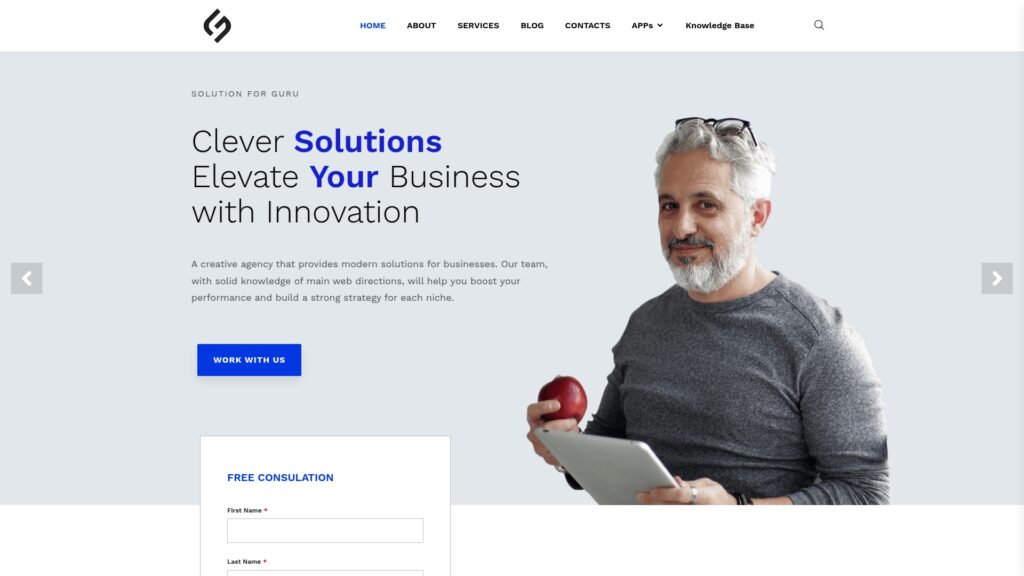
Solution for Guru is a technology solutions company. Its website lists services such as custom web development, UI/UX design, SEO and digital marketing, AI and automation, CRM and SaaS integrations, cybersecurity and data protection, and tech consulting and strategy. The company also works with a long list of business platforms, including service desk and IT management tools.
What Are the Benefits of Working with Solution for Guru?
- Integration expertise. The team can help you connect remote access with your ticketing, CRM or service desk systems, so agents stop switching between screens.
- Automation. Its automation focus helps you reduce repetitive tasks, such as logging session details or routing tickets.
- Security guidance. Cybersecurity and data protection services help you review permissions, authentication and privacy practices.
- Strategic planning. Tech consulting helps you decide which use cases to tackle first and how to phase the rollout.
- Tailored solutions. The company builds strategies around your workflows instead of forcing a generic template.
- Single partner for many needs. If you also need a support portal, a knowledge base or an SEO-friendly help centre, the same team can handle it.
- Free consultation. Its website offers a consultation form, so you can discuss your goals before you commit.
When Should You Bring in a Partner?
Consider outside help when you must integrate several systems, when your team lacks time or when regulation raises the stakes. Keep an internal owner for the project, though. A partner speeds up the work, but your organisation still owns the decisions.
Recommended:
- How Does Zoho Assist Support Android Endpoints Remotely for Mobile Device Support?
- How Does Zoho Assist Help Remote Customer Support Teams Run Attended Sessions Without Installations?
- What Are the Best Practices for MSPs Using ManageEngine Remote Access Plus?
- Why Businesses Choose ManageEngine Remote Access Plus Instead of Traditional Remote Desktop
- ManageEngine Remote Access Plus Review
- Why Businesses Choose Zoho Assist for Remote Support
- Zoho Assist – Review, Feedback, Price, Pros and Cons
- 12 Jobs You Wouldn’t Have Without Remote Access Software
- What Are the Use Cases of Remote Access Software Across Different Industries?
- ManageEngine Remote Access Plus: Is This the Best Enterprise Remote Support Tool in 2026?
- Remote Access Security Model: Encryption and Compliance — What Does Every Enterprise Need to Know?
- Remote Access Software for Enterprise IT Support
- Secure Remote Access for Corporate Networks
- Zero Trust and Remote Access: A Perfect Match?
- What Is the Role of Remote Access Software in IT Support and Help Desk Operations?
- Common Challenges in Implementing Remote Access Software — and How to Overcome Them
- Performance Optimization Tips for Remote Access Connections
- Remote Access in Secure Operations: Professions Where It’s Mission-Critical
- How AI and Automation Are Shaping the Future of Remote Access