How Can Developers Automate Document Routing with Whitevision?

Every business runs on documents. Invoices, receipts, order confirmations, and delivery notes arrive by email, paper, and file transfer, and someone must send each one to the right person at the right time. When that routing relies on manual effort, errors multiply and approvals stall.
This article explains how developers can design automated document routing around Whitevision. It covers the routing architecture, the platform’s core capabilities, integration patterns, validation rules, security, testing, and the practical steps that turn a manual process into a reliable workflow.
Table of contents
What Is the Quick Summary of This Article?
- Document routing means capturing a document, identifying it, extracting its data, validating it, and sending it to the right approver or system.
- Whitevision automates much of this chain for finance teams through OCR, AI extraction, matching, approval workflows, and accounting integrations.
- Developers add the most value by designing clear routing rules, validation checks, exception handling, and integrations around the platform.
- Public sources list an API feature for Whitevision but give no technical details, so developers should confirm API scope, authentication, and limits with the vendor before they build.
- Careful design and expert guidance from a partner such as Solution for Guru help teams launch faster and avoid costly rework.
What Is Whitevision B.V., and How Does It Relate to Document Routing?

Whitevision B.V. is a Dutch software company based in Breda, founded in 2005, according to a TechImply company profile. It builds automation software that reduces repetitive administrative work in procurement and finance. Its main product reads incoming business documents, validates them, matches them to orders, and routes them through approval workflows.
How Does the Platform Handle Documents from Start to Finish?
The TechImply profile describes four stages. First, the software collects documents from XML files, PDFs, email, and paper into one central place. Second, it recognizes content through OCR and AI, extracting header and line-item data. Third, it processes documents by matching invoices to orders and receipts and flagging discrepancies. Finally, it routes documents through customizable approval workflows that users reach through a browser or mobile app.
Which Features Matter Most for Routing?
Capterra and GetApp list about 60 features for Whitevision. The ones that matter most for routing include:
- Data extraction and OCR
- Document classification
- Approval workflows
- Purchase order reconciliation
- Duplicate payment alerts
- Receipt and expense management
- Audit trail and archiving
- Spend control and reporting
- Accounting integrations
Why Do Developers Care About This Platform?
Routing logic touches many systems: email inboxes, ERP software, approval tools, and reporting databases. Developers connect these pieces, enforce business rules, and keep data consistent. Whitevision handles the document intelligence, so developers focus on the rules and integrations that make each company’s process unique.
Where Does Whitevision Fit in the Wider Picture?
The platform emphasizes automation, mobile receipt capture, approval workflows, accounting integrations, and centralized visibility into spending. Together, these strengths make it a natural hub for the document-driven parts of finance operations. Developers still design how that hub connects to the rest of the technology stack.
Why Does Manual Document Routing Fail as Companies Grow?

Manual routing works for a handful of documents per week. It breaks quickly when volume rises.
What Problems Appear Most Often?
Teams usually report the same issues:
- Documents sit in shared inboxes until someone notices them.
- Approvers lose track of which invoices need action.
- Staff retype data from PDFs into accounting systems.
- Duplicate invoices slip through and cause double payments.
- Auditors cannot trace who approved what, and when.
How Do These Problems Affect the Business?
Delays damage supplier relationships and miss early-payment discounts. Errors waste staff time on corrections. Weak audit trails create compliance risk. Moreover, managers lack a clear view of spending until the month ends, which makes budget control reactive.
Which Problems Does Automation Solve?
| Problem | Manual Process | Automated Routing |
|---|---|---|
| Slow intake | Staff check inboxes and sort files | The platform collects documents centrally |
| Data entry errors | Staff retype fields | OCR and AI extract the fields |
| Missed approvals | Email chains and reminders | Workflow rules assign and track approvals |
| Duplicate payments | Staff notice duplicates by chance | Duplicate alerts flag repeats |
| Weak audit trail | Scattered emails and spreadsheets | The system logs every action |
| Late spending visibility | Month-end reports | Central dashboards update continuously |
What Does a Document Routing Architecture Look Like?
Good routing follows a repeatable pipeline. Developers who understand the stages design more reliable systems.
Which Stages Make Up the Pipeline?
Independent guides on AI document processing describe a similar sequence. Fast.io, for example, outlines ingestion, classification, extraction, validation, and routing. The table below maps those stages to Whitevision’s capabilities.
| Stage | Purpose | Whitevision Capability |
|---|---|---|
| Ingestion | Receive documents from email, files, and paper | Central collection from XML, PDF, email, and paper |
| Classification | Identify the document type | Document classification |
| Extraction | Pull data into structured fields | OCR and AI recognition |
| Validation | Check completeness and consistency | Matching, discrepancy flags, and duplicate alerts |
| Routing | Send the document to the right person or system | Approval workflows and accounting integrations |
| Audit | Record every action | Audit trail and archiving |
Why Should Developers Separate Stages?
Separate stages make troubleshooting easier. If routing fails, you can tell whether the problem started at extraction, validation, or the final hand-off. Separate stages also let you improve one step without rewriting the others.
What Role Does Human Review Play?
Automation should not hide uncertainty. Fast.io recommends sending failed validations to human review. Apply the same principle: when the system cannot read a document confidently or finds a mismatch, route it to a person instead of guessing. This approach protects accuracy and builds trust in the system.
How Do Developers Design Routing Rules That Work?

Rules turn a generic platform into a process that fits your business. Developers translate policy into logic, and good design prevents later confusion.
Which Attributes Can Drive Routing Decisions?
Common routing attributes include:
- Document type, such as invoice, delivery note, or order confirmation
- Supplier or vendor
- Amount, including thresholds for escalation
- Department or cost center
- Purchase order match status
- Project or contract reference
- Country or tax category
What Does a Sample Rule Set Look Like?
The table below shows an illustrative example. Adapt every threshold to your own policy.
| Condition | Action |
|---|---|
| Invoice matches a purchase order and receipt | Route to the budget owner for a quick approval |
| Invoice has no purchase order | Route to the purchasing manager first |
| Amount exceeds a set threshold | Add a second approver |
| Supplier appears for the first time | Route to finance for verification |
| Duplicate alert triggers | Hold the document and notify accounts payable |
| Extraction confidence looks low | Route to a reviewer for manual correction |
How Do You Keep Rules Maintainable?
Document every rule in plain language, and store the logic in one place. Name rules clearly, and review them each quarter. When policies change, update the rule and note the reason. Without this discipline, rule sets grow into tangled structures that nobody dares to touch.
How Do You Handle Exceptions?
Exceptions happen daily: a missing purchase order, an unreadable scan, or an approver on leave. Design fallback paths in advance. For example, route to a delegate when an approver is absent, and send unreadable documents to a review queue with a clear reason. Clear fallback paths keep documents moving instead of vanishing.
How Does Whitevision Support Approval Workflows?
Approvals form the heart of document routing in finance. Whitevision builds approval handling into the platform.
What Can Approval Workflows Do?
According to the TechImply profile, Whitevision routes documents through customizable approval workflows. Approvers work in a browser or a mobile app, so they act wherever they are. Therefore, approvals no longer wait for someone to return to a desk.
How Does Mobile Access Help?
Mobile access shortens approval cycles. An approver reviews the invoice image, checks the extracted data, and approves or rejects within minutes. Capterra lists Android, iPhone, and iPad support for the platform. Faster approvals help companies capture early-payment discounts and keep suppliers happy.
How Do Receipts and Expenses Fit into the Workflow?
Invoices from suppliers are not the only documents that need routing. Employees also submit receipts for travel, meals, and small purchases. Capterra lists receipt and expense management among Whitevision’s features, and the platform supports mobile devices. Staff can therefore send receipts to the same approval process, instead of emailing photos to a manager. Confirm the exact capture and submission options with the vendor during your evaluation, because listings describe features at a high level.
How Does Centralized Spend Visibility Help Managers?
When every document passes through one platform, managers see spending in one place. Capterra lists spend control and reporting among the features, so finance leaders review commitments, approvals, and open items without chasing spreadsheets. This visibility supports better budget decisions, and it exposes unusual patterns early, such as a supplier whose invoices suddenly rise.
How Do Audit Trails Support Compliance?
Capterra and GetApp list audit trail and archiving among the features. An audit trail records who handled each document and what they decided. Auditors then trace decisions without searching mailboxes, and managers resolve disputes quickly.
Which Approval Models Do Teams Use?
| Model | How It Works | Best Fit |
|---|---|---|
| Single approver | One person approves each document | Small teams and low-value items |
| Sequential approval | Approvers act in a fixed order | Layered authority levels |
| Threshold-based approval | Amount decides who approves | Mixed-value invoices |
| Department-based approval | Cost center decides the approver | Decentralized organizations |
How Do Developers Integrate Whitevision with Other Systems?
Integration turns a good tool into a connected process. Developers need to understand what the platform offers and where they must build.
Which Integrations Does Whitevision List?
GetApp and Capterra list 19 integrations for Whitevision. Named examples include Exact Online Accounting, Exact Globe, AFAS Software, AccountView, PROACTIS, 4PS Construct, and PowerAll. The TechImply profile adds that the software integrates with various ERP systems and supports customization. Check the current list directly with the vendor, because listings change.
What Do We Know About the API?
GetApp lists API as a feature, but the page gives no details about availability, documentation, or access terms. Because public sources do not describe endpoints, authentication, or rate limits, developers should ask the vendor these questions before they commit to a design:
- Which operations does the API support: document upload, status queries, approvals, exports?
- Which authentication methods does it use?
- Does the platform send webhooks or events, or must your system poll?
- What are the rate limits and file size limits?
- How does versioning work, and how does the vendor announce changes?
- Which environments exist for testing?
How Do General API Patterns Apply?
Even without vendor details, solid engineering habits apply. Nutrient’s guide on API-driven workflows recommends running external calls on the server to protect keys, storing secrets as credentials instead of configuration, setting timeouts, adding retry logic for temporary failures, and defining fallback behavior. Follow these habits in any integration you build around Whitevision.
Which Integration Patterns Fit Best?
| Pattern | How It Works | When to Use It |
|---|---|---|
| Native accounting connector | The platform pushes approved data to the accounting system | Standard bookkeeping flows |
| Scheduled export | A job pulls approved documents at set times | Simple batch processes |
| Event-driven sync | An event triggers an update in another system | Near real-time needs, if the vendor supports it |
| Middleware layer | An integration service translates data between systems | Complex or multi-system landscapes |
Why Use a Middleware Layer?
Middleware isolates your other systems from vendor changes. If the platform updates a field, you adjust one mapping instead of many integrations. It also gives you a single place to log, monitor, and retry failed transfers.
How Should Developers Handle Errors and Retries?
Integrations fail from time to time. A network drops, an accounting system goes offline, or a field contains an unexpected value. Plan for these events. Use timeouts so calls do not hang, and retry temporary failures with increasing delays between attempts. Move documents that fail repeatedly into a clear exception queue, and alert the owner. Finally, log each failure with enough detail to diagnose it quickly. Nutrient’s guidance on timeouts, retries, and fallback behavior supports this approach.
How Do Developers Validate and Secure Document Data?

Automation increases speed, and speed magnifies mistakes. Validation and security keep the benefits without the risks.
Which Validation Checks Should You Add?
Fast.io recommends checks on required fields, formats, and cross-field math, such as totals against line items, plus duplicate detection. Apply these checks to every document:
- Required fields, such as supplier, date, and amount
- Valid date and currency formats
- Totals that match line items and tax
- Supplier details that match your master data
- Purchase order references that exist and remain open
- Duplicate invoice numbers from the same supplier
How Should You Treat Extraction Confidence?
OCR and AI produce confident and uncertain results. Fast.io notes that extracted fields should carry confidence scores, but it does not define thresholds. You should define your own. Start with a conservative threshold, route anything below it to human review, and tighten the threshold as you measure accuracy over time.
Which Security Practices Matter?
Financial documents contain sensitive data. Protect them with these practices:
- Limit access by role, so staff see only the documents they need
- Store credentials in a secrets manager, never in code
- Encrypt data in transit and at rest
- Log every access and change
- Keep originals separate from processed copies
- Define retention periods that match legal requirements
What About Data Privacy?
Nutrient notes that sending documents to third-party AI services raises privacy questions. Ask the vendor where it stores data, which sub-processors it uses, and how it handles deletion. In Europe, align your design with GDPR requirements, and involve your data protection officer early.
How Do You Test and Monitor an Automated Routing Workflow?
Testing proves that rules behave as intended. Monitoring proves that they keep behaving.
What Should You Test Before Launch?
Build a test set that reflects real documents: clean invoices, blurry scans, multi-page PDFs, foreign-language documents, and edge cases. Then check each rule against that set. Include documents that should fail, such as duplicates and invoices with wrong totals, to prove that your safeguards work.
Which Metrics Should You Monitor?
| Metric | What It Reveals | Action to Take |
|---|---|---|
| Straight-through rate | Share of documents that need no manual touch | Improve rules and extraction |
| Average approval time | Speed of the approval chain | Fix bottlenecks and escalate delays |
| Exception rate | Share of documents routed to review | Review the top causes |
| Duplicate catch rate | Effectiveness of duplicate controls | Tune matching rules |
| Integration failure rate | Reliability of connections | Add retries and alerts |
| Cost per document | Efficiency of the process | Track trends over time |
How Do You Document the Workflow for Your Team?
Documentation protects your investment when people change roles. Write a short guide that explains each document type, its routing rules, the approvers, and the fallback paths. Add a diagram of the integrations, a contact list for the vendor, and a log of rule changes. Store the guide where the whole team can find it, and review it each quarter. Clear documentation shortens onboarding for new developers and prevents knowledge from living in one person’s head.
How Do You Run a Safe Rollout?
Start with one document type and one team. Run the new workflow alongside the old process for a short period, and compare results. After the numbers confirm accuracy, expand to more document types and teams. This phased approach limits risk and builds confidence.
How Do You Build a Document Routing Project Step by Step?

A structured plan keeps the project on track.
What Steps Should Developers Follow?
- Map the current process. Trace each document from arrival to payment.
- Define success measures. Choose targets for speed, accuracy, and cost.
- Design the routing rules. Write them in plain language first.
- Confirm integration options. Ask the vendor about the API, events, and connectors.
- Build the integrations. Use middleware where it adds value.
- Configure validation and exceptions. Add checks and fallback paths.
- Test with real samples. Include difficult documents.
- Train the users. Show approvers and reviewers how the workflow works.
- Launch in phases. Start small, measure, and expand.
- Review regularly. Update rules as policies and suppliers change.
What Mistakes Should You Avoid?
- Automating a messy process without cleaning it first
- Hard-coding thresholds that nobody can change
- Skipping exception paths
- Ignoring audit and retention requirements
- Building integrations that depend on undocumented behavior
- Forgetting to train approvers
Who Should Join the Project Team?
Include a finance owner, a developer, an approver representative, and a security or compliance contact. Cross-functional teams catch problems that a single group would miss.
What Are the Strengths and Limitations of Whitevision for Developers?
A balanced view helps you plan realistically.
What Strengths Stand Out?
Whitevision focuses on a well-defined problem: inbound documents in finance. Its listed features cover extraction, matching, approvals, audit trails, and accounting integrations. The company states that it serves more than 1,650 clients and processes roughly 18 million documents a year, although those figures come from the company itself. Capterra also lists support for Dutch, English, French, and German, plus customer support by email, phone, knowledge base, and forum.
What Limitations Should You Consider?
Public information leaves gaps. Pricing follows a per-feature model without published prices, API details do not appear in public listings, and review data on the major directories looks thin or inconsistent. In addition, the listed countries focus on Belgium, Germany, the Netherlands, the UK, and the US. Treat these gaps as questions for your evaluation, not as reasons to rule the product out.
How Should You Evaluate the Platform?
Request a demo with your own documents, ask for API documentation, and speak with reference customers in your industry. Compare the results against alternatives that appear on directories, such as Veryfi, AutoEntry, and Square 9. A hands-on pilot answers more questions than any brochure.
What Are the Key Conclusions About Automating Document Routing with Whitevision?
Automated document routing replaces slow, error-prone manual work with a predictable pipeline. Whitevision B.V. supports that pipeline through document collection, OCR and AI extraction, matching, approval workflows, mobile access, audit trails, and accounting integrations. Developers then add clear rules, validation checks, exception paths, and integrations that fit their business.
However, careful planning matters. Public sources give limited detail about the API, pricing, and reviews, so teams should ask the vendor direct questions and run a pilot before they commit. Strong validation, security, and monitoring protect accuracy as volumes grow.
Therefore, start with one document type, measure the results, and expand step by step. Finally, consider partnering with Solution for Guru to design the workflow, connect your systems, and train your people, so your automation delivers lasting value.
Frequently Asked Questions
According to Capterra, Whitevision processes documents such as purchase invoices, service notifications, order confirmations, order forms, and delivery notes. It captures, validates, matches, and routes them into workflows. Confirm the exact document types for your use case during a demo.
GetApp lists an API among the platform’s features, but public sources do not describe its scope, authentication, or limits. Ask Whitevision for current API documentation and test access before you design an integration.
Capterra and GetApp list 19 integrations, including Exact Online Accounting, Exact Globe, AFAS Software, AccountView, PROACTIS, 4PS Construct, and PowerAll. Availability may change, so verify the current list with the vendor.
What Are the Benefits of Cooperation with Solution for Guru?
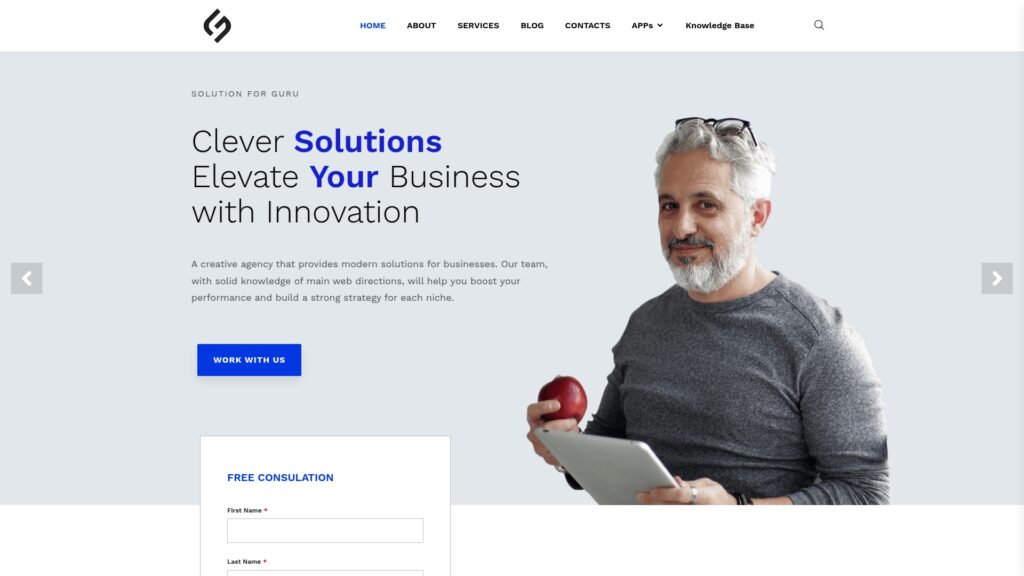
Solution for Guru is a CRM and software implementation consultancy. The company helps businesses select, configure, and connect the systems that run daily operations. For teams that automate document routing with Whitevision, that experience delivers practical value.
How Does Solution for Guru Support Implementation?
Solution for Guru studies your current document flows and designs the workflow around them. Consultants map processes, define routing rules, configure approvals, and plan the rollout. As a result, your team launches with a design that fits your business instead of a generic setup.
How Does Solution for Guru Help with Integrations?
Document routing touches accounting, ERP, CRM, and reporting systems. Solution for Guru connects these tools so data flows without manual copying. Clean integrations also reduce the long-term maintenance burden on your development team.
How Does Solution for Guru Train Your Team?
Software delivers value only when people use it well. Solution for Guru trains approvers, finance staff, and administrators on the features they use daily. Trainers also document your processes, so new hires learn them quickly.
What Business Benefits Can You Expect?
| Benefit | What It Means for Your Team |
|---|---|
| Faster setup | A clear plan shortens the path to your first automated workflow |
| Cleaner data | Consistent rules improve accuracy and reporting |
| Better adoption | Training builds confidence among users |
| Connected systems | Finance, ERP, and CRM share information |
| Ongoing guidance | A consultant supports you as volumes grow |
Visit solution4guru.com to discuss your needs and plan an implementation that fits your organization.
Recommended:
- Best Accounting Integrations for Moss
- How Does Whitevision Support Purchase-to-Pay Automation?
- How Does Whitevision Help Shared Service Centers Automate Document Workflows?
- How Does Moss Simplify Corporate Expense Management?
- AI Document Processing vs. Traditional OCR: What Businesses Need to Know
- How Intelligent Data Extraction Works in Whitevision
- HR Analytics in HoorayHR
- Digital HR Transformation with HoorayHR
- How Whitevision Helps Finance Teams Manage High Document Volumes
- Employee Onboarding Best Practices with HoorayHR
- Integrating Whitevision with Accounts Payable Software
- Whitevision AI Document Processing: Common Business Use Cases
- What KPIs Should You Track in Expense Management?
- Zoho Expense Pricing Explained: Plans, Features, and Costs
- Whitevision vs Moss: Which Platform Fits Your Finance Workflow Better?
- Key Features of HoorayHR
- Zoho Expense Review: Pros, Cons, and Key Features
- HoorayHR ROI: How Businesses Save Time with HR Automation
- How Long Does It Take to Implement HoorayHR?
- HoorayHR Review: Features, Pros, Cons, and Best Use Cases