Digital HR Transformation with HoorayHR

For decades, HR departments ran on spreadsheets, paper contracts, and email chains. That approach worked when teams were small, but as companies grow, manual HR administration quickly becomes a bottleneck. Leave requests get lost, contract renewal dates slip through the cracks, and HR staff spend more time chasing paperwork than supporting people.
Digital HR transformation solves this problem by moving core HR processes onto a single, cloud-based platform. Instead of juggling disconnected tools, HR teams and employees alike get one place to manage everything from onboarding to performance reviews. In this article, we’ll explore what digital HR transformation actually means, why it matters more than ever in 2026, and how a platform like HoorayHR helps small and medium-sized businesses make this shift without a lengthy or expensive rollout.
Table of contents
Quick Summary
Here’s a fast look at what this guide covers before we go into detail:
| Topic | What You’ll Learn |
|---|---|
| Why digital HR matters | The operational and strategic reasons manual HR no longer scales |
| What HoorayHR does | Core features covering leave, absence, time tracking, and development |
| Key benefits | How automation improves accuracy, compliance, and employee experience |
| Implementation steps | A practical roadmap for rolling out a digital HR platform |
| Common challenges | What to watch for during adoption, and how to address it |
| Partner support | How working with a digital solutions team like Solution for Guru can support your rollout |
How Does HoorayHR Relate to Digital HR Transformation?

HoorayHR is a cloud-based, all-in-one HR platform built specifically for small and medium-sized businesses. It brings together digital personnel files, leave registration, absence management, time tracking, contract management, and employee development tools into a single system that both HR teams and employees can access from the web or a mobile app.
This directly reveals the topic of this article: digital HR transformation isn’t an abstract concept that only large enterprises with big IT budgets can pursue. It’s a practical, achievable shift that platforms like HoorayHR make accessible to growing companies. Rather than requiring a company to overhaul its entire technology stack, HoorayHR consolidates the HR tasks that used to live across spreadsheets, email inboxes, and paper folders into one dashboard.
The platform reports that 96% of its customers are highly satisfied, and it holds ISO 27001 certification, which speaks to the data security standards it maintains while handling sensitive employee information. Businesses can start with a 14-day free trial, and the platform includes onboarding support at no extra cost, lowering the barrier for companies taking their first step toward digital HR.
Because HoorayHR integrates with popular payroll, accounting, and workspace tools like Nmbrs, Loket.nl, Slack, and Microsoft Teams, it also fits into an existing software ecosystem rather than forcing a company to replace every tool it already uses. This combination of breadth, simplicity, and integration is exactly what makes it a relevant case study for understanding digital HR transformation in practice.
Why Does Digital HR Transformation Matter for Growing Businesses?

As companies scale past a handful of employees, HR administration becomes noticeably more complex. Recognizing why this shift matters helps explain why so many SMEs are prioritizing it in 2026.
What Happens When HR Stays Manual Too Long?
Manual systems cannot handle growing volumes of data, evolving compliance requirements, and increasingly complex employee interactions. Spreadsheets that worked fine for ten employees start breaking down at thirty, and by the time a company reaches fifty or more, tracking leave balances, contract renewal dates, and absence patterns by hand becomes genuinely risky. Errors creep in, deadlines get missed, and HR staff spend the bulk of their time on repetitive administrative work instead of supporting people.
How Does Hybrid Work Change the Equation?
The shift toward hybrid and remote work has made traditional, office-bound HR processes largely obsolete. Teams distributed across multiple locations need digital tools to manage attendance, time tracking, and communication consistently, regardless of where each employee is physically working. A centralized platform ensures everyone follows the same process, whether they’re in the office three days a week or fully remote.
Why Are Data-Driven Decisions Becoming Essential?
Gut-based HR decisions are no longer sufficient in a competitive hiring market. HR leaders increasingly rely on workforce analytics to predict attrition, identify skill gaps, and optimize performance. Digital platforms make this kind of real-time reporting possible in a way that manual record-keeping simply cannot match.
What Are the Core Benefits of Digital HR Transformation?

Moving HR processes onto a digital platform delivers benefits that extend well beyond convenience. The table below summarizes the most significant advantages reported across the industry.
| Benefit | Why It Matters |
|---|---|
| Reduced administrative workload | Automation removes repetitive manual tasks, freeing HR staff for strategic work |
| Fewer errors | Digital records reduce the risk of miscalculated leave balances or missed deadlines |
| Improved employee experience | Self-service tools let employees manage their own leave, documents, and expenses |
| Better compliance | Centralized digital contracts and records simplify audits and legal requirements |
| Real-time analytics | Dashboards provide instant insight into absence trends, capacity, and workforce data |
| Easier scaling | Digital systems handle growth in headcount without a proportional increase in HR staff |
Does Automation Really Save Meaningful Time?
Yes. When leave requests, absence reports, and time tracking all flow through one system rather than being manually compiled from multiple sources, HR staff no longer need to reconcile conflicting records. This time savings compounds as a company grows, since manual processes scale poorly while digital workflows scale almost effortlessly.
How Does Self-Service Improve the Employee Experience?
Employees increasingly expect the same convenience from workplace tools that they get from consumer apps. Giving employees direct access to their own HR data, whether it’s requesting time off, checking remaining leave balance, or submitting an expense claim, removes friction and reduces the number of routine questions HR teams field every week.
What Features Should a Digital HR Platform Include?
Not every HR tool covers the same ground, so it helps to understand which core capabilities actually drive transformation. HoorayHR’s feature set offers a useful reference point.
How Does Leave and Absence Management Work?
HoorayHR lets companies create custom leave types with the correct calculation rules built in, removing the need to manually track accrual and usage. Absence management consolidates sick reports for every employee into one place, giving managers a clear, immediate view of who is available and who isn’t, instead of relying on scattered emails or verbal updates.
How Does Time Tracking Fit Into the Bigger Picture?
Time tracking within HoorayHR allows employees to log hours per day or per week, using the mobile app, desktop, or even a QR code at a physical location. Reports then consolidate all hours worked across the organization, broken down by project, period, or compensation type, and this data can be exported directly for payroll processing. This removes the need for separate spreadsheets or standalone time-tracking software.
How Does Digital Contract Management Reduce Risk?
Digital personnel files keep contracts, documents, and renewal dates centralized and searchable. Since HoorayHR includes digital contract signing, companies avoid the common problem of a contract renewal deadline being missed simply because it was buried in an inbox or filing cabinet.
How Does Employee Development Get Supported?
Beyond administrative tasks, HoorayHR includes goal-setting and reporting tools, along with 360-degree feedback that lets employees request input from colleagues and external parties, either anonymously or openly. This turns the platform into more than a compliance tool. It becomes a system that actively supports employee growth and engagement.
How Do Integrations Extend the Platform’s Value?
HoorayHR connects with payroll providers like Nmbrs and Loket.nl, workspace tools like Slack and Microsoft Teams, and accounting systems, allowing HR data to flow directly into the other software a business already relies on. This integration layer is often what determines whether a digital HR rollout feels seamless or creates yet another disconnected silo.
What Does the Digital HR Transformation Process Actually Look Like?
Adopting a platform like HoorayHR isn’t simply a matter of signing up and expecting everything to work immediately. A structured rollout produces far better results than an ad-hoc one.
What Should Happen in the First 30 Days?
The initial phase should focus on stakeholder alignment, defining the scope of the rollout, and establishing baseline metrics. Decide which processes will move to the platform first, typically leave management and digital personnel files, since these deliver quick, visible wins.
What Happens Between 30 and 90 Days?
During this phase, the core HR system should go live for an initial pilot group, ideally one department rather than the entire company. Teams should thoroughly test primary integrations, particularly with payroll, before expanding platform access to everyone.
What Happens Between 90 and 180 Days?
With the pilot validated, automation can extend to more common HR cases: absence tracking, time registration, and manager dashboards. This is also the point at which companies should fully roll out employee self-service features, since staff will already be familiar with the basic system from the pilot phase.
How Should a Company Measure Long-Term Success?
Beyond the first six months, the focus should shift to analytics: tracking metrics like time-to-hire, payroll accuracy, and engagement scores. Companies should treat this as an ongoing cycle rather than a one-time project, continuously reviewing which features employees actually use and where additional automation could help.
What Challenges Come With Digital HR Transformation?

While the benefits are substantial, it’s worth acknowledging the friction points that come with any technology shift.
Is Employee Resistance a Common Obstacle?
Yes, particularly among long-tenured staff accustomed to older processes. Clear communication about why the change is happening, paired with visible early wins like faster leave approvals, tends to overcome most resistance within the first few months.
What About Data Security Concerns?
Moving sensitive employee data to a cloud platform naturally raises questions about privacy and security. Choosing a provider with recognized certifications, such as HoorayHR’s ISO 27001 status, helps address these concerns directly, since it demonstrates an independently verified commitment to data protection standards.
Does Integration With Legacy Systems Cause Delays?
Sometimes. Companies using older, highly customized payroll or accounting software may need extra setup time to connect these systems with a new HR platform. Planning integration testing as an explicit phase of the rollout, rather than an afterthought, helps prevent this from derailing the broader transformation timeline.
Is Cost Really a Barrier for Smaller Companies?
Many SMEs assume digital HR platforms only serve larger enterprises, but affordable, subscription-based pricing models have made these tools accessible to companies with a handful of employees. In most cases, continuing to run HR manually creates hidden operational waste that costs more than the software itself.
How Does Digital HR Transformation Support Compliance and Governance?
HR data increasingly extends beyond the HR department itself, touching financial planning, workforce strategy, and regulatory reporting. This broader relevance is one reason digital HR transformation has become a board-level conversation rather than a back-office concern.
Why Are Regulators Paying More Attention to People Data?
As data privacy regulations continue to tighten, businesses face growing scrutiny over how they store, access, and protect employee information. Centralizing HR records in a secure, certified platform makes it far easier to demonstrate compliance during an audit than trying to reconstruct scattered records from spreadsheets, paper files, and email threads.
How Does Centralized Documentation Simplify Audits?
When contracts, leave records, and absence histories all live in one searchable system, responding to a compliance request becomes a matter of running a report rather than manually gathering documents from multiple sources. This not only saves time but also reduces the risk of incomplete or inconsistent records surfacing during a review.
Does This Extend Beyond Legal Compliance?
Yes. Beyond strict legal requirements, having accurate, centralized HR data supports better financial planning and workforce forecasting. Finance teams can rely on consistent absence and headcount data when building budgets, and leadership can make staffing decisions based on verified trends rather than anecdotal impressions. This is part of why HR technology decisions increasingly involve stakeholders well beyond the HR department itself.
How Does Digital HR Transformation Change the Role of HR Teams?
Perhaps the most significant, and sometimes underappreciated, effect of digital HR transformation is what it does to the HR function itself, shifting it from a purely administrative role toward a more strategic one.
What Tasks Get Automated First?
Repetitive, rules-based tasks are typically the first to be automated: leave balance calculations, absence tracking, and contract renewal reminders. These are exactly the kinds of tasks that consume disproportionate amounts of HR staff time relative to the strategic value they generate.
What Does HR Focus on Once Administration Is Automated?
With routine administration handled by the platform, HR professionals can redirect their time toward employee development, culture initiatives, and workforce planning. Features like goal-setting and 360-degree feedback, which HoorayHR includes as part of its employee development tools, become far more central to the HR team’s day-to-day work once manual paperwork no longer dominates their schedule.
Does This Shift Require New Skills From HR Staff?
To some extent, yes. HR professionals increasingly need comfort with data analytics and reporting dashboards, since digital platforms surface insights that used to require manual compilation. This doesn’t mean HR teams need to become data scientists, but a working familiarity with interpreting trends in absence rates, turnover, or engagement scores has become a more standard part of the role than it was even a few years ago.
How Does Digital HR Transformation Compare Across Company Sizes?
Not every business faces the same HR challenges, and understanding how needs shift with company size helps clarify why a flexible platform matters.
What Do Very Small Teams Need Most?
For companies with under twenty employees, the priority is usually replacing spreadsheets with something slightly more structured: basic leave tracking, a simple employee database, and digital contract storage. At this stage, ease of use matters more than advanced analytics, since there typically isn’t a dedicated HR specialist managing the system full time.
What Changes as Companies Reach Fifty or More Employees?
Once headcount grows past this threshold, the volume of leave requests, absence reports, and contract renewals becomes difficult to manage manually, even with a reasonably organized spreadsheet system. This is typically when companies start looking for dedicated HR software, and when features like automated reporting and manager dashboards become genuinely necessary rather than simply convenient.
What Do Larger SMEs and Multi-Location Businesses Require?
Businesses operating across multiple locations or with distributed teams need HR platforms that support consistent processes regardless of where an employee is based. Mobile app access, integration with workspace tools like Slack or Microsoft Teams, and centralized reporting across departments become increasingly important at this scale, since coordinating HR processes manually across multiple sites is simply not practical.
What Do Real Businesses Say About Making the Switch?

User feedback offers a useful, grounded perspective on what digital HR transformation feels like in practice, beyond the marketing language.
- Businesses frequently describe the shift from scattered spreadsheets and email threads to a single platform as the moment HR “finally feels organized.”
- New employees are often able to start using the system immediately after their first login, without requiring dedicated training sessions.
- Teams commonly highlight having “everything in one place” as the single biggest improvement over their previous setup.
- Some users note that visual dashboards, particularly around remaining leave balances and team holiday planning, could be even more prominent on the homepage, suggesting there’s always room for platforms to keep improving the employee-facing experience.
This kind of feedback illustrates an important point: digital HR transformation isn’t primarily about technology for its own sake. It’s about removing daily friction for the people who use these systems, both HR staff and employees, every single day.
Conclusion
Digital HR transformation is no longer an optional upgrade reserved for large enterprises with dedicated IT departments. It has become a practical necessity for growing businesses that want to reduce administrative overhead, improve compliance, and give employees a better experience managing their own HR needs. HoorayHR demonstrates how this transformation can happen without a costly, months-long enterprise implementation. By consolidating leave management, absence tracking, time registration, contract management, and employee development into one accessible platform, it gives small and medium-sized businesses a realistic path toward modern, efficient HR operations.
The transformation itself still requires planning. Companies that succeed treat the rollout as a phased process, starting with a pilot group, testing integrations carefully, and expanding gradually rather than switching everything at once. But with the right platform and a structured approach, the payoff, less administrative burden, fewer errors, and a noticeably better employee experience, tends to arrive faster than most businesses expect.
Frequently Asked Questions
Most small and medium-sized businesses can complete an initial rollout within 90 days, starting with a pilot group before expanding to the full company. Straightforward implementations covering leave management and digital personnel files can go live even faster, often within a few weeks, since these are core features designed for quick setup rather than lengthy configuration.
No. Small businesses can benefit just as much, if not more, from adopting affordable, cloud-based HR tools. Manual HR administration tends to become painful earlier than most founders expect, sometimes once a company reaches just ten employees, which makes early adoption of a platform like HoorayHR a practical investment rather than a premature one.
Not necessarily. Platforms like HoorayHR are built to integrate with tools a company already uses, including payroll systems, accounting software, and workspace communication tools like Slack or Microsoft Teams. This means most businesses can adopt a digital HR platform as an addition to their existing technology stack rather than a full replacement of it.
What Are the Benefits of Partnering With Solution for Guru?
Rolling out a new HR platform involves more than just choosing the right software. It requires integrating that platform with existing systems, training staff, and making sure the digital transformation supports the company’s broader technology strategy. This is where a specialized digital solutions partner like Solution for Guru adds real value.
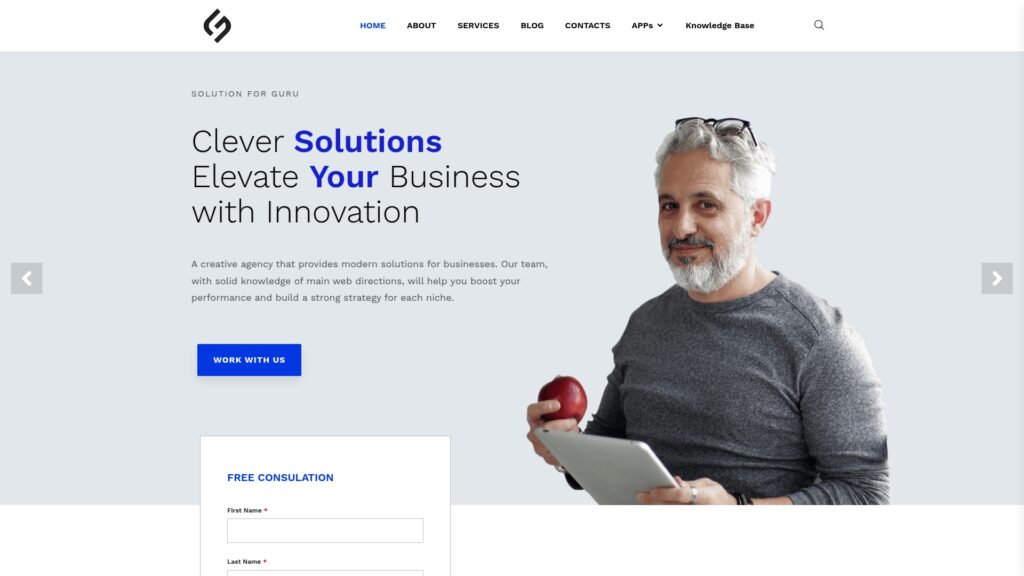
Solution for Guru is a technology consultancy focused on CRM, SaaS integration, and digital strategy for businesses across multiple industries. Cooperation with the team can help companies adopting a platform like HoorayHR in several concrete ways:
- CRM and SaaS integration: Connecting HR platforms with existing CRM, accounting, and workspace tools so employee data flows automatically instead of requiring manual entry across systems.
- Digital strategy consulting: Helping businesses map out a phased rollout plan that aligns HR transformation with broader company goals, rather than treating it as an isolated IT project.
- Automation of administrative workflows: Reducing manual work further by automating reporting, notifications, and data syncing between HR software and other business tools.
- Ongoing technical support: Assisting with integration troubleshooting as new tools are added to the company’s technology stack over time.
- SEO and digital visibility: For HR consultancies, accountants, and partner organizations, Solution for Guru’s marketing expertise also helps communicate these efficiency gains to prospective clients online.
In short, while HoorayHR provides the platform and features needed to modernize HR administration, a partner like Solution for Guru can help ensure that platform is properly integrated, automated, and aligned with the rest of a company’s digital ecosystem, turning a software purchase into a genuine transformation.
Recommended:
- How Whitevision Helps Finance Teams Manage High Document Volumes
- Employee Onboarding Best Practices with HoorayHR
- Integrating Whitevision with Accounts Payable Software
- Whitevision AI Document Processing: Common Business Use Cases
- What KPIs Should You Track in Expense Management?
- Zoho Expense Pricing Explained: Plans, Features, and Costs
- Whitevision vs Moss: Which Platform Fits Your Finance Workflow Better?
- Key Features of HoorayHR
- Zoho Expense Review: Pros, Cons, and Key Features
- HoorayHR ROI: How Businesses Save Time with HR Automation
- How Long Does It Take to Implement HoorayHR?
- HoorayHR Review: Features, Pros, Cons, and Best Use Cases
- What Is HoorayHR? A Complete Overview
- Best Expense Automation Software: Which Platform Fits Your Business?
- What ROI Can Businesses Expect From Expense Automation Software?
- Multi-Currency Expense Management with Zoho Expense
- What Is Zoho Expense and How Does It Work?
- What Are the Biggest Challenges in Multi-Entity Expense Management?
- Whitevision vs Traditional Invoice Processing: What Changes?