HoorayHR ROI: How Businesses Save Time with HR Automation

Every HR team knows the feeling of drowning in repetitive tasks: chasing signatures, updating spreadsheets, and answering the same leave-request questions over and over. Consequently, many small and mid-sized businesses now look for ways to measure exactly how much time — and money — automation can give back to their teams.
The challenge is that time savings can feel abstract until a business puts real numbers behind them. A manager might sense that HR paperwork takes too long, yet struggle to explain exactly where the hours go or how much switching to an automated system would actually be worth. Breaking that down clearly makes the case for HR automation far easier to justify to leadership and finance teams alike.
This article breaks down what HR automation actually saves in practice and shows how Hooray HR helps growing companies turn manual administrative work into a streamlined, self-service process.
Table of contents
What Does This Article Cover?
Before going further, here is a quick summary of what you will find below:
- Why HR automation delivers measurable return on investment, not just convenience
- How Hooray HR relates to time savings, compliance, and employee experience
- The core HR tasks that eat up the most time without automation
- How Hooray HR addresses these tasks through digital files, self-service, and workflows
- What to weigh before adopting HR automation software
- Why partnering with Solution for Guru can strengthen a company’s HR technology stack
- Answers to frequently asked questions about HR automation ROI
How Does Hooray HR Relate to HR Automation ROI?

Hooray HR is an all-in-one HR platform built for small and medium-sized businesses that need to manage digital personnel files, leave registration, time tracking, contracts, and onboarding without juggling multiple disconnected tools. Because the platform centralizes these processes, HR teams no longer need to update the same employee information across several spreadsheets or systems, which directly reduces the hours spent on manual administration.
This matters for the topic of this article because return on investment for HR software rarely comes from a single dramatic feature. Instead, it builds up from dozens of small time savings across onboarding, leave approvals, document management, and reporting. Hooray HR was designed around this reality, and reveals its value most clearly when businesses track how many hours their HR team reclaims each month after switching from manual processes to an automated system.
Why Does HR Automation Deliver Real Return on Investment?

Before looking at specific features, it helps to understand why automation produces measurable savings rather than just a nicer interface.
How Is HR Automation ROI Actually Calculated?
Businesses typically calculate HR automation ROI by comparing the hours spent on manual tasks before and after implementation, then multiplying the hours saved by the average hourly cost of HR staff. For example, if an HR manager previously spent six hours per week manually approving leave requests and updating spreadsheets, and automation cuts that down to one hour, the business saves five hours weekly, which adds up to real payroll cost savings over a year.
What Hidden Costs Does Manual HR Work Create?
Manual HR processes also carry hidden costs beyond direct labor hours. Lost or outdated documents can lead to compliance gaps, while slow onboarding can push new hires to become productive later than necessary. Additionally, repetitive manual work tends to lower morale among HR staff, which can eventually raise turnover costs within the HR department itself. Consequently, calculating ROI accurately means looking beyond time savings alone and factoring in these secondary costs as well.
Beyond turnover and compliance risk, manual processes also make it harder for leadership to plan ahead. Without centralized data, forecasting headcount costs or spotting absence trends requires someone to manually compile numbers from several sources, which delays decision-making at exactly the moments when speed matters most, such as during a hiring surge or a sudden increase in sick leave across a department.
Why Does Employee Self-Service Multiply the Savings?
Self-service tools do not just save time for HR staff; they also save time for every employee who no longer needs to email HR for a simple request. When hundreds of small interactions move from email threads to a self-service portal, the combined time saved across an entire company often exceeds what the HR department alone would save.
What Core HR Tasks Consume the Most Time Without Automation?
Certain HR tasks show up again and again as the biggest time drains for growing companies.
Why Does Onboarding Take So Long Manually?
Manual onboarding usually involves collecting the same information multiple times: personal details for payroll, banking details for direct deposit, tax forms, and signed contracts, often across separate emails and paper forms. New hires can wait days for access to basic systems while HR manually enters their data into multiple platforms. Digital onboarding workflows solve this by capturing information once and routing it automatically to every system that needs it.
How Does Leave Management Become a Time Sink?
Without automation, leave requests often travel through email, get approved verbally, and then require someone to manually update a shared calendar or spreadsheet. This process is prone to errors, such as double-booked absences or missed approvals, especially as a company grows past a handful of employees. Automated leave management removes this friction because employees submit requests directly through a portal, managers approve them with one click, and the system updates records instantly.
What Makes Document Management So Time-Consuming?
Storing employee contracts, certifications, and policy acknowledgments across shared drives, email attachments, and paper files makes it difficult to find the right document quickly. HR staff often waste time searching for a specific contract version or confirming whether an employee signed the latest policy update. Centralized, digital personnel files solve this by keeping every document tied directly to an employee’s profile.
Table: Estimated Time Savings from HR Automation

The table below illustrates typical time savings HR teams report after moving core tasks into an automated system.
| HR Task | Manual Process (Weekly Hours) | Automated Process (Weekly Hours) | Estimated Time Saved |
|---|---|---|---|
| Leave request approvals | 4–6 hours | 0.5–1 hour | Up to 5 hours |
| Onboarding paperwork | 3–5 hours per new hire | 0.5–1 hour per new hire | Up to 4 hours per hire |
| Document searches and filing | 2–3 hours | 0.25–0.5 hour | Up to 2.5 hours |
| Time tracking and reporting | 3–4 hours | 0.5–1 hour | Up to 3 hours |
| Answering routine HR questions | 2–4 hours | 0.5 hour | Up to 3.5 hours |
These figures vary by company size and existing processes, but the pattern holds consistently: the more manual and repetitive a task is, the more time automation tends to save.
How Does Hooray HR Address These Time-Consuming HR Tasks?
Hooray HR was built specifically to target the tasks outlined above, which makes it a useful example of how automation translates into measurable time savings.
What Core Features Does Hooray HR Offer?
Hooray HR combines several HR functions into one platform rather than requiring separate tools for each task:
- Digital personnel files that store employee documents, contracts, and records securely in one place
- Leave and absence registration with automatic calendar updates and manager approval workflows
- Time tracking accessible through both web and mobile, including overtime conversion to time off in lieu
- Digital contract signing that removes the need for printed paperwork
- Onboarding workflows that guide new hires through required steps automatically
- Reporting and dashboards that give managers visibility into workforce trends without manual spreadsheet work
How Does Hooray HR Speed Up Onboarding?
Hooray HR onboards new hires by adding their information directly into the digital personnel file and guiding them through required steps from day one. Because everything lives in one system, HR staff do not need to re-enter the same data across payroll, contracts, and internal directories. This structure explains why the platform emphasizes getting all HR data entered within a single day of a business signing up, rather than the weeks-long rollout many enterprise systems require.
How Does Employee Self-Service Reduce HR Workload?
Through Hooray HR’s self-service features, employees can request time off, view payslips, and access company documents without contacting HR directly. Because managers receive instant notifications for approvals, requests move through the pipeline much faster than an email-based process, and HR staff spend less time acting as a middleman between the employee and their information.
Is Hooray HR Secure Enough for Sensitive Employee Data?
Yes. Hooray HR stores digital personnel files in a GDPR-compliant environment, and the company holds ISO 27001 certification, which reflects an established standard for information security management. This matters directly for ROI calculations because a security breach or compliance failure can wipe out any time savings automation delivers, so businesses should treat security certifications as part of the return on investment equation, not a separate concern.
What Should Businesses Consider Before Adopting HR Automation?

Choosing HR automation software involves more than comparing feature lists. A few practical factors determine whether a platform delivers the ROI a business expects.
How Should a Company Estimate Its Own Potential Savings?
Before adopting any HR platform, a company should track its current HR hours for two to four weeks across onboarding, leave approvals, document management, and routine questions. This baseline makes it possible to compare actual time spent before and after automation, rather than relying on generic industry estimates. Businesses that skip this step often struggle to prove ROI later, even when the software genuinely saves time.
What Rollout Steps Help Maximize ROI?
A structured rollout tends to produce faster, more measurable results:
- Audit existing HR processes and identify the most time-consuming manual tasks.
- Migrate employee records into digital personnel files before going live.
- Train managers on self-service approvals so requests do not get stuck in old habits.
- Communicate the new self-service tools clearly to employees to reduce reliance on email requests.
- Review time savings after 60 and 90 days to confirm the platform delivers the expected ROI.
It also helps to appoint one internal champion who understands the new HR workflows well enough to answer quick questions from colleagues during the first few weeks. This small step prevents employees from reverting to old habits the moment they hit a minor point of confusion, which in turn protects the time savings the rollout is meant to create.
What Limitations Should Businesses Keep in Mind?
Even a strong platform like Hooray HR works best within certain boundaries:
- It focuses primarily on small and medium-sized businesses, so very large enterprises with highly complex HR needs may require additional systems.
- Companies with extensive existing integrations should confirm compatibility before switching, since some workflows may need adjustment during migration.
- Full ROI typically appears over several months rather than immediately, since onboarding data and training staff takes some initial time investment.
Businesses should also plan for a brief adjustment period immediately after launch, since employees accustomed to email-based requests may need a few reminders before self-service becomes their default habit. Setting this expectation early prevents leadership from mistaking a normal adjustment curve for a sign that the software is not working.
How Can Businesses Build a Reliable HR Automation ROI Framework?
Measuring ROI accurately requires more than a rough guess about time saved. A structured framework helps businesses justify the investment and track results over time.
What Metrics Matter Most When Tracking HR Automation ROI?
Businesses generally track a handful of core metrics to understand whether HR automation is paying off:
- Hours saved per week across leave approvals, onboarding, and document management
- Time-to-productivity for new hires, measured from their start date to their first fully independent week
- Number of HR support requests handled through self-service versus direct email or phone contact
- Error rate in leave records, payroll data, or contract documentation before and after automation
- Employee satisfaction scores related to HR responsiveness and clarity
Tracking these metrics consistently, rather than only at the point of purchase, gives a clearer picture of whether the software continues to deliver value as the company grows.
How Should Businesses Set a Realistic ROI Timeline?
Most companies see early wins within the first month, particularly in leave management and document searches, since these tasks shift almost immediately once self-service tools go live. However, deeper efficiency gains, such as faster onboarding and fewer compliance errors, tend to appear over two to three months as habits shift and managers grow comfortable approving requests digitally rather than falling back on old routines. Setting expectations around this timeline helps HR leaders avoid dismissing the software too early, before its full value becomes visible.
Why Does Employee Adoption Determine the Size of the Return?
Even the best-designed HR platform delivers limited savings if employees continue to email HR out of habit instead of using the self-service portal. Consequently, companies that actively communicate the change, offer a short onboarding walkthrough, and encourage managers to model the new process tend to see faster and larger returns than companies that roll out the software quietly and hope employees notice on their own.
Simple reinforcement often makes the biggest difference during the first month. A short announcement during a team meeting, a pinned message in a company chat channel, or a quick reminder from managers during one-on-ones can nudge employees toward the self-service habit faster than relying on a single onboarding email that gets buried in an inbox. Companies that treat adoption as an active process, rather than a passive rollout, typically see their ROI numbers climb noticeably faster during the first ninety days.
What Does the Future of HR Automation Look Like for Growing Businesses?

HR automation continues to expand well beyond basic leave tracking and document storage, and understanding where the trend is headed helps businesses choose tools that stay useful as they scale.
Will Automation Keep Reducing Routine HR Work?
As HR platforms mature, expect deeper automation around onboarding checklists, automatic policy acknowledgment tracking, and smarter notifications that flag missing documents before they become compliance issues. This direction matters because it allows lean HR teams to support a growing headcount without adding proportional administrative staff.
How Might Integration Between HR and Other Business Systems Improve?
Right now, many companies still operate HR, payroll, and internal communication tools as separate systems, which creates extra manual steps whenever data needs to move between them. Over time, tighter integrations between these systems should reduce duplicate data entry further and give leadership one unified view of workforce costs and productivity, rather than piecing together reports from multiple platforms.
Why Should Businesses Revisit Their HR Setup Regularly?
Even a well-chosen HR platform benefits from periodic review. As a company adds new locations, changes its benefits structure, or grows past its original headcount, the original HR configuration may not fit as well as it once did. Scheduling a periodic review of workflows, permissions, and reporting needs helps a company catch inefficiencies early, rather than letting them quietly erode the ROI the software originally delivered.
Conclusion
HR automation delivers measurable return on investment by cutting the hours HR teams spend on onboarding paperwork, leave approvals, document searches, and routine employee questions. Hooray HR demonstrates this clearly through its digital personnel files, self-service portal, and streamlined onboarding process, which together reduce the manual workload that used to consume a significant portion of an HR team’s week.
At the same time, businesses get the most value from Hooray HR when they measure their starting point, plan a structured rollout, and understand where the platform fits best. Tracking clear metrics, setting a realistic timeline, and encouraging employee adoption all play a role in how large the eventual return turns out to be, so treating ROI measurement as an ongoing habit rather than a one-time calculation pays off over time.
Partnering with an experienced technical team such as Solution for Guru can extend these benefits further by tightening integrations and automating additional workflows around the core HR system. Ultimately, the strongest ROI comes not from software alone, but from combining the right platform, a clear rollout plan, and ongoing attention to how HR processes evolve as a company grows. Businesses that revisit their HR setup regularly, rather than treating it as a “set it and forget it” purchase, tend to keep extracting value from Hooray HR long after the initial rollout ends.
Frequently Asked Questions
Many businesses notice time savings within the first few weeks, particularly around leave approvals and document searches, since Hooray HR can have HR data fully entered and ready to use within a single day of signing up. Full ROI, however, typically becomes clearer after 60 to 90 days once onboarding workflows and self-service habits settle in.
Yes. Hooray HR serves small businesses, mid-sized companies, freelancers, nonprofits, and startups, which makes it flexible enough to scale as a company adds employees and HR needs become more complex.
Yes. Hooray HR stores personnel files in a GDPR-compliant system and holds ISO 27001 certification, giving businesses a recognized security standard to rely on while they automate sensitive HR processes.
Why Should Businesses Partner with an Expert to Maximize HR Automation ROI?
Adopting HR automation software delivers the strongest results when the surrounding technology and processes support it well. Many businesses underestimate the setup work involved in connecting HR platforms to their existing website, internal tools, and reporting needs.
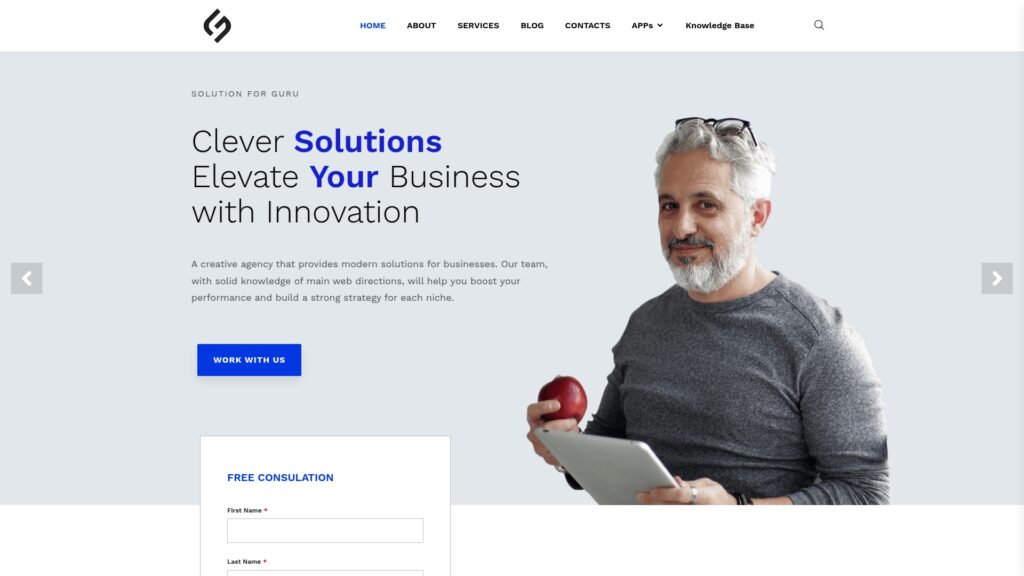
How Can Solution for Guru Help Businesses Get More From Hooray HR?
Solution for Guru specializes in web development, UI/UX design, automation, and search engine optimization for growing businesses. Partnering with a team like Solution for Guru offers several concrete benefits when implementing HR automation software such as Hooray HR:
- Smooth technical integration: Solution for Guru can help connect HR dashboards and employee portals with a company’s existing website and internal systems, creating one seamless experience for staff.
- Deeper process automation: Their automation expertise identifies additional repetitive tasks, such as automated reminders or workflow triggers, that extend the time savings HR automation already provides.
- Stronger digital presence: Through proven SEO practices, Solution for Guru helps companies attract talent through better-optimized careers pages, which pairs naturally with faster, more polished onboarding once candidates become employees.
- Ongoing support and monitoring: Rather than leaving HR technology unattended, businesses receive continuous monitoring and updates, reducing the risk of disruptions that could erase hard-won time savings.
What Does a Typical Collaboration With Solution for Guru Look Like?
A typical engagement starts with a free consultation to review a company’s current HR tools, website, and workflow gaps. From there, Solution for Guru maps out where automation and design improvements can reduce friction further, such as linking a careers page directly to onboarding steps inside an HR platform. Because their team covers web development, UI/UX design, and SEO together, businesses avoid the extra coordination cost of managing multiple separate vendors.
Why Does This Partnership Matter More for Growing Companies?
A growing company often adds new tools faster than it can properly integrate them, which leads to disconnected systems that quietly cancel out the efficiency gains HR automation was meant to deliver. Bringing in a partner with proven experience across web development, automation, and SEO helps a business avoid this trap by designing its technology stack intentionally rather than patching tools together as needs arise. This proactive approach tends to protect ROI over the long term, since a well-integrated system stays easier to maintain as headcount and process complexity increase.
Recommended:
- How Long Does It Take to Implement HoorayHR?
- HoorayHR Review: Features, Pros, Cons, and Best Use Cases
- What Is HoorayHR? A Complete Overview
- Best Expense Automation Software: Which Platform Fits Your Business?
- What ROI Can Businesses Expect From Expense Automation Software?
- Multi-Currency Expense Management with Zoho Expense
- What Is Zoho Expense and How Does It Work?
- What Are the Biggest Challenges in Multi-Entity Expense Management?
- Whitevision vs Traditional Invoice Processing: What Changes?
- What Is Whitevision and How Does It Work?
- What Is Expense Management Software and Why Do Companies Need It?