
Why Only 48% Succeed: Digital Transformation Consulting for Leaders

Digital transformation consulting is advisory and delivery work that helps leaders turn a technology or business strategy into measurable digital change across operations, customer experience, or revenue. Organizations hire it when internal teams lack the bandwidth, technical breadth, or change management discipline to execute a transformation alone. The outcome business leaders should expect is not software for its own sake, but a documented improvement in a specific metric, whether that is cycle time, customer satisfaction, or cost per transaction.
TL;DR:
- Successful digital transformation projects require staged approaches, with pilots and clear KPIs to measure progress and demonstrate value before scaling.
- Governance terms such as milestone-based payments and source code ownership are essential to avoid risks and ensure accountability throughout the engagement.
- Transformation efforts benefit from focusing on real outcomes like cycle time reduction, customer satisfaction, revenue growth, and automation percentages, not just technology implementation.
- Choosing the right partner involves assessing industry-specific experience, measurable past results, technology neutrality, and strong change management capabilities.
- Most transformation failures occur due to poor stakeholder alignment, unclear objectives, and complex legacy system integration, not technology deficiencies.
Table of Contents
- Scope of Digital Transformation Consulting: Services and Participants
- Roles and Responsibilities: What Consultants Do During an Engagement
- Common Approaches and Phased Engagement Models
- Benefits and Measurable Outcomes Leaders Should Track
- How to Choose a Digital Transformation Consulting Partner
- Common Challenges and Failure Modes in Digital Transformation Projects
- A Five-Phase Model and Practitioner Proof Points
- The One Priority Leaders Should Settle First
- Ready to Start? Services That Support Your Transformation Lifecycle
- FAQ
- Sources
Scope of Digital Transformation Consulting: Services and Participants
Digital transformation consulting covers a wider set of disciplines than a typical IT project. A software vendor sells a platform; a transformation consultant diagnoses which problems a platform, process change, or organizational shift should actually solve, then helps deliver it. Google Cloud defines digital transformation as the practice of embedding digital technologies across operations to redesign relationships with customers, employees, and partners, and to enable new business models. That scope explains why the services involved rarely fit inside a single department’s budget or mandate.
A typical engagement draws on several capability areas:
- Strategy and vision setting, aligning transformation goals with business objectives and board priorities.
- Process redesign, mapping current workflows and removing steps that no longer serve the customer or the business.
- Technology selection and architecture, choosing platforms, integrations, and data standards that fit the organization’s scale.
- Systems integration, connecting CRM, ERP, and ITSM tools so data moves without manual rework.
- Change management, preparing teams, managers, and frontline staff for new tools and new ways of working.
- Analytics and measurement, building dashboards and KPIs that prove whether the transformation is working.
Stakeholders typically include the executive sponsor, a program lead, IT and security teams, department heads whose workflows change, and frontline employees who must adopt the new system. External participants often include the consulting firm, software vendors, and sometimes a systems integrator. The difference from standard IT project work is scope: an IT project usually installs or upgrades a system, while a transformation engagement asks whether the underlying process, organizational structure, or business model needs to change first.
Roles and Responsibilities: What Consultants Do During an Engagement
A consultant’s day-to-day work follows a fairly consistent sequence, even when the underlying industry or technology differs. Understanding these tasks helps leaders see where internal staff can carry the load and where outside expertise earns its fee.
- Assessment and discovery. Consultants audit current processes, systems, and data flows, then run a capability gap analysis against the stated business goals.
- Strategy and roadmap development. They translate findings into a prioritized roadmap, often backed by a business case that ties each phase to expected financial or operational return.
- Technology architecture and vendor guidance. Consultants recommend platforms and integration patterns, ideally staying neutral rather than steering every recommendation toward one vendor’s product line.
- Program delivery and governance. During build and rollout, they oversee integration work, manage timelines, and run governance checkpoints so scope does not drift.
- Change management, training, and handover. The engagement closes with staff training, documentation, and a transition plan so internal teams can own and maintain the new system.
SAP frames digital transformation as cultural and organizational change as much as a technical one, which is why the training and handover step carries as much weight as the technology build itself. Skipping it is one of the most common reasons adoption stalls after a consultant leaves.
Pro Tip: Ask any prospective consultant to show you a sample handover document from a past engagement before you sign; it reveals how seriously they treat the transition to your internal team.
Common Approaches and Phased Engagement Models
Most credible transformation engagements follow a staged lifecycle rather than a single large build. A five-phase structure is common across the industry: discover and assess, set strategy, run a pilot or proof of value, implement at scale, then optimize. Harvard Business Review’s research on successful transformations points to staged execution, leadership alignment, and ongoing measurement as recurring factors that separate transformations that stick from those that stall.
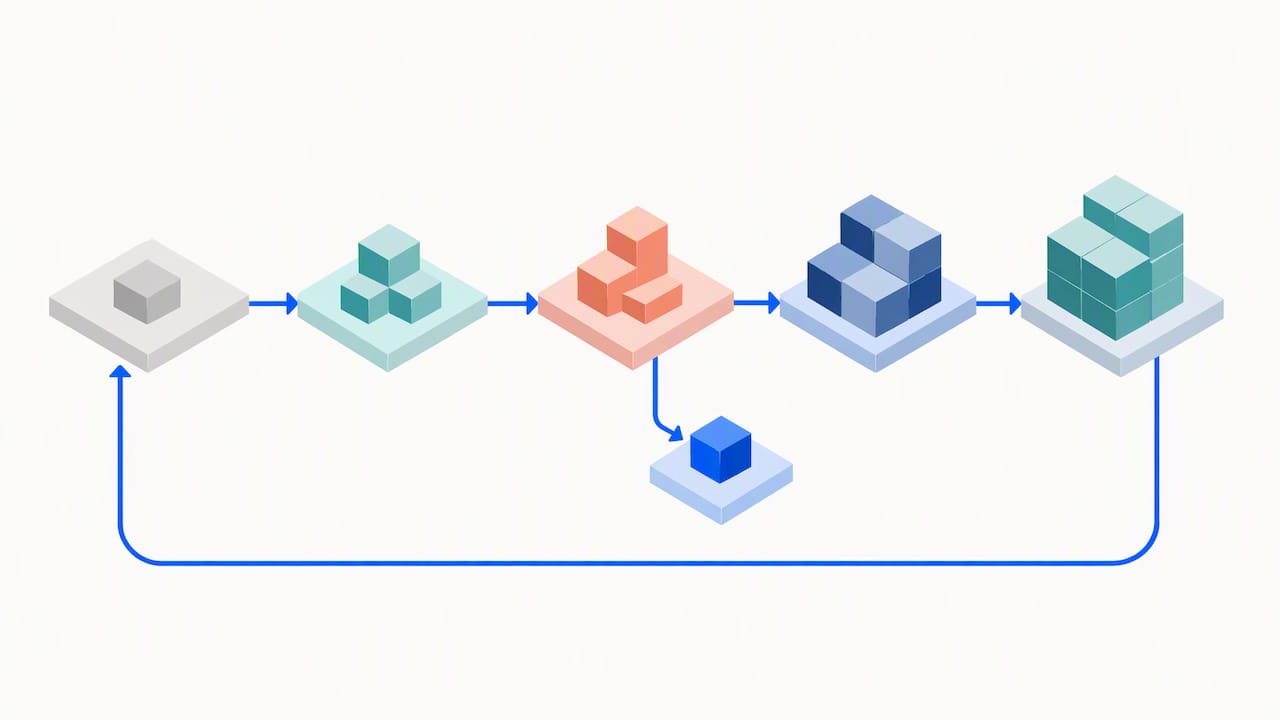
Pilots and minimum viable products matter because they let an organization test assumptions on a small, contained workflow before committing a full budget. A failed pilot costs a fraction of a failed enterprise rollout, and a successful one builds the internal case for further funding.
Governance structures to look for in any proposal:
- Milestone-based funding, releasing budget in stages tied to delivered, tested work rather than a single upfront payment.
- Defined KPIs per phase, so success at each stage is measurable rather than assumed.
- Source code and IP ownership retained by the client from day one, avoiding long-term dependence on the consulting firm.
- Clear advisory versus delivery boundaries, since some engagements are strategy only while others include hands-on build work.
Advisory-only arrangements fit organizations with strong internal technical teams that need direction, not extra hands. Full delivery partnerships suit teams that lack the internal capacity to build and integrate the solution themselves.
Benefits and Measurable Outcomes Leaders Should Track
The value of digital transformation consulting shows up in specific, trackable numbers, not vague claims of modernization. Common benefits include faster time to market, lower operational cost, improved customer experience scores, and new revenue channels opened by digital products or marketplaces.
Survey data reported by Nasdaq found that fewer than half of digital initiatives meet or exceed their business outcome targets. That figure underscores why leaders need governance and measurement built into a project from the start, rather than treating KPIs as an afterthought.
Suggested KPIs to track across a transformation program:
- Cycle time, how long a core process takes from start to finish before and after the change.
- Net Promoter Score, tracking whether customer sentiment improves alongside new digital touchpoints.
- Revenue uplift, tied specifically to new channels or products the transformation introduced.
- Percentage of processes automated, a direct measure of operational efficiency gains.
- Cost per transaction, useful for finance teams building the ROI case.
A realistic ROI case ties each KPI to a dollar or percentage target and a timeline, typically measured in quarters rather than weeks, since adoption and data collection both take time before a metric stabilizes. Our resource on KPIs for expense management offers one concrete example of how this measurement discipline applies to a single operational area.
How to Choose a Digital Transformation Consulting Partner
Selecting a partner is as important as the technology decisions that follow it, since the wrong firm can burn through budget without producing a usable outcome. A practical evaluation checklist should cover:
- Domain experience, asking for case studies specific to your industry rather than general technology success stories.
- Measurable case studies, requesting the actual before-and-after metrics from a past engagement, not just testimonials.
- Change management capability, confirming the firm has a defined training and adoption process, not just a technical delivery team.
- Technology neutrality, checking whether recommendations are tied to one vendor’s product or genuinely matched to your needs.
- Governance and IP terms, confirming in writing that your organization retains source code and data ownership.
Useful interview questions include asking for a specific example of a failed phase and how the firm recovered, and asking how they measure success three months after go-live rather than at launch day.
Pro Tip: Insist on staged, milestone-based payments tied to delivered and tested work; it protects your budget and keeps the consulting firm accountable to outcomes, not just hours billed.
Red flags include a firm that cannot produce references, gives evasive answers when asked about specific metrics, or pushes a particular software platform before understanding your actual workflow problems.
Common Challenges and Failure Modes in Digital Transformation Projects
Most transformation failures trace back to people and governance, not technology. Cultural resistance appears when frontline staff were not consulted before a new process or system arrived, and poor stakeholder alignment between departments often surfaces midway through a rollout rather than at the start.
Common failure patterns include:
- Unclear objectives, where the project starts without a specific, measurable target tied to business value.
- Misaligned KPIs, where IT measures system uptime while the business cares about customer retention.
- Integration complexity and technical debt, where legacy systems resist clean data flow to new platforms.
- Vendor lock-in, where proprietary code or data formats make switching providers costly later.
SAP’s analysis of transformation failure points to poor planning and misaligned goals as recurring causes, reinforcing why staged pilots, clear governance, and early change management work reduce risk more reliably than a bigger technology budget.
A Five-Phase Model and Practitioner Proof Points
Our own engagement model follows the five-phase lifecycle described above: discover and assess, set strategy, pilot, implement, then scale and optimize. We document this approach in detail in our guide to the five-phase digital transformation process model, which walks through how each phase ties to a measurable outcome rather than a generic milestone.
Implementation work frequently touches ITSM and CRM systems, since these platforms carry much of the day-to-day operational data a transformation needs to unify. Our breakdown of how ITSM platforms like Freshservice support transformation work and our guide on evolving CRM team roles offer concrete examples of how these integrations play out in practice.
The One Priority Leaders Should Settle First
Before signing any transformation contract, agree internally on the two or three metrics that define success, and put governance terms, including milestone payments and source code ownership, in writing before work begins. The most common procurement mistake is committing a full budget before a pilot has proven the approach works for your organization. Review case studies carefully, and ask direct questions before you commit.
Ready to Start? Services That Support Your Transformation Lifecycle
Our work covers the pieces of a transformation lifecycle leaders most often struggle to staff internally: strategy and tech consulting, custom web development, UI/UX design, SEO and digital marketing, AI and automation solutions, and CRM and SaaS integrations. For organizations already running on HubSpot, our HubSpot implementation, integration, and ongoing administration services cover everything from initial setup to data migration and custom Marketing Hub development.
Every engagement starts with a scoped conversation about what you are trying to measure, not a pitch for a specific platform. If you are weighing a pilot, a full implementation, or just need a second opinion on a roadmap a vendor has handed you, a free consultation is the lowest-risk way to find out where we can help. Reach out through our services page to schedule a discovery call and talk through a scoped audit of your current systems.
FAQ
A digital transformation consultant assesses current processes and technology, builds a strategy and roadmap, advises on technology architecture and vendor selection, and oversees delivery and change management through to handover. The role blends business strategy with technical oversight, which is why engagements often include both senior advisors and hands-on delivery staff.
Compensation for digital transformation consultants varies widely by region, seniority, and whether the role sits inside a large consulting firm or a smaller agency. We do not have a single published figure to cite here, since pay structures differ significantly by market and employer type.
A digital consultancy advises organizations on how to use technology, process redesign, and strategy to meet business goals, then often helps deliver the resulting projects. Services typically span strategy, systems integration, change management, and ongoing optimization rather than a single product or platform.
A digital transformation project is a structured initiative that redesigns a business process, customer experience, or operating model using digital technology, typically moving through discovery, strategy, piloting, implementation, and optimization phases. Google Cloud’s definition frames it as embedding digital technology across operations to enable new business models, not simply installing new software.
Evaluate a potential partner on industry-specific case studies with real metrics, demonstrated change management capability, neutrality toward specific technology vendors, and clear governance terms covering milestone payments and source code ownership. Red flags include vague answers about past results or pressure to commit to a specific platform before your goals are fully scoped.
Sources
- What is Digital Transformation? | Google Cloud
- What is digital transformation, digital business transformation? | SAP
- Gartner survey reveals only 48% of digital initiatives meet or exceed business outcome targets | Nasdaq
- 3 stages of a successful digital transformation | Harvard Business Review