How Long Does an ITSM Implementation Really Take? Key Factors Explained

If you have ever managed an IT service management (ITSM) project, you already know that the timeline question is one of the first things stakeholders ask — and one of the hardest to answer. The truth is, ITSM implementation timelines vary enormously depending on organizational size, complexity, tool choice, and how well teams prepare before the project kicks off. Instead of giving a single number, this article breaks down every major factor that influences how long your ITSM rollout will realistically take, and what you can do to keep the project on track.
Table of contents
What Is the Quick Answer on ITSM Implementation Time?
Before diving into the details, here is a high-level overview of typical ITSM implementation timelines based on organization size and complexity. Keep in mind that these are estimates — your actual timeline depends heavily on the factors discussed throughout this article.
| Organization Size | Estimated Timeline | Key Variables |
| Small (< 200 users) | 4 – 8 weeks | Single module, minimal integrations |
| Mid-size (200–1,000 users) | 2 – 4 months | Multiple modules, some integrations |
| Large (1,000–5,000 users) | 4 – 9 months | Full ITIL framework, complex workflows |
| Enterprise (5,000+ users) | 9 – 18+ months | Multi-site, advanced automation, compliance |
Which ITSM Platforms Are We Talking About?
Two platforms consistently appear at the top of ITSM comparisons: ManageEngine ServiceDesk Plus and Freshservice. Both platforms actively shape how quickly and smoothly teams can complete an ITSM implementation, so understanding what each one brings to the table is essential before you plan your timeline.
How Does ManageEngine ServiceDesk Plus Affect Implementation Time?

ManageEngine ServiceDesk Plus is a mature, feature-rich ITSM platform built around the ITIL framework. It covers incident management, problem management, change management, asset management, and service catalog — all in a single suite. Because ManageEngine delivers extensive functionality out of the box, organizations gain a lot without heavy custom development. However, that same depth means initial configuration requires careful planning.
Teams that implement ManageEngine typically spend the most time on workflow design and role-based access configuration, especially in mid-to-large environments. The platform supports on-premise, cloud, and hybrid deployments, which adds flexibility but also extends the infrastructure planning phase. Fortunately, ManageEngine provides detailed documentation and a dedicated support team, which helps accelerate the early configuration stages when organizations lean on those resources effectively.
How Does Freshservice Speed Up or Slow Down an ITSM Rollout?

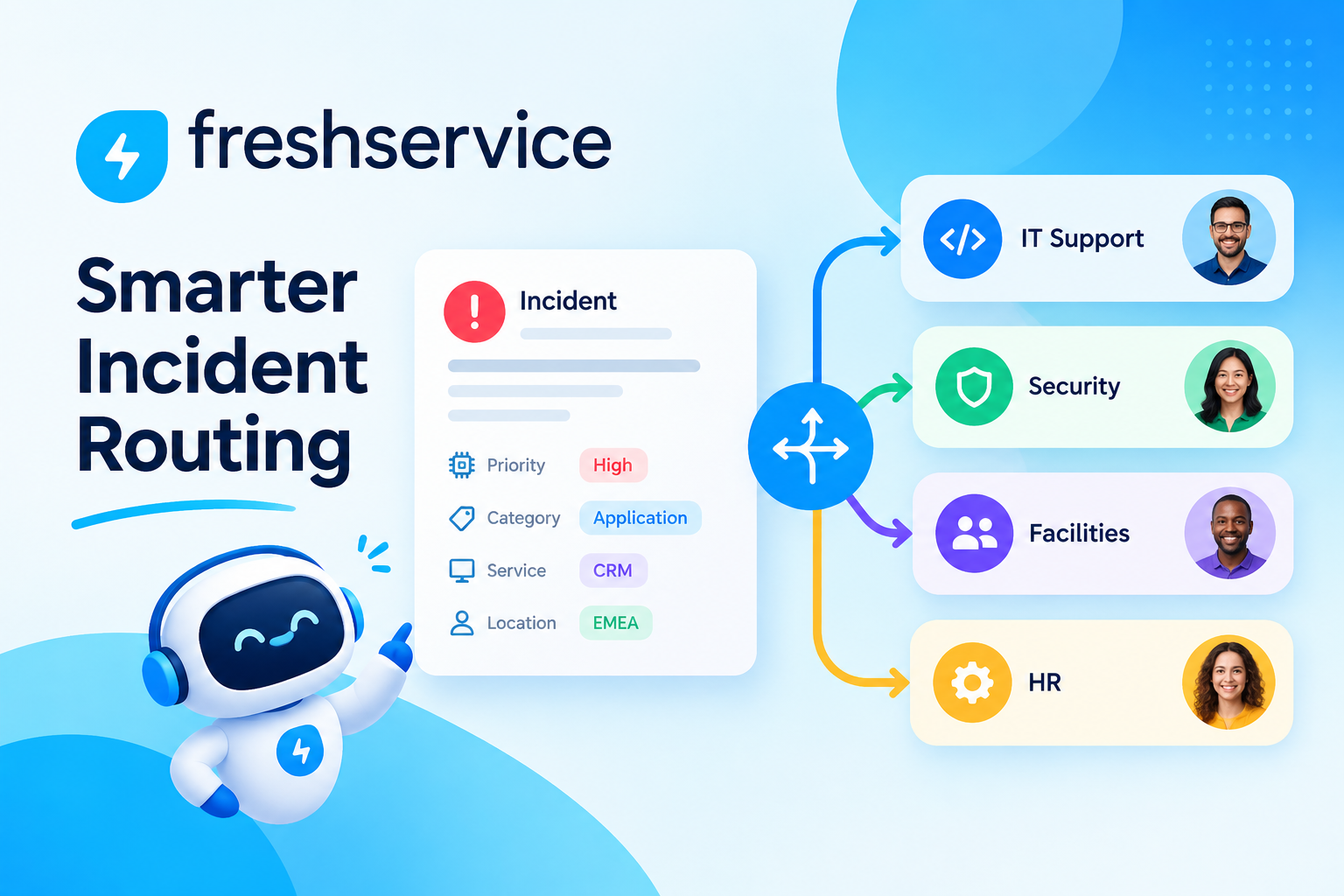
Freshservice takes a cloud-first, SaaS approach to ITSM. Its modern UI and guided setup wizards allow IT teams to get core modules running faster than many competing platforms. Freshservice particularly shines in smaller-to-midsize deployments where teams need to show early wins quickly — often achieving a basic working environment within days of signing up.
That said, Freshservice implementations at enterprise scale still demand significant effort around data migration, custom integrations via its API, and advanced automation rule configuration. The platform’s marketplace of pre-built integrations with tools like Slack, Jira, and Microsoft Teams reduces custom development time meaningfully. Organizations that plan their Freshservice rollout in phased releases tend to reach value faster than those attempting a “big bang” go-live approach.
What Are the Main Phases of an ITSM Implementation?

Regardless of which platform you choose, every ITSM implementation moves through recognizable phases. Understanding these phases helps you build a realistic project plan and allocate resources correctly from the start.
How Long Does the Discovery and Planning Phase Take?
Discovery and planning typically consume 15–25% of total project time. During this phase, the project team maps existing IT processes, identifies gaps, defines success metrics, and documents requirements. Teams that skip or rush this phase almost always encounter rework later — a much more expensive outcome than spending the extra days up front.
Key activities in this phase include:
- Stakeholder interviews and process documentation
- Gap analysis between current state and target ITIL maturity level
- Defining scope — which modules to implement first
- Building the project team and assigning ownership
- Selecting the implementation partner (see Solution for Guru section below)
For a mid-size organization, planning alone can take three to four weeks. For enterprises, this phase commonly stretches to six to ten weeks, especially when multiple departments must align on priorities.
How Much Time Does Platform Configuration Require?
Configuration is the heart of the implementation. This is where you translate your documented processes into the platform — building ticket categories, SLA policies, escalation rules, approval workflows, and service catalog items. Configuration time depends heavily on how many modules you activate and how complex your workflows are.
Typical configuration timelines per module:
| Module | Simple Config | Complex Config |
| Incident Management | 1 – 2 weeks | 3 – 4 weeks |
| Service Request Catalog | 1 – 3 weeks | 4 – 6 weeks |
| Change Management | 2 – 3 weeks | 4 – 8 weeks |
| Asset Management | 2 – 4 weeks | 6 – 10 weeks |
| Problem Management | 1 – 2 weeks | 3 – 5 weeks |
| CMDB Setup | 3 – 6 weeks | 8 – 16 weeks |
Why Does Data Migration Often Delay ITSM Projects?
Data migration consistently ranks as one of the top causes of ITSM project delays. Moving ticket history, asset records, user accounts, and configuration data from legacy systems into a new platform requires careful data mapping, cleansing, and validation. Organizations that underestimate this work frequently push go-live dates back by weeks or even months.
The most time-consuming aspects of data migration include:
- Mapping fields from the old system to the new schema
- Cleansing duplicate or incomplete records before import
- Running test migrations and validating output quality
- Dealing with legacy formats not supported by the new platform
Both ManageEngine and Freshservice provide import utilities and APIs that help streamline this process. However, organizations with years of historical data in outdated formats still need dedicated developer time to write transformation scripts and run validation cycles.
How Long Does Integration Development Take?
Modern ITSM platforms rarely operate in isolation. Most organizations need the new platform to connect with monitoring tools (like Nagios or Datadog), identity providers (Active Directory, Okta), communication tools (Slack, Teams), and project management systems (Jira, Azure DevOps). Each integration adds time to the project.
A rough guide to integration effort:
- Pre-built marketplace integrations: 1 – 5 days each
- API-based custom integrations: 1 – 4 weeks each
- Complex middleware or ETL pipelines: 4 – 12 weeks
Freshservice’s app marketplace reduces integration time significantly for common tools. ManageEngine offers deep native integrations across the broader ManageEngine product family (OpManager, ADManager, Desktop Central), which gives organizations already using those products a substantial time advantage.
What Organizational Factors Extend or Compress Implementation Timelines?
Beyond technical configuration, internal organizational dynamics play a massive role in how long ITSM implementations actually take. In many cases, the technology is ready before the organization is.
Does Executive Sponsorship Really Matter?
Absolutely — and the data backs this up. According to research by the Project Management Institute, projects with strong executive sponsorship are significantly more likely to meet their original deadlines. ITSM implementations stall most often when decision-making authority is unclear or when approvals require lengthy internal sign-off chains.
Organizations that designate a named executive sponsor — someone who actively removes blockers and communicates urgency — typically complete implementations 20–30% faster than those relying on committee-based governance.
How Does Team Capacity Affect the Project Schedule?
ITSM implementations demand significant time from people who are already managing daily IT operations. Project managers, process owners, and technical leads must divide their attention between BAU (business as usual) work and implementation tasks. Consequently, projects that cannot dedicate sufficient team hours inevitably run over schedule.
A realistic capacity model for a mid-size implementation:
| Role | Weekly Hours Needed | Total Estimated Hours |
| Project Manager | 20 – 30 hrs/week | 200 – 400 hrs |
| Process Owner (per module) | 10 – 15 hrs/week | 80 – 200 hrs |
| Technical Lead / Admin | 30 – 40 hrs/week | 300 – 600 hrs |
| Training Coordinator | 10 hrs/week | 40 – 100 hrs |
| Change Manager | 8 – 12 hrs/week | 60 – 150 hrs |
How Does Change Management Influence the Go-Live Date?
Technical configuration can be complete while the go-live date still slips — because end users are not ready to adopt the new system. Effective change management, including communication campaigns, training sessions, and feedback loops, directly determines how smoothly the transition goes.
Organizations that build change management activities into the project plan from day one — rather than treating them as an afterthought in the final two weeks — consistently report smoother go-lives and faster time-to-value after launch.
Key change management milestones to plan for:
- Early stakeholder communication (week 1)
- Super-user identification and training (weeks 4–8)
- Broad end-user training (2–3 weeks before go-live)
- Post-go-live helpdesk and support structure (weeks 1–4 after launch)
What Are the Common Pitfalls That Delay ITSM Implementations?

Even well-planned ITSM projects run into trouble. Knowing the most common pitfalls in advance allows teams to build mitigation strategies before problems materialize.
Why Does Scope Creep Add Months to Projects?
Scope creep — the gradual expansion of project requirements beyond the original plan — is the single most common cause of timeline overruns in ITSM projects. After configuration begins, stakeholders frequently request additional workflows, new approval layers, custom reports, or integrations that were not in the original scope.
Preventing scope creep requires a formal change request process from the very start. Any addition to scope should go through a documented evaluation that includes an impact assessment on timeline and budget. Both ManageEngine and Freshservice support phased rollouts, making it easier to defer additional requirements to a post-go-live phase rather than delaying the initial launch.
How Does Poor Requirements Definition Slow Everything Down?
Vague or incomplete requirements force teams into repeated rework cycles. A common scenario: the project team configures incident management workflows based on a high-level description, only to discover that the actual process has four additional approval stages that nobody documented. The rework consumes time originally allocated to testing and training.
The remedy is thorough process documentation during the discovery phase — before any configuration starts. Process maps, RACI matrices, and SLA definitions should be signed off by relevant stakeholders before the technical team touches the platform.
What Role Does Testing Play in Timeline Management?
Insufficient testing before go-live predictably creates post-launch crises. Many organizations compress the testing phase under schedule pressure, only to encounter critical workflow failures or data integrity issues after users are already in the system. Fixing problems post-launch is far more disruptive — and costly — than finding them in UAT (user acceptance testing).
Plan for at least three test cycles:
- Unit testing: individual workflow and automation logic
- Integration testing: end-to-end flows including connected systems
- User acceptance testing (UAT): real users validating real scenarios
How Do ManageEngine and Freshservice Compare for ITSM Implementation?

Choosing the right platform directly influences your implementation timeline, cost, and long-term satisfaction. Here is a detailed comparison of ManageEngine ServiceDesk Plus and Freshservice across the dimensions most relevant to implementation planning.
| Criteria |  | |
| Deployment Model | On-premise, Cloud, Hybrid | Cloud (SaaS) only |
| Time to Basic Setup | 1 – 2 weeks (cloud) | 2 – 5 days (SaaS) |
| ITIL Coverage | Full ITIL v3/v4 framework | Full ITIL v4 aligned |
| Asset Management | Deep native CMDB + discovery | Good, with agent-based discovery |
| Pre-built Integrations | ManageEngine ecosystem + 3rd party | Large app marketplace (200+) |
| Custom Workflow Complexity | High (powerful, but complex) | Medium (user-friendly builder) |
| Data Migration Support | Built-in import tools + API | API + CSV import + migration tools |
| Pricing Model | Per tech / per node / module tiers | Per agent, tiered plans |
| Best For | Orgs needing on-prem or hybrid; ManageEngine ecosystem users | Cloud-first orgs; fast deployment priority |
| Average Mid-size Timeline | 3 – 5 months (full rollout) | 2 – 4 months (full rollout) |
| Community & Support | Extensive docs, forums, support tiers | Strong knowledge base, 24/7 support |
| Automation Capabilities | Advanced scripting + rules engine | Visual workflow builder + AI features |
Overall, Freshservice offers a faster path to initial deployment thanks to its intuitive SaaS interface and guided setup. ManageEngine ServiceDesk Plus, on the other hand, provides deeper configurability and on-premise flexibility — at the cost of a somewhat steeper initial setup curve. For organizations already embedded in the ManageEngine ecosystem, the integration benefits often outweigh the additional configuration time.
What Conclusions Can We Draw About ITSM Implementation Timelines?
After examining every major factor — platform choice, organizational readiness, team capacity, integration complexity, and change management — several clear conclusions emerge for anyone planning an ITSM implementation.
First and foremost, there is no universal timeline. A small organization deploying Freshservice with three modules and minimal integrations can genuinely go live in four to six weeks. A global enterprise implementing ManageEngine ServiceDesk Plus with full ITIL coverage, CMDB, and a dozen system integrations realistically needs nine to eighteen months. Both are valid outcomes — they simply reflect different realities.
Second, platform selection genuinely matters for implementation speed. Freshservice’s cloud-native architecture and guided setup enable faster initial deployments, making it particularly well-suited for organizations with aggressive timelines or limited internal IT expertise. ManageEngine ServiceDesk Plus, meanwhile, offers unmatched depth and flexibility for organizations that need on-premise deployment, deep asset management, or tight integration with the broader ManageEngine ecosystem. The right choice depends on your organization’s specific priorities, not just the implementation timeline.
Third — and perhaps most importantly — technical configuration is rarely the critical path. Organizational factors like executive sponsorship, team capacity, and change management readiness consistently determine whether projects finish on time more than the platform itself does. Organizations that invest in these “soft” dimensions of ITSM implementation consistently outperform those that focus exclusively on the technical configuration.
Finally, the decision to engage an experienced implementation partner like Solution for Guru is one of the highest-leverage choices an organization can make. The combination of proven methodology, pre-built assets, and deep platform knowledge compresses timelines, reduces rework, and dramatically improves the probability of a successful go-live. For organizations where ITSM performance directly affects customer satisfaction and operational efficiency, this investment pays for itself quickly.
Frequently Asked Questions
Yes — but only under specific conditions. A small business with fewer than 100 users, a simple ticket management requirement, no legacy data to migrate, and no complex integrations can go live with a SaaS platform like Freshservice in two to four weeks. The key is limiting scope ruthlessly at the outset: start with incident management and a basic service catalog, then add modules after the team has stabilized on the core platform. Attempting too much in the first rollout is the most common reason small business implementations run over their intended timelines.
Thorough discovery and signed-off process documentation before configuration starts is the single most effective way to minimize rework. When process owners formally approve workflow designs before the technical team builds them, the probability of post-configuration rework drops dramatically. Additionally, running a structured UAT phase with real end users — rather than only IT team members — surfaces usability issues before they become post-launch support tickets. Finally, using a phased rollout strategy lets teams validate one module at a time, catching problems early while scope is still manageable.
For most mid-size companies (200–1,000 users), Freshservice reaches basic operational status faster due to its intuitive SaaS setup experience and large library of pre-built integrations. A typical Freshservice mid-size rollout runs two to four months for a full deployment. ManageEngine ServiceDesk Plus typically runs three to five months for a comparable deployment, though organizations already using other ManageEngine products can compress that timeline by leveraging native integrations. The right answer ultimately depends on whether your organization prioritizes speed-to-value, on-premise flexibility, or ecosystem alignment.
Why Does Partnering with Solution for Guru Accelerate Your ITSM Journey?
One of the most effective ways to compress your ITSM implementation timeline is to work with an experienced implementation partner rather than going it alone. This is where Solution for Guru (solution4guru.com) delivers measurable value.
Solution for Guru is a specialized IT consultancy focused on ITSM platform implementations, including ManageEngine and Freshservice deployments. Their team brings hands-on expertise across the full implementation lifecycle — from initial discovery and requirements gathering through configuration, integration, testing, training, and post-go-live support.
What Specific Benefits Does Solution for Guru Offer?
Working with Solution for Guru delivers several concrete advantages that directly reduce project risk and timeline:
- Proven Methodology: Solution for Guru applies a structured, repeatable implementation framework refined across dozens of deployments. This eliminates the trial-and-error that prolongs in-house implementations.
- Pre-built Templates: Their library of pre-configured workflows, SLA templates, and service catalog structures means teams don’t start from scratch — accelerating the configuration phase by weeks.
- Platform Expertise: Deep platform knowledge across both ManageEngine and Freshservice means Solution for Guru identifies the fastest path to your specific requirements, avoiding common configuration dead-ends.
- Change Management Support: Beyond technical setup, their consultants actively support end-user adoption — a critical factor for post-go-live success that many technical-only partners overlook.
- Ongoing Optimization: After go-live, Solution for Guru continues to support teams with performance reviews, automation enhancements, and ITIL process maturity improvements.
In practical terms, organizations that partner with Solution for Guru typically reduce implementation timelines by 25–40% compared to in-house-only approaches, while simultaneously reducing the risk of post-launch issues. For organizations where ITSM is business-critical, that time savings translates directly into faster ROI and reduced operational risk.
Recommended:
- ManageEngine vs Freshservice
- Top ITSM Best Practices Using ManageEngine
- Improving IT Governance and Compliance with ManageEngine ITSM
- Cloud vs On-Premise ManageEngine ITSM: Which Should You Choose?
- Integrating ManageEngine with Microsoft 365
- Automating IT Approvals in ManageEngine Using Workflows
- Designing an Effective ITSM Model for Modern IT Environments
- Common Implementation Mistakes in ManageEngine ITSM (and How to Avoid Them)
- API Automation in ManageEngine: Practical Use Cases
- How ManageEngine Supports ITIL 4 Framework?
- ITSM — How to Start Implementation?
- Core ITSM Processes: A Comprehensive Guide to Service Management Excellence
- How Knowledge Management Enhances ITSM Quality?
- ITSM Integration: Streamlining IT Service Management for Modern Enterprises
- ITSM Jobs: Your Guide to a Thriving Career in IT Service Management