The Importance of Digital Marketing for Business Growth

TL;DR:
- Digital marketing allows small and medium-sized businesses to reach targeted audiences cost-effectively through channels like search engines and social media. It enables measurable results, improves brand visibility, and levels the competitive playing field. Focusing on two or three key channels and using data to optimize campaigns produces the best growth outcomes.
Digital marketing is defined as the promotion of products and services through digital channels such as search engines, social media, email, and websites. The importance of digital marketing for small and medium-sized businesses cannot be overstated: it connects you directly with your ideal customers through targeted, measurable, and cost-efficient methods that traditional advertising simply cannot match. Marketers now allocate 57% of budgets to digital channels, a figure that reflects where buyers spend their attention. 73% of small businesses maintain a website, confirming that digital presence is now a baseline competitive requirement, not a differentiator.
Why does the importance of digital marketing matter for growth?
Digital marketing drives business growth by expanding your reach far beyond your local geography. A well-run SEO campaign, a targeted social media ad, or a consistent email newsletter can put your brand in front of thousands of qualified prospects without a large media budget. Digital marketing levels the playing field for smaller businesses competing against firms with far larger resources. That shift in competitive dynamics is one of the most significant changes in modern commerce.

Brand visibility improves through three core mechanisms: search engine optimization (SEO), content marketing, and social media presence. SEO places your website in front of buyers who are actively searching for what you sell. Content marketing builds authority and trust over time. Social media creates ongoing touchpoints that keep your brand top of mind between purchase decisions.
Customer engagement goes deeper than impressions and clicks. Digital marketing enables precise audience targeting by demographics, interests, and behavior, which means your message reaches people who are already predisposed to buy. That precision reduces wasted spend and increases conversion rates.
Key benefits of digital marketing for small and medium-sized businesses include:
- Extended reach: Your business becomes visible to regional, national, or global audiences without proportional cost increases.
- Brand awareness: Consistent SEO and content activity builds recognition that compounds over time.
- Customer engagement: Social media and email create two-way conversations that build loyalty.
- Measurable results: Every campaign produces data you can act on immediately.
- Personalization: Segmented email lists and retargeting ads deliver relevant messages to specific buyer groups.
Pro Tip: Start with one channel where your customers already spend time. Master it before adding a second. Spreading effort across five platforms at once produces mediocre results on all of them.
What makes digital marketing more cost-effective than traditional methods?
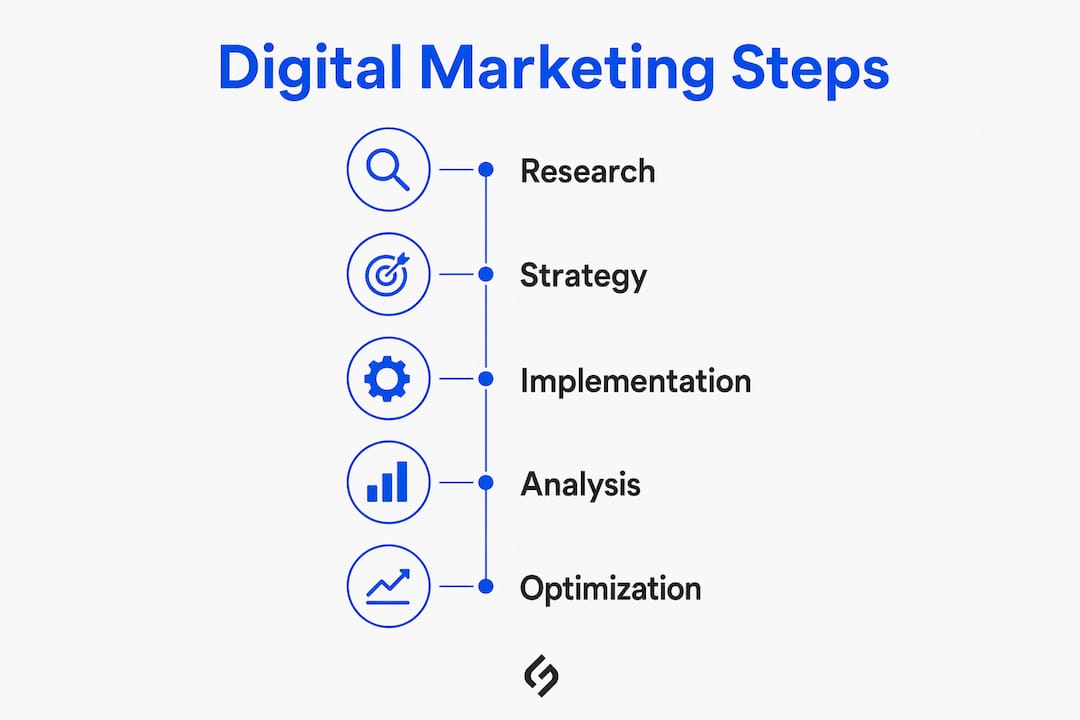
Traditional advertising, such as print, radio, and television, requires significant upfront spend with limited ability to measure results. Digital marketing flips that model. You can run a Google Ads campaign for $10 per day, pause it instantly if it underperforms, and reallocate the budget to a channel that converts better.
Real-time analytics optimize campaigns and improve ROI by showing you exactly which ads, keywords, and content pieces drive revenue. That feedback loop is unavailable in traditional media. A billboard cannot tell you how many people saw it and then visited your store.
The table below illustrates the core differences between digital and traditional marketing approaches:
| Factor | Traditional marketing | Digital marketing |
|---|---|---|
| Cost to launch | High (print runs, airtime) | Low (ad spend starts at any budget) |
| Audience targeting | Broad, demographic estimates | Precise, behavior and intent based |
| Performance data | Delayed, indirect | Real-time, direct |
| Campaign flexibility | Fixed once published | Adjustable at any time |
| Geographic reach | Local or regional by default | Local to global, your choice |
Budget allocation trends in 2026 confirm this shift. The 57% digital budget share reported by Harvard Business Review reflects a deliberate move toward channels that produce accountable results. For a small business owner managing a tight budget, that accountability is the single most important feature digital marketing offers.
Measuring your return matters as much as spending wisely. Tools like Google Analytics and platform-native dashboards give you cost per click, cost per acquisition, and customer lifetime value data. Those numbers let you make decisions based on evidence, not instinct. For a deeper look at tracking returns, the 2026 ROI measurement guide from Solution4guru covers the metrics that matter most.
Which digital marketing strategies work best for small to medium businesses?
The most effective approach for smaller businesses is channel focus, not channel breadth. Trying to maintain a presence on every platform simultaneously drains time and budget without producing proportional results. Focused channel use in SEO, email, and social media consistently outperforms unfocused marketing spreads.
The four channels that deliver the strongest results for most small and medium-sized businesses are:
SEO (search engine optimization): Organic search traffic is free once earned. Ranking for the right keywords puts your business in front of buyers at the exact moment they are ready to purchase. SEO compounds over time, meaning a page you publish today can generate leads for years.
Content marketing: Blog posts, guides, and videos build authority and answer the questions your prospects are already asking. Content also feeds SEO by creating pages that rank. A business that publishes consistent, useful content builds trust faster than one that only runs ads.
Email marketing: Email delivers the highest return on investment of any digital channel for most businesses. A segmented email list lets you send different messages to new subscribers, active customers, and lapsed buyers. Automation handles the timing so you stay present without manual effort.
Social media marketing: Platforms like Instagram, LinkedIn, and Facebook let you build community and run targeted paid campaigns. Organic social builds brand personality. Paid social reaches new audiences with precision targeting by age, location, interest, and behavior.
Pro Tip: Pick your top two channels based on where your customers spend time, not where you feel most comfortable. Then set one clear metric for each, such as organic traffic for SEO or open rate for email, and review it weekly.
Automation and personalization amplify all four channels. Automated email sequences nurture leads without manual follow-up. Retargeting ads re-engage website visitors who did not convert on their first visit. Personalized landing pages increase conversion rates by matching the message to the specific ad a visitor clicked. For businesses building their digital marketing channel mix, starting with two or three well-executed channels produces better results than attempting all four at once.
What are the most common digital marketing mistakes to avoid?
The most damaging mistake small businesses make is the “everything, everywhere” approach. Avoiding unfocused marketing prevents budget waste and keeps your team focused on tactics that produce measurable outcomes. Spreading a limited budget across eight channels produces weak results on all of them.
Common pitfalls and how to address them:
- No clear measurement plan: Running campaigns without defined KPIs means you cannot tell what is working. Set one primary metric per channel before you spend a dollar.
- Ignoring data between campaigns: Digital marketing produces data continuously. Reviewing performance weekly, not just at campaign end, lets you adjust before wasting the full budget.
- Chasing every new platform: New social platforms emerge regularly. Adopt a new channel only after your existing channels are producing consistent, measurable results.
- Neglecting existing customers: Most digital marketing focuses on acquisition. Email campaigns and loyalty content directed at current customers often produce higher ROI than new customer acquisition.
- Skipping the offline connection: For businesses with physical locations, digital and offline marketing reinforce each other. A Google Business Profile, local SEO, and in-store signage pointing to your email list work together more effectively than either alone.
Real-time adaptation provides strategic agility that traditional methods cannot match. If an ad is underperforming after three days, you pause it and test a new creative. That speed of iteration is a structural advantage for smaller businesses that can move faster than large organizations.
Key Takeaways
Digital marketing is the most cost-effective, measurable, and targeted growth tool available to small and medium-sized businesses in 2026.
| Point | Details |
|---|---|
| Digital presence is baseline | 73% of small businesses have a website, making online visibility a minimum competitive requirement. |
| Budget allocation confirms the shift | Marketers direct 57% of budgets to digital channels, reflecting where buyers and ROI both live. |
| Focus beats breadth | Concentrating on 2–3 channels with clear metrics outperforms spreading budget across every platform. |
| Measurement drives improvement | Real-time analytics let you adjust campaigns before wasting budget, a capability traditional media lacks. |
| Engagement builds retention | Digital marketing serves existing customers as effectively as it acquires new ones, often at lower cost. |
Why I think most small businesses underuse their biggest digital advantage
The businesses I see getting the most from digital marketing are not the ones with the largest budgets. They are the ones that pick two channels, define one metric per channel, and review the numbers every week without fail. That discipline is rarer than it sounds.
The common misconception is that digital marketing significance comes from being everywhere at once. It does not. It comes from being consistently visible to the right people in the right place. A local service business with a well-optimized Google Business Profile and a monthly email newsletter to past customers will outperform a competitor running five poorly managed social accounts.
What I find most underused is the retention side of digital marketing. Acquisition gets all the attention, but email campaigns to existing customers, retargeting ads for past buyers, and loyalty content for your best clients produce returns that new customer campaigns rarely match. The role of data in marketing is precisely this: it tells you which customers are worth more of your attention and which channels are actually driving revenue.
My honest recommendation is to treat digital marketing as a system, not a series of one-off campaigns. Build the channels, measure the outputs, and let the data tell you where to put more resources. That approach produces compounding results over time. Businesses that treat it as a checkbox exercise get checkbox results.
How Solution For guru helps you build a digital marketing strategy that works
Building a digital marketing strategy from scratch takes time, and the wrong starting point costs money. Solution4guru works with small and medium-sized businesses to identify the right channels, set up measurement frameworks, and execute campaigns that produce results you can track.
The digital marketing for startups guide on Solution4guru covers the foundational steps for businesses building their online presence for the first time. For businesses ready to expand, the top digital marketing channels resource breaks down which platforms deliver the strongest results by business type. Solution4guru also offers web development basics guidance for businesses that need a stronger digital foundation before scaling their marketing efforts.
FAQ
Digital marketing is the promotion of products and services through online channels including search engines, social media, email, and websites. It matters because it delivers measurable, targeted reach at a fraction of the cost of traditional advertising.
Digital marketing levels the playing field by giving smaller businesses access to the same targeting and analytics tools as large enterprises. A focused SEO and email strategy can outperform a competitor with a larger budget but a less disciplined approach.
Email marketing consistently delivers the highest return on investment for most small and medium-sized businesses. SEO follows closely because organic traffic compounds over time without ongoing per-click costs.
Budget allocation depends on business size and goals, but 57% of total marketing budgets now go to digital channels across businesses of all sizes. Starting with a defined budget on one or two channels and scaling based on performance data is more effective than spreading spend thin from the start.
Success is measured through channel-specific KPIs such as organic traffic, email open rates, cost per acquisition, and conversion rates. Tools like Google Analytics provide real-time data that lets you adjust campaigns before the full budget is spent.