What Is Verizon Connect Fleet Management Software?

Managing a fleet of vehicles, drivers, and field technicians involves far more than simply knowing where a truck happens to be at any given moment. Companies need visibility into fuel use, driver safety, maintenance schedules, and regulatory compliance, all in near real time and across multiple locations. That is the gap that Verizon Connect fleet management software was built to close. Drawing on years of GPS tracking and telematics experience, the platform gives fleet managers a single dashboard to monitor vehicles, assets, and drivers, automate compliance tasks, and turn raw location data into decisions that actually move the business forward. Below, we walk through what the software does, how it works day to day, what it costs, and how it stacks up against alternatives, so you can judge whether it fits your operation.
Table of Contents
What Does Verizon Connect Offer at a Glance?
Before diving into the details, here is the short version. Verizon Connect: Fleet Management Software and Solutions is a cloud-based platform that combines GPS vehicle tracking, AI-powered dashcams, asset monitoring, and compliance tools into one system. Consequently, fleet managers no longer need separate logins for tracking, safety, and paperwork. Instead, everything from live vehicle location to driver coaching data lives in one interface, which is precisely why the platform remains one of the most widely used fleet solutions in North America.
- GPS fleet tracking with near real-time maps, geofencing, and route replay
- AI-powered video telematics that flags harsh driving events and near-misses
- Asset and equipment tracking for trailers, generators, and heavy machinery
- Automated compliance tools covering HOS, ELD, and DVIR requirements
- Generative-AI-driven Operational Insights that surface trends without manual analysis
- Field service dispatch and scheduling for technician-based businesses
How Does Verizon Connect Fleet Management Software Work?
At its core, Verizon Connect relies on small GPS devices installed in each vehicle, together with optional dashcams and asset trackers. These devices transmit location, speed, and engine data to the cloud, where the software processes it into dashboards, alerts, and reports that fleet managers can access from a browser or mobile app. As a result, the platform effectively turns a fleet of otherwise disconnected vehicles into one connected, data-generating network.
What Hardware and Data Does It Use?
A plug-in or hardwired GPS tracking device fitted to each vehicle captures ignition status, location, idle time, speed, and diagnostic trouble codes directly from the engine. Meanwhile, optional AI dashcams add a second layer of data by recording both the road ahead and the driver’s cabin, then using computer vision to classify events such as harsh braking, distracted driving, or following too closely. Because these devices work together, fleet managers receive a fuller picture than GPS location alone could ever provide.
How Is the Data Presented to Fleet Managers?
After the system collects the data, it sends the information to a web-based dashboard and companion mobile app, which organize it into maps, scorecards, and automated reports. Notably, the platform’s Operational Insights feature uses generative AI to interpret this data automatically, proactively suggesting where a fleet is losing money on idling, fuel, or unsafe driving rather than requiring managers to build their own analysis from scratch. In this way, the software shifts fleet management from a reactive task to a more predictive, insight-driven process.
What Are the Core Features of Verizon Connect?

Verizon Connect bundles several distinct capabilities into one subscription, and understanding each one helps clarify why the platform appeals to such a wide range of industries, from construction to field services to government fleets.
How Does GPS Fleet Tracking Work in Practice?
The GPS tracking module shows the near real-time location of every vehicle on an interactive map, alongside historical route replay so managers can review where a vehicle traveled earlier in the day. Geofencing further allows businesses to draw virtual boundaries around job sites, warehouses, or customer locations, then receive automatic alerts whenever a vehicle enters or exits that zone. Consequently, dispatchers can verify arrivals, catch unauthorized vehicle use, and provide customers with more accurate ETAs.
What Does AI-Powered Video Telematics Include?
Video telematics, marketed under the Reveal brand, pairs dual-facing dashcams with AI video analytics that automatically rank incidents by severity, from minor near-misses to full collisions. When a harsh driving event occurs, the driver hears an audio alert immediately, while managers are notified within minutes and can download the clip for coaching or liability protection. Because the AI filters out routine footage, safety teams only need to review the events that actually matter, saving considerable review time.
How Does Verizon Connect Support Regulatory Compliance?
For fleets subject to federal trucking regulations, the platform automates hours-of-service tracking, electronic logging device requirements, and driver vehicle inspection reports. Additionally, built-in FMCSA audit tools help larger trucking operations prepare for compliance reviews without manually cross-referencing paper logs. As regulations continue to tighten, this automation reduces both the administrative burden and the risk of costly violations.
| Feature | What It Does |
|---|---|
| GPS Fleet Tracking | Near real-time vehicle location, route history, and geofenced alerts |
| AI Dashcams (Reveal) | Detects harsh driving events, distraction, and collisions with instant alerts |
| Asset Tracking | Monitors trailers, generators, and equipment location and utilization |
| Compliance Tools | Automates HOS, ELD, and DVIR reporting for regulated fleets |
| Operational Insights | Generative AI that surfaces cost, safety, and efficiency trends automatically |
| Field Service Dispatch | Drag-and-drop scheduling and mobile job updates for technicians |
How Does Verizon Connect Handle Asset and Equipment Tracking?
Vehicles are not the only things fleets need to keep an eye on. Trailers, generators, pumps, and other high-value equipment often sit idle for long periods between jobs, making it difficult for businesses to track each asset’s location or determine how frequently they use it. Verizon Connect solves this problem with dedicated asset trackers that report location and movement independently of any vehicle, allowing businesses to monitor equipment even while it sits at a job site or remains in a storage yard overnight.
Because asset tracking data feeds into the same dashboard as vehicle GPS data, fleet managers get a unified view of everything moving, and everything sitting still, across the business. Consequently, companies can flag underused equipment for reallocation, set up theft alerts for high-value assets, and plan purchases based on actual utilization rather than guesswork. Verizon’s own trend research shows that more than half of asset tracking users report meaningful improvements in equipment utilization, which directly supports smarter capital planning over time.
What Industries Rely on Verizon Connect the Most?
Although Verizon Connect fleet management software can serve almost any organization with vehicles or mobile assets, a handful of industries make up the bulk of its customer base, largely because their operational challenges map so closely to the platform’s strengths.
- Construction: tracking heavy equipment, trailers, and crews across multiple job sites
- Transportation and logistics: managing compliance, routing, and driver safety at scale
- Field services (HVAC, plumbing, electrical): scheduling technicians and proving accurate arrival windows
- Wholesale distribution: coordinating delivery routes and protecting valuable cargo
- Government and public safety: monitoring municipal fleets and officer or crew safety
Because each of these industries has slightly different priorities, whether that is compliance, asset security, or customer-facing accuracy, Verizon Connect’s modular structure allows businesses to activate only the tools that are relevant to their operation, rather than paying for an entire suite of features they will never use.
What Integrations and Add-Ons Does Verizon Connect Support?
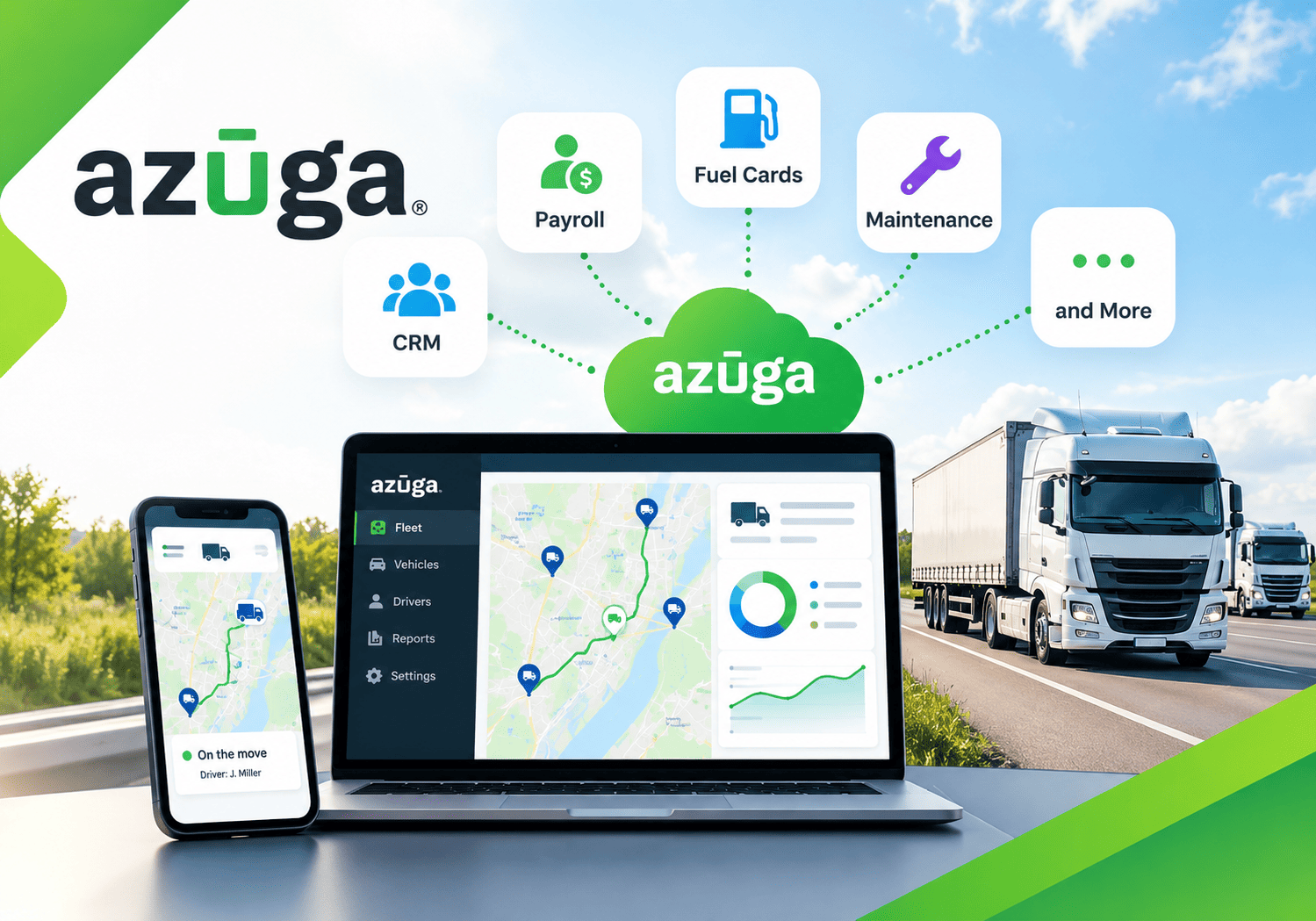
Fleet data rarely lives in a vacuum, and most businesses eventually want it to talk to their other core systems, such as accounting software, fuel cards, or maintenance platforms. Verizon Connect supports this through an application programming interface (API) and a marketplace of approved integration partners, which extend the platform’s functionality without requiring a custom-built solution from scratch.
Typical integrations include fuel card providers that reconcile fuel purchases against actual vehicle activity, maintenance management systems that schedule service based on real mileage and engine diagnostics, and dispatch or CRM software that keeps customer-facing teams updated on job status. Additionally, businesses running custom internal tools can use the API directly to pull fleet data into their own reporting systems. For companies that want this level of customization but lack in-house development resources, working with an implementation partner is often the fastest path to a fully connected tech stack.
How Does the Mobile Experience Work for Drivers and Technicians?
Since the desktop dashboard is entirely browser-based, there is no software to install on office computers, while drivers and technicians in the field rely on dedicated iOS and Android apps. Through the app, technicians can view their daily job schedule, get turn-by-turn navigation to the next stop, and update job status in real time, which keeps dispatchers and customers informed without constant phone calls.
For driver safety, the mobile experience also supports audible in-cab alerts tied to the AI dashcam system, notifying drivers immediately when the system detects risky behavior, such as harsh braking or distraction. While some reviewers note that the app can occasionally be less polished than the desktop dashboard, most fleets still find that mobile access meaningfully improves communication between the field and the office, particularly for businesses managing technicians across a wide service area.
What Are the Benefits of Using Verizon Connect for Fleet Management?

Beyond the individual features, businesses adopt Verizon Connect fleet management software because it consistently produces measurable operational improvements. According to Verizon Connect’s own 2026 Fleet Technology Trends Report, fleets using its technology report average decreases of 11 to 19 percent in fuel, accident, labor, and maintenance expenses, while a large share of GPS tracking and asset tracking users say the tools directly improved productivity and equipment utilization.
- Lower fuel costs through reduced idling and optimized routing
- Fewer accidents thanks to AI-driven driver coaching and real-time alerts
- Faster maintenance response by catching engine issues before they become breakdowns
- Improved compliance with less manual paperwork for HOS and DVIR requirements
- Better customer service through more accurate arrival estimates and job tracking
Taken together, these benefits explain why nearly half of surveyed fleet professionals now rely on video telematics, up ten percentage points since 2024, and why efficiency remains the top priority for the majority of fleet managers heading into the next 12 to 18 months.
Who Should Use Verizon Connect Fleet Management Software?
Verizon Connect is generally best suited to mid-size and enterprise fleets, particularly those operating 50 or more vehicles across construction, transportation, distribution, field services, or government sectors. Because the platform’s compliance tools and Verizon network coverage are especially strong in rural and remote corridors, businesses with drivers who travel outside major metro areas often benefit the most. On the other hand, very small fleets or businesses needing only basic tracking may find the pricing and multi-year contract requirements harder to justify relative to lighter-weight competitors.
It is also worth considering organizational maturity, not just fleet size. Businesses that already have a dedicated safety manager, dispatcher, or operations lead tend to extract more value from Verizon Connect’s deeper features, such as driver scorecards and Operational Insights, since someone is available to act on the data the platform generates. Conversely, a very lean team with no one assigned to review reports regularly may end up paying for capabilities it never fully uses, regardless of fleet size.
How Does Verizon Connect Support Sustainability Goals?
Fuel consumption is one of the largest controllable costs in any fleet, and it is also one of the biggest contributors to a company’s carbon footprint. By combining route optimization with idle-time monitoring and driver behavior coaching, Verizon Connect gives fleets concrete levers to pull when trying to lower fuel use and emissions simultaneously, rather than treating sustainability and cost control as separate initiatives.
For fleets that have begun incorporating electric vehicles, the platform also offers near real-time EV monitoring, including charging status, location, and battery-level alerts, all displayed alongside traditional combustion-vehicle data on the same live map. As a result, fleets transitioning to electric vehicles do not need a separate system to manage the mixed-fleet period, which can otherwise be one of the more operationally complex phases of an EV rollout.
What Are the Pricing and Contract Considerations?

Verizon Connect does not publish flat, one-size-fits-all pricing; instead, cost depends on fleet size, selected modules, hardware needs, and contract length. Businesses that choose Verizon-supplied and installed tracking hardware typically need to commit to a minimum three-year contract, which exceeds the contract length many competitors require. Therefore, it’s worth requesting a detailed quote and clarifying early-termination terms before signing, since several independent reviewers note that pricing can be complex and that exiting a contract early is notoriously difficult.
| Strengths | Trade-offs |
|---|---|
| Strong Verizon network coverage in rural/remote areas | Multi-year contract typically required for bundled hardware |
| Comprehensive compliance and audit tooling | Customer support reviews are mixed across major review sites |
| Scales well from mid-size to enterprise fleets | Interface seen as less modern than some newer competitors |
| Wide integration and API/marketplace ecosystem | Pricing can be complex and less transparent upfront |
How Does Verizon Connect Compare to Other Fleet Management Platforms?
When evaluating fleet management software, it helps to compare Verizon Connect against the broader competitive field rather than in isolation. Independent reviewers generally describe Verizon Connect as the market incumbent: not necessarily the most innovative interface, but the platform that large procurement teams trust because of Verizon’s brand and cellular network. Competing platforms sometimes iterate on features faster, but they cannot always match Verizon Connect’s network reliability in remote regions or its depth of enterprise compliance reporting.
- Network reliability: Verizon’s cellular backbone gives it an edge in rural and fringe coverage areas.
- Compliance depth: FMCSA audit tools, DVIR, and HOS reporting are built for large regulated fleets.
- Enterprise scale: Procurement relationships and support infrastructure suit fleets of 500 or more vehicles.
- Trade-off: Feature releases and interface modernization can lag behind smaller, newer competitors.
What Should You Ask Before Signing a Contract?
Given the multi-year commitment often involved, it makes sense to go into vendor conversations with a short list of questions prepared, rather than relying solely on the sales presentation. Doing so helps surface details that matter later but are easy to overlook during the initial pitch.
- What exactly triggers a long-term hardware contract, and are there shorter-term alternatives?
- How are early termination fees calculated if fleet size changes significantly?
- Which support channels are available, and what are the guaranteed response times?
- Which modules (compliance, video, asset tracking) are bundled versus billed separately?
- What does the onboarding timeline look like for a fleet of our specific size?
Answering these questions upfront generally prevents the most common sources of buyer frustration reported by existing customers, namely unexpected costs, unclear support expectations, and contract terms that do not match how the business actually plans to grow or change.
What Are the Common Challenges When Using Verizon Connect?

No platform is without drawbacks, and prospective buyers should weigh a few recurring themes found in user reviews. Several users report that customer support response times can be slow and inconsistent, which becomes especially frustrating during billing disputes or hardware troubleshooting. Others note that the mobile app can occasionally be glitchy, and that the overall interface takes longer to learn than some newer, more streamlined competitors. Because the platform includes a wide range of features, businesses typically spend more time on the initial setup and staff training than they would with simpler tracking-only tools. However, most organizations find that this investment pays off once they fully configure the system.
Another recurring theme involves contract flexibility. Since hardware-inclusive plans typically require a multi-year commitment, businesses that experience rapid growth, downsizing, or a change in fleet strategy may find it difficult to adjust their subscription mid-term. For this reason, it is worth mapping out expected fleet changes over the next few years before signing, rather than assuming the initial configuration will remain a perfect fit indefinitely.
How Long Does Onboarding Typically Take?
Because Verizon Connect combines hardware installation with software configuration, onboarding a new fleet is rarely an overnight process. Vehicles need GPS units and, if selected, dashcams physically installed, while administrators must configure geofences, driver profiles, and compliance settings before the system reflects real operational needs. For a mid-size fleet, this process commonly takes several weeks from signing to full deployment.
During this period, clear communication with drivers matters just as much as the technical setup. Since dashcams and driver scorecards represent a meaningful change to daily routines, fleets that introduce the technology with a clear explanation of its safety purpose tend to see faster adoption and less pushback than those that roll it out without context. Consequently, many businesses find that pairing the technical rollout with a short internal training and communication plan meaningfully shortens the time it takes to see a full return on investment.
Is Verizon Connect the Right Fleet Management Solution for Your Business?
Ultimately, Verizon Connect: Fleet Management Software and Solutions offers one of the most complete fleet management ecosystems available today, combining GPS tracking, AI video safety tools, asset monitoring, and automated compliance in a single platform. For mid-size and enterprise fleets, especially those operating across rural or interstate routes, the combination of network reliability and compliance depth is difficult for smaller competitors to match. That said, businesses should go in with clear eyes about contract length, pricing complexity, and support responsiveness. Overall, if your organization values a proven, scalable platform backed by a major carrier network more than the newest interface design, Verizon Connect is well worth evaluating alongside its closest alternatives.
How Do Drivers Typically Respond to Being Monitored?
Introducing GPS tracking and dashcams can understandably raise concerns among drivers who worry the technology is primarily about surveillance rather than support. However, fleets that frame the rollout around safety and liability protection, rather than punishment, tend to see much smoother adoption. For example, dashcam footage can prove that a driver did not cause a collision, protecting them from an unfair claim. Drivers often appreciate this benefit as soon as they see it in action.
Over time, most fleets find that transparent scorecards, paired with positive reinforcement for safe driving rather than only penalties for mistakes, build more lasting behavior change than the technology alone. In this sense, Verizon Connect functions best not as a standalone surveillance tool, but as one part of a broader driver safety culture that management actively supports.
Frequently Asked Questions
No. While Verizon Connect is widely used by trucking and logistics fleets because of its compliance tools, it also serves construction companies, field service businesses, distributors, and government agencies that need to track vehicles, equipment, or mobile technicians. Its modular design means smaller operations can start with basic GPS tracking and add compliance or video features later as needs grow.
Contract length varies by plan, but businesses that use Verizon-supplied and installed hardware are commonly asked to commit to a minimum three-year term. It’s advisable to review the contract’s early-termination clauses carefully before signing, and to compare that commitment against how much your fleet size is expected to change over the same period.
Yes. Verizon Connect is a standalone fleet management platform, and customers do not need to be existing Verizon Wireless subscribers to use it, although the devices do rely on Verizon’s cellular network for connectivity, which is part of why coverage tends to be strong even in rural or remote areas.
How Can Solution for Guru Help You Implement Verizon Connect?
Choosing fleet management software is only the first step; configuring it correctly and connecting it to the rest of your business systems is where much of the real value gets unlocked or, alternatively, left on the table. This is where working with an experienced CRM and software implementation partner like Solution for Guru makes a measurable difference.
- Needs assessment to match Verizon Connect’s modules to your actual fleet size and workflows
- Hands-on setup and configuration, so tracking, dashcams, and compliance tools work correctly from day one
- Integration support connecting fleet data with your existing CRM, dispatch, or accounting software
- Staff training to shorten the learning curve and speed up adoption across your team
- Ongoing optimization advice so your fleet keeps improving efficiency, safety, and costs over time
By partnering with Solution for Guru, businesses avoid many of the common implementation pitfalls, such as underused features or disconnected systems, and instead get a fleet management setup that is tailored, well-integrated, and ready to deliver a faster return on investment.
Recommended
- Motive Pricing Plans Explained: How Much Does Motive Cost?
- What Is Motive Fleet Management?
- What Is the True Cost Breakdown of Fleet Tracking Systems?
- Offline Tracking: How Do Devices Store Data Without Connectivity?
- Real-Time Tracking vs Passive Tracking: What Are the Key Differences?
- How Vehicle Tracking Systems Reduce Commercial Auto Insurance Costs
- How Does GPS Tracking Work: Satellites, Signals, and Software?
- Can GPS Trackers Be Hacked? Security Risks Explained
- 4G vs 5G GPS Trackers: What’s Changing?
- AI in Fleet Tracking: How Are Predictive Maintenance and Analytics Transforming Fleet Operations?
- Tracking Requirements for Commercial Vehicles in the U.S.
- How Vehicle Maintenance Tracking Software Reduces Costs and Extends Fleet Lifespan?
- Top Benefits of GPS Vehicle Tracking Fleet Management Solutions for Modern Businesses
- Vehicle Tracking Online
- Business Vehicle Tracking: Boosting Efficiency and Accountability on the Road