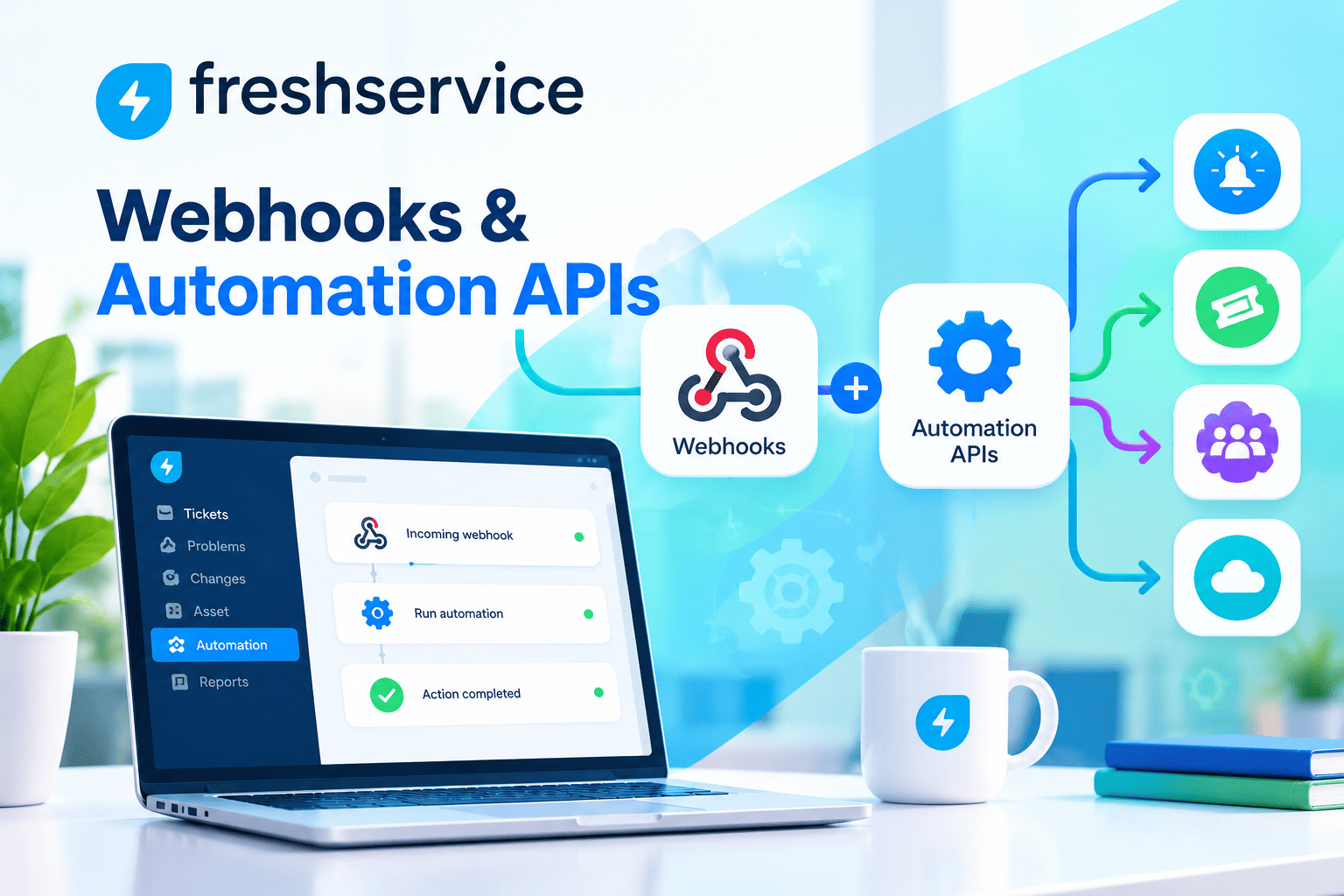
Automating Employee Onboarding and Offboarding with Freshservice

A new hire’s first day sets the tone for their entire experience with a company, yet in many organizations that first day starts with a laptop that isn’t ready, accounts that haven’t been created, and a manager scrambling to figure out who was supposed to handle what. The same chaos often repeats in reverse when an employee leaves, except the stakes shift from productivity to security. Automating these processes eliminates both problems at once, and Freshservice has built specific tools designed exactly for this purpose. This article explains how onboarding and offboarding automation works, why it matters, and how to implement it well.
Below, you’ll find a quick summary of the capabilities involved, an explanation of how Freshservice ITSM connects to this specific challenge, a detailed walkthrough of the automation itself, and guidance on how a partner like Solution for Guru can help a company implement it successfully.
Table of contents
What Should You Know About Onboarding and Offboarding Automation at a Glance?
Before diving into the mechanics, here’s a snapshot answering the questions IT and HR leaders typically ask first.
| Category | Details |
|---|---|
| Core Freshservice feature | Employee Onboarding and Offboarding modules, powered by Journeys workflow orchestration |
| What gets automated | Parent-child ticket creation, account provisioning, asset assignment, approvals, and notifications |
| Departments involved | HR, IT, Facilities, and Finance, coordinated within a single workflow |
| Key integrations | Microsoft Active Directory, Okta, and Google Workspace orchestration apps |
| Primary benefit for onboarding | New hires become productive from day one instead of waiting on manual setup |
| Primary benefit for offboarding | Access and assets get revoked promptly, reducing security risk |
| Measurable outcomes | Faster onboarding cycle times, fewer manual tickets, stronger compliance auditing |
As this table shows, the value of automation touches both ends of the employee lifecycle. Therefore, understanding how Freshservice structures these workflows helps clarify why so many growing companies treat this as one of their first automation priorities.
How Does Freshservice ITSM Relate to This Topic?

Freshservice ITSM sits directly at the center of this topic, since onboarding and offboarding automation is one of the platform’s most developed and widely used capabilities. Rather than treating these processes as a series of manual IT requests that HR initiates one email at a time, Freshservice reframes onboarding and offboarding as structured workflows that HR owns and triggers, with the platform automatically coordinating the right tasks across IT, facilities, and finance.
This connection matters because employee lifecycle events involve far more than a single department. A new hire needs a laptop from IT, a desk from facilities, payroll setup from finance, and training resources from their manager, all coordinated to arrive before day one. Freshservice ITSM handles this coordination through its Employee Onboarding module and its native workflow orchestration feature, called Journeys, which manages multi-step, multi-team processes rather than isolated tickets.
Consequently, Freshservice becomes the operational backbone connecting HR’s intent with IT’s execution. HR configures what should happen and when, while Freshservice automatically generates and routes the resulting tasks to the right teams, tracks completion, and gives HR a single view of progress without requiring anyone to chase status updates manually.
Why Do Manual Onboarding and Offboarding Processes Break Down?
Understanding the specific failure points in manual processes clarifies exactly what automation needs to solve.
What Goes Wrong During Manual Onboarding?
When onboarding depends on a chain of individual emails and verbal requests, steps get missed, forgotten, or delayed. When a new hire can’t access core systems on day one, they can’t contribute effectively, and that difficult start creates a poor first impression of the company’s organization.
Why Does Manual Coordination Fail Across Departments?
Onboarding naturally spans HR, IT, facilities, and sometimes finance, yet these departments rarely share a single coordinated system by default. As a result, HR often has no visibility into whether IT has actually provisioned an account or whether facilities has prepared a workspace, forcing constant follow-up communication that drains time on both sides.
What Risks Does Manual Offboarding Introduce?
Offboarding carries even higher stakes than onboarding, since a delayed or forgotten step here means a departed employee retains system access longer than they should. Manual offboarding processes are particularly prone to this kind of oversight, especially when an employee’s departure happens quickly or involves multiple systems that different teams manage independently.
How Does Freshservice Automate the Onboarding Process?

Freshservice structures onboarding as a coordinated workflow rather than a single ticket, which changes how the entire process unfolds from the moment a new hire is identified.
How Does an Onboarding Request Get Initiated?
An HR manager raises an onboarding request directly through the Freshservice support portal by selecting the onboarding option and filling in the new hire’s details. Freshservice then routes this request to relevant stakeholders, such as the reporting manager, for additional information or approval before the process moves forward.
How Are Onboarding Tasks Distributed Across Teams?
After creating the parent onboarding request, Freshservice automatically generates child tickets and routes them to the appropriate groups. IT receives tasks for hardware provisioning and account creation, facilities handles workspace setup, and the reporting manager completes onboarding tasks specific to the new hire’s role. Each child ticket links back to the parent request, giving HR a single consolidated view of what’s complete and what remains outstanding across every team involved.
What Are Role-Specific Onboarding Kits?
Freshservice allows administrators to predefine onboarding kits tied to specific roles, so the correct set of hardware, software, and access requests gets attached automatically based on the new hire’s position. This eliminates the need to manually determine what a given role requires each time someone joins, and it ensures consistency across hires in the same job function.
Can Multiple New Hires Be Onboarded at Once?
Yes. Freshservice supports bulk employee onboarding, allowing HR to upload multiple new hires’ information at once. The platform then automatically generates the corresponding requests and sends onboarding forms to each hire’s reporting manager, which proves especially useful during periods of rapid hiring or seasonal staffing changes.
How Does Freshservice Automate the Offboarding Process?

Offboarding follows a similarly structured model, though the priorities shift toward security and prompt revocation rather than provisioning speed.
How Does an Offboarding Request Begin?
An HR business partner initiates an offboarding request through the service portal by locating the corresponding service catalog item and completing the offboarding form. This form typically captures details about the departing employee, their role, and the effective date of separation.
How Does Freshservice Handle Asset and Access Revocation?
Administrators can configure offboarding workflows so that the system automatically creates tickets for asset retrieval and software access revocation the moment a request is submitted. This automatic ticket generation removes the risk of a manual step being forgotten during a busy or emotionally charged departure process.
What Role Does a Second Stakeholder Play?
Freshservice’s offboarding workflow lets organizations add a second stakeholder, often the departing employee’s reporting manager, who decides whether to reclaim assets and software access or transfer them to another team member. This step matters particularly for shared resources, licenses, or ongoing projects that shouldn’t simply disappear when someone leaves.
How Are Child Tickets Tracked During Offboarding?
Just as with onboarding, offboarding requests generate child tickets routed to the appropriate teams, and administrators can customize exactly how these child tickets get created and assigned. This structure gives HR and security teams a clear, auditable trail confirming that every access point tied to a departing employee was actually addressed.
What Is Journeys, and How Does It Improve Lifecycle Automation?
Freshservice’s Journeys feature represents a more advanced layer of orchestration built specifically for multi-step, multi-team processes like onboarding and offboarding.
How Does Journeys Differ from Standard Ticket Automation?
Standard ticket-based automation in Freshservice handles individual requests well, but Journeys manages entire sequences by defining the order of steps, determining which tasks run in parallel, and triggering each subsequent stage. This sequencing matters because onboarding and offboarding rarely follow a single linear path; some tasks depend on others finishing first, while other tasks can proceed simultaneously.
What Types of Lifecycle Events Can Journeys Handle?
Beyond onboarding and offboarding, Journeys extends to other employee lifecycle events like relocations and role changes, coordinating the same kind of cross-departmental workflow. This broader scope means a company can standardize its approach to structured lifecycle events, rather than building separate ad hoc processes for each type of change.
Why Does This Matter for Growing Organizations?
As a company scales, the number and variety of lifecycle events grows too, and manually tracking each one becomes increasingly unsustainable. Journeys gives growing organizations a repeatable, auditable structure that keeps pace with hiring volume without requiring HR or IT to reinvent the process every time a new type of transition occurs.
How Does Integration with Identity Systems Strengthen Automation?
Onboarding and offboarding automation reaches its full potential when it connects directly to the systems that actually control account access, rather than stopping at ticket creation alone.
How Does Active Directory Integration Work?
Freshservice’s Microsoft Active Directory orchestration app allows a workflow to automatically create a new user account and add that user to the appropriate group based on their designation, directly within Active Directory. This means account creation happens as part of the automated workflow itself, rather than requiring a separate manual step once the ticket lands in IT’s queue.
What Other Identity Platforms Does Freshservice Support?
Beyond Active Directory, Freshservice integrates with platforms like Okta and Google Workspace, allowing account provisioning or deactivation to happen automatically as part of the same orchestrated workflow. This flexibility matters since many companies run hybrid identity environments rather than relying on a single system.
How Does This Reduce Offboarding Risk Specifically?
For offboarding, this integration is particularly valuable, since deactivating an account directly through an automated workflow node removes the delay and error risk associated with a human agent manually locating and disabling each account across multiple systems. Consequently, the gap between an employee’s departure and the actual loss of system access shrinks considerably.
What Are the Measurable Benefits of This Automation?
Bringing the previous sections together, here’s a consolidated list of the outcomes companies typically report after automating onboarding and offboarding through Freshservice:
- Reduced manual workload — automation eliminates repetitive coordination for both IT and HR staff
- Faster onboarding — new hires become productive from day one instead of waiting on manual setup
- Swifter, more secure offboarding — access and assets get revoked promptly, reducing security exposure
- Consistent compliance — standardized workflows support audit trails and organizational policy
- Stronger HR-IT collaboration — clear handoffs replace scattered email chains and follow-up requests
- Improved employee experience — fewer delays and errors translate into higher satisfaction for new hires and departing employees alike
- Better visibility — a single parent ticket view shows exactly what’s complete and what remains outstanding
Table: Key Performance Indicators to Track
| Metric | What It Measures |
|---|---|
| Onboarding cycle time | Time from new hire trigger to full access and readiness |
| Task completion SLAs | Speed of provisioning, offboarding, or access changes relative to policy |
| Manual intervention rate | How many workflows still require manual IT effort |
| Security incident reduction | Change in access-related incidents before and after automation |
| HR-IT collaboration feedback | Team-reported improvements in handoffs and communication |
How Does Automated Offboarding Strengthen Security and Compliance?

Security and compliance concerns deserve their own focused discussion, since offboarding failures carry consequences that extend well beyond operational inconvenience.
What Happens When Offboarding Relies on Memory Alone?
Without a structured system, offboarding often depends on someone remembering every application, license, and physical asset tied to a departing employee. Given how many systems a typical employee touches over the course of their tenure, from cloud applications to shared drives to building access badges, this reliance on memory creates an almost inevitable gap somewhere in the process.
How Does Freshservice Support Closed-Loop Auditing?
Automated offboarding workflows in Freshservice create a closed-loop audit trail, documenting every lifecycle task against the originating HR event. This gives compliance teams a clear audit trail, allowing them to verify which access points the organization revoked, when it revoked them, and who completed each action instead of piecing together the history from scattered email threads or memory.
Why Does This Matter for Regulated Industries?
Companies operating in regulated industries, such as healthcare, financial services, or any sector handling sensitive customer data, face real consequences if a departed employee’s access lingers unnoticed. Automated, auditable offboarding directly supports the kind of governance these industries need to demonstrate during compliance reviews, turning what was once a manual liability into a documented, defensible process.
How Does Real-Time Governance Improve Access Control?
Because automated workflows respond instantly to legitimate HR events instead of waiting for someone to create a manual ticket, Freshservice provides much stronger, real-time governance over access controls. This shift from reactive to proactive access management represents one of the most meaningful security improvements a company can make through onboarding and offboarding automation.
Which Teams and Company Types Benefit Most from This Automation?
While every organization deals with hiring and departures, certain team structures and growth stages see especially strong returns from automating these workflows.
How Does This Help Fast-Growing Companies?
Companies experiencing rapid headcount growth often feel onboarding pain most acutely, since the volume of new hires can quickly overwhelm a manual process built for a much smaller team. Bulk onboarding and role-specific kits let fast-growing companies maintain consistency even as hiring accelerates, rather than watching quality slip as volume increases.
How Does This Help Companies with Distributed or Remote Teams?
Remote and distributed teams add another layer of complexity because IT, facilities, and HR often work from different locations and cannot coordinate a new hire’s setup informally. Automated workflows remove the dependency on hallway conversations or spontaneous check-ins, ensuring that a remote new hire’s laptop, accounts, and access arrive on schedule regardless of where each stakeholder sits.
How Does This Help Organizations with High Turnover or Contractor Populations?
Organizations with higher turnover, or those relying heavily on contractors with defined engagement periods, face frequent offboarding events that make manual tracking especially risky. Automating this process ensures that even a high volume of departures doesn’t translate into a growing backlog of forgotten access revocations, which is precisely the scenario where security risk tends to accumulate unnoticed.
How Does HR Benefit Specifically from This Model?
HR teams gain perhaps the most direct benefit, since Freshservice’s Enterprise Service Management model gives them a dedicated service catalog and ticketing system without requiring them to operate inside IT’s queue. This allows HR to configure and manage the onboarding and offboarding workflow, define what to request and when, and rely on IT to handle the technical provisioning behind the scenes.
What Should a Company Consider Before Automating These Workflows?
While the benefits are substantial, a thoughtful rollout matters as much as the technology itself.
Should You Map the Current Process Before Automating?
Yes. Documenting the existing onboarding and offboarding steps before building automation ensures the company doesn’t simply automate an already inefficient process. This mapping exercise often reveals redundant approvals or unclear ownership that are worth resolving before Freshservice workflows are configured.
How Should Data Mapping Be Handled Between HR and IT Systems?
Accurate data mapping matters enormously, since fields like employee ID, email, department, and role need to match consistently between HR systems and Freshservice. Establishing clear “source of truth” boundaries, where HR triggers changes and IT executes provisioning based on automation rules, prevents confusion about which system owns which piece of information.
Should Workflows Be Tested Before a Full Rollout?
Testing automated workflows with a small pilot group before scaling company-wide helps surface configuration issues while the impact remains limited. This approach also gives HR and IT the chance to refine notification timing, approval steps, and task assignments based on real feedback rather than assumptions. Pilot groups also help teams confirm that role-specific onboarding kits genuinely match what each department needs, since assumptions made during initial configuration don’t always hold up once real hires move through the process.
Conclusion: Is It Time to Automate Your Onboarding and Offboarding with Freshservice?
Pulling everything together, manual onboarding and offboarding processes create real costs on both ends of the employee lifecycle: lost productivity when new hires can’t access what they need, and real security risk when departing employees retain access longer than they should. Freshservice addresses both problems through its Employee Onboarding and Offboarding modules and its Journeys orchestration feature, coordinating HR, IT, facilities, and finance into a single automated workflow rather than a chain of manual requests.
For growing companies experiencing the friction of manual coordination, automating these processes through Freshservice offers a clear, measurable path forward, one that improves the employee experience while strengthening security and compliance at the same time. As with any automation initiative, the results depend heavily on thoughtful implementation. Partnering with an experienced team like Solution for Guru helps ensure Freshservice onboarding and offboarding workflows are configured around the company’s actual structure from day one, rather than requiring costly adjustments after the fact.
Frequently Asked Questions
Freshservice uses dedicated Employee Onboarding and Offboarding modules, both built on the platform’s Journeys workflow orchestration feature. When HR initiates a request, Freshservice automatically generates parent and child tickets routed to IT, facilities, and other relevant teams, coordinating the entire multi-step process from a single trigger.
Yes. Freshservice supports orchestration apps for platforms including Microsoft Active Directory, Okta, and Google Workspace, allowing account provisioning during onboarding and account deactivation during offboarding to happen automatically as part of the workflow itself, rather than requiring a manual step.
Yes. Freshservice supports bulk employee onboarding, letting HR upload multiple new hires’ information simultaneously. The platform then automatically creates the corresponding requests and sends onboarding forms to each hire’s reporting manager, which is especially useful during periods of rapid hiring.
What Are the Benefits of Partnering with Solution for Guru for Your Freshservice Automation?
Building onboarding and offboarding automation correctly requires more than simply activating a feature; it requires thoughtful process mapping, careful integration work, and ongoing refinement. This is where working with Solution for Guru adds genuine value.
Solution for Guru is a technology solutions provider with hands-on experience integrating platforms like Freshservice into real business workflows, alongside CRM, payroll, and identity management systems. Partnering with a team that understands this broader ecosystem offers companies several concrete advantages:
- Accurate process design — an experienced partner helps map current onboarding and offboarding steps before automation begins, avoiding the trap of automating existing inefficiencies
- Seamless identity integration — Solution for Guru brings hands-on experience connecting Freshservice to Active Directory, Okta, and other identity platforms so account provisioning and deactivation happen reliably
- Tailored role-based kits — rather than generic templates, Solution for Guru configures onboarding kits and offboarding workflows around each company’s actual roles and departments
- Cross-departmental coordination — the team helps align HR, IT, facilities, and finance stakeholders early, reducing friction once workflows go live
- Ongoing optimization — beyond initial setup, Solution for Guru can help track KPIs and refine workflows as the company’s hiring patterns and organizational structure evolve
In short, Freshservice provides the tools to automate onboarding and offboarding effectively, but organizations realize the full value of that automation only when they implement it thoughtfully. Partnering with a knowledgeable team like Solution for Guru helps companies build these workflows correctly from the start, rather than uncovering gaps after a new hire’s rough first day or a departed employee’s overlooked access.
Recommended:
- ManageEngine ServiceDesk Plus for Mid-Size Business: Is It the Right ITSM Fit?
- ManageEngine ITSM: Standard vs Professional vs Enterprise — Which Edition Fits Your Team?
- ManageEngine SLA Management: How Does It Help IT Teams Meet Every Deadline?
- Freshservice for Growing Companies: When Is the Right Time to Upgrade ITSM?
- Freshservice Change Management: Real-World Configuration Strategies
- What Are the Best Automation Use Cases for ITSM Platforms in Growing Businesses?
- How Does Freshservice Support Compliance and Audit Readiness?
- Freshservice vs Traditional Help Desk Systems: What Has Changed?
- What Reporting and Dashboard Strategies Do High-Performing ITSM Leadership Teams Actually Use?
- What Are ITSM KPIs and Why Do They Matter for Your IT Organization?
- What Is a Self-Service Portal in ITSM and Why Does Your Business Need One?
- ESM vs ITSM: What Is the Difference and Which One Does Your Business Need?
- Freshservice for Non-IT Departments: HR, Facilities, Finance, and Operations
- Can Freshservice Reduce IT Operational Costs?
- ITSM Workflow Optimization Strategies for Hybrid Work Environments
- Breaking Down the ITSM Model: What Are the Core Processes, Roles, and Value Streams?
- Common ITSM Deployment Mistakes Businesses Make — and How to Avoid Them
- ITSM for DevOps Teams: Bridging Agile and Service Management