Common ITSM Deployment Mistakes Businesses Make — and How to Avoid Them

Implementing IT Service Management (ITSM) is one of the most strategic investments a modern business can make. Nevertheless, even well-resourced organizations consistently stumble over the same avoidable pitfalls — from misaligned processes to poor user adoption. As a result, projects run over budget, timelines slip, and teams end up with a solution that frustrates rather than empowers them. This article unpacks the most common ITSM deployment mistakes and, more importantly, shows you exactly how to avoid them.
Table of contents
Quick Summary: What Will You Learn in This Article?
This article covers the most frequent mistakes companies make when deploying ITSM platforms, how those errors affect business outcomes, and proven strategies to sidestep them. You will also find a detailed comparison of two leading ITSM platforms — ManageEngine ServiceDesk Plus and Freshservice — along with guidance on how partnering with Solution4Guru can accelerate your deployment success.
Which ITSM Platforms Are We Talking About?
Before diving into the mistakes themselves, it is worth introducing the two ITSM platforms that appear throughout this article. Both are industry-recognized solutions that businesses use to streamline service delivery, automate workflows, and manage incidents efficiently.
What Is ManageEngine ServiceDesk Plus?
ManageEngine ServiceDesk Plus is a comprehensive ITSM platform built on ITIL best practices. It covers incident management, problem management, change management, asset management, and a self-service portal — all within a single, unified interface. Organizations that need on-premises control, deep customization, and integration with existing ManageEngine IT tools find ServiceDesk Plus particularly compelling. It also offers a robust reporting engine that lets IT managers track KPIs in real time.
What Is Freshservice?

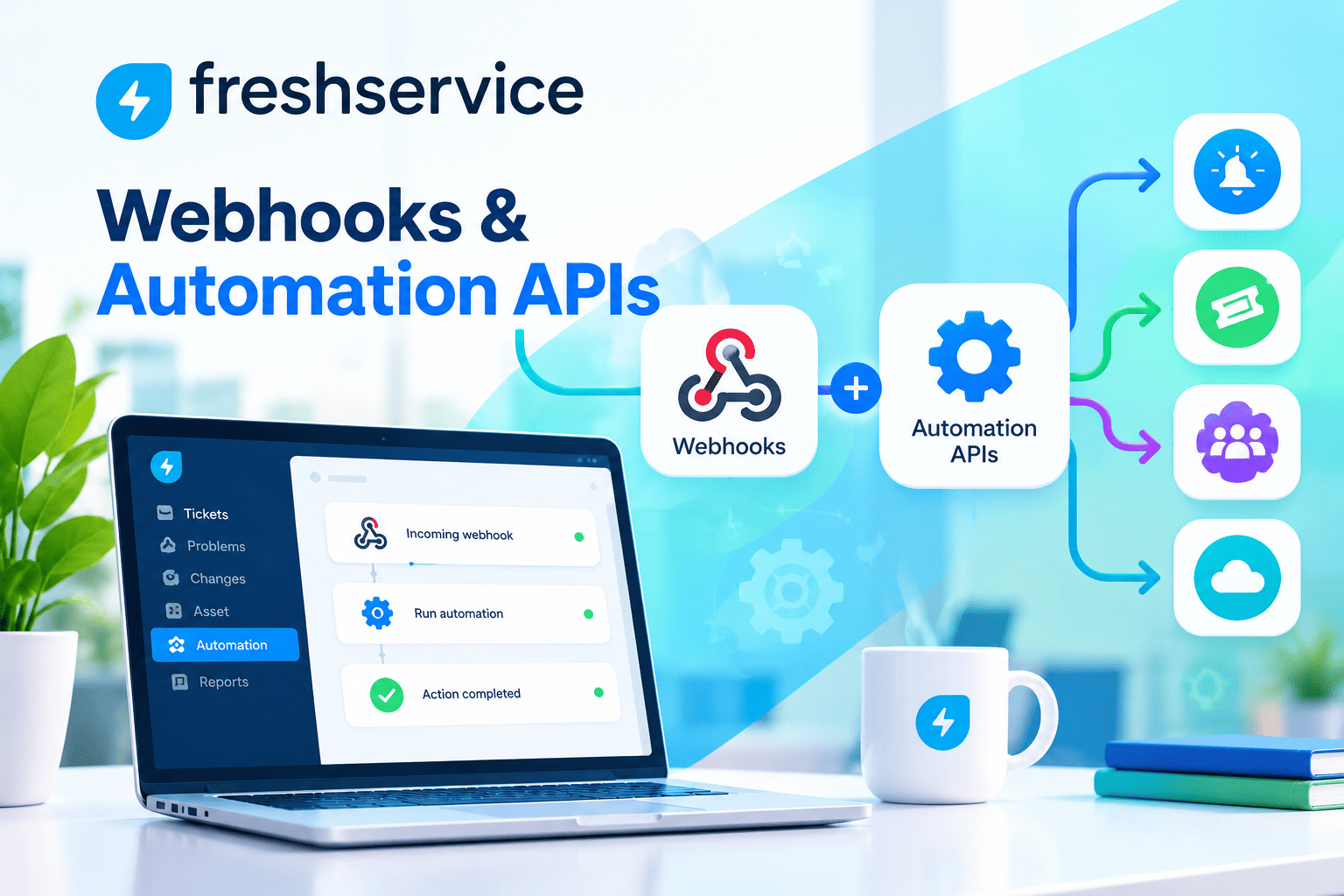
Freshservice is a cloud-native ITSM platform designed with simplicity and speed in mind. It provides AI-powered automation, a clean end-user experience, and seamless integrations with hundreds of third-party tools. Freshservice suits businesses that want rapid deployment, minimal IT overhead, and a modern, intuitive interface for both agents and end users. Its AI-driven suggestions for ticket categorization and resolution significantly reduce mean time to resolution (MTTR).
What Are the Most Common ITSM Deployment Mistakes?

Businesses across industries — from mid-market firms to large enterprises — repeat a recognizable set of errors when deploying ITSM solutions. Understanding these mistakes gives your team a decisive advantage before the project even starts.
Mistake #1: Why Do Businesses Skip the Needs Assessment Phase?
Surprisingly, many IT teams jump straight into selecting and configuring an ITSM platform without first conducting a structured needs assessment. They assume their pain points are obvious — long ticket resolution times, no self-service portal, siloed communication — and therefore skip the diagnostic work. Consequently, the chosen platform often solves the wrong problems or addresses only a fraction of the real challenges.
A proper needs assessment maps current workflows, identifies gaps, prioritizes business requirements, and defines measurable success criteria. Both ManageEngine ServiceDesk Plus and Freshservice offer pre-deployment consulting resources and demo environments that allow teams to test configurations against real-world scenarios before committing to a setup.
How to avoid it: Dedicate at least two to four weeks to a structured discovery phase. Interview stakeholders across IT, HR, finance, and facilities — because ITSM often extends beyond IT. Document both current-state pain points and future-state goals, then map platform capabilities against those requirements.
Mistake #2: Are You Trying to Replicate Legacy Processes Instead of Improving Them?
One of the costliest mistakes businesses make is treating an ITSM deployment as a simple system migration. They configure the new platform to mirror their old ticketing system exactly, including all its inefficiencies, workarounds, and outdated approval chains. This approach negates the value of the new investment almost entirely.
ManageEngine ServiceDesk Plus provides ITIL-aligned workflow templates that encourage teams to rethink processes rather than simply replicate them. Similarly, Freshservice includes AI-assisted workflow suggestions that highlight bottlenecks and recommend optimizations based on industry benchmarks. Both platforms effectively serve as a forcing function for process improvement — but only if the team is willing to embrace change.
How to avoid it: Treat deployment as a business transformation project, not just a technical migration. Use the platform’s built-in best-practice templates as your starting point. Identify and eliminate redundant approval steps, automate repetitive tasks, and design workflows around user needs rather than legacy habits.
Mistake #3: How Does Poor Change Management Derail ITSM Adoption?
Even a perfectly configured ITSM platform fails when employees resist using it. Unfortunately, IT leaders frequently underestimate the cultural dimension of ITSM adoption. They focus intensely on technical configuration while neglecting communication, training, and stakeholder buy-in.
Research from Gartner consistently shows that technology adoption failures stem primarily from people and process issues, not technical deficiencies. When end users find a new portal confusing or agents feel the system adds steps rather than removing them, ticket volumes drop back to informal channels — emails, phone calls, Slack messages — defeating the purpose of the platform entirely.
How to avoid it: Launch a structured change management program in parallel with your ITSM deployment. Appoint ITSM champions within each department, run role-specific training sessions, and create feedback loops so users can report friction points early. Both ManageEngine and Freshservice offer guided onboarding, video tutorials, and knowledge base resources to support this process.
Mistake #4: Are You Configuring Too Much Too Soon?
ITSM platforms like ManageEngine ServiceDesk Plus and Freshservice offer an enormous range of configuration options — custom fields, complex SLA rules, multi-tier approval workflows, automated escalations, and more. Naturally, it is tempting to configure everything at once. However, over-configuring during the initial deployment creates a brittle, confusing system that is hard to maintain and even harder for users to navigate.
A phased approach consistently produces better outcomes. Start with core incident and request management, then layer in additional modules — change management, asset tracking, problem management — once the team has built confidence with the basics. Freshservice’s modular architecture specifically supports this incremental approach, allowing teams to activate features progressively. ManageEngine ServiceDesk Plus similarly allows phased rollout by starting with essential ITIL processes and expanding over time.
How to avoid it: Define a phased deployment roadmap with clear milestones. Phase one might cover incident management and the self-service portal. Phase two could add change management and asset discovery. Phase three might introduce advanced analytics and integrations. This approach reduces risk and allows continuous learning.
Mistake #5: Why Does Ignoring Data Migration Strategy Cause Problems?

Migrating historical ticket data, asset records, and user information from a legacy system is rarely straightforward. Companies that treat data migration as an afterthought often discover — too late — that their historical records are incomplete, improperly formatted, or entirely missing from the new system.
This matters because historical data supports trend analysis, SLA compliance reporting, and audit trails. Without it, IT teams lose institutional knowledge and struggle to demonstrate compliance. ManageEngine’s import utilities and Freshservice’s data migration tools both support structured data imports, but success depends heavily on data quality preparation before the migration begins.
How to avoid it: Audit your existing data at least three months before migration. Cleanse duplicate records, standardize field formats, and decide which historical data is genuinely worth migrating. Run test migrations in a staging environment and validate results against the source system before cutting over.
Mistake #6: Are You Underestimating Integration Complexity?
Modern IT environments rely on dozens of interconnected tools — monitoring platforms, identity management systems, communication tools, HR software, and ERP systems. ITSM platforms must integrate with these tools to deliver value across the organization. However, businesses routinely underestimate the complexity of these integrations and the testing time they require.
Freshservice provides a large native integration library and an iPaaS-friendly API that simplifies connections with tools like Slack, Microsoft Teams, Jira, Okta, and Salesforce. ManageEngine ServiceDesk Plus offers deep native integrations within the ManageEngine ecosystem — including OpManager, ADManager, and Analytics Plus — as well as REST API support for custom integrations. Both platforms support webhook-based automation that extends their capabilities significantly.
How to avoid it: Map every integration requirement during the needs assessment phase. Prioritize integrations by business impact and test each one independently in a staging environment before moving to production. Allow more time than you think you need — integrations almost always surface unexpected edge cases.
Mistake #7: How Does Neglecting SLA Configuration Hurt Service Quality?
Service Level Agreements define the commitments your IT team makes to the business. Yet many organizations deploy ITSM platforms with SLA configurations that are either too generic to be meaningful or so complex that agents cannot track them effectively. Both extremes produce the same result: missed SLAs, frustrated users, and eroded trust in IT.
ManageEngine ServiceDesk Plus provides granular SLA management with priority-based escalation rules, business-hours calendars, and automated notifications. Freshservice offers AI-assisted SLA suggestions based on historical resolution data, which helps teams set realistic targets from the start. However, the platform can only enforce the SLAs you define — if those definitions are wrong, the tool cannot compensate.
How to avoid it: Define SLAs collaboratively with business stakeholders, not unilaterally within IT. Ensure targets reflect genuine business impact. Use tiered SLA structures: critical issues get four-hour response times; routine requests might allow two business days. Review SLA performance monthly and adjust targets as the team’s capabilities evolve.
Mistake #8: Why Is Skipping ITSM Training a False Economy?
Organizations frequently cut training budgets to reduce deployment costs. This decision appears financially prudent in the short term but generates significant hidden costs — extended onboarding times, increased support tickets from confused users, misconfigured workflows, and low platform adoption rates. In practice, skimping on training is one of the most expensive mistakes a business can make.
Both ManageEngine and Freshservice provide comprehensive training ecosystems: documentation libraries, video tutorials, certification programs, and live webinars. Freshservice Academy and ManageEngine University both offer structured learning paths for administrators and end users. Nevertheless, self-service training resources cannot fully replace structured, role-specific training facilitated by an experienced implementation partner.
How to avoid it: Budget for formal training as a non-negotiable line item in your ITSM project plan. Develop role-specific training tracks — one for IT agents, one for department managers, one for end users. Supplement vendor resources with hands-on workshops in your specific configuration.
Mistake #9: Are You Measuring the Right ITSM Performance Metrics?
Without measurement, improvement is guesswork. However, organizations regularly deploy ITSM platforms and then track vanity metrics — total ticket volume, for instance — rather than outcome-based indicators like first-call resolution rate, mean time to resolution, change success rate, or user satisfaction score.
ManageEngine ServiceDesk Plus includes a powerful built-in analytics module with customizable dashboards that display ITIL KPIs in real time. Freshservice offers an Analytics module with AI-driven insights that surface trends and anomalies automatically. Both platforms give IT leaders the data they need — but only if the organization decides which metrics matter before deployment, not after.
How to avoid it: Define your key performance indicators during the needs assessment phase and configure dashboards before go-live. Review metrics in weekly IT operations meetings and use data to drive continuous improvement cycles rather than treating reports as a compliance exercise.
Mistake #10: What Happens When Businesses Ignore Post-Deployment Optimization?
ITSM deployment does not end at go-live. Unfortunately, many organizations invest heavily in initial implementation and then fail to allocate resources for ongoing optimization. As business requirements evolve, workflows become outdated, integrations drift out of sync, and platform capabilities go unused.
Both ManageEngine ServiceDesk Plus and Freshservice release regular updates that introduce new features, security patches, and performance improvements. Organizations that fail to adopt these updates gradually fall behind, losing competitive advantages that the platform could otherwise deliver.
How to avoid it: Establish a quarterly ITSM review cadence. Assign an internal ITSM owner who monitors platform updates, manages configuration changes, and coordinates with the vendor or implementation partner on optimization opportunities. Treat your ITSM platform as a living system, not a one-time project.
How Do ManageEngine ServiceDesk Plus and Freshservice Compare?

The table below provides a structured comparison of both platforms across the key dimensions that matter most during ITSM deployment decisions. Use it to align platform selection with your organization’s specific priorities.
| Feature / Dimension |  | |
| Deployment Model | On-premises, cloud, or hybrid | Cloud-native SaaS only |
| ITIL Alignment | Full ITIL v3/v4 coverage | Full ITIL v3/v4 coverage |
| AI & Automation | Zia AI for suggestions & analytics | Freddy AI for classification, resolution & insights |
| Self-Service Portal | Fully customizable, branded portal | Modern, intuitive end-user portal |
| Change Management | Advanced change advisory board (CAB) workflows | Streamlined change templates with risk scoring |
| Asset Management | Built-in CMDB with discovery agents | Cloud-native CMDB with network discovery |
| Integrations | Deep ManageEngine ecosystem + REST API | 500+ native integrations + iPaaS connectors |
| Reporting & Analytics | Advanced built-in analytics + BI connectors | Analytics module with AI-driven insights |
| SLA Management | Granular SLA with priority-based escalation | AI-assisted SLA recommendations |
| Mobile App | iOS and Android apps available | iOS and Android apps available |
| Customization Depth | Very high — ideal for complex environments | Moderate — optimized for ease of use |
| Onboarding Speed | Moderate — rich features require more setup | Fast — designed for rapid deployment |
| Pricing Model | Per technician or per device licensing | Agent-based tiered subscription plans |
| Best Suited For | Mid-large enterprises with complex IT needs | SMBs and fast-growing companies |
| Vendor Support | 24/7 support with dedicated account managers | 24/7 support + Freshworks community |
What Conclusions Should Businesses Draw From These ITSM Deployment Insights?
The ten mistakes outlined in this article share a common thread: they all stem from treating ITSM deployment as a purely technical exercise rather than a strategic business initiative. Organizations that achieve the best outcomes approach ITSM with the same rigor they apply to any major transformation — clear goals, structured project management, cross-functional stakeholder engagement, and ongoing measurement.
ManageEngine ServiceDesk Plus stands out for organizations that need deep customization, on-premises control, and seamless integration with an existing ManageEngine toolset. Its comprehensive ITIL coverage and granular configuration options make it particularly valuable for complex IT environments with established governance frameworks. If your team already relies on ManageEngine tools for network monitoring, AD management, or endpoint security, ServiceDesk Plus delivers exceptional synergy.
Freshservice, on the other hand, excels in scenarios where deployment speed, user experience, and AI-driven automation are top priorities. Its cloud-native architecture eliminates infrastructure overhead, while Freddy AI actively reduces agent workload through intelligent ticket routing, automated suggestions, and predictive analytics. Growing businesses and those undergoing digital transformation frequently find that Freshservice’s modern interface accelerates adoption significantly.
Regardless of which platform you choose, the deployment mistakes covered in this article apply equally to both. The differentiator between successful and failed ITSM implementations is almost never the platform itself — it is the quality of planning, execution, and ongoing management surrounding it.
Frequently Asked Questions About ITSM Deployment
Deployment timelines vary significantly depending on organizational complexity, the number of integrations required, and the scope of the initial rollout. A focused, phased deployment covering core incident and request management typically takes six to twelve weeks. Full enterprise deployments that include change management, asset management, and multiple integrations may require four to six months. Working with an experienced partner like Solution for Guru can compress these timelines by up to 40%, since the team anticipates common challenges and resolves them before they become blockers.
Both platforms serve small businesses effectively, but they target slightly different profiles. Freshservice generally suits smaller organizations better due to its rapid deployment, intuitive interface, and cloud-native architecture that eliminates server management overhead. ManageEngine ServiceDesk Plus becomes more advantageous for small businesses that already use other ManageEngine tools or that need on-premises deployment for compliance reasons. The best choice always depends on your specific requirements, existing toolset, and growth trajectory — which is exactly why a needs assessment is so important before selecting a platform.
Consistently, the biggest predictor of ITSM deployment success is executive sponsorship combined with cross-functional stakeholder engagement. When senior leadership actively champions the ITSM initiative, communicates its importance to the organization, and allocates appropriate resources, adoption rates climb dramatically. Conversely, even the most technically sophisticated deployment struggles when it lacks organizational buy-in. Pairing strong leadership support with a structured implementation methodology — and the guidance of an experienced partner like Solution4Guru — creates the conditions for sustainable, long-term ITSM success.
Why Should You Consider Partnering With Solution for Guru for Your ITSM Deployment?
Working with an experienced ITSM implementation partner dramatically increases your chances of a successful deployment. Solution for Guru is a specialized IT solutions company that brings deep expertise in ITSM platform deployment, configuration, and optimization.
What Benefits Does Solution for Guru Bring to Your ITSM Project?
Expert Platform Knowledge: Solution for Guru’s consultants hold certifications and hands-on experience with both ManageEngine ServiceDesk Plus and Freshservice. This means your team benefits from platform-specific best practices from day one, rather than learning through trial and error.
Needs Assessment and Process Design: Rather than jumping straight into configuration, Solution4Guru begins every engagement with a thorough discovery process. The team maps your current workflows, identifies improvement opportunities, and designs a deployment roadmap aligned with your business goals.
Accelerated Deployment Timelines: Because Solution for Guru has executed numerous ITSM deployments across industries, the team anticipates common blockers and resolves them proactively. This significantly reduces deployment timelines compared to in-house implementations.
Custom Integrations and Automation: Solution4Guru builds custom integrations between your ITSM platform and your broader IT ecosystem — ERP systems, monitoring tools, identity providers, and communication platforms. The team also designs automation workflows that reduce manual workload and improve response times.
Training and Change Management Support: Beyond technical configuration, Solution for Guru provides structured training programs tailored to different user roles. The team also supports change management activities, helping your organization build genuine buy-in across departments.
Ongoing Optimization and Support: Post-deployment, Solution for Guru offers managed services and optimization engagements to ensure your ITSM platform continues to deliver value as your business evolves. Regular platform reviews, update management, and performance analysis are all part of the ongoing partnership.
In short, partnering with Solution for Guru transforms ITSM deployment from a risky, resource-intensive project into a structured, outcome-driven initiative with a much higher probability of success.
Recommended:
- ITSM for DevOps Teams: Bridging Agile and Service Management
- Event-Driven ITSM: How Do You Connect Monitoring Alerts to Automated Ticketing?
- Integrating Monitoring Tools with ManageEngine or Freshservice for Proactive Support
- Freshservice Asset Management vs ManageEngine Asset Discovery
- On-Premise vs Cloud ITSM: Choosing Between ManageEngine and Freshservice Architectures
- Freshservice for Internal IT Support: What Problems Does It Solve?
- How Does Freshservice Simplify IT Service Management for Modern Organizations?
- How Do Businesses Integrate Slack and Microsoft Teams with ITSM Platforms?
- Automating Software License Tracking with ITSM Solutions: How Can You Take Control?
- Best Microsoft 365 Integrations for ManageEngine and Freshservice
- Integrating Endpoint Management Tools with ITSM Systems
- Aligning ITSM Processes with ISO 20000 Standards
- How Long Does an ITSM Implementation Really Take? Key Factors Explained
- ManageEngine vs Freshservice
- Top ITSM Best Practices Using ManageEngine
- Improving IT Governance and Compliance with ManageEngine ITSM
- Cloud vs On-Premise ManageEngine ITSM: Which Should You Choose?
- Integrating ManageEngine with Microsoft 365