ESM vs ITSM: What Is the Difference and Which One Does Your Business Need?

As businesses grow more complex, the tools they use to manage services and support must evolve too. Two frameworks frequently come up in conversations about operational efficiency: Enterprise Service Management (ESM) and IT Service Management (ITSM). At first glance, they might seem interchangeable. However, they serve distinct purposes and address different organisational needs. Understanding the difference between ESM and ITSM is critical for any company that wants to streamline service delivery, improve employee experience, and scale operations effectively.
In this article, we break down ESM and ITSM in detail, compare leading platforms like ManageEngine and Freshservice, and explain how working with a specialist partner like Solution for Guru can unlock the full potential of these tools for your organisation.
Table of contents
Quick Summary: What You Need to Know at a Glance
| ITSM | ESM | |
|---|---|---|
| Full Name | IT Service Management | Enterprise Service Management |
| Primary Focus | IT department services | All business departments |
| Origin | ITIL framework | Extension of ITSM principles |
| Users | IT staff and end-users | All employees and departments |
| Key Processes | Incident, change, problem management | HR, Finance, Facilities, Legal + IT |
| Goal | Reliable IT service delivery | Organisation-wide service excellence |
| Example Platforms | ManageEngine ServiceDesk Plus, Freshservice | ManageEngine ServiceDesk Plus (ESM), Freshservice (multi-dept) |
How Do ManageEngine and Freshservice Fit Into the ESM vs ITSM Debate?
Before diving deeper into the ESM vs ITSM comparison, it is worth understanding two of the most widely adopted platforms in this space: ManageEngine ServiceDesk Plus and Freshservice. Both tools support ITSM processes and increasingly offer ESM capabilities, making them highly relevant to this discussion.
What Is ManageEngine ServiceDesk Plus?
ManageEngine ServiceDesk Plus is an enterprise-grade ITSM solution developed by Zoho Corporation. It covers the full spectrum of ITIL-aligned processes, including incident management, problem management, change management, asset management, and a self-service portal. Furthermore, ManageEngine has expanded its platform with ESM capabilities, allowing organisations to create dedicated service desks for departments such as HR, Finance, and Facilities — all within a single unified platform.
This makes ManageEngine an excellent choice for organisations that want a single, centralised platform capable of managing both IT and non-IT service requests. As a result, companies that start with ITSM can gradually extend their service management practices across the entire enterprise.
What Is Freshservice?

Freshservice is a cloud-native, AI-powered IT service management platform by Freshworks. Designed with simplicity and speed in mind, Freshservice delivers intuitive ITSM features including ticketing, asset management, workflow automation, and a knowledge base. Moreover, Freshservice supports ESM through its multi-department service management capabilities, enabling HR, Legal, Finance, and other departments to manage requests through the same platform.
Freshservice stands out for its modern interface, fast deployment, and strong integration ecosystem. Consequently, organisations that prioritise agility and ease of use often select Freshservice as their platform of choice for both ITSM and ESM initiatives.
What Is ITSM and Why Does It Matter for Organisations?
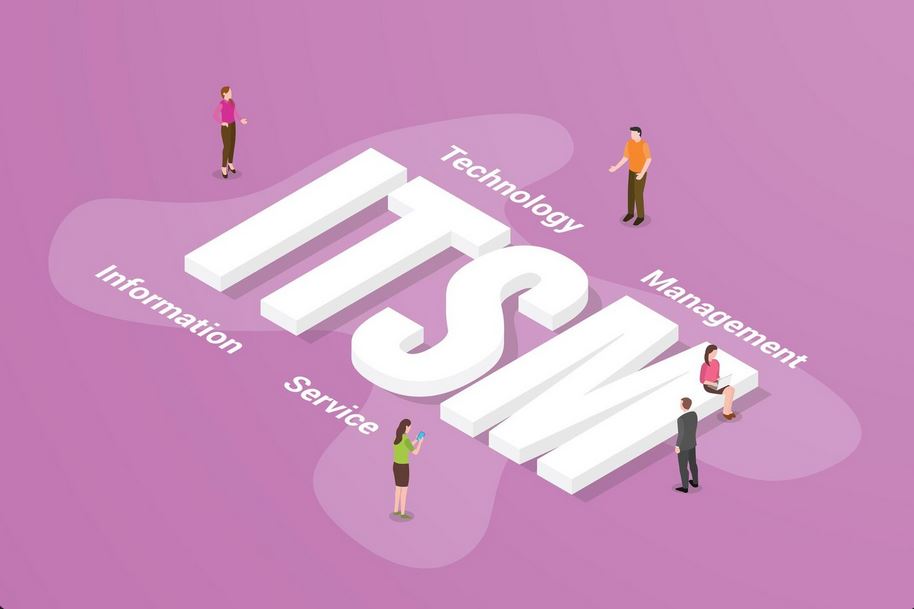
IT Service Management, commonly known as ITSM, refers to the policies, processes, and tools that organisations use to design, deliver, manage, and improve IT services. Rather than treating IT as a back-office function, ITSM positions IT as a strategic service provider that actively supports business objectives.
What Processes Does ITSM Typically Include?
ITSM draws heavily from the ITIL (Information Technology Infrastructure Library) framework, which provides a set of best practices for IT service delivery. Key ITSM processes include:
- Incident Management: Restoring normal service operation as quickly as possible after an IT disruption
- Problem Management: Identifying and eliminating the root causes of recurring incidents
- Change Management: Controlling and tracking changes to IT infrastructure to minimise risk
- Service Request Management: Handling routine requests such as password resets or software installations
- Asset and Configuration Management: Tracking IT assets and their relationships throughout their lifecycle
- Knowledge Management: Capturing and sharing information to resolve incidents faster
In practice, ITSM improves response times, reduces downtime, and creates a more predictable and reliable IT environment. According to Gartner, organisations that implement mature ITSM practices can reduce incident resolution time by up to 50 percent and lower IT costs significantly.
How Do ManageEngine and Freshservice Support ITSM?
Both ManageEngine and Freshservice deliver comprehensive ITSM capabilities aligned with ITIL best practices. ManageEngine offers deep customisation and robust reporting, making it particularly suitable for enterprises with complex IT environments. Freshservice, on the other hand, prioritises user experience and automation, reducing the manual workload of IT teams through intelligent workflows and AI-powered suggestions.
Therefore, choosing between the two often depends on the scale of your IT operations, the level of customisation required, and the preferred deployment model — on-premise for ManageEngine or cloud-native for Freshservice.
What Is ESM and How Does It Differ From ITSM?
Enterprise Service Management (ESM) extends the principles and practices of ITSM beyond the IT department and applies them to other business functions. In essence, ESM treats every department — HR, Finance, Legal, Facilities, Marketing — as a service provider that delivers structured services to internal customers (employees).
What Problems Does ESM Solve for Businesses?
Many organisations struggle with fragmented service delivery. Employees submit requests through emails, phone calls, or informal messages, resulting in inconsistent experiences and delayed resolutions. ESM solves this by:
- Centralising service requests across all departments into a unified portal
- Standardising processes for request fulfillment, approvals, and escalations
- Providing visibility into service performance through dashboards and reporting
- Enabling automation to reduce manual tasks and speed up response times
- Improving employee experience by creating a consistent, self-service-first culture
As a result, organisations that implement ESM report higher employee satisfaction, reduced operational costs, and greater alignment between departments. According to HDI (Help Desk Institute), companies adopting ESM practices see up to 30 percent improvement in service delivery efficiency.
How Do ManageEngine and Freshservice Enable ESM?
ManageEngine ServiceDesk Plus enables ESM through its Enterprise Service Management module, which allows organisations to set up separate service desk instances for HR, Facilities, Finance, and other departments — all sharing the same underlying platform, user directory, and reporting infrastructure. This means IT teams and HR teams, for example, can work in their own dedicated environments while management gains a unified view of service performance across the organisation.
Similarly, Freshservice supports ESM through its multi-department service management capabilities. Organisations can configure separate service groups, catalogs, and workflows for different business units, all accessible through a single employee-facing portal. Freshservice’s AI-powered features further enhance ESM by automating ticket routing, suggesting knowledge articles, and predicting service trends.
What Are the Key Differences Between ESM and ITSM?
Now that we have a solid understanding of both frameworks, let us examine the key differences that distinguish ESM from ITSM. Understanding these differences helps organisations decide which approach — or which combination — best suits their needs.
Scope: Department vs Organisation
The most fundamental difference between ITSM and ESM is scope. ITSM focuses exclusively on IT services. Its processes, tools, and teams are designed to manage the IT environment and support technology users. ESM, by contrast, applies the same structured service management approach across the entire organisation. Consequently, ESM delivers value to every employee, regardless of which department their request originates from.
Beneficiaries: IT Users vs All Employees
ITSM primarily benefits employees who interact with IT services — essentially everyone who uses a computer or corporate system. However, the service desk is managed and operated by the IT team. ESM broadens this model to include all departments as both service providers and consumers. For instance, an HR team using ESM manages onboarding requests in the same structured way that IT manages software deployments.
Processes: Technical vs Cross-Functional
ITSM processes are technically oriented — they focus on infrastructure, applications, and technology-related incidents. ESM processes are cross-functional and cover a much wider range of service types, including employee onboarding (HR), purchase approvals (Finance), office maintenance (Facilities), and contract reviews (Legal). Therefore, ESM requires greater collaboration across departments and a more flexible process design.
Technology: Specialised vs Unified Platforms
Traditionally, ITSM relied on specialised tools built specifically for IT teams. Modern ESM platforms, however, unify these capabilities under one roof. Both ManageEngine and Freshservice have evolved their platforms to support both ITSM and ESM from a single interface, eliminating the need for multiple disconnected tools across departments.
How Do ManageEngine and Freshservice Compare as ESM and ITSM Platforms?

To help you make an informed decision, here is a detailed side-by-side comparison of ManageEngine ServiceDesk Plus and Freshservice across the most important dimensions for ITSM and ESM:
| Feature / Criteria |  | |
|---|---|---|
| Deployment Model | On-premise, cloud, and hybrid | Cloud-native (SaaS) |
| ITSM Capabilities | Full ITIL-aligned: incident, problem, change, asset, CMDB | Full ITIL-aligned: incident, problem, change, asset, CMDB |
| ESM Capabilities | Dedicated ESM module with multi-department service desks | Multi-department service management with shared portal |
| Automation | Workflow automation, business rules, scheduled tasks | AI-powered workflow automation, orchestration |
| AI Features | Zia AI assistant for analytics and recommendations | Freddy AI for ticket routing, suggestions, forecasting |
| Self-Service Portal | Customisable employee self-service portal | Modern, intuitive self-service portal with chatbot |
| Asset Management | Advanced IT asset and CMDB management | IT asset management with discovery integrations |
| Integrations | Extensive integrations within Zoho ecosystem and third-party tools | Native integrations with Freshworks suite and 1000+ apps |
| Reporting & Analytics | Advanced custom reports, dashboards, and analytics | Real-time dashboards, analytics, and predictive insights |
| Ease of Setup | Moderate — more configuration required | High — fast deployment and intuitive UI |
| Best For | Enterprises needing deep customisation and on-premise options | Growing businesses prioritising speed, UX, and cloud-first approach |
| Pricing Model | Per technician/month (multiple editions) | Per agent/month (tiered plans) |
When Should You Choose ITSM Over ESM — and Vice Versa?
Choosing between ITSM and ESM — or deciding to implement both — depends on your organisation’s current maturity, size, and strategic goals. Here is a practical guide to help you decide.
When Is ITSM the Right Starting Point?
ITSM is the ideal choice when your primary goal is to improve the efficiency and reliability of your IT department. Specifically, you should start with ITSM if:
- Your organisation lacks structured IT processes and experiences frequent unresolved incidents
- You need to establish an ITIL-aligned service desk before scaling to other departments
- Your IT team handles a high volume of requests and needs automation and prioritisation tools
- You require robust asset management and CMDB capabilities to track your IT infrastructure
In this case, both ManageEngine ServiceDesk Plus and Freshservice deliver excellent ITSM foundations that you can later expand into ESM as your organisation grows.
When Does ESM Make More Sense?
ESM is the right approach when you want to extend the benefits of structured service management beyond IT. You should consider ESM if:
- Employees struggle to submit and track requests to HR, Finance, or Facilities departments
- Different departments use separate, disconnected tools that create silos
- Leadership wants a unified view of service performance across all business functions
- Your organisation is undergoing digital transformation and needs a scalable, integrated platform
- You want to improve the overall employee experience, not just IT support
In practice, many organisations start with ITSM and progressively adopt ESM as they mature. This incremental approach reduces risk and allows teams to build competence before expanding scope.
What Are the Core Benefits of Implementing ESM and ITSM?

Whether you choose ITSM, ESM, or a combination of both, implementing structured service management delivers tangible business value. Below are the most significant benefits organisations report after successful implementation.
How Does ITSM Improve IT Operations?
- Faster incident resolution: Structured triage and escalation reduces mean time to resolution (MTTR)
- Reduced IT costs: Automation eliminates repetitive manual tasks, freeing IT staff for higher-value work
- Better compliance: Audit trails, change controls, and documentation support regulatory requirements
- Improved visibility: Dashboards and reporting give IT leaders real-time insight into performance
- Higher user satisfaction: Self-service portals and knowledge bases reduce ticket volumes
How Does ESM Transform Business Operations?
- Consistent employee experience: Every department provides structured, trackable, and measurable services
- Cross-departmental collaboration: Shared platforms break down silos between IT, HR, Finance, and more
- Scalability: Organisations can add new departments to the ESM platform without major reconfiguration
- Cost savings: Centralised platforms reduce licensing and maintenance costs compared to multiple tools
- Data-driven decisions: Unified analytics enable leaders to identify bottlenecks and allocate resources effectively
In What Ways Are Organizations Around the World Adopting ESM and ITSM?
ESM and ITSM adoption has accelerated significantly in recent years, driven by the growing need for operational resilience, remote work support, and digital transformation. According to Forrester Research, global spending on ITSM tools exceeded $12 billion in 2025, with ESM emerging as the fastest-growing segment.
Which Industries Benefit Most From ESM and ITSM?
While ESM and ITSM apply across virtually every industry, certain sectors derive particularly strong benefits:
- Financial services: Banks and insurance companies use ITSM to manage complex IT environments and ESM to streamline compliance and approval workflows
- Healthcare: Hospitals use ITSM for medical IT systems and ESM to coordinate HR onboarding, facilities management, and equipment requests
- Manufacturing: Factories use ITSM for operational technology support and ESM to manage procurement, HR, and maintenance requests
- Education: Universities deploy ESM to provide students and staff with unified access to IT, administrative, and facilities services
- Retail: Retailers use ITSM to maintain point-of-sale systems and ESM to coordinate store operations, HR, and supply chain requests
In each of these contexts, platforms like ManageEngine and Freshservice provide the scalability and flexibility required to meet diverse service management needs.
What Conclusions Can We Draw About ESM vs ITSM?
After examining both frameworks in detail, it is clear that ESM and ITSM are not competing approaches — they are complementary. ITSM provides the foundational processes and tools to manage IT services efficiently, while ESM extends these capabilities across the entire organisation, delivering consistent service experiences to every employee.
For organisations beginning their service management journey, starting with ITSM is a proven strategy. Platforms like ManageEngine ServiceDesk Plus and Freshservice provide robust ITSM capabilities out of the box and offer clear pathways to ESM expansion as maturity grows.
For organisations ready to take a broader view of service management, ESM delivers transformative value by unifying HR, Finance, Facilities, and other departments on a single platform. Both ManageEngine and Freshservice have invested significantly in ESM functionality, making them strong candidates for organisations at this stage of their journey.
Ultimately, the most critical success factor is not the platform you choose — it is how you implement and continuously improve it. Partnering with an expert like Solution for Guru ensures that your ESM or ITSM investment delivers maximum business value, faster time to value, and a service management capability that scales alongside your organisation.
Frequently Asked Questions About ESM and ITSM
Absolutely. While ITSM and ESM are often associated with large enterprises, small and medium-sized businesses (SMBs) can benefit significantly from structured service management. In fact, SMBs often see faster returns on investment because they can implement streamlined processes more quickly without the complexity of large organisational hierarchies. Platforms like Freshservice, in particular, offer tiered pricing and fast deployment that make them highly accessible for growing businesses.
Yes, and many organisations do exactly that. Modern platforms like ManageEngine ServiceDesk Plus and Freshservice are designed to support both ITSM and ESM within the same environment. The recommended approach, however, is to establish strong ITSM foundations first and then progressively extend service management practices to other departments. This phased approach reduces risk and builds internal competence before scaling.
Implementation timelines vary based on the size of the organisation, the complexity of existing processes, and the level of customisation required. A basic ITSM implementation using Freshservice can be operational in as little as two to four weeks for a mid-sized organisation. A more comprehensive ManageEngine deployment with custom workflows, integrations, and CMDB configuration typically takes two to four months. ESM rollouts, which involve multiple departments, can take three to six months or longer depending on the number of service groups and process complexity.
Why Should You Partner with Solution for Guru to Implement ESM or ITSM?
Implementing ESM or ITSM is not simply a matter of purchasing a software licence. To unlock the full value of platforms like ManageEngine and Freshservice, organisations need expert guidance, tailored configuration, and ongoing support. That is precisely where Solution for Guru makes a decisive difference.
What Does Solution for Guru Offer?
Solution for Guru is a specialist IT service management consultancy with deep expertise in deploying and optimising ManageEngine and Freshservice for organisations across various industries. Their team of certified consultants partners with clients to ensure that implementations align with business objectives, follow best practices, and deliver measurable results.
Working with Solution for Guru gives your organisation access to:
- Expert needs assessment: Solution for Guru’s consultants analyse your current processes and identify the right ITSM or ESM approach for your specific situation
- Tailored platform configuration: Rather than generic setups, Solution for Guru configures ManageEngine or Freshservice to match your workflows, team structure, and service catalog requirements
- ITIL and ESM best practice alignment: The team ensures your implementation follows proven frameworks, maximising the long-term value of your investment
- User training and adoption support: Solution for Guru provides training programmes that drive user adoption, ensuring your teams get the most out of the platform from day one
- Ongoing optimisation: As your organisation evolves, Solution for Guru continues to support you with platform updates, process improvements, and new feature rollouts
- Faster time to value: With experienced consultants guiding the implementation, you avoid common pitfalls and achieve results significantly faster than attempting a self-managed deployment
In short, partnering with Solution for Guru transforms your ESM or ITSM project from a technology deployment into a genuine business transformation. Their combination of technical expertise and strategic insight ensures you not only implement the right platform but also build the processes and culture needed to sustain long-term service excellence.
Recommended:
- Freshservice for Non-IT Departments: HR, Facilities, Finance, and Operations
- Can Freshservice Reduce IT Operational Costs?
- ITSM Workflow Optimization Strategies for Hybrid Work Environments
- Breaking Down the ITSM Model: What Are the Core Processes, Roles, and Value Streams?
- Common ITSM Deployment Mistakes Businesses Make — and How to Avoid Them
- ITSM for DevOps Teams: Bridging Agile and Service Management
- Event-Driven ITSM: How Do You Connect Monitoring Alerts to Automated Ticketing?
- Integrating Monitoring Tools with ManageEngine or Freshservice for Proactive Support
- Freshservice Asset Management vs ManageEngine Asset Discovery
- On-Premise vs Cloud ITSM: Choosing Between ManageEngine and Freshservice Architectures
- Freshservice for Internal IT Support: What Problems Does It Solve?
- How Does Freshservice Simplify IT Service Management for Modern Organizations?
- How Do Businesses Integrate Slack and Microsoft Teams with ITSM Platforms?
- Automating Software License Tracking with ITSM Solutions: How Can You Take Control?