Bigin by Zoho CRM for First-Time CRM Users: A Beginner’s Guide

Switching from spreadsheets and sticky notes to a real CRM feels intimidating the first time around, especially when most CRM platforms seem built for enterprise sales teams with dedicated administrators. Fortunately, not every CRM demands that level of complexity. Bigin by Zoho CRM was designed specifically for people picking up a CRM for the very first time, stripping away the overwhelming feature bloat that scares off solo founders and small teams before they even get started.
This guide walks first-time users through exactly what Bigin does, how to get started with it, and what to expect as a business grows, along with how a technology partner can help smooth out the initial setup.
Table of contents
Quick Summary
Here is a brief overview of what this guide covers:
- The core idea: Bigin brings spreadsheet-like simplicity to CRM, letting anyone get started immediately without a lengthy setup process.
- The target user: solo founders, freelancers, and small teams of 1 to 20 people who need pipeline visibility without enterprise complexity.
- The core features: pipeline-centric deal tracking, contact management, built-in calling, workflow automation, and mobile access.
- The pricing structure: a genuinely usable free plan, with paid tiers starting around $7 per user per month.
- The honest limits: businesses that scale rapidly or need advanced AI-driven sales tools will eventually outgrow Bigin and may need to migrate to full Zoho CRM.
- The partner angle: working with a specialist like Solution for Guru helps first-time users configure Bigin correctly from day one.
How Does Bigin by Zoho CRM Relate to First-Time CRM Adoption?

Bigin by Zoho CRM sits at the center of this topic because it was purpose-built to solve the exact problem that keeps many small businesses stuck on spreadsheets far longer than they should be: most CRM platforms feel like overkill for a team that just wants to track leads and close deals. Launched by Zoho with a clear focus on solo founders and small teams, Bigin strips CRM functionality down to a pipeline-centric core, then layers in just enough automation and communication tools to genuinely replace a messy spreadsheet without introducing months of implementation work.
This matters directly to the topic of first-time CRM adoption because the biggest barrier for many beginners is not understanding what a CRM does in theory; it is the fear of investing time into a system too complicated to actually use consistently. Bigin addresses this fear head-on with an interface designed to feel familiar to anyone who has used a spreadsheet before, while still providing the structure and automation that spreadsheets fundamentally lack. The sections below walk through exactly what a first-time user should expect, feature by feature.
What Problem Does a CRM Actually Solve for a First-Time User?
Before diving into Bigin’s specific features, it helps to understand why moving away from spreadsheets matters in the first place.
Why Do Spreadsheets Eventually Break Down for Managing Customers?
Spreadsheets work fine for a handful of contacts, but they quickly become unmanageable once a business starts juggling dozens of leads at different stages of a sales conversation. Nothing in a spreadsheet automatically reminds a founder to follow up on a stalled deal, and there is no built-in way to see, at a glance, how many deals sit in each stage of the pipeline without manually filtering and sorting every time. As more people join the team, spreadsheets also introduce version conflicts and duplicate entries, since multiple people editing the same file rarely stays clean for long.
How Does a Pipeline-Centric CRM Solve This More Naturally Than a Spreadsheet?
A pipeline-centric CRM like Bigin replaces static rows and columns with a visual board where each deal moves through defined stages, from initial contact to closed won or closed lost. This visual structure makes it immediately obvious where every deal stands without requiring any manual filtering, and automated reminders and workflow rules handle the follow-up nudges that a spreadsheet simply cannot provide on its own. For a first-time user, this shift from static data to an active, visual system is often the single biggest quality-of-life improvement a CRM delivers.
How Does Bigin’s Pipeline Management Work for Beginners?
Pipeline management sits at the very core of what Bigin does, and understanding this feature first makes everything else about the platform easier to grasp.
How Do Pipelines Represent a Business’s Sales Process?
In Bigin, a pipeline represents a specific business process, most commonly a sales process, broken into custom stages that match how a particular business actually operates. A real estate agent might set up stages like “New Lead,” “Property Shown,” “Offer Made,” and “Closed,” while a consultancy might use “Inquiry,” “Proposal Sent,” “Negotiation,” and “Signed.” Because these stages are fully customizable, a first-time user is not forced into a generic sales process that does not match their actual workflow.
Can a Business Manage More Than One Process at Once?
Bigin supports multiple pipelines, which matters for businesses running more than one distinct process simultaneously, such as a sales pipeline alongside a separate customer onboarding pipeline. The number of pipelines available depends on the plan tier, but even the entry-level paid plan supports several team pipelines, giving a growing business room to organize more than a single, catch-all sales process.
What Does Managing a Deal Actually Look Like Day to Day?
Each deal card within a pipeline holds the details a salesperson needs at a glance, including contact information, deal value, expected close date, and any notes from recent conversations. Moving a deal forward is as simple as dragging its card into the next stage, which immediately updates any related automation or reporting tied to that pipeline. This drag-and-drop simplicity is a major part of why reviewers consistently describe Bigin as approachable for people who have never used a CRM before.
What Other Core Features Does Bigin Include Beyond Pipeline Tracking?

While pipeline management forms the foundation, Bigin bundles in several additional tools that round out its usefulness for a small team.
The table below summarizes the core features a first-time user can expect to find inside Bigin.
| Feature | What It Does | Why It Matters for Beginners |
|---|---|---|
| Contact management | Stores customer and lead details in one place | Replaces scattered contact lists and business cards |
| Built-in telephony | Makes and logs calls directly within the platform | Keeps call history tied to the right deal automatically |
| Workflow automation | Triggers actions based on predefined conditions | Removes manual follow-up tracking |
| No-code forms | Captures leads directly from a website | Feeds new leads into the pipeline without manual entry |
| Customizable dashboards | Visualizes deal and team performance | Gives an at-a-glance view without building reports manually |
| Mobile apps | Provides iOS and Android access | Lets users manage deals and contacts away from a desk |
How Does Built-In Telephony Simplify Daily Communication?
Because Bigin includes built-in calling functionality, a user can call a contact directly from within the platform, and the call automatically logs against that contact’s record without any manual note-taking required. For a first-time user unfamiliar with juggling a separate phone system alongside their CRM, this integration removes an entire category of manual data entry that would otherwise fall through the cracks.
How Do No-Code Forms Help Capture New Leads Automatically?
Bigin’s no-code form builder lets a business create a lead capture form for its website without writing any code, and submissions flow directly into the appropriate pipeline as new deals. This matters enormously for beginners, since it closes the gap between a potential customer filling out a contact form and that lead actually entering the CRM, a step that often gets missed entirely in a spreadsheet-based system.
How Much Does Bigin Cost, and Which Plan Fits a First-Time User?

Cost is often a deciding factor for beginners, and Bigin’s pricing structure is specifically built to accommodate very small teams and tight budgets.
Bigin offers a genuinely usable free plan alongside two paid tiers, Express and Premier, each adding more capacity and functionality as a business grows.
| Plan | Price | Users / Records | Best Suited For |
|---|---|---|---|
| Free | $0 | 1 user, 1 pipeline, 500 records | Solo founders testing the platform |
| Express | ~$7/user/month | 50,000 records, 3 pipelines, email integration | Small teams past the free plan’s limits |
| Premier | ~$12/user/month | 100,000 records, 5 pipelines, advanced automation, AI tools | Growing teams needing more automation and multi-currency support |
Why Does the Free Plan Have Real Limits Rather Than Being Fully Featured?
The free plan caps out at a single user and 500 records, with only three automated workflows and no email integration. This is intentional: the free tier works well for evaluating whether Bigin fits a business’s needs, but most reviewers note it becomes restrictive quickly once a business starts actually using the CRM for daily operations. First-time users should treat the free plan as a genuine trial rather than a permanent home for their growing customer base.
When Does Upgrading From Express to Premier Actually Make Sense?
Premier unlocks AI-powered tools such as a writing assistant and features designed to flag cross-sell opportunities or predict customer churn, along with support for more pipelines and multi-currency transactions. A common piece of guidance from experienced users is to start on the free plan, move to Express once the team grows past one person, and only upgrade to Premier once advanced automation or additional pipeline capacity becomes an actual bottleneck, rather than upgrading preemptively before those features are genuinely needed.
How Easy Is Bigin Actually to Set Up for Someone With No CRM Experience?
Ease of setup is arguably the single most important factor for a first-time user, since a complicated onboarding process is exactly what drives people back to spreadsheets.
What Does the Initial Setup Process Involve?
New users typically start by defining their first pipeline stages, importing existing contacts from a spreadsheet or another source, and connecting an email account for integration. Because Bigin’s interface closely mirrors the row-and-column logic of a spreadsheet that most beginners already understand intuitively, this initial setup rarely requires technical expertise or a dedicated administrator to complete.
How Do Reviewers Describe the Learning Curve?
User reviews consistently praise Bigin’s clean, organized layout, noting that its intuitive design helps people visualize pipelines and manage relationships without feeling overwhelmed by unnecessary features. This stands in sharp contrast to more complex CRM platforms, where new users often need extensive training before feeling comfortable navigating the interface. For someone adopting a CRM for the first time, this shorter learning curve directly translates into faster real-world adoption across the team.
Where Does Bigin Reach Its Limits as a Business Grows?
A trustworthy beginner’s guide needs to be honest about where a tool eventually stops being the right fit, and Bigin is no exception.
Bigin works best for teams of roughly 1 to 20 people running straightforward sales processes without a need for deep marketing automation, AI-powered lead scoring, or enterprise-grade reporting. Businesses that scale rapidly, expand into multiple departments, or require the kind of advanced customization found in platforms like full Zoho CRM, HubSpot, or Salesforce, will likely find Bigin’s feature set too limited once they cross that growth threshold. This is a deliberate trade-off rather than a flaw: Bigin’s entire value proposition rests on staying simple and affordable for small teams, rather than trying to compete feature-for-feature with enterprise CRM platforms.
For a first-time user just starting out, however, this limitation rarely matters in the short term. A business is far more likely to abandon a CRM because it felt too complicated on day one than because it eventually outgrew a lightweight tool years down the line, which is why starting simple with Bigin often produces better long-term CRM adoption than starting with a more powerful but intimidating platform.
What Mistakes Do First-Time CRM Users Commonly Make With Bigin?

Even with a beginner-friendly platform, a handful of common missteps can slow down adoption or reduce how much value a business actually gets from the switch.
Why Does Overcomplicating the First Pipeline Cause Problems?
Some first-time users try to build an overly detailed pipeline with a dozen granular stages before they have even used the CRM long enough to know what their real sales process looks like in practice. This tends to backfire, since an overly complex pipeline becomes tedious to update and often gets abandoned within a few weeks. A simpler starting pipeline with four or five broad stages, refined gradually as the business learns what actually matters, almost always works better than an elaborate structure built before any real usage data exists.
Why Does Skipping the Contact Import Step Undermine Early Adoption?
Another common mistake involves starting with an empty CRM and adding contacts only as new leads come in, rather than importing existing contacts from a spreadsheet right away. This leaves a business managing two separate systems simultaneously during the transition period, which often causes old spreadsheet habits to persist far longer than necessary. Importing existing contacts immediately, even if the data is imperfect, gives a first-time user one consolidated source of truth from day one rather than a confusing split between old and new systems.
How Does Ignoring Automation Early On Waste the Platform’s Core Advantage?
Finally, many beginners initially treat Bigin as a slightly nicer-looking spreadsheet, manually tracking every follow-up rather than setting up even basic workflow automation. This approach misses much of what separates a CRM from a spreadsheet in the first place. Setting up just one or two simple automations, such as a reminder when a deal has not moved in a week, early in the onboarding process helps first-time users experience the platform’s real advantage rather than replicating old habits inside new software.
How Do Different Types of Small Businesses Actually Use Bigin?
Seeing how Bigin applies across different business types helps a first-time user picture how the platform might fit their own specific situation.
How Does a Real Estate Agent Use Bigin Differently Than a Consultant?
A solo real estate agent typically builds a pipeline around property transactions, tracking stages like new inquiry, property shown, offer submitted, and closed sale, with built-in calling logging every conversation directly against the relevant listing or client record. A consultant or agency, by contrast, often structures their pipeline around client engagements, moving from initial inquiry through proposal, contract signing, and ongoing account management, sometimes running a second pipeline specifically for referral tracking or repeat business opportunities.
How Do Retail and E-Commerce Businesses Apply Bigin’s Tools?
Small retailers and e-commerce brands frequently use Bigin’s no-code forms to capture leads directly from their website, feeding new inquiries into a pipeline without any manual data entry. Because these businesses often deal with a higher volume of smaller transactions than a service-based business, workflow automation becomes particularly valuable for sending timely follow-ups without requiring a team member to manually track every single lead.
How Do Clinics and Educational Businesses Use Bigin Beyond Sales?
Clinics, schools, and other service-oriented small organizations sometimes use Bigin less as a traditional sales tool and more as a structured way to track inquiries, enrollments, or patient onboarding steps. Because pipeline stages are fully customizable, these businesses can repurpose the same underlying structure that a sales team would use for closing deals, instead applying it to track prospective students or patients moving through an intake process.
What Steps Should a First-Time User Follow to Get Started Successfully?

Given everything covered so far, a few practical steps help a beginner get real value from Bigin quickly rather than letting the account sit unused after signup.
- Start with the free plan to explore the interface and confirm the platform fits before committing to a paid tier.
- Define one simple pipeline first, matching stages closely to the actual sales process rather than overcomplicating the setup.
- Import existing contacts early, rather than starting from a completely empty CRM that feels harder to trust.
- Set up one or two basic automations, such as a follow-up reminder, before attempting more complex workflow rules.
- Add the mobile app immediately, since checking deals on the go builds the habit of actually using the CRM consistently.
Following this kind of gradual, structured approach helps first-time users build confidence with the platform before layering in more advanced features like AI tools or multiple pipelines.
Conclusion
For someone stepping into CRM software for the very first time, the biggest risk is not choosing the wrong features; it is choosing a platform so complicated that it never actually gets used. Bigin by Zoho CRM solves this problem directly by offering spreadsheet-like simplicity, a genuinely usable free plan, and a pipeline-centric structure that makes sense to anyone regardless of prior CRM experience. While rapidly scaling businesses will eventually need to graduate to a more powerful platform, Bigin remains one of the most approachable entry points available for solo founders and small teams ready to finally leave spreadsheets behind.
Frequently Asked Questions
Bigin offers a permanent free plan rather than a time-limited trial, though it comes with real restrictions, including a single user, one pipeline, and a 500-record cap. This makes the free plan genuinely useful for evaluating whether Bigin fits a business’s needs, but most growing businesses upgrade to a paid tier fairly quickly once they exceed these limits during actual day-to-day use.
Because Bigin’s interface closely mirrors the row-and-column logic of a spreadsheet, most first-time users report feeling comfortable navigating pipelines, contacts, and basic deal management within their first few sessions, without needing formal training. Building comfort with more advanced features, such as workflow automation or AI-powered tools available on the Premier plan, generally takes a bit longer and benefits from a structured onboarding approach.
Possibly, though not necessarily right away. Bigin fits teams of roughly 1 to 20 people running straightforward sales processes very well, but businesses that scale rapidly, add multiple departments, or need advanced AI-driven sales tools and enterprise-grade reporting will likely need to migrate to full Zoho CRM or a comparable enterprise platform eventually. For most first-time users, however, this is a future consideration rather than an immediate concern, since Bigin comfortably supports small business needs for a meaningful stretch of time.
What Are the Benefits of Partnering With Solution for Guru?
Even a beginner-friendly platform like Bigin benefits from expert setup, particularly when it comes to configuring pipelines correctly and connecting the CRM to the rest of a business’s tools, and this is where Solution for Guru adds real value.
Solution for Guru specializes in CRM, SaaS, and system integrations, which means the team can help a first-time user design pipeline stages that genuinely match their business process, rather than relying on generic default templates that may not fit. Beyond initial setup, the team can connect Bigin with other tools a business already uses, such as email marketing platforms, accounting software, or website form builders, ensuring the CRM becomes a true operational hub rather than an isolated tool.
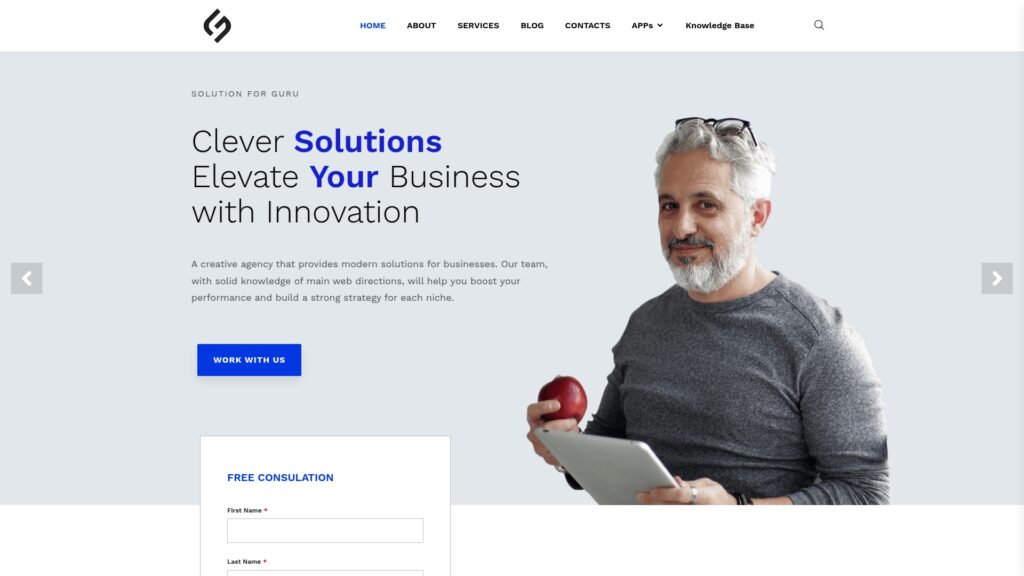
Working with Solution for Guru offers several concrete advantages:
- Correct initial configuration, ensuring pipeline stages and automation rules reflect a business’s actual sales process from day one.
- Data migration support, helping first-time users move existing spreadsheet data into Bigin cleanly and accurately.
- Custom integrations between Bigin and other business software, reducing manual data entry.
- Team training, helping small teams build consistent CRM habits early rather than letting adoption lag.
- Growth planning guidance, helping a business recognize when it may need to migrate to full Zoho CRM as it scales.
Because every small business has a slightly different sales process and set of existing tools, a tailored setup consistently produces better long-term adoption than a generic, self-managed rollout. Partnering with a team that understands both the technical and practical sides of CRM adoption helps a first-time user avoid common early mistakes and start seeing real value from Bigin much faster.
Recommended:
- Zoho CRM Webhooks and API Integrations
- Creatio CRM Integration with ERP Systems
- API Capabilities in Creatio: What Developers Should Know
- Using Creatio to Improve B2B Sales Performance
- What Is Pipedrive Pipeline Management and How Does It Help Your Team Close More Deals?
- Pipedrive Google Workspace Integration: How Does It Transform Sales Productivity?
- What Is the Pipedrive LeadBooster Add-On and How Can It Transform Your Sales Process?
- Why Pipedrive Implementations Fail: The Top 7 Mistakes and How to Avoid Them
- CRM Systems: How to Make Your Business More Efficient?
- What Are the Best CRM Systems for Service Businesses?
- Account-Based Marketing Strategies with Creatio
- Modern CRM Teams: How Are Roles Evolving in the Digital Era?
- CRM Automation for Logistics Companies Using Creatio
- Using Creatio Dashboards for Executive Decision-Making
- Pipedrive Compliance: How Does Pipedrive Handle Data Protection, Privacy, and Security Standards?
- What Is the Pipedrive Mobile App and How Can It Transform Your Sales on the Go?