How does Motive’s real-time visibility improve fleet operations?
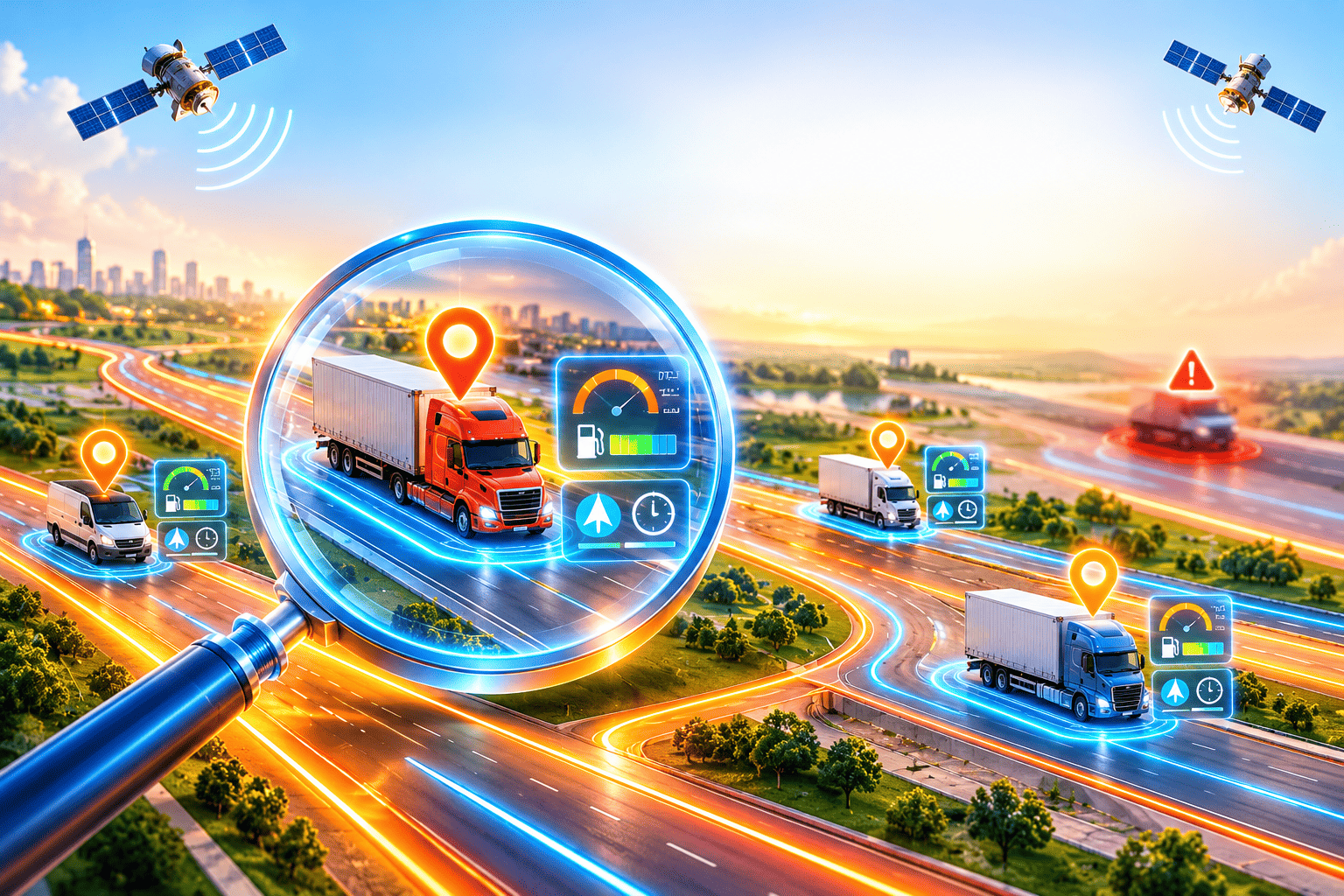
A fleet that cannot see itself must guess. Dispatchers guess where trucks are, managers guess why fuel costs rise, and customers guess when deliveries will arrive. Real-time visibility replaces those guesses with live data, and that change touches almost every part of fleet operations. This article explains how live tracking improves dispatch, safety, compliance, and cost control, and it shows how Motive – GPS Fleet Tracking System & Solutions supports each area.
Table of contents
What Is the Quick Summary of Real-Time Fleet Visibility?
The table below answers the main questions before the detailed sections begin.
| Question | Short Answer |
| What is real-time fleet visibility? | Live knowledge of where every vehicle, driver, and asset is and what each one is doing |
| Which operations improve? | Dispatch, customer communication, safety, compliance, maintenance, fuel use, and asset control |
| How does Motive help? | Motive combines live GPS tracking, alerts, geofencing, AI dashcams, electronic logging, and asset tracking in one platform. |
| Who benefits most? | Trucking carriers, field service teams, construction firms, delivery fleets, and any business with vehicles on the road |
| Main challenge | Data only helps when managers act on it, so teams need clear processes and training. |
How Is Motive – GPS Fleet Tracking System & Solutions Related to Real-Time Visibility?

Real-time visibility depends on a steady stream of accurate location and vehicle data. Motive provides that stream through a Vehicle Gateway that plugs into the vehicle, and it shows the results on a live map called Fleet View. According to Motive’s product page, the platform delivers GPS and telematics updates every one to two seconds. Consequently, managers see movement as it happens instead of waiting for a delayed report.
Moreover, Motive does not stop at location. The platform links tracking with driver activity, AI dashcam footage, hours-of-service clocks, vehicle health alerts, and trailer tracking. This combination turns raw dots on a map into operational knowledge. A dispatcher, a safety manager, and a maintenance lead can all work from the same live picture.
What Will This Article Explain?
This guide first defines real-time visibility and explains why it matters now. Next, it follows the main operational areas that improve, from dispatch to maintenance. Then it covers implementation, metrics, and common mistakes. Finally, it explains how an implementation partner such as Solution for Guru can help a fleet turn live data into daily results.
What Is Real-Time Fleet Visibility?
Which Data Sources Create a Live Picture?
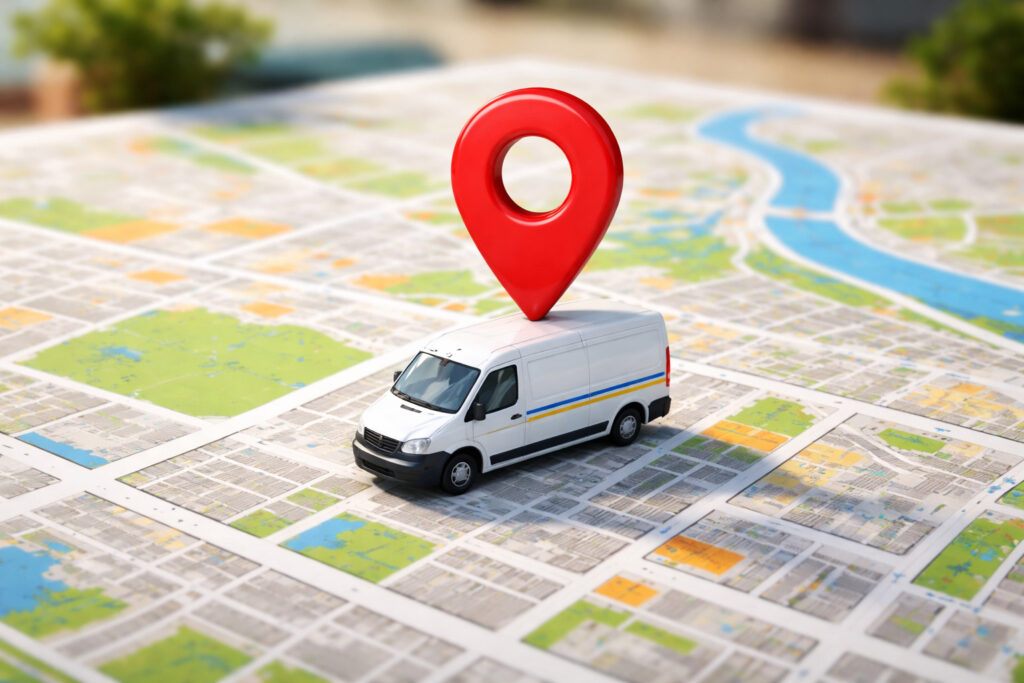
Real-time visibility combines several data sources into one view. GPS devices report position and speed, while the engine connection reports fuel level, RPM, and fault codes. Driver apps report status and documents, and dashcams add video context. Trailer and equipment trackers extend the view to assets that have no engine. Together, these sources answer three questions at once: where is everything, what is it doing, and is anything wrong?
How Does Live Data Differ From Periodic Reports?
Periodic reports describe the past, while live data describes the present. A report that arrives tomorrow cannot prevent a missed delivery today. In contrast, a live alert about a stalled vehicle lets a dispatcher reroute another driver within minutes. Therefore, real-time visibility shifts fleet management from reaction to prevention.
| Approach | Data Timing | Typical Result |
| Manual check-in calls | When someone calls | Delays, interruptions, and gaps |
| Daily or weekly reports | After the fact | Good for review, weak for action |
| Real-time tracking | Every few seconds | Fast decisions and fewer surprises |
Why Does Real-Time Visibility Matter More Than Ever?
How Much Pressure Do Rising Costs Put on Fleets?
Costs squeeze fleets from every side. The American Transportation Research Institute (ATRI) reports that trucking operational costs reached a record $2.336 per mile in 2025, a 3.4% increase over 2024. Within that figure, ATRI lists fuel at about $0.48 per mile, driver wages at $0.818 per mile, repair and maintenance at $0.22 per mile, and insurance at $0.11 per mile. Repair and maintenance rose the fastest, at 8.6%.
| Cost Category (2025) | Per Mile | Change From 2024 |
| Driver wages | $0.818 | Up 2.5% |
| Fuel | About $0.48 | Roughly flat |
| Repair and maintenance | $0.22 | Up 8.6% |
| Insurance | $0.11 | Up 3.9% |
| Total operational cost | $2.336 | Up 3.4% |
Which of These Costs Can Visibility Influence?
Visibility cannot change fuel prices or wage markets, but it can change how efficiently a fleet uses what it buys. Live data reduces idle time, shortens routes, and flags harsh driving that wastes fuel and wears out equipment. It also supports safer driving, which helps control insurance claims. As a result, even modest percentage gains in efficiency matter when margins stay thin.
How Does Real-Time Tracking Improve Dispatch and Routing?
How Do Dispatchers Use the Live Map?
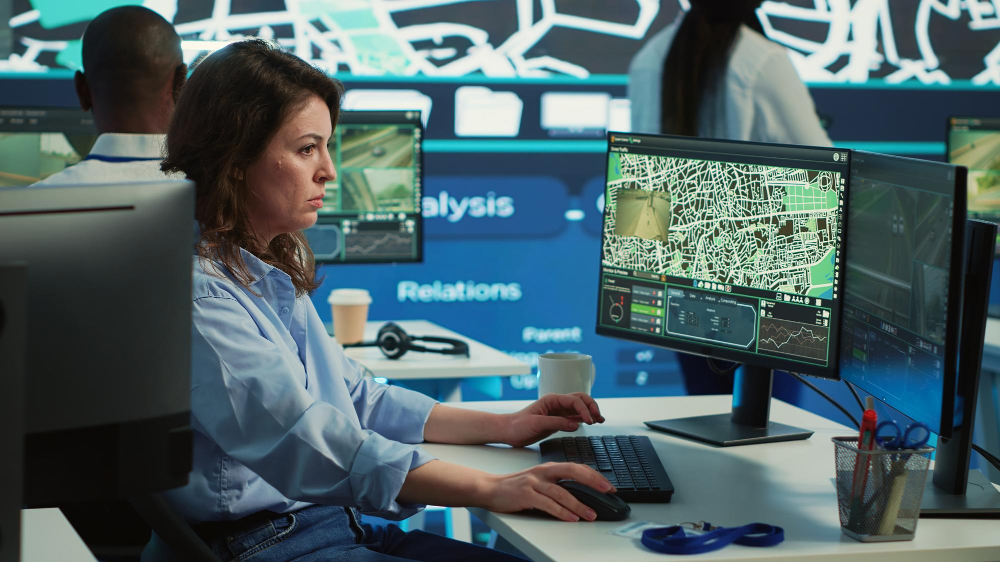
Dispatch decisions depend on current information. Motive’s Fleet View shows whether each vehicle is driving, idling, or parked, and it can layer live traffic and weather onto the map. Furthermore, Motive describes a proximity search that finds the vehicles nearest to a reference point, such as a pickup address. A dispatcher can therefore assign the closest available driver instead of calling several drivers to ask where they are.
How Does Live Data Reduce Missed Windows?
Customers expect accurate arrival times. Motive states that it can generate automatic ETAs and share them, along with live location, with customers. In addition, a route history lets managers review how a trip unfolded and learn from delays. Over time, this feedback improves planning, because dispatchers adjust schedules to match real conditions.
- Assign the nearest available vehicle to urgent jobs.
- Reroute drivers around traffic or weather problems.
- Share live ETAs with customers to cut status calls.
- Review completed routes to spot recurring delays.
- Pair vehicles and trailers correctly before dispatch.
How Does Real-Time Visibility Improve Customer Service?
Customers care about reliability, and live data helps fleets deliver it. When a delivery runs late, the dispatcher sees the delay early and informs the customer before the customer asks. Motive supports this workflow with shareable ETAs and live location links, and it captures proof-of-delivery documents in its Driver App. Consequently, disputes about whether a driver arrived become easy to settle.
Geofences add another layer of proof. Motive states that fleets can combine geofence data with histories and activity logs to verify job completion. For example, a field service company can confirm that a technician reached a site and stayed for a reasonable time. This record protects both the customer and the company when billing questions arise.
| Customer Need | Visibility Tool | Benefit |
| Accurate arrival time | Live ETA sharing | Fewer status calls |
| Proof of service | Geofence history and activity logs | Fewer billing disputes |
| Delivery confirmation | Documents captured in a driver app | Faster invoicing |
| Delay notices | Live alerts to dispatch | Earlier communication |
How Does Real-Time Visibility Improve Driver Safety?

How Do Live Alerts and Dashcams Support Safer Driving?
Safety programs work best when feedback comes quickly. Motive reports real-time alerts for excessive speed and idling, pairing tracking with AI dashcams that record video of each trip. Managers can review footage to confirm what happened at a stop or during an incident. In addition, the Fleet View map shows driver activity alongside dashcam footage, providing context for any event.
How Should Managers Use Safety Data Fairly?
Safety data works only when drivers trust it. Therefore, managers should explain what the system records and why, and they should use the data for coaching rather than punishment. The Federal Motor Carrier Safety Administration (FMCSA) also prohibits carriers from harassing drivers based on electronic logging device data or connected technology. A fair program respects that rule and builds a culture where drivers welcome feedback.
- Share the policy with drivers before turning on cameras or alerts.
- Coach on patterns, not single events.
- Recognize safe drivers publicly.
- Review disputed events with the driver present.
Motive also publishes customer stories that report safety gains. For example, Motive states that Cascade Environmental, a fleet of more than 3,000 vehicles, achieved a 50% safety improvement, and that Estes Forwarding Worldwide reduced insurance claims by 81%. These figures come from the vendor, so fleets should treat them as examples rather than guarantees.
How Does Real-Time Visibility Support Compliance?
What Do Electronic Logging Rules Require?
Compliance creates a steady workload for carriers. According to the FMCSA, commercial drivers who must prepare hours-of-service records of duty status must use an electronic logging device (ELD) that meets FMCSA standards and appears on its registered list. The FMCSA guidance points readers to 49 CFR Part 395, Subpart B, for the authoritative requirements. Fleets should consult that regulation, or a compliance advisor, for the details that apply to them.
How Does Motive Help With Hours of Service?
Motive shows hours-of-service clocks on the live map, so dispatchers can see how much driving time each driver has left before assigning a load. This visibility helps prevent violations by letting dispatchers plan around available hours. In addition, the platform stores log data on the Vehicle Gateway, which Motive states holds four months of data, so drivers and managers can review records when needed.
| Compliance Task | How Live Visibility Helps |
| Hours of service planning | Dispatchers see remaining drive time before assigning loads |
| Record keeping | Digital logs replace paper and reduce errors |
| Inspections | Digital walkthroughs capture defects early |
| Audit readiness | Records stay organized and easy to retrieve |
How Does Real-Time Visibility Improve Maintenance and Uptime?

How Do Vehicle Health Alerts Prevent Breakdowns?
Unplanned breakdowns cost far more than planned repairs. Motive’s Fleet View includes vehicle health and maintenance alerts, and the Fleet App lets managers check fault codes from a phone. When a warning light appears, the maintenance team knows within moments instead of days. Because repair and maintenance costs rose 8.6% in ATRI’s 2025 data, early detection carries real financial weight.
Why Do Engine Hours and Mileage Matter?
Preventive maintenance works best when it follows actual use. Motive describes engine-hour tracking for equipment and maintenance scheduling based on real usage. Fleets can therefore service a vehicle when it needs service, not on an arbitrary calendar date. This approach reduces both missed maintenance and unnecessary maintenance.
- Set maintenance intervals by mileage or engine hours.
- Route fault code alerts to the maintenance team immediately.
- Schedule service during planned downtime.
- Track repeat faults to find problem vehicles.
How Does Real-Time Visibility Reduce Fuel Waste?

Fuel remains a major cost, even when prices hold steady. Live data helps in three ways. First, idling alerts show vehicles that burn fuel while parked. Second, trip histories reveal inefficient routes and unauthorized stops. Third, speed alerts discourage the high speeds that raise fuel consumption. Motive’s trip history lets managers play back a vehicle’s path and review fuel level, RPM, and speed at any point.
Motive reports that All Chemical, one of its customers, grew 30% while it reduced fuel spend by 3%. As with other vendor figures, results vary by fleet, but the example shows how small percentage savings add up across many vehicles and months. Managers should set a baseline before they launch tracking so they can measure their own gains.
| Fuel Waste Source | Visibility Response |
| Excess idling | Idling alerts and weekly idle reports |
| Inefficient routes | Trip playback and route review |
| Speeding | Speed alerts and driver coaching |
| Unauthorized use | Geofence alerts and after-hours movement checks |
How Does Real-Time Visibility Protect Trailers and Equipment?
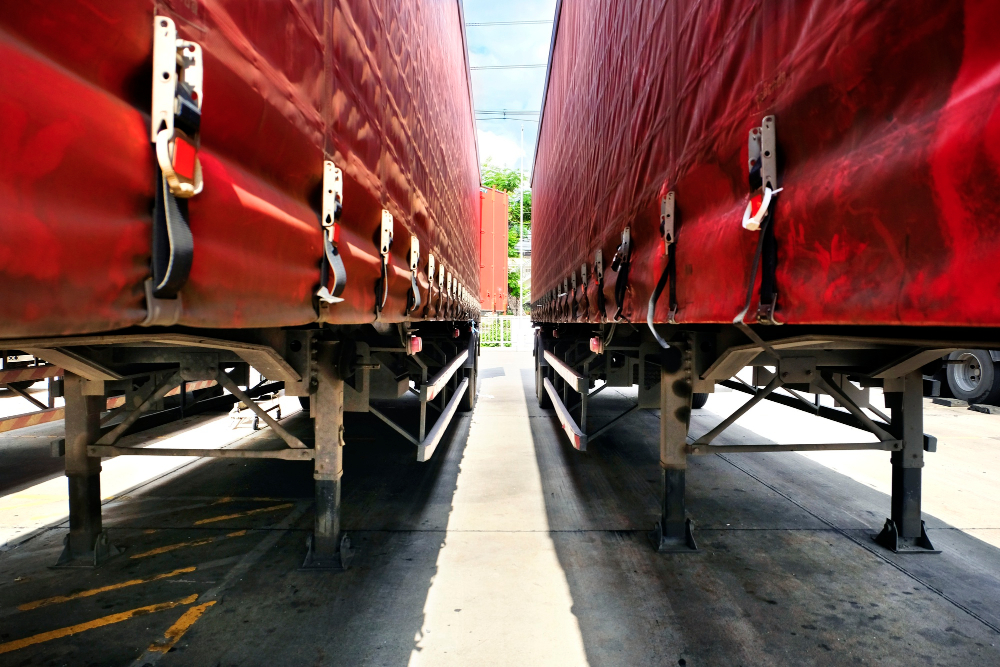
Vehicles with engines are only part of the picture. Trailers, generators, and heavy equipment also lose value when they go missing or sit unused. Motive offers an Asset Gateway for trailers and equipment, and its product page describes a Mini version that runs on battery or cable power and shares live location. Motive’s earlier announcement also describes geofence alerts for theft or unauthorized use, plus reports on dormant equipment and detention time.
These tools help managers answer practical questions. Which trailers sit idle at customer sites? Which equipment has not moved in weeks? How long do drivers wait at each facility? Once managers see the answers, they can recover lost assets, reduce detention charges, and avoid buying equipment they do not need. Motive also lists temperature monitoring for refrigerated trailers for customers who use its reefer monitoring product.
- Locate trailers instantly instead of searching a yard.
- Receive alerts when equipment leaves approved areas.
- Measure detention time and bill for it.
- Identify underused assets before buying more.
How Does Real-Time Visibility Help Different Types of Fleets?

Which Fleets Gain the Most From Live Tracking?
Any fleet that sends vehicles out from a central office can benefit, though priorities differ. A long-haul carrier cares most about hours of service and fuel, while a local delivery fleet cares about stop sequences and customer windows. Meanwhile, a field service business needs proof that technicians reached each site. Motive serves this range through one platform, so each fleet can focus on the tools that match its work.
| Fleet Type | Top Priority | Useful Visibility Tools |
| Long-haul trucking | Compliance and fuel | Hours of service clocks, trip history, speed alerts |
| Local delivery | On-time stops | Live map, proximity search, shared ETAs |
| Field service | Proof of service | Geofences, activity logs, driver app documents |
| Construction | Equipment control | Asset tracking, dormancy reports, after-hours alerts |
| Refrigerated freight | Cargo condition | Reefer monitoring, live alerts, trailer tracking |
How Should a Fleet Pick the Right Starting Point?
A fleet should begin with its most expensive problem. If fuel costs hurt most, start with idling and speed alerts. If missed delivery windows create complaints, start with live ETAs and proximity dispatch. Also, if claims and accidents drive insurance costs, start with dashcams and coaching. This focused approach produces a quick win, and quick wins build support for later phases.
How Does Live Data Help Managers Make Better Decisions?

Managers make better decisions when they see patterns, not just events. Motive stores trip histories, and its Fleet View lets managers review where vehicles have been. Over weeks and months, those records reveal habits. Perhaps one route always runs late, or one yard always causes long waits, or one vehicle idles far more than the rest. Each pattern points to a specific fix.
Furthermore, live data improves conversations inside the company. A sales team can answer customer questions with facts, finance can verify billing and payroll against stop records, and operations can justify equipment purchases with utilization data. Motive notes that automatic stop locations help verify payroll, billing, and claims. Consequently, visibility creates a single version of the truth, reducing arguments and speeding up decisions.
- Review idle, speed, and route data every week.
- Compare drivers and vehicles on the same measures.
- Share summary numbers with finance and sales.
- Record every change and measure its effect.
How Can a Fleet Implement Real-Time Visibility Step by Step?
A structured rollout limits disruption and builds driver trust. Follow this plan:
- Weeks 1 to 2: Define goals, such as fewer idle hours or faster dispatch, and record baseline numbers.
- Weeks 2 to 4: Install Vehicle Gateways, set up geofences for yards, customers, and restricted areas, and invite users.
- Weeks 4 to 6: Train dispatchers on the live map, and train drivers on the mobile app and the purpose of the system.
- Weeks 6 to 8: Turn on alerts for speed, idling, and geofences, and tune thresholds to avoid alert fatigue.
- Weeks 8 to 12: Review dashboards weekly, coach drivers, and compare results with the baseline.
After the first quarter, the fleet should expand to dashcams, trailer tracking, and integrations. Rolling out one step at a time keeps the team focused and the data clean.
Which Metrics Show That Visibility Improves Operations?
Teams should track outcomes, not just activity. The following metrics give a balanced view.
| Metric | What It Reveals |
| Idle time per vehicle | How much fuel the fleet wastes while parked |
| On-time delivery rate | Whether dispatch and routing improve |
| Cost per mile | Overall efficiency compared with industry benchmarks |
| Hours of service violations | Compliance risk and planning quality |
| Safety events per 1,000 miles | Driver behavior trends |
| Unplanned downtime days | Maintenance effectiveness |
| Asset utilization | Whether trailers and equipment earn their keep |
Fleets can compare their cost per mile with ATRI’s published 2025 benchmark of $2.336. Although every fleet differs by region, equipment, and cargo, the benchmark offers a useful reference point for management discussions.
Why Does Change Management Matter for Visibility Projects?
Technology changes how people work, so people need time to adjust. Drivers may worry about being watched, dispatchers may distrust new screens, and managers may drown in alerts. Therefore, leaders should explain the system’s purpose early, name a champion on each team, and gather feedback during the first weeks. When drivers see that the data protects them in disputes and rewards safe behavior, resistance fades. In contrast, a rollout without communication often fails, no matter how good the software is.
Which Mistakes Should Fleets Avoid With Real-Time Tracking?
- Collecting data without a plan: define the questions the data must answer.
- Setting too many alerts: noisy alerts train people to ignore them.
- Skipping driver communication: surprise cameras damage trust.
- Using data only for discipline: coaching and recognition improve behavior more reliably.
- Ignoring integrations: connect tracking data with dispatch, payroll, and accounting systems where possible.
In short, visibility succeeds when people use it every day. A simple, well-understood system beats a complex system that nobody trusts.
What Are the Conclusions About Real-Time Visibility in Fleet Operations?
Real-time visibility improves fleet operations by replacing guesswork with facts. Dispatchers assign the right vehicle faster, customers receive accurate ETAs, drivers get timely coaching, and maintenance teams catch problems early. At a time when ATRI reports record operating costs of $2.336 per mile, those efficiency gains carry real weight.
Motive – GPS Fleet Tracking System & Solutions brings these capabilities together through live GPS tracking, geofencing, alerts, AI dashcams, electronic logging, and asset tracking. Nevertheless, technology alone does not guarantee results. Fleets still need clear goals, driver communication, and a habit of acting on the data. To begin, a fleet should record its baseline, launch tracking in stages, and review results weekly. Finally, a partner such as Solution for Guru can guide the rollout and help the team reach results sooner.
What Are the Most Frequently Asked Questions About Real-Time Fleet Visibility?
Motive states on its product page that GPS and telematics updates arrive every one to two seconds. Update speed can vary with connectivity and device type, so fleets should confirm the details for their own hardware with Motive.
It does not have to, if the fleet sets clear policies. Fleets should explain what the system records, limit tracking to work vehicles, and follow local privacy and labor rules. The FMCSA also forbids carriers from harassing drivers based on ELD data, so managers should use the data for safety and operations.
Yes. Small fleets often feel cost pressure most, and live tracking helps them cut idle time, answer customer calls with facts, and prove that jobs took place. Small fleets should start with core tracking and add features such as dashcams or asset trackers when they see clear value.
What Are the Benefits of Cooperation With Solution for Guru?
Why Does a Visibility Project Need Implementation Support?
Fleet software touches dispatch, drivers, maintenance, and finance, so poor setup creates problems across departments. Solution for Guru helps businesses avoid those problems. The company specializes in CRM and software implementation, helping teams connect operational platforms such as Motive with the business systems that surround them. A partner brings structure and experience to a project that internal teams often squeeze between daily tasks.
How Does Solution for Guru Close Common Implementation Gaps?
| Common Gap | How Solution for Guru Helps |
| Unclear goals | Defines measurable targets tied to fleet costs and service levels |
| Disconnected systems | Plans integrations between tracking data and business tools such as a CRM |
| Messy customer and job data | Supports data cleanup and migration |
| Weak adoption | Provides training so dispatchers and managers use the data daily |
| Alert overload | Helps design workflows and thresholds that surface what matters |
| No improvement cycle | Supports regular reviews and expansion as the fleet grows |
What Results Can Fleets Expect?
- Faster launch: a guided plan shortens the time from purchase to daily use.
- Better data flow: connected systems remove double entry.
- Lower risk: an experienced consultant catches setup errors early.
- Stronger adoption: trained teams trust and use the live data.
Fleets that want to explore this option can visit the Solution for Guru website and discuss their goals with the team.
Recommended
- How Do Delivery Companies Improve Routes With Motive?
- Verizon Connect for Landscaping Companies
- Verizon Connect Mobile App Overview
- How Does Motive Support Business Growth?
- Why Do Construction Companies Choose Motive?
- Driver Safety Monitoring with Azuga: How Can Fleets Reduce Risk and Build Safer Habits?
- Benefits of Using Samsara for Fleet Management
- How Verizon Connect Helps Reduce Insurance Premiums
- How Motive Helps Reduce Insurance Costs
- How Verizon Connect Improves Fleet Productivity
- How Motive Detects Distracted Driving
- Managing Mixed Fleets with Verizon Connect
- How Verizon Connect Improves Driver Accountability
- How Motive Helps Schedule Preventive Maintenance
- How Samsara Improves Fleet Productivity
- How Fleet Managers Use Motive for Compliance Reporting
- How Motive Improves Dispatcher Efficiency
- How Motive Helps Reduce Fleet Operating Costs
- Azuga Review: Features, Pros, Cons, and Best Use Cases
- What Is Azuga Fleet Management Software? A Complete Guide
- Top Reasons Businesses Choose Motive Fleet Management
- Samsara Review: Features, Pros, Cons, and Best Use Cases