How Motive Detects Distracted Driving
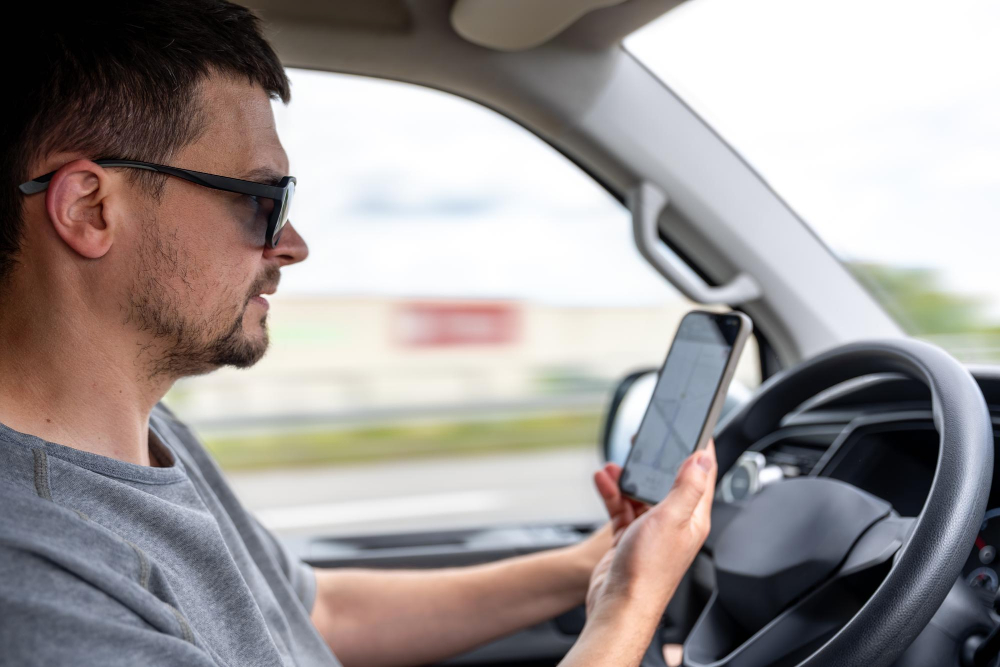
A driver glances down at a phone for five seconds, and at highway speed, the vehicle has already traveled the length of a football field with nobody watching the road. Distracted driving remains one of the leading causes of preventable commercial vehicle collisions, and it is also one of the hardest behaviors for a fleet manager to catch through traditional oversight, since it happens in brief moments no dispatcher or supervisor could ever witness directly. Motive – GPS Fleet Tracking System & Solutions built its AI Dashcam technology specifically to close this visibility gap, catching distraction in real time rather than relying on a crash report to reveal it after the fact.
This article explains exactly how Motive detects distracted driving, what technology powers that detection, and how a technology partner can help a fleet deploy this system effectively.
Table of contents
Quick Summary
Here is a brief overview of what this article covers:
- The core problem: distracted driving happens in brief, invisible moments that traditional fleet oversight cannot catch until after a collision occurs.
- The Motive approach: a dual-facing AI dashcam runs more than 30 AI models simultaneously, monitoring both the driver and the road at once.
- The detection trigger: Motive’s system alerts whenever a driver looks down for more than five seconds at speeds faster than 10 mph.
- The broader risk picture: cell phone use, fatigue, smoking, and eating all register as distraction, and Motive’s own data shows real-world patterns in when and how these behaviors spike.
- The measured results: fleets using Motive’s AI Dashcam have reduced collisions by 80% and accident-related costs by 63% since 2023.
- The partner angle: working with a specialist like Solution for Guru helps fleets configure and roll out Motive’s distraction detection tools effectively.
How Does Motive Relate to Distracted Driving Detection?

Motive – GPS Fleet Tracking System & Solutions sits at the center of this topic because its AI Dashcam technology represents one of the more advanced commercial approaches to catching distracted driving as it happens, rather than reconstructing it after a collision. Motive equips fleets with AI-powered dashcams that run dozens of detection models simultaneously, watching both the road ahead and the driver’s own behavior inside the cab, and flagging distraction the moment it occurs rather than waiting for a dispatcher to review footage days later.
This matters directly to the topic of distracted driving because the entire challenge with this particular risk factor is its brevity and invisibility. A driver checking a text message for a few seconds leaves no obvious trace unless something actually goes wrong, which means traditional fleet safety programs relying on post-incident review consistently miss the vast majority of distraction events before they escalate into something serious. The sections below walk through exactly how Motive’s detection technology works and what makes it effective at catching this kind of fleeting, high-risk behavior.
Why Does Distracted Driving Remain Such a Difficult Risk to Manage?
Before exploring Motive’s specific detection technology, it helps to understand why distracted driving has proven so resistant to traditional fleet safety approaches.
How Serious Is the Distracted Driving Problem in Commercial Fleets?
Nearly 40,000 highway fatalities and 6 million collisions were reported in 2025, and behavior consistently emerges as a clear predictor of danger, with speeding, hard cornering, and lane swerving most strongly linked to collisions. Cell phone use, particularly in the late afternoon, along with in-cab distractions such as smartphones, digital cockpits, and even smoking behind the wheel, further compound this risk. Motive‘s own research detected smoking behind the wheel nearly 4,000 times per day across its customer base in a single year, illustrating just how frequently distraction-related behaviors occur across a typical commercial fleet.
Why Do These Incidents Happen in Ways Traditional Oversight Cannot Catch?
Distraction typically lasts only a few seconds, which means a dispatcher monitoring a fleet from an office, or a safety manager relying on driver self-reporting, has essentially no realistic way to observe these moments as they happen. By the time a distraction-related incident surfaces, it has usually already resulted in a near-miss or an actual collision, at which point the fleet is managing the consequences rather than preventing the behavior. This gap between when distraction occurs and when it becomes visible to fleet management is exactly the problem AI-powered dashcam technology is designed to close.
What Hardware Powers Motive’s Distraction Detection?
Motive’s approach to catching distracted driving starts with the physical hardware inside the cab, since detection accuracy depends heavily on what the camera system can actually see.
How Does the Dual-Facing Camera Design Work?
Motive’s AI Dashcam Plus uses dual stereo vision, with one lens facing the driver and two lenses facing the road, a wide-angle lens paired with a recessed zoom lens designed to capture details more clearly than a standard road-facing view. This dual-facing design matters enormously for distraction detection specifically, since a system monitoring only the road ahead cannot see whether a driver is actually looking down at a phone, while a system monitoring only the driver’s face misses the broader context of what is happening around the vehicle at the same moment.
Why Does the Zoom Lens Add Extra Evidentiary Value?
The dashcam’s 1440p zoom lens can capture license plates and vehicle make and model details from up to 40 feet away, even in rain or snow, giving fleets a stronger evidence-gathering capability than a basic road-facing camera typically provides. While this zoom capability primarily supports collision documentation and liability protection, it also strengthens the overall picture a fleet manager can build around a distraction event, particularly when that event involves interaction with another vehicle or a near-miss situation.
Why Does Motive Use Tamper-Resistant Internal Storage?
Motive‘s cameras use internal eMMC flash storage rather than removable SD cards, with capacity ranging from 45 to 230 hours depending on the specific model and quality settings. This design choice exists specifically for tamper resistance, ensuring footage cannot be removed or conveniently lost by pulling a memory card, which matters for maintaining the integrity of distraction-related evidence that a fleet might need for coaching, liability defense, or insurance purposes.
How Does the AI Actually Detect a Distracted Driver?

Hardware alone cannot identify distraction; the real detection work happens through the AI models processing what the cameras capture in real time.
What Specific Trigger Does Motive Use to Flag Distraction?
Motive’s AI Dashcam alerts drivers whenever they look down for more than five seconds at speeds faster than 10 mph. This specific threshold reflects a deliberate calibration: a brief glance downward rarely indicates meaningful risk, but a sustained five-second period of looking away from the road while the vehicle is actually moving represents a genuine safety concern regardless of the underlying cause. Drivers may look down due to drowsiness, cell phone use, smoking, eating, or general inattentiveness, and Motive’s system recognizes and alerts to this pattern almost instantly regardless of the specific reason behind it.
How Many AI Models Run Simultaneously to Catch Different Risk Types?
The newer AI Dashcam Plus runs more than 30 AI models simultaneously, detecting a broad range of risks in real time to help prevent collisions before they happen. During live demonstrations, reviewers have observed the system smoothly detecting and surfacing a wide variety of events, including cell phone usage, general distraction, seat belt violations, speeding, stop sign violations, close following, unsafe lane changes, and unsafe parking, often catching multiple risk types within the same short window of footage.
How Does Sensor Fusion Improve Detection Accuracy?
Dual stereo vision and sensor fusion work together to improve depth perception and capture complex events more accurately than a single-camera system could manage on its own. This combination allows the AI to distinguish between genuinely risky behavior and normal driving variations, which matters enormously for fleet manager confidence, since a system that flags too many false positives quickly loses trust and gets ignored, while one that reliably catches real distraction events builds the kind of confidence needed for consistent coaching follow-through.
What Does Motive’s Own Data Reveal About When Distraction Actually Happens?
Beyond the detection technology itself, Motive’s aggregated fleet data offers genuinely useful insight into the patterns behind distracted and risky driving behavior.
When Does Collision Risk Actually Peak During the Day?
According to Motive’s 2026 AI Road Safety Report, risk is highly concentrated, spiking at specific times and in certain operating environments, with collision risk peaking at 3 a.m., when it triples compared to midday. This pattern likely reflects a combination of fatigue and reduced visibility during overnight hours, both of which compound the danger already present from any distraction-related behavior occurring during that same window.
What Time of Day Sees the Most Cell Phone Use Behind the Wheel?

Cell phone use shows a distinct pattern as well, spiking particularly in the late afternoon, a period that likely overlaps with drivers approaching the end of a long shift and potentially experiencing both fatigue and a temptation to catch up on personal messages before finishing their route. This kind of data-driven insight helps fleet managers target coaching and safety communications toward the specific windows when distraction risk actually concentrates, rather than applying generic safety messaging evenly across an entire shift.
The table below summarizes the key risk patterns Motive’s aggregated data has identified across its customer fleets.
| Risk Factor | Pattern Identified | Practical Implication for Fleets |
|---|---|---|
| Overall collision risk | Peaks around 3 a.m., roughly triple the midday rate | Extra caution warranted for overnight and early-morning routes |
| Cell phone use | Spikes in late afternoon | Targeted coaching around end-of-shift periods |
| Smoking behind the wheel | Detected nearly 4,000 times per day fleet-wide | Broader distraction awareness beyond just phone use |
| Speeding, hard cornering, lane swerving | Most strongly linked to collisions overall | Priority behaviors for automated alerts and coaching |
How Does Motive Turn a Detected Distraction Event Into Actionable Coaching?
Detecting distraction is only half the value; Motive’s platform also structures how fleet managers review and act on flagged events.
What Information Does a Manager See When Reviewing a Flagged Event?
When a manager opens the details of a flagged event, the interface shows exactly what happened alongside relevant statistics and the AI’s own analysis, all presented together in one place. Events open with the relevant footage, AI behavior labels, and driver and vehicle details, along with useful context like a summary of recent events and, for applicable event types such as close following, time-to-hit data that quantifies how close the vehicle came to a potential collision.
How Do Fleet Managers Prioritize Which Events Need Coaching?
Managers can mark each flagged event as coachable, coached, or dismissed, creating a practical workflow when multiple managers share responsibility for reviewing incidents across a larger fleet. This categorization system prevents alert fatigue from overwhelming a safety team, since not every flagged event necessarily warrants a formal coaching conversation, while still ensuring genuinely concerning patterns get addressed with the driver directly rather than simply logged and forgotten.
How Does Real-Time Feedback Differ From After-the-Fact Review?
Beyond retrospective review, Motive’s automated alerts help drivers respond to critical situations as they happen, including hands-free two-way communication and an AI voice assistant that allows dispatchers to communicate with drivers instantly. This real-time feedback loop matters because it gives a driver the chance to self-correct in the moment a distraction event occurs, rather than only learning about the behavior during a coaching session that might happen days or weeks after the fact.
What Measurable Results Have Fleets Seen From This Technology?
Detection technology only matters if it actually changes outcomes, and Motive’s reported results suggest a meaningful real-world impact.
Since 2023, Motive’s AI Dashcam has helped prevent more than 170,000 accidents and saved an estimated 1,500 lives across its customer base. Customers using the AI Dashcam have reduced collisions by 80% and accident-related costs by 63%, figures that reflect the combined effect of real-time alerting, structured coaching workflows, and the behavioral shift that tends to occur once drivers know their behavior is being actively monitored and addressed. For fleets evaluating whether this kind of investment is worthwhile, these numbers offer a strong, evidence-based case that proactive distraction detection genuinely changes driving behavior rather than simply documenting incidents after they occur.
What Specific Goals Should a Fleet Set When Adopting This Technology?
Fleets adopting AI dashcam technology generally benefit from setting specific, measurable goals rather than simply installing the hardware and hoping for improvement. Reasonable targets include aiming for a meaningful decrease in preventable collisions within the first year, targeting a significant cut in distracted driving incidents within the first 90 days, securing measurable insurance premium savings through documented risk mitigation, and maintaining a high coaching completion rate to support a genuinely proactive safety culture rather than a reactive one.
How Do Motive’s Newer AI Features Extend Beyond Basic Distraction Alerts?
Motive has continued expanding its AI capabilities well beyond the core five-second look-down trigger, building toward a more proactive, predictive approach to driver safety.
What Does Predictive Intervention Actually Mean in Practice?
Motive’s newer hardware, including the AI Dashcam Plus and AI Omnicam Plus, integrates advanced AI processing through a Qualcomm Dragonwing processor, enabling real-time, edge AI processing that goes beyond simply flagging distraction after it starts. The system monitors driver behavior, anticipates external traffic patterns, detects road signs, and alerts drivers to hazards like stalled vehicles ahead, combining internal distraction monitoring with external hazard awareness to support what the company describes as predictive intervention rather than purely reactive alerting.
Why Does On-Device Processing Matter for Alert Speed?
This on-device, edge AI processing ensures low-latency alerts, a detail that matters enormously in a safety context since even a one or two-second delay in flagging a hazard could mean the difference between a driver having time to react and a collision becoming unavoidable. Processing data directly on the camera hardware, rather than sending it to a remote server and waiting for a response, keeps the time between detection and driver notification as short as possible.
How Does the AI Voice Assistant Support Safer In-Cab Communication?
Motive’s AI Dashcam Plus also includes a built-in AI voice assistant, letting drivers get information hands-free without needing to look down at a phone or a separate device to check details like route information or delivery status. This feature directly addresses one of the more common root causes of distraction in the first place: a driver reaching for or glancing at a phone to handle a routine task that could otherwise be managed through voice interaction alone. By reducing the everyday reasons a driver might look away from the road, this kind of hands-free design works alongside the detection system itself, tackling the problem from both the prevention and detection sides simultaneously.
How Does Motive’s Approach Compare to Basic Fleet Dashcams?
Understanding how Motive’s technology differs from a more basic fleet dashcam helps clarify exactly what a fleet gains by choosing a more advanced, AI-driven system.
What Do Basic Dashcams Typically Miss?
Many standard fleet dashcams record continuous or event-triggered footage without any real-time behavioral analysis, meaning a fleet manager only discovers a distraction event by manually reviewing footage after the fact, often triggered by a collision or a complaint rather than proactive monitoring. Basic systems also frequently rely on removable SD cards, which introduce the risk of footage being lost, damaged, or, in less scrupulous cases, deliberately removed before a manager can review a concerning event.
How Does Motive’s Combined Hardware and Software Approach Differ?
Motive combines the AI Dashcam and Vehicle Gateway into a single unified device, which not only improves reliability but also allows the system to correlate distraction events with other vehicle data, such as speed, location, and fault codes, at the moment they occur. This integration provides a fuller picture of exactly what was happening around a vehicle during a flagged event, rather than isolated dashcam footage disconnected from the broader operational context a fleet manager needs to understand the full situation.
What Should a Fleet Consider Before Deploying This Technology?

A fair look at this technology should include practical deployment considerations alongside its clear safety benefits.
How Should a Fleet Prepare Drivers for Dual-Facing Camera Monitoring?
Many fleet managers consider dual-facing cameras essential for liability protection, since footage can verify that a driver was not actually distracted during a specific incident, protecting against unfounded claims. That said, driver acceptance of inward-facing monitoring varies considerably, and fleets should communicate clearly with drivers about how the technology works, what triggers an alert, and how flagged events get used for coaching rather than punitive action, since transparent communication tends to improve both adoption and the honesty of subsequent safety conversations.
What Should a Fleet Evaluate Before Committing to a Fleet-Wide Rollout?
Prospective buyers should request demonstrations, understand pricing and contract terms thoroughly, and consider pilot deployments before committing to a fleet-wide rollout, since the right configuration depends heavily on operation size and specific management needs. A phased approach, starting with a subset of vehicles or a single terminal, lets a fleet validate detection accuracy and driver response before scaling the technology across an entire operation.
Conclusion
Distracted driving remains dangerous precisely because it happens in brief, easy-to-miss moments that traditional fleet oversight was never built to catch. Motive – GPS Fleet Tracking System & Solutions addresses this gap directly through dual-facing AI dashcam technology that runs more than 30 detection models simultaneously, flagging distraction the moment a driver looks away from the road for more than five seconds at meaningful speed. Backed by real-world results showing an 80% reduction in collisions and a 63% drop in accident-related costs among customers, Motive‘s approach demonstrates that real-time detection, paired with structured coaching workflows, genuinely changes driver behavior rather than simply documenting incidents after the damage is already done.
Frequently Asked Questions
Motive’s AI Dashcam alerts drivers whenever they look down for more than five seconds at speeds faster than 10 mph, a threshold designed to catch sustained inattention rather than brief, harmless glances. The system does not need to determine the specific cause of the distraction, whether that is cell phone use, smoking, eating, or drowsiness, since the underlying risk from looking away from the road for that duration remains the same regardless of the reason.
Yes, Motive’s system combines dual stereo vision with sensor fusion to improve depth perception and accurately capture complex events, running more than 30 AI models simultaneously to cross-reference multiple risk factors in real time. This combination helps the system distinguish genuinely risky behavior from ordinary driving variations, which matters for maintaining fleet manager and driver trust in the alerts the system generates.
Since 2023, Motive’s AI Dashcam has helped prevent more than 170,000 accidents and saved an estimated 1,500 lives across its customer base, with fleets using the technology reporting an 80% reduction in collisions and a 63% drop in accident-related costs. These figures suggest the combination of real-time detection and structured coaching genuinely changes driver behavior over time, rather than simply providing better documentation after incidents occur.
What Are the Benefits of Partnering With Solution for Guru?
Rolling out AI dashcam technology across a fleet involves more than simply installing hardware; getting genuine safety value requires thoughtful configuration, driver communication, and ongoing coaching workflows, and this is where Solution for Guru adds real value.
Solution for Guru specializes in SaaS and system integrations, which means the team can help a fleet configure Motive‘s distraction detection settings, coaching workflows, and alert thresholds to match its specific operational needs, rather than relying on generic default settings that may not fit every fleet’s driver population or route types. Beyond initial setup, the team can connect Motive’s safety data with other systems a fleet already relies on, such as HR platforms for coaching documentation or insurance reporting tools, ensuring safety data flows smoothly across the entire operation.

Working with Solution for Guru offers several concrete advantages:
- Phased rollout planning, helping fleets pilot the technology on a subset of vehicles before committing to a full deployment.
- Driver communication strategy, ensuring staff understand how detection works and how flagged events get used, which improves both acceptance and coaching outcomes.
- Custom integrations between Motive’s safety data and existing HR, insurance, or reporting systems.
- Coaching workflow configuration, setting up the review and follow-up process that turns detected events into real behavioral change.
- Ongoing optimization, refining alert thresholds and coaching practices as the fleet gathers more data on its own specific risk patterns.
Because every fleet has a different driver population, route profile, and safety culture, a tailored rollout consistently produces stronger adoption and better safety outcomes than a generic, self-managed deployment. Partnering with a team that understands both the technical and human sides of fleet safety technology helps a business reduce distracted driving incidents faster and with fewer costly missteps.
Recommended
- Managing Mixed Fleets with Verizon Connect
- How Verizon Connect Improves Driver Accountability
- How Motive Helps Schedule Preventive Maintenance
- How Samsara Improves Fleet Productivity
- How Fleet Managers Use Motive for Compliance Reporting
- How Motive Improves Dispatcher Efficiency
- How Motive Helps Reduce Fleet Operating Costs
- Azuga Review: Features, Pros, Cons, and Best Use Cases
- What Is Azuga Fleet Management Software? A Complete Guide
- Top Reasons Businesses Choose Motive Fleet Management
- Samsara Review: Features, Pros, Cons, and Best Use Cases
- What Is Samsara GPS Fleet Tracking Software?
- Verizon Connect Review: Features, Pros, Cons, and Best Use Cases
- What Is Verizon Connect Fleet Management Software?
- Motive Pricing Plans Explained: How Much Does Motive Cost?
- What Is Motive Fleet Management?
- Offline Tracking: How Do Devices Store Data Without Connectivity?