How Verizon Connect Improves Fleet Productivity

Every idle minute, wasted mile, and missed appointment chips away at what a fleet can accomplish in a day. Fleet managers juggling dozens or hundreds of vehicles often cannot see these losses until they add up into a real budget problem. That is precisely where Verizon Connect: Fleet Management Software and Solutions steps in, turning scattered GPS pings and engine data into the kind of visibility that actually changes how a fleet operates day to day. This article examines how the platform’s tracking, routing, reporting, and maintenance tools work together to raise productivity, and it walks through real data on the results fleets have achieved. Additionally, it looks at which industries benefit most and how a proper implementation partner can help a fleet get more value out of the platform from day one.
Table of contents
What Does Verizon Connect Deliver for Fleet Productivity at a Glance?
The table below summarizes the productivity levers Verizon Connect offers and the reported impact of each, based on the company’s own fleet technology research and independent reviews. Because results vary by fleet size and industry, treat these figures as directional benchmarks rather than guaranteed outcomes.
| Productivity Lever | Reported Impact | How It Works |
| Route optimization | Up to 15%-16% reduction in fuel costs | Cuts wasted miles and keeps vehicles moving instead of idling in traffic |
| Idle time monitoring | 15.9% median reduction in idling | Flags unnecessary engine-on time and separates it from required PTO use |
| Harsh driving alerts | 48.6% median reduction in speeding | Real-time in-cab notifications correct costly habits immediately |
| Preventive maintenance scheduling | Fewer unplanned breakdowns | Automated service reminders based on mileage or engine hours |
| Fleet dashboards and reports | Faster, data-based decisions | Consolidates KPIs like utilization, payroll accuracy, and safety in one view |
Key takeaways:
- About one-third of GPS fleet tracking users report a positive return on investment within six months.
- Average fuel savings from connected fleet technology have grown from 8% in 2021 to 16% in the most recent reporting year.
- Real-time visibility lets dispatchers assign the closest available driver instead of guessing at location.
- Productivity gains compound: fewer wasted miles free up hours that fleets redirect toward additional jobs.
What Is Verizon Connect, and How Does It Relate to Fleet Productivity?
Verizon Connect: Fleet Management Software and Solutions is a cloud-based fleet management platform, built on Verizon’s telecommunications infrastructure, that gives fleet managers real-time visibility into vehicle location, driver behavior, fuel use, and asset health. Formerly known as Fleetmatics, the platform now serves transportation, construction, utilities, field service, and government fleets that need to coordinate large numbers of vehicles and workers across wide territories.
Productivity sits at the center of what the platform is built to solve. Rather than treating GPS tracking as a standalone security feature, Verizon Connect ties location data to routing, dispatch, maintenance, and reporting, so every piece of information feeds back into decisions that save time. A dispatcher who can see exactly where every vehicle sits right now assigns work more efficiently than one relying on radio check-ins or driver phone calls. In the same way, a fleet manager who sees idle time and harsh driving patterns in a report can correct costly habits before they compound across an entire fleet. The remainder of this article breaks down exactly how each part of the platform contributes to that overall productivity gain.
It also helps to understand the scope of what the platform covers. Verizon Connect organizes its tools around two core product lines: Reveal, which handles GPS tracking, route optimization, and compliance for general fleet operations, and Reveal Fleet, which adds field service scheduling and dispatch for businesses that manage mobile workers alongside vehicles. Both run in the cloud and work across web and mobile, so managers and dispatchers can act on the same data whether they sit at a desk or move between job sites themselves.
How Does Real-Time GPS Tracking Improve Fleet Productivity?
Real-time GPS tracking forms the foundation of everything else Verizon Connect does, since accurate location data drives dispatch decisions, customer communication, and reporting alike. Knowing exactly where each vehicle sits, updated roughly every 30 seconds, lets dispatchers react to changing conditions instead of working from outdated assumptions.
How Does Live Location Data Speed Up Dispatch Decisions?
When a new job comes in, a dispatcher using live GPS data can assign the closest available driver rather than the next one in a rotation or the one who happens to answer the phone first. This single change reduces windshield time and lets a fleet complete more stops per shift. Because Verizon Connect‘s network runs on Verizon’s cellular infrastructure, tracking stays reliable even in rural or fringe areas where competing platforms sometimes lose signal, which matters for fleets covering wide service territories.
How Does Geofencing Support Better Time Management?
Geofencing lets fleet managers set virtual boundaries around job sites, depots, or restricted zones, and the system automatically logs arrival and departure times as vehicles cross those boundaries. This removes the need for manual check-ins and gives managers accurate, timestamped records of how long a crew actually spent at each location. Consequently, geofencing data feeds directly into payroll accuracy and helps identify jobs that consistently run longer than estimated, which supports better scheduling going forward.
Beyond time tracking, geofences also trigger automated alerts when a vehicle enters or exits a zone unexpectedly, such as after hours or outside an approved service area. Fleet managers configure these alerts to arrive by text or email, so they learn about a deviation the moment it happens rather than discovering it days later in a report. This immediacy matters for productivity because it lets managers redirect a vehicle or address an issue in real time, rather than simply documenting a problem after the fact.
How Does Route Optimization Increase Jobs Completed Per Day?
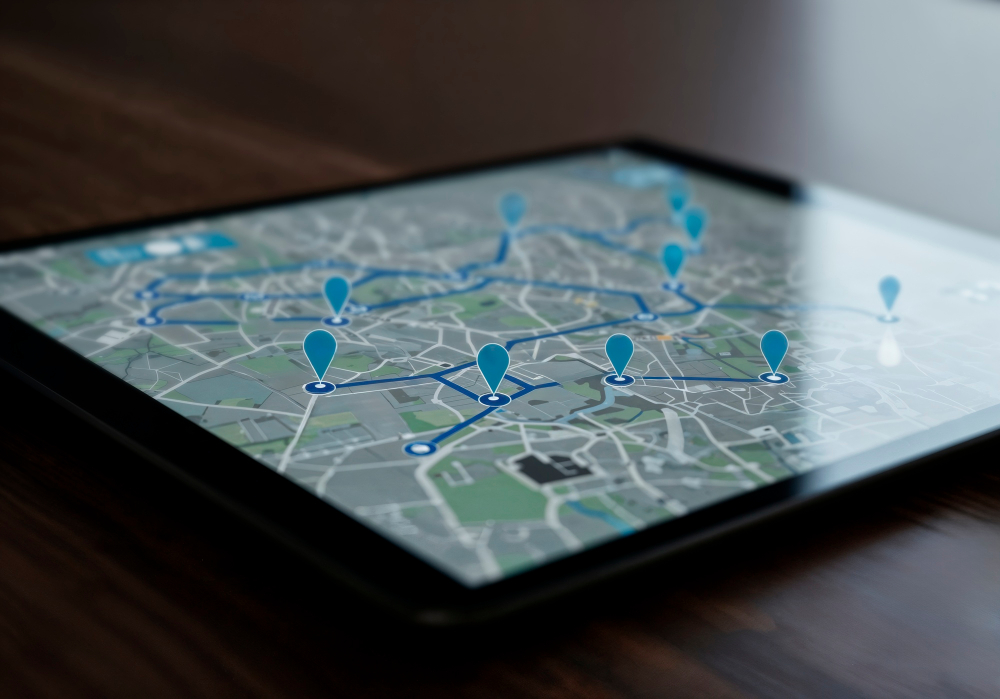
Route optimization goes beyond simply finding the shortest path between two points. It evaluates traffic conditions, delivery windows, vehicle capacity, and driver schedules together, then produces routes that get more work done with the same fleet size.
How Does Dynamic Dispatch Support Field Service Productivity?
Field service operations, such as HVAC repair or utility maintenance, benefit heavily from dynamic dispatch tools that assign the nearest qualified technician to an urgent job in real time. Instead of sending someone across town while a closer technician sits idle, the system matches jobs to availability and location simultaneously. As a result, service fleets complete more calls per technician per day, which directly increases billable hours without adding headcount.
How Much Do Optimized Routes Reduce Idle Time and Wasted Miles?
Verizon Connect‘s own fleet technology research shows that active monitoring combined with route optimization produces a 15.9% median reduction in idling time and a 48.6% median reduction in speeding among US Reveal users. Fewer detours and less stop-and-go driving also mean vehicles spend less time stuck in traffic, which compounds into meaningfully shorter routes over a full week. Because these gains stack across every vehicle in a fleet, even a modest per-route improvement adds up to substantial recovered time at scale.
This effect becomes clearer when fuel costs enter the picture. Fleets using connected technology reported an average 12% reduction in fuel costs after implementation, with gains driven largely by better routing, dynamic dispatching, and reduced idling working together rather than any single feature alone. Meanwhile, industry-wide data shows those average fuel savings climbing from 8% in 2021 to 16% in the most recent reporting year, which suggests that fleets are getting progressively better at translating telematics data into real operational change rather than simply collecting it.
How Does Reducing Idle Time and Harsh Driving Boost Overall Productivity?
Idling and harsh driving cost more than fuel; they also signal inefficient scheduling and wasted labor hours. An idling engine burns roughly a quarter to half a gallon of fuel per hour without moving a vehicle a single foot, and repeated harsh braking or rapid acceleration adds unplanned maintenance costs on top of the fuel waste.
Verizon Connect addresses this by sending near real-time, in-cab alerts the moment a driver idles too long or drives aggressively, rather than waiting for a weekly report to surface the pattern. Gamified leaderboards then turn fuel efficiency into a team-wide effort, rewarding drivers who consistently follow best practices. Because correction happens immediately rather than after the fact, fleets see faster behavior change than they would from monthly coaching sessions alone, which translates into more consistent, predictable route times.
This distinction between necessary and wasteful idling matters just as much as the alerting itself. Reports that separate an engine running for no reason from idling required to power a lift gate or PTO unit prevent managers from penalizing drivers for legitimate work time. As a result, fleets can target coaching precisely at the idling that is actually avoidable, rather than issuing blanket policies that frustrate drivers performing tasks the vehicle genuinely requires an engine to power.
How Do Fleet Dashboards and Reports Drive Data-Based Decisions?
Visibility only improves productivity when it turns into action, and Verizon Connect’s customizable dashboards exist to make that translation easier. Rather than digging through raw GPS logs, fleet managers see KPI trends at a glance and can drill into the specific report that explains an unexpected cost or delay.
What Does the Utilization Report Reveal About Asset Productivity?
The Utilization Report breaks down movement duration, distance traveled, idle time, engine-on time, and power take-off use for every vehicle in the fleet. This level of detail lets managers spot underused vehicles that could be reassigned or retired, as well as overused assets approaching maintenance thresholds sooner than expected. In this way, the report turns raw telematics data into a concrete asset allocation decision rather than a pile of numbers nobody reviews.
How Do Daily and Detailed Reports Improve Payroll Accuracy?
Daily and detailed reports show exactly where drivers stopped and for how long, which helps reconcile payroll hours against actual work performed rather than self-reported timesheets. Beyond payroll, this same data highlights recurring bottlenecks, such as a specific route segment that consistently runs long, giving managers concrete evidence to adjust scheduling. Consequently, reporting becomes less about auditing drivers after the fact and more about proactively refining how routes and shifts get planned.
How Does Preventive Maintenance Reduce Downtime and Protect Productivity?

A vehicle sitting in the shop cannot generate revenue, so unplanned downtime represents one of the most direct threats to fleet productivity. Verizon Connect automates service reminders based on actual engine hours, mileage, or time intervals, replacing the reactive repair cycle many fleets still rely on.
Real-time diagnostic trouble code alerts also let maintenance teams address minor mechanical issues before they escalate into a roadside breakdown. Because these alerts arrive as problems emerge rather than during a scheduled inspection weeks later, fleets catch failures early enough to schedule repairs around existing routes instead of pulling a vehicle out of service unexpectedly. Digital inspection logs further streamline this process by replacing paper-based checks, which reduces the administrative time spent tracking compliance separately from maintenance planning.
Asset tracking extends this same logic to non-vehicle equipment, monitoring engine runtimes and idle duration across generators, trailers, and other powered assets. For fleets that operate off-road equipment, this tracking also simplifies off-road tax refund claims by clearly documenting engine hours that qualify. Taken together, preventive maintenance and asset tracking shift a fleet from reacting to breakdowns as they happen toward planning around known service needs, which keeps more vehicles available for revenue-generating work on any given day.
How Does Compliance Automation Free Up Time for Productive Work?
Compliance tasks, from hours-of-service logging to DVIR forms and FMCSA audit preparation, consume administrative hours that could otherwise go toward dispatching, planning, or customer service. Verizon Connect automates much of this reporting, generating the documentation regulators expect without requiring a dedicated staff member to compile it manually.
For large US trucking operations in particular, this automated compliance layer reduces the risk of audit failures and the fines that come with them, while also freeing up office staff to focus on higher-value work. Because compliance and productivity data live in the same platform, fleet managers avoid the duplicated effort of maintaining separate systems for regulatory reporting and day-to-day operations.
Two-way messaging between dispatchers and drivers further reduces the administrative burden tied to compliance and daily coordination. Rather than requiring drivers to pull over and call the office for updated instructions, messages arrive directly in the cab, keeping vehicles moving while still relaying job changes, safety alerts, or documentation requests. Combined with driver ID features, this messaging layer also helps fleets confirm who was operating a given vehicle at any point, which simplifies both compliance recordkeeping and incident investigations.
What Productivity Gains Have Real Fleets Achieved with Verizon Connect?
Independent case studies illustrate how these individual features combine into measurable results. Sonoco Recycling used telematics to monitor engine idle time and optimize routing, which saved the company more than $100,000 in fuel costs while increasing average material collected per route from roughly 10-12 tons to 17-18 tons. That increase in tons per route reflects a direct productivity gain: the same number of trucks and drivers accomplished significantly more work in the same amount of time.
Olmsted Falls Police Department faced a different challenge: a fleet of cruisers running up excessive idle time and fuel costs while officers needed the vehicles available at a moment’s notice. By implementing Verizon Connect, the department gained visibility into idle events across shifts, which led to meaningful fuel savings and reduced wear on the vehicles without compromising officer readiness. Across both examples, the common thread holds: visibility into how vehicles actually get used, rather than how they are assumed to get used, is what unlocks the productivity gain.
Broader industry data reinforces what these individual case studies show. Alongside the fuel and idling improvements already discussed, connected fleet technology has helped push average accident cost savings from 11% in 2021 to 22% more recently, and average labor cost savings have grown to roughly 16% over the same period. Because safer driving reduces accident-related downtime and better scheduling reduces overtime reliance, these categories reinforce the same productivity story from different angles: less time and money lost to preventable problems means more capacity available for actual revenue-generating work.
How Does Verizon Connect Compare on Productivity to Other Fleet Platforms?
Verizon Connect competes with platforms like Samsara, Motive, and Azuga, and independent benchmarking consistently rates its GPS tracking and fuel management features strongly, while noting that its route optimization tools trail some dedicated last-mile routing specialists. Its core strength lies in network reliability: because tracking runs on Verizon’s own cellular network, fleets operating in rural or remote corridors see fewer coverage gaps than they would on platforms built on competing carriers.
| Comparison Factor | Verizon Connect Strength | Consideration |
| Network coverage | Strong rural and remote coverage via Verizon’s cellular network | Newer telematics rivals sometimes offer a more modern interface |
| Route optimization | Solid for field service dispatch and scheduling | Less specialized than dedicated last-mile routing platforms |
| Compliance tools | Strong FMCSA audit tools, DVIR forms, HOS summaries | Best suited to larger US trucking operations with heavy compliance needs |
| Enterprise scale | Established procurement and support for 500-5,000 vehicle fleets | Smaller fleets may find some features more than they need |
Which Industries See the Biggest Productivity Gains from Verizon Connect?
While nearly any fleet-based business can benefit from better visibility, some industries see outsized productivity gains because of how heavily their operations depend on scheduling accuracy and vehicle utilization.
- Field service (HVAC, utilities, home services): dynamic dispatch shortens response times and increases completed jobs per technician per day.
- Waste and recycling: route optimization and idle monitoring directly increase tons collected per route, as seen in the Sonoco example.
- Construction: asset tracking and utilization reports help allocate expensive equipment across multiple job sites more efficiently.
- Government and public safety: geofencing and idle tracking balance vehicle readiness against fuel and maintenance budgets.
- Long-haul trucking: automated compliance reporting reduces administrative overhead tied to FMCSA regulations.
What Should Fleet Managers Take Away About Verizon Connect and Productivity?

Verizon Connect: Fleet Management Software and Solutions turns scattered vehicle data into a coordinated system for improving how a fleet operates every day. Real-time GPS tracking speeds up dispatch decisions, route optimization and idle time monitoring recover wasted hours and fuel, preventive maintenance keeps vehicles on the road instead of in the shop, and automated compliance reporting frees up administrative time for higher-value work. Together, these features explain why documented case studies show fleets recovering fuel costs, increasing tons or jobs completed per route, and reaching positive ROI within months rather than years.
That said, software alone does not guarantee these results. Fleets get the most value from Verizon Connect when they actually act on the data the platform surfaces, whether that means adjusting routes based on utilization reports or coaching drivers flagged for harsh driving. Approached that way, the platform becomes less a monitoring tool and more a continuous feedback loop for squeezing more productive work out of every vehicle and driver on the road.
Ultimately, the case for Verizon Connect: Fleet Management Software and Solutions rests on a simple principle: fleets that can see exactly how their vehicles and drivers spend every hour make better decisions than fleets working from assumptions. Whether that visibility uncovers wasted fuel, an underused asset, or a route that consistently runs long, each insight represents recoverable time and money that goes straight back into the business.
Frequently Asked Questions
Recent fleet technology research shows that about one-third of GPS fleet tracking users report a positive return on investment within six months of implementation. Results vary by fleet size and how consistently managers act on the data the platform provides, but fuel and labor savings often appear within the first few months.
Verizon Connect supports fleets of many sizes, though its deepest value tends to show up for mid-sized to large fleets, including enterprise operations running 500 to 5,000 vehicles, thanks to established procurement relationships and support infrastructure. Very small fleet operators seeking the most basic tracking system may find some features more extensive than they immediately need.
What Is the Fastest Way to Start Improving Fleet Productivity with Verizon Connect?
Most fleets see the quickest gains by first addressing idle time and harsh driving, since correcting those habits requires no route changes and produces measurable fuel savings almost immediately. From there, layering in route optimization and utilization reporting from Verizon Connect: Fleet Management Software and Solutions builds on that early momentum and moves the fleet toward the larger productivity gains documented in real-world case studies.
What Are the Benefits of Cooperation with Solution for Guru?
Rolling out a fleet management platform across dozens or hundreds of vehicles involves more than flipping a switch. Configuring geofences, dashboards, alert thresholds, and integrations correctly determines whether a fleet actually captures the productivity gains available. Solution for Guru specializes in CRM and software implementation, helping fleet operators translate a Verizon Connect subscription into a fully adopted, correctly configured system.
| Common Implementation Gap | How Solution for Guru Helps |
| Dashboards and reports left at default settings | Configures KPI dashboards around the metrics that matter most to each fleet’s operations |
| Low driver adoption of in-cab alerts and coaching tools | Builds rollout plans and training that get buy-in from drivers, not just managers |
| Fleet data disconnected from dispatch or CRM systems | Sets up integrations so location and utilization data flow into existing workflows |
| Underused compliance and maintenance automation | Ensures service reminders and compliance reporting are configured correctly from day one |
By pairing Verizon Connect with dedicated implementation support, fleets shorten the time between signing up and seeing measurable productivity gains, and they avoid leaving valuable reporting and automation features unused.

This partnership approach matters most in the first few months after go-live, when a fleet is still learning which dashboards, alerts, and reports actually matter for its own operations. Rather than leaving that discovery process to trial and error, Solution for Guru helps fleet managers prioritize the features most likely to produce quick, visible wins, building internal confidence in the platform before rolling out its more advanced capabilities.
Recommended
- How Motive Detects Distracted Driving
- Managing Mixed Fleets with Verizon Connect
- How Verizon Connect Improves Driver Accountability
- How Motive Helps Schedule Preventive Maintenance
- How Samsara Improves Fleet Productivity
- How Fleet Managers Use Motive for Compliance Reporting
- How Motive Improves Dispatcher Efficiency
- How Motive Helps Reduce Fleet Operating Costs
- Azuga Review: Features, Pros, Cons, and Best Use Cases
- What Is Azuga Fleet Management Software? A Complete Guide
- Top Reasons Businesses Choose Motive Fleet Management
- Samsara Review: Features, Pros, Cons, and Best Use Cases
- What Is Samsara GPS Fleet Tracking Software?
- Verizon Connect Review: Features, Pros, Cons, and Best Use Cases
- What Is Verizon Connect Fleet Management Software?
- Motive Pricing Plans Explained: How Much Does Motive Cost?
- What Is Motive Fleet Management?
- Offline Tracking: How Do Devices Store Data Without Connectivity?