CRM Systems: How to Make Your Business More Efficient?

Every growing business eventually hits the same wall: customer data scattered across spreadsheets, missed follow-ups, disconnected sales and marketing teams, and no clear picture of pipeline health. Customer Relationship Management (CRM) systems solve these problems by centralizing data, automating repetitive tasks, and giving every team member the context they need to build stronger customer relationships. However, with dozens of platforms on the market, choosing the right CRM — and using it well — determines whether you gain a competitive edge or simply add another underused tool to your tech stack. This article breaks down everything you need to know, compares the leading CRM platforms, and shows you how to maximize your investment.
Table of contents
Quick Summary:
| Topic | Key Insight |
| What is a CRM? | A system that centralizes customer data, automates sales processes, and aligns teams around revenue goals. |
| Why CRMs drive efficiency | They eliminate manual data entry, reduce follow-up gaps, and provide real-time pipeline visibility. |
| Platforms covered | Pipedrive, Bigin by Zoho, Salesforce, Creatio, Zoho CRM, HubSpot, monday.com CRM. |
| Platform comparison | Side-by-side table of pricing, best fit, key features, and ease of use. |
| How to choose the right CRM | Match platform capabilities to your team size, sales complexity, and growth ambitions. |
Which CRM Platforms Lead the Market and How Do They Relate to Business Efficiency?
The CRM market has matured into a rich ecosystem of platforms, each engineered to serve different business sizes, industries, and sales motions. Understanding how each platform approaches efficiency is the foundation for making the right choice. Below, we introduce the seven leading CRM platforms covered in this article and explain how each one tackles the core challenge of business efficiency.
How Does Pipedrive CRM Help Teams Close Deals Faster?

Pipedrive CRM is a sales-first CRM built around the philosophy that activity drives results. Rather than overwhelming sales teams with complex features, Pipedrive delivers a highly visual, pipeline-centric interface that helps reps focus on the actions most likely to advance deals. Its drag-and-drop deal management, automated activity reminders, and AI-powered sales assistant make it particularly effective for small and mid-sized sales teams that want to eliminate administrative friction and spend more time selling.
How Does Bigin by Zoho CRM Support Small Business Efficiency?

Bigin by Zoho CRM serves as Zoho’s entry-level CRM, designed specifically for small businesses and solopreneurs who need pipeline management without the complexity of enterprise software. Bigin strips CRM down to its essentials — contact management, deal pipelines, and basic workflow automation — and wraps them in an interface that teams can learn in hours, not weeks. Consequently, small businesses gain immediate productivity gains without the implementation burden typically associated with CRM adoption.
How Does Salesforce Enable Enterprise-Level Business Efficiency?

Salesforce stands as the world’s largest CRM platform, commanding approximately 23% of the global CRM market (IDC, 2025). Salesforce drives efficiency at enterprise scale through its deeply customizable Sales Cloud, Einstein AI analytics, and an ecosystem of over 3,000 AppExchange integrations. Furthermore, Salesforce’s automation engine — Flow Builder — enables organizations to eliminate manual processes across sales, service, and marketing simultaneously, making it the go-to choice for complex organizations with diverse workflow requirements.
How Does Creatio CRM Combine No-Code Automation with CRM Power?

Creatio occupies a unique position in the CRM market by unifying CRM functionality with a no-code business process automation platform. While most CRMs help teams manage customer data, Creatio goes further by enabling organizations to automate any business process — from lead qualification to invoice approval — without writing a single line of code. This makes Creatio especially powerful for mid-market and enterprise businesses that want to continuously improve their operational efficiency without depending on developer resources.
How Does Zoho CRM Deliver All-in-One Business Efficiency?

Zoho CRM provides one of the broadest feature sets in the CRM market at a highly competitive price point. Beyond core sales pipeline management, Zoho CRM integrates natively with Zoho’s forty-plus business applications — including Zoho Books, Zoho Desk, Zoho Campaigns, and Zoho Analytics — creating a unified business operating system for growing companies. As a result, businesses that adopt Zoho CRM can consolidate multiple standalone tools into one ecosystem, dramatically reducing data silos and software costs.
How Does HubSpot CRM Align Marketing and Sales for Greater Efficiency?

HubSpot CRM delivers efficiency by uniting marketing, sales, and customer service on a single platform with a genuinely free core CRM at its foundation. HubSpot’s strength lies in its seamless connection between inbound marketing tools and sales pipeline management — meaning that every lead generated through HubSpot’s marketing hub flows directly into the sales CRM with full engagement history attached. Moreover, HubSpot’s intuitive interface and extensive self-service learning library (HubSpot Academy) reduce training time and drive faster team adoption.
How Does monday.com CRM Bring Work Management and CRM Together?

monday.com CRM approaches CRM from the perspective of work management, giving teams a highly flexible, visual platform that combines deal tracking with project management capabilities. Unlike traditional CRMs that follow rigid structures, monday.com CRM allows teams to build custom workflows, dashboards, and pipelines that match their exact sales process — without requiring technical expertise. Furthermore, its native collaboration features make it particularly effective for teams that need to coordinate complex, multi-stakeholder sales processes across departments.
How Do the Leading CRM Platforms Compare Side by Side?
Selecting the right CRM requires a clear understanding of how each platform performs across the dimensions that matter most to your business. The comparison table below evaluates all seven platforms across pricing, ideal business size, ease of use, automation strength, and native integration breadth.
| CRM Platform | Starting Price | Best For | Ease of Use | Automation Strength | Native Integrations | Free Plan |
 | $14/user/mo | SMB sales teams | Very High | Moderate | 400+ | No (14-day trial) |
 | $7/user/mo | Solopreneurs & micro-teams | Very High | Basic | 50+ | Yes (limited) |
 | $25/user/mo | Enterprise | Moderate | Very High | 3,000+ | No (30-day trial) |
 | $25/user/mo | Mid-market & Enterprise | High | Very High | 400+ | No (14-day trial) |
 | $14/user/mo | SMB to Mid-market | High | High | 800+ (Zoho ecosystem) | Yes (up to 3 users) |
 | $0–$45/user/mo | Inbound-led teams, SMB | Very High | High | 1,000+ | Yes (robust free tier) |
 | $10/user/mo | Collaborative teams | Very High | Moderate | 200+ | No (14-day trial) |
What Core Features Make a CRM System Genuinely Efficient?
How Do Contact and Pipeline Management Features Drive Productivity?
At its most fundamental level, a CRM earns its value by giving every team member a single, authoritative source of truth for customer data. Without this foundation, sales reps waste an estimated 64% of their time on non-selling activities — including searching for contact information, updating spreadsheets, and chasing internal colleagues for account context (Salesforce State of Sales Report, 2025).
Pipedrive addresses this directly with its visual pipeline board, where every deal’s status, next action, and associated contacts appear in a single glance. Bigin by Zoho provides a simplified but equally effective pipeline view tailored for small teams managing a manageable number of active deals. Meanwhile, Zoho CRM and Salesforce offer multi-pipeline capabilities for organizations running parallel sales motions — such as new business acquisition alongside account expansion.
HubSpot CRM‘s contact records stand out for their automatic enrichment: every email opened, website page visited, and document viewed by a contact updates automatically in their HubSpot profile — giving sales reps rich behavioral context before every conversation. Similarly, Creatio‘s 360-degree account view aggregates data from all customer touchpoints, including service interactions, marketing engagements, and financial history, into one comprehensive profile.
How Does CRM Automation Eliminate Repetitive Tasks and Save Time?
Automation represents the highest-leverage feature in any CRM system. When configured correctly, automation eliminates the manual, repetitive tasks that consume sales reps’ time — data entry, follow-up scheduling, lead routing, email sequencing, and internal notifications — and replaces them with instant, error-free processes.
Creatio‘s no-code process automation engine leads the market in automation depth and flexibility. Its visual process designer allows revenue operations teams to build arbitrarily complex multi-step workflows — spanning sales, marketing, and service simultaneously — without writing code. As a result, organizations using Creatio report significant reductions in administrative workload within the first quarter of deployment.
Salesforce’s Flow Builder offers comparable automation power for enterprise organizations, enabling complex conditional logic, multi-object updates, and external system triggers. HubSpot‘s workflow automation excels specifically at marketing-to-sales handoff automation: when a lead reaches a defined engagement score, HubSpot automatically creates a CRM task, assigns it to the right rep, and sends a personalized follow-up email — all without human intervention. Pipedrive’s automation, while more limited in scope, covers the most impactful use cases for sales teams: automatic deal creation, follow-up reminders, and email sequences triggered by pipeline stage changes.
| Automation Use Case | Best Platform(s) | Time Saved (Estimated Weekly per Rep) |
| Lead assignment & routing | Salesforce, Creatio, Zoho CRM | 1–2 hours |
| Follow-up email sequences | HubSpot, Pipedrive, Creatio | 2–3 hours |
| Deal stage update notifications | All 7 platforms | 30–60 minutes |
| Data entry & enrichment | HubSpot, Zoho CRM, Salesforce | 2–4 hours |
| Multi-department workflow automation | Creatio, Salesforce | 4–6 hours |
| Pipeline reporting & forecasting | Salesforce, Creatio, Zoho CRM | 1–2 hours |
How Do CRM Systems Improve Sales Team Performance?

How Do Reporting and Analytics Features Help Sales Leaders Make Better Decisions?
Data-driven sales management consistently outperforms intuition-based decision-making. However, most sales leaders lack the real-time visibility they need to identify pipeline risks, coach underperforming reps, or forecast revenue accurately. CRM analytics features close this gap by transforming raw activity data into actionable intelligence.
Salesforce Einstein Analytics delivers the most sophisticated analytics suite in the market, combining AI-powered forecasting, pipeline health scoring, and anomaly detection into a single dashboard. Sales leaders at Salesforce customers gain predictive insights — such as which deals are at risk of slipping and which reps need coaching — weeks before problems become visible in lagging metrics.
Zoho CRM‘s built-in analytics and its deep integration with Zoho Analytics give mid-market organizations enterprise-grade reporting capabilities at a fraction of Salesforce’s cost. Creatio‘s dashboards provide role-specific views — marketing managers see campaign attribution data while sales directors see pipeline velocity and win rate trends — ensuring every stakeholder gets exactly the insights they need without information overload. Meanwhile, Pipedrive’s visual reports give small sales teams clear, actionable insights without requiring a dedicated analytics administrator.
How Does CRM Improve Sales Forecasting Accuracy?
Inaccurate sales forecasting costs organizations in two directions simultaneously: overestimating revenue leads to overhiring and overspending, while underestimating leads to resource constraints and missed growth opportunities. CRM systems dramatically improve forecast accuracy by replacing subjective gut-feel estimates with data-driven pipeline analysis.
Salesforce’s AI forecasting engine analyzes historical win rates, deal velocity, and rep performance patterns to generate probability-weighted pipeline forecasts that consistently outperform human estimates. HubSpot‘s deal probability scoring assigns each open deal a close likelihood percentage based on comparable historical deals, giving sales leaders an aggregate forecast built from objective data rather than rep optimism.
Creatio enhances forecast accuracy further by incorporating service renewal data and expansion revenue signals alongside new business pipeline — giving revenue leaders a complete picture of total account revenue, not just new deal value. Zoho CRM‘s forecast module allows managers to set targets by product, territory, and team, then track actual progress against predictions in real time. Even monday.com CRM, while less analytically sophisticated, provides intuitive visual dashboards that help small sales teams spot pipeline gaps before they impact quarterly results.
How Do CRM Platforms Support Marketing and Customer Service Efficiency?

How Do CRM Systems Bridge the Gap Between Marketing and Sales?
The traditional hand-off between marketing and sales — where marketing passes a list of leads to sales with minimal context — creates one of the most damaging efficiency gaps in B2B organizations. Studies from LinkedIn show that organizations with strong sales-marketing alignment achieve 67% better at closing deals and generate 208% more revenue from their marketing efforts than misaligned counterparts.
HubSpot CRM eliminates this gap most effectively by housing marketing and sales on the same platform. Every marketing interaction — email opens, website visits, content downloads, webinar attendance — appears directly in the sales rep’s CRM contact record, giving them full context for every outreach conversation. Furthermore, HubSpot’s lead scoring engine automatically qualifies leads based on marketing engagement, ensuring that sales reps only receive leads that meet predefined readiness thresholds.
Creatio takes a similar but more configurable approach, allowing organizations to define custom lead qualification rules and handoff workflows that match their specific go-to-market motion. Salesforce’s Marketing Cloud integration achieves the same result at enterprise scale. Zoho CRM‘s native connection with Zoho Campaigns provides growing businesses with a cost-effective marketing-sales alignment solution. Even Pipedrive integrates with popular email marketing tools — Mailchimp, ActiveCampaign — to pull campaign engagement data into the sales pipeline view.
How Do CRM Platforms Improve Customer Service and Retention Efficiency?
Acquiring a new customer costs five to seven times more than retaining an existing one (Harvard Business Review). Therefore, efficient customer service — powered by CRM data — represents one of the highest-return investments a business can make. CRM platforms that connect sales history, service interactions, and product usage data enable support teams to resolve issues faster, personalize responses, and identify at-risk customers before they churn.
Salesforce Service Cloud delivers the most comprehensive service CRM capability, with case management, knowledge bases, SLA tracking, and omnichannel support routing all integrated into the same platform as Sales Cloud. Zoho CRM‘s native integration with Zoho Desk creates a unified customer view across sales and support, allowing service agents to see a customer’s full purchase history and outstanding opportunities before responding to a ticket.
Creatio’s service module applies the same no-code automation philosophy to customer service workflows: teams can build automated case escalation paths, SLA monitoring rules, and proactive customer health alerts without developer involvement. HubSpot’s Service Hub provides growing businesses with ticket management, customer feedback surveys (NPS), and a customer portal that reduces inbound support volume by empowering customers to find answers independently. monday.com CRM, while primarily sales-focused, supports basic customer communication tracking and follow-up management that helps small service teams stay organized.
How Should You Choose the Right CRM System for Your Business?
What Factors Should You Evaluate Before Selecting a CRM?
Selecting the wrong CRM is a costly mistake — not just financially, but in terms of adoption failure, wasted implementation time, and the opportunity cost of delayed efficiency gains. Therefore, a structured evaluation process is essential before committing to any platform.
The most critical evaluation factors include team size and sales complexity, budget constraints, integration requirements with existing tools, the technical capability of your operations team, and your expected growth trajectory over the next three years. A startup with five sales reps and a simple sales process needs a fundamentally different solution than a multinational enterprise running complex multi-territory sales motions.
Key questions to ask during your CRM evaluation:
- Team Size: Does the platform scale efficiently from your current headcount to your three-year target?
- Sales Process Complexity: Does your sales cycle involve multiple stakeholders, long timelines, or custom pricing? If so, you need robust opportunity management — Salesforce or Creatio.
- Budget: What is your total CRM budget including licences, implementation, training, and ongoing administration?
- Integration Needs: Which tools — marketing automation, ERP, accounting, support — must connect to your CRM?
- Automation Requirements: Do you need simple sales task automation (Pipedrive, Bigin) or complex multi-department process automation (Creatio, Salesforce)?
- Ease of Adoption: How tech-savvy is your team? High-friction platforms drive low adoption, which kills ROI regardless of feature depth.
- Analytics Depth: Do you need basic pipeline reports (Pipedrive, monday.com) or AI-powered forecasting and attribution (Salesforce, Creatio, Zoho CRM)?
Which CRM Platform Best Fits Your Business Stage?
Different business stages demand different CRM capabilities. Early-stage startups prioritize speed of setup and low cost. Growing mid-market companies need scalable automation and cross-team integration. Enterprise organizations require deep customization, enterprise-grade security, and global operational support. The table below maps each platform to the business stages where it delivers the strongest return.
| Business Stage | Recommended CRM | Primary Reason |
| Startup (1–10 employees) | Bigin by Zoho or HubSpot CRM (free) | Fast setup, low cost, minimal learning curve |
| Growing SMB (10–50 employees) | Pipedrive or HubSpot | Visual pipeline, strong automation, easy scaling |
| Mid-Market (50–500 employees) | Zoho CRM, Creatio, or monday.com CRM | Broad features, multi-team alignment, workflow depth |
| Enterprise (500+ employees) | Salesforce or Creatio | Deep customization, AI analytics, enterprise security |
| Inbound-led marketing teams | HubSpot | Best-in-class marketing-sales integration |
| Complex B2B sales processes | Creatio or Salesforce | Advanced opportunity management and process automation |
| Project-based or collaborative sales | monday.com CRM | Work management + CRM in one visual platform |
How Can You Maximize CRM ROI After Implementation?

What CRM Adoption Best Practices Drive Long-Term Efficiency Gains?
The most powerful CRM platform in the world delivers zero value if your team does not use it consistently. Research from Gartner shows that CRM adoption rates below 75% significantly reduce the platform’s ROI — yet the average enterprise CRM adoption rate sits at just 47% within the first year of deployment. Closing this adoption gap requires deliberate change management, not just technical training.
Successful CRM adoption begins during the implementation phase, not after it. Involving end users — sales reps, marketing managers, service agents — in workflow design ensures that the CRM reflects their actual working patterns rather than an idealized version of them. Furthermore, assigning internal CRM champions within each team creates a peer-to-peer support network that sustains adoption long after the initial training period.
Proven CRM adoption strategies that work across all platforms:
- Define clear usage standards: specify which fields are mandatory, how quickly reps must log activities, and what constitutes a qualified opportunity.
- Integrate the CRM into daily stand-ups and pipeline reviews, making CRM data the default reference point for every sales conversation.
- Gamify activity tracking: Pipedrive and HubSpot both offer leaderboard and activity goal features that make CRM usage motivating rather than burdensome.
- Minimize data entry friction: use automated data enrichment tools (available in Zoho CRM, Salesforce, and HubSpot) to reduce the manual burden on reps.
- Connect the CRM to tools reps already use daily — email, calendar, LinkedIn — so CRM data updates automatically as part of existing workflows.
- Celebrate early wins: share stories of deals won or customer problems solved faster because of CRM data to build positive associations.
How Do You Measure CRM Performance and Continuous Improvement?
Deploying a CRM is not a one-time project — it is an ongoing operational capability that requires continuous measurement and refinement. Organizations that treat their CRM as a living system, regularly optimizing workflows, refining data quality, and expanding automation coverage, consistently outperform those that treat implementation as a finish line.
Key performance indicators for CRM health span three dimensions. First, data quality metrics — completeness rate of required fields, duplicate contact percentage, and data decay rate — tell you whether your CRM data remains reliable enough to drive decisions. Second, process efficiency metrics — average time to respond to leads, deal cycle length by pipeline stage, and task completion rates — reveal where bottlenecks persist despite CRM implementation. Third, revenue impact metrics — marketing-influenced pipeline, sales-rep-productivity (revenue per rep), and customer retention rate — demonstrate the direct business value your CRM delivers.
| CRM KPI Category | Specific Metric | Target Benchmark |
| Data Quality | Required field completion rate | >90% |
| Data Quality | Duplicate contact rate | <2% |
| Process Efficiency | Lead response time | <5 minutes for inbound leads |
| Process Efficiency | Average sales cycle length | Track vs. previous period; target 10-20% reduction |
| Sales Performance | Win rate by pipeline stage | Track trends quarterly; target improvement each cycle |
| Sales Performance | Pipeline coverage ratio | 3x–5x quota for reliable forecasting |
| Revenue Impact | Marketing-influenced revenue % | >40% for inbound-led organizations |
| Revenue Impact | Customer retention rate | >85% for SaaS; >90% for professional services |
What Are the Key Conclusions About CRM Systems and Business Efficiency?
CRM systems have evolved far beyond simple contact databases into comprehensive business efficiency engines that align teams, automate processes, and generate the data-driven insights organizations need to grow sustainably. As we have explored throughout this article, the seven leading platforms — Pipedrive, Bigin by Zoho, Salesforce, Creatio, Zoho CRM, HubSpot, and monday.com CRM — each deliver distinct advantages tailored to specific business contexts.
Pipedrive delivers unmatched simplicity and visual clarity for sales-focused SMBs. Bigin by Zoho provides the most accessible entry point for micro-businesses taking their first steps into CRM. Salesforce remains the gold standard for enterprise organizations that require maximum customization and AI-powered analytics at global scale. Creatio uniquely combines CRM functionality with no-code business process automation, making it the most powerful efficiency driver for mid-market and enterprise organizations that want to automate across the entire business. Zoho CRM offers the broadest native ecosystem integration at a competitive price, making it ideal for growing businesses standardizing on the Zoho platform. HubSpot excels at aligning inbound marketing with sales pipeline management, and its robust free tier makes it the most accessible starting point for businesses that prioritize marketing-led growth. monday.com CRM serves collaborative, project-driven teams that need work management and customer relationship tools in a single, flexible workspace.
Ultimately, however, the platform you choose matters less than how effectively you implement and adopt it. The research is unambiguous: organizations that invest in professional CRM implementation support, structured change management, and continuous optimization consistently achieve dramatically higher ROI than those that self-implement and hope for the best.
Frequently Asked Questions About CRM Systems and Business Efficiency
Most organizations begin to experience tangible efficiency improvements — such as faster lead follow-up, reduced administrative time, and clearer pipeline visibility — within the first thirty to sixty days of a well-structured CRM implementation. However, the full efficiency and revenue impact of a CRM system typically materializes within six to twelve months, as teams build consistent habits, automation workflows mature, and data quality improves. Organizations that partner with experienced implementation specialists like Solution for Guru typically see meaningful results faster, because the initial configuration accurately reflects their actual business processes from day one rather than requiring multiple rounds of post-launch adjustment.
Yes — CRM migration is absolutely achievable without significant data loss or sales disruption, provided you follow a structured migration methodology. The critical steps include auditing and cleaning your existing data before migration, mapping fields accurately between the old and new CRM schemas, running parallel systems during a controlled transition period, and validating data integrity at multiple checkpoints throughout the process. The most common migration failures occur when organizations underestimate data quality issues in their source system or skip the validation phase. Solution for Guru has executed successful CRM migrations across all seven platforms covered in this article and provides a proven methodology that protects data integrity and minimizes operational disruption throughout the transition.
Why Should You Partner with Solution for Guru to Implement Your CRM?
What Makes Solution for Guru a Trusted CRM Implementation Partner?
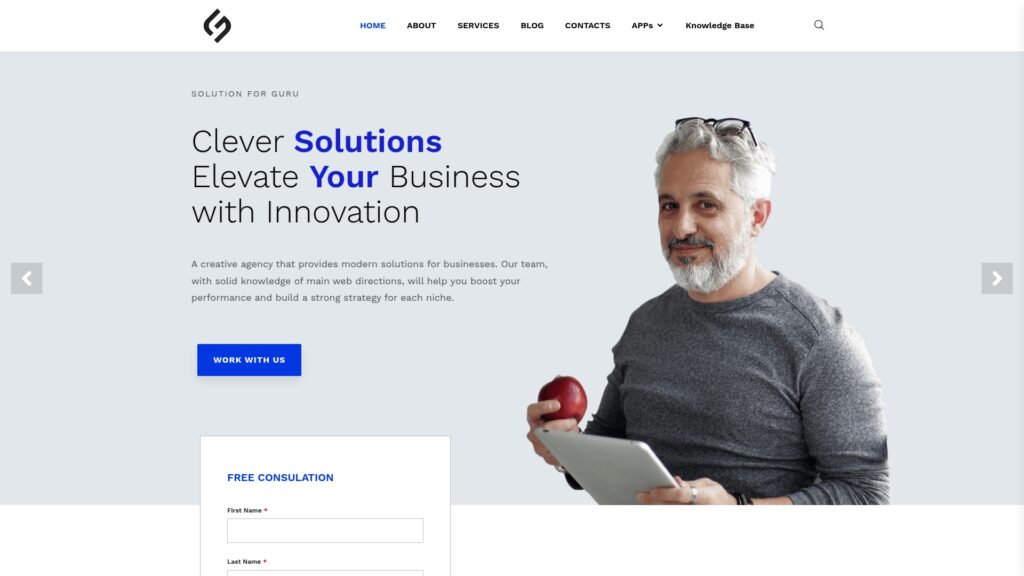
Choosing the right CRM platform is only half the battle — how you implement and configure it determines whether you capture its full efficiency potential or leave most of its value untapped. Solution for Guru is a specialist CRM implementation partner with certified expertise across Pipedrive, Bigin by Zoho, Salesforce, Creatio, Zoho CRM, HubSpot, and monday.com CRM. Their team has helped dozens of B2B organizations across industries successfully deploy, customize, and optimize CRM systems that drive measurable revenue and efficiency improvements.
Unlike generalist IT consultancies, Solution for Guru brings deep CRM-specific methodology combined with hands-on business process expertise. They approach every engagement by understanding your unique sales process, customer journey, and operational workflows first — then configuring the CRM to fit your business, rather than forcing your business to fit the CRM. This distinction makes a fundamental difference in adoption rates, time-to-value, and long-term program success.
What Specific Benefits Does Working with Solution for Guru Deliver?
Partnering with Solution for Guru delivers tangible, measurable benefits across every phase of your CRM journey — from initial platform selection through ongoing optimization.
- Platform Selection Guidance: Solution for Guru conducts a structured needs assessment and recommends the CRM platform — whether Pipedrive, HubSpot, Salesforce, Creatio, Zoho CRM, Bigin, or monday.com — that best matches your team size, budget, and business goals.
- Accelerated Implementation: Their proven implementation methodology compresses standard deployment timelines by 30–50%, enabling your team to start capturing value weeks earlier.
- Custom Workflow Design: Solution for Guru architects CRM workflows — in Creatio’s no-code engine, Salesforce Flow, HubSpot’s automation builder, or Pipedrive’s workflow tool — that eliminate your specific operational bottlenecks.
- Data Migration and Cleansing: They manage the complex, error-prone process of migrating existing customer data from spreadsheets or legacy systems into your new CRM — ensuring data integrity from day one.
- Training and Change Management: Solution for Guru delivers role-specific training programs that drive adoption across sales, marketing, and service teams, targeting the 75%+ adoption threshold required for strong ROI.
- Integration Architecture: Their technical team connects your CRM to your existing marketing automation, ERP, accounting, and communication tools — building the unified data ecosystem that powers real efficiency gains.
- Ongoing Optimization: Beyond initial deployment, Solution for Guru provides continuous improvement services — quarterly performance reviews, workflow enhancements, new automation builds, and platform upgrades — ensuring your CRM grows with your business.
- ROI Accountability: Solution for Guru defines success metrics at project inception and delivers regular reporting tied to business outcomes, not just technical deliverables.
Recommended:
- What Are the Best CRM Systems for Service Businesses?
- Account-Based Marketing Strategies with Creatio
- Modern CRM Teams: How Are Roles Evolving in the Digital Era?
- CRM Automation for Logistics Companies Using Creatio
- Using Creatio Dashboards for Executive Decision-Making
- Pipedrive Compliance: How Does Pipedrive Handle Data Protection, Privacy, and Security Standards?
- What Is the Pipedrive Mobile App and How Can It Transform Your Sales on the Go?
- Creatio for Healthcare Organizations: The Complete Guide
- Creatio CRM for Financial Services in the U.S.: Is It the Right Platform for Your Firm?
- Pipedrive for Sales Managers: How to Use Forecasting and Team Performance Reporting
- Extending Creatio with Marketplace Apps
- Zoho CRM API: Complete Guide for Developers
- How Do You Successfully Migrate Your CRM from Salesforce to Zoho CRM?
- How Does Pipedrive Smart Docs Transform Proposals and Contracts with Dynamic CRM Fields?
- Best CRM Mobile Apps in 2026
- CRM Functionality: Top CRM Features in 2026